

What do you think?

Underworld USA #3
Blood's A Rover
It´,s 1968. Bobby Kennedy and Martin Luther King are dead. The Mob, Howard Hughes and J Edgar Hoover are in a struggle for America´,s soul, drawing into their murderous conspiracies the dammed and the soon-to-be damned. Blood's A Rover will be published for the first time in Windmill paperback. The long-awaited ma
656 pages, Paperback
First published September 1, 2009
About the author
James Ellroy
154 books4,405 followersLee Earle "James" Ellroy is an American crime fiction writer and essayist. Ellroy has become known for a telegrammatic prose style in his most recent work, wherein he frequently omits connecting words and uses only short, staccato sentences, and in particular for the novels The Black Dahlia (1987) and L.A. Confidential (1990).
Ratings & Reviews
Friends & Following
Create a free account to discover what your friends think of this book!
Community Reviews
Displaying 1 - 30 of 492 reviews

September 24, 2009
“I paid a dear and savage price to live History.”
And that’s the message of James Ellroy's bloody and brilliant Underworld USA trilogy (American Tabloid, The Cold Six Thousand and Blood’s A Rover) summed up in one sentence. Here at the end, it’s all about remorse, radicals, revolution, rebellion, revenge and redemption. (To borrow some Ellroy-style alliteration.)
The book begins with a brief flashback to an armored car heist in 1964 that might have been planned by The Joker considering the body count and betrayal involved. A fortune in emeralds and cash is unaccounted for years later and is one of the main issues driving the plot.
Cut to 1968, where Wayne Tedrow Jr. is dealing with the aftermath of the last book and his involvement in the plots to kill Martin Luther King and Bobby Kennedy. Wayne’s weird form of racism has been burnt out of him like a fever following the MLK and RFK hits, but he quickly takes over fronting the Mob’s on-going plans to sell Howard Hughes their Vegas hotels and build a new casino empire in a Latin American country so they can recreate Cuba pre-Castro.
But Wayne is now severely conflicted. The guy who processed massive amounts of heroin being run out of Vietnam is now adamant about a no-heroin policy. He worked on the MLK hit and killed several black men, but starts dating a black woman he’s linked to by tragedy, and he’s vowed to find her missing son. Wayne doesn’t want the local population abused while the new casinos are built in the Dominican Republic even though he’s the guy making it happen.
Dwight Holly was also in on the MLK and RFK hits as J. Edgar Hoover’s preferred enforcer with the FBI, but his years of loving a radical woman he’s protected with an informant status are also starting to influence him. He’s worried about how fast Hoover is getting senile, but since Hoover still has a blackmail file on him, he has to keep going along with Hoover’s plans of infiltrating and discrediting the militant black movement.
Don Crutchfield (Crutch) is an idiot kid who uses his voyeur tendencies as an errand boy for low-rent private detectives in L.A. When he accidently finds out some dirt on Wayne and Dwight, he gets pulled into their lifestyle, but he’s so geeky and impressionable that he still thinks rabid anti-Communism is cool even as they waver between warning him off or killing him.
Hanging over all of them is Red Joan, a legendary left-wing radical who is involved with all of their plans in ways they can’t even imagine.
This is a departure for Ellroy. He backed way off his hipster staccato style in this one, going with more simple declarative sentences and dropping a lot of the schtick that made The Cold Six Thousand almost unreadable in spots. It’s his most traditional writing since The Big Nowhere.
Ellroy also steps away from the real history to spin this wild tale of the three men and Red Joan. Hoover still appears in an increasingly delusional state via the usual transcripts of phone calls, and Richard Nixon makes a few very funny call transcripts too as the ultimate political hack who knows he’s been bought and paid for.
But the real people and events start to fade over the course of the book. Watergate is barely mentioned as a planned Nixon black-bag job. The old power structures are crumbling. Hoover and Nixon may be the last ones standing, but the country is growing out of their control. By killing the leaders who would have worked within the system, people are turning to more radical means of change so the Bad White Men revised the rules without realizing it when they killed JFK, RFK and MLK.
The focus here is on Wayne and Dwight’s growing horror at the lives they’re leading, and Crutch’s growth from an idiot geek they call Dipshit to the same lessons that Wayne and Dwight learned. And as always with Ellory, the attempts at redemption have a terrible cost.
Crutch is one of Ellroy’s oddest creations. Supposedly based on a real Los Angeles private investigator who Ellroy claims has some extra knowledge of events of this time frame, Crutch is also part-Ellroy, incorporating his well documented tendencies for break-ins, panty sniffing and window peeping when he was a teen-age homeless drunk and drug addict before getting clean and becoming a writer. Crutch is a weird hybrid of a couple of real guys written as the watcher who sees everything burn when all the old debts come due.
Brutal, violent, profane, but surprisingly tender at times, I don’t think I’d put this one in the class of American Tabloid yet, but it’s going to haunt me for a while.
And that’s the message of James Ellroy's bloody and brilliant Underworld USA trilogy (American Tabloid, The Cold Six Thousand and Blood’s A Rover) summed up in one sentence. Here at the end, it’s all about remorse, radicals, revolution, rebellion, revenge and redemption. (To borrow some Ellroy-style alliteration.)
The book begins with a brief flashback to an armored car heist in 1964 that might have been planned by The Joker considering the body count and betrayal involved. A fortune in emeralds and cash is unaccounted for years later and is one of the main issues driving the plot.
Cut to 1968, where Wayne Tedrow Jr. is dealing with the aftermath of the last book and his involvement in the plots to kill Martin Luther King and Bobby Kennedy. Wayne’s weird form of racism has been burnt out of him like a fever following the MLK and RFK hits, but he quickly takes over fronting the Mob’s on-going plans to sell Howard Hughes their Vegas hotels and build a new casino empire in a Latin American country so they can recreate Cuba pre-Castro.
But Wayne is now severely conflicted. The guy who processed massive amounts of heroin being run out of Vietnam is now adamant about a no-heroin policy. He worked on the MLK hit and killed several black men, but starts dating a black woman he’s linked to by tragedy, and he’s vowed to find her missing son. Wayne doesn’t want the local population abused while the new casinos are built in the Dominican Republic even though he’s the guy making it happen.
Dwight Holly was also in on the MLK and RFK hits as J. Edgar Hoover’s preferred enforcer with the FBI, but his years of loving a radical woman he’s protected with an informant status are also starting to influence him. He’s worried about how fast Hoover is getting senile, but since Hoover still has a blackmail file on him, he has to keep going along with Hoover’s plans of infiltrating and discrediting the militant black movement.
Don Crutchfield (Crutch) is an idiot kid who uses his voyeur tendencies as an errand boy for low-rent private detectives in L.A. When he accidently finds out some dirt on Wayne and Dwight, he gets pulled into their lifestyle, but he’s so geeky and impressionable that he still thinks rabid anti-Communism is cool even as they waver between warning him off or killing him.
Hanging over all of them is Red Joan, a legendary left-wing radical who is involved with all of their plans in ways they can’t even imagine.
This is a departure for Ellroy. He backed way off his hipster staccato style in this one, going with more simple declarative sentences and dropping a lot of the schtick that made The Cold Six Thousand almost unreadable in spots. It’s his most traditional writing since The Big Nowhere.
Ellroy also steps away from the real history to spin this wild tale of the three men and Red Joan. Hoover still appears in an increasingly delusional state via the usual transcripts of phone calls, and Richard Nixon makes a few very funny call transcripts too as the ultimate political hack who knows he’s been bought and paid for.
But the real people and events start to fade over the course of the book. Watergate is barely mentioned as a planned Nixon black-bag job. The old power structures are crumbling. Hoover and Nixon may be the last ones standing, but the country is growing out of their control. By killing the leaders who would have worked within the system, people are turning to more radical means of change so the Bad White Men revised the rules without realizing it when they killed JFK, RFK and MLK.
The focus here is on Wayne and Dwight’s growing horror at the lives they’re leading, and Crutch’s growth from an idiot geek they call Dipshit to the same lessons that Wayne and Dwight learned. And as always with Ellory, the attempts at redemption have a terrible cost.
Crutch is one of Ellroy’s oddest creations. Supposedly based on a real Los Angeles private investigator who Ellroy claims has some extra knowledge of events of this time frame, Crutch is also part-Ellroy, incorporating his well documented tendencies for break-ins, panty sniffing and window peeping when he was a teen-age homeless drunk and drug addict before getting clean and becoming a writer. Crutch is a weird hybrid of a couple of real guys written as the watcher who sees everything burn when all the old debts come due.
Brutal, violent, profane, but surprisingly tender at times, I don’t think I’d put this one in the class of American Tabloid yet, but it’s going to haunt me for a while.

August 3, 2009
history is a tragedy not a melodrama/history is a nightmare from which i am trying to awake. after all the wars lies coups assassinations we're left with myths of nobility virtue honor blood's a rover ('clay lies still, but blood's a rover') is different than the two which preceded it; we are at the end and the cracked eggs make up the whole omelette. fuck the spics in guatemala if we want their bananas we take them fuck the spics in chile if we don't like the results of a free election we'll take it fuck the niggers in africa if we don't like what their leader says we kill him fuck the sandniggers in iraq and the ones in iran all the sandnigger dunecoon towelhead cameljockey motherfuckers are all the same sandnigger dunecoon towelhead cameljockey motherfuckers &the kikes are no different b/c the more alike two peoples are the more they hate one another and the more arid ugly and horrible a piece of land is the fiercer they'll fight for it. but it's a testament to something that the US is as free as it is despite that quasi-mystical thing (human folly or History or pure motherfucken satanic juju or military-industrial fuckoff?)--there is some reason we centimeter along, that the slaves of yesterday are presidents of today and that matthew shepard is remembered, and the two largest groupings of people i've seen in my lifetime assembled to protest a war and to express rage at a bill that fears boys kissing boys. we poll higher in favor of torture than china (it's the evangelicals) and believe free medical coverage for all is evil but yes. old school imperialism is nearly discredited and racism isn't hip. i think ellroy got spooked. the man'd never admit it but i think the past few years and the devotion of over a decade of life to these treacherous books gave a beatdown and the exhaustion the nation felt at the end of the nixon era or the bush era the disgust we've felt at the subtle and not-so-subtle awareness that it was picking up speed and devouring more and more well, it's spread across the final sections of this book the final volume of his 'USA' trilogy. it's something important and spooky. start with american tabloid and power through the cold six thousand, and, when there's nowhere lower to go, go lower: blood's a rover.

October 4, 2013
"You will read with some reluctance and capitulate in the end. The following pages will force you to succumb. I am going to tell you everything.”
― James Ellroy, Blood's a Rover

This is how the 60s ends, this is how the 60s ends, not with a bang, but a peeper. James Ellroy's Underworld trilogy was fantastic, but this was my least favorite of the three books. Looking back, I think they all were amazing, but this one just dragged a bit too far and wasn't as tight or stylized as his other two. But tied all together they create an amazing (and yes depressing) portrait of the corruption and conspiracies of the JFK (American Tabloid) assassination, Bobby Kennedy & MLK (The Cold Six Thousand) assassinations, and Hoover years. Filled with CIA agents, FBI agents, rogue cops, corrupt cops, black panthers, femme fatales, voodoo, Cuba, conspiracies, intrigue, etc., these books read like the back side of some warped people's history. This isn't your mother or father's history. This is the devil's diary, the assassin's journal, the sludge and the gout of history. It is the underbelly and the corruption. Sometimes you learn as much from the worm as the eagle. This book is the worm and it is brilliant. I'm sad it is over and sad this series will never again be a shock. Reading these books seems to be as close as you can come without ingesting methamphetamine of experiencing the chalk, crystal, and ice of those years of Camelot that weren't photographed in Life magazine. The prose and the dialogue seemed to drill into my brain as I read. It was relentless. I think about the prose and the narrative and I wonder about how any writer could emerge from birthing this series without scars, wounds, and serious therapy debt. I'm glad Ellroy paid the price that we might experience this work of art.
― James Ellroy, Blood's a Rover
This is how the 60s ends, this is how the 60s ends, not with a bang, but a peeper. James Ellroy's Underworld trilogy was fantastic, but this was my least favorite of the three books. Looking back, I think they all were amazing, but this one just dragged a bit too far and wasn't as tight or stylized as his other two. But tied all together they create an amazing (and yes depressing) portrait of the corruption and conspiracies of the JFK (American Tabloid) assassination, Bobby Kennedy & MLK (The Cold Six Thousand) assassinations, and Hoover years. Filled with CIA agents, FBI agents, rogue cops, corrupt cops, black panthers, femme fatales, voodoo, Cuba, conspiracies, intrigue, etc., these books read like the back side of some warped people's history. This isn't your mother or father's history. This is the devil's diary, the assassin's journal, the sludge and the gout of history. It is the underbelly and the corruption. Sometimes you learn as much from the worm as the eagle. This book is the worm and it is brilliant. I'm sad it is over and sad this series will never again be a shock. Reading these books seems to be as close as you can come without ingesting methamphetamine of experiencing the chalk, crystal, and ice of those years of Camelot that weren't photographed in Life magazine. The prose and the dialogue seemed to drill into my brain as I read. It was relentless. I think about the prose and the narrative and I wonder about how any writer could emerge from birthing this series without scars, wounds, and serious therapy debt. I'm glad Ellroy paid the price that we might experience this work of art.

September 2, 2017
⭐️⭐️1/2
Ellroy seems like he's running out of steam here. Story-wise and stylistically, this novel fits right in as the final book in the Underworld USA trilogy, where he documents his own version of the history of this country's turbulent '60's, with this book pulling us from the MLK and Bobbie Kennedy assassinations and into the early 70's with the Nixon years and the Black Power movement. But it's a far cry from the quality of his masterpiece American Tabloid, and surprisingly, I even liked it a little less than the disappointing The Cold Six Thousand. While those two previous books had solid structures that moved on a path to their respective inevitable events in history, the historical material here doesn't provide such a trajectory, and much of it started to feel really repetitive. Even though it's an easier read than Cold Six, the main characters here were barely engaging. The book's best character by far, the fascinating FBI/Black Power Movement double agent Marshall Bowen, is relegated to mostly journal entries, where the book would've been so much better if he was a POV character!
I still love Ellroy's work in general but in this one, he either run out of interesting material to fill an epic novel, or the good stuff that he did have was misused.
Ellroy seems like he's running out of steam here. Story-wise and stylistically, this novel fits right in as the final book in the Underworld USA trilogy, where he documents his own version of the history of this country's turbulent '60's, with this book pulling us from the MLK and Bobbie Kennedy assassinations and into the early 70's with the Nixon years and the Black Power movement. But it's a far cry from the quality of his masterpiece American Tabloid, and surprisingly, I even liked it a little less than the disappointing The Cold Six Thousand. While those two previous books had solid structures that moved on a path to their respective inevitable events in history, the historical material here doesn't provide such a trajectory, and much of it started to feel really repetitive. Even though it's an easier read than Cold Six, the main characters here were barely engaging. The book's best character by far, the fascinating FBI/Black Power Movement double agent Marshall Bowen, is relegated to mostly journal entries, where the book would've been so much better if he was a POV character!
I still love Ellroy's work in general but in this one, he either run out of interesting material to fill an epic novel, or the good stuff that he did have was misused.

September 3, 2009
There might be some spoilers. I will make sure that they pop up later in the review. Don't hit more if you don't want to see them.
The hump sucked up fear and hate wholesale. He was a stone shit magnet.
After 1600 plus pages in the past three weeks, slumming in the netherworld of Ellroy's vision of American history my brain has fried itself on staccato prose, excessive violence and a belief that we are all rotten to the core. I feel complicit. I want a sap. A few throw-down pieces. I want to walk next to History, even though my mind barely survived the first brush with it.
Blood's a Rover a strange book. The story picks up where The Cold Six Thousand ends. 1968, MLK and RFK are dead. JEH is estatic, he's also aging fast. Dracula is buying up all of Vegas and the mob is dreaming of manifest destiny for their lost casinos to the Beard.
The story begins in 1964, temporally in the time when Dallas was being sanitized, but here on an eventful LA morning when a baaad ass armored truck robbery went down.
Convergence. Compartmental seepage. Stories running into one another. Stories melding. Muddying the waters with blood and narratives. History moves on, the characters along for the ride, running along the abyss of morality right towards the swirling meat-grinder of History.
On the surface Blood's a Rover is a continuation of the first two novels. Surfaces lie. Appearances deceive.
A fourth book flexes its muscles. My Dark Places glides under and between the Cheltenham letters. A character reads much like Ellroy. Teenage peeper. Adolescent rebellion rebelling against the sixties with the aplomb of going too far in the other direction. A mother gone missing, an obsession of why. A weak absent father. The Devil Dog has put himself into the passenger seat of History. He names himself dipshit. He pulls the trigger on the JFK trigger man. He blows the lid off of History. He further blurs fact and fiction.
While dipshit's story moves forward other stories fall away. Where are the Boys? What happened to Drac? Vegas? Watergate is coming, but that too falls to the side. Los Angeles starts looming larger and larger even as the story does the frug around the country. To the Dominican Republic. To voodoo villages of Haiti. The story shifts. It recompartmentalizes. The story becomes LA. It becomes dipshit. And Joan. And Karen. The vision goes from super fucking wide lensed to myopic.
The book shifts. It feels incomplete for the American Trilogy. It jives as an epilogue for the LA Quartet.
Something is unsettling about the book as a whole. It feels like a couple of books in one. I have to remind myself that somethings happened in this novel and not in The Cold Six Thousand. Maybe this isn't a true five star book, but the series as a whole is, and what Ellroy does in this book is his own thing. He has created his own mythology of America, and in the end brought it all back to the city that spawned him.
The hump sucked up fear and hate wholesale. He was a stone shit magnet.
After 1600 plus pages in the past three weeks, slumming in the netherworld of Ellroy's vision of American history my brain has fried itself on staccato prose, excessive violence and a belief that we are all rotten to the core. I feel complicit. I want a sap. A few throw-down pieces. I want to walk next to History, even though my mind barely survived the first brush with it.
Blood's a Rover a strange book. The story picks up where The Cold Six Thousand ends. 1968, MLK and RFK are dead. JEH is estatic, he's also aging fast. Dracula is buying up all of Vegas and the mob is dreaming of manifest destiny for their lost casinos to the Beard.
The story begins in 1964, temporally in the time when Dallas was being sanitized, but here on an eventful LA morning when a baaad ass armored truck robbery went down.
Convergence. Compartmental seepage. Stories running into one another. Stories melding. Muddying the waters with blood and narratives. History moves on, the characters along for the ride, running along the abyss of morality right towards the swirling meat-grinder of History.
On the surface Blood's a Rover is a continuation of the first two novels. Surfaces lie. Appearances deceive.
A fourth book flexes its muscles. My Dark Places glides under and between the Cheltenham letters. A character reads much like Ellroy. Teenage peeper. Adolescent rebellion rebelling against the sixties with the aplomb of going too far in the other direction. A mother gone missing, an obsession of why. A weak absent father. The Devil Dog has put himself into the passenger seat of History. He names himself dipshit. He pulls the trigger on the JFK trigger man. He blows the lid off of History. He further blurs fact and fiction.
While dipshit's story moves forward other stories fall away. Where are the Boys? What happened to Drac? Vegas? Watergate is coming, but that too falls to the side. Los Angeles starts looming larger and larger even as the story does the frug around the country. To the Dominican Republic. To voodoo villages of Haiti. The story shifts. It recompartmentalizes. The story becomes LA. It becomes dipshit. And Joan. And Karen. The vision goes from super fucking wide lensed to myopic.
The book shifts. It feels incomplete for the American Trilogy. It jives as an epilogue for the LA Quartet.
Something is unsettling about the book as a whole. It feels like a couple of books in one. I have to remind myself that somethings happened in this novel and not in The Cold Six Thousand. Maybe this isn't a true five star book, but the series as a whole is, and what Ellroy does in this book is his own thing. He has created his own mythology of America, and in the end brought it all back to the city that spawned him.

July 6, 2023
Third and final instalment of the brilliant American Trilogy. The narrative picks up after the assassinations of Martin Luther King and Robert Kennedy. Elroy gives zero credence to the official account of both killings. He's now focused on Hoover's war with black militant organisations. The novel begins with an unsolved heist involving emeralds. Once again the power structures in the US are depicted as thoroughly corrupt and sinister.

October 11, 2009
I just finished reading the latest James Ellroy book, "Blood's A Rover." It's a weighty slog to get through the novel at nearly 650 pages.
I used to be a big James Ellroy fan. Now I feel Ellroy is very much past his prime as a relevant writer. I finished the book because I wanted to see what happened--I read both (the good) "American Tabloid" and (the terrible) "The Cold Six Thousand" that preceded this (hopefully last) entry in the trilogy--to the characters involved.
Ellroy's mostly two-dimensional characters and hipster late 60's jargon were wearying from the beginning. If you really like Ellroy, read "White Jazz" again instead.
Ellroy substitutes what he considers "style" for substance whenever possible in "Blood's A Rover." But since he includes characters like Nixon, J. Edgar Hoover, various famous mobsters--and his main characters are responsible for the JFK, RFK and MLK assassinations (and much more) in one way or another--he has some built in gravitas, which he tends to squander on characters who all seem to hate either African-Americans or homosexuals, or both.
Ellroy tosses so many famous characters into the blender of his revisionist history--where they emerge as little more than caricatures--that the tactic goes from being fun at first to just plain formulaic.
I'm a fan of sex and violence and hard-boiled fiction, but "Blood's A Rover" is so persistently ugly and pointless that it just bores me after a while, from endless repetition. The same puerile nonsense over and over.
The fascination with Communist insurgency--most of the characters either start "red" or go "red" during the book in one way or another (as a reaction to the fascism of J. Edgar Hoover and Nixon, etc.)--is constant in "Blood's A Rover." Yet that red fascination destroys or disfigures all of the main characters in the end.
By the end, it's hard to care about the big "mystery" Ellroy hangs his bloated tome on this time around. This time it's a stolen shipment of emeralds and cash. He lays out the "bad" guys' motivation in a bland chapter of exposition near the end--which seems to me to be bad storytelling craft, pure and simple.
I think I'm going to try to return the book and get my money back.
I used to be a big James Ellroy fan. Now I feel Ellroy is very much past his prime as a relevant writer. I finished the book because I wanted to see what happened--I read both (the good) "American Tabloid" and (the terrible) "The Cold Six Thousand" that preceded this (hopefully last) entry in the trilogy--to the characters involved.
Ellroy's mostly two-dimensional characters and hipster late 60's jargon were wearying from the beginning. If you really like Ellroy, read "White Jazz" again instead.
Ellroy substitutes what he considers "style" for substance whenever possible in "Blood's A Rover." But since he includes characters like Nixon, J. Edgar Hoover, various famous mobsters--and his main characters are responsible for the JFK, RFK and MLK assassinations (and much more) in one way or another--he has some built in gravitas, which he tends to squander on characters who all seem to hate either African-Americans or homosexuals, or both.
Ellroy tosses so many famous characters into the blender of his revisionist history--where they emerge as little more than caricatures--that the tactic goes from being fun at first to just plain formulaic.
I'm a fan of sex and violence and hard-boiled fiction, but "Blood's A Rover" is so persistently ugly and pointless that it just bores me after a while, from endless repetition. The same puerile nonsense over and over.
The fascination with Communist insurgency--most of the characters either start "red" or go "red" during the book in one way or another (as a reaction to the fascism of J. Edgar Hoover and Nixon, etc.)--is constant in "Blood's A Rover." Yet that red fascination destroys or disfigures all of the main characters in the end.
By the end, it's hard to care about the big "mystery" Ellroy hangs his bloated tome on this time around. This time it's a stolen shipment of emeralds and cash. He lays out the "bad" guys' motivation in a bland chapter of exposition near the end--which seems to me to be bad storytelling craft, pure and simple.
I think I'm going to try to return the book and get my money back.
This entire review has been hidden because of spoilers.

July 24, 2016
Ellroy closes out the Underworld USA Trilogy in style with a book that sees its characters moving from authority to revolution and from history's secrets to its margins.
(As always, I'll assume you've read the preceding books.)
Blood's a Rover continues the story of Wayne Tedrow, Jr., who, fresh from participating in the MLK assassination and orchestrating his father's murder, is struggling with guilt, burnout, and his own past--especially how it's reflected back at him by everyone he meets. He's trying to keep the hard, dangerous quality he developed over the course of The Cold Six Thousand but find better ways to deploy it, including a way that he hopes might lead him to some sort of redemption. He's tentatively joined in that by FBI agent Dwight Holly, whose intimacy with his leftist Quaker informant may finally be starting to tip him more towards her beliefs than his own, especially with J. Edgar Hoover's sharpened deterioration. Circling and observing them is Don Crutchfield, a.k.a. Dipshit, a.k.a. Peeper, whose private eye assistance is really just a monetization of his own deep-rooted voyeurism, who never met an older woman he couldn't fall in obsession with. (Given his vanished mother and the way all the objects of his peeping tom fascination evoke her, it's possible Crutch may Remind You of Someone, )
This is a dense, complicated novel--Red radicalization and infiltration, an emerald heist, a missing son, Haitian zombies, the quest to build casinos in the Dominican Republic, ongoing interest in Cuba, struggle over heroin distribution, a murdered woman in a "Horror House," Hoover's plan to discredit the civil rights movement by targeting fringe black militants, and, floating almost-but-not-quite untouched through it all, the nearly mythic Joan Rosen Klein, Red Joan, who has had at least a finger in every major leftist plot and half the minor ones, and who is magnetic enough to draw in men and women both like iron filings. The middle of the book bogs down a little in it all, as the quests that really drive the characters stall into a holding pattern and their actual jobs don't interest them (Crutch's adventures with Mesplede seemed especially inert), but a daring development about two-thirds of the way through sharpens the storytelling and helps get everything moving again.
The structural problems of The Cold Six Thousand drop off here, with Wayne, Dwight, and Crutch all having real--and very powerful--arcs, which is particularly impressive with Wayne, whose struggle to come back from his precipitous descent could have made him nothing more than a sequel to Ward Littell, whose morose equilibrium hurt the preceding book. But Ellroy finds a new story to tell with Wayne, and nicely complicates his search for redemption by suggesting that it has consequences of its own, and can be just as objectifying as vengeance when he seeks to work it out through other people. In fact, the late-in-the-game struggle to avoid treating people as pawns to move around some chessboard is, in part, what Blood's a Rover is really about. That makes it a great, worthy conclusion to a trilogy about manipulation and the living grist for history's mill. Raise a glass for those we lost along the way.
(As always, I'll assume you've read the preceding books.)
Blood's a Rover continues the story of Wayne Tedrow, Jr., who, fresh from participating in the MLK assassination and orchestrating his father's murder, is struggling with guilt, burnout, and his own past--especially how it's reflected back at him by everyone he meets. He's trying to keep the hard, dangerous quality he developed over the course of The Cold Six Thousand but find better ways to deploy it, including a way that he hopes might lead him to some sort of redemption. He's tentatively joined in that by FBI agent Dwight Holly, whose intimacy with his leftist Quaker informant may finally be starting to tip him more towards her beliefs than his own, especially with J. Edgar Hoover's sharpened deterioration. Circling and observing them is Don Crutchfield, a.k.a. Dipshit, a.k.a. Peeper, whose private eye assistance is really just a monetization of his own deep-rooted voyeurism, who never met an older woman he couldn't fall in obsession with. (Given his vanished mother and the way all the objects of his peeping tom fascination evoke her, it's possible Crutch may Remind You of Someone, )
This is a dense, complicated novel--Red radicalization and infiltration, an emerald heist, a missing son, Haitian zombies, the quest to build casinos in the Dominican Republic, ongoing interest in Cuba, struggle over heroin distribution, a murdered woman in a "Horror House," Hoover's plan to discredit the civil rights movement by targeting fringe black militants, and, floating almost-but-not-quite untouched through it all, the nearly mythic Joan Rosen Klein, Red Joan, who has had at least a finger in every major leftist plot and half the minor ones, and who is magnetic enough to draw in men and women both like iron filings. The middle of the book bogs down a little in it all, as the quests that really drive the characters stall into a holding pattern and their actual jobs don't interest them (Crutch's adventures with Mesplede seemed especially inert), but a daring development about two-thirds of the way through sharpens the storytelling and helps get everything moving again.
The structural problems of The Cold Six Thousand drop off here, with Wayne, Dwight, and Crutch all having real--and very powerful--arcs, which is particularly impressive with Wayne, whose struggle to come back from his precipitous descent could have made him nothing more than a sequel to Ward Littell, whose morose equilibrium hurt the preceding book. But Ellroy finds a new story to tell with Wayne, and nicely complicates his search for redemption by suggesting that it has consequences of its own, and can be just as objectifying as vengeance when he seeks to work it out through other people. In fact, the late-in-the-game struggle to avoid treating people as pawns to move around some chessboard is, in part, what Blood's a Rover is really about. That makes it a great, worthy conclusion to a trilogy about manipulation and the living grist for history's mill. Raise a glass for those we lost along the way.

July 14, 2021
Il vecchio J.E. o lo si ama o lo si odia, non ci sono mezze misure. E' un suo difetto? Non credo. Come tutte le cose vere, rare e originali crea divisione. Arrivato alla chiusa finale della monumentale trilogia dell'America sotterranea, Ellroy confeziona una summa epica della sua narrazione: sangue, violenza, sesso, complotto, paranoia, droga, autodistruzione, pragmatismo, ideali distorti e contorti, ma soprattutto espiazione e riscatto. Sarebbe vano piu' che impossibile fare un breve riassunto del libro. Resta forse da evidenziare, nella descrizione di questa America a cavallo degli anni '60 '70 che non ha nulla di innocente (come altri autori hanno invece proposto), il personaggio di "Crutch" Crutchfield, giovane sbandato ma intelligente, ossessionato dalle donne e dalle droghe, che rimanda abbastanza apertamente alla vita dell'autore e che sembra un compendio narrativo dei suoi "luoghi oscuri".

October 25, 2009
Ellroy does redemption. It's not pleasant. There's a mantra that runs throughout the book: "Nobody dies." But this is Ellroy. So you can guess how well that works out.
In some ways, this review is pointless, at least as a guide to any potential reader. Let's face it: if you've read American Tabloid and The Cold Six Thousand, you already know whether you are going to read this one or not. If you haven't read either of those, then you owe it to yourself to give American Tabloid a shot, or maybe start further back with The Black Dahlia or The Big Nowhere. These are some of my favorite books (White Jazz is still tops of Ellroy for me), and Ellroy is one of my favorite writers.
After The Cold Six Thousand, I wondered how he was going to crank the style up another notch. Maybe he would figure out a way to write a book that contained nothing but one word sentences? Instead, he eased off a little bit on his formal restrictions. The fractured sentences coming in threes disappears here, and Ellroy allows himself a bit of freedom in his constructions. This makes for easier reading. Here, he allows himself sentences as complicated as you would find in a Dick and Jane primer, and he uses this to evoke an astonishing array of effects and emotions, from hipster kidding, to brutal torture, to pure hallucinogenic voodoo shit. All in short, simple declarative sentences. It's brilliant, fascinating, addicting, and a bit offputting all at once.
The main characters are typical Ellroy. Wayne Tedrow - ex-racist, mobbed-up, personal Heroin chef for Howard Hughes. He sells Las Vegas casinos to Hughes, and then helps the mob launder the skim money they steal after the sales. He has a reputation for killing negroes, but few people know that he masterminded the hit on Martin Luther King. Now he's trying to set up some offshore casinos for the mob to take the place of what they lost in Cuba.
Then there's Dwight Holly. He's an FBI enforcer, tied in tightly with J. Edgar himself. He also commands the admiration of Nixon. His main job here is to get informants into black militant groups, start the groups running heroin into the ghetto, and then make some busts to discredit the entire black nationalist movement. It's the biggest bug up Hoover's ass, in his declining years, and Holly does what Hoover wants. (He, too, was in on the assassinations of RFK and King).
The new kid on the block is Don Crutchfield. AKA Peeper and Dipshit. He turns his peeping penchant into a career. He also has insatiable curiosity, and the inability to let go of anything. In some ways, he is the proxy for Ellroy himself. Almost everyone in the book underestimates Crutch. But Ellroy makes him almost too powerful.
And, in a twist, there is a fourth POV character who comes in late for his POV sections. That would be Scotty Bennett, an LAPD officer who wears a bowtie embroidered with 18s, for the number of black armed robbers he has killed. By the end of the book, I don't know how high the number would be. Besides legal (and some illegal) murder, Bennett has a pure fixation on an open case -- an armored car robbery back in 1964 where the surviving thieves got away with a couple of mill and a shitload of emeralds.
The book starts just before the 68 convention riots, and basically covers the Nixon administration. There are two main differences between this book and the earlier two. First, this book involves a series of failures by the main characters. In those books, the characters set out to do terrible things, and by and large, they succeed. The main characters there are horrible, vicious, and very effective. Here, the main characters become riddled with doubts. And they also tend to fail in their main goals. And their failures are intimately tied to their quest for some kind of redemption. In this way, I think this book, and the main characters, hark back to figures like Buzz Meeks from The Big Nowhere. Also, I want to point out that I am definitely oversimplifying here. It's a broad impression that I have, but there are lots of details that point other ways, so other people might disagree.
This book also had some great humor. One of my favorite things in the book is the treatment of Watergate. Basically, Holly dumps off the job to Howard Hunt because he's too busy and more interested in the other evil shit he's involved with. For the real players here, Watergate merits simply an afterthought.
I haven't read many reviews, but I find it hard to believe that Ellroy, especially in these last three books, would have readers who did not react strongly. It seems to me that you should either love him or hate him. I can't imagine being blase. I love him. I think his vision of history is manic, sick, twisted and vulgar. I also find it compelling and hard to dismiss, and that comes largely from the force and conviction of his writing. It's rare to see anyone writing stuff that is simultaneously so compellingly honest, and so transparently false. It takes a rare kind of brilliance to pull this shit off, and I'm really happy that Ellroy has done it.
I also think its oddly fitting that I finished this book on July 4.
In some ways, this review is pointless, at least as a guide to any potential reader. Let's face it: if you've read American Tabloid and The Cold Six Thousand, you already know whether you are going to read this one or not. If you haven't read either of those, then you owe it to yourself to give American Tabloid a shot, or maybe start further back with The Black Dahlia or The Big Nowhere. These are some of my favorite books (White Jazz is still tops of Ellroy for me), and Ellroy is one of my favorite writers.
After The Cold Six Thousand, I wondered how he was going to crank the style up another notch. Maybe he would figure out a way to write a book that contained nothing but one word sentences? Instead, he eased off a little bit on his formal restrictions. The fractured sentences coming in threes disappears here, and Ellroy allows himself a bit of freedom in his constructions. This makes for easier reading. Here, he allows himself sentences as complicated as you would find in a Dick and Jane primer, and he uses this to evoke an astonishing array of effects and emotions, from hipster kidding, to brutal torture, to pure hallucinogenic voodoo shit. All in short, simple declarative sentences. It's brilliant, fascinating, addicting, and a bit offputting all at once.
The main characters are typical Ellroy. Wayne Tedrow - ex-racist, mobbed-up, personal Heroin chef for Howard Hughes. He sells Las Vegas casinos to Hughes, and then helps the mob launder the skim money they steal after the sales. He has a reputation for killing negroes, but few people know that he masterminded the hit on Martin Luther King. Now he's trying to set up some offshore casinos for the mob to take the place of what they lost in Cuba.
Then there's Dwight Holly. He's an FBI enforcer, tied in tightly with J. Edgar himself. He also commands the admiration of Nixon. His main job here is to get informants into black militant groups, start the groups running heroin into the ghetto, and then make some busts to discredit the entire black nationalist movement. It's the biggest bug up Hoover's ass, in his declining years, and Holly does what Hoover wants. (He, too, was in on the assassinations of RFK and King).
The new kid on the block is Don Crutchfield. AKA Peeper and Dipshit. He turns his peeping penchant into a career. He also has insatiable curiosity, and the inability to let go of anything. In some ways, he is the proxy for Ellroy himself. Almost everyone in the book underestimates Crutch. But Ellroy makes him almost too powerful.
And, in a twist, there is a fourth POV character who comes in late for his POV sections. That would be Scotty Bennett, an LAPD officer who wears a bowtie embroidered with 18s, for the number of black armed robbers he has killed. By the end of the book, I don't know how high the number would be. Besides legal (and some illegal) murder, Bennett has a pure fixation on an open case -- an armored car robbery back in 1964 where the surviving thieves got away with a couple of mill and a shitload of emeralds.
The book starts just before the 68 convention riots, and basically covers the Nixon administration. There are two main differences between this book and the earlier two. First, this book involves a series of failures by the main characters. In those books, the characters set out to do terrible things, and by and large, they succeed. The main characters there are horrible, vicious, and very effective. Here, the main characters become riddled with doubts. And they also tend to fail in their main goals. And their failures are intimately tied to their quest for some kind of redemption. In this way, I think this book, and the main characters, hark back to figures like Buzz Meeks from The Big Nowhere. Also, I want to point out that I am definitely oversimplifying here. It's a broad impression that I have, but there are lots of details that point other ways, so other people might disagree.
This book also had some great humor. One of my favorite things in the book is the treatment of Watergate. Basically, Holly dumps off the job to Howard Hunt because he's too busy and more interested in the other evil shit he's involved with. For the real players here, Watergate merits simply an afterthought.
I haven't read many reviews, but I find it hard to believe that Ellroy, especially in these last three books, would have readers who did not react strongly. It seems to me that you should either love him or hate him. I can't imagine being blase. I love him. I think his vision of history is manic, sick, twisted and vulgar. I also find it compelling and hard to dismiss, and that comes largely from the force and conviction of his writing. It's rare to see anyone writing stuff that is simultaneously so compellingly honest, and so transparently false. It takes a rare kind of brilliance to pull this shit off, and I'm really happy that Ellroy has done it.
I also think its oddly fitting that I finished this book on July 4.

August 5, 2010
This series really does fall victim to the law of diminished returns. I’ve already noted how ‘The Cold Six Thousand’ is not as good as ‘American Tabloid’, but ‘Blood’s A Rover’ is a considerable dip from all that went before.
It was never going to be easy. ‘American Tabloid’ focused on the assassination of JFK, while ‘The Cold Six Thousand’ built up to the deaths of RFK and Martin Luther King. And although the years after that were tumultuous and eventful ones in America’s history, there is no big moment for Ellroy to latch onto and the book suffers from malaise as a consequence (well, I suppose there is Watergate, but that’s deliberately ignored). He then makes it even harder on himself, by having the least convincing and least rounded central character from ‘The Cold Six Thousand’ as the only surviving main character into this book. That problem is confounded by surrounding him by other truly unconvincing and unpleasant individuals, so that there’s no one at all for the reader to empathise with. Indeed one of the things which seems to have vanished in this volume is Ellroy’s sense of distinct character, as many of them just blend into each other. It wouldn’t be inaccurate to say that a fairly un-commonplace phrase, such as “my relationship with him is mutually usurious’, could be uttered by any single person in this book. They all speak in exactly the same way.
I guess the big villain of the piece is supposed to be J. Edgar Hoover, and indeed – since he’s the only major recurring figure in all three books – one could argue that the trilogy is about him. Once again though, Ellroy gets it wrong. The Director of the FBI is losing his marbles and whereas that gets some good chuckles, it means he stops being a huge scary monster. Instead we just have a sad and pathetic old man, someone who drools blank-eyed in restaurants – and what kind of villain does that make?
The book does open with a fantastic robbery scene, but then the plot twists and turns, many characters die along the way, and by the end the whole thing seems to have lost its point. The entire structure feels haphazard and all over the place. And so the question arises, all those years ago, when Ellroy started to write this trilogy – was this really how he conceived the ending? An epic tale which began by examining one of the most defining events of the last fifty years, finishes with a whole different set of characters (most of whom few people could care about), dealing with the consequences of a (fictional) robbery in a truly un-dramatic way.
Ellroy is too good a writer to produce a truly terrible book, but this a huge disappointment.
It was never going to be easy. ‘American Tabloid’ focused on the assassination of JFK, while ‘The Cold Six Thousand’ built up to the deaths of RFK and Martin Luther King. And although the years after that were tumultuous and eventful ones in America’s history, there is no big moment for Ellroy to latch onto and the book suffers from malaise as a consequence (well, I suppose there is Watergate, but that’s deliberately ignored). He then makes it even harder on himself, by having the least convincing and least rounded central character from ‘The Cold Six Thousand’ as the only surviving main character into this book. That problem is confounded by surrounding him by other truly unconvincing and unpleasant individuals, so that there’s no one at all for the reader to empathise with. Indeed one of the things which seems to have vanished in this volume is Ellroy’s sense of distinct character, as many of them just blend into each other. It wouldn’t be inaccurate to say that a fairly un-commonplace phrase, such as “my relationship with him is mutually usurious’, could be uttered by any single person in this book. They all speak in exactly the same way.
I guess the big villain of the piece is supposed to be J. Edgar Hoover, and indeed – since he’s the only major recurring figure in all three books – one could argue that the trilogy is about him. Once again though, Ellroy gets it wrong. The Director of the FBI is losing his marbles and whereas that gets some good chuckles, it means he stops being a huge scary monster. Instead we just have a sad and pathetic old man, someone who drools blank-eyed in restaurants – and what kind of villain does that make?
The book does open with a fantastic robbery scene, but then the plot twists and turns, many characters die along the way, and by the end the whole thing seems to have lost its point. The entire structure feels haphazard and all over the place. And so the question arises, all those years ago, when Ellroy started to write this trilogy – was this really how he conceived the ending? An epic tale which began by examining one of the most defining events of the last fifty years, finishes with a whole different set of characters (most of whom few people could care about), dealing with the consequences of a (fictional) robbery in a truly un-dramatic way.
Ellroy is too good a writer to produce a truly terrible book, but this a huge disappointment.

September 18, 2011
The final book in James Ellroy's Underworld U.S.A. trilogy, "Blood's A Rover", is an exciting, provocative examination of crooked cops and the conspiracies that have shaped this country.
Ellroy is probably one of my favorite writers ever, but I can't seem to read him one after another. I need long breaks between his books, they are so intense and disturbing. They are, however, a joy to read, as his language is a hodge-podge of pulp-era cop-slang and jazz-inspired stream-of-consciousness.
His characters are fascinating, as well. There are rarely any good guys, as Ellroy doesn't believe that anyone is good, just different shades of evil. His anti-heroes, however, do, occasionally, do the right thing, but invariably for the wrong reasons or on accident.
"Blood's A Rover" is set between 1964 and 1972, starting with the assassinations of Bobby Kennedy and Dr. Martin Luther King and ending with Watergate. FBI agent Dwight Holly works directly for J. Edgar Hoover, cleaning up the messes left over from Hoover's personal crusades. He has just come off the assignment of Bobby Kennedy/Dr. King's assassinations, setting up the two patsies who would successfully go down in history as the "official" assassins. Hoover's next assignment: destroy the militant black organization known as The Black Panthers from within.
Holly recruits the help of his old cop friend, Wayne Tedrow Jr., who recently killed his own father so that he could carry on his love affair with his stepmother without any inconveniences. Tedrow has a reputation for killing the most blacks while on duty as an L.A.P.D. officer, so Holly knows he'd be perfect for the gig.
Then there is Don "Crutch" Crutchfield, a young cop with an unhealthy obsession: he's searching for a woman involved in an armored car heist in '63 that resulted in three dead guards, two dead robbers, and the theft of over several million dollars-worth of stolen emeralds.
As always, Ellroy employs countless minor characters and subplots that complicate an already-complex plot. Therein lies the fun. It may help to read the series in order, starting with "American Tabloid", followed by "The Cold Six Thousand", as some characters and events from those books are referenced in this one.
Ellroy is probably one of my favorite writers ever, but I can't seem to read him one after another. I need long breaks between his books, they are so intense and disturbing. They are, however, a joy to read, as his language is a hodge-podge of pulp-era cop-slang and jazz-inspired stream-of-consciousness.
His characters are fascinating, as well. There are rarely any good guys, as Ellroy doesn't believe that anyone is good, just different shades of evil. His anti-heroes, however, do, occasionally, do the right thing, but invariably for the wrong reasons or on accident.
"Blood's A Rover" is set between 1964 and 1972, starting with the assassinations of Bobby Kennedy and Dr. Martin Luther King and ending with Watergate. FBI agent Dwight Holly works directly for J. Edgar Hoover, cleaning up the messes left over from Hoover's personal crusades. He has just come off the assignment of Bobby Kennedy/Dr. King's assassinations, setting up the two patsies who would successfully go down in history as the "official" assassins. Hoover's next assignment: destroy the militant black organization known as The Black Panthers from within.
Holly recruits the help of his old cop friend, Wayne Tedrow Jr., who recently killed his own father so that he could carry on his love affair with his stepmother without any inconveniences. Tedrow has a reputation for killing the most blacks while on duty as an L.A.P.D. officer, so Holly knows he'd be perfect for the gig.
Then there is Don "Crutch" Crutchfield, a young cop with an unhealthy obsession: he's searching for a woman involved in an armored car heist in '63 that resulted in three dead guards, two dead robbers, and the theft of over several million dollars-worth of stolen emeralds.
As always, Ellroy employs countless minor characters and subplots that complicate an already-complex plot. Therein lies the fun. It may help to read the series in order, starting with "American Tabloid", followed by "The Cold Six Thousand", as some characters and events from those books are referenced in this one.

October 8, 2021
I feel as if the ghost of Christopher Marlowe had jumped out and tried to stab me in the eye. This is a theatre of cruelty modernised: automatic weapons, high explosives and mind-bending drugs swamping the stage with bemused victims, bloody corpses and body parts. However, there is a problem with repetitive violence: eventually it turns shock and dismay into Punch and Judy, the anaesthesia of gore.
Of course a story involving organised crime, the CIA, the FBI, the personnel of various Police Departments, the Black Panthers and associated groups, voodoo priests in Haiti, Papa Doc Duvalier and, sitting malignantly over all as manipulative and calculating as any She Who Must Be Obeyed - J. Edgar Hoover, is going to be violent – and racist. Curiously the dialogue is not full of expletives. Motherf****r receives quite an airing but on the whole this collection of hoods, hoodlums, scumbags, racists, thieves, murderers, extortionists and torturers is surprisingly articulate, at times even erudite. The American underworld, and those who police it, it seems could give lessons in self analysis and expression to the rest of us.
While the plot occasionally stumbles as it becomes more and more convoluted - in fact the author seemed to reach a conclusion that a short chapter needed to be included near to the end (chapter 119) to provide a summary explanation of the action - it is the characters who lift the story into vibrant life, above all Donald 'Crutch' Crutchfield and Joan Rosen Klein. Presumably Mr Ellroy felt that, if left to themselves, the surviving protagonists would need another 200 pages to achieve the same aim.
Crutchfield is brought across as a person whose company one would be hesitant to keep and yet feel that, given the right circumstances, he may be the one who is reliable and has a personality the closest to trustworthiness. He has to deal with the contempt of many he is required to work with who see him as a worthless boy floundering out of his depth, but there are a few who see his value and his courage – albeit often in the favour of a despicable cause. On the basis of Mr Ellroy's portrait I could never like him but I would like him fighting on my side not against me.
Joan Rosen Klein could have been stereotyped as a third generation Jewish revolutionary, the granddaughter of an East European immigrant who made a fortune with Colombian emeralds and used them together with his son to finance revolution. Instead of being a femme fatale avoiding capture and being a thorn in the side of her great enemy Hoover, she is given much greater depth. Along with the capacity to love, to tease, to have friends, to long for a family, she can still play the conspirator and could pull as many strings as J. Edgar Hoover given half a chance and any man susceptible to her playfulness and deceit.
It's a wonderful book and if you don't mind the sound of breaking fingers, the image of vomiting induced by pain and fright, and multiple gun shot wounds, I recommend it. However, while the violence was repetitive but nonetheless described with some artistry, there was one thing in the book above all else which annoyed me as it was said over and over again.
But no, “I'm not telling you.”
Of course a story involving organised crime, the CIA, the FBI, the personnel of various Police Departments, the Black Panthers and associated groups, voodoo priests in Haiti, Papa Doc Duvalier and, sitting malignantly over all as manipulative and calculating as any She Who Must Be Obeyed - J. Edgar Hoover, is going to be violent – and racist. Curiously the dialogue is not full of expletives. Motherf****r receives quite an airing but on the whole this collection of hoods, hoodlums, scumbags, racists, thieves, murderers, extortionists and torturers is surprisingly articulate, at times even erudite. The American underworld, and those who police it, it seems could give lessons in self analysis and expression to the rest of us.
While the plot occasionally stumbles as it becomes more and more convoluted - in fact the author seemed to reach a conclusion that a short chapter needed to be included near to the end (chapter 119) to provide a summary explanation of the action - it is the characters who lift the story into vibrant life, above all Donald 'Crutch' Crutchfield and Joan Rosen Klein. Presumably Mr Ellroy felt that, if left to themselves, the surviving protagonists would need another 200 pages to achieve the same aim.
Crutchfield is brought across as a person whose company one would be hesitant to keep and yet feel that, given the right circumstances, he may be the one who is reliable and has a personality the closest to trustworthiness. He has to deal with the contempt of many he is required to work with who see him as a worthless boy floundering out of his depth, but there are a few who see his value and his courage – albeit often in the favour of a despicable cause. On the basis of Mr Ellroy's portrait I could never like him but I would like him fighting on my side not against me.
Joan Rosen Klein could have been stereotyped as a third generation Jewish revolutionary, the granddaughter of an East European immigrant who made a fortune with Colombian emeralds and used them together with his son to finance revolution. Instead of being a femme fatale avoiding capture and being a thorn in the side of her great enemy Hoover, she is given much greater depth. Along with the capacity to love, to tease, to have friends, to long for a family, she can still play the conspirator and could pull as many strings as J. Edgar Hoover given half a chance and any man susceptible to her playfulness and deceit.
It's a wonderful book and if you don't mind the sound of breaking fingers, the image of vomiting induced by pain and fright, and multiple gun shot wounds, I recommend it. However, while the violence was repetitive but nonetheless described with some artistry, there was one thing in the book above all else which annoyed me as it was said over and over again.
But no, “I'm not telling you.”

June 20, 2009
Ellroy, you magnificent bastard! The final piece of the Underground U.S.A. trilogy is also the largest, longest, most convoluted, bloodiest, most intricate, fast-paced, and conspiratorial.
Wayne Tedrow and Dwight Holly are back as main players, as are "Gay" Edgar Hoover, Howard "Dracula" Hughes in his decadent decline, Richard Nixon in his ascent to power, assorted Mob figures, American celebrities major and minor, sundry Communist revolutionaries, banana republic dictators, Haitian voodoo kings, black militants, heist men, black-bag men, hitmen, informants, peepers, prowlers, and scum of all kinds. Sex, drugs, zombie voodoo powder, secret torture chambers, mob deals, armored car heists, shakedowns, bribery, and blackmail. Fantastic stuff!
I especially enjoyed the fully-realized female and black characters and their changes over the course of the four years (1968-1972) that the book covers. There is hardly a character for whom to cheer, but one or two of them have a fascinating belated dawning consciousness of moral crisis that creeps up slowly on the reader.
Wayne Tedrow and Dwight Holly are back as main players, as are "Gay" Edgar Hoover, Howard "Dracula" Hughes in his decadent decline, Richard Nixon in his ascent to power, assorted Mob figures, American celebrities major and minor, sundry Communist revolutionaries, banana republic dictators, Haitian voodoo kings, black militants, heist men, black-bag men, hitmen, informants, peepers, prowlers, and scum of all kinds. Sex, drugs, zombie voodoo powder, secret torture chambers, mob deals, armored car heists, shakedowns, bribery, and blackmail. Fantastic stuff!
I especially enjoyed the fully-realized female and black characters and their changes over the course of the four years (1968-1972) that the book covers. There is hardly a character for whom to cheer, but one or two of them have a fascinating belated dawning consciousness of moral crisis that creeps up slowly on the reader.

August 26, 2011
This trilogy seriously goes downhill after the excellent "American Tabloid." Not only does the writing style become increasingly more inscrutable (especially in the second book, "The Cold Six Thousand") but the characters become less well-defined and difficult to care about, and the historical stakes they're dealing with get far lower.
Whereas the first book deals largely with the JFK assassination and the lead-up to it (feeding into conspiracy theories and making the reader really think about what they think they know), here we get an armored car robbery, some stolen emeralds, something about voodoo, and the infiltration of some small-time black militant groups.
Basically, a bunch of stuff happens in this book, everyone turns on everyone else, and some historical figures seem to play zero role in anything.
My advice: read "American Tabloid," then don't bother with the other two.
Whereas the first book deals largely with the JFK assassination and the lead-up to it (feeding into conspiracy theories and making the reader really think about what they think they know), here we get an armored car robbery, some stolen emeralds, something about voodoo, and the infiltration of some small-time black militant groups.
Basically, a bunch of stuff happens in this book, everyone turns on everyone else, and some historical figures seem to play zero role in anything.
My advice: read "American Tabloid," then don't bother with the other two.
April 8, 2020
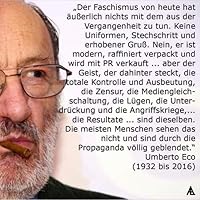
Selten so etwas einfallsloses gelesen, James Ellroy spult das Programm der vorher gehenden Romane der Trilogie mit neuem Personal in der Nixon-Ära weiter durch, mit ein bisschen Voodoo als exotischer Beilage.
Glatte Zeitverschwendung.
Glatte Zeitverschwendung.

November 18, 2010
Conclusa la lettura dell’ultimo tomo della trilogia mi si è palesata alla mente una metafora geometrica, a me assai manchevole nell’arte di assemblare figure retoriche o di comprendere qualcosa di geometria: ho pensato a un solido che ruota su stesso fino a mostrare l’identica faccia di partenza ma da una prospettiva completamente rovesciata (e questa pensata mi è costata assi più fatica delle 859 pagine appena concluse). Nel capostipite American Tabloid , in fondo un romanzo a tesi, i tre personaggi (il terzetto di stronzi naturali più potente della letteratura americana degli ultimi anni) ricordano certe caviette da laboratorio continuamente sottoposte agli stimoli della Storia, una sorta di Darwinismo applicato alla politica, più forte è l’iterazione, maggiore è il loro modificarsi, adattarsi, destrutturarsi, fino a rimanere solo un ambaradan confuso di sentimenti basici: rabbia, vendetta, fallimento, malriusciti tentativi di redenzione, sacri lavacri nel sangue, insomma tutte quelle cose che piaccion tanto agli scrittori Protestanti e ai lettori di Moby Dick. ( Una Storia Americana volutamente modificata ad arte da un onnisciente Ellroy –che, nonostante lo si voglia infilare a forza tra i moderni cantori postmoderni della mitopoietica , sotto sotto è il più ottocentesco degli scrittori contemporanei).
Il sangue è randagio, invece, rovescia completamente il punto di vista per moti speculari: i tre protagonisti sono una copia caratterialmente scialba del terzetto del Tabloid: Dwight Holly è Kemper Boyd che ha perso ogni cinica e sfrontata drammaticità per trasformarsi in un dandy della violenza e del malaffare politico; Wyane Tedrow è invece Ward Little asciugato da ogni idealismo e consapevole da subito del proprio tragico destino e Crutch è un Pet Bondurant in erba, ipnoticamente attratto da una violenza che gli esplode sempre in mano come una maldestra bomba a orologeria; il plot è inesistente: la ricerca di soldi, persone e moventi di una feroce rapina a un furgone valori avvenuta qualche anno prima dello svolgersi dell’azione, plot che si trascina stancamente lungo le pagine, tutte in salita per il lettore ignaro delle altre due parti della trilogia; la Storia resta una nube confusa sullo sfondo ed è sommariamente indagata ( i movimenti rivoluzionari neri solo un’accolita di malavitosi dediti allo spaccio di droga e al malaffare spiccio, Nixon un borioso cretino da fumetto e così via…). Quello che invece viene indagato, esposto, descritto minuziosamente è la forma stessa su cui si costruisce l’inganno della Storia: infiltrazioni, provocazioni, costruzione di prove false, doppio, triplo, quadruplo gioco, è l’ossessione la forma stessa del romanzo – in questo senso, per quanto possa sembrare ardito l’accostamento, qui siam più dalle parti di Borroughs che di Dostoevskij. Scenario magnifico per chi ama Ellroy, difficile, insulso e incomprensibile per chi si avvicina per la prima volta al suo mondo, e in particolare alla trilogia.
Obbligatoria la lettura delle puntate precedenti.
Il sangue è randagio, invece, rovescia completamente il punto di vista per moti speculari: i tre protagonisti sono una copia caratterialmente scialba del terzetto del Tabloid: Dwight Holly è Kemper Boyd che ha perso ogni cinica e sfrontata drammaticità per trasformarsi in un dandy della violenza e del malaffare politico; Wyane Tedrow è invece Ward Little asciugato da ogni idealismo e consapevole da subito del proprio tragico destino e Crutch è un Pet Bondurant in erba, ipnoticamente attratto da una violenza che gli esplode sempre in mano come una maldestra bomba a orologeria; il plot è inesistente: la ricerca di soldi, persone e moventi di una feroce rapina a un furgone valori avvenuta qualche anno prima dello svolgersi dell’azione, plot che si trascina stancamente lungo le pagine, tutte in salita per il lettore ignaro delle altre due parti della trilogia; la Storia resta una nube confusa sullo sfondo ed è sommariamente indagata ( i movimenti rivoluzionari neri solo un’accolita di malavitosi dediti allo spaccio di droga e al malaffare spiccio, Nixon un borioso cretino da fumetto e così via…). Quello che invece viene indagato, esposto, descritto minuziosamente è la forma stessa su cui si costruisce l’inganno della Storia: infiltrazioni, provocazioni, costruzione di prove false, doppio, triplo, quadruplo gioco, è l’ossessione la forma stessa del romanzo – in questo senso, per quanto possa sembrare ardito l’accostamento, qui siam più dalle parti di Borroughs che di Dostoevskij. Scenario magnifico per chi ama Ellroy, difficile, insulso e incomprensibile per chi si avvicina per la prima volta al suo mondo, e in particolare alla trilogia.
Obbligatoria la lettura delle puntate precedenti.

October 3, 2009
Hard Print
http://theleadmiamibeach.com/2009/100...
Three the Hard Way
James Ellroy Chats about Underworld USA
By John Hood
Dig. Mau Mau militants knocking off ghetto liquor stores. An unhinged J. Edgar Hoover heaving heavy over Archie Bell & the Drells. An FBI cut-out cutting everybody else outta the rad action. A holed-up Howard Hughes buying up Vegas and scarfing down nuclear-strength narco-cocktails. MLK shot dead. RFK ditto. Sirhan Sirhan and James Earl Ray on ice and spitting conspiracy.
Such is a mere smidgen of the action that fast tracks James Ellroy’s “Blood’s a Rover” (Knopf, $28.95), part three in his “Underworld USA” Trilogy. Like ’95s “American Tabloid” and ’01s “The Cold Six Thousand” (Vintage $14.95 and $15.95, respectively), this is sprawling, brawling, stone-walling fiction based on brutal hard fact. And like both its predecessors, this book will kick your ass. Most though it’s the work of a master, the kinda cat who can throw a thousand lines in the air and have them all ravel back into a single purpose. Is it history? Sure. History as peeped through the eyes of a visionist who sees things very differently from you and me. It’s also knock-down, drag-out, smash ’n’ grabbing fun. If, that is, you’re idea of fun is multiple murder.
The Lead caught Ellroy in Chi-town on the eve of a MIA hit that will find him holding court and spilling tale at the Gables branch Books and Books. Miss it, miss him, and you miss out.
So you’ve wrapped up the Trilogy, how do you feel, relieved?
Yeah, I feel relieved. The books are there. I’ve recreated 1958-1972 America. I’ve rewritten history to my own specifications. It’s a good empty feeling. Now I’m out here selling the book across country. And it’s a gas.
The dog is straining at his chain. You get to let him off his hook. And he gets to grind two cats.
How much real dirt didya dig up before getting with the Trilogy?
I hired a researcher. I don’t like doing research. These books are 90% fiction. They’re true to fact as far as they’re true to fact. And then I extrapolate fictionally.
You know the names of your protagonists – especially Dwight Holly and Wayne Tedrow – sound like the names of some shady ops one might stumble upon in a history book. I mean, they sound just like who they are. Where did you get ‘em, outta the blue?
When you’ve got ’em, you’ve got ’em. Dwight Holly I especially love. That is a guy you don’t wanna fuck with. It’s kind of a funny name for a guy like that.
Yeah, Holly’s either gonna fold or he’s gonna blow up. He’s walking that fine line. Tedrow too.
All of these guys. Holly, Tedrow, [Don:] Crutchfield. They’re all suckers for women.
Don Crutchfield’s a real-life character. You can find him on pi4stars.com. And we’re old friends. I decided to use him as a fictional character in this book, although he’s a real character, doing things he did do and things he didn’t do. And I gave him my own window-peeping past
And what about Mesplede?
He’s in the previous book, The Cold Six Thousand. You know where I got that name? The French critic, Claude Mespede.
I know The Badge played a pivotal role for you, didya ever get to meet Jack Webb?
No, Jack Webb crapped out in ’82 and I never got to meet him.
I interviewed Joseph Wambaugh once, and he seemed pissed that Webb always got so much more attention. Are you a Wambaugh fan?
I am a fan of Wambaugh. Wambaugh’s early work jazzed me.
“The Onion Field,” all those?
“The Onion Field,” “The Choirboys.” The early work.
Do you read any other contemporary crime writers?
Nah, I don’t read at all. I don’t read. I don’t go to movies. I don’t have a cell phone. I don’t have a computer. I have a landline phone; I don’t have a cell phone. I have an assistant who taps into Facebook and does all that shit for me. And I lie in the dark and I think of this shit.
But surely you saw “L.A. Confidential” and “Black Dahlia.”
“L.A. Confidential” is a very fine movie. I’ve been [heavily:] compensated by selling the book rights for these movies. So I would never rag about a bum movie being made from one of my books. I don’t think about it a helluva lot. HBO has the option for the first two books in the Trilogy; they may option “Blood’s a Rover” as well. I don’t think about it much.
If you weren’t writing this crime stuff, do you think you’d be out there in The Life?
No. I can only write. I’m a storyteller. I’m a brooder. I’m a thinker. I’m a worshiper. I’m a conjurer. I’m meant to be isolated. I’m meant to be alone in a room telling stories.
http://theleadmiamibeach.com/2009/100...
Three the Hard Way
James Ellroy Chats about Underworld USA
By John Hood
Dig. Mau Mau militants knocking off ghetto liquor stores. An unhinged J. Edgar Hoover heaving heavy over Archie Bell & the Drells. An FBI cut-out cutting everybody else outta the rad action. A holed-up Howard Hughes buying up Vegas and scarfing down nuclear-strength narco-cocktails. MLK shot dead. RFK ditto. Sirhan Sirhan and James Earl Ray on ice and spitting conspiracy.
Such is a mere smidgen of the action that fast tracks James Ellroy’s “Blood’s a Rover” (Knopf, $28.95), part three in his “Underworld USA” Trilogy. Like ’95s “American Tabloid” and ’01s “The Cold Six Thousand” (Vintage $14.95 and $15.95, respectively), this is sprawling, brawling, stone-walling fiction based on brutal hard fact. And like both its predecessors, this book will kick your ass. Most though it’s the work of a master, the kinda cat who can throw a thousand lines in the air and have them all ravel back into a single purpose. Is it history? Sure. History as peeped through the eyes of a visionist who sees things very differently from you and me. It’s also knock-down, drag-out, smash ’n’ grabbing fun. If, that is, you’re idea of fun is multiple murder.
The Lead caught Ellroy in Chi-town on the eve of a MIA hit that will find him holding court and spilling tale at the Gables branch Books and Books. Miss it, miss him, and you miss out.
So you’ve wrapped up the Trilogy, how do you feel, relieved?
Yeah, I feel relieved. The books are there. I’ve recreated 1958-1972 America. I’ve rewritten history to my own specifications. It’s a good empty feeling. Now I’m out here selling the book across country. And it’s a gas.
The dog is straining at his chain. You get to let him off his hook. And he gets to grind two cats.
How much real dirt didya dig up before getting with the Trilogy?
I hired a researcher. I don’t like doing research. These books are 90% fiction. They’re true to fact as far as they’re true to fact. And then I extrapolate fictionally.
You know the names of your protagonists – especially Dwight Holly and Wayne Tedrow – sound like the names of some shady ops one might stumble upon in a history book. I mean, they sound just like who they are. Where did you get ‘em, outta the blue?
When you’ve got ’em, you’ve got ’em. Dwight Holly I especially love. That is a guy you don’t wanna fuck with. It’s kind of a funny name for a guy like that.
Yeah, Holly’s either gonna fold or he’s gonna blow up. He’s walking that fine line. Tedrow too.
All of these guys. Holly, Tedrow, [Don:] Crutchfield. They’re all suckers for women.
Don Crutchfield’s a real-life character. You can find him on pi4stars.com. And we’re old friends. I decided to use him as a fictional character in this book, although he’s a real character, doing things he did do and things he didn’t do. And I gave him my own window-peeping past
And what about Mesplede?
He’s in the previous book, The Cold Six Thousand. You know where I got that name? The French critic, Claude Mespede.
I know The Badge played a pivotal role for you, didya ever get to meet Jack Webb?
No, Jack Webb crapped out in ’82 and I never got to meet him.
I interviewed Joseph Wambaugh once, and he seemed pissed that Webb always got so much more attention. Are you a Wambaugh fan?
I am a fan of Wambaugh. Wambaugh’s early work jazzed me.
“The Onion Field,” all those?
“The Onion Field,” “The Choirboys.” The early work.
Do you read any other contemporary crime writers?
Nah, I don’t read at all. I don’t read. I don’t go to movies. I don’t have a cell phone. I don’t have a computer. I have a landline phone; I don’t have a cell phone. I have an assistant who taps into Facebook and does all that shit for me. And I lie in the dark and I think of this shit.
But surely you saw “L.A. Confidential” and “Black Dahlia.”
“L.A. Confidential” is a very fine movie. I’ve been [heavily:] compensated by selling the book rights for these movies. So I would never rag about a bum movie being made from one of my books. I don’t think about it a helluva lot. HBO has the option for the first two books in the Trilogy; they may option “Blood’s a Rover” as well. I don’t think about it much.
If you weren’t writing this crime stuff, do you think you’d be out there in The Life?
No. I can only write. I’m a storyteller. I’m a brooder. I’m a thinker. I’m a worshiper. I’m a conjurer. I’m meant to be isolated. I’m meant to be alone in a room telling stories.
November 14, 2010
Fairly disappointing Ellroy. Still an exhilirating ride, but the pay-off was very unsatisfying. This is the conclusion to his American Tabloid trilogy. The first part was based around the assassination of JFK, and the second around those of Bobby Kennedy and Martin Luther King. Ellroy, justifiably, decided not to cover the Watergate scandal in the third volume, but that left no comparable historic events to anchor this book, making it feel a far less significant work. This sadly drags down the two preceding tomes by association and leads to the question of whether he should have bothered making the series into a trilogy.
All of the major mysteries - set up in the early part of the book, and driving much of the plot throughout - fizzle out into perfunctory and largely unbelievable (even by Ellroy standards) conclusions. It really felt like he hadn't plotted the book fully enough and ended up writing himself into a corner. If he had been using them just to drive along the plot he really shouldn't have built them up so much.
It's a shame, because the Ellroy roller-coaster or misanthropy does still deliver. And he has curbed some of his more annoying tics, while maintaining his kinetic, punchy prose. His conflicted and compromised anti-heroes are still compelling (although his propensity to kill his characters off - while admirably shocking - does mean that you feel seen his archetypes several times before), and the hallucinatory passages, particularly in Haiti, are immersive. He still delivers a convincing vision of a familiar world refracted through a prism of violence, fear and hate. Perhaps best of all, he introduces a young and ingenuous (as far as an Ellroy character can be) character that seems to have a lot of the young and wayward Ellroy, and hence feels particularly believable. I would like to read more about him.
Unfortunately, by the end of what should have been the crowning work of an impressive and challenging trilogy, I felt that Ellroy had over-indulged himself, and perhaps believed his own hype a little too much.
All of the major mysteries - set up in the early part of the book, and driving much of the plot throughout - fizzle out into perfunctory and largely unbelievable (even by Ellroy standards) conclusions. It really felt like he hadn't plotted the book fully enough and ended up writing himself into a corner. If he had been using them just to drive along the plot he really shouldn't have built them up so much.
It's a shame, because the Ellroy roller-coaster or misanthropy does still deliver. And he has curbed some of his more annoying tics, while maintaining his kinetic, punchy prose. His conflicted and compromised anti-heroes are still compelling (although his propensity to kill his characters off - while admirably shocking - does mean that you feel seen his archetypes several times before), and the hallucinatory passages, particularly in Haiti, are immersive. He still delivers a convincing vision of a familiar world refracted through a prism of violence, fear and hate. Perhaps best of all, he introduces a young and ingenuous (as far as an Ellroy character can be) character that seems to have a lot of the young and wayward Ellroy, and hence feels particularly believable. I would like to read more about him.
Unfortunately, by the end of what should have been the crowning work of an impressive and challenging trilogy, I felt that Ellroy had over-indulged himself, and perhaps believed his own hype a little too much.

May 28, 2019
I used to be a huge fan of James Ellroy, but I hadn’t read anything of his in about 15 years. That was THE COLD SIX THOUSAND, which marked the first time I came away from one of his novels a bit disappointed. The novelty of his prose was beginning to wear thin, plus the book seemed more interested in ticking off historical events than in creating compelling characters, which were found in abundance in his previous book AMERICAN TABLOID. I finally got around to reading BLOOD’S A ROVER, the final book in that trilogy. It’s awful. Not a single compelling character (especially author surrogate Don Crutchfield), and a really uninteresting plot.
AMERICAN TABLOID soars high. THE COLD SIX THOUSAND sputters. BLOOD’S A ROVER is full on death spiral. I have PERFIDIA sitting on a shelf, but I think I’m just going to return it to the library unread.
AMERICAN TABLOID soars high. THE COLD SIX THOUSAND sputters. BLOOD’S A ROVER is full on death spiral. I have PERFIDIA sitting on a shelf, but I think I’m just going to return it to the library unread.

October 11, 2021
Ellroy at his most experimental, fantastical, sprawling, and compelling. A knockout, miles ahead of The Cold Six Thousand and somehow better than Tabloid and Dahlia.

March 30, 2025
With no JFK, MLK or RFK to kill the last installment is running on empty.

August 26, 2015
[image error]
James Ellroy's literary Underworld USA Trilogy is worthy of reading, especially the first book, 'American Tabloid'. However, the next two novels I did not admire as much. 'Blood's a Rover' is the last one and I was glad of that. In my opinion, the taut-tough-terse construction which makes 'American Tabloid' a classic of American literature is missing from the next two books, taking the sense of very interesting fraught and anxious criminal depravity away with its disappearance. Instead, the reader is subjected tediously to more than a thousand pages of extremely wretched corruption, vice and debauchery in the following books. The trilogy remains a recommended read by me, however. It never compromises in giving the reader the realism behind American criminal activity and how the men who swim in these filthy waters either delude or satisfy themselves. I could not help thinking of Jack Kerouac's 'On the Road', despite the (minor to me) differences of social milieu and scale.
'Blood's a Rover' picks up where 'The Cold Six Thousand' left off, which in turn picked up where 'American Tabloid' finished. All together, the second Red Scare years ( https://en.m.wikipedia.org/wiki/Red_S...) from the mid-1950's to the early 1970's when John F. Kennedy, Martin Luther King and Robert Kennedy were actually assassinated are fictionally reimagined with tremendous realism primarily due to James Ellroy's incredibly detailed research and scope.
I should mention that I grew up in the decades Ellroy describes. Most of the actual, historical conspiracy theories of the time swirled around the idea that the Mafia, J. Edgar Hoover who was the chief of the FBI, and various conservative American rich men paid (subverted and corrupted) CIA/FBI/Military/Mafia assassins to commit these above-mentioned political murders in order to stop the Soviet Union, labor unions, leftist American politicians and minorities (especially black people) from changing the comfortable financial status of the then rich white Republican/Clan American men who had most of the wealth and power in the world, as they saw it. (Rich men and corporations were also actually assassinating environmentalists and activist farmworkers in these years - fact.)
In real history, Cuba's revolution and its left turn to Communism and its friendly support by the Soviet Union meant the Mafia's casinos in Cuba were closed without compensating their American Mafia/Wall Street owners. Washington D.C. was then also easily within bombing distance of Cuban nuclear rocket attack and a possible ground invasion from Communist Soviet and Cuban troops. Most Caribbean islands were within the Castro/Cuban possible zone of influence.
Paranoia swept the political establishment of the Right and the military, while some Communist American lefties rejoiced and other left-leaning organizations began plotting and pushing into politics agitating for equal rights for minorities. Middle-class, mostly white, mostly 8th-grade educated, adult America did not have a fricking clue, generally, since they were being propagandized quite thoroughly about America being the 'Greatest Generation' and living 'under god' while watching clean family sitcoms and being urged to buy houses, Chevrolet cars, furniture, washing machines, soap, boxed cereals full of sugar-highs, and separate twin beds if married, even while every legally married heterosexual couple somehow was to have four children (moms were morally forbidden from earning a paycheck outside the home), white picket fences and fluffy curtains, a yard for a pet dog, and to regular attend church. Middle-class Protestant America easily bought into the Right's fears that the Soviets and the Cubans were behind the civil rights 'agitators', job-destroying environmentalists and 'extortionist' unions, college-educated women and the Catholic Kennedys.
Ellroy's fictional trilogy instead posits that the post-war 20th-century American political upheavals were directed entirely by selfish, sensation-seeking, lowlife psychopathic white American men who were either under the delusions or cover of patriotism and revenge, or who worked for personal excitement, profit and self-aggrandizement, possibly partly because of their military exposure or poverty. Their adventures are as hideous and destructive as they are stupidly intricate and plausible. I never doubted such characters of which Ellroy writes actually existed and exist now somewhere. Do men everywhere carry the dreams of being Napoleon? The genius in this trilogy for me is in Ellroy's brilliant revelations of these damaged males in their self-delusions of control, power and superior intelligence in their plots and strivings.
But while I think I see the three main themes: feeling as if your power can change the course of history, whether personal or society's, is intoxicating; however, making a meaningful change through evil methods so that it works the way one wants is hard; and Kali is a scary goddess I wouldn't recommend attempting to invoke or see as a guiding light (from Wikipedia - "The name of Kali means black one and force of time; she is therefore called the Goddess of Time, Change, Power, Creation, Preservation, and Destruction. Her earliest appearance is that of a destroyer principally of evil forces.")
Why do I mention Kali? I think the frequently mentioned "Red Goddess", a character's nickname in the novel, is a literary symbol representing Kali. I don't think it references a voodoo goddess, the religion of some in Haiti despite that much of the action in the book takes place there, or Communism, of which the symbolic color was red. Kali's symbolic representation appears to fit the overarching destructive reality and foolish chaos of the 'bad' men at the end of their feverish plots.
The assassinations of 'good' men who were, in many of the public's eyes, moral giants (even if they were not so good in private), had the strongest effect in the following complete loss of public confidence and political innocence, and the partial loss of the self-deception of moral religious superiority, as well as an end to a strong belief in American exceptionalism and superior moral standing in political life. What we have today is a tainted and darkened political democracy, if heavily defended still, but with more sad bitterness and uncertain anxiety.
The intended legacy behind the political murders of the two Kennedy brothers and King was the continuing hidden oppression of black people. It succeeded, in my opinion. What the murder of these political figures did was destroy a hope for a possible cure for the cancer even now rotting the body of America.
James Ellroy's literary Underworld USA Trilogy is worthy of reading, especially the first book, 'American Tabloid'. However, the next two novels I did not admire as much. 'Blood's a Rover' is the last one and I was glad of that. In my opinion, the taut-tough-terse construction which makes 'American Tabloid' a classic of American literature is missing from the next two books, taking the sense of very interesting fraught and anxious criminal depravity away with its disappearance. Instead, the reader is subjected tediously to more than a thousand pages of extremely wretched corruption, vice and debauchery in the following books. The trilogy remains a recommended read by me, however. It never compromises in giving the reader the realism behind American criminal activity and how the men who swim in these filthy waters either delude or satisfy themselves. I could not help thinking of Jack Kerouac's 'On the Road', despite the (minor to me) differences of social milieu and scale.
'Blood's a Rover' picks up where 'The Cold Six Thousand' left off, which in turn picked up where 'American Tabloid' finished. All together, the second Red Scare years ( https://en.m.wikipedia.org/wiki/Red_S...) from the mid-1950's to the early 1970's when John F. Kennedy, Martin Luther King and Robert Kennedy were actually assassinated are fictionally reimagined with tremendous realism primarily due to James Ellroy's incredibly detailed research and scope.
I should mention that I grew up in the decades Ellroy describes. Most of the actual, historical conspiracy theories of the time swirled around the idea that the Mafia, J. Edgar Hoover who was the chief of the FBI, and various conservative American rich men paid (subverted and corrupted) CIA/FBI/Military/Mafia assassins to commit these above-mentioned political murders in order to stop the Soviet Union, labor unions, leftist American politicians and minorities (especially black people) from changing the comfortable financial status of the then rich white Republican/Clan American men who had most of the wealth and power in the world, as they saw it. (Rich men and corporations were also actually assassinating environmentalists and activist farmworkers in these years - fact.)
In real history, Cuba's revolution and its left turn to Communism and its friendly support by the Soviet Union meant the Mafia's casinos in Cuba were closed without compensating their American Mafia/Wall Street owners. Washington D.C. was then also easily within bombing distance of Cuban nuclear rocket attack and a possible ground invasion from Communist Soviet and Cuban troops. Most Caribbean islands were within the Castro/Cuban possible zone of influence.
Paranoia swept the political establishment of the Right and the military, while some Communist American lefties rejoiced and other left-leaning organizations began plotting and pushing into politics agitating for equal rights for minorities. Middle-class, mostly white, mostly 8th-grade educated, adult America did not have a fricking clue, generally, since they were being propagandized quite thoroughly about America being the 'Greatest Generation' and living 'under god' while watching clean family sitcoms and being urged to buy houses, Chevrolet cars, furniture, washing machines, soap, boxed cereals full of sugar-highs, and separate twin beds if married, even while every legally married heterosexual couple somehow was to have four children (moms were morally forbidden from earning a paycheck outside the home), white picket fences and fluffy curtains, a yard for a pet dog, and to regular attend church. Middle-class Protestant America easily bought into the Right's fears that the Soviets and the Cubans were behind the civil rights 'agitators', job-destroying environmentalists and 'extortionist' unions, college-educated women and the Catholic Kennedys.
Ellroy's fictional trilogy instead posits that the post-war 20th-century American political upheavals were directed entirely by selfish, sensation-seeking, lowlife psychopathic white American men who were either under the delusions or cover of patriotism and revenge, or who worked for personal excitement, profit and self-aggrandizement, possibly partly because of their military exposure or poverty. Their adventures are as hideous and destructive as they are stupidly intricate and plausible. I never doubted such characters of which Ellroy writes actually existed and exist now somewhere. Do men everywhere carry the dreams of being Napoleon? The genius in this trilogy for me is in Ellroy's brilliant revelations of these damaged males in their self-delusions of control, power and superior intelligence in their plots and strivings.
But while I think I see the three main themes: feeling as if your power can change the course of history, whether personal or society's, is intoxicating; however, making a meaningful change through evil methods so that it works the way one wants is hard; and Kali is a scary goddess I wouldn't recommend attempting to invoke or see as a guiding light (from Wikipedia - "The name of Kali means black one and force of time; she is therefore called the Goddess of Time, Change, Power, Creation, Preservation, and Destruction. Her earliest appearance is that of a destroyer principally of evil forces.")
Why do I mention Kali? I think the frequently mentioned "Red Goddess", a character's nickname in the novel, is a literary symbol representing Kali. I don't think it references a voodoo goddess, the religion of some in Haiti despite that much of the action in the book takes place there, or Communism, of which the symbolic color was red. Kali's symbolic representation appears to fit the overarching destructive reality and foolish chaos of the 'bad' men at the end of their feverish plots.
The assassinations of 'good' men who were, in many of the public's eyes, moral giants (even if they were not so good in private), had the strongest effect in the following complete loss of public confidence and political innocence, and the partial loss of the self-deception of moral religious superiority, as well as an end to a strong belief in American exceptionalism and superior moral standing in political life. What we have today is a tainted and darkened political democracy, if heavily defended still, but with more sad bitterness and uncertain anxiety.
The intended legacy behind the political murders of the two Kennedy brothers and King was the continuing hidden oppression of black people. It succeeded, in my opinion. What the murder of these political figures did was destroy a hope for a possible cure for the cancer even now rotting the body of America.

February 23, 2022
Late 1960s. Las Vegas, L.A., Miami, Santo Domingo, elsewhere. FBI, black militants, black bags, CIA, LAPD, Tonton Macoute, other guys. Some murders, surveillance, burglaries, infiltration, corruption, intimidation. All to get Nixon elected. And keep Hoover happy. And Howard Hughes, known here as Drac. Some sex, wiretapping, ultimatums. Lots of flights and drives, cover memoranda, desert, Chicago. Exotic poisons. Lots of mentions of Archie Bell and The Drells. Drugs. Lots of racist talk. Lots of cynicism. Power and money and reactionary insanity. Soul kitchen and batwinged bars.
If you like reading a book written like this, you'll like BLOOD'S A ROVER.
If you like reading a book written like this, you'll like BLOOD'S A ROVER.
October 15, 2009
So I've finished Blood's A Rover and I am happy to say that my initial enthusiasm carried throughout the entire read. I was so sad to see it finish, which is rare for a crime novel. While I tend to think the best crime novels are the equal of the best litfic, there are those that disagree. Genre snobs should consider the book a literary work and note that while its story line is like that of a thriller, the depth of character, the singular use of language and syntax and the emotional depth of the story will win over the more effete readers. Unless of course you can't stand the over the top vulgarity.
Past fans of Ellroy will note many consistencies with his earlier books. There are a pair of men with a complicated relationship who weave back and forth across the good and evil line. There is an unsolved crime scene around which much of the plot revolves, although it is often unclear why. There is the uneasy sense that the power structure is completely corrupt and there is little chance for hope for the good.
If you want to scare yourself this Halloween, but don't like traditional horror stories, you should pick this up. All the conspiracy theories that nagged you about the 60s and early 70s are true. What's more, in Ellroy's dark world, no one is truly innocent. The left is populated by the deluded, the self-important, the idiotic and the ineffectual. The right is populated by a range of terrifying monsters perfectly happy to grind up anyone in their path. The path chosen by the book's few survivors makes perfect sense after the hell they have been through.
My only regret after reading the book is my fear that Ellroy now has no place to go. He has completed his major work started with the Black Dahlia, the first in the LA Quartet and continued with the Underground America trilogy. His story line has been so epic for so long, I am not sure how he goes back to simpler plots or how he would continue this story. My only solace is that his creativity and vision are strong enough to do just about anything.
Past fans of Ellroy will note many consistencies with his earlier books. There are a pair of men with a complicated relationship who weave back and forth across the good and evil line. There is an unsolved crime scene around which much of the plot revolves, although it is often unclear why. There is the uneasy sense that the power structure is completely corrupt and there is little chance for hope for the good.
If you want to scare yourself this Halloween, but don't like traditional horror stories, you should pick this up. All the conspiracy theories that nagged you about the 60s and early 70s are true. What's more, in Ellroy's dark world, no one is truly innocent. The left is populated by the deluded, the self-important, the idiotic and the ineffectual. The right is populated by a range of terrifying monsters perfectly happy to grind up anyone in their path. The path chosen by the book's few survivors makes perfect sense after the hell they have been through.
My only regret after reading the book is my fear that Ellroy now has no place to go. He has completed his major work started with the Black Dahlia, the first in the LA Quartet and continued with the Underground America trilogy. His story line has been so epic for so long, I am not sure how he goes back to simpler plots or how he would continue this story. My only solace is that his creativity and vision are strong enough to do just about anything.

May 2, 2016
FBI, Pantere nere e altre organizzazioni dell'orgoglio afroamericano, droga, intrighi internazionali, infiltrazioni, depistaggi, vodoo, mafia, JFK, MLK e altri omicidi politici, poi di nuovo droga e intrighi, figli dei fiori e attivisti comunisti, Haiti, Cuba, schiavitù, colpi di stato, oppressione, violenza, droga e ancora droga e pestaggi, poliziotti corrotti e poliziotti idealisti e doppiogiochisti, Hoover “la checca” e “dracula” Hughes, e attraverso tutto questo un ragazzo che perde la propria innocenza e alla fine la ritrova, in fondo a un abisso di orrore.
Una ricetta cucinata dal magistrale Ellroy, l'unico che può scrivere un romanzo come questo.
Una ricetta cucinata dal magistrale Ellroy, l'unico che può scrivere un romanzo come questo.

March 8, 2019
The conclusion of James Ellroy’s Underworld USA trilogy is probably not the best work of is but it may be one of my favorites.
If you haven’t followed along with my reviews, allow me some framing: I have a weird relationship with James Ellroy’s books. LA noirs and overarching American conspiracy are definitely my thing. But for years, I wasn’t able to connect with Ellroy’s style. Not necessarily his writing style, per se, though that often leaves something to be desired. Rather, Ellroy reads were tough for me because of their rampant, unapologetic cynicism. Every character was little more than their motives and entire people seemed to exist to sprout exposition and then be killed or do something transgressively sexual.
But then November 8, 2016 happened. And I gave into a heavy dose of cynicism myself. Last summer, I picked up The Cold Six-Thousand and was surprised at how quickly I devoured it. I then switched to Perfidia, which was one of the best things I read last year. Furiously, I made my way through his original LA quartet and now back to this in order to finish both.
This is no different from other Ellroy’s in terms of plot: the peek behind the curtain of the compromised men and women who do bad things for those with more power than they have. But there is a maturity to Ellroy’s style that wasn’t here in TC6T. It’s almost as if he wants us to appreciate these characters in a way he hasn’t otherwise done so before. Because I was able to connect with them, feel their joys/pains/struggles. Perhaps it’s because rigging the 68 election or an attempt to build mob casinos in the DR isn’t as compelling as political assassination but by having lesser stories, I became closer with the people who lived them. There’s a lot of tragedy here and Ellroy deals with it honestly.
Of course, this is still Ellroy so racism and homophobia are rampant, as well as a plot that hurtles itself off the interstate at every opportunity (though this one is easier to follow than others). Still, I appreciated what he was doing here and the stories he told through these people.
If you haven’t followed along with my reviews, allow me some framing: I have a weird relationship with James Ellroy’s books. LA noirs and overarching American conspiracy are definitely my thing. But for years, I wasn’t able to connect with Ellroy’s style. Not necessarily his writing style, per se, though that often leaves something to be desired. Rather, Ellroy reads were tough for me because of their rampant, unapologetic cynicism. Every character was little more than their motives and entire people seemed to exist to sprout exposition and then be killed or do something transgressively sexual.
But then November 8, 2016 happened. And I gave into a heavy dose of cynicism myself. Last summer, I picked up The Cold Six-Thousand and was surprised at how quickly I devoured it. I then switched to Perfidia, which was one of the best things I read last year. Furiously, I made my way through his original LA quartet and now back to this in order to finish both.
This is no different from other Ellroy’s in terms of plot: the peek behind the curtain of the compromised men and women who do bad things for those with more power than they have. But there is a maturity to Ellroy’s style that wasn’t here in TC6T. It’s almost as if he wants us to appreciate these characters in a way he hasn’t otherwise done so before. Because I was able to connect with them, feel their joys/pains/struggles. Perhaps it’s because rigging the 68 election or an attempt to build mob casinos in the DR isn’t as compelling as political assassination but by having lesser stories, I became closer with the people who lived them. There’s a lot of tragedy here and Ellroy deals with it honestly.
Of course, this is still Ellroy so racism and homophobia are rampant, as well as a plot that hurtles itself off the interstate at every opportunity (though this one is easier to follow than others). Still, I appreciated what he was doing here and the stories he told through these people.
August 14, 2026
Too sprawling and ambitious even for Ellroy.

April 6, 2020
Gruelling slog through an aimless post-Kennedy assassination span of years, charting the downfall of our heroes and the blowback from decades spent twisting history on the whims of a madman. I didn't enjoy it very much because it didn't seem to have much drive, though that could have been on purpose. The female characters were my favourite part.

October 17, 2025
The end of James Ellroy's Underworld USA cycle finds us following ex-cop/chemist/assassin Wayne Tedrow (from The Cold Six Thousand), FBI agent Dwight Holly, and peeping tom and unlicensed P.I. Don Crutchfield through the waning days of the 1960s and in to the early 1970s. Along the way we also get a fourth viewpoint character in Scotty Bennett, an LAPD officer with a penchant for killing black armed robbery suspects. Stripped to it's essence this is a search for the ill-gotten gains from an armored car robbery that took place in 1964, but it's also a lot more than that. We get the rise of the black nationalist movement and the FBI COINTELPRO against those groups. We get most of our main characters working with the mob for both the election of Tricky Dick Nixon and to attempt to establish mob casinos in the Dominican Republic. We have the Howard Hughes takeover of Las Vegas. And the deterioration and eventual death of arguably the biggest American villain of the 20th Century, J. Edgar Hoover.
That sound like a lot. And it is. This is a big book. And it's the book by Ellroy that I struggled with the most. There was concern going in that Ellroy would again ratchet up the stylized writing that started in White Jazz. But that wasn't the case. This book is the most traditional writing since L.A. Confidential. The problem for me was that none of the characters were interesting. I don't need to like them...and I know that I'm not going to get that in a book by Ellroy. Everyone is a totally broken asshole in all of Ellroy's books. You just have to be okay with that. And I am. But they need to be interesting. And here, to me, they aren't. Tedrow was by far the least interesting character in The Cold Six Thousand and that didn't change here. Dwight Holly (who was a supporting character in The Cold Six Thousand) isn't really much more interesting. And Crutch...I mostly just want to slap the shit out of him to make him become something...anything.
I will say that Ellroy knows and shows that America is utterly incapable of learning from its history, its mistakes...well it is pretty much just incapable of learning. So we got that going for us. Ultimately, this isn't a bad book. It just isn't very good James Ellroy. And that's disappointing.
That sound like a lot. And it is. This is a big book. And it's the book by Ellroy that I struggled with the most. There was concern going in that Ellroy would again ratchet up the stylized writing that started in White Jazz. But that wasn't the case. This book is the most traditional writing since L.A. Confidential. The problem for me was that none of the characters were interesting. I don't need to like them...and I know that I'm not going to get that in a book by Ellroy. Everyone is a totally broken asshole in all of Ellroy's books. You just have to be okay with that. And I am. But they need to be interesting. And here, to me, they aren't. Tedrow was by far the least interesting character in The Cold Six Thousand and that didn't change here. Dwight Holly (who was a supporting character in The Cold Six Thousand) isn't really much more interesting. And Crutch...I mostly just want to slap the shit out of him to make him become something...anything.
I will say that Ellroy knows and shows that America is utterly incapable of learning from its history, its mistakes...well it is pretty much just incapable of learning. So we got that going for us. Ultimately, this isn't a bad book. It just isn't very good James Ellroy. And that's disappointing.
Displaying 1 - 30 of 492 reviews