

What do you think?

Черная курица, или Подземные жители
История милого, наивного мальчика Алеши написана в 1829 году Антонием Погорельским (настоящее имя Алексей Перовский). Это повествование о дружбе и верности, честности и предательстве.
Прекрасные иллюстрации Михаила Бычкова, великолепно гармонируя с текстом, делают одну из самых грустных и трогательных сказок еще пронзительнее и таинственнее.
Прекрасные иллюстрации Михаила Бычкова, великолепно гармонируя с текстом, делают одну из самых грустных и трогательных сказок еще пронзительнее и таинственнее.
80 pages, Hardcover
First published January 1, 1829
About the author
Antony Pogorelsky
25 books9 followersRussian: Антоний Погорельский
Real name: Алексей Алексеевич Перовский
Antony Pogorelsky was a Russian prose writer. His remarkable set of stories Dvoinik (The Double, or My Evenings in Little Russia) (1828) was closely related to the German fantastic tradition (Serapion Brothers by Hoffman) and anticipated the famous Evenings on a Farm Near Dikanka by Nikolai Gogol and Russian Nights by Vladimir Odoevsky. In 1829 Pogorelsky published the book that brought him real fame: it was the fairy tale Black Hen, or Living Underground written for his nephew, the first book about childhood in Russian literature. His novel Monastyrka, a “moral-descriptive novel” combining both sentimental and romantic elements was very well accepted by public and critics.
Real name: Алексей Алексеевич Перовский
Antony Pogorelsky was a Russian prose writer. His remarkable set of stories Dvoinik (The Double, or My Evenings in Little Russia) (1828) was closely related to the German fantastic tradition (Serapion Brothers by Hoffman) and anticipated the famous Evenings on a Farm Near Dikanka by Nikolai Gogol and Russian Nights by Vladimir Odoevsky. In 1829 Pogorelsky published the book that brought him real fame: it was the fairy tale Black Hen, or Living Underground written for his nephew, the first book about childhood in Russian literature. His novel Monastyrka, a “moral-descriptive novel” combining both sentimental and romantic elements was very well accepted by public and critics.
Ratings & Reviews
Friends & Following
Create a free account to discover what your friends think of this book!
Community Reviews
Displaying 1 - 28 of 28 reviews

September 28, 2015
Gorgeous illustrations in this children's book. A great little fairy tale that was unfamiliar to me. This Russian tale gives a nice little insight into some differences in cultures.

May 29, 2023
اليوم عرفتُ بأنَّ هذه القصة مشهورة وهي من أدب الأطفال الروسي، لم اقرأها وحدها بل قرأتها في كتاب "حكايات من التراث العالمي" وهي كانت من ضمن هذه القصص المترجمة وكان الكتاب من إصدارات منشورات مصابيح من العراق..
الترجمة جيدة جدًا والقصة ممتعة وجميلة وتقدم دروسًا رائعة للأطفال (طبعًا مع التحفظ على طريقة التعامل مع المشكلة لحلها لأننا نحكي عن قصة كُتبتْ في القرن السابع عشر، ونحن نعرف كيف أن طرق التعامل مع الأطفال مختلفة عن اليوم وبما يُسمى التربية الإيجابية) وهنا مساحة للأهل والطفل كي يتناقشوا معًا حول التصرفات الصحيحة وكيف نتجنبها ونتعامل معها في حال حدوثها..
#ت #تُقى #مراجعاتي #كتب_٢٠٢٣
الترجمة جيدة جدًا والقصة ممتعة وجميلة وتقدم دروسًا رائعة للأطفال (طبعًا مع التحفظ على طريقة التعامل مع المشكلة لحلها لأننا نحكي عن قصة كُتبتْ في القرن السابع عشر، ونحن نعرف كيف أن طرق التعامل مع الأطفال مختلفة عن اليوم وبما يُسمى التربية الإيجابية) وهنا مساحة للأهل والطفل كي يتناقشوا معًا حول التصرفات الصحيحة وكيف نتجنبها ونتعامل معها في حال حدوثها..
#ت #تُقى #مراجعاتي #كتب_٢٠٢٣

February 14, 2018
Долго искала эту книгу, иногда даже казалось, что я её выдумала (никому не могла доказать что такая повесть есть! и это не единственный такой случай). Добавляю сюда, чтобы не забыть. Помню с каким трудом и испугом читала её в детстве, и даже не знаю, как она попала мне в руки. Сейчас посмотрела описание - написана в 1825-ом Погорельским для своего племянника, Алексея Толстого. Почему-то всегда была уверена, что она советская. Замечательная сказка для детей с устойчивой психикой. И для любителей волшебной атмосферы конца 18 - начала 19 вв.

April 13, 2011
"Black Chicken or Underground Inhabitants" is a book by Anatolii Pogorelskii. This book is probably one of the most sad and touching tales for children in Russian literature, and even though it was written a long time ago in 1829, magical and mysterious plot about a little boy Alex and his favorite black chicken until today conquers hearts of little kids and their parents. The ending of the story is very sad and real that's why this book captures attention of both auditories: little kids and their parents. This book is for kids but not necessarily meant to be read only by children, I guess a lot of adults would find this book very interesting as well because of the way it reflects reality of Russia in the 18 th century.

December 22, 2018
Red istorije, red fantazije, red moralnog propovedanja- naivno, kratko i slatko!#russian#narnia

June 19, 2014
The first book for children in Russian literature leads us into the world of a alleged kingdom in the backyard. Lovely, indeed.
January 5, 2017
Vem har sagt att barnböcker ska vara lättsmälta och glada? Var beredd på att få ditt hjärta krossat. Som liten grät jag över tecknade filmen gjort på boken, som något större, gömde jag mig för att kunna böla i fred efter bokläsningen.

June 2, 2022
Сказка из детства )


December 11, 2020
A classical Russian story, written by Anatolii Pogorelskii in 1829, for his nephew (future writer Alexei Tolstoi). The little Black Hen is well known in Russia and is one of the first Russian fairy tales for children.

May 13, 2025
**Explicit spoilers only discussed at the very bottom, though references to events that occur throughout (that are inferable from the title) are discussed in the main body**
Crafting your own fairy tale post-Grimm is certainly an intriguing task, especially when aiming to incorporate biographical elements into the fold. Yet that’s exactly what Antoni Pogorelsky did with Little Black Hen, a fable reportedly scribed for his nephew, and which contains allusions to his own upbringing.
Unfortunately, the strongest issues plaguing Black Hen is how it's composed of two halves with little connection to the other, thereby rendering the attempted moral lesson severely lacking. What I mean is, in these kinds of tales, the impending conflict is set-up prior to the advent of the fantasy change -- in Cinderella, we learned of her abusive step-family long before the encounter with the mice; in Little Mermaid, we knew of the heroine’s obsession with the surface dwellers prior to meeting the Witch. Here though, the first half sees protagonist Alyosha discovering the magical elements, only for the second half to finally introduce his character arc, thereby bearing it out of the fantasy side versus preceding it.
Some may counter what the big deal is considering it’s ultimately doing its own thing, to which I say true, and that’d be fine, were it not for the short length of the work. See, even with a big-sized font, Black Hen runs less than 50 pages, and so the tactic of prepping readers for a new world via longer prologue stumbles significantly when said prologue culminates in half-the-words met. And you guys need to understand that Pogorelsky isn’t going for an urban gimmick but rather, as the subtitle implies, a full-blown quasi-portal yarn in which a secondary race of individuals exist, and so you needed far more time for the endeavor if the subsequent conflict was intended to sprout from it.
Pogorelsky is also a bit lazy in how he balances (or rather fails to balance) the coexisting societies he’s built. The Underground People literally reside adjacent to Alyosha’s schoolmates, make discernible noises, and use separate forms when publicly-visible, yet it’s never explained how they evade notice, which, again, would be fine under a suspension of disbelief were it not for A) the inciting event of Act 1 entailing an interaction between the two & B) Alyosha conveniently falling asleep as the Black Hen is about to reveal her reasons for appearing in plain sight & causing said ruckus.
Finally, I do feel the novel gets a bit torture pornish towards the end, and while I understand this was probably intended to reflect the harsh disciplinary system Pogorelsky endured as a youth, its use as a plot device when Alyosha didn’t do anything deserving it suggests the purpose to be more of a moral lesson than reflection of biographical sorrow(+).
I also acknowledge that my experience with the text might’ve been infringed upon by the translation from Kathleen Cook as the sentences here read very overly-descriptive, as though she were trying to account for every nuance that would’ve been latent in the original text. Then again, it’s possible, too, that Cook was simply doing an accurate verbatim job of what Pogorelsky himself intended.
Take this clause as a standing sample of my critiques: “Beams seemed to come from her eyes and light up everything around them, although not as brightly as the small candles.” Not only do you have a blatantly unnecessary rider alluding to the brightness of the beams, but even the notation of the beams irradiating everywhere feels superfluous amidst the obviousness of the phrase (what else is light going to do?).
Finally, my version came with illustrations by Georgi Yudin, ranging from small figures at the top of each sheet to full-blown splash pages, and they’re quite beautiful, taking the form of a charcoaled art that evokes the kind of old-timey drawings you’d expect from around this period. Yudin, in particular, is very effective at perfectly replicating the textiles such characters were wearing, right down to the powdered wigs & even creases from their overlong clothes.
My sole complaints with the art are the following: first, there were sometimes inconsistencies between what the drawings depicted versus what was described in-text (e.g., the Underground People being shown to be as tall as Alyosha when they were explicitly labeled as no more than a foot high); and second, that the vast majority are drawn under a sepia-esque gradient that’s decidedly at-odds with the vivid colors lavished by the work. That’s not to say Yudin ignores external hues, but more-so that they falter in terms of what the writing would have you believe.
In conclusion, I cannot say I enjoyed Little Black Hen. I admire the attempt at a unique fairy tale, and Alyosha makes for a decent hero -- the kind of free-spirited child a lot of us embodied back-in-the-day. However, his haphazard character arc combined with an underscribed fantasy renders Pogorelsky’s efforts null-and-void.
**SPOILERS**
+Alyosha is publicly-humiliated, locked in his room, provided a poor supper of water & bread, and finally flogged in front of the other students, prior to which he breaks-down & tells the school about the Underground People, resulting in him later getting shunned by his BFF Blackie (aka the Little Black Hen) and the Underground People migrating away, leaving him alone forever.
This was all done under the pretext of showcasing what happens when someone is prideful, a nonviolent crime made even more perplexing in terms of the punishment above when Pogorelsky explicitly notes how Alyosha’s school financially-benefited from his “prideful” actions.
Crafting your own fairy tale post-Grimm is certainly an intriguing task, especially when aiming to incorporate biographical elements into the fold. Yet that’s exactly what Antoni Pogorelsky did with Little Black Hen, a fable reportedly scribed for his nephew, and which contains allusions to his own upbringing.
Unfortunately, the strongest issues plaguing Black Hen is how it's composed of two halves with little connection to the other, thereby rendering the attempted moral lesson severely lacking. What I mean is, in these kinds of tales, the impending conflict is set-up prior to the advent of the fantasy change -- in Cinderella, we learned of her abusive step-family long before the encounter with the mice; in Little Mermaid, we knew of the heroine’s obsession with the surface dwellers prior to meeting the Witch. Here though, the first half sees protagonist Alyosha discovering the magical elements, only for the second half to finally introduce his character arc, thereby bearing it out of the fantasy side versus preceding it.
Some may counter what the big deal is considering it’s ultimately doing its own thing, to which I say true, and that’d be fine, were it not for the short length of the work. See, even with a big-sized font, Black Hen runs less than 50 pages, and so the tactic of prepping readers for a new world via longer prologue stumbles significantly when said prologue culminates in half-the-words met. And you guys need to understand that Pogorelsky isn’t going for an urban gimmick but rather, as the subtitle implies, a full-blown quasi-portal yarn in which a secondary race of individuals exist, and so you needed far more time for the endeavor if the subsequent conflict was intended to sprout from it.
Pogorelsky is also a bit lazy in how he balances (or rather fails to balance) the coexisting societies he’s built. The Underground People literally reside adjacent to Alyosha’s schoolmates, make discernible noises, and use separate forms when publicly-visible, yet it’s never explained how they evade notice, which, again, would be fine under a suspension of disbelief were it not for A) the inciting event of Act 1 entailing an interaction between the two & B) Alyosha conveniently falling asleep as the Black Hen is about to reveal her reasons for appearing in plain sight & causing said ruckus.
Finally, I do feel the novel gets a bit torture pornish towards the end, and while I understand this was probably intended to reflect the harsh disciplinary system Pogorelsky endured as a youth, its use as a plot device when Alyosha didn’t do anything deserving it suggests the purpose to be more of a moral lesson than reflection of biographical sorrow(+).
I also acknowledge that my experience with the text might’ve been infringed upon by the translation from Kathleen Cook as the sentences here read very overly-descriptive, as though she were trying to account for every nuance that would’ve been latent in the original text. Then again, it’s possible, too, that Cook was simply doing an accurate verbatim job of what Pogorelsky himself intended.
Take this clause as a standing sample of my critiques: “Beams seemed to come from her eyes and light up everything around them, although not as brightly as the small candles.” Not only do you have a blatantly unnecessary rider alluding to the brightness of the beams, but even the notation of the beams irradiating everywhere feels superfluous amidst the obviousness of the phrase (what else is light going to do?).
Finally, my version came with illustrations by Georgi Yudin, ranging from small figures at the top of each sheet to full-blown splash pages, and they’re quite beautiful, taking the form of a charcoaled art that evokes the kind of old-timey drawings you’d expect from around this period. Yudin, in particular, is very effective at perfectly replicating the textiles such characters were wearing, right down to the powdered wigs & even creases from their overlong clothes.
My sole complaints with the art are the following: first, there were sometimes inconsistencies between what the drawings depicted versus what was described in-text (e.g., the Underground People being shown to be as tall as Alyosha when they were explicitly labeled as no more than a foot high); and second, that the vast majority are drawn under a sepia-esque gradient that’s decidedly at-odds with the vivid colors lavished by the work. That’s not to say Yudin ignores external hues, but more-so that they falter in terms of what the writing would have you believe.
In conclusion, I cannot say I enjoyed Little Black Hen. I admire the attempt at a unique fairy tale, and Alyosha makes for a decent hero -- the kind of free-spirited child a lot of us embodied back-in-the-day. However, his haphazard character arc combined with an underscribed fantasy renders Pogorelsky’s efforts null-and-void.
**SPOILERS**
+Alyosha is publicly-humiliated, locked in his room, provided a poor supper of water & bread, and finally flogged in front of the other students, prior to which he breaks-down & tells the school about the Underground People, resulting in him later getting shunned by his BFF Blackie (aka the Little Black Hen) and the Underground People migrating away, leaving him alone forever.
This was all done under the pretext of showcasing what happens when someone is prideful, a nonviolent crime made even more perplexing in terms of the punishment above when Pogorelsky explicitly notes how Alyosha’s school financially-benefited from his “prideful” actions.
This entire review has been hidden because of spoilers.

November 15, 2009
As with so many fairy tales, greed plays a large part in teaching the main character of this Russian tale a lesson.After Alyosha saves a little black hen from the cook's knife, the hen grants him a wish. When he wishes for the ability to know all the correct answers in school without studying, she sighs, but must grant his wish. He becomes lazy and arrogant, but by the time he receives his comeuppance, the little hen has gone.
Students in second grade or above will be able to talk meaningfully about this book, but younger children may be baffled by it. The illustrations are ultra-traditional, and look as if they sprung from the classical section of a museum.
Students in second grade or above will be able to talk meaningfully about this book, but younger children may be baffled by it. The illustrations are ultra-traditional, and look as if they sprung from the classical section of a museum.

October 20, 2012
Based on a Russian story, this is a morality tale where the story itself predominates, as do the imaginative illustrations, and the moral is more embodied in the story rather than being thrust at the reader. The fantastic underground, with its inhabitants that have counterparts above ground, adds a rich layer to the story.

November 20, 2014
I would have put four stars, but the fact that a male chicken is being referred to over and over again as a hen really annoyed me. It is probably because it was originally a Russian story and it was translated poorly. "The Little Black Chicken" is a good story.

February 3, 2016
This is not a Disney fairytale. All does not work out beautifully for everyone - but it works out well and consequences aren't skipped and happiness is found in growth.
All from a Russian folk tale about a little black hen.
All from a Russian folk tale about a little black hen.
This entire review has been hidden because of spoilers.
July 25, 2011
Growing up in Ukraine I had a vinyl recording of this book, which did not stop me from re-reading the paper copy a bunch of times.

July 4, 2015
Read it and re-read itas a child and loved it...
December 3, 2024
Le conte La Poule noire, ou le monde souterrain d'Antony Pogorelsky, publié en 1829, est une œuvre fascinante mêlant réalisme et fantastique, destinée à la fois aux enfants et aux adultes. L’histoire suit Aliocha, un garçon vivant dans un pensionnat de Saint-Pétersbourg, qui découvre un royaume souterrain peuplé d'êtres magiques. Parmi eux, une poule noire, alias Chernushka, joue un rôle central, offrant à Aliocha des leçons précieuses sur l’importance de la responsabilité et de l’honnêteté.
L'œuvre explore des thèmes universels comme l'orgueil, la paresse, et la nécessité de mériter ses succès. Bien qu'Aliocha reçoive un don magique pour exceller à l'école, son manque de discrétion le conduit à trahir le secret du royaume souterrain, ce qui entraîne des conséquences désastreuses. Cette trahison met en lumière une morale claire : le véritable mérite vient de l’effort et non des raccourcis.
Sur un plan personnel, j’ai été touché par la manière dont Pogorelsky illustre les conflits internes d’Aliocha, oscillant entre ambition et remords. Le conte m’a rappelé combien il est facile de succomber à la tentation de chercher des solutions simples, au détriment des principes fondamentaux. La poésie des descriptions du monde souterrain, combinée aux interactions complexes entre les personnages, donne une profondeur inattendue à ce conte.
Malgré son âge, ce récit reste pertinent, surtout dans une époque où l’instantanéité est valorisée. Il invite à réfléchir sur les valeurs que nous transmettons aux générations futures et sur l'importance de la persévérance dans un monde obsédé par les résultats rapides.
En somme, La Poule noire, ou le monde souterrain est une histoire intemporelle, riche en leçons de vie, portée par une narration captivante qui allie réalisme et imaginaire.
L'œuvre explore des thèmes universels comme l'orgueil, la paresse, et la nécessité de mériter ses succès. Bien qu'Aliocha reçoive un don magique pour exceller à l'école, son manque de discrétion le conduit à trahir le secret du royaume souterrain, ce qui entraîne des conséquences désastreuses. Cette trahison met en lumière une morale claire : le véritable mérite vient de l’effort et non des raccourcis.
Sur un plan personnel, j’ai été touché par la manière dont Pogorelsky illustre les conflits internes d’Aliocha, oscillant entre ambition et remords. Le conte m’a rappelé combien il est facile de succomber à la tentation de chercher des solutions simples, au détriment des principes fondamentaux. La poésie des descriptions du monde souterrain, combinée aux interactions complexes entre les personnages, donne une profondeur inattendue à ce conte.
Malgré son âge, ce récit reste pertinent, surtout dans une époque où l’instantanéité est valorisée. Il invite à réfléchir sur les valeurs que nous transmettons aux générations futures et sur l'importance de la persévérance dans un monde obsédé par les résultats rapides.
En somme, La Poule noire, ou le monde souterrain est une histoire intemporelle, riche en leçons de vie, portée par une narration captivante qui allie réalisme et imaginaire.

August 25, 2025
Na edição portuguesa, o nome do autor está escrito assim: Antoni Pogorelski.
《 os vícios entram pela porta mas saem pela fechadura e, por isso, se queres corrigir-te, tens que vigiar-te a ti próprio constantemente e com rigor.》
《Aliocha não sabia que para melhorar o seu carácter, era indispensável começar por pôr de lado seu amor-próprio e a presunção supérflua.》
《Quanto mais a natureza nos dota com capacidades e talento - disse ele [o professor] a Aliocha - tanto mais modesto e dócil se deve ser. A inteligência não lhe foi nada para ser usada para o mal.》
《 os vícios entram pela porta mas saem pela fechadura e, por isso, se queres corrigir-te, tens que vigiar-te a ti próprio constantemente e com rigor.》
《Aliocha não sabia que para melhorar o seu carácter, era indispensável começar por pôr de lado seu amor-próprio e a presunção supérflua.》
《Quanto mais a natureza nos dota com capacidades e talento - disse ele [o professor] a Aliocha - tanto mais modesto e dócil se deve ser. A inteligência não lhe foi nada para ser usada para o mal.》

August 8, 2020
I remember when I was little, my heart was really broken by this fairy tale. It influenced me in a good way, made me want to be a better kid. And I promised to myself that I would never ever hurt or harm anything or anyone by accident.

February 3, 2024
Đọc bản dịch của Ngọc Châu do Kim Đồng xuất bản từ năm 1987, ngạc nhiên vì nó quá quá hay nhé. Không gian châu Âu cổ, có tính răn dạy, và cũng không bị bó buộc vào "cái kết có hậu" có trẻ em.
Con người khi bị tha hoá thì sẽ biến chất đủ thứ đấy nhé.
Con người khi bị tha hoá thì sẽ biến chất đủ thứ đấy nhé.
October 17, 2019
It reminded me of the many unnamed fairy tales I was told in the childhood about the disguised folks living all around and the good deeds making some kids fortune or teaching them wisdom. So nice.
June 27, 2021
A wonderful Russian tale with beautiful pictures.
August 19, 2022
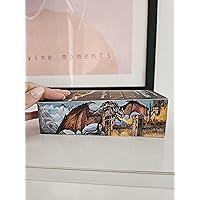
LOVELY ILLUSTRATIONS
July 24, 2026
Классика отличается от остального, что в разном возрасте разное восприятие.
От сказки, к рассказу о детском объяснение травматического опыта.
От сказки, к рассказу о детском объяснение травматического опыта.

May 1, 2021
I love lists! I found a list of some 40+ books recommended by Leo Tolstoy. This book was on that list (see below). Its a Russian fairytale, and its delightful cautionary tale about betrayal and getting something for nothing. The pictures in this addition are also wonderful. I highly recommend this little Russian story.
https://alexandbooks.com/archive/the-...
https://alexandbooks.com/archive/the-...
February 9, 2024
Read in Russian (audiobook).
Displaying 1 - 28 of 28 reviews