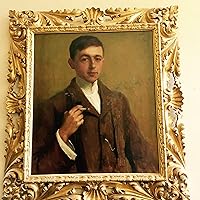
He was young, arrogant, wealthy and in the bloom of health—or was he?
“Undoubtedly one of the best writers of English mysteries and chiller-killer plots.”— The Los Angeles Times
Like any small community, Linchester has its love affairs, money problems, unhappy marriages. But the gossip is elevated to new heights when young Patrick Selby dies on the very night of his beautiful wife’s birthday party.
The whole neighborhood was there, witness to the horrible attack of wasp stings Patrick suffered at the end of the evening. But did Patrick die of a wasp sting? Dr. Greenleaf thinks not. Heart failure, more likely.
Still, Greenleaf isn’t at peace about his death. After all, everyone in Linchester hated Patrick. With the help of a certain naturalist, Dr. Greenleaf begins to think about murder. . . .
“Rendell is awfully good.”— The New York Times Book Review
Ruth Barbara Rendell, Baroness Rendell of Babergh, CBE, who also wrote under the pseudonym Barbara Vine, was an acclaimed English crime writer, known for her many psychological thrillers and murder mysteries and above all for Inspector Wexford.
I was genuinely surprised that Ruth Rendell was really quite amusing in her novels. I found 'To Fear a Painted Devil' most enjoyable. A group of friends meet for a party at a country house, but when one dies of what is assumed to be a wasp sting, the fingers start pointing in all directions. I loved the twist at the end. I never thought I would read Ruth Rendell as someone who has similar traits as Agatha Christie when plotting her murders, but in this stoy I found that to be the case. I loved all the characters as well, especially the ones having secret affairs with each other...
I rather enjoyed this. It's an early entry in Rendell's works, and a non-Wexford. If the handling of character and psychology is less well done than later books, that is unsurprising. Still, all the elements are there -- it is recognisably Rendellian. And once the book settles down to a few of the main characters, the characters do become distinct.
I note some reviews below have found the number of characters introduced at the beginning rather overwhelming. I did find the number of names to remember rather intimidating, and at first sometimes had to flip back a couple of pages. But in a way, I rather liked that sense of overcrowding -- it helped create the atmosphere of a close-knit community, and one that was perhaps too close, with too many people knowing and trying to discover everybody's business.
A psychological thriller. An unliked man, Patrick dies mysteriously and at first it appears he died of heart failure after being stung by wasps. However, Greenleaf a doctor starts to investigate with his friend Marvell. They find out his wife disliked him, most of his neighbors and all with motives.
In the end there is a good twist with the murderer revealed to the surprise of Doctor Greenleaf.
An early work and enjoyable read set in a rural setting.
After delaying for years the reading of my first Ruth Rendell book, I certainly wasn’t disappointed! Rendell is a master at mystery writing…never putting the answers directly in front of you but rather leading you in what might or might not be the right direction. Either way, getting to the end of the book is a lot of fun, particularly if you like the subtleness of British mystery writing the way I do.
Jacket notes: “Gossip in tiny Linchester is raised to new heights when young Patrick Selby dies on the night of his beautiful wife's birthday party. The whole neighborhood was there, witness to the horrible attack of wasps Peter suffered at the end of the evening. But did Peter die of the stings? Dr. Greenleaf thinks not. After all, wasps aren't the only creatures that kill with poison.”
I’m so glad that I never began to read Ruth Rendell’s suspense novels in chronological order, because I’m not sure I would have discovered her many great works. It is not ideal that authors learn and improve on the hoof, but it is often a fact, and to that extent a certain leeway can be allowed. But that requires a degree of hindsight, and others of a series for comparison.
To Fear A Painted Devil was published in 1965, when the author was 35. Her last book, Dark Corners, was published shortly before her death in 2015.
I’m sure most literary agents today, presented with the raw manuscript, would politely suggest, “Don’t give up the day job” (an experience I know something about). It is littered with basic flaws, such as a failure to distinguish between (too many) one-dimensional characters, the absence of meaningful motives (it turns out to be a whodunit), and a highly implausible means of committing the crime.
I understand she was probably finding her way – and, it must be said, her publisher deserves credit for recognising an incredible talent in the offing – but, I reckon you can skip this one.
From January 2012 — Tamsin and Patrick Selby have an unhappy marriage. Tamsin is a beautiful young woman just on the verge of turning 27. Her husband, who also happens to be her first cousin, is very controlling, down to dictating what kind of clothes his wife should wear (plain in subdued colours), whether she should wear makeup (she shouldn't) and how she is to keep the house (immaculate). They live in a beautiful house in the fictional housing development of Linchester, Nottinghamshire. Tamsin has invited their neighbours to a get-together she's organized for her birthday. Patrick is rude to her and the guests throughout, and when he gets repeatedly stung by several wasps, no one is much chagrinned by his plight, nor when he is found dead the next day. The local doctor doesn't believe in foul play until some persistent gossiping leads him to further investigations to find out if there's any truth to claims that beautiful Tamsin had something to do with Patrick's death. There's an interesting sub-plot having to do with a painting of John the Baptist's head on a bloody platter. Good enough story, but none of the characters made much of an impression on me.
Slightly expanded review on my book blog, https://marketgardenreader.wordpress.... This is Ruth Rendell’s first psychological crime novella, published in 1965. No wonder the publishers wanted more. It’s initially extremely confusing, introducing the cast of characters from a small new upmarket housing estate. Some have known each other all their lives, some are newcomers. It’s amazing just how snobbish the public school educated men are. In fact, many of the men are horrid, sexist, overbearing prigs who have taken to heart the belief that women are there to meet their sexual needs, look attractive at all times, cook, entertain and keep the house spotless, while putting up with their infidelities; at least they try to keep those hidden. If necessary, any inheritance may also add an extra incentive for wedded bliss. Oliver and Edward are both in this mould, with Patrick in a class of his own as an OCD neurotic, quite happy to intimidate and humiliate his wife Tamsin. Mind you, he seems to take a positive delight in upsetting everyone else as well.
Of course, the flip side of the coin when it comes to gender roles is that women are willing to put up with all this so they attract and keep a man who can support them financially, by doing their utmost to fit their menfolk’s ideal woman or attract a new man. Of course, the men should never see the effort the women put into keeping up this level of perfection. They have to make sure they’ve tidied up any signs of cooking before hubby gets home and heaven forbid they should notice the smell of perming fluid when they get home. The obnoxious Patrick dictates his wife’s choice of decor and clothes, but she is defiant - defiant, I tell you! - in the matter of her hairstyle. Mind you, her private number plate SIN 1A also doesn’t fit the image Patrick wants to convey and she definitely has secrets.
I particularly liked - or rather, disliked - the subtly humorous picture Ruth Rendall paints of the odious Oliver Gage with his third wife Nancy. He hasn’t ‘trained’ her yet to act as he would wish, though she tried to please him by petty economies which he fails to appreciate. He is fixated on money because he has to support two ex-wives, resentful because he can’t afford to send his two sons to expensive public school Marlborough and an ex is asking to send £50 or £70 to fund a 7-year-old daughter on holiday to Spain while he will be going to Worthing; does anyone go on holiday to Worthing? Even in the 1960s? Possibly a private joke by Ms. Rendell. Meanwhile he inwardly seethes as “current wife” Nancy (he’s already got his eye on a more financially sound replacement) hasn’t properly arranged the £30 curtains (which he considers expensive) and has used the £20 he gave her for a new dress for other things and made herself look unattractive, hot and sweaty while making her own dress which he fears will reflect badly on him with the neighbours. Quel horreur!
The whole book is full of social commentary and it may be dated but it’s glorious.
Published in 1965, this is Rendell’s second novel, a non-Wexford. It starts intriguingly enough but, for most of its (mercifully short) length, it is rather tedious and uninvolving. None of the unhappy marriages, peculiar brother-sister relations or unsatisfactory love affairs is of much interest. (Was she influenced by Iris Murdoch?) The characters have the potential of being fascinating but are not; no character ever comes to life.
The murder method - by bee sting — is far-fetched and mainly of curiosity value, reminiscent of the Golden Age of the English detective story. At one point there is a mention of Sayers’s novel Unnatural Death and one wonders whether it gave Rendell the idea of a murder that doesn’t look a murder . There is a twisted cleverness at work but somehow — for me, at least — it falls very flat. And it is amazing that the killer (who induced the bee to sting) should commit (startlingly bloody) suicide when exposed in order to escape justice — the Law, as such, couldn’t have touched him. So much for Rendell’s claims to realism.
Rendell was (annoyingly) superior about Agatha Christie and particularly sniffy about Miss Marple, but Christie’s At Bertram’s Hotel, published that same year 1965, is rather more fun that To Fear a Painted Devil. It would be 20 years before Rendell was to start producing what — in my opinion — were her best and most memorable books. Her 1985 A Tree of Hands is superb.
This entire review has been hidden because of spoilers.
Ruth Rendell's writing always has just a bit of darkness to it in the midst of the mystery. This book, however, does not have the usual twisted undertones but still is a compelling story. Red herrings abound and the killer is not quite as easy to identify as one would imagine. Has the victim been killed by wasps, died from natural causes (not likely in a Rendell story) or is some secret in the lives of the neighborhood behind it? Read and discover the answer from this master of modern British mystery. A good read.
Rendell's second novel (the first without Inspector Wexford) is a middling mystery that showcases her writing style, but lacks the plotting and characterization skills she quickly developed in her later books It can be difficult to keep the characters straight, and the plot is not especially compelling.
A decent early effort, but not something that will impress those who haven't read Rendell before. Her later books, starting with ONE ACROSS, TWO DOWN, are better places to start.
Tamsin Selby is having a birthday party at her mansion, Hallows. Her husband, cool, aloof, fastidious Patrick gets stung by wasps. The next day he is dead. Not from the stings though, just from heart failure. Or was it...murder? Dr. Greenleaf investigates and after, naturally, suspecting the widow (who seems coldly unaffected) discovers the true murderer. Lovely English village setting, but the, mostly, unappealing characters and contrived plot detract from this book.
not Ruth Rendell's best but a pretty good book overall. there are a TON of characters all introduced pretty much simultaneously, and it takes a little while to get them all straightened out in your head. it's pretty typical Ruth Rendell -- a mix of psychological sort-of thriller with sociological commentary. This one seems a bit more 'dated' than some of her other work.
Gosh, you can tell this is an early Rendell. The plot is OK but the characters have no depth: and far too many are introduced in the early chapters. It is not until the second half of the book that the focus narrows, and her descriptive powers come into their own.
I think that my biggest problem with this book is it was written in 1965 as an obvious tribute to Agatha Christie and I’ve never liked Agatha Christie. I realize that she has followers in 300 countries in 500 languages – I’m sure you could find “Murder on the Orient Express” in Klingon, if you looked – but that doesn’t change my opinion. I’ve always associated Agatha Christie with those “Friday the 13th“ films. (You know: “Hey, let’s go to this abandoned summer campground where there’s a serial killer on the loose who butchers a group of teens every year and there’s never any sort of police investigation!” “Oh, that idea makes me SOOOOOO hot! And if I let you in my pants, I hope you won’t tell everyone and stab me in the back! Hahahaha” “Oh, you kid!”) In Agatha Christie, there is that harbinger of death, Miss Marple; every time you invite her to your house in the country, someone ends up dead; unless it’s some form of population control of the idle rich, I can’t understand why they keep doing it. “I hope you’re going to invite that horrid old bat. I do hate unexpected funerals! One never knows what to pack…” “Yes, quite right, it’s frightful. I know, we’ll invite Derek, who everyone hates, and that fat Frenchman!” “Oh, do, that would be delightful!” We all know the formula and who’ll be leaving horizontally.
Which brings me to this book. A group of suburbanites near Nottingham Forest living in a community called Linchester and a neighborhood called The Circle. The first half of the book is about all the same intrigues as ever, money and infidelity, and we learn who has money problems and who’s boinking whom (or only wishes to do so.) This is 1965 so these affairs are not necessarily consummated in the flesh; it’s left vague but apparently some only lust in their hearts and make secret plans. Then we have the man who almost everyone hates. His wife has a birthday party, the bucket is kicked and on to the second half we go. (No plot spoiler here, it’s on the cover.) A doctor neighbor begins to unravel the mystery with gossip from all the others and we get to a ludicrous conclusion. The book, as well as the neighborhood, is inundated with wasps so we know they’re hard to ignore as part of the plot. (Like “don’t think of elephants” while you’re surrounded by them.)
I like Ruth Rendell even if she’s not a favorite but this book was a miss for me. HOWEVER, if you like Agatha Christie, this could be for you because it follows the pattern quite closely; if you don’t, there’s always “The Texas Chainsaw Massacre” to entertain you.
This was part of the Audible Plus Catalogue included with my membership. I didn’t realise when I chose it that it was only Rendell’s 2nd book and it was first published in 1965. So I chose it 1) because it was free and 2) because it was narrated by the wonderful Brian Cox (the evil patriarch Logan Roy in Succession). It’s quite a retro, old school type murder mystery with lots of characters and no fault of the story, I found it difficult to follow the individuals and their relationships just by listening. It’s the sort of story that would ordinarily have me flipping back a few pages for a recap on who was who, the advantage of a good old book over audio and Kindle as well. So while it was nice to listen to Mr Cox and it was a cosy little murder mystery about wasps in a quaint English village housing estate, it was only a so-so story for me.
This came from a little free library, and it shall return to one. I keep swearing off Rendell, and then somehow one falls into my hands and I give her one more chance. It was short - only 150 pages or so, and I thought it would be a nice break from the heavier stuff I've been reading. This book was dull, and I truly had no interest in who killed the unlikable victim. Book was written in 1965 (my copy was inscribed to Cindy in 1976), but is psychological look at a murder in small upper class British suburb. All the folks in the neighborhood are class conscious and gossipy. The death occurs nearly halfway in, and the fact of it being a murder isn't established until close to the end. It was boring, twenty pages from the big reveal I set the book down to answer the phone -- I forgot about it. That's how little I cared.
I was introduced to Ruth Rendell while taking a college course on English mytery novels. I enjoy her calm writing style. TO FEAR A PAINTED DEVIL was published in 1965, so it's one of her first two books--the first Detective Wexford novel was published the year before. The victim is an arrogant man whom no one liked--even his wife. Death comes after he's stung by wasps, but that's not what killed him. Dr. Greenleaf thinks at first that his heart failed him during the night, but after investigating further, he dicides that the man was murdered. The characters are thoughtful and human. The setting is an English town. You can see the genius that is Rendell in this novel and who she becomes as a writer later on.
This was my first Rendell mystery to read, an escapist novel for the end of the school year. A quick read that I would have rated a little higher except that there were just too many characters for a novel of such short length, and an implausibility to the events that led up to the solution. The sleuth and his wife were completely likeable characters, however, and they definitely carry the plot. I have one more Rendell mystery in my escapist pile, an Inspector Wexford, and I will try that one too. I do prefer a little tongue-in-cheek humor to my mystery novels, such as Rex Stout always brought to Nero Wolfe.
This was my first taste of Ruth Rendell's writing, a stand alone English mystery which I found intriguing, reminiscent of some of Agatha Christie's mysteries.
Patrick Selby dies after receiving several wasp stings at his wife's birthday party. Was his death from natural causes or was it helped along? A lot of people benefitted from his death, including the merry widow. It falls to the local doctor, Max Greenleaf, to figure out the truth.
Rendell makes any disastrous dinner party you've ever arranged look positively successful in comparison to the one in this book... She is a master of tension, awkward embarrassment, and unspoken desire, hate and ambition.
This is Rendell's first non-Wexford novel. It's an excellent Christie-esque tale in which just about everyone hates (and thus has motive to murder) the victim.
One of her standalones, it was (for me) missing Wexford. I didn’t have the same sense of character development or liking for any of the characters in the story, and it ended fairly abruptly.
This is the second book published by Ruth Rendell and it is a stand-alone mystery. Set in the mid-1960s in a Sussex town 50 miles from London, it features a group of neighbors who are way too much up in each others' business. The Swinging 60s has not really reached this part of England, but, nonetheless, it's a Peyton Place of sexual intrigue. There is a birthday party, all the neighbors come, the host is stung by wasps, the party breaks up, the host goes to bed, and is discovered dead the next day by his wife. It is determined that he died of a heart attack, and so the police don't investigate. End of story, yes? Not so fast!
The neighborhood ladies gossip, and the talk leans towards the possibility of foul play. The local GP, who knows them all, discounts the gossip at first, but then begins to realize that the death doesn't pass the smell test after all. He eventually finds out who did it and why.
It's not a bad book at all, but it's not her best work. It's got the explorations of society and class, and how all of that is changing during the turbulent era that was the 60s in England. Many people are starting to have money, but the people who used to have it, the landed gentry, are starting to lose their great houses and land, due to high death and estate taxes. The Big House is torn down and the land is parceled off into suburban chalets and McMansions, leaving the former established order of things in tatters.
Other reviewers have complained about the opening scenes, with a myriad of characters being introduced. It didn't bother me; it reminded me of the PBS/Mystery TV "Morse" and its various spinoffs, where we shift from one group of characters to another, no connection apparent, until a body is discovered and everything starts to come together. Same thing is happening here.
I think the main problem, since no police, and no shrewd and lively Inspector Detectives are on hand, we are left with a reluctant amateur sleuth, the aforementioned GP doctor, who is a bit dull by comparison. Dr. Greenleaf is an Austrian Jew, an outsider in the community, and best placed to understand what is happening around him. He is an intelligent and caring man, and he uncovers what actually happened after the party, but I found I was a bit ahead of him in this case.
Plenty of non-professionals solve mysteries all the time, and I can't get enough of them, but this book doesn't quite get there. But Ms. Rendell was only getting started, and she wrote plenty of amazing books during her long career.
Still, this is a good read, and I would encourage you to pick it up if you are reading the complete set of Rendell.
To Fear a Painted Devil is Ruth Rendell's second novel, and the first not to feature Chief Inspector Wexford (I'm not sure if she intended him to be a recurring character at this point). As I mentioned in my last review, I've embarked on a reread-in-order of all Rendell's published books, and was a bit surprised to find this wasn't available on Kindle (all the Wexfords are). The library also proved fruitless so I had to buy a second hand copy of the rather oddly titled (given this was only her second book) Second Ruth Rendell Omnibus, which includes this, Vanity Dies Hard, and The Secret House of Death. (On reflection, the First Ruth Rendell Omnibus is probably the first three Wexfords.)
Anyway, I'm sure I've read this before, because I think I've read all of them, but I didn't remember it at all. It's a well written and atmospheric story concerning the inhabitants and shifting relationships within a rural community, and the death of the unpopular (particularly with his wife) Patrick Selby. The tone feels a bit different from many of Rendell's later novels, perhaps unsurprisingly when this is such an early one. It's a bit Christie-esque in some regards - the village community, the local doctor, the means of death. Overall though it's not a book I could imagine Agatha having written.
The title relates to a quote from Macbeth - "´tis the eye of childhood that fears a painted devil" - and a graphic painting of Salome with the head of John the Baptist on a plate that terrorises a child, and indeed various adults (it does sound horrible; I wouldn't be giving it house room, personally).
This stand-alone was written back in 1965 & it did show, with it being especially apparent in the relationships between the men & women, & more particularly in the men's attitude to women in general.
There were a lot of characters introduced all together so it took me a while to recall who was married....or related....to who & that never helps me get involved in a story! The characters didn't seem to come into their own & the storyline itself was a bit of a plodder, lacking some of the coincidences & misunderstandings that I've enjoyed in her later novels.
Overall a decent read but not one that gripped me - a bit cosy-mysteryish rather than the warped & twisted tale I prefer from this author.
Primo approccio con questa autrice, a quanto pare molto apprezzata e famosa nell'ambito mystery, ma, al solito, io sono la voce fuori dal coro. Mi sono persa tra i mille personaggi (che fatica ricordare tutti i nomi e i vari legami) e la campagna inglese (l'unica cosa bella del libro), e tutto questo non è stato un bene per la lettura. Spero sia solo un episodio di passaggio, perché la signora Rendell ricorda un po' Agatha Christie (che adoro) e vorrei proseguire alla scoperta della sua bibliografia. Purtroppo con questo titolo è andata male. Peccato, andrà meglio con il prossimo (?).
One of her earliest standalone novels from 1965 but still holds up today, (despite houses costing £7k, no mobiles etc!) It all takes place in Linchester, a small housing estate near Nottingham. A birthday party is being held with the neighbours, but by the following morning, Patrick is found dead, supposedly from wasp stings. It all looked innocent till the neighbours began speaking to each other and finding things didn’t add up. So many characters were a little confusing, but I found the end surprising, and I really enjoyed it.