The fourth and final book in the epic Morgaine science fiction sagaMorgaine must meet her greatest challenge—Gault, who is both human and alien, and also seeks control of the world and its Gate. She will meet the true Gatemaster—a mysterious lord with power as great, or greater, than her own.
Currently resident in Spokane, Washington, C.J. Cherryh has won four Hugos and is one of the best-selling and most critically acclaimed authors in the science fiction and fantasy field. She is the author of more than forty novels. Her hobbies include travel, photography, reef culture, Mariners baseball, and, a late passion, figure skating: she intends to compete in the adult USFSA track. She began with the modest ambition to learn to skate backwards and now is working on jumps. She sketches, occasionally, cooks fairly well, and hates house work; she loves the outdoors, animals wild and tame, is a hobbyist geologist, adores dinosaurs, and has academic specialties in Roman constitutional law and bronze age Greek ethnography. She has written science fiction since she was ten, spent ten years of her life teaching Latin and Ancient History on the high school level, before retiring to full time writing, and now does not have enough hours in the day to pursue all her interests. Her studies include planetary geology, weather systems, and natural and man-made catastrophes, civilizations, and cosmology…in fact, there's very little that doesn't interest her. A loom is gathering dust and needs rethreading, a wooden ship model awaits construction, and the cats demand their own time much more urgently. She works constantly, researches mostly on the internet, and has books stacked up and waiting to be written.
Another world and another gate to close for Morgaine and Vanye, who Cherryh brings back for the fourth and final installment of the Morgaine Saga roughly a decade after the initial trilogy. Many of the gates that connect various worlds built by the qhal even after the catastrophe (time paradox?) that brought an end to their civilization still exist, inviting yet another meltdown. The 'rump' qhal now live in worlds shared with humanity, sometimes peacefully, but often in a master/slave relationship (qhal on top of course).
Cherryh could have continued this series with many more adventures of Morgaine and Vanye, who always face impossible odds to complete their quest to shut down the the world's gate and move on to the next. I was hoping Cherryh would answer some of the enigmas and questions about the gates and even more, about Morgaine, here, but she only gives us a little more; just like the orts and scraps she doled out in the previous volumes. We learn, for example, that Morgaine's father came from an ancient civilization that may have even predated the qhal (although as the gates allow time travel as well as portals to different planets, time is not that meaningful).
While Exile's Gate followed the now rather formulaic script of Morgaine and Vanye arriving on a new world and working on an ad hoc plan to shut down the gate, facing of course all kinds of trials and tribulations along the way. Cherryh did, however, make this one substantially longer. The prose is just as breathless as the pacing as Morgaine and Vanye face one problem only to meet two more, never seeming to have time to rest. Fun and rather novel series, but this last installment did not add much in the way of reveals; I was hoping for a bit more. 3 solid stars.
Gate-time works differently than world-time -- for Nhi Vanye and Morgaine, mere moments passed between when they rode into the Fires at Azeroth and when they emerged at Morund, but for the rest of us ten years had passed.
This is the final (not concluding, but presumably last) book about Morgaine and Vanye. It's the largest in the series -- in terms of word-count, it's probably double any of the preceding volumes -- and the most complex in terms of the number of POV characters and in terms of the situation on the ground. On the world of Exile's Gate, some qhal still remain and still control the Gates, to a greater or lesser degree, at the behest of a power infinitely older and more dangerous.
We still never get inside Morgaine's head -- all of our experience with her is filtered through other characters' observations, most especially Vanye's. The relationship between Morgaine and Vanye is, as always, one of the chief structural members of the story, and we get to see a glimpse of that relationship from outsiders' perspectives; we also, before the end, do learn somewhat about Morgaine herself.
Myself, I'd be thrilled to see further adventures of Morgaine and Vanye. But if this is the end, I'm well-content, secure in the knowledge that they still ride the Gates, but at a place too far for tales to filter back.
A decade after the original trilogy C.J. Cherryh revisits Morgaine and Vanye. It follows the same episodic formula of the other three: new world, new enemies, new gate to close. This one is twice the length of the others and takes a bit more time with the characters, especially the growing will they, won’t they romance between Morgaine and Vanye. It’s definitely got more challenging villains with a bit of depth. She does fill in a few more blanks from Morgaine’s origin and the function of the gates. I really enjoyed the whole series and I see no reason she didn’t write more, there’s definitely still room for more stories.
This entire review has been hidden because of spoilers.
A fitting end to a grand story. A story that I think could go on, and on and on. And I would read them. I love these characters. Really nothing more to say. You like the series or you don't.
Read again. I have no idea how many times I have read this book, this entire series. It is just special to me. I find some new detail each time. I wish the author would continue this series. I would just gobble it up.
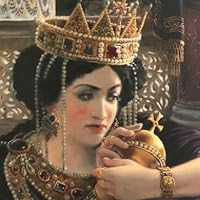
Finally, a cover that truly reflects Morgaine's striking and slightly unsettling appearance, as well as showing her in the practical and extremely functional armor worn throughout the series.
I don't think this book's extra length adds much to the story. Like the previous ones, it reserves most of its action (and many really good ideas) for its last quarter. The earlier sections are deep ruminations and character analysis. While this allows Cherryh to delve into how Morgaine and Vanye create their own enemy, Chei ep Kantory, and drive him into tragedy and mad revenge, this situation mulls very long, drawing away energy. It became a real effort to reach that turning point where things suddenly get moving and they start to have fun storming the castle.
It is only in the final pages when the reader gets insight into the whole of the Gate system and how it has enclosed and cut itself off from the wide universe by paradox or inclination or effect of the system. Outside, humanity spreads among the free stars. The worlds trapped inside the Gate system are on an endless cycle of cataclysm and recovery as ever less skillful civilizations overtake control and crude mastery of the Gate technology. This unveiling, in an exchange between Morgaine and Skarrin, is uniquely powerful and transformative and I wish it had happened much sooner.
When I was a kid/early teen, Morgaine was my other Xena bc after endless Moorcock, the broody, mysterious white-haired immortal with blinding rages & an incomprehensible past being a woman blew my mind. One might argue, all that the author has done is make one little change... but let's pause and let it sink in. Morgaine is a woman in a grimdark sci-fi/fantasy blend and her storyline is pursuing her larger-than-universe quest rather than being womanly or chasing men. there is never even a /whiff/ of her abandonding her quest or settling down. it defines her completely until...
but anyway, for years, I had no idea Cherryh wrote the fourth installment. as soon as I found out, I ordered it on Amazon, but by then, Cherryh has become too serious and slow-moving for me (plus I have quibbles like Morgaine being the /only/ woman with a personality around and all the worlds that she sweeps through being one more sexist than the last). I kept lugging the book around, though, across countries, and finally got to it when in a hospital.
the other cornerstone of the story - the lord/vassal relationship between her and Vanye, also refreshingly played straight - becomes the focus of the last book, undergoing the transformation into lovers and maybe, one day, equals. I was initially very much against it bc why ruin such a good thing with tired old love story?
the thing is, miraculously, it wasn't ruined - it felt like a very natural evolution for the pair. it's a bit like human & Timelord romance - easy to get wrong, extremely hard to make convincing. morgaine & Vanye did lose their heads and pay for it - we cannot be lovers and fools (c). Morgaine lets Vanye do the decision-making and wield her most dangerous weapon and it all goes terribly wrong, but she never abandons him. they both live and learn and through him, she becomes a bit less cast in stone and he becomes a bit more like her, a true companion on her lonely journey :)
while the dialogue was as stiff and thou and thee as ever, the side cast managed to surprise me and even make me care, so that was also a pleasant surprise :))
This entire review has been hidden because of spoilers.
The consummation of this series, written ten years after the original trilogy, is nothing short of masterful. I am in awe of Cherryh's ability to balance complex plots and characters with carefully-chosen language of such simple beauty that it sometimes reads almost like poetry. Morgaine and Vanye have become so very dear to me that it's with a feeling of sadness that I realize I will know no more of their story.
I first read this many, many years ago... I have Michael Whelan's limited edition of the cover hanging at home.. I still want to see more of these two, I re-read Exile's Gate, in particular, every 2 or three years still.
Book 4 (and final?) of the Morgaine cycle. The ending is open with Morgaine and Vanye escaping a doomed world through a gate to a destination unknown. From the start a third character is introduced: Chei ep Kantory. A young warrior left chained near the Gate of Morund with his comrades already killed and eaten by the wolves. Chei is saved by Morgaine and Vanye and serves as their guide through the hostile lands to the Gate of Mante where Skarrin rules. In this world the Qhal use the Gates for a form of bodysnatching. A lot of human rulers are in fact Qhal. When they are old or dying they go through the gates with a human prisoner and so they can take over the body. But Skarrin has still another method of imortality. His essence is uploaded in the system of the gates and when he dies the next person who enters the gates becomes Skarrin. Morgaine has a similar effect installed in the gate-system: the moment she and Vanye pass a gate their bodies are restored to a prerecorded condition. (Used in this book to get rid of Vanye’s serious injuries.) As a guide Chei is not really reliable and after a couple of days the trio is on the run from the troupes of Lord Gault (in fact the Qhal Quiverin). A lost brother Born is picked up but in a big confrontation Morgaine’s sword Changeling is used by Vanye. It’s sort of a portable gate device, but a gate to nowhere. Bron is killed because he rescues Chei who was stubbornly riding at Vanye’s sword side. Chei is furious at Vanye and deserts the duo and throws himself at Gault who escaped the massacre with a handful of men. Chei is captured and proposes a body swap with Gault. Who is from that point on a trio: Quiverin-Gault-Chei. Halfway through the book Vanye is captured and tortured by Gault who wants to get hold of Morgaine’s sword to go against Skarrin. But Morgaine is killing off his men one by one in a sort of guerrilla. In the end Gault and two of his men strike a bargain with Morgaine: they will help her get to Mante and attack Skarrin. This plan succeeds but when Skarrin is killed, he cries: I cannot die. Then Morgaine discovers the setting of the Gates that will lead to the essence of Skarrin taking over the first person to use the Gate. It is Quivering-Gault-Chei who says he feels powerful enough (being three minds) to battle Skarrin in his mind. How this ends we will probably never know… The book is a good addition to the cycle. It’s been years since I read the first three, so I was forgotten that the language was a bit archaic with a lot of “thee’s an thou’s. The relationship between Morgaine and Vanye is a little bit more advanced with a kiss, a cuddle and even a night together.
This entire review has been hidden because of spoilers.
This is the fourth book in a series, and it's the best by far. C.J. Cherryh is a very good author, but the first three books in this series were written near the beginning of her career. This book was ten years later, and her writing has noticeably improved. It's difficult for me to explain exactly -- this book feels the same as the first three, yet it's smoother somehow. If you've read the first three Morgaine books, you need to read this one. If you're a fan of C.J. Cherryh, you may or may not want to read the first three books, but Exile's Gate is worth reading. The plot and personal relationships are easier to understand if you've read the first three, but this book should stand on its own well enough.
The best of the Morgaine books. Written almost a decade after the first three, the quality of writing is improved, and the characters better devolved, and the general story structure improved. Sadly also the last we will hear of Morgaine. A great example of a cross category series. Are they SF or fantasy?
The book was good but didn’t really stand up to the previous three books in my opinion. The tone was just different, which probably has to do with the fact that this was written a decade after the original trilogy. The writing was good and the story was good too but idk…I feel like the first three books were all I really needed, idk why this one felt so different…
Loved this series as a teenager, and was so glad to find she had written a fourth novel. Of course, I would be totally open to her continuing the series.
Chei did not look at him until he was in the saddle, and then he was all shadow, there between the menhirs. He rode away without a word, whipping the exhausted horse with blows Vanye felt in his own flesh. "Liyo," he said then to Morgaine, without looking at her, "I know your reasons. I know everything you would say. But, Mother of God, could we not have let him rest, could we not have tried him—?" "Pity," she said, "will be your undoing. I did this. I have spared you the necessity. For your sake—and mine. And I have given him cause to hate me. That is my best gift. Best he lose his zeal for us altogether— before it kills him. That is the pity I have for him. And best it come from me rather than you. That is all the mercy I have."
Ten years after wrapping up the Morgaine Saga in Fires of Azeroth, Cherryh returns to the character for one last adventure. There’s plenty to like here, particularly in the novel’s latter half, but it’s not hugely effective as a new finale for the series. Perhaps Morgaine’s story could only end with a “the adventure continues” conclusion, but despite some interesting revelations about her origins and relationship with Vanye, I don’t have much of a sense of closure from this one. But, hey, there’s still time for Cherryh to pen another long-awaited sequel!
This book felt interminable and although it's longer than the other books in the series it is in fact not a very long book. The story is a variation on the same story for all the installments of this series, the writing is still evocative and rich, and we get some deeper glimpses of a few aspects of how the world works. The character interactions are fraught and uncomfortable to read about but also the characters have been subtly changing and evolving through the series and that continues here.
A whole host of Morgaine-ish elements get amped up in this final -so far - volume of the adventures of the tragic pair. Leaping blind into a strange world, making friends they'll have to betray, meeting enemies they'll have to get along with, and the strange nightmarish science of the Gates even more in evidence as this is a world where people know how to make use of them and do so ruthlessly, and contrasting souls in one body creating tortuous dilemmas for our long-suffering protagonists.
The Morgaine books, despite their high fantasy trappings — elves, magical sword, medieval Northern Europe-inspired settings — are really intimate studies of the main characters' relationship. (They are also, technically speaking, science fiction — e.g., the elves are actually the alien qhal — so that, somehow, these books are part of Cherryh’s Alliance-Union universe.) Morgaine is Vanye’s liyo, meaning that he has sworn an oath to her that requires him to obey her commands but also implicitly requires her to take responsibility for his well-being (up to a point, at least). But though the oath is deeply serious to Vanye, and Morgaine does him the courtesy of treating it as such as well even though it’s not a thing of her culture, it has been removed from a context where it makes sense, and as such is constantly under strain. Vanye’s problem is that he has sworn an oath to someone whose motivation is completely unfamiliar to him. Morgaine doesn’t care about land or honor or any of the things that his culture prioritizes: she only cares about her quest, and all her actions are judged solely according to whether or not they help to advance it. This means that Vanye’s oath regularly brings him into conflict with what he feels is the right thing to do, something that would not be a problem if he had sworn it to someone from his own culture who would have the same ideas about right and wrong that he does. Given that Morgaine is half qhal, Vanye tends to think of these conflicts as requiring him to deny his humanity, which raises their stakes considerably. However, there’s another force at play here, which is their increasing affection for each other: it’s a little cliched, but considering that Morgaine is the only remnant of Vanye's old life, and Morgaine hasn’t had so much as a friend in who knows how long, it’s not entirely surprising. The push and pull between these different aspects of their relationship gives the books much of their interest and tension.
Otherwise, “Exile’s Gate” is much the same as the first three, only longer: Morgaine and Vanye show up on a new world and the locals try to stop them from destroying their Gate. Even the world is fairly similar to the previous worlds: this is necessary, I think, to put the maximum pressure on Vanye’s oath — he wouldn’t feel that he was betraying his humanity by siding with Morgaine against the local humans if they weren’t part of a feudal society similar to the one he grew up in — but it nonetheless makes the books less distinct than they might be, and sacrifices one way in which Cherryh could juice their interest a bit. There is a twist here, namely that there are more qhal than usual and they are using the Gates to prolong their lives by transferring their consciousnesses into new bodies. But otherwise it’s the usual formula: luckily, it’s a pretty good formula. Even with the longer running time, Cherryh effortlessly maintains suspense, and there are several neat twists along the seemingly straightforward route from A to B depicted in the map at the front of the book. Plus, there are the characters: not just Morgaine and Vanye, but also the locals, who are struggling not just against Morgaine and Vanye but, often enough, each other. Only the final boss villain is lacking: we don’t get enough of a sense of him during the book to give the final confrontation the heft it needs. Still, this is mostly the story of Morgaine and Vanye, and is quite successful as such. While I recognize that there was no need for another book after this one — at best, it could only be a rewrite of this — I wouldn’t have minded reading it anyway.
I read the other books of this saga as a young adult. I liked them very much and never forgot Morgaine, Vanye and their endless quest. I discovered Exile's Gate only some time ago - it has never been translated into my language - and I was so happy to find a new piece of the story that I read the book in one shot. Then, for the first time in all my life, I felt the need of translating the first chapter in Italian - for my own pleasure, of course, as I'm certainly not a skilled translator (as you should have yet understood). To make a long story short, I haven't yet been able to stop... I'm now translating chapter 13 and I like this book more and more. The characters are amazing. Vanye is likeable as always, and I like Chei, Bron and the rest of friends and enemies and enemies/friends very much too, but in my opinion is Morgaine whom we learn to knew more than in the previous books. And finally we can truly love her, too. I don't want to spoil anything, so I'll say only a thing: I am really enjoying chapter 13, because here there is some Clint-Eastwood-western attitude. I highly recommend this book, so as I have always highly recommend the Morgaine saga. My only regret is having discovered Exile's gate too late, so I can't speak about it with anyone. Sadly, I have no hopes to find someone to speak about it in my own language.
FAILMEME, INO, BUT THERE'S A THREAD ASKING FOR CANON RECS ABOUT HIGHER-RANKING WOMEN AND GUYS WHO ARE SUPER DEVOTED TO THEM, AND IT SEEMED LIKE SOMETHING MEME MIGHT BE INTO.
I'M USING IT AS A JUMPING OFF POINT, BASICALLY, AND GOOGLING EVERYTHING/LOOKING IT UP ON GOODREADS TO SEE WHAT NON-FAILMEMERS SAY.
JO WALTON AND OTHER REVIEWERS I LIKE TALKED ABOUT THEM POSITIVELY, ROMANCE EVENTUALLY BECOMES CANON IN FOURTH BOOK AFTER UST IN FIRST THREE. INTERESTING PREMISE.
The first time I read it, half a decade ago, I gave it 3 stars. A reread made it better. But it does need to be said, that for a fourth volume, written near a decade after the third and intending to end the saga, it actually ends on a massive cliffhanger and with much more questions and the certainty that the journey is far from over.
Perhaps that's the intention, and I wouldn't have minded more of Morgaine and Vanye, but alas, we never got more.
"In the opal dawn, in the mist, arrows fall like black sleet on flesh and steel, and thunder on wooden shields, finding chinks in the failing defense."
This passage serves as one more example of the strength of Cherryh's prose; how simple, how evocative, how unmistakably powerful it can be. At times, this dedication to description borders on poetry. At times, that description gets in the way of (or entirely supplants) the plot, but more on that later.
The battle above serves to introduce two new characters central to this final tail in the Morgaine Saga: Chei ep Kantory and Gault of Morund. Other than filling the roles of catalyst and antagonist, they provide a point of comparison and contrast to Morgaine and Vanye. This is handled primarily through exploration of the dichotomy of their relationships. Both pairings have elements of liege/vassal and master/novice, and the tension introduced by making such a contrast casts our protagonists and their own bond(s) in a new light.
The perspective of these new characters also offers an unparalleled opportunity to examine the growth of Morgaine and Vanye. They change. They try new things. They make mistakes. They pay the price. The reader is invited to take part of the emotional journey with Vanye; experience his frustration, his commitment, his regret, his hope, his fear. It's part idealized exploration of the warring values of liege loyalty and concern for the person you care about most in the world; part fumbling journey of love outside of class/status boundaries; partly a tale about two friends trying to complete an impossible task. It's all of it achingly human and wonderful, to boot. Rejoice, despair or be infuriated; agree with it or not, it will hit the reader right in the feelz.
That having been said, it runs a bit long. As Goodreads librarian Derek mentioned in his review, the bulk of the action occurs in the final quarter of the book. This isn't bad in and of itself, nor is it unusual for those familiar with Cherryh's style of writing. The problem comes from how much filler exists in the first two-thirds of the book. So much happens in the last quarter of the book, it leaves a reader wondering two things: 'why did it take so long to get here' and 'why aren't these events being rendered with the same attention to detail/level of description as the first part of the book.'
TLDR: two thumbs up for fans of the series. While "Exile's Gate" is the strongest entry in the Morgaine saga, it is not recommended as a stand-alone. Without the history of the first three books, the nuanced revelations about gate-technology, qhal-society and the Big Bad at the end of the novel will go unappreciated. Most importantly, without the investment in Morgaine and Vanye, the emotional impact of their evolving relationship will go unrecognized and that would be a tragedy.
A few more examples of Cherryh's prose and her ability to deftly summarize differing realizations across the spectrum of humanity:
"But this priest did not have any gentle look. This one was damnation and hellfire, and met them with the uplifted cross of a sword."
"He did not know why, except their kindness had broken something in him which all Gault's threats had never touched, and he was terrified it was all a lie."
"That was the safe thing to remember. That was a cold time, a numb, down-to-the-rock time, when a man learned that only life was valuable, and only his own life was truly valuable. His comrades kept the wolves from him. That was all. They were there to talk to and fill the silence while they were alive, but a man only wanted to be alive a little longer at the last; and if a friend was the price of that, then a man learned he would pay that, would pay the wolf-price with his dearest friend or with his own brother. That was the safe thing to remember..."
This last book in the series is the best. Something unusual as most of the genre is littered with 3 or 4 star first books that get progressively repetitive or fall in quality with each book.
I read the first three as an omnibus and was very confused.. here is an explanation of those first three books more than a review of this one..
The main hurdle in this series is that the first two books are very hard to follow. We have two main characters:
Morgaine: a wanderer between the worlds from a high tech background. She is on a mission to shut down all the time/world gates left over from a Universe spanning empire of the elven race known as the Qual, who had mastered the gates, time travel, and even downloading their memories into new bodies to achieve what looks like immortality.
The problem with the World gates is that while they allow for instantaneous travel between worlds and can be harnessed as a power source, they also cause environmental damage to the worlds they are linked to and over time cause whole realities to collapse.
Morgaine uses a high tech key and weapon made to look like a sword. It not only destabilizes and destroys the gates, it can be used as a weapon ( not very controllable weapon, it creates a mini gate that sucks whole armies into null space)
In the first book she meets Vanye, who while not as crude as Conan the Barbarian, definitely comes from a world Robert E Howard fans would recognize. He becomes bound to Morgaine and obsessed with proving his worth as a servant/ warrior...while also falling in love with her over the course of the first three books. Much confusion is created by any high tech devices as they are very vague in their description and everything is told from Vanye’s viewpoint as “magic”.
Morgaine on the other hand is trying desperately to both hold onto Vanye as a companion while simultaneously pushing him away for fear of getting too attached and having to leave him behind when she shuts down a gate to leave the world for a new one.
At the end of the first omnibus they finally resolve and break the tension. Morgaines mission is still the most important thing..but Vanye is now a companion dedicated to her and the mission...and not just a servant she will cast aside later.
In this book we get a much better glimpse of what they are up against from the remnants of the Qual AND a lot more progress on the romance front in their relationship.
Overall the best for plot pacing...and it helped I was able to follow what was going on finally.
9 years after the 3rd novel in the series, Cherryh returned to the world of Morgaine and Vanye (or should I say worlds). I did not wait as long - I read the previous one just 6 years ago - I had been trying to read all her novels in some semblance of order so it had to wait a bit.
It starts where the previous one finished - with Morgaine and Vanye crossing into a new world. But before we see them, we see the world they are coming into - a brutal world where the Qhal keep the humans under their thumb (and the humans revolt occasionally). Part of the story is told from the perspective of the new characters in this novel (both Qhal and human), some of it is from Vanye. As usual, we don't get to hear Morgaine's perspective (which may be a good thing - or a lot of things will get a lot less mysterious) although I was hoping that we may actually get it here.
On the surface, it almost feels like more of the same but under the usual story of gates and horses, there is also a lot of backstory about ancient races, about Morgaine's parents (with her mother coming from the stars and some of the other clues in the series, it feels almost like this is supposed to be another Union story) and about how the worlds ended up the way they did. There are battles, both with swords and with other means, there is love and betrayal and and open ending - allowing for a lot more novels if Cherryh ever decides to write more.
And then there is Vanye - who is so besotted with Morgaine that half of the time he sounds like a teenager who does not know better (and worse, Morgaine finally lets herself admit some of her own feelings which leads to an almost disaster). This newly found connection is almost amusing to watch - even when it gets annoying in places. But it also adds a new dimension to their partnership - not because of the love story but because of how Morgaine reacts to it and what she does (and does not do). I'd have loved to see how that develops on the next worlds...
It is a good continuation of the series and it may even work as a standalone novel (although a lot of the rich tapestry of the past will get missed that way). I am not sure it was strictly necessary - the previous 3 novels worked as a trilogy and that one clarifies and adds more to the backstory but it does not really close the story. And yet, I am very glad that it exists.
Une fin très solide pour cette série ! Le niveau remonte après un tome précédent assez médiocre.
Cette fois, on retrouve ce qui fait la force de cette univers : une ambiance si particulière, des dilemmes moraux, des visions apocalyptiques et surtout...Morgane !!!! On en apprend plus sur elle et surtout : elle ne disparaît pas pendant toute une moitié du livre.
J'avais un peu peur en voyant que la relation entre Morgane et Vanye lorgne du côté du romantique/sexuel. Heureusement, ça n'affecte pas leur dynamique globale. Et c'est tant mieux parce que leur dynamique renverse vraiment les clichés habituels de la fantasy : Vanye est la conscience de Morgane, il se retrouve souvent en détresse et elle doit le sauver, elle est stoïque, il est plus émotif... Ils sont des frères d'armes, unis par un but commun.
Le fond reste assez sombre, mais l'autrice gère tout ça avec pudeur et retenue, ce qui évite d'en faire des caisses.
Bon, il y a quand même des défauts :
-De nouveau, la structure des livres reste assez similaire. L'univers ressemble beaucoup trop aux précédents.
-La place des femmes...misère, misère. (je dis ça à chaque fois). Mais là c'est pire. Les seules femmes qu'on voit sont des servantes (et la narration le remarque même). Et le pire du pire, c'est que dans les tomes précédents, Morgane était respectée et inspirait la crainte. Mais là même pas, on a une caricature de prêtre chrétien qui la traite de sorcière, on lui donne du "femme retourne à la kuisine..."
Au final, on sous-entend que si Morgane est l'exception, c'est parce qu'elle est une femme d'un autre monde. Sauf que c'est drôle quand même, mais dans le vrai Moyen Âge, beaucoup de femmes ont réussi à s'imposer et même à combattre. Et elles n'avaient pas d'armes futuristes. Juste leur force, leur ténacité et leur jugeote.
Bref, ça reste une bonne saga que je recommande de lire (au moins les deux premiers tomes). J'ai beaucoup aimé ce mélange de fantasy et de science fiction !
Exile's Gate begins with two riders and a world gate. One is dark and rides a pale horse, the other, pale on a grey horse. It ends the same way. This is the doom laid on Morgaine and chosen by her companion Nhi Vanye.
It is a harsh and unforgiving tale, full of exhaustion, betrayal and horror. And of love, devotion and loyalty in the face of those extremities. The story resumes the quest to destroy the gates which threaten time itself on this world and on all worlds. Ten years may have passed for the reader, but for the protagonists the peaceful forests of Azeroth are still fresh in their memories.
The first portion of the quest lands Vanye and Morgaine with another rescued stray, Chei ep Kantory, last survivor of a doomed rebellion, saved from the wolves, but whose relationship with the travellers ends ultimately in misunderstanding and blunt dismissal.
It is Chei's reaction to his dissapointment and dismissal which so complicates the final climactic confrontation, where much is revealed about Morgaine's backstory, as she contends with gatemaster Skarrin.
I listened to an audiobook, which was well read and dramatically presented. As is usually the case with Cherryh's style, there is an intense focus on the relationships between the characters, whether as allies of as enemies. Another excellent tale by one of my favourite authors.
Genuinely some of the best fantasy / sci-fi I’ve ever read—in a league far above what is filling the shelves now. Why is fantasy written before the 21st century so much better than it it generally is now? Cherryh’s style leans toward a Tolkien-esque feel, yet incredibly individual and spends a lot of time developing characters and diving into their inner fears and lives.
Where The Dreaming Tree (my favorite of Cherryh’s so far) is beautiful and bittersweet, centered on love and family and light, this series feels desperate. It’s a quest story, an adventure, but not the ‘fun’ kind. Its characters are wildly complicated, flawed, some merciless, and one very very loyal oath-bound Vanye. His and Morgaine’s mission is one that leaves them exhausted and often unwilling murderers, and half the time uncertain if they’re even doing a good thing. The world building in this series is incredible, the ease of languages and the confident way Cherryh establishes characters and cultural worldbuilding in a way that always works and never feels off.
Everything about her writing is incredible and far-reaching in time and space, and deserves more notice among modern fantasy shelves. I’m determined to read everything she’s ever written.
The last in the series and some questions do get answered as Morgaine and Vanye travel through another world to close another gate.
Several questions regarding Morgaine, the creation of the sword Changeling and even the gates themselves are finally revealed. But this time, there is also a character that may precede the gates and Morgaine must find a way around his centuries if not millenia-old protections.
It seems excessively long at times as the local character Chei - who the reader spends alot of time in his head - goes from rescued by the pair to travelling with them to racing to the Changed Gault in order to get revenge for his brother, Bron's, death by Changeling. But it does give the reader an opportunity to see Vanye and Morgaine interact from an outsider's perspective.
The end - as before - has the pair jumping into the gate and travelling on to the next world and adventure. It seems as if it was left open-ended so that Cherryh could add another adventure if a plot struck her but another book or even short story was published. And perhaps it's better this way. It did get to seem a bit formalistic towards the end.
I picked this book up on a whim at a small used book store. I was looking for a hidden gem fantasy series, and I am glad to say I found one.
Morgaine and her companion Vanye are on a quest to close the Gates, magical portals between time and space built by an alien race known as the qhal. The Gates pose a risk to humanity, time, and space.
To begin, Exile’s Gate is book 4 in the Morgaine series. Something I did not realize on starting the book. Luckily, the book contains a short prologue which explains the core concept of the Gates and Morgaine’s mission, and the rest of the book functions well as a stand alone adventure. The concept of the Gates is strongly reminiscent of the Stargate series (though the Morgaine books predate that franchise by over a decade).
I enjoyed Exile’s Gate a lot, and plan to seek out the rest of the series to read in the future. I am excited to continue the series. The writing could be a bit obtuse at times. Occasionally I thought two characters would be having a normal discussion, only to find out it had been a heated argument.