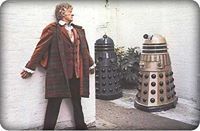
From the "If you find science fiction films thought-provoking, this could be the book for you....The scope of the book is wide, with a good grounding in basic physics and biology, and a lot of other information besides." New Scientist "The idea of using science fiction films to convey science in an interesting way is sound, and anyone preparing a course using the genre should at least consult this book." Nature By revealing the facts behind the fiction of some of the finest films in the sci-fi genre, Fantastic Voyages offers a novel approach to teaching science -- namely, it uses scenes from science fiction films to illustrate fundamental concepts of physics, astronomy, and biology. Each film scene depicts a scientific principle -- or its violation-reinforcing concepts that are taught in more traditional ways. The chapter Electricity and Magnetism discusses the use of computers in Blade Runner. Within Astronomy, 2001 is examined as it relates to ancient astronauts. And what could be a better choice for the chapter on evolution than Planet of the Apes. Helpful end-of-chapter exercises are included, together with more than 20 movie stills. The new edition will have add material on astronomy and astrophysics as well as discussing several movies that have come out since the publication of the first edition.
If you're a science fiction fan, the last 100 pages of this book are very valuable, summarizing and discussing a number of old classic science fiction films that I otherwise wouldn't have known about (many are very old and in black and white), and even compare these films with the books they were based on, if there were any.
The rest of the book is a mediocre attempt (and by "mediocre" I mean compared with other books that try to do the same thing) at providing an overview of all of scientific discovery. There are occasional references to science fiction films that often seem a bit too critical and close-minded.
Got this out of the library because I'm considering designing a course about science and science fiction, and was looking for some inspiration. Still not sure if I'm actually going to end up teaching that course, but if I do, I know exactly how I'm NOT going to teach it!
This book does not teach science fiction. This book does not teach science. At best, it recites lists of scientific facts and formulas that the reader is rarely given enough context to actually understand. And as for its treatment of science fiction films, there is a lengthy appendix with film reviews, but the films and the science seem to be kept oddly separate. The reviews have little to do with the science of the films, and the science-y section of the book rarely mentions the films, except for brief pieces of snark. Yeah, we know Terminator 2 isn't a science documentary. Telling us that isn't interesting. What would have been interesting would be to have looked at where and how science is important to the films' storytelling, and to think about ways in which we can reconcile science fiction cinema's frequently wonky science with the kinds of speculation (inherent to both science and SF) that the films encourage us to participate in. But that's apparently a bridge too far for this book. Oh well. Back to the drawing board. (And maybe some Michio Kaku. Now THERE'S a scientist who knows how to write intelligently about SF!)