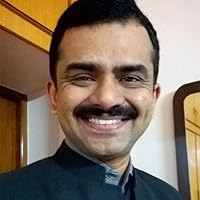
Pavan K. Varma is a former Indian Foreign Service officer and was an adviser to the Chief Minister of Bihar, Nitish Kumar, with cabinet rank. With effect from June, 2014 he was a Member of Parliament (Rajya Sabha) until July 2016. He is currently the National General Secretary and National Spokesman of the Janata Dal (United).
Varma is a graduate of St. Stephen’s College, New Delhi where he studied History (Honours) and received the first position. He was President of the St. Stephen’s College Debating Society as well as the star debater and elocutionist of the University of Delhi. He also won the Sir CP Ramaswamy Aiyar Memorial Essay Prize at St. Stephen’s. Subsequently, he acquired a degree in Law from the University of Delhi.
He joined the Indian Foreign Service in 1976. His career as a diplomat has seen him serve in several locations, including New York and Moscow. In New York, he was with India’s Permanent Mission to the United Nations. His assignments in India include that of Press Secretary to the President of India, Spokesman in the Ministry of External Affairs, Joint Secretary for Africa and Director General of the Indian Council for Cultural Relations, New Delhi.
Brilliant. Absolutely brilliant. A must read for all Indians.............perhaps should be a part of curriculum in all the schools. This book is a notch above "Being Indian" and "The Great Indian Middle Class" (both outstanding books) by the same author. It is evident that the author is pouring his heart out. And how well he does it. One can relate to almost everything that has been written. The book is "riddled" with gems. It raises some questions as well. While commenting on the 1997 Commonwealth Summit, the author makes a pertinent point that begs an answer: "why my prime minister, who represented the will of billion free people, acquiesced so effortlessly in an act of open deference in a conclave supposed to be of equals". However, there is no rancour. He concedes the point that Commonwealth has "probably done more good than harm, and helped nations move beyond acrimonies of the past". He defines mother tongue as a "psychology, an environment, a source of cultural and cognitive sustenance, an emotion, a bond, and many collateral things". He doesn't deride English either as a language. In fact he recognizes English as an "indispensable tool to interface with a globalizing world". What he advocates is "the right balance between acquiring a working proficiency in the foreign language and accord respect, acceptability and pride of place to one's own language". He even takes on Amartya Sen. He disagrees with Sen's assertion that "identity can kill". He goes on to state that "Diversity must not be trivialized and devalued......". At the end of the book he quotes President Sarkozy of France, "A clash of civilizations will not be averted by forcing everyone to think and believe alike; cultural and religious diversity must be accepted everywhere and by all" to drive home a pertinent point.. Varma rightly concludes that the "clash of civilization" will take place if there is a pressure to homogenize.
If Mr. Varma's earlier work, "Being Indian" was descriptive of the status quo (how Indians are and how, possibly, they came to be this way), "Becoming Indian" is profoundly prescriptive. The author expresses his heartfelt anguish at the withering of the vibrant Indian cultural ethos due to colonization by the British. Under the assault of Macaulayism, the author asserts, the Indian elite's acceptance of the supremacy of western culture, language and philosophy meant that India's subjugation by the colonial power rule was complete and this has cast a long shadow over subsequent sub continental developments. According to the author, excessive lionization of western achievements and culture and a simultaneous disavowal of Indian culture, customs and languages have reduced the Indian social ethos to a caricature with blind imitation of western cultural and social mores as its defining characteristic. It has engendered an obsession with English and thus has arisen a situation where facility with the language has become the yardstick for education and refinement. Inevitably, and tragically in a society steeped in inequalities, this also implies English has become a tool for social and financial exclusion. While this is appalling enough, the author says, the promotion and elevation of facility with English to the level of aspiration has come at a great cost- a weakening of the socio-linguistic and cultural moorings for the elite who have access to English education and have adopted the language , and an ingrained sense of inferiority for the rest who do not but aspire to. The author concludes by asserting that tis’ a sad state of affairs and needs to be addressed urgently, lest we lose our millennia old cultural and linguistic legacy completely and become an ersatz, uninspired and uninspiring, unthinkingly imitative repository of western values and culture- neither comfortable in our own skins, nor accepted as equals by those we seek to emulate.
"Copies, however good, cannot be as valuable as original."
The book has definitely added dimensions to my thinking regarding identities, culture, homogeneity and diversity in the society. It has provoked me to ask myself some difficult questions and brought some things into focus which were lost in the background.
It also makes me question whether we as a country are adopting a better approach to resolve cultural differences among diverse communities than the western countries which are trying to co-opt all of them to become a homogeneous state.
I liked the book even though sometimes it reinforces the same idea again and again, which becomes a bit of drab. But when the matter comes back to my mind, it forces me to introspect & to learn.
Pavan K. Varma’s most recent book, Becoming Indian, argues that cultural freedom has eluded formerly colonized nations, specifically India. He sees a need for a cultural revolution in India. Although it reads at times like an extended opinion piece, Varma makes convincing arguments highlighting the importance of reclaiming language, architecture, and art in a way that empowers indigenous knowledge rather than oppressing it. He examines concepts and examples related to language, architecture, and art with regard to modern Indian history, contemporary events, and personal experiences.
Varma believes that the real strength of empires lay in the colonization of minds, and he views modern history as one that has resulted in cultural and ideological consequences. He explores how English has become a tool for upward mobility and questions the cost, as the loss of one’s own language is seen as a gain in India. He uses the example of young people performing Shakespeare in English with no knowledge of theatre in their own languages to illustrate this pervasive ignorance. He also compares the success of writing in English to the sure failure of writing in Indian mother tongues to illustrate a flaw in today’s Indian value systems. Convincingly, he critiques the concept of providing important information, such as health and traffic signs on the highways, in English.
Although India has been independent since 1947, Varma argues that colonialism persists in the realms of language, politics, and self-image. Varma believes that globalization is leading to the desire for a homogeneous identity. To counteract this, he believes it is important to know one’s cultural roots in order to move forward into the future.
From a feminist perspective, it is interesting to note the ways in which the British have historically seen Indians as effeminate, and thus treated them with less respect. The power dynamics within post-colonial societies are especially tricky as colonization has already permeated people’s minds. According to Varma’s arguments, what may be necessary is not only a contemporary Indian cultural revolution but also one that involves all sectors of society, from the lowest to the highest castes and socioeconomic backgrounds.
2.5 There was a lot of good information presented and I agree with the main points that the author asserts. The writing, however, was rather laborious and unenjoyable. The author was also hypocritical at times, such as stating that one historical character can't be judged because he was merely a product of his time while freely judging other characters. There were also some assertions that were both arrogant and inaccurate, such as the claim that while in other parts of the world they hadn't yet developed a language for communication purposes, "Indian thinkers had come up with a vision of aesthetics that encompassed every aspect of artistic endeavor." Unfortunately the nature of the writing style and presentation of the valid points within this book may prevent readers from hearing and seriously considering those points.
A biting evaluation of the deep and continued impact of colonialism on Indian culture and psychology.
Verma laments the fact that Indian languages today are forgotten, mangled or cast aside as "low class" in favour of English. He talks about the lack of care applied to the preservation of Indian art, music, history and culture - although "European style" artistic sensibilities are in vogue in modern India. He characterizes many Indians - in the past and today - as sad parodies that mimic the very people that once subjugated them. He talks also about the deep rooted conviction that Colonial rulers felt about their inherent superiority (an attitude which prevails today).
I felt that there were many nuances of Indian history, culture, language that I could appreciate better after this book, because the author chooses to share a rich and interesting repertoire of detail. He also makes a lot of ironic observations about everyday India - which make you wake up to things that you already knew but hadn't perhaps thought about or stopped to question.
Some choice quotes: "dominant cultures consider their domination normal, even morally good and uplifting, and have the means to project this message globally ...everything that is precious to you must belong to one of two poles: exotica or spécialisés study. Everything precious to him must be a part of your normal education".
At times, however, this book does feel like an extended bitter diatribe which few practical solutions. (For example his suggested way of saving Indian languages is to educate kids solely in their native language until 6th grade which is when you can introduce English - not sure this would do much to ease the babel problem given 20+ official languages, and not necessarily conducive to Indians fitting into the globalisation revolution). Some sections also do drag as he has a tendency to list an overwhelming number of examples to illustrate every tiny point.
Overall "Becoming Indian" is an insightful and interesting read that provides much food for thought. Not particularly pragmatic, but does at least make us question the attitudes that prevail today.
When you come across something which speaks the same language as you think it leaves you speechless and you admire it. Same goes for this book written by Pavan Varma. It is undoubtedly the best non-fiction book i have come across till date. It is a mirror in which we can see ourselves and we must try to re-organize ourselves after seeing ourselves in that mirror. It talks a lot and lot. It starts from the time Lord Macaulay to the time Chandigarh was designed by a non indian after independence. It starts from time first british landed on indian soil till the time our first PM gave first speech of our independence in a language unknown to most of indians. Some of us feel proud to be called English like but we must not take them as pride rather than a compromise on our part. Author also talks about our rich culture and also convinces with his amazing facts that all that happened during our freedom struggle has left us struggling till now. We are lost in an island where we have assumed everything around us to be best except the thing which we have. It has left us in a wild goose chase with no fruitful future. This book is very well researched and the author presents some of the rarest facts about people and their behavior. I wouldn't call it a condemned act of abuse but it is a call for us to re-organise ourselves.
Well written, though at time quite long winding and excessively indignant about British slights on Indian culture, architecture and literature. What defeats the purpose of the book is the author's recommendation that all children in India must be compulsorily taught Hindi, even those children whose primary language is not Hindi. Substituting one kind of cultural imperialism for another is hardly a solution to identity issues and regional issues in India. To summarise, Pavan Verma makes a very good case to empower our own cultures (not culture, cultures)rather than be perpetually in awe of western attitudes and opinions, but would lose an discerning reader's respect when he talks about how every Indian should know Hindi.
the book turned out to be quite dfferent from what i had thought when i picked it up. its more about indian immigrants in UK (and indian 'elites') than about indians in india. i had hoped it to be focused on what it means to be indian in india and how we hold almost everything western on a pedestal without giving it a second thought.
While the whole book is an interesting and informative read, I found the chapters titled "Colonial Amnesia: A Tale of Two Cities", "Creativity and Distortion" and "Within the Global Village: Asymmetry and Co-option" to be most insightful.
This is one of the best piece of work on India for the beginners. Who want to know India in one book should read this book. And also those who are starting to know. I must say this book has changed my perception about India. Very big thank you to the writer.
This was a thoughtful yet readable book on impact of colonialism on India. Starting with the personal, he has covered a no. of aspects. And I loved the portrayal of Mahatma Gandhi as a confident anti-colonial. Despite so much being written on him, this was something new to me.
There is some overlap with his recent book The Great Hindu Civilisation: Achievement, Neglect, Bias and the Way Forward There are a few issues:- a) Ironically, the book is written in English. So was J.Sai Deepak's book :) b) Like J.Sai Deepak, while defending indigenous practices, he takes things too far, especially in the last chapter. Which is a bit surprising since the author is from a Left-wing (clearly socialist) political party. c) Reverse racism is mentioned briefly but needed to be discussed more. Currently I admire the West for making changes at all levels and all spheres - social as well as political for combating racism. The situation is far from perfect but compare that with the Middle East's treatment of immigrants and "kafirs". d) He neglects to consider and discuss the impact of Islamic colonialisation of India. But, still an excellent read.
The book delves deep into both our psyche and our history, hunting for the answers that I asked in the post Urban India: The English Republic... or Macaulay's Children. It starts from colonial rule, and the introduction of English education. It traces how jobs became dependent on knowledge of English; how cultural imperialism imposed its ugly head on our ancient land, and the attendant inferiority complex that became associated with being "Indian". Hence the apt title of the book: Becoming Indian. The book very successfully traces how the ugly combination of livelihood dependency on English, and constant debasement of everything Indian by the British became associated in the minds of the people with western superiority. This is a link that still holds powerful sway over India - especially over the teens, the 20 and 30 -- something generation - such is the ferocious power of the cultural imperialism that the British let loose on us. That this has been exacerbated in recent years by western television, movie and economic might does nothing to exculpate either us Indians or the British.
The book into the modern times and tackles head-on the avowed elitist viewpoint of English superiority, and the habit of educated Indians to regard anyone who is not fluent in English with utter disdain; as though it is not possible to succeed without being as fluent in English as an Englishman. It forcefully makes the point that while knowledge of English is indeed a needed asset, it cannot be an Indian language. It is indeed a fact there are innumerable nations that are succeeding economically without sacrificing their heritage. And the best way to earn the respect of the world is to respect your own heritage and culture, rather than ape an alien culture.
The hallmark of the book is the study of the cultural degradation and destruction wrought by the British, resulting in the interruption of the natural development of our art and culture, and its transposition into a reactionary phase. This can even be spotted in modern times, with the reactionary anti-valentine's day protests that happen every year. By the way, we Indians have never needed a Valentine's day to tell someone we love them; strange that such a step back can be regarded as a development by our youngsters! (My personal opinion - not in the book).
Inscribed on the secretariat at North Block are the lines: "A Liberty will not descend to a people, a people must raise themselves to liberty. It is a blessing which must be earned before it can be enjoyed". Niall Ferguson, the Harvard historian calls these lines 'the most condescending in the entire history of the Empire'. This book written by the erudite Ambassador to Bhutan is based on the premise that culture and identity of India needs to be reclaimed as a matter of national pride, unity and collective identity.
Peppered with interesting vignettes and well dug out facts about historical personalities, with some contrarian insights to their 'image', the book deals with 'truths' usually ignored: our rapid assimilation of a western tradition in our cultural and linguistic space while turning away or looking down on the local aspects of ourselves. The contention being that we'll be a second rate power in future if this is not checked.
The author is particularly scathing on the language front, reminding us that we are the only major country which broadly speaking doesn't read and write its languages for commerce and administration and also that English being our secondary language, we make errors in grammar and pronunciation much to the 'humour' of our western audiences. The continual breeding of elitism due to the gap between the english taught and those who are not makes matters worse as this affects our self-image, fabric of social class, and the opportunities available leading to exclusion of vast segments. The author talks about introducing English in the secondary school level and making Hindi a compulsory language, proposals that are not likely to excite a lot of people. One may suspect that the author is raising a false alarm looking at the attention we get and the destiny that India has in its reach but to simply write off his points may not serve us well. If anything else, for the insights available in this slim read, it is worth the effort.
The book is a deep examination of culture and identity. Verma's focus in on the effects of colonization on the psyche of a people, the class structures it creates, and how they unknowingly get perpetuated even years after the end of colonization. He argues that British policies in various areas served to undermine the local religion, knowledge system, language, belief structures, etc. and then replaced it with what the colonizer wanted. (Not very different from how a foreign power first demonizes the local ruler and his systems to justify the occupation. Think of the US in Viet Nam and Iraq.) His examination of the dominance of English in the country and how it has become a means of social and economic exclusion is powerful. Apart from language, he applies his thesis in the areas of art, dance, architecture, and finally on the creation of an individual’s identity. He also shows, very interestingly, how the locals are co-opted in the process and that is how it carries on unless conscious efforts are made to break it. It is another story that even 60 years after, Indians have been unable to throw off the actual or perceived yoke of colonization. Verma’s book will go down as an effective riposte against books that aim to whitewash the effects of colonization. He also has very good command of the language, and if you like to read good English, this one is for you.
I loved the book for several reasons. As a nation, we do not appreciate the traditions we have inherited (linguistic, social, intellectual). He's making an important point here that Indians have come away with the feeling that everything western is somehow superior to what is Indian. The book is repetitive in some places, I noticed, but overall I think what he says is of great value. We've got to be grounded in our traditions and our culture before we figure out what to borrow from others.
From the point of view of writing and literature alone, this has cost India in a BIG way. Please know that there are fewer and fewer translators from our regional languages into English. What doest this mean for India? It means that average writers in English are being read across the country. But writers of eminence in the vernacular are not getting heard enough. Hello....!!! This means someone of the stature of Kafka or Dostoyevsky does not get read in English. That is a big loss for generations of readers. To one of the people who posted here, please, please read the book. It's not conservative; I don't think it's prescriptive either.
I think the man has made strong arguments a few of which moved me to tears; Shashi Tharoor's upcoming book (Nov 2016) is probably going to reinforce a lot of what is being said in this book.
One interesting nonfiction on culture and identity I read so far. Easy and quick read, as this book's cover which quotes the Telegraph stating the book for "every young man and woman of the country should read". I recommend this book for those who are interested on culture and identity particularly on India and the rest of those who are in the midst of globalization and its effect on their identity. The reasons I liked this book: clearly mentions on the aspects of colonialism particularly the case of India and how it affected the post-independent culture as well. How one by keeping to self and respecting the cultures of others can be true to oneself. How Gandhi by respecting others remained true to his words. Interesting book which also focuses on Globalization.
A very thought provoking insight to what we really are and we, as Indians, making of us. Imitating west is not going to help us!!! Very new information too... Especially about Max Muller, Raja Ram Mohan Roy, about Hindi as a language, any many other things too...
Awesome book; must read for every Indian. The author has a gift with words and he mesmerizes the reader with his style. The content and the context are as interesting.
The depth of research is amazing and one cannot but be affected by the book. Highly recommended to all Indians.:)
At the start of the book, it was quite contrary to my views and felt like a typical case of 'we are better than them/British in India' bashing. However, as the author laid out his arguments, there were some points he made that were very valid and others that provided much contemplation. Points that can relate to anyone in any place other than their place of childhood. Be it their village, town, state or country.
By the end of the book, while not raving positively about the validity of each argument Mr Verma makes, I consider the book a 5 star rating. It make me judge myself and my view points. Change a few opinions and hold even firmer to some.
:) A rare book that might be re-read at some stage.
The book offers a broad perspective into the long rooted effects of colonisation. Readers would be forced to introspect how their daily lives are affected due to the dominance of certain cultures in the society.
I would recommend this book for anyone who grew up in India to understand how colonization systemically destroyed a great culture inside and out. 5 stars is unfortunately the maximum I can rate this book.