Jump to ratings and reviews
Rate this book

The Prince and the Plunder: How Britain Took One Small Boy and Hundreds of Treasures from Ethiopia

Rate this book
'Extraordinary and thrilling ... This story should be known to every man, woman and child' - Lemn Sissay

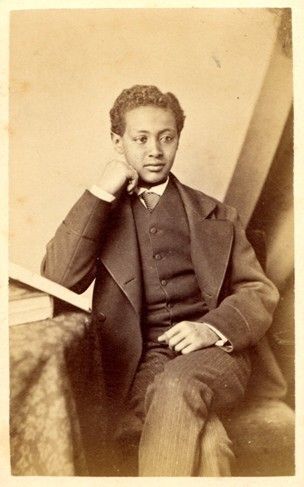
In 1868, British troops charged into the mountain empire of Ethiopia, stormed the citadel of its monarch Tewodros II and grabbed piles of his treasures and sacred manuscripts. They also took his son – six-year-old Prince Alamayu – and brought the boy back with them to the cold shores of England.

For the first time, Andrew Heavens tells the whole story of Alamayu, from his early days in his father’s fortress on the roof of Africa to his new home across the seas, where he charmed Queen Victoria, chatted with Lord Tennyson and travelled with his towering red-headed guardian Captain Speedy. The orphan prince was celebrated but stereotyped and never allowed to go home.

The book also follows the loot – Ethiopia’s ‘Elgin Marbles’ – and tracks it down to its current hiding places in bank vaults, museum store cupboards and a boarded-up cavity in Westminster Abbey.

A story of adventure, trauma and tragedy, The Prince and the Plunder is also a tale for our times, as we re-examine Britain’s past, pull down statues of imperial grandees and look for other figures to commemorate and celebrate in their place.

347 pages, Kindle Edition

Published February 2, 2023

64 people are currently reading
343 people want to read

About the author

Andrew Heavens

2 books3 followers

Ratings & Reviews

What do you think?
Rate this book

Friends & Following

Create a free account to discover what your friends think of this book!

Community Reviews

5 stars
23 (33%)
4 stars
26 (38%)
3 stars
18 (26%)
2 stars
1 (1%)
1 star
0 (0%)
Displaying 1 - 10 of 10 reviews
Profile Image for Abeselom Habtemariam.
58 reviews74 followers
May 24, 2023

‘’Was very grieved and shocked to hear by telegram that good Alamayou had passed away this morning. It is too sad. All alone in a strange country, without seeing a person or relative belonging to him, so young and so good, but for him one cannot repine. His was no happy life, full of difficulties of every kind, and he was so sensitive thinking that people stared at him because of his colour, that I fear he would have never been happy. Everyone is very sorry.’’

Queen Victoria, Queen of the United Kingdom of Great Britain and Ireland, 1879
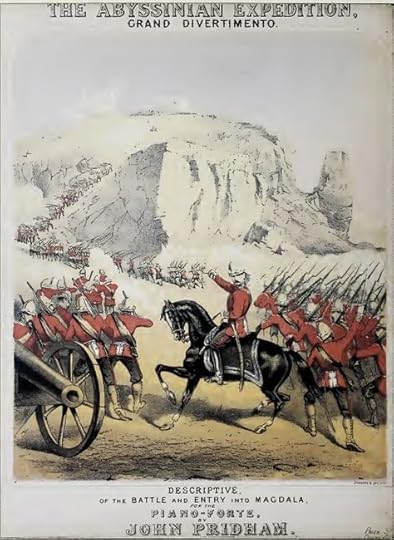
On an overcast Monday afternoon of April 13, 1868, in the towering peaks of the Ethiopian highlands, the British Imperial Army and The Ethiopian forces of Emperor Theodros II engaged in a battle the British called ‘’The Abyssinian Expedition of 1868’’. This is a book born out of the aftermath of this battle. After seizing Theodros’s mountain-top fortress of Meqdela, the British Bombay Army led by Lieutenant-General Sir Robert Napier took back with it many ancient manuscripts, scrolls, royal cloths and ornaments amongst other items. However, that’s not all they took. Emperor Theodros’s youngest son, Prince Alamayhu Theodros (1861 - 1879), would also leave his native land with the army, never to return again.

description

In the first part of the book, the prince’s short life and his times are covered. It traces the prince’s journey from the Red Sea port of Massawa (in present day Eritrea), through Suez, Alexandria and Malta, to his first landing on the shores of Britain at the Port of Plymouth. Three days after his arrival, he would meet Queen Victoria and the royal family at their summer home of Osborne House. Soon after, he would travel again. His guardian, who goes by the name of ‘’Speedy’’, would take him to The Crown Jewel of the British Empire, India.

After spending about three years in Uttar Pradesh, India and Singapore with his guardians, he returned to Britain. This time to Cheltenham, Gloucestershire, a spa town today famous for being the headquarters of the GCHQ and hosting the annual horse-racing event of Cheltenham Festival. From there he moved to Warwickshire, Berkshire, Devon and eventually to West Yorkshire, his final residence before his untimely death. He constantly was switching from one guardian to another, with no definitive plans for his future prospects. His life was shrouded in mystery, and his death was indeed very tragic. He would not live long enough to discover the letters of love and expectation sent to him from his homeland. Alamayhu was always reclusive and a stranger in a strange land, feeling the pull of memories from the land he left as a 7-year-old.


In 2007, the Ethiopian Government submitted a formal request to the British Government for Alemayehu’s remains to be returned to Ethiopia. However, repeated requests have been met with denial (The most recent request being on May 2023). Individuals such as Rev. John McLuckie and Dr Ian MacLennan have helped in the restoration of items of religious importance back to The Ethiopian Orthodox Church. In September 2021, The Scheherazade Foundation purchased a significant number of items from the Meqdela loot, through a UK-based auction house and private dealers, so that they can be returned to Ethiopia.

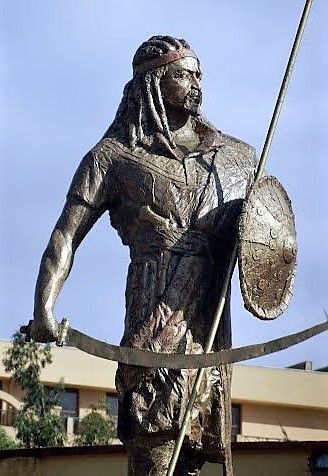
In May 1868, Emperor Theodros’s lock of hair arrived in Plymouth carried by Captain Cornelius ‘Frank’ James, an artist who tagged along with Lieutenant-General Napier’s Meqdela campaign. Along with other items from Meqdela, the lock of hair was donated to The National Army Museum, London, by James’ descendents in 1959. In 2019 the Ethiopian Embassy in London successfully campaigned to have it return to Ethiopia and buried with the rest of the Emperor’s remains. In January 2022, the lock of hair arrived at the airport named after the Emperor himself in the North Western Ethiopian city of Gonder, close to his burial site in Qwara. You can actually find Emperor Theodros’s, statue in the city centre of Gonder as shown in the photo below.

description

The Meqdela collection of artefacts the British army took back is dispersed all over the world today. Some found in private collections, others in museums. The overwhelming majority is still found in Britain. Andrew Heavens has set up a website (found here), where any interested party in possession of one of these artefacts can reach him. The current list of the Meqdela collection can also be found there, along the items returned to Ethiopia. You can find some of the British Museum’s collection from Meqdela along with other relevant documents here. On their website, The Museum has written the following;

‘’The [Meqdela] collection includes ceremonial crosses, chalices, processional umbrella tops, weapons, textiles, jewellery and archaeological material, as well as tabots (altar tablets that consecrate a church building that are highly sacred objects within the Ethiopian Orthodox tradition).’’’
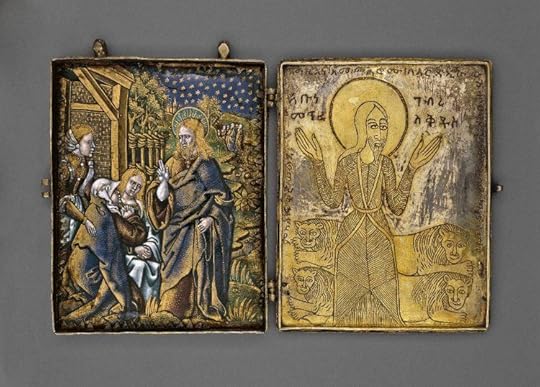

description

Among the collections in the British Museum are Alamayhu’s necklace displaying his rank of ‘’Dejazmatch’’ and his mother’s Book of Psalms in Amharic. Further items from Meqdela including a dress belonging to Alamayhu’s mother are found in The Victoria and Albert museum, South Kensington, London. The museum’s Meqdela collection includes an elegantly crafted three-tiered cylindrical gold crown alloyed with copper and silver and embellished with glass beads. Some more items were passed on to the Museum of Archaeology and Anthropology in Cambridge.

There are some ideas I have for correction, perhaps in future editions. While writing Ethiopian names, it would be helpful to indicate the title to distinguish it from the name itself. For example, the name of the Ethiopian wife of the adventurer John Bell is written as ‘Woizero Warknesh Asfa Yilma’ (in Ge’ez script, ወይዘሮ ወርቅነሽ አስፋ ይልማ). For someone who doesn’t speak Amharic or isn’t familiar with the Ethiopian and Eritrean naming system, it might appear that ‘Woizero’ is the given name of Bell’s wife. However, ‘Woizero’ is an honorific title whose English equivalent would be ‘Mrs’. ‘Warknesh Asfa Yilma’ would be her given name, patronymic name and her Grandfather’s name in that order. Similarly, in chapter three, in reference to Theodros’s right-hand man, the name is written as ‘’General Fitawrari Gabriye’’. Again, the issue here is, Fitawrari (ፊታውራሪ) is a military title that can roughly be translated to Commander of the Vanguard. So, inserting ‘General’ in the name makes it redundant.

As a whole, the book is well thought through and comes across as a passion project. It’s written with the consultation of numerous archival documents, articles, books and interviews. There are a lot of sources that are lost for good because of documentation (or lack thereof) in this story. However, Andrew pieces together a cogent narrative with the information at hand. In cases where the information is unreliable, he states it explicitly and when there are no solid sources, he refrains from wild speculations.
1 review
February 3, 2023
One of the best books I've ever read I would recommend it to anyone even if they didn't read even if they didn't like non-fiction I loved it
Profile Image for Laura.
590 reviews33 followers
February 25, 2023
For the British, months of preparation and marching had ended in a quick, brutish massacre – up to 20 wounded British and Indians, only 2 of them fatally, against as many as 700 dead Ethiopians, another 1,200 wounded and thousands more who had fled.* Tewodros had unleashed his missionary-made artillery, fighting the kind of battle he had dreamed of fighting ever since his first jolting defeat by ‘the Turks’ in Sudan, twenty years earlier.

The defeat at Maqdala of Tewodros at the hands of the British empire is accompanied by looting, pillaging and rape. The treasures of Maqdala are auctioned and brought back to England. With them also the son of Emperor Tewodros II and his wife Tiruwork Wobe, Alamayu, their only legitimate heir. He is taken from his own land and sent to England after the untimely death of both parents. Here begins the story of the lost prince, his life ruined by ignorance and heartlessness. Moved from school to school and from guardianship to guardianship like an unwanted parcel, Alamayu becomes the symbol of British Victorian predatory instincts and sense of superiority over the rest of the world.

The book is extremely well researched and is compelling in its very honest and compassionate take of the life of the king of kings' heir and his ultimate fate. It clarifies the relationship Britain established with Abyssinia and its current ambivalence over this legacy. Particularly abhorrent are the findings that Alemayu's last wish to return to Ethiopia was denied by the British to satisfy the new Ethiopian ruler, Yohannes, who was worried Alamayu might usurp his reign. A life lost, a life wasted. His remains should indeed be sent home to Ethiopia.

Read here for further details about the campaign to bring him back

https://www.theguardian.com/world/201...
Profile Image for Shaqira Shamah.
11 reviews
February 15, 2023
An epic read from start to finish. There is so much detail and imagery in it; I can't even begin to imagine how much research it took to write this.
2 reviews
February 7, 2023
Gripping read, deeply reported, thoroughly enjoyed - a moving tale brought to life in a story that resonates so much today. Brought back many memories of Ethiopia -- and taught me much I had never known. Buy it, read it!
Profile Image for Katie Bee.
1,249 reviews9 followers
April 23, 2024
A moving book about one of the many "little" wars of the Victorian era, and the small prince who was stolen (along with all the plunder the empire could loot) from his homeland and never saw it again.

The imperial sources Heavens relies on are fragmentary and heavily slanted. He often reads them slantwise/between the lines, but refrains from embroidery and flights of imagination, which is a wise choice.

I wish there had been an Ethiopian co-author to this book. I badly wished there were Ethiopian points of view. I recognize that sources from the time period may have been scarcer, but I doubt they're nonexistent. And there should have been a chapter (if not laced throughout) with Ethiopian historians, religious leaders, museum heads, librarians, etc.

Without that dimension, this is a profoundly imperial story. It is well-done within this imperial focus and I am glad that it exists and that I learned about this part of history. I wholeheartedly support the return of the plunder to Ethiopia, as well as (of course) the prince's body. It is so infuriating and shameful that cultural, historical, and sacred treasures of the Ethiopian people are locked up in museum basements and kept from their rightful home.

But if there is ever a second edition, I hope very much that an Ethiopian co-author is brought on to add that much-needed perspective. It feels very incomplete (and the ending incredibly abrupt) without it.
Profile Image for Katherine.
334 reviews12 followers
Read
February 27, 2023
This was an ARC from the publisher - DNF at 17%

Despite what it says in the blurb, this book is very much framed from the British perspective, not focused on Prince Alamayu. Heavens' even uses copious material from a novel by Samuel Johnson, who never visited Ethiopia and lived a century earlier.

Also, I have never before come across a book that reads so much like a long-form newspaper article.
Between the synthesising of sources behind-the-scenes (i.e. there are no references in this book); the author's personal experience of visiting Ethiopia from 2004 being included for no good reason; and colloquial language such as "[t]here's no need to overthink this. It is just a name, not a destiny." or comparing real-life soldiers to "the pieces of a giant game of Risk." – the book comes across as lacking credibility.
Profile Image for Jeremy.
192 reviews
May 16, 2023
In this book, Andrew Heavens has tracked down a lot of the booty taken by victorious British troops in 1868 after the Battle of Magdala, today a conflict that is barely remembered outside Ethiopia.

He reminds us of the battle and the stupidity that led up to it. And he relates the heartbreaking tale of a human form of loot — the young Prince Alamayu — dragged from his home at age seven and bounced around Britain and the Empire by people who did not know what to do with him.

For more: https://medium.com/exploring-history/...

Profile Image for Ana-Maria Bujor.
1,332 reviews81 followers
March 26, 2025
After having read a magical realism novel very loosely based on Tewodros' life, I was interested in finding out what really happened. And I am glad I found this book, which tells a less known story with sensitivity and nuance. Alamayu's journey from prince to guest in a gilded cage in imperial Britain is sad and leaves a rather uncomfortable message with the reader. And so does the part about the plunder and the ongoing debate about where stolen treasures should be exposed. Without pointing fingers, the book tells a good story and also lets the reader decide for oneself.
Displaying 1 - 10 of 10 reviews

Can't find what you're looking for?

Get help and learn more about the design.