

What do you think?
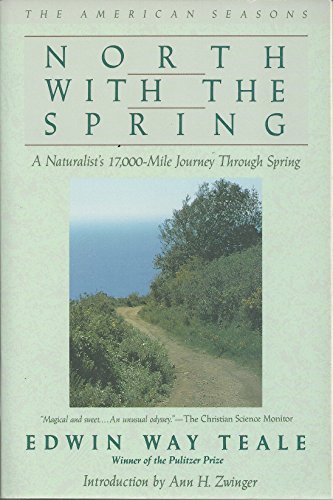
American Seasons #1
North With the Spring: A Naturalist's Record of a 17,000-Mile Journey With the North American Spring
The author describes his experiences traveling from the Florida Everglades to Mt. Washington, and shares his observations of nature along the way
358 pages, Paperback
First published January 1, 1951
About the author
Edwin Way Teale
58 books56 followersEdwin Way Teale was an American naturalist, photographer, and Pulitzer Prize-winning writer. Teale's works serve as primary source material documenting environmental conditions across North America from 1930 - 1980. He is perhaps best known for his series The American Seasons, four books documenting over 75,000 miles (121,000 km) of automobile travel across North America following the changing seasons.
Ratings & Reviews
Friends & Following
Create a free account to discover what your friends think of this book!
Community Reviews
Displaying 1 - 30 of 38 reviews
July 24, 2026
North With the Spring by Edwin Way Teale (1951, 1st edition), 358 pages. An old book I picked up at our local Goodwill for $9.99.
Edwin Way Teale (June 2, 1899 - October 18, 1980)
The author and his wife lived in Long Island, New Jersey. They’ve had a life-long dream of traveling from the south and following the spring weather all the way up through the southern U.S. east coast and north to Maine. Years and years passed before they were to take on this adventure. World War II had begun, and they lost their only son, David, whom this book is dedicated.
Spring moves forward in the south at a pace of about 15 days, and much faster the more north, so they divided their travel into four months, beginning in March at Everglades, Florida, and into southern Florida, then zigzagging along the Gulf coast to the Louisiana marshes and ending in June out to the tip of Cape Cod and through the New England Mountains to the Canadian line. A map of their travels is provided on the inside binding of the book.
The vernal equinox, the one day each year that day and night are exactly the same amount of time, occurs every March 20th (March 21st at 0 hour…according to nasa.gov). This is the beginning of spring all across the continent.
Interestingly, although I have never heard of him, Teale must have been pretty well known in his time. He ran in circles with Roger Roy Peterson and other naturalists, so he had many connections with a variety of wildlife people all along his route.
Below are places along the U.S. east coast that I’ve never heard of that I’d like to remember and hopefully get to visit one day. If you are a birdwatcher, you definitely want to get your hands on this book.
Teale was invited to attend a spring baby eagle tagging, where we learn just how massive an eagle nest really is. This one was 20-1/2 feet deep by 10 feet wide, and eagle nests can easily weigh a ton. Each year, eagles return to the same nest and continue to add limbs and all kinds of things to their nest. Once, they found a boat paddle intertwined with limbs up in a nest.
Teale was invited to a rattlesnake hunt around Cross City, Florida, where rattlesnakes were most numerous in spring. Evidently, rattlesnakes are closterphobic and by simply covering the hole with a rag for about 8-10 minutes, it will draw them out. There, they live in the numerous old gopher or turtle holes.
Orange Lake, Florida, has the infamous floating islands. They are anywhere from 2 to 5 feet deep, grow trees and contain all kinds of little animals and provide shelter and a place to live. Back then, there was a tour guide, for photographers, to provide a ride in a flat boat around the islands. The height of spatterdock season in Orange Lake is in April. The giant yellow buds are just opening up. The roots can grow as long as 20 feet underwater.
Wakulla Lake, Florida - Ponce de Leon was killed by an arrow here. Known as the River of the Limpkins more seen here than anywhere else. It’s magical…800,000,000 gallons of water flow out of the earth down the stream meeting up with and emptying into the Gulf of Mexico.
Cape Romain National Wildlife Refuge on the coast of South Carolina, about 30 miles north of Charleston. Nearby is Turkey Walk and Old Fort Trail. There is an Observation Tower at Bull’s Island and Boneyard Beach and Capers Island Heritage Preserve nearby. Back in 1951, there was a house, plantation-style bed and breakfast, on Bull’s Island that you could rent and walk around the 12 miles of trails and road on the island. Interestingly, Bull Island was one of the most heavily tick infested spots in the country. Not sure if it still is. But, in the years previous, the military had sent in about a dozen men covered in different chemicals to see which worked best as a repellant. As the author walked through the trails, he picked up dozens of ticks with the little white spot on its back…the actual lone star tick. This was back in 1951, but you didn’t hear of the alpha gal disease that these particular ticks are giving us today. Another thing to watch out for at night on the beach are the water moccasins. They hunt at night.
Chattanooga, Tennessee - Nickajack Cave Wildlife Refuge 20 miles west of Chattanooga. De Soto had visited this cave over four hundred years ago. Soldiers of the Civil War fought for this cave and its saltpeter deposits and left their mark by engraving their names in the wall. Teale was fortunate enough to get a boat ride inside the cave by a local farmer to Mirror Lake. Three state lines join and sit above this lake. Do they offer tourist rides today?
Sweetwater, Tennessee - the Lost Sea Adventure glass bottom boat ride. Also nearby, the Bone Yard tourist attraction.
Pearson’s Fall, North Carolina - a 90 foot waterfall. Area was preserved by the Garden Club of Tryon since 1931 to preserve the look from pioneer days. Evidently, in 1951 when this book was published, the variety of native flowers in bloom in spring is amazing to see. There are other nearby preserves to check out with possible hiking trails: Blue Wall Preserve, Chestnut Ridge Heritage Preserve & Wildlife.
For birdwatching, you want to be in and around Asheville, North Carolina, the third week of April to see the mass migration of all kinds of warblers heading north for the summer. Nearby parks and reservations to check out while there: Flat Rock State Park, Table Rock State Park, Dupont State Recreational Forest, Looking Glass Falls, Pisgah National Forest, Linville Gorge Wilderness Area, Lake James State Park, South Mountains State Park and Francis Marion & Sumpter National Forest. Chimney Rock State Park, Batcave and Waterfall. Checkout Pigeon Forge (Gatlinburg), Great Smokey Mountains National Park.
On the Appalachian Trail from Newfound Gap in Tennessee to Silers Bald (According to Google: 12 mile round trip, about 5 hrs and 7 min hike, 2,234 feet elevation gain). They made this trek in one full day arriving back at their car at sunset. Teale, born in 1899, was about 52 years old when book was printed and took this hike. (p. 184-197)
Hiked up to Mount Le Conte (3 hrs and 45 min). First, left packs at Ice Water Shelter and took right at fork of Le Conte and Appalachian Trail to Charlie’s Bunion. They camped overnight at the Jack Huff shelter before continuing on to the Boulevard Trail to Mount Le Conte. They fought against rains and strong winds (which have been known to reach 70mph) down to Alum Cave Bluff Trail, traversing parts of the trail which were only 18” wide, a wall on one side and a thousand foot drop-off on the other, and weather slicked rocks. This was where Nellie drove the car to pick up Teale and his hiking partner. (p. 198-208). The very next day after reading and learning about Mount Le Conte, a hiking acquaintance of mine, Courtney Pousson, posted on her Facebook that she was headed there in three months. Just a kwinka-dink.
Lake Drummond in the Great Dismal Swamp State Park, North Carolina, there was, maybe still is, a HUGE ancient cypress tree. Roots are MASSIVE!!! (Photo between page 206 and 207).
Cape Fear, North Carolina - In spring, here you will find the most concentrated carnivorous
plants in bloom: pitcher plants (yellow flowers), Venus’s-fly traps (only found here and nowhere else, but even back in 1951 were nearly extinct due to the massive harvesting for nickel and dime stores throughout the U.S.), sundews (red flowers), and butterworts (violet flowers). And here, you will find the painted bunting bird.
Charlottesville, Virginia - the author of the Declaration of Independence, President Thomas Jefferson’s (1743 - 1826) grave at Monticello Graveyard in May. He was a naturalist, responsible for recording 130 bird species in the area. He planted the now ancient tulip trees, lindens, copper beeches, sugar maples, and European larches. I wonder if these are still standing? In 1951, the gardens were still layed out as sketched by Jefferson. Then on to Virginia’s famed Natural Bridge once owned by Thomas Jefferson. He acquired it from King George III, of England, just 2 years before the American Revolution. But how could he have acquired it? Now, it is Natural Bridge State Park and costs a fee to get in.
June in the Pine Barrens near the New Jersey shore. Rechnitz Preserve and hiking trail nearby. Mid to late May would be a better time to visit this area. Only in these barren pines will you see pyxie moss with tiny white waxy flowers scattered like snowflakes. It grows nowhere else, and the Fowler’s toad, bright green with lavender side stripe and yellow under belly. It’s only about an inch and a half long and lives only in a few places, the Jersey barrens being one of them.
Essex, Massachusetts - Crane Wildlife Refuge. Close by Thoreau’s Waldon Pond, now Waldon Pond State Reservation, and the cabin he lived in for one year. Hiking nearby at Pleasant Meadow and Pine Hill Trails.
They hiked up to Lake Hermit Their journey ended with a drive up to the Summit House somewhere near Mt. Washington. I need to do more research to see if this is still here. Google doesn’t recognize it.
BOOK MENTIONED
Teale mentions quite a few books he has read, but this one caught my attention:
“The Seasons” by James Thompson (1795). Mentioned on page 326, the book Teale and his wife carried with them and read together on their 121 days (4 months) following the spring north. NOTE: After looking this up on eBay ($145.00), I see it is a book of poetry of the seasons. Not for me!
Edwin Way Teale (June 2, 1899 - October 18, 1980)
The author and his wife lived in Long Island, New Jersey. They’ve had a life-long dream of traveling from the south and following the spring weather all the way up through the southern U.S. east coast and north to Maine. Years and years passed before they were to take on this adventure. World War II had begun, and they lost their only son, David, whom this book is dedicated.
Spring moves forward in the south at a pace of about 15 days, and much faster the more north, so they divided their travel into four months, beginning in March at Everglades, Florida, and into southern Florida, then zigzagging along the Gulf coast to the Louisiana marshes and ending in June out to the tip of Cape Cod and through the New England Mountains to the Canadian line. A map of their travels is provided on the inside binding of the book.
The vernal equinox, the one day each year that day and night are exactly the same amount of time, occurs every March 20th (March 21st at 0 hour…according to nasa.gov). This is the beginning of spring all across the continent.
Interestingly, although I have never heard of him, Teale must have been pretty well known in his time. He ran in circles with Roger Roy Peterson and other naturalists, so he had many connections with a variety of wildlife people all along his route.
Below are places along the U.S. east coast that I’ve never heard of that I’d like to remember and hopefully get to visit one day. If you are a birdwatcher, you definitely want to get your hands on this book.
Teale was invited to attend a spring baby eagle tagging, where we learn just how massive an eagle nest really is. This one was 20-1/2 feet deep by 10 feet wide, and eagle nests can easily weigh a ton. Each year, eagles return to the same nest and continue to add limbs and all kinds of things to their nest. Once, they found a boat paddle intertwined with limbs up in a nest.
Teale was invited to a rattlesnake hunt around Cross City, Florida, where rattlesnakes were most numerous in spring. Evidently, rattlesnakes are closterphobic and by simply covering the hole with a rag for about 8-10 minutes, it will draw them out. There, they live in the numerous old gopher or turtle holes.
Orange Lake, Florida, has the infamous floating islands. They are anywhere from 2 to 5 feet deep, grow trees and contain all kinds of little animals and provide shelter and a place to live. Back then, there was a tour guide, for photographers, to provide a ride in a flat boat around the islands. The height of spatterdock season in Orange Lake is in April. The giant yellow buds are just opening up. The roots can grow as long as 20 feet underwater.
Wakulla Lake, Florida - Ponce de Leon was killed by an arrow here. Known as the River of the Limpkins more seen here than anywhere else. It’s magical…800,000,000 gallons of water flow out of the earth down the stream meeting up with and emptying into the Gulf of Mexico.
Cape Romain National Wildlife Refuge on the coast of South Carolina, about 30 miles north of Charleston. Nearby is Turkey Walk and Old Fort Trail. There is an Observation Tower at Bull’s Island and Boneyard Beach and Capers Island Heritage Preserve nearby. Back in 1951, there was a house, plantation-style bed and breakfast, on Bull’s Island that you could rent and walk around the 12 miles of trails and road on the island. Interestingly, Bull Island was one of the most heavily tick infested spots in the country. Not sure if it still is. But, in the years previous, the military had sent in about a dozen men covered in different chemicals to see which worked best as a repellant. As the author walked through the trails, he picked up dozens of ticks with the little white spot on its back…the actual lone star tick. This was back in 1951, but you didn’t hear of the alpha gal disease that these particular ticks are giving us today. Another thing to watch out for at night on the beach are the water moccasins. They hunt at night.
Chattanooga, Tennessee - Nickajack Cave Wildlife Refuge 20 miles west of Chattanooga. De Soto had visited this cave over four hundred years ago. Soldiers of the Civil War fought for this cave and its saltpeter deposits and left their mark by engraving their names in the wall. Teale was fortunate enough to get a boat ride inside the cave by a local farmer to Mirror Lake. Three state lines join and sit above this lake. Do they offer tourist rides today?
Sweetwater, Tennessee - the Lost Sea Adventure glass bottom boat ride. Also nearby, the Bone Yard tourist attraction.
Pearson’s Fall, North Carolina - a 90 foot waterfall. Area was preserved by the Garden Club of Tryon since 1931 to preserve the look from pioneer days. Evidently, in 1951 when this book was published, the variety of native flowers in bloom in spring is amazing to see. There are other nearby preserves to check out with possible hiking trails: Blue Wall Preserve, Chestnut Ridge Heritage Preserve & Wildlife.
For birdwatching, you want to be in and around Asheville, North Carolina, the third week of April to see the mass migration of all kinds of warblers heading north for the summer. Nearby parks and reservations to check out while there: Flat Rock State Park, Table Rock State Park, Dupont State Recreational Forest, Looking Glass Falls, Pisgah National Forest, Linville Gorge Wilderness Area, Lake James State Park, South Mountains State Park and Francis Marion & Sumpter National Forest. Chimney Rock State Park, Batcave and Waterfall. Checkout Pigeon Forge (Gatlinburg), Great Smokey Mountains National Park.
On the Appalachian Trail from Newfound Gap in Tennessee to Silers Bald (According to Google: 12 mile round trip, about 5 hrs and 7 min hike, 2,234 feet elevation gain). They made this trek in one full day arriving back at their car at sunset. Teale, born in 1899, was about 52 years old when book was printed and took this hike. (p. 184-197)
Hiked up to Mount Le Conte (3 hrs and 45 min). First, left packs at Ice Water Shelter and took right at fork of Le Conte and Appalachian Trail to Charlie’s Bunion. They camped overnight at the Jack Huff shelter before continuing on to the Boulevard Trail to Mount Le Conte. They fought against rains and strong winds (which have been known to reach 70mph) down to Alum Cave Bluff Trail, traversing parts of the trail which were only 18” wide, a wall on one side and a thousand foot drop-off on the other, and weather slicked rocks. This was where Nellie drove the car to pick up Teale and his hiking partner. (p. 198-208). The very next day after reading and learning about Mount Le Conte, a hiking acquaintance of mine, Courtney Pousson, posted on her Facebook that she was headed there in three months. Just a kwinka-dink.
Lake Drummond in the Great Dismal Swamp State Park, North Carolina, there was, maybe still is, a HUGE ancient cypress tree. Roots are MASSIVE!!! (Photo between page 206 and 207).
Cape Fear, North Carolina - In spring, here you will find the most concentrated carnivorous
plants in bloom: pitcher plants (yellow flowers), Venus’s-fly traps (only found here and nowhere else, but even back in 1951 were nearly extinct due to the massive harvesting for nickel and dime stores throughout the U.S.), sundews (red flowers), and butterworts (violet flowers). And here, you will find the painted bunting bird.
Charlottesville, Virginia - the author of the Declaration of Independence, President Thomas Jefferson’s (1743 - 1826) grave at Monticello Graveyard in May. He was a naturalist, responsible for recording 130 bird species in the area. He planted the now ancient tulip trees, lindens, copper beeches, sugar maples, and European larches. I wonder if these are still standing? In 1951, the gardens were still layed out as sketched by Jefferson. Then on to Virginia’s famed Natural Bridge once owned by Thomas Jefferson. He acquired it from King George III, of England, just 2 years before the American Revolution. But how could he have acquired it? Now, it is Natural Bridge State Park and costs a fee to get in.
June in the Pine Barrens near the New Jersey shore. Rechnitz Preserve and hiking trail nearby. Mid to late May would be a better time to visit this area. Only in these barren pines will you see pyxie moss with tiny white waxy flowers scattered like snowflakes. It grows nowhere else, and the Fowler’s toad, bright green with lavender side stripe and yellow under belly. It’s only about an inch and a half long and lives only in a few places, the Jersey barrens being one of them.
Essex, Massachusetts - Crane Wildlife Refuge. Close by Thoreau’s Waldon Pond, now Waldon Pond State Reservation, and the cabin he lived in for one year. Hiking nearby at Pleasant Meadow and Pine Hill Trails.
They hiked up to Lake Hermit Their journey ended with a drive up to the Summit House somewhere near Mt. Washington. I need to do more research to see if this is still here. Google doesn’t recognize it.
BOOK MENTIONED
Teale mentions quite a few books he has read, but this one caught my attention:
“The Seasons” by James Thompson (1795). Mentioned on page 326, the book Teale and his wife carried with them and read together on their 121 days (4 months) following the spring north. NOTE: After looking this up on eBay ($145.00), I see it is a book of poetry of the seasons. Not for me!

January 25, 2009
For those interested in North American nature studies Edwin Way Teale is inevitably a force to contend with. His biography is summarized on Wikipedia. He came to my attention via the reference to his Strange Lives of Familiar Insects in Dillard's Pilgrim At Tinker Creek. His four volume "Seasons" represents the notable accomplishment of crossing the country's cardinal directions in subsequent seasons and documenting an encyclopedia's worth of information about flora, fauna, weather, human impact, etc. with then (50s/60s) nascent ecological sensibilities.
This work appeals to me for its contributions to ecological science, for its literary merits, down to earth reporting and just plain good stories if you like things like eagle’s nests and the world's deepest spring, a couple hundred foot hole in the ground that turns into a river at your feet - but also for the audacity and drama of undertaking a many thousands of miles road trip around the US. Beats a desk job trying to assuage clients whose life savings is down the drain.
Regrettably, Goodreads database does not include and asks that I do not upload my copies of the books, i.e. the 1960s Apollo trade paperbacks with wonderful period cover illustrations. Can be viewed at www.thewaterwall.blogspot.com
or
https://lh5.googleusercontent.com/-YI...
This work appeals to me for its contributions to ecological science, for its literary merits, down to earth reporting and just plain good stories if you like things like eagle’s nests and the world's deepest spring, a couple hundred foot hole in the ground that turns into a river at your feet - but also for the audacity and drama of undertaking a many thousands of miles road trip around the US. Beats a desk job trying to assuage clients whose life savings is down the drain.
Regrettably, Goodreads database does not include and asks that I do not upload my copies of the books, i.e. the 1960s Apollo trade paperbacks with wonderful period cover illustrations. Can be viewed at www.thewaterwall.blogspot.com
or
https://lh5.googleusercontent.com/-YI...

June 22, 2021
It took me a little more than a year to read this book and what a wonderful companion during COVID-19. I wish someone would make an illustrated / annotated edition; I spent a lot of time happily researching places he described (and wondering if they are still in existence) as well as flora and fauna he and Nellie encountered and observed. Wanted to read the last chapter yesterday (Summer Solstice) but had friends over celebrating so I finished it today. What a beautiful book, a treasure. Thank you M for the gift of this book.

December 24, 2013
The prose in this book is beautiful. I love that it was written 70 years ago because it is neat to have a verbal look at what eastern America's wild places were like then. I would love to visit some of the places he writes about. A wonderful, peaceful, informative, joyful read.

June 20, 2018
This was my second seasonal trip with Edwin Way Teale and his wife Nellie. For this spring journey, the Teales started in the Everglades of Florida, where spring first begins in the U.S. And they started not in March , but on February 22, as spring that far south arrives much earlier than it’s official equinox date. Immediately, they began to see birds and waterfowl that were beginning their migration north. Jogging back and forth across Florida for several days, the Teales headed across swamps and lakes, hiking around areas where birds, diamondback rattlers, and alligators were populous, eventually making their way on March 21st to the Wakulla River, where the Wakulla Spring is said to be the largest and deepest spring on earth. They observed the monarch butterflies as they headed north, saw whooping cranes in Audubon Park in New Orleans, and ventured into western Louisiana, where they rode in a mudboat, a flat-bottomed boat that can glide on mud or water. They passed under immense live oaks, that were “like a cathedral”.
Again, I learned so much from this journal of their travels, such as that buzzards, as they dine on dead or dying animals, actually keep disease from spreading, both by eating up these animals, and leaving behind a share of their digestive juices, which kill germs! Other tidbits—The Great Smoky Mountains is one of the most biologically diverse areas on the planet; flora and fauna found no other place in the southern U.S. is found there, brought southward from Canada along the ridges of the Appalachian mountain chain. And I learned about vertical migration, when, come spring, birds, like Carolina Juncos, and other life moves not northward across the continent, but up a mountainside, after spending winters in the valleys.
Ending their journey on June 20th, the Teales were at Mount Washington, in the White Mountains of New Hampshire, where the climate is comparable to that at the Great Barrens, above the Arctic Circle. There, at 4 a.m., it is already getting light; “with this sunrise the tide of light reached it’s annual flood to begin the long slow rollback to the low ebb of December”.
This was such an enjoyable read, full of simple truths and reflections on life as well as the natural world, written with eloquence.
This book meets the challenge in the group A Book for All Seasons, topic #6, a book related to the current equinox.
Again, I learned so much from this journal of their travels, such as that buzzards, as they dine on dead or dying animals, actually keep disease from spreading, both by eating up these animals, and leaving behind a share of their digestive juices, which kill germs! Other tidbits—The Great Smoky Mountains is one of the most biologically diverse areas on the planet; flora and fauna found no other place in the southern U.S. is found there, brought southward from Canada along the ridges of the Appalachian mountain chain. And I learned about vertical migration, when, come spring, birds, like Carolina Juncos, and other life moves not northward across the continent, but up a mountainside, after spending winters in the valleys.
Ending their journey on June 20th, the Teales were at Mount Washington, in the White Mountains of New Hampshire, where the climate is comparable to that at the Great Barrens, above the Arctic Circle. There, at 4 a.m., it is already getting light; “with this sunrise the tide of light reached it’s annual flood to begin the long slow rollback to the low ebb of December”.
This was such an enjoyable read, full of simple truths and reflections on life as well as the natural world, written with eloquence.
This book meets the challenge in the group A Book for All Seasons, topic #6, a book related to the current equinox.
March 8, 2015
I first discovered Edwin Way Teale's books about 40 years ago in a branch of Edmonton Public Library. This wonderful naturalist and author wrote 4 books on travelling through the seasons across America, as well as one on springtime in Britain, that despite being written in the early 1950s, still are fresh and inspiring to read today. I have never looked at "common weeds" or insects the same way since reading that first book back in the '70s. I wish I could have met the man, and his constant companion/wife, Nellie--they sound like extraordinary people.
Teale's writing is full of quiet humour and quiet poetry. Here is a sample from one of the last paragraphs of the book: "The season had swept far to the north; it had climbed mountains; it had passed into the sky. Like a sound, spring spreads and spreads until it is swallowed up in space. Like the wind, it moves across the map invisible; we see it only in its effects. It appears like the tracks of the breeze on a field of wheat, like shadows of wind-blown clouds, like tossing branches that reveal the presence of the invisible, the passing of the unseen."
I very seldom re-read books but I make an exception for Edwin Way Teale's books--they never get old.
Teale's writing is full of quiet humour and quiet poetry. Here is a sample from one of the last paragraphs of the book: "The season had swept far to the north; it had climbed mountains; it had passed into the sky. Like a sound, spring spreads and spreads until it is swallowed up in space. Like the wind, it moves across the map invisible; we see it only in its effects. It appears like the tracks of the breeze on a field of wheat, like shadows of wind-blown clouds, like tossing branches that reveal the presence of the invisible, the passing of the unseen."
I very seldom re-read books but I make an exception for Edwin Way Teale's books--they never get old.

April 17, 2021
I finished this book as a reading challenge category "a book you started but never finished".
I started reading this book a few years ago and only got through the first few chapters. But when I picked it back up this time I really enjoyed it.
Read it in the springtime and you can really smell and hear, as well as picture the scenes he describes.
I started reading this book a few years ago and only got through the first few chapters. But when I picked it back up this time I really enjoyed it.
Read it in the springtime and you can really smell and hear, as well as picture the scenes he describes.

May 3, 2016
North with Spring is the first of four books written by Edwin Way Teale and his wife Nellie's 17,000-mile journey America in spring, summer, autumn and winter. Published in 1951 , North with Spring begins in the Florida Keys and proceeds northward zig-zagging along most of the eastern seaboard. The prose in this book is priceless. It is a superb account of natural history, scientific discovery of the time and quaint tales of the average americans who live in the out of the way places they visited. Perhaps the best thing about this book is it's record of ecosystems and people as they were in the mid 20th Century. Traveling these environs a short 66 years later prove how quickly many have been impacted by humans; many being reduced or disappearing altogether. For anyone who enjoys our the natural wonder of our nation, this is a must read.
Read
May 7, 2025Is spring my new favorite season? The next lilac bush I smell may just seal the deal.
Things I learned or think about:
- that red stalk coming out of Tillandsia is not the flower, but in fact the thing that protects the flower (I’ve been lying for so long!)
- migrations occurring vertically in space, as well as horizontally (in soil, water, mountains, who knows how else!)
- I’m still afraid of the swamp but I want to see those floating islands in Florida
- Eels are crazy! what a journey! who knew!
- the whole universe inside of a venus flytrap.
Wonder is, as ever, everywhere.
Things I learned or think about:
- that red stalk coming out of Tillandsia is not the flower, but in fact the thing that protects the flower (I’ve been lying for so long!)
- migrations occurring vertically in space, as well as horizontally (in soil, water, mountains, who knows how else!)
- I’m still afraid of the swamp but I want to see those floating islands in Florida
- Eels are crazy! what a journey! who knew!
- the whole universe inside of a venus flytrap.
Wonder is, as ever, everywhere.
April 22, 2026
And so my odyssey with the Teales ends--4 books, 4 seasons over the past year. What a wonderful journey it was! 'North With the Spring' was actually the first written (published 1951, they traveled in 1947) but for me it was the last. Sort of wish I had read them in 'order' but I stumbled across the first one (Summer) and was well into it before I figured out there were others and in what order. It really doesn't matter, they are all treasures of nature writing, tinged even then with an aura of wistfulness and the inexorable passage of time. As I write here in the midst of a record warm and possibly record dry April in much of southwest Virginia it is hard not to succumb to the general unease about what we humans are actually doing to the planet. Weather patterns 'appear' to be increasingly erratic with all that means for the seasons and nature.
The Teales were living and writing (late 1940s to early 60s) in a time when something as foundational as the seasons 'seemed' almost immutable and not questioned. Although Teale is quick to observe and discuss the impact of various weather events, for example the influx of rare bird species to northern New England and massive tree damage from the famous 1938 'Long Island Express' hurricane for example. As noted in my reviews of his other books, this was also a time the near the beginning of environmental awareness movement as to man's impact becoming increasingly malign and noticeable. Teale is a keen observer of many negative trends but it is not a dominant theme in this book. Nature in all its myriad wonder is always the focus--weeds, bugs, birds, plants, critters, landscapes, weather, lovingly related with a constant sense of wonder. Observing nature requires patience--on a beach on Cape Cod he spends two-plus hours watching ants and recording exactly what are carrying.
But he does not omit the human elements--visits and adventures with local wildlife experts (often 'amateurs') are among the most fascinating sections. The 'eagle man' in Florida, Charles Broley, the expert on Van Cortlandt Park, NY (sportswriter and modern savant) John Kieran, the 'bird man' of northern Vermont, Wendell P. Smith (he later moved to North Wilkesboro, NC and became a bird expert there too!), lunch with the author of the 'The Yearling' Marjorie Kinan Rawlings and other local naturalists are among the highlights of these journeys. He also has lunch with Rachel Carson, though he does not mention what they talked about! This was long before her fame.
The Teales start this trip in the Everglades a full month before the spring equinox and take an incredibly winding path through interesting sites in Florida, west to New Orleans and the Mississippi delta, north through the southeast states to the Carolina coast, back west to the Smokies and Appalachians, north through VA (Great Dismal Swamp and Monticello), the Pine Barrens of NJ, the Bronx (Van Cortland Park), ending in New England at Mt. Washington and vicinity at the summer solstice. That is an incredibly compressed version of the itinerary. It was such a profoundly different country which goes unmentioned of course because it was normal to them! No interstates, no fast-food, no chain motels (Howard Johnson motels started in 54), paper maps, no plastic water bottles! How did they even survive? No mention of gas prices which would have been amusing! Anyway, I loved it and feel a bit sad to be moving on, but another 5-star winner!
Many who have read these books (myself included) comment that it would be fun to follow or return to some of the places the Teales visited (with books in hand) today. At least one person had the same thought and has written a book--'Returning North with the Spring' by John R. Harris (2016). I have added it to my WtR list!
The Teales were living and writing (late 1940s to early 60s) in a time when something as foundational as the seasons 'seemed' almost immutable and not questioned. Although Teale is quick to observe and discuss the impact of various weather events, for example the influx of rare bird species to northern New England and massive tree damage from the famous 1938 'Long Island Express' hurricane for example. As noted in my reviews of his other books, this was also a time the near the beginning of environmental awareness movement as to man's impact becoming increasingly malign and noticeable. Teale is a keen observer of many negative trends but it is not a dominant theme in this book. Nature in all its myriad wonder is always the focus--weeds, bugs, birds, plants, critters, landscapes, weather, lovingly related with a constant sense of wonder. Observing nature requires patience--on a beach on Cape Cod he spends two-plus hours watching ants and recording exactly what are carrying.
But he does not omit the human elements--visits and adventures with local wildlife experts (often 'amateurs') are among the most fascinating sections. The 'eagle man' in Florida, Charles Broley, the expert on Van Cortlandt Park, NY (sportswriter and modern savant) John Kieran, the 'bird man' of northern Vermont, Wendell P. Smith (he later moved to North Wilkesboro, NC and became a bird expert there too!), lunch with the author of the 'The Yearling' Marjorie Kinan Rawlings and other local naturalists are among the highlights of these journeys. He also has lunch with Rachel Carson, though he does not mention what they talked about! This was long before her fame.
The Teales start this trip in the Everglades a full month before the spring equinox and take an incredibly winding path through interesting sites in Florida, west to New Orleans and the Mississippi delta, north through the southeast states to the Carolina coast, back west to the Smokies and Appalachians, north through VA (Great Dismal Swamp and Monticello), the Pine Barrens of NJ, the Bronx (Van Cortland Park), ending in New England at Mt. Washington and vicinity at the summer solstice. That is an incredibly compressed version of the itinerary. It was such a profoundly different country which goes unmentioned of course because it was normal to them! No interstates, no fast-food, no chain motels (Howard Johnson motels started in 54), paper maps, no plastic water bottles! How did they even survive? No mention of gas prices which would have been amusing! Anyway, I loved it and feel a bit sad to be moving on, but another 5-star winner!
Many who have read these books (myself included) comment that it would be fun to follow or return to some of the places the Teales visited (with books in hand) today. At least one person had the same thought and has written a book--'Returning North with the Spring' by John R. Harris (2016). I have added it to my WtR list!

August 25, 2021
As a lover of road trips and an admirer of the minutiae of nature, i loved this first installment in Edwin Way Teale's four-part series exploring the seasons' changes across the United States. In this one, Teale and his wife journey from southern Florida to the Canadian border of Vermont over the course of the four months of spring. Along the way, he describes all the flora and fauna, with an emphasis on flowers and birds. This was a really fun book to read to get a glimpse of places that are intriguing to me, such as the Everglades and Cape Cod. I also thoroughly enjoyed the introduction to floating islands, which I didn't know about, the Venus fly trap's natural habitat, and the life cycle of eels. This is a book jam-packed with detail, but the chapters were broken up into bite-sized pieces that made the book easy to read and not so daunting. I was elated when I saw this book, and Autumn Across America (the next installment and the one I'm most interested in, for the places he visits in my favorite season) in the library of my summer place of employment. Even online, copies of this series seemed hard to acquire. Alas, my summer job has come to an end and I did not get to check out Autumn Across America..but perhaps I will enlist the help of friends and snag the copy nonetheless. If you see it on my "currently reading," you'll know my plan has been successful...

April 6, 2020
This book was recommended to me years ago by a nature loving friend, it was for sure worth the read. Written the same year I was born, it was a great accompaniment to spring arriving here in St. Louis and has made me more aware and a tiny bit more knowledgeable of what I am seeing and hearing and smelling around me. I plan to visit several of the places he and his wife encountered on the trip.
I’m going to re-read it next year, much more slowly, really study it, take the time to google the hundreds of plants, insects, birds, and mammals he observes and chronicles in the book, plus the scenery and locations he describes, from swamps to forests to mountains to rivers, lakes, creeks, and the ocean. This is the first of four seasonal travel/naturalist books he wrote, winning the Pulitzer Prize for one of them. I also want to read more of a bio on the author, he tells of meeting up with and interacting with a number of scientists, naturalists, park employees, guides, and others who live the natural world. He talks about visiting a naturalist friend, Rachel Carson, and this was 10 years before she wrote her consciousness-changing classic Silent Spring.
I’m going to re-read it next year, much more slowly, really study it, take the time to google the hundreds of plants, insects, birds, and mammals he observes and chronicles in the book, plus the scenery and locations he describes, from swamps to forests to mountains to rivers, lakes, creeks, and the ocean. This is the first of four seasonal travel/naturalist books he wrote, winning the Pulitzer Prize for one of them. I also want to read more of a bio on the author, he tells of meeting up with and interacting with a number of scientists, naturalists, park employees, guides, and others who live the natural world. He talks about visiting a naturalist friend, Rachel Carson, and this was 10 years before she wrote her consciousness-changing classic Silent Spring.
April 19, 2026
Such a beautifully written book! I enjoyed the meandering chapters, which were full of interesting details about nature and geography. This was the first book I’ve read by Teale, and I’m looking forward to reading more of his work.

April 30, 2018
North with the Spring
Although spring officially begins on the Vernal Equinox, March 20 of this year (2018), the book begins in February with the spring before spring in South Florida. That is when spring begins in Everglades. Indeed, the author and his wife covered most of Florida before reaching the official beginning of spring on the Vernal Equinox.
As the Author pointed out, Florida has a north-south distance equal of New England and greater than any other state East of the Mississippi. By April 1, they were barely into Georgia and Exploring the Okefenokee. The end of April brought them well into North Carolina and they entered the New Jersey Pine Barrens around May 1. June 1 saw them only into New York, with a part of that month to explore New England as far as Northern Vermont and end the season at the famed Mount Washington and Crawford Notch.
On the may there they almost certainly passed through Chattanooga though they do not mention the city where I now reside. In Chapter 16, “The Underground River,” Teale recorded a trip through Nickajack Cave years before the construction of the dam which flooded portions of it, and Chapter 17, “The Poisoned Hills,” is a description of the Copper Basin before reclamation. Copper mines and smelting had killed the trees and left the soil with a red tint. With descriptions of significant landmarks on either side of the city, they must have passed through.
Teale and his wife Nellie visited more natural areas than I can record in this brief review, but I find some particularly interesting. The description of the Pine Barrens recalled John McPhee’s book by the same title. The Chapters on Cape Cod and Walden Pond and surrounding areas called to mind time I have spent in those locations.
The book is a great read. I have challenged myself to read all four books of the series, The American Seasons, in one year, and have now completed two, North with The Spring, and Wandering Through Winter. They are now out of print but available from used book dealers. I eagerly await delivery of my copy of Journey into Summer, and already have a copy of Autumn Across America, portions of which I read several years ago.
Although spring officially begins on the Vernal Equinox, March 20 of this year (2018), the book begins in February with the spring before spring in South Florida. That is when spring begins in Everglades. Indeed, the author and his wife covered most of Florida before reaching the official beginning of spring on the Vernal Equinox.
As the Author pointed out, Florida has a north-south distance equal of New England and greater than any other state East of the Mississippi. By April 1, they were barely into Georgia and Exploring the Okefenokee. The end of April brought them well into North Carolina and they entered the New Jersey Pine Barrens around May 1. June 1 saw them only into New York, with a part of that month to explore New England as far as Northern Vermont and end the season at the famed Mount Washington and Crawford Notch.
On the may there they almost certainly passed through Chattanooga though they do not mention the city where I now reside. In Chapter 16, “The Underground River,” Teale recorded a trip through Nickajack Cave years before the construction of the dam which flooded portions of it, and Chapter 17, “The Poisoned Hills,” is a description of the Copper Basin before reclamation. Copper mines and smelting had killed the trees and left the soil with a red tint. With descriptions of significant landmarks on either side of the city, they must have passed through.
Teale and his wife Nellie visited more natural areas than I can record in this brief review, but I find some particularly interesting. The description of the Pine Barrens recalled John McPhee’s book by the same title. The Chapters on Cape Cod and Walden Pond and surrounding areas called to mind time I have spent in those locations.
The book is a great read. I have challenged myself to read all four books of the series, The American Seasons, in one year, and have now completed two, North with The Spring, and Wandering Through Winter. They are now out of print but available from used book dealers. I eagerly await delivery of my copy of Journey into Summer, and already have a copy of Autumn Across America, portions of which I read several years ago.

March 19, 2020
I began and was so taken aback and appalled that he mentioned a horrible little black kitten was mangled by a burly man. I just could not get past this and could NOT finish the book.
January 11, 2023
春天就像生命,你无法整个将它攥住,而只能碰碰这边,摸摸那边,领略的永远只是它的片段和碎片。可是,就是那一点点的大自然的碎片,足以抚慰人心。
April 10, 2026
There is no one who writes like Edwin Way Teale. Sometimes the perfection of a phrase describing bird or flower or weather stops me, and I must read it again and again.
With each book of his which I read, whether it's North With the Spring or Wandering Through Winter or Autumn Across America or another, I always imagine a third figure accompanying him and Nellie on their quests, that of their dead son, David, killed in 1945 during the last days of the war.
David was their only child. Had he lived he might have carried on his parents' work. David might now have children and grandchildren still living who would, years ago, have visited the elder Teales at Trail Wood, the Connecticut farm Edwin and Nellie purchased in 1959. The farm is now a nature sanctuary owned by the Connecticut Audubon Society.
David's children and grandchildren would be the keepers of first-hand memories of their grandparents, or at the very least, of the family stories passed down to them. Instead it is we, Edwin Way Teale's readers, who must continue to bridge the gap between the lifetimes of Nellie and Edwin Way Teale and the next generations.
According to Goodreads, I have already read North With the Spring once, completing it in December 2022. I know I must have, because there were parts that were familiar and there were slips of paper with notes, in my handwriting, here and there in the book. I did not write a review at the time, though, and that is odd. Perhaps because 2020 through 2024--actually through to the present--were fraught years, I was only half engaged as I read...?
Bless her earnest little heart, Gladys Taber was never the writer that Edwin Way Teale was, but she mentions him in at least one of her Stillmeadow books. She also mentions Beverley Nichols, which was a fine thing for her to do because I immediately requested his (Beverley was a man) Down the Garden Path from our local library. And she mentions Dylan Thomas, specifically Quite Early One Morning, which I hadn't read, so I also requested that. And in Quite Early One Morning Dylan Thomas mentions several of his own favorite writers. And so it goes. So many books, so little time.
In the way of Gladys Taber, Edwin Way Teale, after a casual reference in North With the Spring, had me scrambling for a particular Guy de Maupassant short story, Love, which I soon located and read. In another chapter his expedition into Nickajack Cave led me to the discovery that in 1967 the construction of the Nickajack Dam by the TVA flooded Nickajack Cave. Today the Teales would not be able to take a boat back through the caverns that they explored in 1947.
And that search led me to the remarkable history of one David Gant, a diver who had illegally entered the flooded cave in 1992, where he became disoriented, lost, and trapped, with only a tiny air pocket to sustain his life until his rather miraculous rescue.
Because Edwin Way Teale evinced so much admiration for the writings of John Muir, I ordered off eBay The Wilderness World of John Muir, a book which contains selections of Muir's work which Teale collected and edited. Thoreau he loved and Thoreau I have read, but only Walden, two or three times, and Civil Disobedience, I think. I already own A Week on the Concord and Merrimack Rivers, so there is no need to resort to eBay.
He mentions John Burroughs several times, but it was only when I googled the origin of Teale's quote on page 157 addressing the definition of eternity, "When the Himalayas shall be ground to powder by a gauze veil floating against them once in a thousand years," that I found myself directed inadvertently to an article by Burroughs, specifically the 1909 piece he wrote for The Atlantic, The Long Road.
Fortunately I have a subscription to The Atlantic so the article is available to me. Where has John Burroughs been all my life! Gladys Taber is tediously goddy. Edwin Way Teale is refreshingly not so, and within the first few lines of The Long Road it becomes apparent that neither is Burroughs.
I am reminded of Charles Darwin who, in his introduction to The Origin of Species, warns that any reader who is not willing to admit to the immensity of time should not attempt to read his book. That is a very rough paraphrase of his actual words...as I remember them.
With each book of his which I read, whether it's North With the Spring or Wandering Through Winter or Autumn Across America or another, I always imagine a third figure accompanying him and Nellie on their quests, that of their dead son, David, killed in 1945 during the last days of the war.
David was their only child. Had he lived he might have carried on his parents' work. David might now have children and grandchildren still living who would, years ago, have visited the elder Teales at Trail Wood, the Connecticut farm Edwin and Nellie purchased in 1959. The farm is now a nature sanctuary owned by the Connecticut Audubon Society.
David's children and grandchildren would be the keepers of first-hand memories of their grandparents, or at the very least, of the family stories passed down to them. Instead it is we, Edwin Way Teale's readers, who must continue to bridge the gap between the lifetimes of Nellie and Edwin Way Teale and the next generations.
According to Goodreads, I have already read North With the Spring once, completing it in December 2022. I know I must have, because there were parts that were familiar and there were slips of paper with notes, in my handwriting, here and there in the book. I did not write a review at the time, though, and that is odd. Perhaps because 2020 through 2024--actually through to the present--were fraught years, I was only half engaged as I read...?
Bless her earnest little heart, Gladys Taber was never the writer that Edwin Way Teale was, but she mentions him in at least one of her Stillmeadow books. She also mentions Beverley Nichols, which was a fine thing for her to do because I immediately requested his (Beverley was a man) Down the Garden Path from our local library. And she mentions Dylan Thomas, specifically Quite Early One Morning, which I hadn't read, so I also requested that. And in Quite Early One Morning Dylan Thomas mentions several of his own favorite writers. And so it goes. So many books, so little time.
In the way of Gladys Taber, Edwin Way Teale, after a casual reference in North With the Spring, had me scrambling for a particular Guy de Maupassant short story, Love, which I soon located and read. In another chapter his expedition into Nickajack Cave led me to the discovery that in 1967 the construction of the Nickajack Dam by the TVA flooded Nickajack Cave. Today the Teales would not be able to take a boat back through the caverns that they explored in 1947.
And that search led me to the remarkable history of one David Gant, a diver who had illegally entered the flooded cave in 1992, where he became disoriented, lost, and trapped, with only a tiny air pocket to sustain his life until his rather miraculous rescue.
Because Edwin Way Teale evinced so much admiration for the writings of John Muir, I ordered off eBay The Wilderness World of John Muir, a book which contains selections of Muir's work which Teale collected and edited. Thoreau he loved and Thoreau I have read, but only Walden, two or three times, and Civil Disobedience, I think. I already own A Week on the Concord and Merrimack Rivers, so there is no need to resort to eBay.
He mentions John Burroughs several times, but it was only when I googled the origin of Teale's quote on page 157 addressing the definition of eternity, "When the Himalayas shall be ground to powder by a gauze veil floating against them once in a thousand years," that I found myself directed inadvertently to an article by Burroughs, specifically the 1909 piece he wrote for The Atlantic, The Long Road.
Fortunately I have a subscription to The Atlantic so the article is available to me. Where has John Burroughs been all my life! Gladys Taber is tediously goddy. Edwin Way Teale is refreshingly not so, and within the first few lines of The Long Road it becomes apparent that neither is Burroughs.
I am reminded of Charles Darwin who, in his introduction to The Origin of Species, warns that any reader who is not willing to admit to the immensity of time should not attempt to read his book. That is a very rough paraphrase of his actual words...as I remember them.
February 27, 2025
Over the course of the first two months of 2025, I read all four of Edwin Way Teale’s seasonal travelogues. I didn’t read them in seasonal order because of vagaries in availability at my library. I read them in the order of summer, autumn, winter, and spring.
I know that some reviewers here on GoodReads consider North with the Spring, Teale’s first book in the American Seasons series, as the best of the four, but I don’t agree. It is very good (4.5 stars out of 5, in my opinion). But the book feels like Teale is feeling his way and getting his bearings in this endeavor (compared with the later volumes). Alternately, since I spent most of my life on the East Coast, perhaps I’m just a bit too familiar with some of these places and they weren’t as “exotic” as some of the locales featured in the later books with which I am less familiar; I’ll grant that’s a real possibility. Nevertheless, I think the summer account is the best of the lot.
Teale and his wife Nellie traveled in the late 1940s for Spring, and this book, more than the others (which documented travels a bit later in the 20th century), shows how much the world has changed.
The Teales needed to take a ferry to get to Sanibel Island off Florida’s Gulf Coast; now, there’s a causeway that connects the island to the mainland (and has allowed the island to become developed).
After the Teales visited Nickajack Cave in Tennessee, it was partially flooded by a reservoir constructed by the Tennessee Valley Authority.
Teale advocated for the protection of North Carolina’s Burgaw Savanna, a wet prairie featuring a spectacular display of unusual plants. The savannah was drained and tilled in the 1960s after the Teales visited (though a much smaller wet prairie nearby featuring many of the same plants was later discovered and protected; it is sometimes called the “ghost prairie”).
Some of the anecdotes in the book seem dated, misinformed, and almost benighted in hindsight. Teale seems to celebrate and revel in unbridled herpetile collecting. There are depressing accounts of shooting birds and abusing cats. His descriptions of “Negroes” flirt with condescending.
In contrast, one passage describing a hike in the Great Smoky Mountains (“Mountain Meadows”) is truly prescient of contemporary social media and images generated by machine learning. When Teale was awed by a particularly expansive view, he writes,
“ ‘Why, I have been in this very spot before!’
But I knew I never had. Each time I was remembering a picture instead of a place, an illustration made where I stood among much-photographed peaks. In these days of television, motion pictures, and an ever-growing number of elaborately illustrated magazines, such vicarious experiences are rapidly multiplying. … During recent years, the actual and the vicariously experienced events have become more than ever mixed in our minds. Not only the present but the past, not only life but memory as well, has taken on a new complexity.”
I know that some reviewers here on GoodReads consider North with the Spring, Teale’s first book in the American Seasons series, as the best of the four, but I don’t agree. It is very good (4.5 stars out of 5, in my opinion). But the book feels like Teale is feeling his way and getting his bearings in this endeavor (compared with the later volumes). Alternately, since I spent most of my life on the East Coast, perhaps I’m just a bit too familiar with some of these places and they weren’t as “exotic” as some of the locales featured in the later books with which I am less familiar; I’ll grant that’s a real possibility. Nevertheless, I think the summer account is the best of the lot.
Teale and his wife Nellie traveled in the late 1940s for Spring, and this book, more than the others (which documented travels a bit later in the 20th century), shows how much the world has changed.
The Teales needed to take a ferry to get to Sanibel Island off Florida’s Gulf Coast; now, there’s a causeway that connects the island to the mainland (and has allowed the island to become developed).
After the Teales visited Nickajack Cave in Tennessee, it was partially flooded by a reservoir constructed by the Tennessee Valley Authority.
Teale advocated for the protection of North Carolina’s Burgaw Savanna, a wet prairie featuring a spectacular display of unusual plants. The savannah was drained and tilled in the 1960s after the Teales visited (though a much smaller wet prairie nearby featuring many of the same plants was later discovered and protected; it is sometimes called the “ghost prairie”).
Some of the anecdotes in the book seem dated, misinformed, and almost benighted in hindsight. Teale seems to celebrate and revel in unbridled herpetile collecting. There are depressing accounts of shooting birds and abusing cats. His descriptions of “Negroes” flirt with condescending.
In contrast, one passage describing a hike in the Great Smoky Mountains (“Mountain Meadows”) is truly prescient of contemporary social media and images generated by machine learning. When Teale was awed by a particularly expansive view, he writes,
“ ‘Why, I have been in this very spot before!’
But I knew I never had. Each time I was remembering a picture instead of a place, an illustration made where I stood among much-photographed peaks. In these days of television, motion pictures, and an ever-growing number of elaborately illustrated magazines, such vicarious experiences are rapidly multiplying. … During recent years, the actual and the vicariously experienced events have become more than ever mixed in our minds. Not only the present but the past, not only life but memory as well, has taken on a new complexity.”

June 5, 2019
Lovely, classic nature writing —my hardcover was published in 1951. The tone is comforting. The structure and much content is experientially driven and place-based.
The Teales rendezvous with various local experts and learn from them. Teale adds fascinating observations and nuggets of information connected to the plants, animals, insects, land, and weather that they encounter.
In this first in a four book Pulitzer-winning Seasons series by the noted naturalist Edwin Way Teale (June 2, 1899 - October 18, 1980), Teale and his wife ( also a naturalist) Nellie (September 13, 1900 - July 18, 1993) decide to follow the spring northward starting in Florida in February 1947, immersing themselves in the natural world.
The book resulting from their nature-focused journey is dedicated to their only child David, who died in battle in Europe in March 1945 as a 19 year old soldier during World War 2. The 17,000 mile journey was undertaken, in part, to help them heal from their grief.
In 1948 Teale served as President of the Thoreau society and in 1949, Edwin and Nellie moved to rural Northeastern CT, later documented in his book A Naturalist Buys an Old Farm. Today, the Teales’ former home is an Audubon property known as Trail Wood and can be visited in person and online (there is an extensive web site with many photographs.)
The Teales rendezvous with various local experts and learn from them. Teale adds fascinating observations and nuggets of information connected to the plants, animals, insects, land, and weather that they encounter.
In this first in a four book Pulitzer-winning Seasons series by the noted naturalist Edwin Way Teale (June 2, 1899 - October 18, 1980), Teale and his wife ( also a naturalist) Nellie (September 13, 1900 - July 18, 1993) decide to follow the spring northward starting in Florida in February 1947, immersing themselves in the natural world.
The book resulting from their nature-focused journey is dedicated to their only child David, who died in battle in Europe in March 1945 as a 19 year old soldier during World War 2. The 17,000 mile journey was undertaken, in part, to help them heal from their grief.
In 1948 Teale served as President of the Thoreau society and in 1949, Edwin and Nellie moved to rural Northeastern CT, later documented in his book A Naturalist Buys an Old Farm. Today, the Teales’ former home is an Audubon property known as Trail Wood and can be visited in person and online (there is an extensive web site with many photographs.)
March 8, 2025
"Everywhere in the Northern Hemisphere spring had come and gone. The season had swept far to the north; it had climbed mountains; it had passed into the sky. Like a sound, spring spreads and spreads until it is swallowed up in space. Like the wind, it moves across the map invisible; we see it only in its effects. It appears like the tracks of the breeze on a field of wheat, like shadows of wind-blown clouds, like tossing branches that reveal the presence of the invisible, the passing of the unseen. So spring had spread from Georgia to North Carolina, from Virginia to Canada, leaving consequences beyond number in its wake. We longed for a thousand springs on the road instead of this one. For spring is like life. You never grasp it entire; you touch it here, there; you know it only in parts and fragments. Reflecting thus as we started south on that first morning of summer - on the day of the summer solstice, the longest day of the year - we were well aware that it is only on the calendar that spring comes to so sudden a termination. In reality its end is a gradual change. Season merges with season in a slow transition into another life."
May 3, 2026
I am in love with Edwin Way Teale and his wife. Their travels across America as slow and very particular to themselves. These books take me a long time to read but make me feel happy and connected. This book was particularly interesting as it was his first seasonal book -- describing a recently post-war America, with signs of human destruction of nature amid the depictions of the natural world. It was interesting to hear him talk about the destruction of snakes and alligators with such calm and approving acceptance.
June 4, 2023
This was a beautiful book. I learned a lot, and the descriptions are precise and often gorgeous. Teale took his journey more than 70 years ago now, and I enjoyed looking up some of the locations he visits to see how they have changed. I also found myself looking up images of plants and birds or recordings of bird calls every few pages.

June 24, 2022
I thoroughly enjoy reading these books a little bit at a time. He tells great stories of the things they saw on their trip, and puts in a lot of facts about animals and plants and history along the way. I didn’t quite finish the book, but we are definitely into summer now so I’m putting it away.
June 30, 2022
Teale goes beyond narration and looks into little known side jaunts, explaining the history of the place. I'd love to follow in his footsteps, but wonder if I even could. I imagine many changes have taken place in the 70 plus years.

October 10, 2018
I learned so much. His writing is a treasure.
December 27, 2018
#birdnerdgoals
April 15, 2021
As a child I was a budding naturalist and my mother gave me this book. (I was 11 YO)
I loved it.
I now have the complete set and need to go back to them.
I loved it.
I now have the complete set and need to go back to them.
June 24, 2021
Beautifully written!

June 30, 2021
This book is a book of naturalist observations on a roadtrip through Spring in 1951. You kind of can't forget that it's written in 1951, but in a way, that's okay.
February 8, 2022
I wish I bought this series many years ago.
Displaying 1 - 30 of 38 reviews