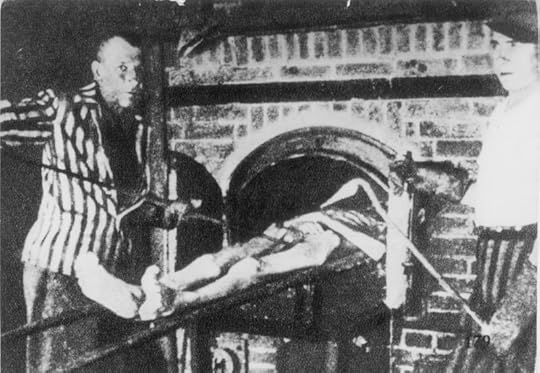
The Sonderkommando of Auschwitz-Birkenau consisted primarily of Jewish prisoners forced by the Germans to facilitate the mass extermination. Though never involved in the killing itself, they were compelled to be “members of staff” of the Nazi death-factory. This book, translated for the first time into English from its original Hebrew, consists of interviews with the very few surviving men who witnessed at first hand the unparalleled horror of the Auschwitz-Birkenau death camp. Some of these men had never spoken of their experiences before. Over a period of years, Gideon Greif interviewed intensively all Sonderkommando survivors living in Israel. They describe not only the details of the German-Nazi killing program but also the moral and human challenges they faced. The book provides direct testimony about the “Final Solution of the Jewish Problem,” but it is also a unique document on the boundless cruelty and deceit practiced by the Germans. It documents the helplessness and powerlessness of the one-and-a-half million people, 90 percent of them Jews, who were brutally murdered in the gas chambers of Auschwitz-Birkenau.
Gideon Greif (Hebrew: גדעון גרייף) is an Israeli historian who specializes in the history of the Holocaust, especially the history of the Auschwitz concentration camp and particularly the Sonderkommando in Auschwitz. Since 2011, he has been a Professor for Jewish and Israeli History at the Schusterman Center for Jewish Studies at the University of Texas at Austin.
"If all the trees in the world became pens, and all the oceans turned into rivers of ink, one could not write down and fully document what happened in the Holocaust." Reading this book was one of the hardest quests I set out on, it shocked me to my very core with every sentence, and at the same time kept on pushing with every sentence: these survivors went through all the pits of hell and the only remaining will that kept them going was to survive so the truth would finally come out. So, we have a responsibility to learn about it in the first place and remember it for the rest of our lives.
This book is NOT for the weak of heart and stomach. You don't read horrid, bloody details but the details you do get are not at all easy to stomach. A thorough study, the Sonderkommando survivors needed Grief to clear their name, set facts straight and bring their words and testimonies to the wide world.
Despite its uneasiness to read, this book is extremely imporntant and highly recommended by me.
let's just say: if you want a vision of hell, read this book. thank whatever you believe in, that these men survived and found the courage to tell their story.
Βλέποντας την ταινία "Ο Γιος του Σαούλ" έμαθα ότι το μεγαλύτερο μέρος του υλικού της προέρχεται από αυτό εδώ το βιβλίο. Πρόκειται για τις αφηγήσεις Εβραίων - στην πλειοψηφία Ελλήνων - επιζώντων από το Άουσβιτς που με την απειλή των όπλων αναλάμβαναν τη βρώμικη δουλειά στους θαλάμους αερίων και στα κρεματόρια. Η λέξη "συγκλονιστικές" δεν αρκεί για να περιγράψει αυτές τις αφηγήσεις και γενικότερα οι λέξεις είναι αδύνατον να περιγράψουν το ψυχολογικό βάρος που έπεφτε στους ώμους αυτών των ανθρώπων. Πέρα από αυτό όμως αυτές οι αφηγήσεις περιγράφουν ολόκληρη την ανατριχιαστική διαδικασία και αποκαλύπτουν τη μεθοδικότητα με την οποία οι ναζί οργάνωσαν αυτό το μεγάλο έγκλημα. Απαραίτητο ανάγνωσμα στις μέρες μας, αρκεί φυσικά να μπορούμε να το αντέξουμε γιατί πρόκειται για κάτι απίστευτα σκληρό.
wstrzasajaca ksiazka, ktora warto przeczytac zwlaszcza biorac pod uwage to co dzialo sie niedawno na polskiej scenie politycznej. ilosc apologetow brauna w naszym spoleczenstwie mnie przeraza i smuci jednoczesnie ciezko mi bylo czytac te ksiazke i nie myslec o ludobojstwie ktore ma teraz miejsce na palestynczykach dlatego pamietajmy, zeby jebac antysemityzm, ale tez jebac syjonistow i zbrodnicze panstwo izrael
Although, to say that one "really liked" this book is absolutely incorrect. it was powerful. It was well done. It crawled under my skin like a Ghanian parasite and continued to wriggle through my veins long after I finished reading. I will never reread it, and wouldn't recommend it to anyone prone to nightmares or crying.
This collection of testimonies from Sonderkommando members brings you right up to the very heart of the Nazi-forged hell of the gas chambers and krematoria of Auschwitz-Birkenau; they literally make you a witness; horrifying, arresting and dehumanizing:
"Amidst the silence of rigor mortis one hears only the faint, almost inaudible gurgling of fluids oozing from the orifices of the dead bodies. At this moment, that is the only motion here, in the great world of the dead."
"A multitude of heads swim in this vast, naked sea. They hold themselves up over the naked tides. It is as though the people are swimming in the great, deep sea, and only their heads protrude from the deep naked wave. The heads - black, blond, brown - are merely the only pieces that project from the surrounding nakedness."
"Do you ever cry when the memories come back? I can't cry anymore. All emotions of a human being, of crying, have died in me. Yes, as I already told you, I think I'm no longer a person."
When it comes to graphic violence, I consider myself a tough guy. Over the years I grew accustumed to see horrible things on the internet, and unfortunately there aren't many things that make me look away anymore. But this book did, it made me look away even though there were "only" words on the pages. I knew quite a lot about Auschwitz beforehand, but reading about the horrifying things the Nazis did there made me sick again and again. So be prepaired, it's a really tough read.
The 3/4 of the book contain interviews with the surviving members of the Sonderkommando, so I see no real point on commenting on the literary side of the book. I have only one complaint, these interviews don't really differ from another, all men talk about the same things with minor changes in details, so it becomes a bit repetative by the end.
Horrible book. Horrible stories. Yet these stories have to be told. Just pushing them aside for the sake of avoiding the shock makes people deny that reality.
A rare, important historical document that took the author years to compile. Gideon Greif spent years tracking down eight Sonderkommando survivors. Most were reluctant to be interviewed about their unspeakable experiences, which brought up gut-wrenching memories. Gideon Greif is a researcher at Yad Vashem in Israel, the principal institution in the world studying the history of the Holocaust.
The term “Sonderkommando” (special labor detail) is of unknown origin, meaning it is a word that the Nazis made up. The Nazis often used euphemisms for their crimes. The Final Solution is a euphemism. They also attached the prefix “sonder” (special) to other words to create these euphemisms.
Sonderkommando were always Jewish, young, male. Their work was not only physically grueling but psychological torture. Though never involved in murder itself, Sonderkommando was forced to drag thousands and thousands of corpses from the gas chambers and haul them to the ovens or into massive pits to be burned. The crematoriums or pit burnings operated all day, all night, seven days a week and so the Sonderkommando also operated all day, all night, seven days a week.
Sonderkommando were considered Geheimnisträger (bearers of secrets) because they were eyewitnesses to the worst Nazi crimes: gas chambers and crematoriums used to commit industrial mass murder or genocide. Sonderkommando were held in extreme isolation in barracks far away from the other camp prisoners. Once a prisoner was marked as a Sonderkommando, he was barred from ever leaving the crematoria alive. Typical Sonderkommando survived only a few months, as the SS murdered them at regular intervals.
Over a period of years, Gideon Greif interviewed intensively all Sonderkommando survivors living in Israel. They describe not only the details of the German-Nazi killing program but also the moral and human challenges they faced. The book provides direct testimony about the “Final Solution of the Jewish Problem,” but it is also a unique document on the boundless cruelty and deceit practiced by the Germans. It documents the helplessness and powerlessness of the one-and-a-half million people, 90 percent of them Jews, who were brutally murdered in the gas chambers of Auschwitz-Birkenau.
A note by the publishers states: "The book provides direct testimony about the "Final Solution of the Jewish Problem," but it is also a unique document on the boundless cruelty and deceit practiced by the Germans. It documents the helplessness and powerlessness of the one-and-a-half million people, 90 percent of them Jews, who were brutally murdered in the gas chambers of Auschwitz-Birkenau."
Reading this book is not for the faint of heart. Saying that, it contains very detailed testimonies from members of the Sonderkommando of what actually occurred in Birkenau and Auschwitz.
4.5 stars. If you’re into this subject and want more in-depth, detailed and elaborate first-hand accounts on the Sonderkommando in Birkenau, this is definately a must-read.
Josef Sackar Abraham & Szlama Dragon Yaakov Gabai Eliezer Eisenschmidt Szaul Chazan Leon Cohen Yaakov Silberberg
Wyżej wymienieni mężczyźni należeli do Sonderkommando, czyli specjalnej grupy żydowskich więźniów, która była odpowiedzialna za przygotowywanie innych więźniów do wejścia do komór gazowych, a następnie do usuwania i palenia ich ciał. Często towarzyszyli oni w ostatniej drodze swoim rodzinom i przyjaciołom. Wiedzieli, że nie mogą się załamać, jeżeli sami chcą przeżyć. Jednak przetrwanie często wiązało się również z noszeniem w sobie tajemnicy o tym, czym zajmowali się w obozach pracy, ze strachu przed niezrozumieniem i pogardą. Niewielu z członków Sonderkommando zdecydowało się opowiedzieć o tym co ich spotkało i czym zajmowali się w obozie zagłady.
‘Płakaliśmy bez łez’, to ciężka i poruszająca lektura. Jest to relacja byłych więźniów, którzy dokładnie opisują swoje doświadczenia i obowiązki, które wykonywali jako Sonderkommando. Nieważne ile przeczytało się książek lub obejrzało filmów o obozach zagłady, te historie zawsze będą trudne w odbiorze, a brutalność esesmanów będzie przerażać. Jednak to ważne, żeby się z nimi zapoznawać i żeby mieć świadomość tego co się działo i do czego przyczyniła się chora wizja jednego szaleńca. Nie powinniśmy nigdy zapominać o tym ile niewinnych osób straciło życie w obozach.
We Wept Without Tears by Gideon Greif (2005), 384 pages. This book is one of about 65 I have read on the Shoah and only the third re-read in its entirety twice. The first 85 pages detail the history and nature of the “work” Sonderkommando prisoners endured; the tortured lives they lived; and the horrible atrocities committed against them & the (mostly) Jewish prisoners of Auschwitz Birkenau. The balance of the book is comprised of interview testimony of eight survivors; Josef Sackar, Abraham and Shlomo Dragon, Ya’akov Gabai, Eliezer Eisenschmidt, Shaul Chazan, Leon Cohen and Ya’akov Silberberg. Greif’s study is meticulously footnoted providing additional research paths as well as offering important background and depth to the reader. The material is utterly shocking; I felt as though taken to the bottom of the abyss noting, as agonizing it was to read, the importance to read and read again.
Sonderkommando (“special squad”) were Jews forced to aid in the process of undressing, gassing, burning and eliminating the existence evidence of fellow prisoners. They removed hair, gold teeth, prosthetics, etc., from the corpses which were sorted and sent to Germany. Sonderkommando were isolated from other prisoners, “keepers of secrets,” and had a very short life expectancy. After the war, many of the few survivors went into hiding fearing the brand “collaborator,” the psychology of which is covered in this book. Below are observations and selected passages that had particular impact on this reader;
Yaakov Gabai, when attempting to explain why he and fellow prisoners’ of this detail could not cry said their tears “dried up.” Zalman Gradowski (who was murdered after the Birkenau uprising) wrote it was impossible to weep and allow tears to flow freely:
“Even now, here in my hell, I cannot weep at all, because every day I drown in a sea, a sea of blood. One wave rises over the other. Not for a moment can you retreat into a corner of your own and sit down there to weep, to weep over the devastation. The continual systematic death, the only life of every one who lives here, deafens, confuses, and dulls your senses. You cannot feel, sense even the greatest sufferings. The personal destruction is swallowed up in the general one. And sometimes the heart is torn, the soul is riven – why am I sitting here quietly instead of lamenting, weeping over my tragedy, and why instead are we frozen, numb, drained of all emotion? Sometimes I hope, occasionally I console myself, that a time will arrive, a day will come, when I have the privilege of being able to weep – but who knows….So what I want – it is my only wish – is that if I cannot bemoan them, then a stranger’s eye will shed a tear for my dear ones.” [page 84] Thus, the title, “We Wept Without Tears.”
Again, borrowing from Gradowski: “The lift ascends and descends, carrying innumerable victims as in a huge slaughterhouse. Now the people lie there in heaps, waiting their turn to be taken. Thirty mouths of hell now burn in two large buildings and swallow up innumerable victims. In a little while, five thousand human beings, five thousand worlds, will be consumed by those flames… The fire burns boldly and placidly. No one disturbs it; no one extinguishes it. It continually receives countless victims, as if the ancient afflicted holy people was born especially for his purpose. Will you, the great free world, ever notice that great flame?... Perhaps your heart will be warmed by their fire and your ice cold hands will once come here and extinguish it, this fire. Perhaps then your heart will muster boldness and courage and you will exchange the victims who are being brought to this fire, this hell, which will stay here to burn forever – and those who kindled it will be consumed in its flames.”
On the question, “Were they collaborators”? Greif quotes Wolfgang Sofsky on the moral problematics the Sonderkommando faced; “Moral judgements exist only when there is a choice. Death (i.e., suicide), however, is not an alternative for action, as it eliminates all the conditions for further action. Martyrdom was no real alternative. The possibility of self-sacrifice, this highest act of morality, was precluded from the beginning. To kill oneself would not have saved a single human life.” [Page 67].
On “The Undressing Phase” “The large, deep hall, with its twelve pillars in the middle that bore the weight of the building, is now powerfully illuminated with electric light. Along the walls, around the pillars – are benches with fixtures attached on which the victims are to hang their clothing. They have long since been standing there, ready. A sign in various languages is affixed to the first pillar. It serves notice that the people have come here to “bathe” and they [the women] have to shed their clothing just so that it may be disinfected. We meet them, we aim frozen gazes at each other. They know everything, understand everything, that this is no bathhouse, that this hall is but a corridor that leads to their grave. The hall fills up with people. Trucks come with new victims and this “hall” swallows them up. We all stand there in befuddlement and cannot tell them a thing. Even though it’s not the first occasion of this kind. The many transports that preceded them gave us our fill, and it wasn’t the first time that we’d observed scenes such as the one today. Just the same, we feel weak just now, as though we’d faint together with them. We remained stricken with bewilderment. Bodies filled with charm and allure are swaddled in those clothes, which are already old, terribly tattered long ago. Lots of heads with curly hair are there, black, brown, blonde, and a few that are gray and eyes, large, black, deep, oozing charm, peer at us from them. We behold throbbing, trembling, effervescent life, all in its budding phase. It comes filled with juice from the saturated wellsprings of life, like flowers, still growing like lilies in garden, soaked to overflowing with the rain, saturated by the morning dew. In the sunlight, the glistening drops flash from their flower-eyes, now twinkling like pearls. We did not have the inner fortitude, the gall, to tell them, these beloved sisters of ours, that they must strip naked. The clothing that they wear, after all, is still a coat of armor that shelters their lives. The moment they remove their clothing and stand there as naked as on the day they were born, they lose their last staff of support, forfeit their last grip, to which their lives are still clinging. Therefore, no one wants to tell them now that they must undress at once. Let them stand there for another moment, another moment in that armor, in the coat of life.” [page 13, excerpted From The Heart of Hell, Gradowski].
On Otto Moll who “is said to have personally killed thousands of innocent victims (over 20 thousand according to some reports) during his time at Birkenau” (Wikipiedia), Shlomo Dragon tells the author; “Once we found a baby who’d been stuffed into a pillow and was still alive. The baby’s head was also buried in the pillow. After we removed the pillow, the baby opened his eyes. Meaning he was still alive. We took the bundle to Moll and told him he was alive. Moll took the kid to the edge of the pit, put him on the ground, stepped on his neck, and threw him into the fire.” [Page 136].
Ya’akov Gabai recalled the following story about a mother and daughter on a “slow night”; “Once they brought a girl from Hungary who had a two-day old baby. She knew she was about to be murdered. We had nothing to do that night. We sat around idly and offered her a chair to sit down, some food, and cigarettes. She told us she was a singer and talked for about half an hour. We sat in front of the furnaces. Next to us sat a Dutch SS man, a rather nice, likeable guy. He also listened in. When the story was over, he stood up and said, ‘Very well, we can’t sit here like this forever; now it’s death’s turn.’ She was asked what she preferred, that we kill the baby first or her. She said, ‘Me first. I don’t want to see my child dead.’ The Dutchman stood up, brought over the rifle, shot her, and threw her into the furnace. Then he picked up the baby, bang-bang, and that was that.” [Page 193].
Also from Gabai, on the cremation process and result; Forgive the question: How much ash do you get from one human body? “It weights less than a kilogram. The pelvic bones wouldn’t be totally cremated, so we had to take them out of the furnace and with an ax and grind them up with this metal instrument…. When the corpses were cremated in the furnace, the ashes came out of the other side of the furnace. Then we took a cart, filled it up, and took the ashes to the crematorium yard. When there was a pile of ashes as big as a hill, a truck came, loaded the ashes, and dumped them into the river. ‘Fish food’ the Germans said sarcastically.” [Page 197].
From Eisenschmidt, on murdered children; “One of the Jews from Athens who’d come to Auschwitz was a short man whom we called Piccolo. Since he was well educated, even the Kapo treated him considerately…. [On the question as to why he was called Piccolo?] He was very sensitive and he took care of the bodies of murdered children only. He’d evidently been a teacher or writer. He looked for children’s bodies only; he went into the gas chambers, and pulled out their bodies. In our jargon, a baby was called a piccolo and that became the Jew’s nickname….He’d pick up the bodies and carry them to the pit or the furnace.” [Page 245].
From Chazan, on Otto Moll; “…Moll... was so zealous and crazy that he personally took part in the cremations. Once he was overheard saying that if Eichmann ordered him to cremate his family, he’d do it. He revealed his sadism at times when he circulated among mothers who were about to be gassed and chatted with a boy whom they carried. He did it with a little chuckle on his lips. He’d hug the boy, give him some candy, and try to talk the mother into handing the boy to him. Then he’d take the kid to the pit and throw him into the fire alive.” [Page 278].
Also from Chazan [page 284]; “The thought that clings to me to this very day is the spectacle of two or three thousand people who become a heap of ash and dust by next morning. Can one possibly forget such a thing? You can’t. It wasn’t something that someone told me or I read in a book. I saw it with my own eyes; it’s impossible to forget. Today I can feel something, but back then, I didn’t.”
I found this title after watching the incredible Oscar winning film Son of Saul. It's a heavy read and I'm glad to move on from it, but I was very moved by the stories the former Sonderkommando prisoners have to tell. One man had the job of removing gold teeth from the corpses before cremation, and said that he found himself looking at people's mouths to see if they had any gold teeth for years after his liberation, and the sound of the suffering from inside the gas chambers came back to him in his dreams his whole life.
The beginning also had a fascinating discussion of morality in the extreme situation of the Sonderkommando, which makes me want to read Primo Levi. Overall, I was very moved and impressed by this important book. I love this quote from Ya'akov Silberberg: "If all the trees in the world became pens and all the oceans turned into rivers of ink, one could not write down and fully document what happened in the holocast."
Gideon Greif stworzył niezapomniane i bardzo ważne dzieło. Pokazał w nim całą prawdę bez cenzury dotyczących więźniów pracujących w Sonderkommando w Auschwitz-Birkenau. Pierwszy raz czytałam tak obszerną książkę, dzięki której poznałam dużo nowych informacji dotyczących więźniów Auschwitz-Birkenau. Od razu dodam, że jest to bardzo mocna lektura. Ściska za serca i wyciska łzy. Czytałam ją przez kilka dni. Wzbudziła we mnie mnóstwo emocji. Przed przeczytaniem tej lektury miałam złe zdanie o ludziach pracujących w Sonderkommando. Winiłam ich za to, że dopuścili do eksterminacji swojej narodowości. Dzięki relacjom byłych więźniów z żydowskiego Sonderkommando wiem, że nie mieli wyjścia i musieli postępować, tak jak postępowali. Inaczej groziła im kulka w łeb, spalenie żywcem, zagazowanie lub samobójstwo. Za wszelką cenę musieli przetrwać, żeby opowiedzieć nam o śmierci setek tysięcy osób. I oczywiście przyczynić się do ukarania sadystycznych SS-manów. Termin Sonderkommando zaczął obowiązywać od września 1942 roku. Była to specjalna grupa żydowskich więźniów. Miała specjalne "tajne zadanie". W 1940 roku ta grupa więźniów nazywała się Krematorium-Kommando. Autor nie jest w stanie oszacować, ilu liczyła członków, ponieważ nikt z tej grupy nie przeżył. To tragiczne i smutne wieści. Jakie mieli zadania? Podtrzymywać ogień i palić ciała zmarłych z wycieńczenia, choroby lub zastrzelonych przez SS. A co to było Fischl-Kommando? Podpowiem, pełniło ważną funkcję i podlegało bezpośrednio pod Gestapo. Do tej pory mam w głowie obrazy ciężkiej, niewolniczej pracy więźniów z Sonderkommando. Czy wyobrażacie sobie, co oni musieli codziennie robić i jak to wpływało na ich psychikę? Ludzie z transportów wchodzili do rozbieralni. Tam musieli rozbierać się do naga. Później przechodzili do łaźni. Tam zostawali zagazowywani. Później członkowie Sonderkommando musieli wyciągać ciała. Powiem jedno, to nie było takie proste. Potrzebna była spora siła. Co dalej działo się ze zwłokami, dowiecie się, czytając "Płakaliśmy bez łez". Poznając te fakty, płakałam. Psychicznie nie dałabym rady tak pracować. Prawdopodobnie poszłabym z innymi więźniami prosto do gazu. Część członków — niewolników z Sonderkommando nie wytrzymywała i szła z innymi do gazu lub w inny sposób odbierała sobie życie. Praca nad tą książką zajęła autorowi dużo lat. Zaczął ją tworzyć od 1986 roku. Idealnie do niej podszedł. Spotkał się z byłymi więźniami należącymi do Sonderkommando. Pojechał z nimi do Auschwitz-Birkenau. Trudna książka, ale naprawdę warto ją przeczytać. Autor rozmawiał między innymi z: Abrahamem i Szlamą Dragon, Leonem Cohenem i Yaakovem Silbergiem. Oczywiście w tej książce poznacie więcej ocalałych więźniów z Sonderkommando. Poznacie historię ich życia sprzed wojny, w trakcie jej trwania i po niej. Ciekawe rozmowy warte uwagi. Dzięki nim poznacie ich emocje, które towarzyszyły im w "pracy" w Sonderkommando. Większość z nich mówiła, że najgorszy był pierwszy dzień. Później działali jak automaty. SS-mani zabili w nich jakiekolwiek uczucia. Mówili, że nie są już ludźmi. Nikt normalny nie mógłby przeżyć tego tragicznego czasu. Wyobrażacie sobie, widzicie, że z transportem przyjechała wasza rodzina. Idą do rozbieralni. SS-mani wmawiają im, że idą się umyć, zdezynfekować. Mają się pospieszyć, bo czeka już na nich kawa i ciasto. Wy już wiecie, że to jest bzdura. Co robicie? Idziecie z nimi do"łaźni", czy biernie się temu przyglądacie? Teraz wiecie, jak wyglądał początek ich każdego dnia. A co było dalej? Tego wam nie napiszę, bo reszta jest straszniejsza. Musicie sami o tym przeczytać. Jak ocenilibyście więźnia, który pracował w Sonderkommando? Czy powinien być sądzony tak jak SS-mani? Czy raczej traktowany tak jak każdy niewinny więzień, który znalazł się w obozie zagłady? Moim zdaniem to drugie. Każdy, kto znalazł się w Sonderkommando wiedział, że to jest praca maks na rok i po tym czasie trafi do gazu. Przez swoje samobójstwo nie uratowałby ani jednego życia. Pozostając żywym, mógłby przyczynić się do mówienia prawdy dotyczącej wszystkiego, co się działo w obozach Auschwitz-Birkenau.
Niemcom bardzo zależało na tym, żeby ukryć dowody swoich wszystkich zbrodniach. Myśleli, że zamordowanie wiele tysięcy niewinnych osób ujdzie im na sucho. Niektórzy członkowie opisywanej grupy wiedząc, że ich czas jest bliski, pisali liściki i je zakopywali. W ten sposób chcieli dać znać, co tu się wyprawiało.
Czy członkowie Sonderkommando się butowali? Oczywiście, że tak. Jak na tym wyszli? Po odpowiedzi odsyłam was do książki "Płakaliśmy do łez".
Wszyscy bohaterowie, z którymi rozmawiał Gideon Greif mówili jednym głosem, że najgorszym sadystą był Otto Moll. Uwielbiał zabijać dla rozrywki. Powiedział nawet, że mógłby zabić swoją rodzinę, gdyby tylko Eichmann mu kazał. Czujecie to? To jest przerażające.
Jestem szczęśliwa, że mogłam przeczytać tę wyjątkową książkę. Nie wolno nam nigdy zapomnieć, co działo się w obozach zagłady. Niewinni ludzie stracili życie, bo inni uwierzyli schizofrenicznemu Adolfowi Hitlerowi.
Czy mimo okrutnej sytuacji członkowie omawianej grupy wierzyli w Boga? Powiem wam, że duża część wierzyła i nadal wierzy w Boga i nie wini go za to co się wtedy stało.
Zachęcam do przeczytania "Płakaliśmy bez łez" i odpowiedzenia na pytanie: Co powinni byli zrobić członkowie Sonderkommando? Dać się zabić, popełnić samobójstwo, czy za wszelką cenę przeżyć?
Ta książka będzie idealna dla wszystkich miłośników historii, a zwłaszcza drugiej wojny światowej.
Jeżeli chcecie znać całkowitą prawdę o pracy w Sonderkommando, przeczytajcie "Płakaliśmy bez łez".
Czy można płakać bez łez? Uwierzcie, że można.
W książce znalazła 5 czarnobiałych fotografii naszych bohaterów. Powiem wam, że to jest dobre, ponieważ wiem z kim mam do czynienia.
Dziękuję autorowi, że stworzył dla nas tak wyjątkowe dzieło.
I have a hard time talking about this book in the "liked it" or "really liked it". The book is not something that you can really like, but it was really fascinating. I learned about the prisoners who worked in Auschwitz, performing the tasks the Nazis wanted performed, but they needed the man power and the labor. There is the contrast of people who think that the members of the Sonderkommando were traitors, and those that wanted them to do all they could to live to let people know the truth of what was going on. Quite fascinating, and you fall in love with these old men who went through the worst.
A moving, heart-wrenching account of life as one of the Sonderkommandos of the Auschwitz concentration camp. The author interviews six men who managed to live through the nightmare of the Third Reich's death factory, forced to do the Nazis' dirty work for them.
These men survived to tell their story. The least we can do is make sure that story is never forgotten.
An invaluable piece of historical research. The author is to be eternally praised for seeking to diligently document these men's witness: they did not choose this hellish work, their only choice was suicide. Some chose the latter, but most chose to try to live to tell the world what the Nazis were capable of. For anyone interested in the Holocaust, this work cannot be recommended enough.
it took me longer to read this book than i had anticipated. It's a substantial read. If you decide to read this, be prepared in some way to shut off your gut reactions otherwise it's impossible. It's a Yale Univ. Press edition and i found some typos and mistakes which is unfortunate.
Impossible to rate such a book. How can one give a "score" the chilling & horrifying testimonies of survivors of the Sonderkommando in Auschwitz-Birkenau
The book incorporates a first long introductory part to put the reader into the context before it begins with the interviews. Methodologically, I find it a right approach, especially as it is not addressed exclusively to specialised audience.
The described scenes force you to think how it could be, how you would feel in their position. It injects questions in your brain: should they have done something differently ? Should they have revolted earlier? Should they have tried to help Jews who were about to die? None of these can be answered because simply we were not in their position- but it is a wholly, eye-opening read. The questions are trying to pin down all details of their life; this fact allows the reader to visualise their daily life. I finished the reading and I have the (false, obviously, but strong nevertheless) impression I lived with them all along. As a third eye, over their shoulders.
The only downside is that the interviews feel repetitive. There are not many new elements from one interview to another. It is natural to a certain degree, but still the book starts getting long towards the end.
“...while non-Jewish survivors have expressed harsh criticism of the Sonderkommando, Jewish survivors have been the most pungent critics of all” “Sometimes I don’t believe that I endured it. But I ‘d always told myself: you have got to get out of here alive.” “There were days when about twenty thousand people were cremated” “I think we had no choice but to answer that way (i.e. lie to incoming Jews) because the idea was to dispel their fear of the unknown.”
PS. I bought the book in a bookstore in Warsaw. I had not heard of the book before, I had not heard of the word Sonderkommando before. I was intrigued by its title and summary, but mostly due to the presence of interviews with survivors. I was even more surprised to realise that the majority of the interviews are Jews from Greece, where I am coming from.
No matter how many books I read about Auschwitz it will never not shock me on some of the things people witnessed and experienced there. I can't even begin to think of what everyone went through during this horrendous time period. This book was a different perspective compared to all of the other books I've read as it was regarding the Sonderkommando - the prisoners forced to work in the gas chambers. Words can't even explain what these men went through every single day and on top of the jobs they were forced to do they witnessed unbelievable cruelty from the SS and their captors. Also, the fact that some of the prisoners wanted to make it through so that the world could know what happened and prevent it from happening again is a bravery like no other.
Most of this made for tough reading, but it has to be known to be prevented again.
Also, the fact that some feel these prisoners enjoyed their jobs and hurting others even though they barely made it through with their sanity and were constantly waiting for their own death disgusts me completely. You would certainly change your mind once you'd spoken to one or even just read this book and the brave testimonies of some of the men.
‘‘If all the trees in the world became pens and all the oceans turned into rivers of ink, one could not write down and fully document what happened in the Holocaust.’’
I studied history in university, and I read a lot of brutal stories while doing so. However, I picked this book up on my own and it was one of the hardest writings I have read — ever. It’s difficult to stomach, but it’s necessary to understand and recognize. The generations that survived the horrors of the Holocaust are passing away, and it’s up to the younger generations to recognize the atrocities of the Nazis without rebuttal or denial. I have the upmost respect of those who testified against the Nazis, whether on the stand, within books and other writings such as these, or in any other way to inform the world about the atrocities of these camps. It was truly a privilege to be able to read these stories, and I will continue to spread the stories of these men whenever provided an opportunity. This was an incredible book, and I would definitely recommend to anyone, especially those with previous experiences with historical writings.
Not for those with a weak stomach. This book was gut-wrenching and spared no horrific detail. The whole extermination and disposal process is documented here down to the tiniest of gory details. These men endured a fate possibly worse than death in my view, but they give us their testimonies so that we may know the true depth of depravity that Auschwitz produced.
I had to read this book bit by bit as every page unleashes disgust as it divulges the tasks the Sonderkommando were set to. I’ll never forget some of the accounts I read in here.
If you are in any way interested in the history of death camps, Auschwitz, or Nazism, this book is required reading.
NB. I feel uneasy about giving a star rating to factual Holocaust testimonies so I don’t, it doesn’t feel right to judge them as literary works when they’re accounts of the biggest atrocity in human history.
I have read all this before.I feel certain the author felt he was breaking new ground but that simply isn't true. These stories have already made the headlines time and again. Each one the same. A carbon copy almost. Yes the stories needed to be to!d because no part of the Holocaust should ever be forgotten or ignored. It was worthy of five stars for that reason alone and for the fact that these men were forced to do the unthinkable. Of course it is beyond the comprehension Of the average person. A necessary book but not a new one. I do highly recommend it just so everyone will know but no matter how it is spoken or written the average person cannot possibly ever understand.
Ich hatte wirklich Angst dieses Buch zu lesen, aber zum Glück war es dann doch nicht so schlimm.
Es war sehr erstaunlich, wie selbstverständlich die Männer über ihren Aufenthalt in Auschwitz und ihre "Arbeit" dort gesprochen haben. Aber im Vorwort stand, dass es sehr schwierig war, die Überlebenden zu den Interviews zu überreden. Immer habe ich mich gefragt, wie die Männer dies überstanden haben, aber alle sagten, dass sich der Mensch halt an alles irgendwie gewöhnt. Ich denke niemand, der nicht dabei war, kann sich kein Urteil bilden. Ich habe aber einen Punkt abgezogen, weil die Aufteilung etwas unglücklich ist. Die Erklärungen zu einigen Wörtern und Fakten steht hinten im Buch und es war etwas nervig immer hinten durchzublättern.
"Myślę, że nikt nie ma prawa, żeby ich [Sonderkommando] osądzać, ani ten, kto doświadczył życia w obozie, nie mówiąc już o kimś, kto go nie doświadczył".
Książka zawiera wstrząsające wspomnienia byłych więźniów pracujących w Sonderkommando, którzy byli najbliżej piekła, jakim była Zagłada. Dokładnie zrelacjonowali w jaki sposób działała cała machina śmierci, od komór gazowych po usuwanie prochów. Przeraża, daje do myślenia, nie da się być obojętnym w stosunku do tych wspomnień. Chociaż czytałam już wcześniej różne relacje na ten temat, to książka wywarła na mnie bardzo duże wrażenie. Ogrom tragedii jaka spotkała tych ludzi był dla mnie przytłaczający. Ciężko się to wszystko czyta, ale warto poznać historię byłych członków Sonderkommando. 9/10