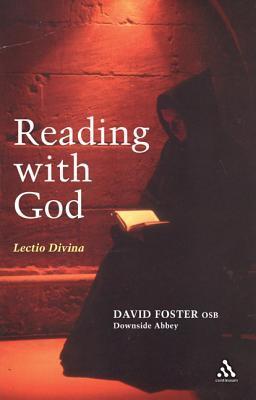
David Foster is a Benedictine Monk of Downside Abbey and chaplain to Downside School. He has always been concerned to bring the riches of the monastic tradition to lay people as they struggle to live the Christian life in the modern world. Lectio Divina or the art of spiritual reading is an art which is all but lost outside monastic communities. But following St Benedict's opening command in his Rule to 'listen', attending to the word of God through the printed text is an art which needs to be rediscovered in a world in which we are surrounded by a cacophony of sound and noise. David Foster has written a masterly guide to this art.
As previous reviewers agree, this started out better than it concluded, Not that this monk at England's famous Downside Abbey isn't knowledgeable, or that he doesn't address a 21st century reader's concerns. Rather that the parts after the initial perusal and meditatio (better reworded as rumination, for this term for medieval Christians meant going over one's words, by recital perhaps, rather than the lotus position and incense type of connotations we moderns bring to this) of the selected snippet of Scripture didn't stick with me as much, The choices he makes from the Gospels mostly are apt, but they get varying degrees of interpretation and application. I was left after a bit thinking this was an uneven guidebook, perhaps better heard than studied.
Fr, Foster seemed to suggest that the prayer stage might weigh in on the difficult question of why the divine presence doesn't answer our petitions, although he encourages us to follow Jesus' admonition to encourage us to ask for what we seek anyhow. Of course, then the suggestion is that one's supplication shouldn't've been granted, or it maybe was in another way, or will be in a subtler form. You get the gist: this is an conundrum about the will of God that I cannot figure out and I know I'm far from alone.
Similarly, while I like the suggestion that we think of the traditional stage four as not contemplation in that original monastic sense for those with more leisure back then, but as "wondering," what to do with one's time spent mulling over the Word, how to take the lessons---not intellectual or historical or theological but reflective--is another challenge for us in the lay community. The author roams into his own impressions of how to live the biblical passages he interspersed sure, But the book doesn't build up to a compelling enough presentation that I can recommend to other as a first introduction ideal for the newcomer. Which I am.
This is an informative generalised overview of Lectio Divina, but I feel that to move forward I require a more practical handbook with advice and examples as well as perhaps some more her/historical context. I found the first half of the book of greater help than the second half, which seemed to me to be less focused.
Even though I found parts of this book difficult to read, I still got a lot out of it, mostly the desire to grow closer in my relationship with God. Also I found my new favourite scripture - Romans 5:1-5 💖