

What do you think?

Aus Dem Schattenreich: Erzählungen
Realm of the Dead describes the lands of both the living and the dead. In this collection of short stories, they are equally dark and mysterious worlds where logic and reality are subject to constant change and where ideas about identity and self are continually questioned. Considered one of the foremost innovators of Japanese modernism, Hyakken incorporates a distinctly non-Western set of myths and folklore to evoke a society--and a people--on the brink of enormous change.
169 pages, Hardcover
First published January 1, 1922
Ratings & Reviews
Friends & Following
Create a free account to discover what your friends think of this book!
Community Reviews
Displaying 1 - 21 of 21 reviews

August 24, 2011
I have been rather surprised by the average ratings that Uchida Hyakken’s “Realm of the Dead” has gathered on Goodreads. Because of this I have decided to write a review that provides some context for appreciating Hyakken’s work. My review will be limited to the eighteen stories that make up “Realm of the Dead”. I will not be reviewing the second cycle of stories known as “Triumphant March into Port Arthur”, for, although there are many stylistic similarities with the first cycle, the second part of the book has unique features which should be reviewed separately.
Robert Aickman once said that, in his opinion, there were only about twenty or thirty first-rate ghost stories in world literature. Much as I admire Aickman’s work, his comment ignores the vast, time-honoured tradition of ghostly narration in Chinese, Japanese and Korean literature. One writer who dipped into these rich literary waters was Lafcadio Hearn, the American writer who retold many of Japan’s ghostly folktales. Most ghost story enthusiasts are familiar with Hearn’s collection, “Kwaidan”. But what some readers may not appreciate is that when Hearn died in Japan in 1904, the Japanese nation mourned his passing, because Hearn was considered Japanese. Or, at least, Japanese readers felt that Hearn’s twice-told tales captured the spirit of the original folktales.
In 1908 Natsume Soseki, a writer destined to become one of Japan’s greatest novelists, published a book entitled “Ten Nights of Dreams”. This very small book of ten stories has been described by some reviewers as a collection of dream narratives. However, I think it is misleading to place these stories in the context of Surrealism, for these so-called ‘dreams’ are ghost stories in a modern vein. Soseki’s ‘dreams’ built on Lafcadio Hearn’s ghost stories. (Anyone who doubts this statement may go read Natsume Soseki’s first ‘dream’ and compare it with Hearn’s “Story of O-Tei”). But where Hearn’s stories were still built on the traditional distinction between the living and the dead, Natsume Soseki pushed the boundaries of the ghost story by collapsing the distinction between dream and reality.
One would think that once the distinction between dream and reality had broken down, there would be no further development to the Japanese ghost story. But, in 1922, a strange little book appeared in Japan published by Uchida Hyakken. When I use the word ‘strange’ I am referring firstly to the book’s appearance, for this little volume of eighteen stories came with a remarkably plain cover design. Above the title of the book – “Realm of the Dead” – was the picture of a fox in the style of a woodblock print. If the reader opened the book, he or she would be met by a table of contents, but with no indication of where the stories could be found in the text. The word ‘strange’, however, also applies to the content, because from the very first story the reader is plunged into a terrifying, disconcerting world revealed through a series of fragmented eerie narratives such that the concepts of ‘dream’ and ‘ghost’ and ‘story’ become meaningless.
Natsume Soseki’s ‘dreams’ represented narratives that coded some of the unbearable collective anxieties of the early twentieth century. Uchida Hyakken’s book built on Soseki’s work to paint an even more disconcerting world. (Anyone who doubts this statement may go read Soseki’s third ‘dream’ and compare it to Hyakken’s story, “The Companion”). The protagonist of “Realm of the Dead” is a man who moves through uncanny landscapes where, haunted by the past in the form of fragments of memories, he tries to make sense of disconnected events. The book presents us with what seem familiar Japanese motifs: temples and shrines, lanterns and fox-spirits. But these familiar motifs are stripped of significance when set against the unfamiliar landscapes: abandoned riverbanks and menacing waters, mysterious towns and dark mountains. Hyakken’s world is an eerie one, where strangers may be relatives, where mythical beasts have lost the power to prophesize, and where women are forced to embody the most painful characteristics of our modern world. It is a world where characters never connect; a shadowy world where one is for the most part blind; and where the protagonist deals with his aloneness by hankering after he-knows-not-what. It is therefore not easy to like Hyakken’s stories, but that should not prevent us from recognizing their worth. For “Realm of the Dead” is an innovative contribution to the Japanese ghostly tale, and a masterpiece of world literature.
Robert Aickman once said that, in his opinion, there were only about twenty or thirty first-rate ghost stories in world literature. Much as I admire Aickman’s work, his comment ignores the vast, time-honoured tradition of ghostly narration in Chinese, Japanese and Korean literature. One writer who dipped into these rich literary waters was Lafcadio Hearn, the American writer who retold many of Japan’s ghostly folktales. Most ghost story enthusiasts are familiar with Hearn’s collection, “Kwaidan”. But what some readers may not appreciate is that when Hearn died in Japan in 1904, the Japanese nation mourned his passing, because Hearn was considered Japanese. Or, at least, Japanese readers felt that Hearn’s twice-told tales captured the spirit of the original folktales.
In 1908 Natsume Soseki, a writer destined to become one of Japan’s greatest novelists, published a book entitled “Ten Nights of Dreams”. This very small book of ten stories has been described by some reviewers as a collection of dream narratives. However, I think it is misleading to place these stories in the context of Surrealism, for these so-called ‘dreams’ are ghost stories in a modern vein. Soseki’s ‘dreams’ built on Lafcadio Hearn’s ghost stories. (Anyone who doubts this statement may go read Natsume Soseki’s first ‘dream’ and compare it with Hearn’s “Story of O-Tei”). But where Hearn’s stories were still built on the traditional distinction between the living and the dead, Natsume Soseki pushed the boundaries of the ghost story by collapsing the distinction between dream and reality.
One would think that once the distinction between dream and reality had broken down, there would be no further development to the Japanese ghost story. But, in 1922, a strange little book appeared in Japan published by Uchida Hyakken. When I use the word ‘strange’ I am referring firstly to the book’s appearance, for this little volume of eighteen stories came with a remarkably plain cover design. Above the title of the book – “Realm of the Dead” – was the picture of a fox in the style of a woodblock print. If the reader opened the book, he or she would be met by a table of contents, but with no indication of where the stories could be found in the text. The word ‘strange’, however, also applies to the content, because from the very first story the reader is plunged into a terrifying, disconcerting world revealed through a series of fragmented eerie narratives such that the concepts of ‘dream’ and ‘ghost’ and ‘story’ become meaningless.
Natsume Soseki’s ‘dreams’ represented narratives that coded some of the unbearable collective anxieties of the early twentieth century. Uchida Hyakken’s book built on Soseki’s work to paint an even more disconcerting world. (Anyone who doubts this statement may go read Soseki’s third ‘dream’ and compare it to Hyakken’s story, “The Companion”). The protagonist of “Realm of the Dead” is a man who moves through uncanny landscapes where, haunted by the past in the form of fragments of memories, he tries to make sense of disconnected events. The book presents us with what seem familiar Japanese motifs: temples and shrines, lanterns and fox-spirits. But these familiar motifs are stripped of significance when set against the unfamiliar landscapes: abandoned riverbanks and menacing waters, mysterious towns and dark mountains. Hyakken’s world is an eerie one, where strangers may be relatives, where mythical beasts have lost the power to prophesize, and where women are forced to embody the most painful characteristics of our modern world. It is a world where characters never connect; a shadowy world where one is for the most part blind; and where the protagonist deals with his aloneness by hankering after he-knows-not-what. It is therefore not easy to like Hyakken’s stories, but that should not prevent us from recognizing their worth. For “Realm of the Dead” is an innovative contribution to the Japanese ghostly tale, and a masterpiece of world literature.

June 12, 2012
In fact, some of these stories are actually amazing. At best, Uchida has an incredible sense of space and landscape, stage for an eerie anticipatory present in which anything may occur and often does, imbued with urgent yet indescribable portents conveyed in dream and fever. It's wonderful. And in the first collection of the two joined here, first published in 1922, Uchida actually seems to have been foreseeing many of the promises of the incipient Surrealism, often exactly in the way that de Chirco's exquisitely vacant architectures do. The slim first collection, with its 18 concisely enclosed visions, is good.
After, it's not so much that the second collection here is bad, it's just unnecessary, thinning out Uchida's concentrated strengths into, first, longer "realistic" stories, then a series of emptier recapitulations of earlier ideas. Any taken alone have interest, but in then end, there's just too much for his narrow stylistic theater.
Still, for stories like "Fireworks", and "The Crow" this seems vital, in some strange and difficult to pin down way. Say, 4 stars for the original 1922 collection (even if that alone becomes a little redundant), 2 stars for the longer second, a decade later.
After, it's not so much that the second collection here is bad, it's just unnecessary, thinning out Uchida's concentrated strengths into, first, longer "realistic" stories, then a series of emptier recapitulations of earlier ideas. Any taken alone have interest, but in then end, there's just too much for his narrow stylistic theater.
Still, for stories like "Fireworks", and "The Crow" this seems vital, in some strange and difficult to pin down way. Say, 4 stars for the original 1922 collection (even if that alone becomes a little redundant), 2 stars for the longer second, a decade later.

June 15, 2015
Dreamy!
In that it was like someone telling you their dreams....
In that it was like someone telling you their dreams....

September 16, 2017
Three stars not for the literary quality but as a reflection that this will be difficult going for anyone not familiar with the underlying references or the tenor of the times Hyakken Uchida was writing from. I'd like to see more of his work in English, especially after watching the film "Zigeunerweisen", which was based on one of his stories.

November 4, 2017
As if in a dream. Is it possible that this book served as psychotherapy to Uchida, like drawing did for Van Gogh? The narration follows a nightmare dream logic, hence it is oftentimes more comical or nonsensical, rather than frightening. It contains a rare glimpse of an external appreciation of the war imagery and ritualistic objects of christian cult, as something inherently morbid and repulsive, for a culture based on purity or rather - cleanlyness, bodily and ritual.
A Lovecraft, with all his overemphasis on athmospheric horror and inexplainable dread, but without the whole chtonic and otherwordly imagery.
A fun, if a little mysterious, short book made of tiny texts.
A Lovecraft, with all his overemphasis on athmospheric horror and inexplainable dread, but without the whole chtonic and otherwordly imagery.
A fun, if a little mysterious, short book made of tiny texts.
May 6, 2025
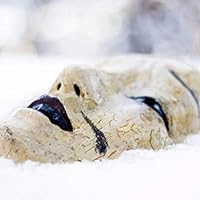
The author has a wonderful way of describing every day things and creating atmosphere. This may be of interest to writers but otherwise there's very little of worth here. It's a 229 page book made up of dream fragments mostly 3 pages long. Every one feels like an anxiety nightmare and ends as quickly as it begins creating an incredibly forgettable experience lacking any narrative, characters or memorable moments. If any longer works were translated I'd love to read a novel or novella by this author... unless its another, 'professor and his cheating wife story' which seems to make up 75% of this book.

September 22, 2018
I really tried. I did, but it just doesn't open up to me. I'm bored out my tits with this book and I just can't ever imagine finishing it. It would take me years but I don't have that sort of time.

June 2, 2021
Even for a volume of weird Japanese short stories, this collection defies expectations. Despite the title, these are neither ghost stories nor horror stories. Instead, we have a long series of mostly extremely short pieces which are not even really stories in the conventional sense. You'll find no 'Tales of the Unexpected'-type twists here, and there is no more logic than you'd find in a dream. In fact, the contents most closely resemble descriptions of nightmares.
My absolute favourite was 'Kudan', in which the narrator finds himself reincarnated as a mythical cow-like creature which only lives for a few days but is expected to deliver a prophecy before expiring.
Uchida is a unique voice, and this collection certainly won't be for everyone, but I liked it a lot. However, at nearly 50 'stories' it's perhaps too much in one volume and it did take me a while to get through it.
My absolute favourite was 'Kudan', in which the narrator finds himself reincarnated as a mythical cow-like creature which only lives for a few days but is expected to deliver a prophecy before expiring.
Uchida is a unique voice, and this collection certainly won't be for everyone, but I liked it a lot. However, at nearly 50 'stories' it's perhaps too much in one volume and it did take me a while to get through it.
February 8, 2021
I borrowed this from the library thinking it would be a weird-ass book judging by its name. Not gonna lie, some of the stories were, and I very much enjoyed them; they were really weird and interesting like I was expecting. But the rest, well, I didn't get anything. Maybe they were simply bad? Or was it because I don't know much about Japanese culture? Probably the latter.
June 4, 2013
1.5 - I struggled to finish this collection of short stories and to give some meaning to, at least, the few stories that I appreciated. But I'm ready to admit that I don't like reading about fantasy or the supernatural, if this book fits into any of these genres.
It reminded me of Lafcadio Hearn's Kwaidan however, I remember that book being more folkloristic, while Uchida's stories are more like nightmares put on paper, therefore it makes it difficult to know what to think of them. The few stories that I liked seem to deal with a crisis with the self, with being alone and with losing connection with the people around. Eerie, but didn't left such an impact on me. Forgettable.
Complete review on my blog, Asia in Literature
It reminded me of Lafcadio Hearn's Kwaidan however, I remember that book being more folkloristic, while Uchida's stories are more like nightmares put on paper, therefore it makes it difficult to know what to think of them. The few stories that I liked seem to deal with a crisis with the self, with being alone and with losing connection with the people around. Eerie, but didn't left such an impact on me. Forgettable.
Complete review on my blog, Asia in Literature

August 26, 2009
Books like this one are the reason why there should be one more category beside 'to read', 'currently reading' and 'read', which would be called 'done with'. Maybe it's just me, but it seems Uchida's novels are on the level of C-rated works in fanzines of experimental writing. I usually give books I pick up a chance and read them through, but in this case I'll gladly make an exception.
March 13, 2010
This is one of the books I couldn't wait to finish reading it. Not because it is really good, but because I do not really like it. Out of 47 stories in total, none of them caught my attention. I felt obliged to read it. The stories are beautifully written, yet I can't understand every single of them. I squinted so hard to see underneath the underneath, but still, I can't grasp their meanings.

August 30, 2018
I enjoyed reading the short stories very much, the opening story “Fireworks”, “Kudan”, and “The Smallpox Demon” in particular. Some stories end in an abrupt way but I think that reflects the nature of weird, dream-like, and unexplainable experiences we have in life. Things could also be out of your control sometimes.

July 1, 2010
Like when you hear a great song, buy the album and find that the song you liked was the only good song, this group of short stories I found ultimately disappointing because of how good "The Leopard" was. Read that! It will take you ten minutes, tops.
August 23, 2012
I could swear that this is a dream journal. I'm not sure what to make of it though. It was just like watching a dream TV. I think it would be a good read when one feels too attached to the material world. Like a "wakeup call" that this is not the only world that is.
Read
November 2, 2010japanese short stories about the beyond..

Read
August 24, 2011Very dreamy.

February 16, 2013
Read for school. Creepy, but not scary.

September 1, 2013
suffocating experience

Did Not Finish
June 3, 2013Absurd

November 29, 2014
I have never read anything like this before.
Displaying 1 - 21 of 21 reviews