

What do you think?
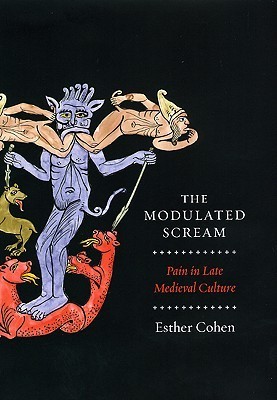
The Modulated Scream: Pain in Late Medieval Culture
In the late medieval era, pain could be a symbol of holiness, disease, sin, or truth. It could be encouragement to lead a moral life, a punishment for wrong doing, or a method of healing. Exploring the varied depictions and descriptions of pain—from martyrdom narratives to practices of torture and surgery—The Modulated Scream attempts to decode this culture of suffering in the Middle Ages.
Esther Cohen brings to life the cacophony of howls emerging from the written record of physicians, torturers, theologians, and mystics. In considering how people understood suffering, explained it, and meted it out, Cohen discovers that pain was imbued with multiple meanings. While interpreting pain was the province only of the rarified elite, harnessing pain for religious, moral, legal, and social purposes was a practice that pervaded all classes of Medieval life. In the overlap of these contradicting attitudes about what pain was for—how it was to be understood and who should use it—Cohen reveals the distinct and often conflicting cultural traditions and practices of late medieval Europeans. Ambitious and wide-ranging, The Modulated Scream is intellectual history at its most acute.
384 pages, Hardcover
First published May 15, 2010
Ratings & Reviews
Friends & Following
Create a free account to discover what your friends think of this book!
Community Reviews
Displaying 1 - 3 of 3 reviews

December 8, 2020
Wow! I have a longstanding personal interest in pain and the title kept me intrigued until one day I bought myself a copy. It was slow-going and I put it down a few times for easier things. That said I found everything about it interesting, and looking for more. I was sorry I only have "hymnbook Latin" as she gave occasional phrases in Latin and she'd made her own translations of so items with the originals in the notes. A working knowledge of Latin is expected in both the history of science and the history of medicine. Aside from that Cohen has sparked my imagination and I've been able to locate a number of references to follow-up on some historical figures. "The Modulated Scream." While not for the faint of heart the stories and examples Cohen has used are no where near as graphic as those in some other works (Foucault's "Discipline and Punish" for example).
"The Modulated Scream" is an excellent choice for anyone looking to learn more about justice, faith or health/health care in the medieval era.
"The Modulated Scream" is an excellent choice for anyone looking to learn more about justice, faith or health/health care in the medieval era.

January 19, 2013
For the most part, this is a tightly-argued and well-organized contribution to studies in medieval culture and it is certainly an important resource for scholars working on the subject of pain in any field of medieval studies, with particular implications for specialists in medical, theological, and legal matters. Although Cohen does not directly deal with literary and visual representations of pain, scholars interested in examining the presence and construction of pain and suffering in medieval literature and art could benefit enormously from this study as a blueprint for thinking about the normative, expressive, and performative aspects of pain in medieval culture. The book should also appeal more widely to those interested in general social and intellectual histories or the history of pain, torture, or medicine in western culture.

May 20, 2026
中世纪痛苦知识考古,那个时候痛苦并不是个人的生理感觉,而是道德、宗教与社会事件。modulated scream很有意思,因为痛苦而产生的尖叫被社会modulated,被赋予了太多的含义。尤其在关于 torture、saint narratives 与pain behavior 的章节里,可以明显看到身体的即是政治的。痛苦不仅制造顺从,也制造真相。其中涉及到script的部分,其实和现代社会非常相似,女性的哭泣被视为肉体化与缺乏控制,与理性背道而驰。身体表达从来不是中性的,书里的很多叙述都和如今的网络创伤叙事、女性身体经验依然紧密相连,让我感到中世纪并没有离我们很远,只是今天的 modulation 变得更隐秘,更日常化。
Displaying 1 - 3 of 3 reviews