

What do you think?

Swallow: Foreign Bodies, Their Ingestion, Inspiration, and the Curious Doctor Who Extracted Them
Product Description
An American half-dollar. A beaded crucifix. Tooth roots shaped like a tiny pair of pants. A padlock. Scads of peanut kernels and scores of safety pins. A metallic letter Z. A toy goat and tin steering wheel. A Perfect Attendance Pin.
One of the most popular attractions in Philadelphia's world-famous Mütter Museum is the Chevalier Jackson Foreign Body Collection: a beguiling set of drawers filled with thousands of items that had been swallowed or inhaled, then extracted nonsurgically by a pioneering laryngologist using rigid instruments of his own design. How do people's mouths, lungs, and stomachs end up filled with inedible things, and what do they become once arranged in Jackson's aura-laden cabinet? What drove Dr. Chevalier Jackson's peculiar obsession not only with removing foreign bodies from people’s upper torsos but also with saving and cataloging the items that he retrieved?
Animating the space between interest and terror, curiosity and dread, award-winning author Mary Cappello explores what seems beyond understanding: the physiology of the human swallow, and the poignant and baffling psychology that compels people to ingest non-nutritive things. On a quest to restore the narratives that haunt Jackson’s uncanny collection, she discovers that all things are secretly edible. Combining original research with a sympathetic and evocative sensibility, Cappello uncovers a history of racism and violence, of forced ingestion and "hysteria," of class and poverty that left children to bank their family’s last quarters in their mouths. Here, the seemingly disparate but equally marvelous worlds of the circus and the medical amphitheater meet in characters ranging from sword swallowers and women who lunched on hardware to the sensitive, bullied boy who grew up to be the father of endoscopy.
Advance Praise
"Swallow is a surprising and original work. It is biography on the slant, a meditation that transcends boundaries and genres, written with scholarship, humor, and panache. I urge you to take this journey." —Ricky Jay
"I was astonished and delighted—grabbed by the throat, indeed—by this most remarkable book, which took me down a thousand little red lanes, and laid out in excruciating and fascinating detail all those myriad of items—corks to safety pins to draughts of lye and three-foot swords—that have managed to pass down there too. It is a wonderful and bizarre book: gorge yourself on it, and gulp.” —Simon Winchester, author of Atlantic: The Biography of an Ocean
"Swallow is a wonderful, intriguing book, a fascinating glimpse into a true medical pioneer and a life's work. Mary Cappello delves into what it means to ingest things we weren’t meant to eat, and how the line between our bodies and foreign bodies can sometimes blur. Every object tells a story, and the stories here are marvelous." —Colin Dickey, author of Crankiolepty: Grave Robbing and the Search for Genius
About the Author
Mary Cappello's three previous books of literary nonfiction are Awkward, a Los Angeles Times bestseller; Called Back, a critical memoir on cancer that won a ForeWord Book of the Year Award and an Independent Publisher Book Award; and the memoir Night Bloom. A recipient of the Bechtel Prize for Educating the Imagination from Teachers and Writers Collaborative and the Dorothea Lange–Paul Taylor Prize from Duke University’s Center for Documentary Studies, she is a former Fulbright lecturer at the Gorky Literary Institute (Moscow) and currently a professor of English and creative writing at the University of Rhode Island. She lives in Providence.
An American half-dollar. A beaded crucifix. Tooth roots shaped like a tiny pair of pants. A padlock. Scads of peanut kernels and scores of safety pins. A metallic letter Z. A toy goat and tin steering wheel. A Perfect Attendance Pin.
One of the most popular attractions in Philadelphia's world-famous Mütter Museum is the Chevalier Jackson Foreign Body Collection: a beguiling set of drawers filled with thousands of items that had been swallowed or inhaled, then extracted nonsurgically by a pioneering laryngologist using rigid instruments of his own design. How do people's mouths, lungs, and stomachs end up filled with inedible things, and what do they become once arranged in Jackson's aura-laden cabinet? What drove Dr. Chevalier Jackson's peculiar obsession not only with removing foreign bodies from people’s upper torsos but also with saving and cataloging the items that he retrieved?
Animating the space between interest and terror, curiosity and dread, award-winning author Mary Cappello explores what seems beyond understanding: the physiology of the human swallow, and the poignant and baffling psychology that compels people to ingest non-nutritive things. On a quest to restore the narratives that haunt Jackson’s uncanny collection, she discovers that all things are secretly edible. Combining original research with a sympathetic and evocative sensibility, Cappello uncovers a history of racism and violence, of forced ingestion and "hysteria," of class and poverty that left children to bank their family’s last quarters in their mouths. Here, the seemingly disparate but equally marvelous worlds of the circus and the medical amphitheater meet in characters ranging from sword swallowers and women who lunched on hardware to the sensitive, bullied boy who grew up to be the father of endoscopy.
Advance Praise
"Swallow is a surprising and original work. It is biography on the slant, a meditation that transcends boundaries and genres, written with scholarship, humor, and panache. I urge you to take this journey." —Ricky Jay
"I was astonished and delighted—grabbed by the throat, indeed—by this most remarkable book, which took me down a thousand little red lanes, and laid out in excruciating and fascinating detail all those myriad of items—corks to safety pins to draughts of lye and three-foot swords—that have managed to pass down there too. It is a wonderful and bizarre book: gorge yourself on it, and gulp.” —Simon Winchester, author of Atlantic: The Biography of an Ocean
"Swallow is a wonderful, intriguing book, a fascinating glimpse into a true medical pioneer and a life's work. Mary Cappello delves into what it means to ingest things we weren’t meant to eat, and how the line between our bodies and foreign bodies can sometimes blur. Every object tells a story, and the stories here are marvelous." —Colin Dickey, author of Crankiolepty: Grave Robbing and the Search for Genius
About the Author
Mary Cappello's three previous books of literary nonfiction are Awkward, a Los Angeles Times bestseller; Called Back, a critical memoir on cancer that won a ForeWord Book of the Year Award and an Independent Publisher Book Award; and the memoir Night Bloom. A recipient of the Bechtel Prize for Educating the Imagination from Teachers and Writers Collaborative and the Dorothea Lange–Paul Taylor Prize from Duke University’s Center for Documentary Studies, she is a former Fulbright lecturer at the Gorky Literary Institute (Moscow) and currently a professor of English and creative writing at the University of Rhode Island. She lives in Providence.
336 pages, Hardcover
First published November 4, 2010
About the author
Mary Cappello
11 books23 followersMary Cappello is a writer and professor of English and Creative Writing at the University of Rhode Island. She is the author of four books of literary nonfiction, and her essays and experimental prose have been published in The Georgia Review, Salmagundi and Cabinet Magazine. Her work has been featured in The New York Times, Salon, The Huffington Post, in guest author blogs for Powell's Books, and on six separate occasions as Notable Essay of the Year in Best American Essays. A 2011 Guggenheim Fellow in Creative Arts/Nonfiction, she recently received a 2015 Berlin Prize from The American Academy in Berlin, a fellowship awarded to scholars, writers, composers, and artists who represent the highest standards of excellence in their fields.
Cappello is originally from Darby, Pennsylvania, a suburb outside Philadelphia. She received her Ph.D. and M.A. from State University of New York, Buffalo, and her B.A. from Dickinson College. Cappello has taught at the University of Rhode Island, as a Fulbright Lecturer at the Gorky Literary Institute in Moscow, Russia, and at the University of Rochester.
(from Wikipedia)
Cappello is originally from Darby, Pennsylvania, a suburb outside Philadelphia. She received her Ph.D. and M.A. from State University of New York, Buffalo, and her B.A. from Dickinson College. Cappello has taught at the University of Rhode Island, as a Fulbright Lecturer at the Gorky Literary Institute in Moscow, Russia, and at the University of Rochester.
(from Wikipedia)
Ratings & Reviews
Friends & Following
Create a free account to discover what your friends think of this book!
Community Reviews
Displaying 1 - 30 of 34 reviews

December 1, 2016
I trudged through 36 pages of small print, wondering why I don't much like the topic/book, a topic I thought would be interesting. Then on page 36, I see the problem: The writer is not particularly interested in her subject, the doctor who removed items people swallowed or breathed in. Cappella says, "I am not a follower of Chevalier Jackson, but in writing this book I sort of feel like his channeler, his chronciler, his poet friend and his scribe." Is she writing this book because of a publish or perish situation? The writing has no life, and I have other more enjoyable books to read.
Great idea this book.
Maybe someone else will be interested enough to bring the topic to life.
Great idea this book.
Maybe someone else will be interested enough to bring the topic to life.

March 25, 2020
As I read Swallow, I was struck by the tenderness the author displays as she writes about scores of safety pins, a shawl pin, a beaded crucifix, a wristwatch, a cocklebur, a fence staple, an American half dollar, a rubber eraser, a pebble, a toy goat, a perfect attendance pin... thousands of objects and the people who swallowed them. I’m not sure what drew me to this remarkable book, but Mary Cappello is a compelling writer with an evocative and original voice. She begins at the Mütter Museum in Philadelphia, a place I’ve wanted to visit ever since I saw Smiling in a Jar, the 2000 film by Errol Morris that featured Gretchen Worden the museums fascinating director. But as I read the book, largely about Chevalier Q. Jackson, a curious doctor who extracted thousands of foreign bodies from the lungs, trachea and esophagi of so many (and whose incredible collection of those objects resides in the Mütter Museum),... I discovered intersections of my own memories tangled in these stories; a 1940’s newspaper clipping about a woman who’d swallowed two open safety pins that I saved for years, a physician I worked for who had his own shadow-boxed collection of foreign body objects he’d removed from patients hanging in his home, and last but not least, the penny swallowed by my 18-month-old son and it’s subsequent retrieval. Needless to say I felt a kinship with Mary Capello and her unusual narrative. I’m looking forward to reading more of her work!
March 25, 2011
I heard about this book on an NPR segment and it sounded strange but interesting. Living in Philadelphia, I have visited the Mutter museum where a large number of these "foreign bodies" are on display. Dr. Jackson himself was an odd man but who made an important contribution to his field of medicine. The author, unfortunately, had an irritating manner of over using metaphors and repetitive clauses which was very distracting. As an example, she closes the book with a description of Dr. Jackson's grave site:"From this bird's-eye cartographic view, set to the left of the Schuylkill Expressway, which resembles from this height an esophagus, to the right of which runs the Schuylkill River (as trachea), it would appear that Chevalier Jackson's resting place is a lung." Enough said.

April 28, 2011
I don't think I've ever read a book quite like this one. The author is a writer of literary nonfiction, a style I'm not very familiar with. I was always one of those kids who didn't like the food on his plate mixing together -- I liked to know what I was getting with each dish. I think I prefer my reading that way, too. This is no fault of Cappello's. She writes eloquently about Chevalier Jackson and his pioneering work in esophagoscopy and bronchoscopy, finding and removing foreign objects from people's throats and windpipes. He is indeed an interesting character, but I got lost (and confused) during detours into psychology and literary theory.
Many nonfiction books I read take turns like these, but in most cases, the effect is one of embellishing the science. In the case of this book, I felt that Jackson's story was used as a framework for creative writing, and that the scientific aspects of the topic took a backseat. A perfectly valid approach, but not as much to my taste.
I do love that this book was written and that I know more about this interesting person. And I love that it was all started by a serendipitous encounter with a collection. That warms the cockles of my librarian heart.
Many nonfiction books I read take turns like these, but in most cases, the effect is one of embellishing the science. In the case of this book, I felt that Jackson's story was used as a framework for creative writing, and that the scientific aspects of the topic took a backseat. A perfectly valid approach, but not as much to my taste.
I do love that this book was written and that I know more about this interesting person. And I love that it was all started by a serendipitous encounter with a collection. That warms the cockles of my librarian heart.
January 25, 2012
I wish I could agree with some of the reviewers who described this as "dry"-sadly, if only the author could have limited herself to this, I might have been able to finish this, especially given its professional interest to me. If only. Instead, we get rhetorical flourishes which go nowhere, overblown prose throughout, and an author who can't seem to understand that she is not a player in the story. I think this excerpt from her URI faculty page sums it up nicely:
"As a practitioner of literary non-fiction, Mary Cappello is primarily interested in creating forms of disruptive beauty, figuring memory in a postmodern age, bringing incompatible knowledges into the same space, and working at the borders of literary genres."
Do you have any idea what that means? Me neither. Were you able to finish the entire sentence without retching? Now you understand what reading this book is like.
"As a practitioner of literary non-fiction, Mary Cappello is primarily interested in creating forms of disruptive beauty, figuring memory in a postmodern age, bringing incompatible knowledges into the same space, and working at the borders of literary genres."
Do you have any idea what that means? Me neither. Were you able to finish the entire sentence without retching? Now you understand what reading this book is like.

Read
February 22, 2011I only made it to page 48. I just can't fathom what the author is actually writing about, because it is certainly not "Foreign Bodies, Their Ingestion, Inspiration, and the Curious Doctor Who Extracted Them." Perhaps the author is just working off the word "inspiration" and writing something completely different. If you know me at all, you know I really picked this up to read about "strange things people swallow", and how. There were some photos and x-rays that were interesting to look at, and the x-rays of open safety pins inside various people were delightfully horrifying. I probably won't actually ever return to this one.

November 6, 2010
I'm afraid this was a very boring book. I was hoping it would be interesting and informative. It was informative, but written as if it were a textbook. None of the cases in it were more than cases; the author seemed to keep everyone at a distance, just like Dr. Chevalier Jackson, the inventor of the bronchoscope which saved many lives. She discusses his distance from his patients and seems to dislike it, but she is the same way with both Dr. Chevalier, whom she appears to have a crush on, as well as the patients in the book. I was disappointed and do not recommend it.

April 10, 2011
This looked fun and quirky--a story of a doctor who specialized in removing swallowed or aspirated foreign bodies from people, then kept, maintained and donated to a museum a collection of ALL the bizarre things he removed from people. Sounds like an interesting guy, interesting story. And it might have been, but the writing is so bizarre that it approaches unintelligibility at times. I ended up just skimming through, looking for the notes actually written by the doctor, as the prose in the rest of the book was just too much to take.

May 13, 2018
"The Jackson collection... does conjur what I'd like to call a "visceral sublime," a combination of fascination and disgust.... A repulsion and attraction toward, a temptation and a terror around incongruity is what moves us, a boundary exceeded, a physiological rule broken: a battleship caught in a thorax, a jackstone stuck in an esophagus, a padlock not quite at home inside a stomach."
This book explodes with metaphor as Capello explores the philosophical implications of swallowing and extracting foreign bodies. Fascinating and provocative.
This book explodes with metaphor as Capello explores the philosophical implications of swallowing and extracting foreign bodies. Fascinating and provocative.
February 25, 2012
The writing is just horrible- and, like all of the other (spot on) reviewers that gave it one star, I agree that the book goes nowhere. The only thing the book did for me was make me want to go to the Mutter Museum. I couldn't get through the whole thing. Somehow the author managed to make this interesting subject about people swallowing foreign objects and the man who perfected the art of retrieving them, about herself. It was awful. The writing is amateur at best.
January 8, 2017
I'm a doctor with an interest in Ear, Nose & Throat medicine, so the subject of this book is right in my wheelhouse. As others have described, however, the writing style of this author is so idiosyncratically weird that I was unable to finish it. I'm sure the museum exhibit that inspired this book is fascinating. This book, however, was not a good chronicle of the exhibit nor of the rather unusual doctor who collected these swallowed objects.

May 22, 2011
After a short while, I didn't even have the desire to skim it. I had the perfect sentence picked out, too, that demonstrates some of the random writing in here. Unfortunately, I returned the book to the library before copying the sentence. Sorry.

February 2, 2015
This book took me forever to finish. The topic intrigued me, but the book was much more about the life of the doctor than the reasons why people swallowed them, which I would have found more entertaining.
December 28, 2010
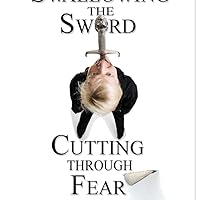
Excellent study on swallowing and the strange things people have swallowed! Very interesting chapter on sword swallowing starting on page 139!

March 27, 2011
Really intesting read about an exhibit at the Mutter Museum. I can't wait to go check it out. The topic was fascinating, but the writing style felt like a thesis.
December 20, 2019
I'm a sucker for a mixture of historical research and the personal in a long form essay. Give me a library of these. Cappello is one of the very best essaysists alive and you can plug that in your pipe and swallow it.

July 28, 2018
How in the world are votes for this book so low? Plebs.
April 27, 2019
I would give it 0 stars if I could. I'm ashamed to say I actually finished it.

December 9, 2016
Author Mary Cappello wrote this book while undergoing treatment for breast cancer. And OH it shows because she must have been on same damn good drugs to get into such loopy tangents from the main point of the book: the history of the Chevalier Jackson foreign body collection at the Mutter Museum in Philadelphia.
HOW loopy does she get? At one point, out of nowhere, she writes, "Remember Proust?"

PROUST??? Effing completely forgettable PROUST? I picked up this book thinking (wrongly) it would be like a Mary Roach book in that it would at least attempt to stick to the theme of swallowed objects and those who survived (and those who didn't.) If I wanted to remember Proust, I'd pick up a damn Proust book.
The writing at turns suddenly flashes poetic, then sentimental then funny and then just downright peculiar. A more focused look at the subject and the exclusion of about 100 pages would have made this a much better book.
And the crush the author had of Dr. Chevalier Jackson was just a little creepy.
Moral of the story: If you want to read Mary Roach, just re-read a Mary Roach book. Don't settle for anything else, even if the title sounds like a Mary Roach title, because it will be hard to swallow.
HOW loopy does she get? At one point, out of nowhere, she writes, "Remember Proust?"
PROUST??? Effing completely forgettable PROUST? I picked up this book thinking (wrongly) it would be like a Mary Roach book in that it would at least attempt to stick to the theme of swallowed objects and those who survived (and those who didn't.) If I wanted to remember Proust, I'd pick up a damn Proust book.
The writing at turns suddenly flashes poetic, then sentimental then funny and then just downright peculiar. A more focused look at the subject and the exclusion of about 100 pages would have made this a much better book.
And the crush the author had of Dr. Chevalier Jackson was just a little creepy.
Moral of the story: If you want to read Mary Roach, just re-read a Mary Roach book. Don't settle for anything else, even if the title sounds like a Mary Roach title, because it will be hard to swallow.

February 8, 2011
The title conveys that could be a very interesting topic. Unfortunately the writing style is rather like a college freshman term paper.
I read the first quarter or so then poked through the rest of the book a bit. There are good gee-whiz anecdotes and some interesting history on treatments for ingested items and throat damage. (Stories about children drinking lye is pretty horrific. Government labeling and bottling requirements were important is stopping this damage.)
A much better book could have been written with the same material.
I read the first quarter or so then poked through the rest of the book a bit. There are good gee-whiz anecdotes and some interesting history on treatments for ingested items and throat damage. (Stories about children drinking lye is pretty horrific. Government labeling and bottling requirements were important is stopping this damage.)
A much better book could have been written with the same material.

July 12, 2011
Not what I expected. I expected cool/neat stories about people swallowing weird things and getting them extracted, and there was a few of these, but most of the book is about Chevalier Jackson. It is interesting to read about him but I find the writing style of this other very very repetitive, the book could have been half its size, so I ended up speed reading and only paying attention to the interesting bits.
January 14, 2011
A quirky tale about an eccentric laryngologist. An interesting glimpse at his foreign body collection and selected stories about some of his patients. The writing style was distracting for me. It was as if the author was trying too hard to make an impression. Nevertheless, I'm grateful that she brought Dr. Jackson's life to light.

April 10, 2011
On a trip to Philadelphia, I visited the Mutter Museum and remember seeing Jackson's foreign bodies exhibit. There's no real shock value in this book as one might expect from a book about people swallowing things, but I enjoyed the discussions about Jackson's contributions to medicine and his eccentricities.
July 22, 2011
I was very aware of my every breath and swallow as I read this book. VERY interesting. It's about the life, works and patients of Dr. Chevalier Jackson, a laryngologist who lived from 1865-1958. Now I want to schedule a visit to Philadelphia's Mütter Museum to view Jackson's Foreign Body Collection with my own eyes.
December 12, 2011
This book was interesting but sometimes the author went on these weird tangents that seemed to have very little to do with the subject matter. I did enjoy this book though and I thought some of the case studies were downright creepy.

Read
December 18, 2010creepy strange fascinating book about the surgeon who extracted many peculiar objects from his patients...his collection has become renowned thanks to philadelphia's mutter museum.

January 11, 2011
So much speculation, so few facts. Such a terrible writing style. So not like the title. :(

March 23, 2011
Dry---did not finish.
March 29, 2011
An odd narrative non-fiction, but right up my alley...
April 4, 2011
The topic was so uncomfortable I could not appreciate the author's scholarship and finesse. Pick up this book only if you want a bizarre and creepy read!
Displaying 1 - 30 of 34 reviews