

What do you think?

The Boy Next Door: A Novel
In Bulawayo, Zimbabwe, there is a tragedy in the house next door to Lindiwe Bishop -- her neighbor has been burned alive. The victim's stepson, Ian McKenzie, is the prime suspect but is soon released. Lindiwe can't hide her fascination with this young, boisterous and mysterious white man, and they soon forge an unlikely closeness even as the country starts to deteriorate. Years after circumstances split them apart, Ian returns to a much-changed Zimbabwe to see Lindiwe, now a sophisticated, impassioned young woman, and discovers a devastating secret that will alter both of their futures, and draw them closer together even as the world seems bent on keeping them apart. The Boy Next Door is a moving and powerful debut about two people finding themselves and each other in a time of national upheaval.
416 pages, Kindle Edition
First published January 1, 2009
About the author
Irene Sabatini
10 books53 followersWinner of the ORANGE AWARD FOR NEW WRITERS 2010
I was born some fifty years ago in Hwange, a coal mining town in west Zimbabwe. I grew up in Bulawayo, the second largest city in Zimbabwe.
Bulawayo is known for its rather sleepy, laid back nature and its graceful colonial era architecture, examples of which can be found on my website
www.irenesabatini.com.
I spent many hours in the fabulous Public Library, down in the basement of the children's section devouring everything from Enid Blyton to Shane by Jack Schaefer, one of my favourite books.
I left quiet Bulawayo for,'The Sunshine City', Harare, to attend university. Harare is all hustle and bustle, with some fantastic futuristic buildings.
After university I went to Colombia where I stayed for four years working as teacher and studying for my masters. One of my biggest thrills in Colombia was catching sight of the legendary Gabriel Garcia Marquez in Cartegena. "Here, in front of me, is a real, living writer," I remember thinking. "They exist!"
Soon after that, I started writing in a red notebook in this former monastery outside Bogota. The writing seemed to just spiral out of me and if I had to pick a time when I really started this journey it would be that wonderful quiet morning on a verandah so many years ago in the Colombian countryside.
Ratings & Reviews
Friends & Following
Create a free account to discover what your friends think of this book!
Community Reviews
Displaying 1 - 30 of 120 reviews

October 29, 2009
Breathe in. And out. Where do I begin with this review?
I received this book from Hachette Book Group; I’ll start there. It sat on my bookcase for a while before I was ready to pick it up; it was intimidating and large and serious looking and I knew I needed to be ready for it. I started it, and fifty pages in I stopped and restarted it, and I’m glad I did. Restarting it allowed me to settle in with the narrative voice, it let me be fully familiar with Lindiwe and the way she uses memories to fill in the past so I can understand what makes the present so profound. The Boy Next Door is epic. It spans decades. It follows Lindiwe from adolescence through her transformation into a woman. She is fourteen when the novel starts, and her seventeen year old neighbor has been arrested for lighting his stepmother on fire. That’s how the novel starts. But that’s not where it stays. It follows Lindiwe and her neighbor, Ian, through post-independant Zimbabwe, through race tensions, and revolutionary riots, and love ,and loss, and danger.
Part 1 begins in the 1980’s. Lindiwe is a young girl, shy, surrounded by racism and a country in transformation. Ian seems worldly to her, having been released from prison and returned to Bulawayo. They form an unlikely friendship, secret from the world. They are pulled together by an inexplicable bond that lasts through war and riots and years apart.
Part 2, the early 90’s, finds Lindiwe grown into a young woman, attending school, with a future. Her childhood crush develops into something mature and deep. But there is always an overhanging sense of unease in Sabatini’s writing; as though we know this happiness between Ian and Lindiwe cannot possibly last and be peaceful for the next 200 pages.
Part 3, the mid 90’s becomes quick and tense. Revolutionary turmoil abounds, people are killed and murdered and violence surrounds them. The tension continues into the late 90’s in Part 4. It peaks and I was left breathless waiting for the end. There is so much more I could write, but it would spoil the novel and you really need to read it and experience it first-hand.
Sabatini’s debut novel is intense and beautiful and artistic. She captures Bulawayo and other places in Zimbabwe and they become characters in her writing, living breathing, forming new stories. The relationship she paints between Ian and Lindiwe is enormous and tragic and joyous all at the same time, it flows up and down with a life of its own, and we’re taken along in the river and cannot escape. We could hardly wish to.
This novel was a debut novel, and it was beautiful. I had tears in my eyes. I suspect we’ll all be hearing about Irene Sabatini in the future.
I received this book from Hachette Book Group; I’ll start there. It sat on my bookcase for a while before I was ready to pick it up; it was intimidating and large and serious looking and I knew I needed to be ready for it. I started it, and fifty pages in I stopped and restarted it, and I’m glad I did. Restarting it allowed me to settle in with the narrative voice, it let me be fully familiar with Lindiwe and the way she uses memories to fill in the past so I can understand what makes the present so profound. The Boy Next Door is epic. It spans decades. It follows Lindiwe from adolescence through her transformation into a woman. She is fourteen when the novel starts, and her seventeen year old neighbor has been arrested for lighting his stepmother on fire. That’s how the novel starts. But that’s not where it stays. It follows Lindiwe and her neighbor, Ian, through post-independant Zimbabwe, through race tensions, and revolutionary riots, and love ,and loss, and danger.
Part 1 begins in the 1980’s. Lindiwe is a young girl, shy, surrounded by racism and a country in transformation. Ian seems worldly to her, having been released from prison and returned to Bulawayo. They form an unlikely friendship, secret from the world. They are pulled together by an inexplicable bond that lasts through war and riots and years apart.
Part 2, the early 90’s, finds Lindiwe grown into a young woman, attending school, with a future. Her childhood crush develops into something mature and deep. But there is always an overhanging sense of unease in Sabatini’s writing; as though we know this happiness between Ian and Lindiwe cannot possibly last and be peaceful for the next 200 pages.
Part 3, the mid 90’s becomes quick and tense. Revolutionary turmoil abounds, people are killed and murdered and violence surrounds them. The tension continues into the late 90’s in Part 4. It peaks and I was left breathless waiting for the end. There is so much more I could write, but it would spoil the novel and you really need to read it and experience it first-hand.
Sabatini’s debut novel is intense and beautiful and artistic. She captures Bulawayo and other places in Zimbabwe and they become characters in her writing, living breathing, forming new stories. The relationship she paints between Ian and Lindiwe is enormous and tragic and joyous all at the same time, it flows up and down with a life of its own, and we’re taken along in the river and cannot escape. We could hardly wish to.
This novel was a debut novel, and it was beautiful. I had tears in my eyes. I suspect we’ll all be hearing about Irene Sabatini in the future.

January 19, 2010
What I love about reading is that you can pick up a book you've never heard of, full of a place and time you know nothing about and by the end of it have a real feel for the people and their lives.
A small mystery , an unlikely seemingly impossible relationship and real characters set amid the turmoil of post-war Rhodesia/Zimbabwe sets the scene for a very memorable book. This book was 'lekker'!!
A small mystery , an unlikely seemingly impossible relationship and real characters set amid the turmoil of post-war Rhodesia/Zimbabwe sets the scene for a very memorable book. This book was 'lekker'!!

April 25, 2010
Had I reviewed this book after the first 150 pages, I would only have given it 3 stars. It had the usual first novel feel, with passages that could have been much more fully explored. But by the time I reached the end of the book, I had been totally drawn in. The relationship between Ian, a "Rhodie" and Lindiwe, a young "colored" woman in Zimbabwe shortly after independence was initially not that compelling - typical teen love. But as the book went on, their struggle to build a meaningful life together as Zimbabwe collapsed around them became more and more interesting to me. The protagonists addressed their situation with surprising courage and developed strengths that they had not demonstrated before. This book taught me a great deal about everyday life in Zimbabwe at the time of independence and after. The author did not hesitate to look at the corruption and dysfunction of the government or the "racialism" that remained in the hearts of even the best people. This was a story that I had not read before and I was glad that I read it. I look forward to more of the author's work.

December 3, 2011
After signing up for the Around the World in 52 Books challenge for 2012, I ended up in a handful of other groups having to do with world literature. This was selected as the November contemporary lead in the Great African Reads group. I'm behind, and then chose to listen to the audio, but I finished today.
First of all - the narrator of the audiobook was wonderful. She has also done some Adichie and I would love to hear her do that. Her accents really brought the story to life for me, particularly for the voices of Lindiwe and Ian.
Sometimes the audiobook was confusing because the way the story is presented. It is in four sections, jumping from one period in time to another. I felt a bit lost at the beginning of each of those sections until enough story was told to catch me up. There was no real reason to jump from place to place except that the author wanted to tell the story of Zimbabwe starting from the Act of Settlement, when the country was renamed from Rhodesia and the period of white minority rule ended, up through the present time. I think she could have done this more effectively if the novel had not all been written in present tense, because it just made it hard to figure out what was going on sometimes. The reader also has to infer what the characters think and feel from what they say or do, because the author doesn't let us in. I would have loved to understand more of what Indiwe was thinking, or even to hear more of the voice of her son David. Indiwe in particular is often doing everything except what is expected of her, but the reader is not as privy to that inner struggle as I'd like!
At the same time, I found enough to keep me interested throughout the book. The interracial relationship at the core of the novel could also be seen as the conflict between old and new Zimbabwe. Seeing how different characters were effected by the changes in their country, and how quickly political movements can change into violent turmoil, was realistically described. I didn't know much about Zimbabwe's history before reading The Boy Next Door, and I feel like I know a lot more now.
First of all - the narrator of the audiobook was wonderful. She has also done some Adichie and I would love to hear her do that. Her accents really brought the story to life for me, particularly for the voices of Lindiwe and Ian.
Sometimes the audiobook was confusing because the way the story is presented. It is in four sections, jumping from one period in time to another. I felt a bit lost at the beginning of each of those sections until enough story was told to catch me up. There was no real reason to jump from place to place except that the author wanted to tell the story of Zimbabwe starting from the Act of Settlement, when the country was renamed from Rhodesia and the period of white minority rule ended, up through the present time. I think she could have done this more effectively if the novel had not all been written in present tense, because it just made it hard to figure out what was going on sometimes. The reader also has to infer what the characters think and feel from what they say or do, because the author doesn't let us in. I would have loved to understand more of what Indiwe was thinking, or even to hear more of the voice of her son David. Indiwe in particular is often doing everything except what is expected of her, but the reader is not as privy to that inner struggle as I'd like!
At the same time, I found enough to keep me interested throughout the book. The interracial relationship at the core of the novel could also be seen as the conflict between old and new Zimbabwe. Seeing how different characters were effected by the changes in their country, and how quickly political movements can change into violent turmoil, was realistically described. I didn't know much about Zimbabwe's history before reading The Boy Next Door, and I feel like I know a lot more now.
September 8, 2009
I loved this engrossing novel. In a crowded market of first time novels this one stands out both for its unusual setting - Zimbabwe in the years following independence - and for its sure handling, a keenly observed story by a writer who clearly knows the world she describes and who is obviously passionate about all her characters.
Lindiwe and Ian are the protagonists, neighbouring teenagers who inhabit very different worlds, she a black Zimbabwean, he a 'Rhodie' with the attitudes of a ruling elite. A terrible event brings them to each other's attention, and through the years of post minority rule their relationship develops from immature curiosity to - well you'll just have to read it to find out exactly what. Suffice to say each has a profound effect on the other, as their paths cross while their country goes through increasingly troubled times.
This is described as a love story in promotion and it's certainly that, but a superior one as it's set in a wider context. This love is developing in a country undergoing turmoil as the new government, at first widely approved as a model of African democracy, descends into a regime of paranoia and fear. The political situation touches the lives of these characters, how can it not, but at its heart this is a novel about people, not politics.
It's to the author's immense credit that she breathes life into her characters, with even comparatively minor figures fully rounded and believable. Lindiwe's family are convincingly drawn, with subtlety and convincing detail. The mix of values, of clashing cultures, the search for personal happiness in a new nation racked by corruption, racism and the 'slim disease', all these infuse 'The Boy Next Door' and lift it into the must-read category.
Highly recommended.
Lindiwe and Ian are the protagonists, neighbouring teenagers who inhabit very different worlds, she a black Zimbabwean, he a 'Rhodie' with the attitudes of a ruling elite. A terrible event brings them to each other's attention, and through the years of post minority rule their relationship develops from immature curiosity to - well you'll just have to read it to find out exactly what. Suffice to say each has a profound effect on the other, as their paths cross while their country goes through increasingly troubled times.
This is described as a love story in promotion and it's certainly that, but a superior one as it's set in a wider context. This love is developing in a country undergoing turmoil as the new government, at first widely approved as a model of African democracy, descends into a regime of paranoia and fear. The political situation touches the lives of these characters, how can it not, but at its heart this is a novel about people, not politics.
It's to the author's immense credit that she breathes life into her characters, with even comparatively minor figures fully rounded and believable. Lindiwe's family are convincingly drawn, with subtlety and convincing detail. The mix of values, of clashing cultures, the search for personal happiness in a new nation racked by corruption, racism and the 'slim disease', all these infuse 'The Boy Next Door' and lift it into the must-read category.
Highly recommended.

February 21, 2024
Ratings:
Writing 5
Story line 4
Characters 5
Impact 5
Overall rating 4.75
Writing 5
Story line 4
Characters 5
Impact 5
Overall rating 4.75

March 24, 2012
I picked up this book looking for a novel about Zimbabwe, but it turned out to be a “modern relationships” type book--a story about how relationships are difficult and complicated, with a Zimbabwean backdrop. Which might not have been so bad, except that I never believed in the relationship and there’s precious little plot to capture the reader’s attention. The first chapter was promising, but the rest of the book failed to deliver.
The Boy Next Door chronicles the relationship between Lindiwe, the black narrator, and Ian, her white love interest, from the 1980s when the two are teenagers and neighbors, through the late 90s; most of the book focuses on their adulthood. It’s written in a minimalist style with lots of dialogue; although Lindiwe narrates the book in first person, she almost never tells us what she’s thinking or feeling, and sometimes doesn’t even tell us what she’s doing, leaving the readers to deduce it from dialogue as if we were reading a play.
Although I didn’t enjoy this book, it’s not all bad: the characters’ personalities are fairly well-defined, there’s an okay story about young people trying to be a family in there and I learned a bit about Zimbabwe. But that’s about all I can say for it.
My biggest problem is with Ian and Lindiwe’s relationship, which is the focus of the novel. Racial differences aside, these two people have nothing in common . Ian’s a high school dropout; Lindiwe graduates from college. Lindiwe’s interested in books and intelligent conversation and gets impatient with Ian’s beer-drinking ways; Ian’s a “bad boy” and finds every educated-sounding thing Lindiwe says either annoying or funny. They dislike each other’s friends. They communicate poorly. They have no common interests. I have absolutely no idea why these characters are attracted to one another aside from availability. Adding the interracial factor makes it even less likely. Not only are they living in a racially divided society, but while Lindiwe thinks about racial issues and is troubled by them, Ian gets upset and defensive whenever she brings up racism. The relationship is written as if it were meant to be convincing and sometimes even romantic despite their difficulties, but I remain entirely unconvinced and just kept waiting for them to break up.
Beyond that, while a revelation midway through makes the novel somewhat more interesting, the tension never picks up much and the book meanders, picking up subplots only to drop them and never mention them again. There are continuity errors and the beginning jumps back and forth between past and present tense until finally settling into present. Ian’s dialogue, which occupies a lot of space especially in the early part of the book, is full of slang and foreign (presumably Ndebele) words whose meanings are not always apparent from context. And there is no glossary.
Overall, I found this book rather tedious and unrewarding. It probably doesn’t help that I read it soon after finishing Adichie’s Half of a Yellow Sun, an absolutely amazing book, but with little plot and a bad “romance” I can see why this one remains obscure despite winning the Orange Prize.
The Boy Next Door chronicles the relationship between Lindiwe, the black narrator, and Ian, her white love interest, from the 1980s when the two are teenagers and neighbors, through the late 90s; most of the book focuses on their adulthood. It’s written in a minimalist style with lots of dialogue; although Lindiwe narrates the book in first person, she almost never tells us what she’s thinking or feeling, and sometimes doesn’t even tell us what she’s doing, leaving the readers to deduce it from dialogue as if we were reading a play.
Although I didn’t enjoy this book, it’s not all bad: the characters’ personalities are fairly well-defined, there’s an okay story about young people trying to be a family in there and I learned a bit about Zimbabwe. But that’s about all I can say for it.
My biggest problem is with Ian and Lindiwe’s relationship, which is the focus of the novel. Racial differences aside, these two people have nothing in common . Ian’s a high school dropout; Lindiwe graduates from college. Lindiwe’s interested in books and intelligent conversation and gets impatient with Ian’s beer-drinking ways; Ian’s a “bad boy” and finds every educated-sounding thing Lindiwe says either annoying or funny. They dislike each other’s friends. They communicate poorly. They have no common interests. I have absolutely no idea why these characters are attracted to one another aside from availability. Adding the interracial factor makes it even less likely. Not only are they living in a racially divided society, but while Lindiwe thinks about racial issues and is troubled by them, Ian gets upset and defensive whenever she brings up racism. The relationship is written as if it were meant to be convincing and sometimes even romantic despite their difficulties, but I remain entirely unconvinced and just kept waiting for them to break up.
Beyond that, while a revelation midway through makes the novel somewhat more interesting, the tension never picks up much and the book meanders, picking up subplots only to drop them and never mention them again. There are continuity errors and the beginning jumps back and forth between past and present tense until finally settling into present. Ian’s dialogue, which occupies a lot of space especially in the early part of the book, is full of slang and foreign (presumably Ndebele) words whose meanings are not always apparent from context. And there is no glossary.
Overall, I found this book rather tedious and unrewarding. It probably doesn’t help that I read it soon after finishing Adichie’s Half of a Yellow Sun, an absolutely amazing book, but with little plot and a bad “romance” I can see why this one remains obscure despite winning the Orange Prize.

July 4, 2009
This is the best book I’ve read in many years. The characters are very much alive and the story is vividly told. There is so much life and suffering at the beginning… I was saddened by what seemed to be another tragic story about the impossibility of living through one’s choices. But how the story proved me wrong! I got engrossed with the plot a little more every page I turned and ended up feeling very emotional and attached to the characters, all of them. They all have a truth to tell. This book unlocked something that made me think a lot about what I know many people experience in so many different ways. I found the voice of this writer authentic and true. Lindiwe and her family will stay with me for a long time.

August 13, 2010
I loved this book. It was a wonderful, page-turning, sometimes heartbreaking, clear eyed, unsentimental immersion in Zimbabwe from the 80s til today, told through the lens of a powerful uncliched love story. It has the sweep and power of an epic novel, a fresh crisp narrative voice, and characters it is easy to care passionately about. A lovely counterpoint to Don't Let's Go to the Dogs...
This book goes beyond archetype and cliche and shows us life in Zimbabwe from the inside. It's not easy to break the grip of cliche when writing about Africa (Elegy for Easterly and Not Untrue and Not Unkind are two books I read recently that failed miserably to do so). Sabatini does ... and I couldn't put this one down.
This book goes beyond archetype and cliche and shows us life in Zimbabwe from the inside. It's not easy to break the grip of cliche when writing about Africa (Elegy for Easterly and Not Untrue and Not Unkind are two books I read recently that failed miserably to do so). Sabatini does ... and I couldn't put this one down.
January 6, 2026
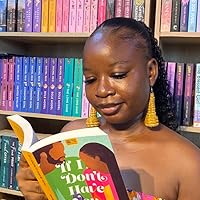
I’m still trying to figure out how I even finished this book. I think it’s because I buddy-read it with my boyfriend… this book has been sitting on top of his TBR list, and I wanted to help him cross it off (he’ll probably drop it and be disappointed or maybe give it five stars, I don’t know really).
So here’s the thing: this book isn’t exactly a great read, but it’s an okay read. If that makes sense. Also, this is not a love story. If you picked it up thinking it was, based on the synopsis, I’m so sorry.
What I really enjoyed was the historical background. Oh lord, the history and context in this book were fascinating. I was genuinely invested in that. It felt like I was actually living in the 1900s. I was living with them, the whole mentality, how they talk, the way everything was then. I didn’t even like the slangs at first, I remember ranting about it but I got used to it. Either I like it or not, it’s the reality then. The last 30% of the book was brutal. Reading about people being killed really affected me… it didn’t make me physically sick, but my mood was ruined for the rest of the day.
I had mixed feelings about the author’s writing. At times it was REALLY good, but then it could be confusing. Scenes would start off strong and draw me in, only to jump six months ahead with no single resolution, leaving me staring at the page thinking, HELLO?? I often found myself wondering why certain plot points were even included.
Some characters, like the parents, David, and a few others, felt flat. I would have loved more depth and backstory for them. Although, I liked that they were there… they added something to the story. Surprisingly, the two main characters’ personality was conveyed well (to me). At times I wanted to scream “fuck you both, na you sabi”, but overall, I got a sense of who they were.
My biggest issue is with Ian and Lindiwe’s supposed relationship, which unfortunately is the MAIN focus of the novel. Racial differences aside (which are very relevant but let’s put it aside first), these two have almost nothing in common. Ian is a wannabe bad boy who probably has some secrets from childhood and never reveals; Lindiwe is a college graduate who loves books and can be very annoying, reading things on her mind made me uncomfortable sometimes fr. She gets annoyed by Ian’s beer-drinking ways, and he finds her educated-sounding comments either annoying or funny. Lindiwe has a way she wants to be loved and cared for, Ian ‘loves’ her in his own way. They dislike each other’s friends, they communicate terribly, and are personality-wise almost polar opposites. Ian is quite the talkative and outspoken; Lindiwe is likely a Taurus introvert. I honestly have no idea why they’re supposed to be attracted to each other. The interracial angle is meant to add tension, but it only makes their relationship feel less believable. Lindiwe worries about racial issues, and Ian gets defensive whenever she brings them up. Despite this, the book tries to make their relationship convincing, sometimes even romantic (LMAOOOOOO) but I remained so unconvinced that I kept waiting for them to break up.
ALL in all, it was an okay read… hence my rating. I ended up writing this long ass review, so the book must be something, I guess.
So here’s the thing: this book isn’t exactly a great read, but it’s an okay read. If that makes sense. Also, this is not a love story. If you picked it up thinking it was, based on the synopsis, I’m so sorry.
What I really enjoyed was the historical background. Oh lord, the history and context in this book were fascinating. I was genuinely invested in that. It felt like I was actually living in the 1900s. I was living with them, the whole mentality, how they talk, the way everything was then. I didn’t even like the slangs at first, I remember ranting about it but I got used to it. Either I like it or not, it’s the reality then. The last 30% of the book was brutal. Reading about people being killed really affected me… it didn’t make me physically sick, but my mood was ruined for the rest of the day.
I had mixed feelings about the author’s writing. At times it was REALLY good, but then it could be confusing. Scenes would start off strong and draw me in, only to jump six months ahead with no single resolution, leaving me staring at the page thinking, HELLO?? I often found myself wondering why certain plot points were even included.
Some characters, like the parents, David, and a few others, felt flat. I would have loved more depth and backstory for them. Although, I liked that they were there… they added something to the story. Surprisingly, the two main characters’ personality was conveyed well (to me). At times I wanted to scream “fuck you both, na you sabi”, but overall, I got a sense of who they were.
My biggest issue is with Ian and Lindiwe’s supposed relationship, which unfortunately is the MAIN focus of the novel. Racial differences aside (which are very relevant but let’s put it aside first), these two have almost nothing in common. Ian is a wannabe bad boy who probably has some secrets from childhood and never reveals; Lindiwe is a college graduate who loves books and can be very annoying, reading things on her mind made me uncomfortable sometimes fr. She gets annoyed by Ian’s beer-drinking ways, and he finds her educated-sounding comments either annoying or funny. Lindiwe has a way she wants to be loved and cared for, Ian ‘loves’ her in his own way. They dislike each other’s friends, they communicate terribly, and are personality-wise almost polar opposites. Ian is quite the talkative and outspoken; Lindiwe is likely a Taurus introvert. I honestly have no idea why they’re supposed to be attracted to each other. The interracial angle is meant to add tension, but it only makes their relationship feel less believable. Lindiwe worries about racial issues, and Ian gets defensive whenever she brings them up. Despite this, the book tries to make their relationship convincing, sometimes even romantic (LMAOOOOOO) but I remained so unconvinced that I kept waiting for them to break up.
ALL in all, it was an okay read… hence my rating. I ended up writing this long ass review, so the book must be something, I guess.
August 3, 2009
I absolutely loved it. I am returing the ARC to the friend I borrowed it from but I am going to buy my own copy. I googled the book and found the following review by Debra Ginsberg in Shelf-Awareness which really captures the way I felt about the story:
Irene Sabatini's remarkable debut novel about Zimbabwe is a kaleidoscopic blend of elements encompassing everything from coming of age and first love to race, nationalism and the rapid degradation of a once-thriving country.... Her portrayal of their different but ultimately connected views on race, family and country is masterful.... Sabatini's descriptions of Zimbabwe--its people, its languages, its politics, its beauty and its despair--are absolutely stunning and not to be missed.--Debra Ginsberg
Shelf Talker: A sprawling, ambitious and utterly compelling first novel about Zimbabwe that blends an unusual love story with political upheaval and national tragedy.
Irene Sabatini's remarkable debut novel about Zimbabwe is a kaleidoscopic blend of elements encompassing everything from coming of age and first love to race, nationalism and the rapid degradation of a once-thriving country.... Her portrayal of their different but ultimately connected views on race, family and country is masterful.... Sabatini's descriptions of Zimbabwe--its people, its languages, its politics, its beauty and its despair--are absolutely stunning and not to be missed.--Debra Ginsberg
Shelf Talker: A sprawling, ambitious and utterly compelling first novel about Zimbabwe that blends an unusual love story with political upheaval and national tragedy.

December 24, 2018
This is a love story set in the 80s and 90s in Zimbabwe just when the country had attained independence and was trying 'to find itself'. Sabatini gives insight into the atmosphere and the relationships between the races inhabiting the country at the time and what effect the transition had on an interracial friendship and eventually a relationship.
Her writings style is almost poetic and sometimes reads like a play script. This transports you to the setting and you do actually get to see Lindiwe and Ian having a conversation. I like the fact that she does not give it all away. In fact, she manages to hide a very imperative fact from the reader such that you may be forced to reread some chapters to actually see if you missed a statement.
Sabatini does achieve the goal of teaching about the history of a country while blessing us with an entertaining romance narrative.
Her writings style is almost poetic and sometimes reads like a play script. This transports you to the setting and you do actually get to see Lindiwe and Ian having a conversation. I like the fact that she does not give it all away. In fact, she manages to hide a very imperative fact from the reader such that you may be forced to reread some chapters to actually see if you missed a statement.
Sabatini does achieve the goal of teaching about the history of a country while blessing us with an entertaining romance narrative.

July 14, 2019
Very nice african story. As a person who spent 4 years in high school in Bulawayo in the mid 90s it was very nostalgic reading about the city, the shops, the roads, arh the memories.
Funny though my experience and how I remember things in the 90s is a bit different from the way the book describes them. There seems to be more action in the book and I never experienced the levels of the racial undertones depicted, while I was school, and yes I did go to a former whites only school that was now integrated.
Beyond that I like the way the story is written, the writing style how she jumps from one scene to the other quite interesting.
I knew it was a love story but sometimes I could not tell if they would still end up together. Kept me interested to see how it would all play out. They sure did have there levels of problems.
Funny though my experience and how I remember things in the 90s is a bit different from the way the book describes them. There seems to be more action in the book and I never experienced the levels of the racial undertones depicted, while I was school, and yes I did go to a former whites only school that was now integrated.
Beyond that I like the way the story is written, the writing style how she jumps from one scene to the other quite interesting.
I knew it was a love story but sometimes I could not tell if they would still end up together. Kept me interested to see how it would all play out. They sure did have there levels of problems.

July 22, 2026
En inblick från det Zimbabwe jag annars bara känt till ytligt och utifrån från nyheterna. Väldigt läsvärd, väl skildrade människoporträtt. Kan också rekommendera att kombinera läsningen med att lyssna på en podd om Mugabe och hans tid vid makten (jag lyssnade på podden "Diktatorer") för mer fördjupad förståelse av det som boken skildrar.

April 13, 2022
Lindiwe jest nastolatką, surowo wychowaną, grzeczną, układną i bardzo prowincjonalną nastolatką. Dorasta na prowincji nowo powstałego kraju - Zimbabwe. Rodezja nie istnieje, ale wciąż w kraju jest mnóstwo Rodezyjczyjków, wśród których dziewczyna mieszka. Jej rodzina się wyróżnia kolorem skóry, statusem ekonomicznym i sposobem życia. Lindiwe spotyka się z dyskryminacją, przede wszystkim w szkole, gdzie jest jedyną kolorową dziewczyną, jednak jej pozornie spokojnym życiem najbardziej wstrząśnie tragedia, która wydarzy się w sąsiedztwie. Pewnej nocy wybuchnie tam pożar, w którym spłonie macocha mieszającego tam młodego mężczyzny. Chłopak zostanie posądzony o udział w tragedii.
Ian jednak szybko wychodzi na wolność i zaczyna wzbudzać w Lindiwe fascynację, której koniec nada jego nagły wyjazd do RPA.
Ciąg dalszy: https://przeczytalamksiazke.blogspot....
Ian jednak szybko wychodzi na wolność i zaczyna wzbudzać w Lindiwe fascynację, której koniec nada jego nagły wyjazd do RPA.
Ciąg dalszy: https://przeczytalamksiazke.blogspot....

May 20, 2012
I tried to give this book a chance, but I honestly did not enjoy reading it. I had a number of issues:
- The use of slang. I don't mind it when the words are explained, but as they were not, it was very difficult to understand what the characters were referring to a lot of the time. A skilled author could use the context of the story to explain to the reader what the words mean - otherwise, a glossary would have sufficed.
- The political aspects of the story. I don't know anything about Zimbabwe/Rhodesia and the political movements that happened there, and so I had no idea what was going on when this part of the story came into play. There didn't seem to be much of an effort to explain it either. For those readers who have a good understanding of Zimbabwean political history, I am sure they would have enjoyed it more than I did. I only like being left confused in a story if there's a resolution or an explanation somewhere down the line, and I never got it in this book.
- The main character, Lindiwe, annoyed me. She was far too touchy when it came to race and she was very unfair to Ian who, while he had his flaws as well, really cared about her and tried to do the best by her. I don't feel like she was a strong character at all. Some other characters, such as David, Danielle & Rosanna, weren't developed enough and I felt like I never got to know them.
- The timeline was difficult to understand at certain points. The skipping back and forth in time was off-putting because once again there was hardly any explanation as to when the particular section was taking place.
- The storyline itself didn't seem to go anywhere. A scene would just begin to draw me in and then it would jump to the next scene, 6 months later, with no resolution. I felt myself often wondering what the point of having certain plot points in the book at all was.
While I understand that this book is highly critically acclaimed, I felt no sense of warmth, connection and love that I do for a really good story. A book can have all the right literary aspects in it but if the plot and characters don't connect with the reader, I don't see much point in reading it.
Almost 2 stars because the one character I really enjoyed was Ian and I felt like he was the most well-developed and likable character in the book, but overall it was not an enjoyable read so I'm sticking with one star.
- The use of slang. I don't mind it when the words are explained, but as they were not, it was very difficult to understand what the characters were referring to a lot of the time. A skilled author could use the context of the story to explain to the reader what the words mean - otherwise, a glossary would have sufficed.
- The political aspects of the story. I don't know anything about Zimbabwe/Rhodesia and the political movements that happened there, and so I had no idea what was going on when this part of the story came into play. There didn't seem to be much of an effort to explain it either. For those readers who have a good understanding of Zimbabwean political history, I am sure they would have enjoyed it more than I did. I only like being left confused in a story if there's a resolution or an explanation somewhere down the line, and I never got it in this book.
- The main character, Lindiwe, annoyed me. She was far too touchy when it came to race and she was very unfair to Ian who, while he had his flaws as well, really cared about her and tried to do the best by her. I don't feel like she was a strong character at all. Some other characters, such as David, Danielle & Rosanna, weren't developed enough and I felt like I never got to know them.
- The timeline was difficult to understand at certain points. The skipping back and forth in time was off-putting because once again there was hardly any explanation as to when the particular section was taking place.
- The storyline itself didn't seem to go anywhere. A scene would just begin to draw me in and then it would jump to the next scene, 6 months later, with no resolution. I felt myself often wondering what the point of having certain plot points in the book at all was.
While I understand that this book is highly critically acclaimed, I felt no sense of warmth, connection and love that I do for a really good story. A book can have all the right literary aspects in it but if the plot and characters don't connect with the reader, I don't see much point in reading it.
Almost 2 stars because the one character I really enjoyed was Ian and I felt like he was the most well-developed and likable character in the book, but overall it was not an enjoyable read so I'm sticking with one star.

December 4, 2010
Hooray for the orange Award for new Writers!
Why? Because this book might never come to my attention had it not been shortlisted.
The setting interested me: Zimbabwe shortly after the Act of Settlement and the first free elections, when white minority rule ended and Robert Mugabe came to power. I was young but my best friend had cousins the same age as us in Zimbabwe, and so we followed developments carefully.
And then the heroine captivated me. In 1978 she was 14, the same age as me and we seemed so much alike. Lindiwe Bishop was quiet, bright but not quite at the top of the class, and she was bookish. She read Sue Barton books, books that I loved but had quite forgotten about. But I would have loved her even without that wonderful reminder.
Lindiwe was of mixed race and she lived with her family in what was previously an all-white suburb of Bulawayo.
Ian McKenzie, the boy next door, was a few years older than Lindiwe and he was white. A different class. And it seems that Ian is trouble. A fire is set at the McKenzie home, and Ian is accused, found guilty and jailed. In time the conviction is overturned and Ian is released, but suspicion still hangs over him.
Lindiwe is warned to steer clear, but she is fascinated by the boy next door and they begin a clandestine relationship.
The story follows that relationship over the next ten years, against the background of the new and changing Zimbabwe. A relationship complicated by racial tensions, family relationships and secrets, demons from the past. It seems doomed to fail, but I couldn’t help hoping that it would succeed.
It works brilliantly, both the small picture and the big picture. The story of the country and the stories of Lindiwe, Ian and the people around them. I felt for them all, but most of all for Lindiwe as she matured, as her understanding grew, and as she struggled to cope with life’s ups and downs.
I was engaged, moved, and informed by The Boy Next Door.
Definitely a worthy award winner.
Why? Because this book might never come to my attention had it not been shortlisted.
The setting interested me: Zimbabwe shortly after the Act of Settlement and the first free elections, when white minority rule ended and Robert Mugabe came to power. I was young but my best friend had cousins the same age as us in Zimbabwe, and so we followed developments carefully.
And then the heroine captivated me. In 1978 she was 14, the same age as me and we seemed so much alike. Lindiwe Bishop was quiet, bright but not quite at the top of the class, and she was bookish. She read Sue Barton books, books that I loved but had quite forgotten about. But I would have loved her even without that wonderful reminder.
Lindiwe was of mixed race and she lived with her family in what was previously an all-white suburb of Bulawayo.
Ian McKenzie, the boy next door, was a few years older than Lindiwe and he was white. A different class. And it seems that Ian is trouble. A fire is set at the McKenzie home, and Ian is accused, found guilty and jailed. In time the conviction is overturned and Ian is released, but suspicion still hangs over him.
Lindiwe is warned to steer clear, but she is fascinated by the boy next door and they begin a clandestine relationship.
The story follows that relationship over the next ten years, against the background of the new and changing Zimbabwe. A relationship complicated by racial tensions, family relationships and secrets, demons from the past. It seems doomed to fail, but I couldn’t help hoping that it would succeed.
It works brilliantly, both the small picture and the big picture. The story of the country and the stories of Lindiwe, Ian and the people around them. I felt for them all, but most of all for Lindiwe as she matured, as her understanding grew, and as she struggled to cope with life’s ups and downs.
I was engaged, moved, and informed by The Boy Next Door.
Definitely a worthy award winner.

November 21, 2017
Towards the end of this book, it's protagonist, Lindiwe reads out loud a sign scrawled in blood, "VOTE ZANU-PF OR DIE"
This story doesn't start with the tension in Zimbabwe, it begins instead with optimism at Robert Mugabe (alias Uncle Bob) ascension to power in 1980. Rhodesia just became Zimbabwe and the new president mounts the podium to give his opening speech. "Reconciliation is the best policy"
14 year old Lindiwe huddled with her family, listens as the new president takes his oath, "His hand firmly on the Bible... and so help me God... and Zimbabwe was born".
Weeks before the White boy next door, 'Ian' had set his step mother alight. Arrested and jailed for few months, his case was dismissed and he was released.
Lindiwe and the boy next door became friends, a complicated friendship between a coloured girl and a White boy in a new, gradually changing country.
This book is a fine, thoughtful exploration and critique of Zimbabwe, it's tensions, fights, wars, it's new despots and of course it's confused citizens.
This is a multi-layered and marvelously intelligent novel. Although, i disliked the fact that the author was trying to do so many things at once, be a story about human relationships, about race, about Mugabe, about photojournalism, about wars, about bullying, about religion and of course about the squishy love with the boy next door.
Occasionally flawed, I cant lie, this is a witty, (I cant get over Ian shouts of this is 'racialism') clever, intellectually stimulating, solidly realistic account of life in Zimbabwe, when Mugabe came into power and when everything suddenly came to ruin.
This story doesn't start with the tension in Zimbabwe, it begins instead with optimism at Robert Mugabe (alias Uncle Bob) ascension to power in 1980. Rhodesia just became Zimbabwe and the new president mounts the podium to give his opening speech. "Reconciliation is the best policy"
14 year old Lindiwe huddled with her family, listens as the new president takes his oath, "His hand firmly on the Bible... and so help me God... and Zimbabwe was born".
Weeks before the White boy next door, 'Ian' had set his step mother alight. Arrested and jailed for few months, his case was dismissed and he was released.
Lindiwe and the boy next door became friends, a complicated friendship between a coloured girl and a White boy in a new, gradually changing country.
This book is a fine, thoughtful exploration and critique of Zimbabwe, it's tensions, fights, wars, it's new despots and of course it's confused citizens.
This is a multi-layered and marvelously intelligent novel. Although, i disliked the fact that the author was trying to do so many things at once, be a story about human relationships, about race, about Mugabe, about photojournalism, about wars, about bullying, about religion and of course about the squishy love with the boy next door.
Occasionally flawed, I cant lie, this is a witty, (I cant get over Ian shouts of this is 'racialism') clever, intellectually stimulating, solidly realistic account of life in Zimbabwe, when Mugabe came into power and when everything suddenly came to ruin.

February 17, 2014
I was pleasantly surprised by this story. It tells the tale of Lindiwe, who starts a relationship with the boy next door, who was accused of murder. He is white, she is coloured - half white half black. What happens in her teenage years impacts her later in life when Ian returns from South Africa to discover her secret, and he blows her life apart.
Following the turmoil of her own situation, is the growing tension in Zimbabwe where the story is set.
There is a line in the story, which I absolutely adored: "I should go to her grave. Maybe even David should come with me. But I don't know if I can do it. Stand there looking at the tombstone with her name etched on it, with the parameters of her life fixed forever between two dates."
I enjoyed Lindiwe, an intelligent woman in her own right, who struggles to cope with life with a white man, trying to understand his profound love for her while she fears that he doesn't love her. Ian is a wonderful character, full of quick wit, love and devotion for the woman in his life.
A wonderful intelligent read, with history wrapped around it.
Following the turmoil of her own situation, is the growing tension in Zimbabwe where the story is set.
There is a line in the story, which I absolutely adored: "I should go to her grave. Maybe even David should come with me. But I don't know if I can do it. Stand there looking at the tombstone with her name etched on it, with the parameters of her life fixed forever between two dates."
I enjoyed Lindiwe, an intelligent woman in her own right, who struggles to cope with life with a white man, trying to understand his profound love for her while she fears that he doesn't love her. Ian is a wonderful character, full of quick wit, love and devotion for the woman in his life.
A wonderful intelligent read, with history wrapped around it.

October 8, 2018
3.5 stars.
Great read, and all those places I know! My old home town, my new one, all my old haunts. That's why I find the inaccuracies annoying, both of language and place. And some of the prejudices, too.
But. Lovely to read a story about things I know so well. And although some of the minor characters are cartoonish, the development of the major characters was really enjoyable.
So, mixed feelings, but recommended!
Great read, and all those places I know! My old home town, my new one, all my old haunts. That's why I find the inaccuracies annoying, both of language and place. And some of the prejudices, too.
But. Lovely to read a story about things I know so well. And although some of the minor characters are cartoonish, the development of the major characters was really enjoyable.
So, mixed feelings, but recommended!

August 29, 2010
Engaging story of the evolution of love in post-independence Zimbabwe as the country teeters on the edge of civil war. A first novel by a writer I look forward to hearing from again. Good voice, interesting characters and a compelling story.

October 27, 2011
This book was an okay read. Was a bit unrealistic for me. Some of the characters like the parents were too much of caricatures. Would have liked more depth in their personalities and more of a back story. I like how the main character's personality was conveyed.

September 16, 2009
What a beautiful story. Loved every page, loved Lindiwe's voice and the setting. I felt like I was in the middle of a girl growing up and a country devolving.


January 1, 2015
This book is really sweet. While also managing to be hard-hitting and making me think. I like.

August 5, 2019
Always good to enjoy a book so much despite the main characters frustrating me deeply.

August 7, 2020
I ended up quite enjoying this, even though it does have a major flaw, which is that it takes way too long to get to the hook. For the first 40% of the novel, I was like, "Well, I guess I'm getting a feel for what it was like to live in 1980s Zimbabwe, but this isn't really much of a story." Then there was a major twist and things got so much more interesting.
The main character is Lindiwe, a young Coloured woman in Bulawayo, Zimbabwe. The book follows her for about 15 years of her life, starting from when she's a 14yo girl intrigued by the older white boy next door (although with flashbacks to earlier times than that). The narration is rather unconventional, mostly dialogue-based, with Lindiwe not really sharing most of her inner thoughts with the reader and even failing to mention important plot developments until way later, making her something of an unreliable narrator.
The book is partly a view of what life was like and how it changed in Zimbabwe between the 1980s and late 1990s, as corruption and militarism saw it degenerate into chaos. It's also partly a book about domesticity, about a mismatched and not particularly happy couple who keep on making things work regardless. That latter part was not something I'd really expected (although in retrospect the title kind of gives it away), but I found it stimulating reading. The characters' different racial backgrounds and levels of education cause soooo many arguments . There are also some other subplots and side characters with their own things going on.
In general, I liked the core story of Lindiwe trying to keep her family going in difficult circumstances, framed by all the turmoil in Zimbabwe. However, I didn't think most of the characters were particularly deep (with the exception of Lindiwe and probably her partner themselves), and it really was an issue that it took so long for an interesting story to come together. Regardless, this is still the best Zimbabwean book I have read (out of three). If you're interested in the country this is worth a read.
The main character is Lindiwe, a young Coloured woman in Bulawayo, Zimbabwe. The book follows her for about 15 years of her life, starting from when she's a 14yo girl intrigued by the older white boy next door (although with flashbacks to earlier times than that). The narration is rather unconventional, mostly dialogue-based, with Lindiwe not really sharing most of her inner thoughts with the reader and even failing to mention important plot developments until way later, making her something of an unreliable narrator.
The book is partly a view of what life was like and how it changed in Zimbabwe between the 1980s and late 1990s, as corruption and militarism saw it degenerate into chaos. It's also partly a book about domesticity, about a mismatched and not particularly happy couple who keep on making things work regardless. That latter part was not something I'd really expected (although in retrospect the title kind of gives it away), but I found it stimulating reading. The characters' different racial backgrounds and levels of education cause soooo many arguments . There are also some other subplots and side characters with their own things going on.
In general, I liked the core story of Lindiwe trying to keep her family going in difficult circumstances, framed by all the turmoil in Zimbabwe. However, I didn't think most of the characters were particularly deep (with the exception of Lindiwe and probably her partner themselves), and it really was an issue that it took so long for an interesting story to come together. Regardless, this is still the best Zimbabwean book I have read (out of three). If you're interested in the country this is worth a read.

January 27, 2018
It''s a good novel. Nothing spectacularly wonderful. More fast reading than anything else. Lin is often conflicted but without any deep secrets. But Ian.. Ian is flawed, charming, certain and uncertain at the same time. Zimbabwe as the backdrop offers hardly any deep insight into the changes that happen, and the focus is more on the unaffected individuals in the novel. It could have been set anywhere and nothing would have changed. If you want to read a book about a first love, a forever love; give it a shot. If you're looking for anything more, skip this.
July 5, 2018
i luvvv the character ian! you just feel lindiwe's love for him and him for her. at first, he comes of as brash and heartless. that maybe he's just toying with her, them being neighbours and all, overshadowed by the apartheid. but the question of whether he did or did not kill his step mum remains unanswered since his answers, whenever questioned by lindiwe, always changes. despite the disrepancy in this, i think it is meant to be presented in that manner. and that despite their differences, their love for each other was real. i felt it and i hope that any reader would too. 😊
December 8, 2018
Took me quite a few pages to really appreciate this piece of work. But once you wrap your mind around the story and the lives of Ian and Lindiwe, and how they have been intertwined, it becomes hard to pull yourself away. Their relationship is quite different from that typical "young love" story. I really grew to appreciate Sabatini's way of storytelling and kind of wanted the story to continue towards the end. The backdrop of the Rhodesian war and Zimbabwe's journey to independence offers a real historical context within which this beautiful, and tragic story unfolds.
Displaying 1 - 30 of 120 reviews