

What do you think?

Economyths: Ten Ways Economics Gets It Wrong
From the inability of wealth to make us happier, to our catastrophic blindness to the credit crunch, Economyths reveals ten ways in which economics has failed us all. Forecasters predicted a prosperous year in 2008 for financial markets - in one influential survey the average prediction was for an eleven percent gain. But by the end of the year, the Standard and Poor's 500 index - a key economic barometer - was down 38 percent, and major economies were plunging into recession. Even the Queen asked - "Why did no one see it coming?"
An even bigger casualty was the credibility of economics, which for decades has claimed that the economy is a rational, stable, efficient machine, governed by well-understood laws.
Mathematician David Orrell traces the history of this idea from its roots in ancient Greece to the financial centres of London and New York, shows how it is mistaken, and proposes new alternatives. Economyths explains how the economy is the result of complex and unpredictable processes; how risk models go astray; why the economy is not rational or fair; why no woman has ever won the Nobel Prize for economics; why financial crashes are less Black Swans than part of the landscape; and finally, how new ideas in mathematics, psychology, and environmentalism are helping to reinvent economics.
An even bigger casualty was the credibility of economics, which for decades has claimed that the economy is a rational, stable, efficient machine, governed by well-understood laws.
Mathematician David Orrell traces the history of this idea from its roots in ancient Greece to the financial centres of London and New York, shows how it is mistaken, and proposes new alternatives. Economyths explains how the economy is the result of complex and unpredictable processes; how risk models go astray; why the economy is not rational or fair; why no woman has ever won the Nobel Prize for economics; why financial crashes are less Black Swans than part of the landscape; and finally, how new ideas in mathematics, psychology, and environmentalism are helping to reinvent economics.
288 pages, Hardcover
First published January 1, 2010
About the author
David Orrell
27 books47 followersDavid Orrell, Ph.D. is a scientist and author of popular science books. He studied mathematics at the University of Alberta, and obtained his Ph.D. from Oxford University on the prediction of nonlinear systems.
His work in mathematical modeling and complex systems research has led him to diverse areas such as weather forecasting, particle accelerator design, economics, and cancer biology. He has authored or coauthored research papers for journals including Journal of the Atmospheric Sciences, Nature Genetics, the International Journal of Bifurcations and Chaos, and Physica D.
He is the author of Economyths and The Other Side of the Coin: The Emerging Vision of Economics and Our Place in The World about new economic theories; and The Future of Everything: The Science of Prediction about prediction in weather, genetics, and economics, which was a national bestseller and finalist for the 2007 Canadian Science Writers' Association book award. Foresight called it "An engaging, as well as deeply insightful, discussion on the difficult task of prediction ... it can change the way you view forecasting."
David has been a guest on radio shows including Coast to Coast AM, NPR, and BBC, and his work has been featured in print media such as New Scientist and the Financial Times. He has spoken at many conferences and events including the Art Center Global Dialogues on Disruptive Thinking. He currently lives in Oxford, UK, where he runs a mathematical consultancy Systems Forecasting.
Awards
Finalist: Canadian Science Writers' Association book award (2007)
Finalist: National Business Book Award (2011)
His work in mathematical modeling and complex systems research has led him to diverse areas such as weather forecasting, particle accelerator design, economics, and cancer biology. He has authored or coauthored research papers for journals including Journal of the Atmospheric Sciences, Nature Genetics, the International Journal of Bifurcations and Chaos, and Physica D.
He is the author of Economyths and The Other Side of the Coin: The Emerging Vision of Economics and Our Place in The World about new economic theories; and The Future of Everything: The Science of Prediction about prediction in weather, genetics, and economics, which was a national bestseller and finalist for the 2007 Canadian Science Writers' Association book award. Foresight called it "An engaging, as well as deeply insightful, discussion on the difficult task of prediction ... it can change the way you view forecasting."
David has been a guest on radio shows including Coast to Coast AM, NPR, and BBC, and his work has been featured in print media such as New Scientist and the Financial Times. He has spoken at many conferences and events including the Art Center Global Dialogues on Disruptive Thinking. He currently lives in Oxford, UK, where he runs a mathematical consultancy Systems Forecasting.
Awards
Finalist: Canadian Science Writers' Association book award (2007)
Finalist: National Business Book Award (2011)
Ratings & Reviews
Friends & Following
Create a free account to discover what your friends think of this book!
Community Reviews
Displaying 1 - 30 of 58 reviews

August 16, 2011
This is one of the better popular economics books that I've read. David Orrell is an applied mathematician and currently works in the area of complex systems research. That will probably give you an idea of his bent: he's not an economist, he is a scientist. More importantly—for me at least—he's an empiricist. And his message is that the economic data do not support the model of classical economics.(♪ - )
A Legacy of Antiquated Ideas
Orrell essentially explains that classical economics is to economics what the Ptolemaic universe is to physics:
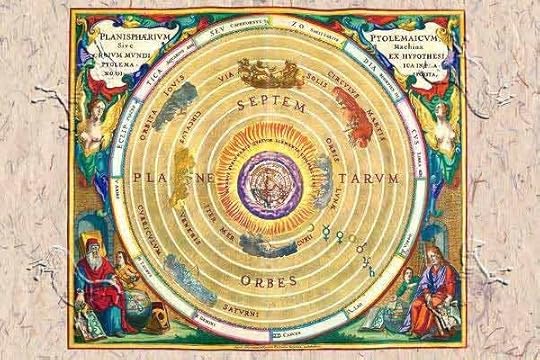
It looks theoretically beautiful and symmetrical, but once you start to use it to understand the data, you end up having to make massive contortions, creating circles within circles:
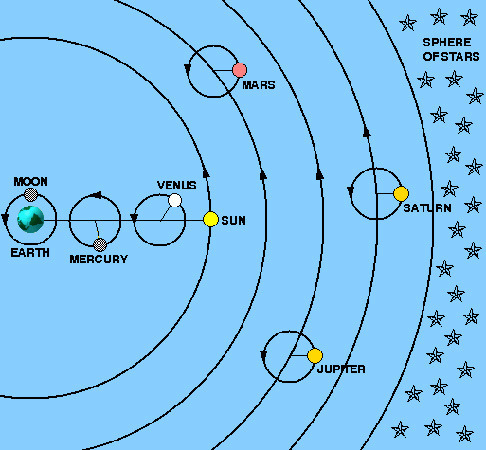
Unfortunately, while physics had its Galilean moment—and its Newtonian and Einsteinian ones too—classical economics is still right there with Ptolemy.
In a way, classical economists were presented with an unfair challenge: How to explain the economic system when the science of physics had so sexily reduced physical laws to simple, rational rules. Suddenly, scientists in all fields wanted the same respectability. The tools the economists had on hand, however, were primitive. Like Ptolemy, they were working with the equivalent of only their eyes. The maths theory had yet to catch up, and their ability to collect and crunch data was pathetic to say the least. You really can't blame them: the computer chip had yet to be invented.
Admittedly, working within these constraints, the work they turned out was nothing short of brilliant. Unfortunately, they had to make certain assumptions in order for their work to be manageable. All of that is perfectly understandable given the task they were confronted with. Unfortunately, those necessary assumptions ossified and hardened into articles of faith. As time went by, and other economists came along to build on their work, the assumptions became the foundational bedrock on which the edifice was built. No wonder they are so savagely defended: destroy the foundation and the edifice crumbles.
The Complex Science of Economics
Science, unfortunately, has an annoying way of not staying still. The rise of supercomputers and advances in the science of complexity have started to explain the shortcomings of the classical model. Much of this will likely be familiar to economists working in academia, regardless of how much (or how little) they have accepted its conclusions. Popular understanding of economic theory, however, is still pretty much at the flat earth stage and Orrell's invaluable contribution is to explain to the layman why the classical model falls short, and how complexity theory explains this. He does a very decent job of laying it out lucidly.
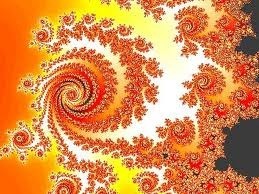
In a nutshell, a complex system is a system like the weather. It's not chaotic, it's fractal: we can observe certain general patterns, but these don't lead us to make accurate predictions.
If you live in South-East Asia, you know the mid-year monsoon will come between June and September. You can't predict with any certainty what the amount of rainfall will be or if there will be a drought this year. You are even less able to predict that it will rain at 1730 on 17 August 2045. All you can say is that if it’s a day in the period between June to September, there's a higher chance of rain than in May, the dry season. You can collect all the data you like, and learn as much as you like about how clouds form and the conditions needed for rain to precipitate, none of that will help you determine if it will indeed rain at 1730 on 17 August 2045.
The Good and the Bad
Orrell breaks it all down in 10 chapters. I enjoyed the first five the most. In them, he carefully tears down the basic assumptions of the classical model showing why those assumptions cannot apply. Its key concept of a rational, stable market economy made of discrete, independent parts is false. The market economy is instead a connected network where the various nodes transmit feedback loops to each other.
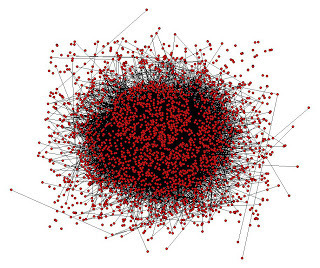
This causes a certain level of instability: the kind of instability that you see with the weather. If you crunch the data to analyse probabilities of risk, rather than a perfectly symmetrical bell-curve that a truly random system would generate, you see instead a warped bell-curve with greater probability of instability and extreme events than the classical model would predict. One of the consequences of this is the butterfly effect: small pertubations can cause large effects *cough*bubble bursting*cough*.
The good news is that economists and scientists from other fields are starting to work and collaborate on new theories and understandings. This is what Orrell covers in the next five chapters of the book where he discusses how work in behavioural economics, computer modelling, and other fields is starting to enrich and change our understanding of the way markets actually function.
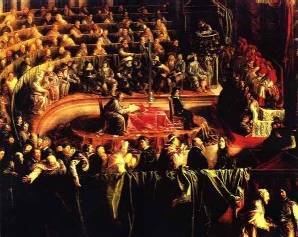
The bad news is that the high priests of the classical model and their enforcers from the Spanish Inquisition (a.k.a bankers and big business) have too much vested in the current status quo to give up without a fight. We don't know yet how it will all end. Likely it will take a few more market crashes before we start to see any real cracks in the façade. As Galileo, bent and twisted after his torture, forced to abjure the truth, muttered, "And yet it moves," we too, broken and broke, might sadly find ourselves muttering, "And yet it's irrational," before fanatical beliefs finally give way to the truth.
A Legacy of Antiquated Ideas
Orrell essentially explains that classical economics is to economics what the Ptolemaic universe is to physics:
It looks theoretically beautiful and symmetrical, but once you start to use it to understand the data, you end up having to make massive contortions, creating circles within circles:
Unfortunately, while physics had its Galilean moment—and its Newtonian and Einsteinian ones too—classical economics is still right there with Ptolemy.
In a way, classical economists were presented with an unfair challenge: How to explain the economic system when the science of physics had so sexily reduced physical laws to simple, rational rules. Suddenly, scientists in all fields wanted the same respectability. The tools the economists had on hand, however, were primitive. Like Ptolemy, they were working with the equivalent of only their eyes. The maths theory had yet to catch up, and their ability to collect and crunch data was pathetic to say the least. You really can't blame them: the computer chip had yet to be invented.
Admittedly, working within these constraints, the work they turned out was nothing short of brilliant. Unfortunately, they had to make certain assumptions in order for their work to be manageable. All of that is perfectly understandable given the task they were confronted with. Unfortunately, those necessary assumptions ossified and hardened into articles of faith. As time went by, and other economists came along to build on their work, the assumptions became the foundational bedrock on which the edifice was built. No wonder they are so savagely defended: destroy the foundation and the edifice crumbles.
The Complex Science of Economics
Science, unfortunately, has an annoying way of not staying still. The rise of supercomputers and advances in the science of complexity have started to explain the shortcomings of the classical model. Much of this will likely be familiar to economists working in academia, regardless of how much (or how little) they have accepted its conclusions. Popular understanding of economic theory, however, is still pretty much at the flat earth stage and Orrell's invaluable contribution is to explain to the layman why the classical model falls short, and how complexity theory explains this. He does a very decent job of laying it out lucidly.
In a nutshell, a complex system is a system like the weather. It's not chaotic, it's fractal: we can observe certain general patterns, but these don't lead us to make accurate predictions.
If you live in South-East Asia, you know the mid-year monsoon will come between June and September. You can't predict with any certainty what the amount of rainfall will be or if there will be a drought this year. You are even less able to predict that it will rain at 1730 on 17 August 2045. All you can say is that if it’s a day in the period between June to September, there's a higher chance of rain than in May, the dry season. You can collect all the data you like, and learn as much as you like about how clouds form and the conditions needed for rain to precipitate, none of that will help you determine if it will indeed rain at 1730 on 17 August 2045.
The Good and the Bad
Orrell breaks it all down in 10 chapters. I enjoyed the first five the most. In them, he carefully tears down the basic assumptions of the classical model showing why those assumptions cannot apply. Its key concept of a rational, stable market economy made of discrete, independent parts is false. The market economy is instead a connected network where the various nodes transmit feedback loops to each other.
This causes a certain level of instability: the kind of instability that you see with the weather. If you crunch the data to analyse probabilities of risk, rather than a perfectly symmetrical bell-curve that a truly random system would generate, you see instead a warped bell-curve with greater probability of instability and extreme events than the classical model would predict. One of the consequences of this is the butterfly effect: small pertubations can cause large effects *cough*bubble bursting*cough*.
The good news is that economists and scientists from other fields are starting to work and collaborate on new theories and understandings. This is what Orrell covers in the next five chapters of the book where he discusses how work in behavioural economics, computer modelling, and other fields is starting to enrich and change our understanding of the way markets actually function.
The bad news is that the high priests of the classical model and their enforcers from the Spanish Inquisition (a.k.a bankers and big business) have too much vested in the current status quo to give up without a fight. We don't know yet how it will all end. Likely it will take a few more market crashes before we start to see any real cracks in the façade. As Galileo, bent and twisted after his torture, forced to abjure the truth, muttered, "And yet it moves," we too, broken and broke, might sadly find ourselves muttering, "And yet it's irrational," before fanatical beliefs finally give way to the truth.

November 4, 2013
Economyths is not a bad book. If you're new to this sort of thing, you might get more out of it than I would. Frankly, I'm not entirely sure why I read this, given that I'm already familiar with most of the points the author is making. Anyhow, the long and short of it is that, by emphasizing tractability in the language of calculus over, you know, FACTS, neoclassical economic theory has fallen dangerously short and failed to deliver on its promise of delivering judicious advice for the economy and indeed for life in general.
However, there are things the reader should watch out for. One is the strange anti-quantification bias of the author. He is in fact an applied mathematician who works in the field of systems biology, so it's not like he doesn't know about numbers. It's more as though he's a bit sick of them from working with them all the time. Despite what he says, I do think that all of nature can be calculated, except perhaps when it comes to the uncomputable. Of course, in practice, not all aspects of nature can be predicted in a timely fashion, something especially relevant to the economy, which I'm sure we'd both agree on, but that does not mean that nature is not in fact "completely bound by Logos". At times, Orrell comes across like an Austrian economist and it's kind of irritating. He would have us believe, for example, that utility cannot be measured, but to my knowledge the behavioral economic research he touts apparently makes this assumption. How else would prospect theory have been devised? If utility is the result of (embodied) neural activity, then it can be measured: so much of this neurotransmitter in the synaptic cleft, more blood flow in this part of the brain, and so it goes. There are also cloying references to "left-brained" and "right-brained" thinking—the latter of which is of course somehow superior—but that division is tripe. That stuff is long since dead pop psychology talk and doesn't belong in a serious title like this one. Then there's the feminist theory. He stresses that gender is pretty much tabula rasa, but you can't do that if you're going to make the (quite possibly true) claim that testosterone has a role in excessive financial risk-taking. One sex has more testosterone than the other, so that sex should be expected to take more financial risks. Eventually he gets to talking about Yin and Yang and it's just embarrassing. Orrell also suggests that the type of economics embodied by agent-based computational economics might draw more women in the future. "Computational economics." ... "Women." ... Well, if you say so, Dave!
Here's something else that often comes up in heterodox economic texts: the emphasis on finding happiness in other people. This ignores the fact that the stupidity and vanity of other people is what caused our economic problems in the first place! Heterodox economic theory puts too much emphasis on what is good about human nature compared to H. economicus, and not enough emphasis on the bad. Anyhow, those who strive for a post-consumerist lifestyle must necessarily be more atomistic, because they will out of step with the rest of society. So, somewhat ironically, to the extent that our economic theories have encouraged greater atomism, then good! And look at this: http://www.huffingtonpost.com/2013/08... #1 regret of the dying: "I wish I'd had the courage to live a life true to myself, not the life others expected of me." A very substantial part of the good life is giving other people the finger. Learn this well, before you are on your deathbed!
One other thing, and this is relatively minor of course but I think it bears pointing out: Unix is not necessarily open source, nor is it a "computer language". My suspicion is that he is aware of this—given that his job probably involves a fairly intimate understanding of computer software—but he botched the fact that Unix (really, Unices) are operating systems and not languages to make things easier to read. I think an intelligent reader might know what an OS is though? And of course the owners of proprietary Unix systems have been pretty greedy and maliciously litigious over the years, not embodying his ideas of reciprocity and generosity at all. That's kind of a minor nitpick but I think it's a bit more substantive that the open source community is full of conservative and libertopian nutters like Eric S. Raymond, self-proclaimed "anti-idiotarian" and climate change denier extraordinaire. Apparently, being an open source proponent doesn't make you more attuned to the faults of mainstream economics or even all that empathetic or whatever.
So read this book, especially if you don't know that something is rotten in the state of economics, but, as always, live by the maxim "caveat lector". Perhaps what redeems this book in the end is that he includes a list of resources whence you can begin your own further research. For instance, I've read Mandelbrot's finance book that he recommends and it's terrific. I think giving this one a chance is a good thing overall, but he could have done quite a lot better.
However, there are things the reader should watch out for. One is the strange anti-quantification bias of the author. He is in fact an applied mathematician who works in the field of systems biology, so it's not like he doesn't know about numbers. It's more as though he's a bit sick of them from working with them all the time. Despite what he says, I do think that all of nature can be calculated, except perhaps when it comes to the uncomputable. Of course, in practice, not all aspects of nature can be predicted in a timely fashion, something especially relevant to the economy, which I'm sure we'd both agree on, but that does not mean that nature is not in fact "completely bound by Logos". At times, Orrell comes across like an Austrian economist and it's kind of irritating. He would have us believe, for example, that utility cannot be measured, but to my knowledge the behavioral economic research he touts apparently makes this assumption. How else would prospect theory have been devised? If utility is the result of (embodied) neural activity, then it can be measured: so much of this neurotransmitter in the synaptic cleft, more blood flow in this part of the brain, and so it goes. There are also cloying references to "left-brained" and "right-brained" thinking—the latter of which is of course somehow superior—but that division is tripe. That stuff is long since dead pop psychology talk and doesn't belong in a serious title like this one. Then there's the feminist theory. He stresses that gender is pretty much tabula rasa, but you can't do that if you're going to make the (quite possibly true) claim that testosterone has a role in excessive financial risk-taking. One sex has more testosterone than the other, so that sex should be expected to take more financial risks. Eventually he gets to talking about Yin and Yang and it's just embarrassing. Orrell also suggests that the type of economics embodied by agent-based computational economics might draw more women in the future. "Computational economics." ... "Women." ... Well, if you say so, Dave!
Here's something else that often comes up in heterodox economic texts: the emphasis on finding happiness in other people. This ignores the fact that the stupidity and vanity of other people is what caused our economic problems in the first place! Heterodox economic theory puts too much emphasis on what is good about human nature compared to H. economicus, and not enough emphasis on the bad. Anyhow, those who strive for a post-consumerist lifestyle must necessarily be more atomistic, because they will out of step with the rest of society. So, somewhat ironically, to the extent that our economic theories have encouraged greater atomism, then good! And look at this: http://www.huffingtonpost.com/2013/08... #1 regret of the dying: "I wish I'd had the courage to live a life true to myself, not the life others expected of me." A very substantial part of the good life is giving other people the finger. Learn this well, before you are on your deathbed!
One other thing, and this is relatively minor of course but I think it bears pointing out: Unix is not necessarily open source, nor is it a "computer language". My suspicion is that he is aware of this—given that his job probably involves a fairly intimate understanding of computer software—but he botched the fact that Unix (really, Unices) are operating systems and not languages to make things easier to read. I think an intelligent reader might know what an OS is though? And of course the owners of proprietary Unix systems have been pretty greedy and maliciously litigious over the years, not embodying his ideas of reciprocity and generosity at all. That's kind of a minor nitpick but I think it's a bit more substantive that the open source community is full of conservative and libertopian nutters like Eric S. Raymond, self-proclaimed "anti-idiotarian" and climate change denier extraordinaire. Apparently, being an open source proponent doesn't make you more attuned to the faults of mainstream economics or even all that empathetic or whatever.
So read this book, especially if you don't know that something is rotten in the state of economics, but, as always, live by the maxim "caveat lector". Perhaps what redeems this book in the end is that he includes a list of resources whence you can begin your own further research. For instance, I've read Mandelbrot's finance book that he recommends and it's terrific. I think giving this one a chance is a good thing overall, but he could have done quite a lot better.
August 2, 2018
I get it, real world is hard, we need new idea of economics. But I don't like the presentation style.

July 11, 2014
One sentence summary: neo-classical economics is bollocks.
Orrell is a mathematician with a background in complexity theory and non-linear dynamics.
His argument, reasonably convincingly put, is that neo-classical economics (i.e. the dominant school of thought running from Adam Smith, through Pareto, Hajek, Milton Friedman to the likes of Alan Greenspan) has tried to position itself as being, like physics, based on immutable, eternal laws (supply and demand, perfect markets, rational maximising of utility etc) but that there is no real evidence that this is how people, and the economy, actually works.
Further, he argues that this is dangerous because, while at one level everyone knows that economic models are very weak at making predictions, they still form the worldview of the large majority of politicians, central bankers, business and financial leaders, are used to make policy and, what's more, to boldly assert that this is the way things must be done Because Free Market Orthodoxy Says So.
A few of his points chime with other things I've been reading and thinking about recently:
1) Neo-classical economics treats us all as ever-rational consumers, constant in our likes and dislikes (and in what we'll pay to get or avoid them), never governed by our emotions and never talking to, or influencing, each other.
2) GDP doesn't put any value at all on unpaid domestic/caring work. So, in consequence, the labour of (mostly) women the world over is entirely overlooked.
3) The assumption is that economic growth can continue forever. Neo-classical models have nothing to say about whether the Earth will always be able to provide resources or what unchecked growth might mean for environmental degradation.
4) Models used in banks and financial institutions to decide lending criteria, Value at Risk etc, made the tacit assumption that they somehow existed outside the economic system, and didn't account for the fact that their widespread use would of course change the system itself. For example, the creation of the risk algorithms which underpin Collateralised Debt Obligations drove an explosion of lending to risky borrowers which completely changed the likely risk of default, invalidating the base assumptions of those algorithms. Hence the 2007 crash.
5) The pay and bonuses of CEOs has no clear link to the performance of their companies. Labour market pricing is clearly not working here, at least.
I'd love some of my right-leaning friends, especially those working in the City, to read this (perhaps along with Robert Peston - How Do We Fix This Mess? and John Lanchester - Whoops!) and to tell me whether it affects their opinions and if not, why not. There must surely be a counter-argument to Orrell's assertions. My guess is that an opponent would say that he's putting up a Straw Man; that economics has recognised and addressed these problems, or discounted them. In any case, I'd like to hear that position expounded.
Overall though, a short and provocative read.
Orrell is a mathematician with a background in complexity theory and non-linear dynamics.
His argument, reasonably convincingly put, is that neo-classical economics (i.e. the dominant school of thought running from Adam Smith, through Pareto, Hajek, Milton Friedman to the likes of Alan Greenspan) has tried to position itself as being, like physics, based on immutable, eternal laws (supply and demand, perfect markets, rational maximising of utility etc) but that there is no real evidence that this is how people, and the economy, actually works.
Further, he argues that this is dangerous because, while at one level everyone knows that economic models are very weak at making predictions, they still form the worldview of the large majority of politicians, central bankers, business and financial leaders, are used to make policy and, what's more, to boldly assert that this is the way things must be done Because Free Market Orthodoxy Says So.
A few of his points chime with other things I've been reading and thinking about recently:
1) Neo-classical economics treats us all as ever-rational consumers, constant in our likes and dislikes (and in what we'll pay to get or avoid them), never governed by our emotions and never talking to, or influencing, each other.
2) GDP doesn't put any value at all on unpaid domestic/caring work. So, in consequence, the labour of (mostly) women the world over is entirely overlooked.
3) The assumption is that economic growth can continue forever. Neo-classical models have nothing to say about whether the Earth will always be able to provide resources or what unchecked growth might mean for environmental degradation.
4) Models used in banks and financial institutions to decide lending criteria, Value at Risk etc, made the tacit assumption that they somehow existed outside the economic system, and didn't account for the fact that their widespread use would of course change the system itself. For example, the creation of the risk algorithms which underpin Collateralised Debt Obligations drove an explosion of lending to risky borrowers which completely changed the likely risk of default, invalidating the base assumptions of those algorithms. Hence the 2007 crash.
5) The pay and bonuses of CEOs has no clear link to the performance of their companies. Labour market pricing is clearly not working here, at least.
I'd love some of my right-leaning friends, especially those working in the City, to read this (perhaps along with Robert Peston - How Do We Fix This Mess? and John Lanchester - Whoops!) and to tell me whether it affects their opinions and if not, why not. There must surely be a counter-argument to Orrell's assertions. My guess is that an opponent would say that he's putting up a Straw Man; that economics has recognised and addressed these problems, or discounted them. In any case, I'd like to hear that position expounded.
Overall though, a short and provocative read.

February 18, 2018
The rules of economy do not function 100% of the time. They are just statistical insights on what we should expect, given a certain action in the market. However this book takes some not-that-well-documented exceptions to the rules, to prove that the rule is non-existent. It is not trying to offer a better solution, or at least treat the cases where it does apply, but just shows you incomplete data to prove that the rules are myths and we should forget them. It is an interesting read, but not scientifically accurate.

May 31, 2019
The book opens with a foreword and preface of the new version which basically gave a summary of what had happen since the first publication in term of reception. The work was cherished by heterodox economist and sparked debate over the way of economics was taught as a subject. This was in light of the economic crash in 2008-09, which was not predicted by many 'experts'. The idea however was rejected by mainstream neo-classical economist due to the fact that it challenges the established theory.
David Orrell blamed the abused of mathematical models, used by bankers, analyst, and economist, not just the models cannot predict the crash, he argued that the model helped cause the crash. But he went further, not just the mathematical models were flawed, the fundamental theory in which we understand economy is plain wrong.
Many of his argument do ring a bell, underlaying assumption in economics such as people are rational is somewhat laughable. Human are not computers, they are highly emotional, and because humans are the building block of the whole economy, the economy must be emotional, we can’t exclude the most important trait of human being, produced a model out of it and applied it to the real world.
But there is also an oxymoronic argument put forward in his book. In one of the chapters he tried to make a case that the economy is gendered, he even brought forward the concept of yin and yang claiming that the aggressive bet and speculation are attributed to male trait (female did not gamble?). But while trying to make his point, he took a sharp turn and wrote that ‘it would be terribly reductionist to blame...solely on people with a tendency to grow facial hair’. So which is it, is it really gendered or it is a reductionist assumption?
I do find one question fairly amusing. When he tried to make a case that other field of studies actually needed to construct new economic model, he asked a question ‘are philosophers in agreement that market can make ethical decision?’ This question, I think, is also an oxymoron. Philosophers were always in disagreement almost about everything between them.
While many of his argument criticizing the whole economics' enterprise were fair (for me at least) and make sense, his argument on gendered economy was less convincing, which cause me to drop one star. Overall its a very stimulating read which investigate the failing of our economic theory.
David Orrell blamed the abused of mathematical models, used by bankers, analyst, and economist, not just the models cannot predict the crash, he argued that the model helped cause the crash. But he went further, not just the mathematical models were flawed, the fundamental theory in which we understand economy is plain wrong.
Many of his argument do ring a bell, underlaying assumption in economics such as people are rational is somewhat laughable. Human are not computers, they are highly emotional, and because humans are the building block of the whole economy, the economy must be emotional, we can’t exclude the most important trait of human being, produced a model out of it and applied it to the real world.
But there is also an oxymoronic argument put forward in his book. In one of the chapters he tried to make a case that the economy is gendered, he even brought forward the concept of yin and yang claiming that the aggressive bet and speculation are attributed to male trait (female did not gamble?). But while trying to make his point, he took a sharp turn and wrote that ‘it would be terribly reductionist to blame...solely on people with a tendency to grow facial hair’. So which is it, is it really gendered or it is a reductionist assumption?
I do find one question fairly amusing. When he tried to make a case that other field of studies actually needed to construct new economic model, he asked a question ‘are philosophers in agreement that market can make ethical decision?’ This question, I think, is also an oxymoron. Philosophers were always in disagreement almost about everything between them.
While many of his argument criticizing the whole economics' enterprise were fair (for me at least) and make sense, his argument on gendered economy was less convincing, which cause me to drop one star. Overall its a very stimulating read which investigate the failing of our economic theory.

April 23, 2013
Economics is not the sort of subject I would normally grab hungrily at and I haven't read a book or article on the subject since A-Level Business Studies. Yet our lives are driven by economics, our jobs and lifestyles depend on our countries having a strong one, the prices of the our day to day necessities are driven by fluctuations in the global market. In short, it is important to know about these things but it is not the most interesting subject to write or read about.
2008 saw the most horrific economic collapse arguably since 1929. In the wake of the banking collapse, the petty recriminations began. Both political sides wagged fingers "we told you this would happen" yet their disagreement was divided between those who claimed there was too little regulation and those who claimed there was too much.
Though my personal feeling is that there had been too much of a laissez faire attitude to banking, but it is important that we do not believe everything we read in the newspapers or accept everything our favourite political talking head says *cough*Rush Limbaugh*cough* so seeing this on Kindle Daily Deal, I bought it with the hope of being informed.
He begins by summarising a history of classical mathematics, leading into Newtonian Physics and explaining why the Neoclassical Economics philosophy that still forms the backbone of the theory is based on these two ideologies (one of them now superceded by another better explanation). The basic idea then is that an economy is (or should) be a constant and he carefully picks apart how flawed this thinking is by showing certain markets for the erratic variables that they are. In chapter 1 for example he looks at the unstable house prices and the incredibly volatile oil price - neither of which adhere to economic conventions of supply and demand.
I enjoyed the analogy of comparing scientific systems - firstly of the current economic thinking being akin (if not directly inluenced) by Newtonian physics and secondly likening the actual market place of one of chaotic yet predictable to a certain degree - such as meteorology. He paints a picture of a flawed economic system that does not take into account human psychology or sudden deviations but tends toward a slow and steady progress toward order. It is seemingly a system that has not advanced since Adam Smith.
He slowly and deliberately explains the wild risks increasingly taken by the banks, how their greed led them to take more risks and the failure to see that the bubble could burst at any time. I'm sure that those who have made a religion of economics, such as The Tea Party in the USA, will dismiss his entire book with accusations of Communism but it is a sobering read. He emphasises over and over again the lack of foresight, the insular and non-adaptive system and how it despite the veneer of being scientific with advanced mathematics is a lot of unscientific guesswork, risk taking and making bad assumptions about people while ignoring some basic human psychology.
The writing style, though devoid of passion (aside from what felt like a call to arms at the end) and with plenty of snark, is informative without being dry and is educational without patronising. Kudos to the writer for making a book about economics interesting and insightful! Sadly though, I have read through several reviews of the book from detractors and it seems they have generally followed the predictable pattern of accusing him of being anti-capitalist. He makes it explicity clear that he isn't and if you read the book this is quite clear. Those people however have fallen into precisely the trap that he warns about and the tragedy they cannot see that they have done so.
See more book reviews at my blog
2008 saw the most horrific economic collapse arguably since 1929. In the wake of the banking collapse, the petty recriminations began. Both political sides wagged fingers "we told you this would happen" yet their disagreement was divided between those who claimed there was too little regulation and those who claimed there was too much.
Though my personal feeling is that there had been too much of a laissez faire attitude to banking, but it is important that we do not believe everything we read in the newspapers or accept everything our favourite political talking head says *cough*Rush Limbaugh*cough* so seeing this on Kindle Daily Deal, I bought it with the hope of being informed.
He begins by summarising a history of classical mathematics, leading into Newtonian Physics and explaining why the Neoclassical Economics philosophy that still forms the backbone of the theory is based on these two ideologies (one of them now superceded by another better explanation). The basic idea then is that an economy is (or should) be a constant and he carefully picks apart how flawed this thinking is by showing certain markets for the erratic variables that they are. In chapter 1 for example he looks at the unstable house prices and the incredibly volatile oil price - neither of which adhere to economic conventions of supply and demand.
I enjoyed the analogy of comparing scientific systems - firstly of the current economic thinking being akin (if not directly inluenced) by Newtonian physics and secondly likening the actual market place of one of chaotic yet predictable to a certain degree - such as meteorology. He paints a picture of a flawed economic system that does not take into account human psychology or sudden deviations but tends toward a slow and steady progress toward order. It is seemingly a system that has not advanced since Adam Smith.
He slowly and deliberately explains the wild risks increasingly taken by the banks, how their greed led them to take more risks and the failure to see that the bubble could burst at any time. I'm sure that those who have made a religion of economics, such as The Tea Party in the USA, will dismiss his entire book with accusations of Communism but it is a sobering read. He emphasises over and over again the lack of foresight, the insular and non-adaptive system and how it despite the veneer of being scientific with advanced mathematics is a lot of unscientific guesswork, risk taking and making bad assumptions about people while ignoring some basic human psychology.
The writing style, though devoid of passion (aside from what felt like a call to arms at the end) and with plenty of snark, is informative without being dry and is educational without patronising. Kudos to the writer for making a book about economics interesting and insightful! Sadly though, I have read through several reviews of the book from detractors and it seems they have generally followed the predictable pattern of accusing him of being anti-capitalist. He makes it explicity clear that he isn't and if you read the book this is quite clear. Those people however have fallen into precisely the trap that he warns about and the tragedy they cannot see that they have done so.
See more book reviews at my blog

October 2, 2017
Orrell feels like he's received a lot of criticism from Economists, and I can understand why. He challenges the consensus and makes some interesting points, but gets quite a lot wrong too, which makes it such an easy target.
One theme that seems to run throughout is double meanings. He uses the economy in the more philosophical sense, rather than its current meaning, to shoehorn in some points. He uses symmetry to make some comparisons between physics and economics, when I think 'equilibrium' would be more suitable. And the title itself is meant to mean 'myth' in the sense of 'legend passed down through the ages', and not the myth meaning 'falsehood' that the publisher so clearly makes it out to be. This makes for a much less dramatic book, as I took its main criticism to be about economics as a good for society, rather than a genuine skewering of the academic discipline.
What Orrell can do, is write in an accessible style that does not patronise the reader too much. This added to my surprise that he is a mathematician-cum-amatuer-economist, as the text lacks much proof or cites one study in support of his view. At one point he says US CEO's are paid too much because their earnings relative to the average employee are severely higher and 'Japan has some successful companies too'. I feel a true mathematician would have cited a study that rated performance compared to CEO pay between countries, not made a trite remark.
The CEO pay is one topic where he falls down, because he tries to use a monetary argument in what is more accurately a moral argument. He cites a survey in which 96% of respondents thought Premier League players are overpaid, and cites salary caps in NFL and NHL. He also mentions that England haven't won the world cup since 1966, when they were paid less. People thinking someone earns too much money is common, but doesn't mean in economic terms that they are overpaid, as they may bring in more money for their employers. The NFL and NHL salary caps are not in the interest of fairness, but in the interests of Franchise owners who can limit their outgoings, and also ignores the discrepancy between a franchise quarterback and a backup left tackle, which is enormous. And all footballers earn more money compared to in 1966, the World Cup winners Germany have footballers who are paid millions a year too.
It is a similar story in other chapters relating to gender and the environment, in which Orrell essentially argues that the world is not a better place for being dominated by financial concerns. However, he tries to argue that Economics is wrong because it doesn't account for environmental costs, rather than a more tried and tested argument that we can pursue economic growth at all costs, or we can be concerned about the environment.
The most ironic thing is that the author spends most of the book arguing that accepted wisdom in Economics is wrong as it is based on assumptions that have not been proven, and then makes a lot of vague, unsupported claims to back up his arguments. I can fully understand why this has not been taken seriously by mainstream economists, because it is so flawed. It is a shame, as I am broadly in agreement with his position on the World, and he had many interesting things to say. He is a much better writer than economist, however.
One theme that seems to run throughout is double meanings. He uses the economy in the more philosophical sense, rather than its current meaning, to shoehorn in some points. He uses symmetry to make some comparisons between physics and economics, when I think 'equilibrium' would be more suitable. And the title itself is meant to mean 'myth' in the sense of 'legend passed down through the ages', and not the myth meaning 'falsehood' that the publisher so clearly makes it out to be. This makes for a much less dramatic book, as I took its main criticism to be about economics as a good for society, rather than a genuine skewering of the academic discipline.
What Orrell can do, is write in an accessible style that does not patronise the reader too much. This added to my surprise that he is a mathematician-cum-amatuer-economist, as the text lacks much proof or cites one study in support of his view. At one point he says US CEO's are paid too much because their earnings relative to the average employee are severely higher and 'Japan has some successful companies too'. I feel a true mathematician would have cited a study that rated performance compared to CEO pay between countries, not made a trite remark.
The CEO pay is one topic where he falls down, because he tries to use a monetary argument in what is more accurately a moral argument. He cites a survey in which 96% of respondents thought Premier League players are overpaid, and cites salary caps in NFL and NHL. He also mentions that England haven't won the world cup since 1966, when they were paid less. People thinking someone earns too much money is common, but doesn't mean in economic terms that they are overpaid, as they may bring in more money for their employers. The NFL and NHL salary caps are not in the interest of fairness, but in the interests of Franchise owners who can limit their outgoings, and also ignores the discrepancy between a franchise quarterback and a backup left tackle, which is enormous. And all footballers earn more money compared to in 1966, the World Cup winners Germany have footballers who are paid millions a year too.
It is a similar story in other chapters relating to gender and the environment, in which Orrell essentially argues that the world is not a better place for being dominated by financial concerns. However, he tries to argue that Economics is wrong because it doesn't account for environmental costs, rather than a more tried and tested argument that we can pursue economic growth at all costs, or we can be concerned about the environment.
The most ironic thing is that the author spends most of the book arguing that accepted wisdom in Economics is wrong as it is based on assumptions that have not been proven, and then makes a lot of vague, unsupported claims to back up his arguments. I can fully understand why this has not been taken seriously by mainstream economists, because it is so flawed. It is a shame, as I am broadly in agreement with his position on the World, and he had many interesting things to say. He is a much better writer than economist, however.

May 31, 2017
Fascinating book on how economics is stuck in the 19th century classic view. The market is always right, except when it isn't. All things being equal etc. References to the 2008 crash. Section on the lack of women in investment banking interesting - they could be a steadying hand for the risk takers.

March 20, 2018
When I first took a course in Economics in college as a sophomore, 6E:1 “Introduction to Microeconomics,” I was quite taken with the subject. Unlike my major subjects, history and political science, it was so neat, so tidy. You could plot supply and demand curves and arrive at a price. Of course, there were monopolies and externalities and the like, but those were flies in the ointment of economic rationality. Of course, macro got messier, and by the time I took my third course, Public Finance, I lost my infatuation with the subject. All of what at first seemed so neat and clean now appeared rather messy, not at all tidy. (And I didn’t get as good a grade). As it turns out, the neat and tidy represented a degree of unreality while the messy and frustrating was much closer to reality.
I’ve known and thought for some time that economics, once hailed as the king of the social sciences, was an emperor with no clothes. Okay, that’s unfair, but I will say that it is arrayed in tattered rags rather than regal robes. Over the years, my innate, naïve disenchantment with economics has been articulated by persons more qualified than me to articulate and identify the problems. The “Nobel” prize for economics has implicitly recognized flaws in the discipline by presenting its awards of late to a political scientist (Elinor Ostrom), a psychologist (Daniel Kahneman), and to two behavior economists, Robert Schiller and Richard Thaler, among other less mainstream, math-oriented recipients.
Thus, with some background in the flaws of economics, and appreciating its importance, I read David Orrell’s Economyths: How the Science of Complex Systems is Transforming Economic Thought (2010). Like many of the most trenchant critics of the economics discipline, Orrell didn't train as an economist. He is a Ph.D. mathematician. Orrell argues that economics is (still) primarily built on an outdated conception based on 19th-century physics and its equilibrium-based mathematics. Economics became the royalty of the social sciences because of its mathematical models, which often worked well—but not very well if you’re in a pinch. And in fact, we’re almost always in a pinch.
Reviewing the field from a variety of perspectives (equity, happiness, gender, stability, etc.), Orrell finds that the prevailing models of economics don’t mesh well with economic realities. Of course, writing in 2010, he needn’t direct his reader any further back than the crash of 2008 to find an enormous and consequential gap between the prevailing theories of economics and the reality that we all faced. Put simply; economic models depend upon rationality and equilibrium (and therefore) a stability that does not—cannot—exist. Human societies, human economies, especially those in the contemporary world, are dynamic and fluctuating and varied in ways that no simple math of equilibrium or postulates of (presumed) human rationality can capture. Of course, everything is fine on a sunny day, but the theories failed when the storms hit. We now have models for complex systems that can deal more realistically with all of the inherent turbulence of a vast economic system, although not at all perfectly when it comes to prediction. (We need to adjust our understanding and expectations.) We need to deploy these models.
Orrell writes quite well. And while quite sophisticated in his mathematical ability, even a math simpleton like me could follow him. He doesn’t overwhelm us with complexity and math. He writes in a manner that any interested layperson can follow. Orrell’s project follows a path laid down by Eric Beinhocker in The Origin of Wealth (2005) (which Orrell cites and that I’m now going to complete). And Orrell's perspective is also well-represented by writings found at the Evonomics: The Next Evolution of Economics Blog, directed by David Sloan Wilson, a biologist turned economics student. These fellows, among many others, from outside of the formal economics community, are pointing the way to a more sophisticated understanding of economics, one that recognizes the contexts of ecology, sociology, and politics in which the economy is embedded.
By the way, I came to know of Orrell through an essay that he published in Aeon entitled “Economics is Quantum,” which I found quite instructive. He has a book along the same lines coming out early this fall. The article is an excellent place to start if you just want to dip your toe into his project.
I’ve known and thought for some time that economics, once hailed as the king of the social sciences, was an emperor with no clothes. Okay, that’s unfair, but I will say that it is arrayed in tattered rags rather than regal robes. Over the years, my innate, naïve disenchantment with economics has been articulated by persons more qualified than me to articulate and identify the problems. The “Nobel” prize for economics has implicitly recognized flaws in the discipline by presenting its awards of late to a political scientist (Elinor Ostrom), a psychologist (Daniel Kahneman), and to two behavior economists, Robert Schiller and Richard Thaler, among other less mainstream, math-oriented recipients.
Thus, with some background in the flaws of economics, and appreciating its importance, I read David Orrell’s Economyths: How the Science of Complex Systems is Transforming Economic Thought (2010). Like many of the most trenchant critics of the economics discipline, Orrell didn't train as an economist. He is a Ph.D. mathematician. Orrell argues that economics is (still) primarily built on an outdated conception based on 19th-century physics and its equilibrium-based mathematics. Economics became the royalty of the social sciences because of its mathematical models, which often worked well—but not very well if you’re in a pinch. And in fact, we’re almost always in a pinch.
Reviewing the field from a variety of perspectives (equity, happiness, gender, stability, etc.), Orrell finds that the prevailing models of economics don’t mesh well with economic realities. Of course, writing in 2010, he needn’t direct his reader any further back than the crash of 2008 to find an enormous and consequential gap between the prevailing theories of economics and the reality that we all faced. Put simply; economic models depend upon rationality and equilibrium (and therefore) a stability that does not—cannot—exist. Human societies, human economies, especially those in the contemporary world, are dynamic and fluctuating and varied in ways that no simple math of equilibrium or postulates of (presumed) human rationality can capture. Of course, everything is fine on a sunny day, but the theories failed when the storms hit. We now have models for complex systems that can deal more realistically with all of the inherent turbulence of a vast economic system, although not at all perfectly when it comes to prediction. (We need to adjust our understanding and expectations.) We need to deploy these models.
Orrell writes quite well. And while quite sophisticated in his mathematical ability, even a math simpleton like me could follow him. He doesn’t overwhelm us with complexity and math. He writes in a manner that any interested layperson can follow. Orrell’s project follows a path laid down by Eric Beinhocker in The Origin of Wealth (2005) (which Orrell cites and that I’m now going to complete). And Orrell's perspective is also well-represented by writings found at the Evonomics: The Next Evolution of Economics Blog, directed by David Sloan Wilson, a biologist turned economics student. These fellows, among many others, from outside of the formal economics community, are pointing the way to a more sophisticated understanding of economics, one that recognizes the contexts of ecology, sociology, and politics in which the economy is embedded.
By the way, I came to know of Orrell through an essay that he published in Aeon entitled “Economics is Quantum,” which I found quite instructive. He has a book along the same lines coming out early this fall. The article is an excellent place to start if you just want to dip your toe into his project.

October 23, 2020
Pues quiese coger un libro para introducirme un poco a la economía y yocreo que fue un buen choice. Aunque no lo más entretenido, me gusto la forma es que el libro está estructurado, breaking down todos los myths que sostienen lo modelos apoyados por neoclassical economists. Me di cuenta también de como la prefesión que yo veía como una ciencia simplemente pretende serlo. Y como la obsesión de los economistas en describirlo como una ciencia mantiene al público satisfecho de que las crisis no son para nada a causa del sector pero causado por otros factores. El autor también presenta diferentes formas de modelar la economía utilizando non linear dynamics y como lo que se utiliza para el tiempo.
1. Los modelos tan engrained en la profesión como la curva de supply and demand no están basadas en nada factual. Y el invisible hand que supuestamente garantiza que los precios son correctos, son completamente inventados para avanzar la deregulación del sector.
2. La economía no está echo de gente que individualmente toma desicisiones, ya que nos rodeamos de gente en nuestras comunidades el cotilleo hace que seamos afectados por lo que hace las personas a nuestro alrededor. Esto se ve claramente en los stock market crashes .
3. La economía no es estable y naturalmente tiene sus crashes y peaks y esto va contra la idea del equilibrium model que asume la estabilidad de la economía.
4. el riesgo no puede ser fácilmente previsto usando estatísticas
5. La economía no es efficient ya que la formación de monopolis y la distribución del dinero no es distribuida justamente. Y me pareció muy waaa el ejemplo que puso donde si les das a 100 personas 100 euros y los inviesten en stocks que o suben 5 por ciento o bajan 5 por ciento, depues de tantos años, naturalmente el dinero se habra concentrado en pocas manos.
6. Siendo un sector dominado por hombres, la testoterona puede ser por parte responsable a la impulsividad de los investores y stockbrokers.
7. La economía no es justa para la moyaría de gente, con la concentración de dinero en pocas manos que habilita la creación de una clase alta que controla a los políticos y no trabaja para lo que gana.
8. La economía no puede seguir creciendo para siempre con los límites de las sources de la naturaleza que se acabarán algún día.
9. Un increased GDP no corresponde a ser más feliz con las países más felices estando en suramerica, aunque es uno de los continentes más pobres y todo cae a que nuestra felicidad una vez no estamos starving depende bastante en las conexiones que hacemos con la gente a nuestro alrededor.
10. Economic growth no es siempre algo positivo especialmente cuando esto no es distribuido justamente y quiere decir que la gente normal tiene que trabajar más horas.
11. El último punto es sobre como la idea de que el dinero simplemente originó como una forma de intercambiar las horas trabajadas para conseguir el producto es completamente falso. Y como está idea a llegado a que dinero, bnacos y otros factores no sean contados en modelos porque se supone que no tienen ningun efecto en la economia.
1. Los modelos tan engrained en la profesión como la curva de supply and demand no están basadas en nada factual. Y el invisible hand que supuestamente garantiza que los precios son correctos, son completamente inventados para avanzar la deregulación del sector.
2. La economía no está echo de gente que individualmente toma desicisiones, ya que nos rodeamos de gente en nuestras comunidades el cotilleo hace que seamos afectados por lo que hace las personas a nuestro alrededor. Esto se ve claramente en los stock market crashes .
3. La economía no es estable y naturalmente tiene sus crashes y peaks y esto va contra la idea del equilibrium model que asume la estabilidad de la economía.
4. el riesgo no puede ser fácilmente previsto usando estatísticas
5. La economía no es efficient ya que la formación de monopolis y la distribución del dinero no es distribuida justamente. Y me pareció muy waaa el ejemplo que puso donde si les das a 100 personas 100 euros y los inviesten en stocks que o suben 5 por ciento o bajan 5 por ciento, depues de tantos años, naturalmente el dinero se habra concentrado en pocas manos.
6. Siendo un sector dominado por hombres, la testoterona puede ser por parte responsable a la impulsividad de los investores y stockbrokers.
7. La economía no es justa para la moyaría de gente, con la concentración de dinero en pocas manos que habilita la creación de una clase alta que controla a los políticos y no trabaja para lo que gana.
8. La economía no puede seguir creciendo para siempre con los límites de las sources de la naturaleza que se acabarán algún día.
9. Un increased GDP no corresponde a ser más feliz con las países más felices estando en suramerica, aunque es uno de los continentes más pobres y todo cae a que nuestra felicidad una vez no estamos starving depende bastante en las conexiones que hacemos con la gente a nuestro alrededor.
10. Economic growth no es siempre algo positivo especialmente cuando esto no es distribuido justamente y quiere decir que la gente normal tiene que trabajar más horas.
11. El último punto es sobre como la idea de que el dinero simplemente originó como una forma de intercambiar las horas trabajadas para conseguir el producto es completamente falso. Y como está idea a llegado a que dinero, bnacos y otros factores no sean contados en modelos porque se supone que no tienen ningun efecto en la economia.
May 12, 2019
First caught eye of this book in an Australian bookstore and my sis got it for me recently, and man I did not think that this book would have such an impact on me. So I've been questioning myself on how useful I think studying economics in unviersity is recently because of all the math that is involved, and how a lot of it does not seem to be linked to the real world, and when it is, it is linked to just the profit margin part, which I guess I kind of expected, but I also expected more on the policy part. Granted it is still only my first semester in university, but it is kinda sad that this is what economics is, and reading this book just made me question everthing more lmao. It talks about some of the fundamental assumptions that are made in economics, and why they affect a lot of the models that are used in the real world, and when I say affect, I mean completely overturn. It kinda sucks. And I get that this book is written from the complete opposite side of the equation, but it kinda makes economists look like assholes. And granted those are not the types of economists that I am wishing to be in the future, and I never wanted to be that type (the banking type), but I can't help but feel, am I slipping into that sort of mindset? And according to the author, a lot of the people who are actually doing good work in economics did not study economics. I suppose I am glad that I am at least not intending to study economics alone, and I still kind of stand by the fact that you need a good understanding of the thing that you are trying to tear down, so I guess I am not too bummed out about it. But I find myself kinda unable to counter much of what Orrell says, and that is pretty sad. Though I do think that he dives too deeply into some irrelevant fields on the way, it kinda feels like he is being sidetracked or just wants to lengthen the book I don't know. Oh, but I like how he revises the book quite a lot to include reviews about his own book and his responses to them. He does attack economists quite a lot though, with language, and I'm not sure if that is justified in itself. Also, I kinda disagree with his view on money, because it is just a transactional thing, and I think he harps too much on that part of the issue.
This entire review has been hidden because of spoilers.
January 16, 2019
يناقش سلبيات النظريات الاقتصادية التقليدية من خلال ١١ موضوع. يأخذك الكتاب في نقاش تاريخ هذه النظريات، والفرضيات المعتمدة في بناء هذه النظريات وحوادث تاريخية تُبرز قصور النظريات. كذلك يمر بمجموعة اشكالات لا يمكن استيعابها بشكل صحيح بهذه النظريات.
من أهم ما قرأت في الكتاب:
- النظريات الاقتصادية التقليدية تعتمد بشكل كبير على ثبات المعطيات، وعلى ان البشر (خلاف الواقع) يتصرفون بعقلانية مطلقة في استثمار واستهلاك الموارد المتاحة.
- هذه النظريات لا تصلح للتنبؤ باحتمالية حدوث أزمات اقتصادية، لأنها مبنية على مبدأ توازن العرض والطلب على الأمد الطويل، وأن كل مؤثر على هذا التوازن هو عامل خارجي ان لم يكن استثنائي. بينما في عصرنا الحالي، تحولت الاستثناءات إلى وقائع يومية..
- احد سلبيات النظريات الاقتصادية هي اعتقاد ان الجميع لدية فرصة متساوية، ففائدة النمو والمردود الاقتصادي يعم الجميع، بينما الواقع ان المردود يتوزع بشكل غير متساوي فالغني يصبح أغنى والفقير أفقر..
- المؤشرات الاقتصادية الايجابية، لا تعني بالضرورة مجتمع اسعد.
لماذا تقرأ هذا الكتاب:
- لفهم محدودية التوقعات الاقتصادية، كإجمالي الناتج المحلي لأي أقتصاد أو أسعار البترول الخ..
- ما لا تشمله الأرقام الاقتصادية، كسعادة الفرد أو كفائة استهلاك الموارد الطبيعية و غيرها..
الكتاب يفي بما وعد، فبيّن سلبيات هذه النظريات. لكن لا يعطي حلول بديلة في كل مره. النظريات الحالية هي على أي حال (أفضل السيئين).
في المواضيع ثقيلة الدم مثل الاقتصاد، وخصوصا اذا المُستهدف قارئ من غير المتخصصين، يكون أسلوب الكتابة وعرض المعلومة عوامل مهمة جدا.
قرأت كتب تناقش نفس المواضيع لكن مشوقة بشكل أكبر، منها:
Naked Economics
Undercover Economist Strikes Back
Thinking Fast and Slow
من أهم ما قرأت في الكتاب:
- النظريات الاقتصادية التقليدية تعتمد بشكل كبير على ثبات المعطيات، وعلى ان البشر (خلاف الواقع) يتصرفون بعقلانية مطلقة في استثمار واستهلاك الموارد المتاحة.
- هذه النظريات لا تصلح للتنبؤ باحتمالية حدوث أزمات اقتصادية، لأنها مبنية على مبدأ توازن العرض والطلب على الأمد الطويل، وأن كل مؤثر على هذا التوازن هو عامل خارجي ان لم يكن استثنائي. بينما في عصرنا الحالي، تحولت الاستثناءات إلى وقائع يومية..
- احد سلبيات النظريات الاقتصادية هي اعتقاد ان الجميع لدية فرصة متساوية، ففائدة النمو والمردود الاقتصادي يعم الجميع، بينما الواقع ان المردود يتوزع بشكل غير متساوي فالغني يصبح أغنى والفقير أفقر..
- المؤشرات الاقتصادية الايجابية، لا تعني بالضرورة مجتمع اسعد.
لماذا تقرأ هذا الكتاب:
- لفهم محدودية التوقعات الاقتصادية، كإجمالي الناتج المحلي لأي أقتصاد أو أسعار البترول الخ..
- ما لا تشمله الأرقام الاقتصادية، كسعادة الفرد أو كفائة استهلاك الموارد الطبيعية و غيرها..
الكتاب يفي بما وعد، فبيّن سلبيات هذه النظريات. لكن لا يعطي حلول بديلة في كل مره. النظريات الحالية هي على أي حال (أفضل السيئين).
في المواضيع ثقيلة الدم مثل الاقتصاد، وخصوصا اذا المُستهدف قارئ من غير المتخصصين، يكون أسلوب الكتابة وعرض المعلومة عوامل مهمة جدا.
قرأت كتب تناقش نفس المواضيع لكن مشوقة بشكل أكبر، منها:
Naked Economics
Undercover Economist Strikes Back
Thinking Fast and Slow

November 26, 2024
[Economyths: 11 Ways Economics Gets it Wrong - David Orrell]
Rating: 5.00/5.00
"I consider this the best economics book I have ever read in recent years, and a non-economist (mathematician) is the author!
At this point, you might think that "Economyths" might be full of complex, quantitative mathematical formulas that are the foundation of almost all aspects of economics. But guess what? This book is free of those beautiful complications.
This masterpiece brings back all the academic nostalgia from all the economics modules during my undergraduate and postgraduate years without accompanying the sense of stress. I love how David Orrell has done extensive research regarding the flaws and limitations of the economic umbrella in both academic and professional contexts, yet still presents the findings respectively without hurling any insults to the world-renowned economists, educational researchers, and economics professors. These aspects have hooked me into spending hours daily reading and re-reading the chapters while absorbing a new perspective on this social science subject.
I can rave about how exceptional "Economyths" is, yet I will allow you, as readers, to try it and see whether you share the same sentiment. Lastly, it is time for "Edible Economics: The World in 17 Dishes" to step down from the position of the best economics book I have read since it is time for "Economyths: 11 Ways Economics Gets it Wrong" to take this literary crown instead."
#Economyths #DavidOrrell #Economics #Nonfiction #HighlyRecommend
Rating: 5.00/5.00
"I consider this the best economics book I have ever read in recent years, and a non-economist (mathematician) is the author!
At this point, you might think that "Economyths" might be full of complex, quantitative mathematical formulas that are the foundation of almost all aspects of economics. But guess what? This book is free of those beautiful complications.
This masterpiece brings back all the academic nostalgia from all the economics modules during my undergraduate and postgraduate years without accompanying the sense of stress. I love how David Orrell has done extensive research regarding the flaws and limitations of the economic umbrella in both academic and professional contexts, yet still presents the findings respectively without hurling any insults to the world-renowned economists, educational researchers, and economics professors. These aspects have hooked me into spending hours daily reading and re-reading the chapters while absorbing a new perspective on this social science subject.
I can rave about how exceptional "Economyths" is, yet I will allow you, as readers, to try it and see whether you share the same sentiment. Lastly, it is time for "Edible Economics: The World in 17 Dishes" to step down from the position of the best economics book I have read since it is time for "Economyths: 11 Ways Economics Gets it Wrong" to take this literary crown instead."
#Economyths #DavidOrrell #Economics #Nonfiction #HighlyRecommend

April 23, 2019
I’ve read quite a few books that follow in a similar vein, the strength and weakness of this book, is that it doesn’t really make any strong positive recommendations. Let me clarify. There are plenty of books out there that talk about complexity economics and behavioural economics, most of them begin by making a concrete case for the intellectual bankruptcy of neo classical economics; then they move on to propose their alternative. This doesn’t do the second bit. There are little sections that are interleaved throughout the book on Agent based models, but not hard recommendations and no attempt to create a systemic answer. This is a weakness as it leaves the reader with nowhere to go but the reading lists, but it’s a strength as most recommendation sections are prone to gross oversimplification either in presentation or theory. If you are new to the subject of complexity economics, this is a great place to start, but if you have been around the block a few times, this will feel very familiar, though there may be some stuff you don’t recognise.

March 25, 2025
This book started out well and I had high hopes, but it soon deteriorated into promoting the author's own untested hypotheses after debunking the similarly unsupported assumptions of classical economics. This would have been ok if evidence had been presented to confirm the validity of the new algorithms, but evidence was weak at best, and sometimes lacking altogether. The most important idea I came away with was that economics is as chaotic and unpredictable as the weather, but I disagree with the conclusion that therefore the same basic methods should be used in both fields. After all, weather forecasts are fairly accurate for the very near future (5 to 7 days), but fail about half the time for longer time periods. That's not a particularly resounding endorsement on which to base economic policy decisions.

April 7, 2020
A startling wake up call on what Economics doesn’t tell us
I must confess that I knew nothing about Economics before picking up this book. I wouldn’t now claim to be an expert, but I am now more enlightened by its challenges and to the problems it can create through the methodologies deployed.
An interesting read, but it felt long and repetitive in parts, particularly the last three chapters. However, the author has obviously given this a lot of thought and has some compelling arguments
I must confess that I knew nothing about Economics before picking up this book. I wouldn’t now claim to be an expert, but I am now more enlightened by its challenges and to the problems it can create through the methodologies deployed.
An interesting read, but it felt long and repetitive in parts, particularly the last three chapters. However, the author has obviously given this a lot of thought and has some compelling arguments
June 8, 2020
Despite the shortcomings of the book primarily due to the author's own avowed agenda for reformative capitalism, the book makes a strong case for introducing a more scientific attitude in the field of economics which to date is based on vehement ideological beliefs based on philosophical, scientific and mathematical ideas and models of 17th-18th centuries. A must read for those who wish to understand the flaws of current economic and financial systems (manifest in successive failures and crashes) and get a basic grip on how to deal with them.

Read
October 3, 2020
Purchase Economyths here for just $10!
A book that questions traditional economics in a clear and easy to read manner. Well worth a read.
Alicia - The Book Grocer
A book that questions traditional economics in a clear and easy to read manner. Well worth a read.
Alicia - The Book Grocer

March 4, 2018
I liked the wit & humor the author had, not to mention the relatable situations that deviates entirely from the economic theories we learned in university.
I would say that it's not a rejection of economic theory entirely but it's a perspective build on top of the theory that everyone should get a grasp of it.
Good non-fiction read!
I would say that it's not a rejection of economic theory entirely but it's a perspective build on top of the theory that everyone should get a grasp of it.
Good non-fiction read!
August 15, 2019
Wasted my time reading this dross to realise that it was an anger-fueled piece written by one who addresses irrelevant issues such as gender gaps in professions and wealth gaps as if a utopian society were ever a possibility.
June 5, 2024
Very interesting book. Some of the chapters seem shoehorned and agenda driven but enjoyable myth busting all the same.
My gripe with the book though is that after all the exposition on what money is not Orrell does not attempt to tell us what it is and what we should do about it.
My gripe with the book though is that after all the exposition on what money is not Orrell does not attempt to tell us what it is and what we should do about it.

March 22, 2020
Quite interesting, informative and even humorous in places. Recommended.

May 24, 2020
I wish I could read this when i was studying in University. Everyone who is interested in economics should read this.
April 2, 2022
Excellent explanation of the many ways mainstream economics is v poor on how actual economies work and, thus, why govs and central banks are so bad at predicting and managing bubbles, crashes etc.

May 10, 2015
Economics is a mathematical model of human behaviour. David Orrell is an applied mathematician and knows about mathematical modelling. He is not an economist; he sees that as an advantage. He says that the orthodox economic model has proved so flawed that it is useless.
He says he does not want to put up a straw-man to knock it down, but I think that is what he is doing. Economics students are not taught that their discipline is governed by simple laws, they know it is more like weather forecasting than trigonometry, they know the economy is complex, they use a simplified model to make predictions with probability levels. Economists use the models they do because they don't have better ones, in the same way as we look at the weather forecast. He does explain how risk analysis using probability calculations is much more useful to insurance companies than investment banks, for several reasons.
Speculators, traders in futures and people who don't carry an umbrella might be blamed for gambling recklessly or insufficient contingency planning, but not for being unaware that it was a gamble (although the effects of financial gambling are more far-reaching than just getting wet and the blame much greater).
He is, of course, correct in saying we need a better economic model than the classical one and that it will need to be more complex. Network modelling should be an improvement and is now being used more than the old classical model, although it is still unable to give reliable projections. I was hoping David Orrell might have some suggestions about new or improved models, but he does not seem to have quite got to that stage yet. The later chapters, about the things a simple economic theory does not include, may make this a popular book as he addresses the concerns many of us share, but their is little promise of any new model including them in any meaningful way.
He explains his ideas well on the whole, although the chapter on control theory is marred by a misunderstanding in his example which might confuse anyone not already familiar with feedback loops (clouds during the day and clouds during the night are both negative feedback, because they reduce the temperature range, or oscillation). This is not a 'change of direction' in the feedback and neither is a crash in house prices after they have risen. Stability is not a balance between positive and negative feedback loops, it happens when the negative feedback overwhelms any positive feedback loop and keeps the oscillations small.
We all know the world is heading for catastrophe. Some people may think economics can fix it. Since economics is an attempt to model human behaviour and human behaviour needs to change, this is plausible. The first step in solving a problem is to investigate what is wrong and David Orrell has done this. That is worth one more star than I was going to give the book.
He says he does not want to put up a straw-man to knock it down, but I think that is what he is doing. Economics students are not taught that their discipline is governed by simple laws, they know it is more like weather forecasting than trigonometry, they know the economy is complex, they use a simplified model to make predictions with probability levels. Economists use the models they do because they don't have better ones, in the same way as we look at the weather forecast. He does explain how risk analysis using probability calculations is much more useful to insurance companies than investment banks, for several reasons.
Speculators, traders in futures and people who don't carry an umbrella might be blamed for gambling recklessly or insufficient contingency planning, but not for being unaware that it was a gamble (although the effects of financial gambling are more far-reaching than just getting wet and the blame much greater).
He is, of course, correct in saying we need a better economic model than the classical one and that it will need to be more complex. Network modelling should be an improvement and is now being used more than the old classical model, although it is still unable to give reliable projections. I was hoping David Orrell might have some suggestions about new or improved models, but he does not seem to have quite got to that stage yet. The later chapters, about the things a simple economic theory does not include, may make this a popular book as he addresses the concerns many of us share, but their is little promise of any new model including them in any meaningful way.
He explains his ideas well on the whole, although the chapter on control theory is marred by a misunderstanding in his example which might confuse anyone not already familiar with feedback loops (clouds during the day and clouds during the night are both negative feedback, because they reduce the temperature range, or oscillation). This is not a 'change of direction' in the feedback and neither is a crash in house prices after they have risen. Stability is not a balance between positive and negative feedback loops, it happens when the negative feedback overwhelms any positive feedback loop and keeps the oscillations small.
We all know the world is heading for catastrophe. Some people may think economics can fix it. Since economics is an attempt to model human behaviour and human behaviour needs to change, this is plausible. The first step in solving a problem is to investigate what is wrong and David Orrell has done this. That is worth one more star than I was going to give the book.
June 7, 2018
Just a couple of comments on why I wasn't that keen on this book (I'll try to write a longer review later) Firstly I felt that finding myths without going into detail about who believed them is a typical strawman argument. Secondly there was the promise throughout the book of an introduction to how complexity science has been applied to economics, but when I got to the end it seemed more a case of 'this is left as an exercise for the readers' (i.e. he hopes that readers of this book will be motivated to develop complexity economics into a mainstream subject)

April 20, 2015
As a work written by a mathematician, as opposed to an Economist or Political Scientist, I expected a more detailed vivisection into the flaws underlying conventional economic theory, but what I was greeted with was more a work of class warfare.
One would assume that a mathematician, in compiling such a study, would put aside sentimental leanings, but that is clearly not the case, as he states at location 2977 "Personally I'm not convinced that anyone on the planet should be paid more than $500,000."
One would expect clearer introspection of the workings of the modern economists, such as Smith, Friedman, and Keynes, but the only ones to receive real scrutiny are those dubbed under the general catch all phrase of "Neo Classical" economics.
The only attention to Keynes is a point where the author points out the Friedmanite criticisms of Keynesian policies that lead to industrial unrest and inflation, but the author remains somewhat silent on the matter, which to this reviewer indicates further impartiality.
A good portion of the book is devoted to the environmental study of unrestrained capitalism, with the familiar doom saying of a bill for future generations. However, one would expect at least that someone educated in the hard sciences (mathematics is a hard science) that the author would at least leave some room for the possibilities of innovation. After all, there was never any need to ban horse transportation.
To it's strengths, Economyths does point out several failings of economics, such as its failure to predict crashes and the myth of equilibrium, but other factors such as happiness and the environment are not really fair criticisms, since economics, rightly or wrongly, is by its nature, agnostic on such matters, and they are the focus for other disciplines.
In general, rather than being a work of class warfare, this is also a work of academic warfare, as Orrell seems intent on discrediting the status of Economics as an academic subject.
The book has some interesting insights, and argues its points well, but is far too steeped in agenda, and if it's intent is to dismantle the idea of economics as an academic subject, then it hasn't convinced this reviewer.
One would assume that a mathematician, in compiling such a study, would put aside sentimental leanings, but that is clearly not the case, as he states at location 2977 "Personally I'm not convinced that anyone on the planet should be paid more than $500,000."
One would expect clearer introspection of the workings of the modern economists, such as Smith, Friedman, and Keynes, but the only ones to receive real scrutiny are those dubbed under the general catch all phrase of "Neo Classical" economics.
The only attention to Keynes is a point where the author points out the Friedmanite criticisms of Keynesian policies that lead to industrial unrest and inflation, but the author remains somewhat silent on the matter, which to this reviewer indicates further impartiality.
A good portion of the book is devoted to the environmental study of unrestrained capitalism, with the familiar doom saying of a bill for future generations. However, one would expect at least that someone educated in the hard sciences (mathematics is a hard science) that the author would at least leave some room for the possibilities of innovation. After all, there was never any need to ban horse transportation.
To it's strengths, Economyths does point out several failings of economics, such as its failure to predict crashes and the myth of equilibrium, but other factors such as happiness and the environment are not really fair criticisms, since economics, rightly or wrongly, is by its nature, agnostic on such matters, and they are the focus for other disciplines.
In general, rather than being a work of class warfare, this is also a work of academic warfare, as Orrell seems intent on discrediting the status of Economics as an academic subject.
The book has some interesting insights, and argues its points well, but is far too steeped in agenda, and if it's intent is to dismantle the idea of economics as an academic subject, then it hasn't convinced this reviewer.

June 22, 2011
The economy is broken. It doesn't take a global financial crisis, rampant wealth inequality, and a collapsing ecosystem to realize it, but it certainly brings the issue into sharp focus. David Orrell argues that one of the main causes of the problem is that neoclassical economics -- the kind taught in every introductory university class and espoused by every government economist -- is founded on flawed assumptions.
The book is divided into ten chapters, each detailing one of these assumptions and showing where it goes wrong. Early chapters are devoted to ideas like "the economy is inherently stable" (most textbooks don't even mention bubbles) and "people act independently and rationally" (a clear refutation can be found in any group of women lamenting about their diets and deciding which one to choose next). Orrell shows how using models that assume a stable economy actually make things worse, by downplaying the risks when players (big banks, investment firms, hedge funds) take huge gambles.
Other chapters are devoted to things like power differences (traditional economics assumes a level playing field), wealth inequalities (increasing consolidation of wealth in the hands of the ultra-rich lead to instability), and happiness (traditional economics assumes that growing material wealth means more happiness, when in fact this is not necessarily the case).
Orrell discusses some other options, like agent-based models (which don't assume rationality or stability) and other measures of wealth and prosperity (like the Happy Planet Index). He suggests moving economics away from the 19th-century physics that it's modeled on and instead integrating new fields like systems analysis, network thinking, and ecosystem biology, all areas where complexity is embraced, even if the answers are fuzzier. None of Orrell's suggestions seem particularly well-formed or well-known, at least not yet. But, if we're lucky, heterodox branches of economics will supplement or replace the current neoclassical model, and we'll all be better off because of it.
The book is divided into ten chapters, each detailing one of these assumptions and showing where it goes wrong. Early chapters are devoted to ideas like "the economy is inherently stable" (most textbooks don't even mention bubbles) and "people act independently and rationally" (a clear refutation can be found in any group of women lamenting about their diets and deciding which one to choose next). Orrell shows how using models that assume a stable economy actually make things worse, by downplaying the risks when players (big banks, investment firms, hedge funds) take huge gambles.
Other chapters are devoted to things like power differences (traditional economics assumes a level playing field), wealth inequalities (increasing consolidation of wealth in the hands of the ultra-rich lead to instability), and happiness (traditional economics assumes that growing material wealth means more happiness, when in fact this is not necessarily the case).
Orrell discusses some other options, like agent-based models (which don't assume rationality or stability) and other measures of wealth and prosperity (like the Happy Planet Index). He suggests moving economics away from the 19th-century physics that it's modeled on and instead integrating new fields like systems analysis, network thinking, and ecosystem biology, all areas where complexity is embraced, even if the answers are fuzzier. None of Orrell's suggestions seem particularly well-formed or well-known, at least not yet. But, if we're lucky, heterodox branches of economics will supplement or replace the current neoclassical model, and we'll all be better off because of it.

December 10, 2011
David Orrell's position as a mathematician and historian of science working in finance gives him a unique vantage point from which he can relentlessly criticize in an analytical manner the myths of classical economics, i.e. what he refers to as "The Ten Economyths". Despite whatever economists would like us to think (and teach to their students) the markets are neither fair, nor efficient, nor rational, nor many other things that are used as alibis by free market proponents from the mid 20th century onwards.
Orrell goes back to the origins of classical economics in the late 18th century to explain how it was born by directly applying newly developed laws of physics to people. His purpose is not to belittle the fathers of economics, but to show us how unfounded those initial principles were and more importantly, how little they have changed since, making economics a science that refuses to challenge and revise its own theories, even in the face of events that it cannot explain (bubbles and crashes). The reason for that being, of course, that the people who have the power to do so have the least to gain from it.
The author goes beyond criticism and describes alternative approaches to economics that have the best chances of modernising it and transforming capitalism as we know it today. That makes Economyths an extremely topical book, since there are many who believe that western capitalism reached the end of an era with the credit crunch of 2009. As a mathematician, agent-based models and the study of emergent system properties come at the the top of his list, but environmentalism, feminism and others are also mentioned.
Economyths is an excellently written and fabulously organised book. The author has done a great deal of background research (a valuable list of sources is given at the end) and an even better job at bringing everything together. Highly recommended, even if you don't agree with his conclusions.
Orrell goes back to the origins of classical economics in the late 18th century to explain how it was born by directly applying newly developed laws of physics to people. His purpose is not to belittle the fathers of economics, but to show us how unfounded those initial principles were and more importantly, how little they have changed since, making economics a science that refuses to challenge and revise its own theories, even in the face of events that it cannot explain (bubbles and crashes). The reason for that being, of course, that the people who have the power to do so have the least to gain from it.
The author goes beyond criticism and describes alternative approaches to economics that have the best chances of modernising it and transforming capitalism as we know it today. That makes Economyths an extremely topical book, since there are many who believe that western capitalism reached the end of an era with the credit crunch of 2009. As a mathematician, agent-based models and the study of emergent system properties come at the the top of his list, but environmentalism, feminism and others are also mentioned.
Economyths is an excellently written and fabulously organised book. The author has done a great deal of background research (a valuable list of sources is given at the end) and an even better job at bringing everything together. Highly recommended, even if you don't agree with his conclusions.
Displaying 1 - 30 of 58 reviews