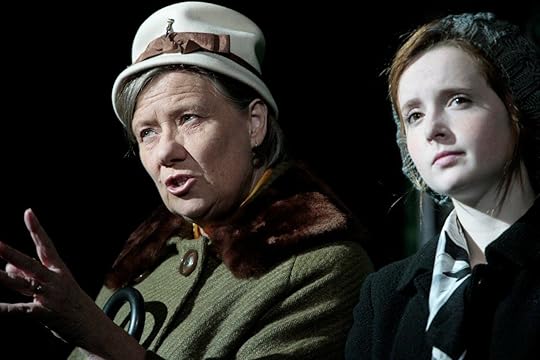
An aging but handsome university professor, Edwin Page, is married to Cecilia, a much younger woman who is an obstetrician and gynaecologist. (He was attracted to her in the first place by all the mysterious things she knew about the human body.) When the childless Cecilia goes away for a year's study leave, Edwin find himself more and more in the company of Leila and her mother who live next door. Leila's mother is a very good cook, and Leila, it turns out, is perfectly willing to be a surrogate mother...
The Sugar Mother explores the way the many little impacts of distance, separation and change can gather forces and move people in unexpected directions. It is a witty, disturbing story of self deception and of hopes perhaps secret hopes.
Monica Elizabeth Jolley was an award-winning writer who settled in Western Australia in the late 1950s. She was 53 years old when her first book was published, and she went on to publish fifteen novels (including an autobiographical trilogy), four short story collections, and three non-fiction books, publishing well into her 70s and achieving significant critical acclaim. She was also a pioneer of creative writing teaching in Australia, counting many well known writers such as Tim Winton among her students. Her novels explore alienated characters and the nature of loneliness and entrapment.
Honours: 1987: Western Australian Citizen of the Year 1988: Officer of the Order of Australia (AO) for services to literature 1989: Canada/Australia Literary Award 1997: Australian Living Treasure
So this is a re-read - I suggested it to a friend Judith, with whom I have recently started a reading group. We've called it Judith and Laura's Group for Women who like to DISCUSS books.
I think one of the most interesting aspects of this re-read was that the first half of the book, had several scenes and details, that I had not understood or noticed as I should have, the first time around. In the second half I saw a few differences - maybe because I focussed more closely as the climax approached.
So - I really didn't see how Daphne threw herself at Edwin - that utterly delightful scene when they meet in the pine plantation - Daphne walking her dog, Prince and Edwin is bursting to tell someone about his infatuation with Leila. Daphne naturally advises caution and a concern about Cecilia's views on this. She and Daphne have been friends since boarding school in England. Towards the end Daphne is utterly distraught by Edwin's inability to tell Cecilia anything but like a good friend Daphne stays stumm, realising that she cannot intrude in her friends' marriage.
In the first half, however, a comic scene ensues as Daphne suggests tactics to oust Mrs Botts and her daughter Leila from Edwin's house. Daphne suggests re-painting or re-wiring as procedures to help evict the intruders and when Edwin fails to consider either of these options, she decides to sacrifice herself for the general good:
"There's only one thing to do," Daphne said. "If you won't have the decorators in, you'll have to have a houseguest turn up suddenly. Someone who'll be dreadfully in the way, in the bath all the time or on the phone for all hours, someone who'll use up all the milk, preferably someone who can bring a pet, a dog." They both looked at Prince.
Daphne develops her idea further and culminates with this particular suggestion:
"To get rid of these people, Leila's mother and Leila," Daphne was saying, "it is essential that you have an affair. You must fill them with disgust at your behaviour while your wife is away. You must do it for Cecilia." "Yes, but who shall I have an affair with?" he asked with suitable gestures of despair.
There were several other smaller details I had missed - and like the above I certainly enjoyed myself reading them back into the novel second time around. I suppose I was so shocked, and yes "disgusted", by Edwin's behaviour on the first approach that I missed half the comedy intended by Jolley.
The one thing that didn't change throughout both readings is how much I loathed Edwin. His sexual advances on Leila, his predatory imaginations over the possibilities with Daphne, the exposure to his sexual shenanigans, with the group he is part of - Paulette, Erica, Ida and others etc created a character intended by Jolley not as a caricature but as an actual possibility of the male psyche.
To this end, Jolley provides us with background. We are given glimpses into Edwin's childhood, his relationship with his mother, who is a single parent, a domestic; and we have glimpses of the early years in his marriage to Cecilia; their courtship in Cecilia's mother's garden in England. There is the voyage out to Australia, where the couple meet the other couples; and a certain lifestyle is set in motion. When we enter the plot, neither partner is happy with the marriage and Cecilia has taken a year's absence from her work as an ob-gyn and gone travelling with her friend Vorwickl, from Vienna, Austria.
The novel deals almost exclusively with Edwin's physical and emotional developments in relation to the young Lola-like figure of Leila whom we eventually find out is 20, to Edwin's 53. A small detail, I missed the first time, is that Cecilia's age is given as 15 years younger than Edwin, and this is quite important. If Cecilia is only 38 then she still has the option of bearing her own child and shouldn't have to rely on a surrogate.
As we reach the end, Edwin's dreams and expectations are quite predictably smashed. Cecilia's return is imminent and yet nothing, has been explained to her. She is returning earlier than expected due to Edwin's failure to return her phone calls. Mrs Botts and Leila have also arranged their departure, post haste to the airport. No need to mention the baby has also arrived sooner than expected.
I suppose the only thing I could add at this point, after Edwin has had his severe comeuppance, is do I feel sorry for him? I wonder if any reader would commiserate with him? Has he learned something about himself? I'm not sure if that is the case; he is yearning desperately after Leila and the baby in the closing pages. He does understand his folly, how he has been duped by mother and daughter. Daphne focuses on the financial aspects, " . . . it makes me mad to think of all the money they have saved on rent." She understands that the emotional scourge is too painful to mention.
Edwin's thoughts are: "A war would solve everything: World War Three. He held up his sparkling glass towards the light. "World War Three," he said aloud, putting aside his pacificism, which he had never declared in any case.
No I did not feel sorry for Edwin in any way. I enjoyed every shade and every level, and all of the variations of how he would suffer. And yet, at the same time, had he not enjoyed himself very much in the year that Cecilia was away?
I really like this photo. It's from The Turnstiles Theatre - and I think it captures some of the beauty of Leila's innocence. Something that the written word struggles to convey; even the best of writers cannot add what the photo above contains. And I think it helps to explain some of the beauty in Edwin's devotion and also his fall into love with Leila and her baby.
I have to add in some further thoughts. I think the hardest thing to admit to in this story are the ends a person might go to to deceive themselves. Edwin knows that he can't maintain the relationship with Leila; that it can only ever be a temporary arrangement and yet he manages to sustain an illusion in the face of every manipulation Mrs Botts carries out. It's surprisingly hard to focus on this, which is probably the point of Jolley's story; the extent to which we are prepared to adjust all the facts in order to pursue a deeper desire. Edwin Page's loneliness drives him into depths of ridiculousness; and this weakness, this need is perceived and pounced upon by Mrs Botts as something she can exploit and manipulate to her own ends. There is a strange moment when she bursts into tears. She has knitted a fine Christening gown for the baby and as she presents it to Edwin, she corrects Leila's comment about the little yellow shawls she likes; " . . . that's how they end up after many washings. Oh what am I saying." And she bursts into tears. It's the only point when we see the possible strain on Botts - and have to wonder about her background.
Secondly Jolley grooms us into loathing Edwin. She makes it absolutely clear that his passion is fuelled by all the inequalities between himself and Leila; not simply that she is younger, but also that she is dependent on him, to the extent that she submits to him sexually; so that she can provide her illegitimate and presumably unwanted child with a home - and parents. Edwin never considers if his sexual advances are welcomed by Leila. He never bothers to consider her thoughts or feelings; he is exclusively consumed by his own needs. His ability to protect and provide for Leila allow him to justify his sexual longings and emotional needs. And although there is Cecilia, his wife, albeit off travelling; the only way he can resolve this emotional and moral conundrum of what he needs versus what he has in his marriage, is to imagine Cecilia's plane vanishing - somewhere above the clouds, the whole thing could just go poof into the void!
The end - again the end - yes I admit, we feel for Edwin right at the end. It is so painful to suddenly be made to encounter all those guilts and shames that you have successfully suppressed for an age. Edwin knows Cecilia will arrive in a few hours; and the item which causes him the most pain, is that Leila doesn't seem to mind the parting. She returns of course, not for him, but for her baby -and in that moment Edwin has an epiphany. He realises she has sacrificed herself, to protect her only love, which is the child. It's almost as if his selfish neediness hidden in the guise of protection and benevolence have actually allowed something good to happen, if not for him, then at least for the baby. He sees this; and this is the light in the situation. He is actually redeemed in that moment at the end, when he sees Leila, desperate to have her child back in her arms.
A novel where we can despise a character absolutely but then also feel the beauty of this same character's pathetic muddle is something quite rare and wonderful. I had to confess the whole arc of my feelings, which is something I also find hard to do.
This entire review has been hidden because of spoilers.
I first read this before I started writing reviews on Facebook – so, a lifetime ago. For a long time, I was obsessed with Jolley. Such an interesting writer. One of Australia’s best. At university I read her Miss Peabody’s Inheritance. And that sent me off reading just about everything she had written. Miss P is probably still my favourite of hers, but it is a very long time since I read it. I also loved The Well and Mr Scobie’s Riddle. I remember liking My Father’s Moon (a title I love to bits) but it is so long ago now, I remember virtually nothing of it other than the title. I read this one back then too – but now see that I’d remembered things that happened in it out of sequence. This book doesn’t resolve – I don’t see that as too much of a spoiler, though spoiler I guess it is. The interest in the book is not in ‘how it turns out’ but rather in all of the doubts and torments the story provides the main character. As such, all of the ‘possible endings’ are somewhat irrelevant to these doubts and torments. Sometimes you can stuff up so comprehensively that, really, how your stuff ups end up resolving themselves are of secondary interest at best. She does something similar at the end of Miss P. There is no need to neatly tie everything up in a bow – what has been said is enough to portray something utterly fundamental about the human condition and as such any potential ending you might dream up – or multiple possible endings – all show that none of these possibilities is going to be satisfactory. And, to me at least, that is the point in ending just before the denouement – any resolution takes away from the fact that any resolution will not fully resolve the world of shit the character has created for himself. This can’t be fixed. I’m not sure I enjoyed this the second time around nearly as much as I did the first time – but all the same, I did enjoy it very much and it is a deeply interesting novel by one of Australia’s best authors.
I am unable to give this any stars, though it probably should get four.
Reading this in a hit over a few days, it seemed better to me than The Well, an exceptional novel.
Then I did that thing. Where you discover something about the author. And it turns out that she is writing about herself and her situation and the situation of those around her. It also turns out she is a despicable person - by my not particularly high standards.
I picked this thinking it was a new read and then I found several copies of it on Internet Archive and I recognized the cover of one - so this is in fact a re-read. At the beginning I struggled to recall anything and then quite quickly I remembered various elements, strangely enough the pine plantation opposite Edwin's house where he meets Daphne walking her dog, Prince and where Leila appears to be lost. The pine plantation is in fact an important element and is used as a frame for most of Edwin's reflections, and to indicate the seasons as the year passes:
Edwin called Leila dumpling and listened for the sound of her soft footfall in the passage ouside his door. They took little walks together in the pines, breathing in the warm fragrance. The pines seemed lighter and the bleached grass gave way to patches of sand. Leila had to stop to empty first one shoe and then the other. Edwin, as usual, was surprised how he could forget, from one season to the other, these gifts from the pines, the gentle sighing of the wind in the tops of the trees and the warmth and the sustaining quality of the air. While Leila emptied her shoes he supported her tenderly.
Edwin is a middle-aged professor (53 to be exact), of Elizabethan and Renaissance literature, and his wife has taken a one-year leave of absence from her work as an ob-gyne at the Mary and Joseph. The hospital is within walking distance of their pleasant old house in the suburbs. Cecilia will be gone for a year and her absence is quickly noted by the mother and daughter pair who live next door, Mrs Bott, and her (20 year old) daughter, Leila. What follows could be said to be a re-write of Nabokov's 'Lolita'. In Jolley's story, however, it is the man who receives a painful comeuppance over his passionate indulgence with the young woman. By the end, poor Dr Edwin Page has learnt the full extent of his folly. There is, however, the slightest hint that Cecilia has also had plans of her own in her year off, and Leila is not the complete instrument that her mother would have liked her to be.
Jolley pulls the reader into the micro details of this story, especially in relation to how Edwin feels at every development and sometimes this intense focus is a little hard to stay with because I think readers are used to a broader outline in story development. The close focus, however is what is required to comprehend the painful process of discovery that Edwin is plunged into; and the story does open to include a cast of other characters. One of the most enjoyable is Cecilia's best friend, Daphne, who herself is somewhat under the influence of the handsome Edwin, but it is she who manages to direct and save nearly all the players from disastrous decisions. She has a kindness and intelligence which is rarely offered in characters in novels, but she is needed here especially when Edwin has to confront his 'indulgence' with the reality of his wife's return.
Here is a neat little snippet to give you some idea of the excruciating dilemma Edwin finds himself in. He was supposed to join Cecilia, in London, for a Christmas visit, but at the last moment 'misses the plane'.
Leila did not want Edwin to go away for Christmas. All along she said nothing, so that it was a surprise one night when she begged him not to go. She cried so much that Edwin was afraid some harm might come to the child. In the end he was obliged to fetch her mother, who made tea for them all. They sat together like characters in a Russian novel, Edwin thought, who never slept but prowled about all night creating problems and facing terrible truths in their night clothes. Only the little dog, who had grown very quickly, slept on in his basket, twitching and uttering little growls from his dreams.
I love that - I laughed outright over 'the Russians in their nightgowns' but also it's so clever, because it shows how Edwin has suppressed the certain fact that Cecilia will return. He believes that Leila is as deeply attached to him as he is to her and so he justifies his cancelled flight and his cancelled promises to his wife, based on Leila's needs, which are really his needs. Complex psychology, but beautifully done by Jolley. And here is another reference to those pine trees just to finish off with. Don't miss this book - it's absolutely fabulous.
He felt as if his chest would burst. He longed for fresh air. He wanted to escape into the pines and walk there. He wished, in a hopeless way, that he and Leila could be walking in the pines, in the dark, that they could be lost there together forever all night and he would protect her as he had the night she was lost. He wished he could walk endlessly in the pines knowing that they could be together for ever.
And it's strange that despite Edwin's immense, egotistical folly we feel sorry for him and believe absolutely in his love for Leila. It's the genius of Jolley's writing and her ability to know the depths of the human psyche. Please read Elisabeth Jolley: almost unheard of here on Goodreads. She is the author of 15 novels, as well as short stories, plays and other writings.
This is the story of two women who insinuate themselves into the life of an unwitting man during his wife's absence. Fascinating to read it in conjunction with Susan Swingler's memoir about Elizabeth Jolley, The House of Fiction - so many ironies.
Beware of the book’s seductive charm. Once you’ve been lured in, the door slams shut behind you and its not easy to emerge with your perceptions entirely unchanged … This quote from the New York Times Book Review, on the back cover of my copy of The Sugar Mother, perfectly reflects my reaction to Elizabeth Jolley’s novel.
It’s one of those novels that grabs you from the start, not because of any shock-inducing event or dramatic moment, but because it’s clear this is a writer who understands how to make odd characters spring to life. As you read further you get so swept along by the humour of this tale of a pathetically fussy professor and his relationship with the newcomers next door that you almost miss the undercurrents. The humour never completely goes away but it’s countered by some elements that left me with an uneasy sensation.
There’s no feeling of apprehension at the start of the book however as we meet the Pages : Edwin, a middle-aged professor whose obsessed about his health, and his much younger wife Cecilia. She’s a successful obstetrician who is embarking on a fellowship year abroad. She has taken care to leave Edwin in good hands, arranging for their set of friends to host him at regular dinners so that he doesn’t get lonely.
What she couldn’t have predicted was that their new neighbours, Mrs Botts and her twenty-something-year old buxom daughter Leila, would make a move on Edwin almost the minute she leaves. It start’s innocently enough. They’re locked out of their new home and since they have no-where else to go, Edwin offers them refuge in his home.
Mrs Botts is a wily old bird for whom the naive Edwin, for all his intelligence is no match. His future at the university seems unstable but at home with the Botts’ women he feels like a lord of the manor. The fool becomes obsessed with Leila, jumping readily at the idea planted by Mrs B that the girl could become a “sugar” mother (a lovely Malapropism) for Edwin and his childless wife. Edwin’s growing infatuation with Leila sees him become more distant with Cecelia, avoiding her phone calls and pulling out of a trip to visit her in Europe. There is no way this can turn out well….
Edwin is a delightful character. An annoying individual who painstakingly documents all his ailments in a book which has separate pages for each part of the body, he is just as pernickety about finding the perfect quotes for his lectures. But he’s also a rather pathetic character who doesn’t fit in with the hip lifestyle embraced by his wife and her friends. The first flush of love between him and Cecilia has vanished:
The feeling of being special and chosen and cared for was gradually absorbed, he realised now, in the more important matter of appearances. How they were seen by other people began to mean more to them and they must, all the time, have been meaning less to each other and thinking only of the next thing they were going to do. Things which would be evaluated by other people and measured against standards which were not necessarily their own.
The ‘swinging’ parties with their friends, which presumably were meant to bring an added spark to their relationship, have lost all meaning for Edwin.
The evening, in the pattern of doing things, was endless, hours of jokes and anecdotes, mostly with double meanings. They would eat and drink and talk too much in loud voices and play foolish games … and would end with the ritual of keys in the ring since that was the way of broad-minded couples …
His growing disenchantment with life makes him ripe for emotional and financial exploitation at the hands of Mrs Bott.
But perhaps we shouldn’t expend too much sympathy on Edwin. I know Leila is older than Lolita but there is still something unsettling about the way this 54-year-old lusts after the body of the much younger girl. He treats her as a child one moment, making her hot drinks to help her sleep, and then caressing and fondling her at every possible opportunity. So caught up is he in his desire and – the boost to his ego – that he is blind to reality even when a close friend raises an alarm bell about the cost of having these women in his house. I wanted to throttle him at times, and shake him out of his blind faith in the domestic bliss he imagines he has with the Botts, but right at the end I did feel my sympathies return.
The Sugar Mother is a novel which is full of unexpected delights.
Elizabeth Jolley is an interesting writer, but this book is different from others I've read by her. It's unclear whether Edwin really has impregnated Leila or not, and this makes the book titillating and fascinating. It will linger in your mind afterward. However, the emptiness of Edwin's life--the "swinging" parties arranged by his absent wife Cecilia--are sad to read about and sad to see how caught he is in this life.
주인공은 중년의 인문학 교수이다. 그의 부인은 산부인과 전문의로서 늘 병원으로 부터 아무때나 콜을 받으며 바쁘게 살고 있다. 당연 집안일에는 소홀하다. 그들의 지위와 맞게 그들만의 공동체를 가지고 있어서 함께사는 연대감이 돈독하다. 그의 아내 씨실리아가 학문적인 외유로 일년간 떠나게 되고 주인공 에드윈은 집에 남게 되며 벌어지는 이야기다. 마침 그때 옆집으로 이사온 모녀가 에드윈 집에서 함께 지내게 되는 일이 생긴다. 에드윈은 어리고 여린 22세의 리일라에게 흠뻑 빠지게 되고 그녀가 자식이 없는 자신의 아들을 낳아줄 대리모가 되기에 딱 맞다는 생각에 사로잡히게 된다. 그녀의 엄마는 이러한 에드윈의 행동을 부추키면서, 맛난 음식으로 저녁식사를 준비하고 집안관리의 능숙함을 보이며 에드윈이 그리워 하던 가정의 안락함을 제공한다. 그녀의 임신으로 인해 행복의 절정에 달한 에드윈은 아내 씨실리아와의 여지껏의 결혼생활을 다 부정하고 잊으려하며, 젊디 젊은 리일라와의 달콤한 미래만을 꿈꾼다. 에드윈은 리일라 엄마가 주도하는, 리일라가 대리모로서 받아야 할 댓가에 기쁘게 동의하며 의심 없이 그돈을 지불한다. 자신만의 행복추구에만 몰두된 그의 합리화된 이기적인 생각은 어이가 없다. 하지만 중년 남성의 허점을 여지없이 드러낸 작품이라 할 수 있겠다. 예상된 대로 그의 자식에 대한 집착과 리일라와의 사랑에 대한 망상의 버블은 마지막을 향해가며 이책은 마감이 된다. 오랜만에 읽은 호주작가의 글이라 반가웠지만 주 내용에 비해서 곁가지 내용이 너무 많아 내게는 불편한 글이었다.
This novel by Elizabeth Jolley was first published in Australia in 1988 and in the UK by Virago in 2000. The cover of this edition gives only an approximation of the characters in the book. Edwin is described as handsome and well-groomed. He is an indecisive and lonely intellectual not a frumpy nail-biter. The female on the cover is neither the woman who coins the term 'Sugar Mother' nor her daughter who performs the rôle. Maybe a weird hybrid of the two, with a cake.
My first impression was that this felt like an Australian Barbara Pym - the same kind of restricted milieu and domestic setting, observations of the small things that mean so much, characters who speak and do according to their own unfamiliar logic. It feels like it belongs to an earlier era - and concerns not Australians of longer pedigree but a community of ex-pats. Edwin and Cecilia met the couples in their set on board ship as they sailed away from England and towards a new life, Dr Edwin to take up an academic post at a university, Dr Cecilia to work at a clinic. Two of the men, 'Buffy' and 'Tuppy', are defined by the time they spent in India, interrupted by the end of British rule. But when Cecilia leaves Edwin alone for a year to further her career in obstetrics, the world has moved on and the old kind of leisurely journey has been replaced by the horrors of plane travel. Jolley also includes a naughtier element - Edwin and Cecilia, 'enlightened', go in for a sterile kind of swinging with the couples they have befriended (the barren ritual of the keys). It all becomes something of a burden to Edwin in Cecilia's absence.
The novel begins with a passage that is repeated somewhere in the middle, when it is re-read with greater understanding and interest. Chronologically the story begins with Edwin wondering how he will manage while Cecilia is away. Within a few hours he has been captivated by the new neighbours, a mother and daughter, who soothe him with praise and attention and seem to offer him the future he longs for, so that he almost forgets his old life. The one consistent element turns out to be Cecilia's old schoolchum Daphne, a character with excellent lungs and a sense of integrity he increasingly appreciates.
One day, inevitably, Cecilia will return. And what then? How will Edwin manage when he has to wake up from the lovely dream? The questions are left hanging in a way that proves disturbing.
While Elizabeth Jolley’s novels are always well worth re-reading, there is a particular pleasure in reading them for the first time. All her novels are really character-driven, always about misfits, eccentrics or odd-bods but there is always some aspect of the plot that takes the reader by surprise. It is the most delicious experience to be deep into the novel, and reasonably convinced that one has the characters worked out, only to find that they have some wholly unexpected ways of behaving. In The Sugar Mother, it’s Edwin…
Edwin is an ageing academic, married to a younger woman. He’s a bit of a fusspot about things, deeply narcissistic and obsessive about the workings of his body, especially his digestive system. He records his trivial doings in three journals, one of which is devoted solely to diarising his digestion. The list of things he ‘can’t eat’ is long. He’s more than a little selfish.
Work is a problem. Edwin is past it, it seems, and the faculty is not subtle about wanting him gone. He still thinks his lectures on the Renaissance are important but the Dawkins ‘reforms’ were around then, and university courses had to be ‘relevant’. The days of higher education as an intellectual pursuit not necessarily of immediate economic value are over. The days of tenure are over for most staff too, but Edwin can hang on until he decides to retire.
Having read much of Elizabeth Jolley's work this book was a little different, or perhaps it was because it’s been a few years since I have read her stories. Knowing a bit about Jolley's background I suspected that this story was more autobiographical than much of her other work. The quirky characters and almost ludicrous situations in which they find themselves make for a compelling, almost voyeuristic read. I find Jolley’s characters very easy to visualise and could not help but compare some descriptions of the main character, Edwin to Jolley’s real life husband. I really like her writing style but as always it’s the characters that make Jolley’s writing so addictive. There's always an element of comedy and not taking a situation too seriously and this story is no exception.
i really struggled to get through this - i only picked it up again six months after i originally started it. it was harder to care about the characters, even though the setting was familiar (set in perth) - i might even say i found the characters quite dislikeable. i found the pacing inconsistent and almost jarring - she’d talk about something and then the next paragraph is days later with now warning. i’m sure the authors other books will interest me more. this one i simply could not get into at all.
this was really hard for me to get into, disliked all the characters, felt uncomfortable most of the time and the sudden timeline jumps made it hard to follow
What to make of this book... As part of my little project to read more Australian fiction one writer who has been on the radar for some time is Elizabeth Jolley, who was one of the major Australian novelists of the 1980s and 90s. I'm not sure that The Sugar Mother was the best place to start, as I found this book to be quite insipid.
The plot of this book is relatively simple - Edwin, a literature professor, is married to Cecilia, a gynecologist. Cecilia goes overseas for a year for work, and Edwin is left to fend for himself. His next door neighbours - Leila, a 21 year old plump ingenue, and Leila's mother (not sure we ever learn her name), a bustling lower-middle-class lady - find themselves locked out of their rented home and Edwin lets them stay the night. This turns into a longer-term arrangement, and Leila's mother notes that Edwin and Cecilia are childless. One thing leads to another and Edwin fathers a child via Leila, under a surrogacy arrangement (Sugar Mother, as Leila's mother calls it). Edwin doesn't tell Cecilia, and falls in love with Leila...once the baby is born, Leila and her mother are due to return to England, but find they can't leave the baby. Edwin is dreading facing his wife, and wonders if in fact he has been taken for a ride and that it's not his baby after all...
In between times we see snippets of Edwin's milieu - his friends, expats like him with the rounds of dinners, tennis and casual affairs (picking up each other's keys at the end of the night). We also understand that Edwin is seen as the old out-of-date academic at the University, while his wife is much more of a go-getter. Edwin initially wanted the baby so that he and Cecilia could have a family, but he realizes as time goes on that it is Leila that he wants - her youth and her passivity.
I had lots of problems with this book. Firstly, none of the characters are very likable. Edwin is a fussy neurotic, Cecilia is childish, Leila's mother is a snobby know-it-all, and Leila herself is a cipher. Edwin's friends are stereotypes of British middle-class. The only sympathetic character is Daphne, Cecilia's best friend from school, who dreads losing Cecilia and Edwin and sees that perhaps Edwin is being taken for a ride both financially and emotionally, by Leila and her mother.
So, if the plot is simple to the point of unbelievability, and the characters are unlikable or ciphers, is the writing any good I hear you ask? No, not particularly. It's not clunky, but there is no style to the prose at all - it's nondescript, and I'm not sure if that is an effect Jolley was aspiring to or not.
It's fair to state that I often have a problem with middle-class stories such as this one, so the premise of this book is not one to which I'd naturally be drawn. That said, I found The Sugar Mother particularly disappointing. Edwin's character, which is so prissy and insecure, doesn't meld with what he does with his friends; he just doesn't make sense in who he is or what he does. It was very hard (for this reader) to become engaged in who he was and what he was thinking and feeling, especially when the story became more and more absurd.
I'll be reading some other reviews and pieces about this book - if this is a typical Elizabeth Jolley work, I do wonder what all the fuss was about. Not recommended.
When I started this book I thought it was odd, but good because it was unusual. It had been sitting on my pile for ohh about 10 years. Yet another one of the dusty remainder books from the New England Mobile Book Fair.
When the "neighbors moved in" the book took a turn from unusual to freaky! I really liked it all the same but the ending was just so-so. Maybe I'm the kind of person who just puts too much emphasis on the ending of book. Maybe I am just being a sour puss for not figuring out the ending before it became so obvious!