Laughing Allegra: The Inspiring Story of a Mother's Struggle and Triumph Raising a Daughter With Learning Disabilities – A Parent's Guide with Answers and Hope
When Anne Ford, great-granddaughter of Henry Ford, learned that her four-year-old daughter Allegra’s “differences” were the result of severe learning disabilities, she faced a challenge that neither money nor position could ease. Desperate for answers, Anne sought out doctors, teachers, counselors, and oth- ers who could help her build a support network for herself and her daughter, while fighting the many common misconceptions and myths about learning disabilities.
Now, in this fiercely honest and compelling memoir, Anne tells her story, writing movingly of her feelings as the mother of a learning disabled child. “I grew to accept that life is filled with uncertainty and that answers to the most simple, yet profound, questions such as ‘What is wrong with my daughter?’ can be elusive. I learned to be self-reliant in ways I never had before. I learned that every spark of optimism and hope was something to be nurtured and treasured because sometimes they were the only comfort available. And I learned that worry had entered my life.”
In time, Anne Ford saw her daughter grow into a vibrant, loving, and independent adult with a passion for ice skating and a commitment to help other disabled children. Allegra Ford, now 32, lives independently and supported this book’s publication so “it could help other kids.” Anne’s experience led her to become a tireless activist on behalf of children and families faced with LD, including her service as Chairman of the Board of the National Center for Learning Disabilities from 1989 to 2001, and the writing of this book with John-Richard Thompson, an award-winning playwright and novelist.
In addition to Anne’s personal story, Laughing Allegra includes four invaluable special sections:
Answers to the most commonly asked questions about LD A resource guide on where to find help A discussion from a mother’s perspective on the challenges of homework, money, relationships, the work- place, and planning as the LD child and parents age A section on “Siblings and Secrets,” new in this paperback edition, inspired by Anne’s conversations with readers during her hardcover book tour.
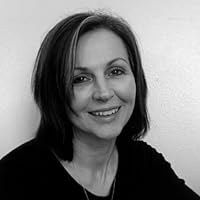
Anne Ford served as Chairman of the Board of the National Center for Learning Disabilities (NCLD) from 1989 to 2001. Mrs. Ford has received many honors for her work, including the Lizette H. Sarnoff Award for Volunteer Service from the Albert Einstein College of Medicine and an Honorary Degree, Doctor of Humane Letters from Leslie University for her advocacy work for people with learning disabilities, and has spoken on this issue at numerous corporations such as JP Morgan Chase, Goldman Sachs, and Ford Motor Company. She has co-authored four books with John-Richard Thompson: Laughing Allegra, On Their Own, and A Special Mother. All three books have been finalists for the “Books for A Better Life” Awards. Their fourth book, The Forgotten Child: “If She is Special, What am I?” Sibling Issues: When Learning Disabilities Cause Tension in the Home was published in 2015.
She has a son Alessandro,, who is married with two children, Eleanor and Olivia. Her daughter Allegra was married on May 5, 2012.
The term LD is used casually & often incorrectly. When you have a child with a true LD, the isolation, the loss of parent friends, the inability to work away from home, the constant advocating is real. I read 1 chapter at a time bec the experience hit so close to home that I couldn't read more in one sitting. A must read for parents who have experienced the heartache, isolation, & fears that come with a life altering LD child.
Anne Ford's account of raising her daughter Allegra in the 1980's before learning disabilities became better publicized reads more smoothly than many disability parent memoirs. Ms. Ford respectfully discusses both Allegra's struggles and her eventual independence. While it was difficult not to be jealous of the additional supports such as tutors for homework and specialized private boarding schools available to the great-great-grandaughter of Henry Ford, which are a definite factor in her success, I respect that both Anne and Allegra continue to invest time to advocate for people with learning disabilities and have sponsored scholarships to help young adults with learning disabilities go to college.
I could relate to a lot of Allegra's experiences, but I was disappointed that this book seemed to mostly be about her mom, Anne & Anne's feelings of raising a daughter with LD. It would have been better if it was told in Allegra's own words. Also, Anne is the granddaughter of Henry Ford so they are very rich & the things they did are not realistic for most parents. I did learn from this book & it's very readable, so I'm glad I read it.
I heard Anne Ford speak at a Learning Disabilities of America conference and picked up this book afterward. My son has learning disabilities that don't come close to those that Anne's daughter deals with. Anne's book shows how difficult it was to navigate through the maze of diagnosis and education of her daughter, the social difficulties, the frustrations and the triumphs.
This is the best book I have read regarding a mother's relationship with a daughter who has different learning needs. I found it informative on a personal level. The book however is a bit outdated and the author is from THE Ford family - which means she has access to more than 98% of the population.
I enjoyed reading this book because I could easily empathize with the author's story. I have a child who has similar difficulties as Allegra and know many of the schools and programs discussed in the book. I ignored the resources section in the back.
it's kind of like the time my snarky obstetrician relative, who used to dismiss the pain and effort of laboring women, had her own baby. every teacher should read this book to help her see the parent perspective.
I received this book from Good Reads. I want to thank Anne Ford for sharing her story. Many educators don't get a chance of experiencing a parent's first hand accounts and emotions of raising a special needs child.
I read this book as part of my daughter’s school’s book club. It is a helpful read if you have a child recently diagnosed with a learning disability. I don’t know if I necessarily found it helpful, but I definitely could relate to her guilt and despair.