Explore a truly astonishing range of interests, philosophies, religions, and cultures--from alchemy to angels, Buddhism to Hinduism, myth to magic. The distinguished authors bring a wealth of knowledge, visionary thinking, and accessible writing to each intriguing subject in these lavishly illustrated, large-format paperback books.
Philip Stanley Rawson was an English artist, teacher and author. A specialist on Eastern art, he wrote widely on the subject in books and for various publications. He also organized a number of exhibitions on Indian art in Britain. Rawson also served as a UNESCO expert on museology in India, worked as a tutor at the Royal College of Art, and was the Dean of the School of Art and Design at Goldsmiths' College, London, among others.
An old friend of mine got involved with an American-born lama who had spent three years confined in a U.S.-based lamastery, meditating most of every day, sleeping in an upright position and enduring what came to be chronic back pain. She introduced me to the fellow at a backyard fire at brother Fin's home in SW Michigan and the two of us talked about his experiences for much of the night.
I read this book in order to get reacquainted with Tibetan Buddhism, a subject I'd not studied since school days. Although written by an art historian and profusely illustrated, the text gave me the brief overview I wanted.
Later, as part of a series of events another friend and I had been running at a local cafe, the Ennui, this unlikely lama was kind enough to give a lecture illustrated with slides about Tibetan religion.
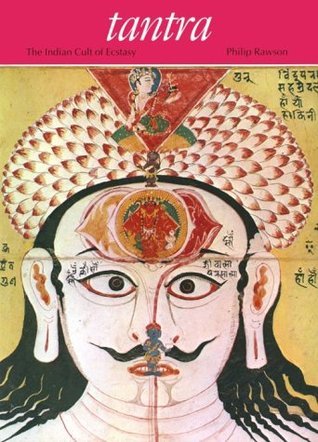
Very straight forward and easy to read. The historical references are written with such fun and easy-to-digest way. The book also came with such a gorgeous illustrations coming from real-life artworks. Very recommended for those who wants to understand the basics of Tantric.
Given that I purchased this book at a museum bookstore in London, I expected to bring it home as a souvenir. The binding and paper are nice, and I expected to enjoy the book's vibrant illustrations and ignore what I expected to be an uninformative and by-the-numbers body of text.
Wrong. Rawson's explanation of Tantra is too brief to do Tantra's complex concepts justice, but for such a small book, he manages to provide an extraordinary introduction to Tantra and some of its more prominent precepts. His handling of the Tantric conception of time got my gears rolling. I read this in my car during a lunch break at work--the last thing I expected that day was to be propelled into a philosophical mode, least of all by a book I bought at a British Tate inner-museum bookstore.
If you're interested in Eastern religion, and ESPECIALLY if you're responsive to Eastern art (as I've found I am), I can't recommend Rawson's slim guide enough--as an introductory text. I expect that experts might disagree with some of Rawson's assessments, but as a newcomer to these fields of study, I'm grateful for his approach--and that the fruit of that approach is so readily available at a museum bookstore near you (or in my case, near your European vacation spot).