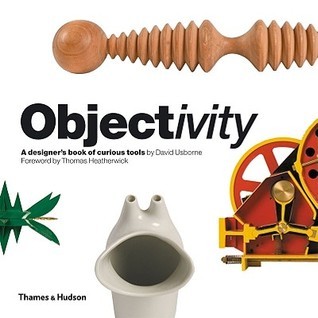
A cabinet of beguiling yet useful the objects that get jobs done, improve domestic and working lives, and make our houses more comfortable. If you have ever thatched a roof, measured a baby’s skull, or castrated a bull, you will recognize some of these objects. If you haven’t but admire the work of, say, Warhol, Duchamp, or Cornell, you will appreciate these accidental masterpieces of daily life.
Some tools were developed to satisfy basic human needs, some for less obvious ends, and still others are the relics of vanishing trades, yet all display a beauty and meaning beyond their function.
More than 400 objects, ancient and modern, are presented in sections that broadly characterize their hitting, cutting, holding, shielding, molding, spreading, gripping, rubbing, and testing. From a nineteenth-century fruit picker to Czech military food-mixing blades, from variations on the kitchen whisk to medical instruments that, thankfully, are no longer in use, there is something in these objects that will touch the inventor, designer, artist, or collector in all of us. 400+ color photographs and illustrations
A collection of single photos of a variety of objects, organized by an interestingly reductive structure of utility: things that hit, that hold, that cut, etc. The photos are good, although in that popular style of "punching out" the object from any background that I really don't care for, and offer great shapes for thinking about design. Most objects are identified, although there are a few mystery-objects included, but descriptions are brief. What elevates it for me from 3-star to 4-star book is the introduction, discussing the nature of collecting and how collections can be organized -- I may want to add that to one of my course syllabi.
I found this book looking for content on or by Thomas Heatherwick. Almost 200 pages of weird-looking tools organized by function: hitting, cutting, gripping, holding, rubbing, shielding, moulding, spreading, and testing. It surprised me that the author didn’t know what many of them were for. I guess with AI today it is easy to find out, but that would destroy the mystery. There is a foreword by Heatherwick, an introduction by the author, and each of the nine sections has its own introduction.
The concept I like the most is the contrast Usborne makes between art and these tools: they don’t want your attention, they don’t have a famous author or celebrity designer, but they fulfill a role. That humility is refreshing in a world of art that tries to make you admire everything an “artist” considers their art. He also mentions Duchamp, Miró and other artists, and once you take a closer look at these objects, you realize how much some of their work visually echoes them.
A good book for leaving on your coffee table. I guess you could even create a game in which you have to discover the functions of a tool (not for kids, because some of the surgical tools are frightening!).