Here are Alan Bennett's four hugely admired, triumphantly reviewed and bestselling stories, brought together in one book for the first time. "Father! Father! Burning Bright" is the savage satire on a dying man's family reaction as he still asserts control over them from the hospital bed. Over 60,000 sold in small format. "The Clothes They Stood Up In" is the painful story of what happens to an elderly couple when their flat is stripped completely bare. Over 200,000 sold as a small novella. "The Laying on of Hands" is a memorial service for a masseur to the famous that goes horribly wrong. Over 100,000 copies sold as a novella. "The Lady in the Van" is the true story of the eccentric old lady and her van who are invited by a homeowner to live in his garden. The homeowner is Alan Bennett and she stays for 15 years. It became a West End hit, starring Maggie Smith. Like everything Bennett does, these stories are playful, witty and painfully observant of ordinary people's foibles. They all have brilliant twists, are immensely entertaining and highly moral. And all are modern classics.
Librarian Note: There is more than one author in the GoodReads database with this name.
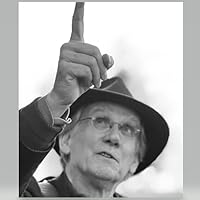
Alan Bennett is an English author and Tony Award-winning playwright. Bennett's first stage play, Forty Years On, was produced in 1968. Many television, stage and radio plays followed, along with screenplays, short stories, novellas, a large body of non-fictional prose and broadcasting, and many appearances as an actor. Bennett's lugubrious yet expressive voice (which still bears a slight Leeds accent) and the sharp humour and evident humanity of his writing have made his readings of his own work (especially his autobiographical writing) very popular. His readings of the Winnie the Pooh stories are also widely enjoyed.
I love these stories because of Alan Bennett's acute observation of people's little mannerisms, especially mannerisms of thought. The clergyman in 'The Laying on of Hands' who is deciding how to pitch his sermon even as he walks up the aisle; Aunty Kitty in 'Father! Father! Burning Bright' who does her 'I am too upset to speak' act. He opens a door into their minds, and there they are - there we are - self-justifying away. It's a very English trait, slightly guilty, a bit tentative, easily overborne by more confident personalities. But it is a sympathetic gaze, we may judge them, but he does not, or at least not harshly. Familiarity with Bennett's own skills as a actor makes it almost impossible not to hear his voice as one reads, the rhythm and intonation are there in the writing, and his wry emphases float out of the page: it's an indication of the quality of the writing that it would be impossible to put stresses in the wrong places when reading aloud. 'The Lady in the Van' is not a story in the same sense as the others, but a memoir of Miss Shepherd, who parked her van by Bennett's house and ended up on his drive for almost a decade. His kindness to her, mixed with exasperation, is touching and humbling, especially as he writes always with a sense of not having done enough for her. Bennett is a master of language, no word is ever wasted or misplaced, and he picks through the muddle of human consciousness gently, kindly even, but with a deadly thoroughness.
This volume brings together four short stories (or possibly novellas) previously published elsewhere. Alan Bennett sells, and justifiably so. It's therefore not surprising that a decision was made to collect these stories. However, with the exception of the Lady in the Van - which is more memoir and diary than fiction - II found that the fiction did not match up to Bennett's notable skills as a playwright and memoir-writer. The three fictional stories each take a good idea - a celebrity-studded funeral of a famous masseur suspected of an AIDS-related death, a couple who return to find their flat denuded of every single possession and fitting, and the slow waiting by the death bed of a not particularly lamented father - but rather then work them into punchy short stories, Bennett waffles and digresses his way through 80 pages.
This manner of writing works very well when Bennett writes about his own life and observations (most famously, of course, his parents) but his fiction lacks the same empathy and pointedness. I imagine that read out in his distinctive voice they take on a whole new perspective, but read straight off the page I found little to interest me. The Lady in the Van, is of course, a wonderful and remarkable story and redeems the book - though many of us will have read it elsewhere as well as seen the play and film.
The humour I loved about The History Boys is present throughout, in Bennett’s irreverent, yet measured attitude. He does not shy away from addressing heavy topics, yet the stories remain humourous throughout. Bennett’s talent for writing inappropriate relationships while keeping the characters human, rather than caricatures of evil is impressive, and a common element in his work. The first story in this collection, “The Laying on of Hands” details the memorial service of a masseur. That the masseur had relations with many of the people in attendance fairly soon becomes apparent, and the memorial service spins somewhat out of control as testimonials to the dead man’s character are offered from various attendees. Bennett’s unique style combines adultery, LGBT relationships and religion seamlessly, exposing the darker underworld to the glossy celebrity lifestyle most of the attendees are part of.
Perhaps the most traditional marital relationship I’ve seen Bennett write in detail is that of the Ransomes in “The Clothes They Stood Up In”. The couple return from a trip, to find their home completely emptied. Not just of valuables, but of furniture, carpet, light fittings, even toilet paper. Left with only the clothes they stood up in, the Ransomes start to repurchase items, and Mrs Ransome in particular starts to come to terms with their new, minimalist way of life. The plot thickens, however, as a series of twists and turns interrupt their new reality, and they are forced to again change their lifestyle. This story acts as a kind of mystery story, and the clues scattered throughout are well-placed so as to seem innocuous, until the final scene at the end reveals the truth. The premise of the story is highly entertaining, and Bennett executes it excellently.
Out of all the stories, my least favourite was “Father! Father! Burning Bright”, about a man who’s father becomes hospitalised. Unlike most of Bennett’s characters, I could not find any sympathy for Mr Midgley, the protagonist. His family, as well, seem insufferable. The most interesting part of this story for me were the other characters in the hospital, the ones mourning a family member, worrying for a loved one, or welcoming a child. These background characters lifted the story for me and gave it an element of humanity that I felt was lacking from the central family. I felt this story wasn’t as humourous as some of the others as well, which was a shame as it’s one of the things that I enjoy most about Bennett. The adultery in this seemed more gratuitous as well, and didn’t make much sense to me. The style is consistent from the other stories in other respects, however, so I still enjoyed reading it.
The final piece in this collection, “The Lady in the Van” is probably the most famous in the collection. Based on entries from Bennett’s diaries, it tells the story of an elderly woman who ends up living in a camper van on Bennett’s drive. Recently turned into a film starring Maggie Smith, “The Lady in the Van” is eccentric, and would seem so unbelievable it would be difficult to get into if it wasn’t based in truth. Bennett doesn’t shy away from telling the more disgusting details of her life in the van as well, giving the story real depth. Despite the gaps between the diary entries, it never feels as though anything is missing from Miss S’s story. I was glad that Bennett offered us more information about her background, but also very glad he put it into an afterword rather than including it in the story. While it was interesting to hear more about the real Miss S, I was glad that the fictional Miss S was left more ambiguous.
So, I’m still a big Alan Bennett fan. If anything, these stories have really just cemented it, as they’ve confirmed his irreverent humour is present throughout his work. His life is extraordinary, as proven by “The Lady in the Van”, and it’s made me really want to read his autobiographies. As my 5th read in 2020 goes: not bad at all.
Alan Bennett is always a delight to read. He has the ability to portray a character vividly in a mere handful of verbal brushstrokes. This volume consists of 4 stories, each long enough to be satisfy, but not long enough to outstay their welcome.
The Laying on of Hands is a wicked portrayal of the funeral of a “masseur” to the stars. The star of the story though is the priest who is struggling with his own sexuality, trying to remain chaste but not doing terribly well and eventually realising that he doesn’t have to. The humour in this is biting, striking at celebrities, the gay community and the church (all of which Bennett has been an active member of in his life).
“The things they stood up in” is slightly unusual, but also a little special. It follows the life of a middle aged couple who come home to find their house has been totally stripped of all their possessions. Everything. Even the oven. This event shakes the two of them, the husband is a very buttoned down lawyer and the change is difficult for him to process, the wife actually learns to enjoy being forced to face new experiences. Then under unusual circumstances this reverses, with one final reversal near the end. The book sets out looking like a critique of materialism, but finishes by being about personal emancipation. It’s a little surreal, but very worthwhile.
“Father, Father Burning Bright” was a little less good. I didn’t really get to grips with Midgley, the main character. I always find Bennett’s women a lot easier to understand. Take from that what you will.
Finally “the lady in the van” is quite sweet in its truthful portrayal of an eccentric old lady who lived on his drive for 15 years until her death. It’s a little disjointed as it is drawn from diary extracts, it doesn’t really have a neat conclusion, but that’s how you can tell it’s true.
All in all, I can highly recommend the collection.
What a joy these four stories were. Alan Bennett has always been a favourite of mine. The first story, A LAYING ON OF HANDS, was a wonderful depiction of a local parish church at a memorial service of a lad who was a masseuse who died of a well known disease in the 80’s. The furtive glances on discovering this among the mourners, both men and women, was hilarious. The second story, THE CLOTHES THEY STOOD UP IN, about an elderly couple whose entire house contents were stolen while they attended an opera, and their subsequent mysterious retrieval is so funny. The third story is FATHER,FATHER , BURNING BRIGHT is the inevitable past history of a man lying dying in hospital while various family members pass by to pay their respects. And the fourth story is the well known THE LADY IN THE VAN , the original story from which the film was made. I chuckled the whole way through. It was so refreshing to have the politically incorrect snippets throughout the stories to remind me of a more sane world.
I enjoy most of Alan Bennett`s work, and he has, quite correctly achieved International recognition for his writing and theater work. This book of four short stories is as good an introduction to his writing, providing any new reader with a firm understanding of Bennett`s style, humour and brilliant observation of the human character and often life`s absurdities. My only reason for giving three stars, is that I do wish he could just move on a little bit with regard to his gay preferences. In my view ( and a view only ) it becomes a bit tiresome and repetitive to always have to read through, what seems the ' must have ' explicit sex and gay scenes. These days it is no big deal, so there is no longer a need to shock or indeed, linger. Still, unquestionably an important and essential writer of our times.
All four stories are just such enjoyable pieces of writing. Pure Bennett, beautiful sentences.
The first had me chuckling out loud as the reason so many of the rich and famous were at Clive's memorial service became clear. The different characters are so well drawn, with their prejudices, outlandish thoughts, tenderness, exposed. Wonderful journey from wariness to distress to sudden relief and back to deep worry and finally calmness again.
The last is less comical, although still a wry sense of humour prevails, as the story of the Lady in the Van is told, with horrible details of the squalor in which the eccentric, strange woman lived.
The second story is based on a surreal situation of burglary, and the third of a son's relationship with his father, explored as the father is dying.
Funny, with wit, insight, twists, thoughtfully built characters and a cynicism yet moments of beauty (although generally ironic).
The first story offers witty, if cynical, insights into Anglican circles, though maybe a bit too acidic and down and dark. The second one was funny and absurd, but I felt it was better to end sooner before it became less absurd and another cynical character piece. The third felt short and ended on a dark, bitter punchline that was quite funny, but I felt maybe there could have been a bit more to the story. The fourth is the classic 'lady in the van' true story, which I first saw in the cinema version. I also read it in a separate book earlier, so I won't say much more, except that if I were to rate it on its own, I would have raised my personal rating of this book.
Alan Bennett, famous for his British dry wit and shrewd commentary on his fellow human beings, has that ability to almost make me laugh. I get a sensation of laughing, but I'm not sure where. The lady in the van on the drive's biography of sorts made me laugh aloud. Twice. His imaginative fiction, gathered in this volume, doubtless also drawn from life, left me bemused. A vicar trying to deal with AIDS myths, the dying father lingering for what felt like a long drawn out punchline; but the bizarre story of the stolen lives went beyond dry and astute: the audio sex tape being the highlight of the odd way Bennett addresses that ubiquitous but obscure activity of human sex. Worth reading, if you want a sort of fertiliser to feed the food of thought.
The first, "The Laying on of Hands" was probably my favourite & was set at the funeral of a "masseur". The panic of some of the attendees on hearing the testimonials & revelations was quite amusing.
"The Clothes They Stood Up In" sees a couple arriving home to find their home stripped bare & how they both react to the experience.
"Father! Father! Burning Bright" I wasn't keen on this one. Nothing else to say about it.
I didn't read "The Lady in the Van" having read it before. ( See here)
I like Bennet's dry British writing style - very good. I really enjoyed the first 2 stories, and did not enjoy the last two. The first was witty and cheeky and somewhat unexpected.The second had an interesting story line. The third just got a bit depressing, repetitive and whiny (a poor take on the first story, almost). Some might find the last story engaging, but I found the ramblings of a woman with mental illness not very interesting, since much of it did not make sense. The interesting part of the 4th story was Bennet's devotion to caring for this homeless woman over the years, though.
Four lovely stories from that British treasure, Alan Bennett. They're not new tales but sit together nicely in this anthology. Co-incidentally the last story had also been turned into a radio play which appeared on Radio 4 while I was reading the book so I had the chance to compare.
The thing with Alan Bennett is, that if you know of him and have heard him, you can 'hear' his voice all the way through his writing. He manages to make fun of himself as well as his characters; and the characters are always 'ordinary' people, warts and all.
Four longish pieces, three fiction, one not. The fictional pieces had their moments and humor, but the standout was the nonfiction piece "The Lady in the Van" about a woman who parked and lived in her van for 10 years in front of the author's house and in his garden. A moving story that does not shy away from the squalor in which "Mrs. Shepherd" lived. I think they made a movie of it with Maggie Smith; haven't seen it.
A great collection of four short stories. The stand out for me was "The Lady in the Van" which manages to be funny and moving all at the same time. These was my first experience of Alan Bennett's writing and I think I will read more. Although I don't think I'll ever be able to read his books without hearing his voice narrating.
Listening to Alan reading his stories is such a treat, wicked observations lovingly composed, and mildly stated "Her mother was 82, the last 20 years had not been easy and had she known what was in store she thought now she would probably have stabbed her mother to death the second she turned 60." Had me sniggering happily.
I listened on audio read by the author. Four of Bennett’s best known stories: The Lady in the Van; a total burglary; a masseur’s memorial service; and the last days of a family man and reactions to the coming end. Bennett is a master of observation. He has known and observed the characters he depicts and describes their foibles, phrases, behaviours and peccadillos minutely.
Highly entertaining selection of short stories, including The Lady in the Van, The Clothes They Stood Up In, and The Laying On Of Hands. I listened to Alan Bennett reading it on Audible. Very Good Indeed!!!
Brilliant! Mr Bennett has a way of describing a scene using the perfect choice of words. I love his sense of humour- very subtle and so very English! Such an entertaining book. Some stories had a surprise turn.