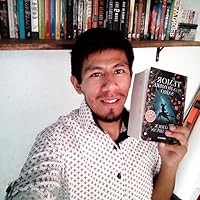
UNKNOWN TO THE WESTERN WORLD. . . THE TIBETAN LAMA UNLEASHES HIS MYSTICAL POWERS. At the age of seven the Day of Prophecy arrived, and the court astrologers pronounced their findings. It was proclaimed that T. Lobsang Rampa was to enter the lamasery to be trained as a clairvoyant and as a healer. Many predictions were made about his life, including the fact that his work would be heralded around the world. While still very young the author's Third Eye was opened increasing his mystical powers, as well as his ability to view the human aura, and to read the thoughts of others. This volume -- part of an extensive series -- discusses karma, the other side of death, the silver cord, the seership, crystal power, ghosts as well as astral projection. This book is highly recommended for students walking the Spiritual Path in search of Enlightenment.
I have always been fascinated by Tibetan ways. Therefore I found the book really interesting. For me it doesn't matter if he's telling the truth or not. If what he says is the truth, then he is one of the greatest meditators ever. If not that makes him one of the best story tellers ever. Either way is fine with me.
It's not as good as the first book but it's definitely worth reading. There's a looot more suffering and pain in this one but that's the journey he has to fulfil.
Llegué a este libro por puro morbo, al leer la historia de Tuesday Lobsang Rampa, un supuesto lama - abad del Tíbet que escribió varios libros autobiográficos sobre su crecimiento espiritual en lamasterios, el descubrimiento de poderes paranormales a través de la meditación y sus viajes a China y Japón durante la Segunda Guerra Mundial. Sin embargo, luego se descubrió que Lobsang Rampa no era más que un autor británico de nombre Cyril Henry Hoskin, nacido en Devon, Inglaterra, quien nunca había pisado el Tíbet y mucho menos, había sido discípulo de su Santidad, el Dalai Lama. Pues bien, con este contexto llegué a su segundo libro "Doctor from Lhasa" (escrito y publicado antes que se descubriera el fraude). En el, Lobsang nos narra sus experiencias como aprendiz de médico tibetano en un lamasterio en Lhasa, su posterior viaje a Chongqing para estudiar medicina occidental, y sus subsiguientes penurias cuando los japoneses invaden China en 1931, para caer luego en manos del ejercito imperial japonés como prisionero de guerra por haber colaborado con el ejercito nacionalista chino. Resulta bastante interesante como alguien que nunca pisó el Tíbet, describa con tanta precisión los lamasterios de Lhasa y las técnicas de aprendizaje y meditación de los monjes. También el libro describe de forma precisa eventos históricos relacionados con la invasión japonesa a China y del trato que se dispensó a los prisioneros de guerra por parte de los japoneses, describiendo con precisión las torturas y vejámenes a los que eran sometidos. El libro flaquea cuando combina esa maravillosa narración histórica con descripciones de los supuestos poderes sobrenaturales de Lobsang Rampa que rayan en lo inverosímil, con relatos que incluso pudiesen haber sido parte del guión de "Alienígenas Ancestrales" de History Channel.
Un libro que resulta interesante, en especial sí se conoce el contexto de su autor, y que a la postre, sería tal vez su último buen libro, antes que el Daily Mail publicara la historia de Cyril Henry Hoskin y todo su teatro, se fuera al garete.
Desgarrador el relato del ya Médico Lobsang Rampa cuando sale de Lhasa y se alista en el ejercito de China para servir como Médico y Piloto. Crudos relatos del trato que los Japonese daban a los prisioneros de guerra, al menos dos de esas anecdotas las he visto replicadas en peliculas de hace algunos pocos años. La fortaleza que Lobsang demuestra va en proporción con el empeño de los japoneses por agredirlo y torturarlo, episodios de odio del hombre al hombre y que Lobsang contrasta al relatar esa otra historia de la humanidad que defienden en el tibet y que habla de periodos de magnificiencia en todos los aspectos de esas antiguas sociedades y que finalmente desaparecen por cometer los mismos errores que las actuales por la soberbia del poder y la ambición de poseer. Historia ciclica, parece que la humanidad no ha aprendido aún.
Li na adolescência e gostei bastante da história, no fundo a aventura de um rapaz num contexto em tudo muito diferente daquele que nós conhecemos. Mas o que mais me fascinava na altura era a descrição de uma cultura tão diferente da nossa.
A diferencia del libro anterior (el tercer ojo), este libro está lleno de errores y exageraciones que ponen en evidencia la charlatanería de su autor Cyril Henry Hoskin. No vale la pena ni como literatura fantástica.
This was the first book where I went to YouTube seeking an audio-book version of some of the chapters because I was falling asleep reading it. This wasn't a good thing and since then I have come to associate this with bad writing. It was boring and even if I suspended my disbelief, and I accepted that Rampa did in fact possess the body of one Cyril Hoskin, our author, following his death, I could not get over some of the other false claims in the book - such as the magic breathing techniques which seemed an excellent way to have a reader pass out.
From politics classes I get the scent of Orientalism as described by Edward Said. Though I read it and thought this is harmless albeit wholly far fetched, I have come to see it differently. Though Hoskin did not appear to be someone who disliked non-European culture or elevated European culture above others, this book does replicate one part of Orientalism. The allure of the Orient comes part and partial with its danger and its eventual possession. And this book serves to create that first alluring entry point from which caricatures immediately form out of. Tibet is and has been a location of cultural oppression, Hoskin never went to Tibet, Hoskin could not speak Tibetan, how is one expected to tell a story of Tibetan life and struggle (the character Rampa fought the Japanese) without being able to so much as communicate with Tibet.
Though wikipedia (from which the first sands of ever molehill mountain arises) may try to dissuade me from being entirely negative by referring to Hoskin's critics as being motivated to research Tibet due to this book, I feel like this is a little conceded. I think that entering a location with the wow this place is so cool it is amazing everything is so new to me and so foreign I cannot wait to go out and explore and find new things... is a brilliant way to navel-gaze. And it is especially concerning when these critics say that their students found the book the most interesting thing they've read in their course. More than showing that people don't change unless you drag them out of the swamp like a crazed dog, it probably makes Francis Fukuyama's heart soar because such persistent ignorance could be pointed to as evidence that nothing changes.
Aside from the joke, I don't like that this story muddies the waters of Tibetan history because this may have been all that some people were exposed to. I am happy people have grown from it, people who know that it was a lie. I hope that when we think about modern societies we don't imagine our boogiemen under their beds.
I cannot in good faith recommend this book as anything other than a lesson in historical problems. Much like Common Sense I feel it informs perspectives about historical processes but unlike Paine, Hoskin wasn't a thought leader in times of war, nor could I finish the book without feeling exhausted.
Not as entertaining and mystical as The Third Eye (and by mystical I mean made up wackadoo) but still an engaging boys own adventure set during the Japanese invasion of China. The protagonist survives air crashes, extreme torture and bears witness to horrific mass murders. Despite fainting a lot he does time to inform us of special breathing to cure pain and more information on the ancient race of super advanced giants whose relics are buried beneath the Potala in Lhasa along with a UFO. You see? Wackadoo.
Assez impressionant que le personnage à demi antipathique de Lobsang Rampa, mythomane accompli mais romancier réussi. Ce sont des aventures quelque peu redondantes mais globalement intéressantes, narrativement bien travaillées (beaucoup de digressions jamais lourdes) et amusantes. On a parfois du mal avec le détachement du protagoniste ([SPOILER] Po Ku décapité qui a droit à seulement une mention outrée) mais on est emporté, c'est inspirant et ça donne envie de découvrir l'univers du bouddhisme tibétain sans pour autant gober les balivernes du romancier.
Es la continuación del libro El Tercer Ojo (2do libro del autor publicado 1959) en esta ocasión es más biográfico menos místico y muy cruel al narrar sus experiencias como prisionero de guerra de los japoneses.
Aún no deja de ser innovador para el año en que se escribió al hablar de temas como clarividencia, aura, muerte, etc.
Un libro interesante pero me quedo con el El tercer ojo.
Continuing the exploration of a Tibetan monk’s tale, Lobsang Rampa presents the journey out of Tibet and into China for medical training in a fairly low key immigrant transference. But there are two disturbing elements in this volume.
The first is clearly made inside the front cover where the response to The Third Eye has already caused great upset and many critics. Despite this Lobsang Rampa maintains that everything he is writing is the truth.
The second is within the story. Having a sense of the life in China and the threats brought by the Japanese creates a real tension for readers who can have no experience of their own. The experience of the Japanese elsewhere is all too real for many returned soldiers from the second world war.
The graphic descriptions bring an all-too-real response within the audience.
Whether it is “the whole truth and nothing but the truth” as would be expected in a court of law, the facts of war and the fear of any who bear witness to it are definitely elements which cannot be denied.
Amidst this setting further explanations of astral travel are plausible as part of the escape mechanism within the human psyche. Those who would not have believed in such an experience merely from the mind extension perspective, are more likely to believe in the possibility from their own experiences of “leaving their own body” during extreme stress or pain.
For these reasons Lobsang Rampa’s writing is most compelling. It touches an inquisitiveness that would not burn its own hands yet wants to know the experience of fire. It also enhances the sense of security that comes with reading a book rather than living in a challenging world.
More than that it opens the minds of readers to different experiences they may well be able to experience without going to the extremes that many explorers and adventurers may have had to face. After all the imagination is part of any journey, no matter how scientific.
okaaay, ahora si ya me perdió, no le creo nadota 😭 parece película dramática donde el prota es superman, todo le pasa y todo soporta jaja Iba emocionada con la idea de que era autobiográfica pero neh, no creo que haya pasado todo eso, igual estuvo entretenido
¡Liberen el Tibet!. Admiro con todo mi sersh a los tibetanos . Con este libro conocimos un poco más de las vivencias de Lobsang en el mundo occidental , un mundo en sí complejo , calculador , frio. En este volumen además vemos un poco más de las reencarnaciones y el tema del "Cordon de plata" el cuál es un tema que nos une al plano real y al mundo astral. Veemos un poco de la existencia de la paz y del yoga. Y podemos agregar un poco de historia universal llega la bomba atomica a japón. Una lectura facíl con un mensaje sobre la esperanza y los males del mundo occidental una lectura para reflexionar .
The Third Eye was a better book, in that the story and pacing of events was smoother in the first book. Both books contained some esoteric information. In the Third Eye, the information that stood out to me was about astral traveling and viewing the astral body. In this book, it was breathing techniques and meditation that caught my interest. The actual story is interesting and I suspend judgement about whether it is true. It is the information that is of value to me.
As always, the Tibetan Lama who led a most interesting life, all of Tuesday Lobsang Rampa's books were and are of great intrigue as regards the subtle side of life and the other worlds.
what a page-turner. i found this book in a free box and will be looking for the others - i'm obsessed by the miraculous skills these Tibetan monks profess to have.