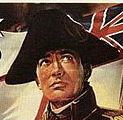
Hornblower's reconnaissance mission quickly turns to warfare in this installment of the beloved series of naval adventures by C. S. Forester, "a master of the genre" ( New York Times ).
April 1803. The Peace of Amiens is breaking down. Napoleon is building ships and amassing an army just across the Channel. Horatio Hornblower -- who, at age twenty-seven, has already distinguished himself as one of the most daring and resourceful officers in the Royal Navy -- commands the three-masted Hotspur on a dangerous reconnaissance mission that evolves, as war breaks out, into a series of spectacular confrontations.
All the while, the introspective young commander struggles to understand his new bride and mother-in-law, his officers and crew, and his own "accursed unhappy temperament" -- matters that trouble him more, perhaps, than any of Bonaparte's cannonballs.
Cecil Scott Forester was the pen name of Cecil Louis Troughton Smith, an English novelist who rose to fame with tales of adventure and military crusades. His most notable works were the 11-book Horatio Hornblower series, about naval warfare during the Napoleonic era, and The African Queen (1935; filmed in 1951 by John Huston). His novels A Ship of the Line and Flying Colours were jointly awarded the 1938 James Tait Black Memorial Prize for fiction.
The blue ocean, the red flows, both are liquid and equally deadly no one can escape the terror and why there here is a concept from those who believe dying for a cause is worth the sacrifice. Unbelievers flee the brave sink to the bottom the lucky fight another day. This is war and the slaughter follows like a clock on a wall moving forward towards their fate and this is life until it ends. The sun rises the clouds roll by the guns fire again the smoke hides the carnage but the flames ignite as bodies fall, the limbs too, and the air full of destiny some good , some not. Darkness arrives eyes can not see many never do, but the shining fish in the sea jump in happiness, genial dolphins somersault, birds fly around watching in puzzlement, rats onboard seek nourishment, bedbugs still bite and decks scrubbed, masts repaired, captains look at their charts, pumps work hard until it ends and starts again. The silvery moon looks down wondering why all the fuss is not the Earth pleasant, the sun gives warmth, the trees bear fruit the rivers quenches thirst? A parable is not a sermon and tales of the sea entertain .The Napoleonic Wars may be over two hundred years in the past however lessons are learned but sadly quickly forgotten to repeat the gloom until the crack of doom.
Some real quandaries of conscience beset Horatio Hornblower in the third book in CS Forester's Hornblower series.
Peace has broken out, tossing a ton of seamen uselessly onto dry land. Hornblower is just one of many now out of work and worried about their futures. In his down time he manages to get himself accidentally married out of pity. It's really one of the sadder, more perplexing moments in the series. Luck does not completely abandon him though, as we see when he is made Commander upon a sloop and is sent off to the Brest blockade just as the inevitable war resumes. The monotonous boredom that usually comprises blockade duty is often dreaded by active commanders looking for action and promotion, but hey, it's better than nothing!
CS Forester would never write an actionless book, so Hornblower's career and neck are at stake on a number of occasions, which makes this an exciting or at least intriguing read. Nice historical flourishes are added to keep the details wonderfully authentic.
Hornblower and the Hotspur billows the series' sails full and heads it on the right course!
I wish everyone who considers himself/herself a leader or aspires to become one could read Hornblower Saga. He/she would learn lesson or two from someone for whom 'responsibility is the air he breathes'.
I started listening to this & stopped thinking I'd missed a book, but this is definitely the third chronologically. It starts out with Hornblower getting married, rather surprising considering where we left off in the last book. Then Admiral Cornwallis makes reference to knowing Hornblower over some business with an Irishman. Again, I hadn't realized they met before the game of whist at the end of the last book. This is cleared up if you read the short story "Hornblower and the Widow McCool (aka, Temptation or Big Decision).
I really enjoyed this once I recovered from the whiplash of the first part. Since it was the last complete novel, but is only third in the chronology, I suppose that is understandable, although others have handled it better - Lois McMaster Bujold in her Vorkosigan series to name one.
The people are great. Hornblower is a very weird guy, though. I guess it was the era in which this story was written, but there is no mention of sex or sexual urges. That's a huge hole in the otherwise very real world that Forester paints.
The action isn't nonstop, but very well done & there was never a moment when I wanted to put the book down. Now I REALLY want to go on to the next, but I have another Parker novel, too. I should stick to alternating them, but I think I have to go on to Hornblower During the Crisis. Yes, they're that good. Can't stop.
I recommend these books highly. As the story continues Hornblower marries quickly (more from pity for his bride than love though he goes to lengths not to let her see this) and goes to sea in command of the Hotspur.
I won't synopsize more than that. I'll only say the adventures here are worth the read. This is another step in the life and career of one of the more iconic characters of literature. The book carries us through to see Hornblower promoted to Post Captain.
"She was close-hauled, sir, under double-reefed tops'ls, on the starboard tack, sir." ... "He's past the wind's eye, sir. His fore tops'ls coming round. ... "Ava-a-ast!" ... "Brace all back again! Jump to it! Quartermaster! Hard-a-port!"
I have no idea what all that means, but I love reading it anyway.
I read almost the entire Patrick O'Brien series before starting Hornblower, which was written first. I like both series, not as a steady diet, but maybe one a year. Hornblower and the Hotspur (Hotspur is the name of the ship) was very well written, with a mixture of many action scenes, a few personal scenes, and an underlying frustration with the English navy bureaucracy. Hornblower's struggle with his personal ethics and sense of duty is engaging. I think the history (1805 war between England and Napoleon) is reasonably accurate and it is certainly well presented.
Jos jedna zabavna knjiga o zivotu i borbi na moru u Napoleonovo doba. Moram priznati ipak da ovo nije za svakoga, ko ne voli detaljniji uvid o zivotu na brodu i sta je sve potrebno da sve funkcionise kako treba, za njih bi ovo moglo biti mozda i dosadno. Mene je super.
Adventures from the Age of Fighting Sail is a favorite genre of mine. I have read all of Patrick O'Brian and Richard Woodman and have had all of Forester's Hornblower series sitting on my shelf for years. I have read a couple of the Hornblower books and have not been impressed as they just don't seem to measure up to either O'Brian or Woodman or others that I have read. It has been quite awhile since I have picked up a sea adventure and I was in the mood. Having nothing readily available except a Hornblower I thought that would just have to do. Unfortunately, this book hasn't been a significant improvement over my other experiences with this series. By no means is this a bad book on any level and those fans of this genre will still find it a worthy addition to this type of fiction but it just didn't do much for me. First, most of the suspense involved in the story centers on the perils of the sea and not naval combat. If the reader has little or no familiarity with the technicalities of sailing especially the intricacies of sailing large vessels then much of this suspense will be lost. The author virtually coats the pages with naval jargon and terminology with little or no explanation. My fondness for this form of fiction has forced me to do independent research to better understand the actions being described. I have never sailed and did not know what most of these terms mean but have acquired some limited understanding but this book still went beyond me.
Aside from the heavy reliance on seamanship there is still a modest story with relatively good character development. Hornblower isn't portrayed as some sort of super hero but as an experience naval officer that still manages to get seasick from time to time. He has realistic career setbacks and a marriage that he regrets but is honor bound to support and nourish. I guess I will continue to read the rest of these books out of curiosity but I won't be eager as I have been with other books of this genre.
While it was nice to spend some time on the high seas in the company of His Majesty's Navy, and while there are moments of excellence in C.S. Forester's Hornblower and the "Hotspur", a combination of poor narration and my own biases held me back from being fully captivated by my time with Commander Horatio Hornblower as he Captain's his first command amidst the Channel Fleet.
The stand out moments of the book were a land mission to raze a signal tower, a thrilling Naval battle in the snow and fog, and Hornblower's decision to save a friend from certain execution at the cost of his self-respect. All of these moments could have been magnificent if better read by narrator Nicolas Coster (an Anglo-American character actor I've long admired), but his gravelly, seemingly ancient voice (I fear it may have been affected rather than natural) and his lack of energy diminished the power of these set pieces. I wish, actually, that I had simply read them myself. My brain would have done far more with them than was done by Mr. Coster's voice.
My other issue with the book is my deep love for the work of Patrick O'Brian. The Aubrey-Maturin books are simply better than the Hornblower series, and I spend much of my time with Hornblower wishing I was with Jack and Stephen instead. Which isn't to say that the Hornblower books aren't worthy works of fiction, nor that they're unworthy of my time, but simply to acknowledge that my love of O'Brian keeps Forester at arms length. So it's back to Master and Commander for me, then maybe I'll move on to Hornblower and the Crisis. Or not.
This book picks up right on the heels of the last. Hornblower finds himself attached to a young woman, Maria. In the last book he developed some sort of relationship with her while staying at her mother's boarding house. In fact, the book starts at the alter with Hornblower getting married. Fortunately, Hornblower is now Commander of the Hotspur. It's a tiny ship - a Sloop of War - but it is his. He's the Captain and therefore only one step from God when at sea. And he's one step away from his new, confusing domestic life.
I found this book another excellent read. In many ways I think this was an interesting book. THe cold, manipulative Lieutenant of the last book was discarded in favor of a return to the do-gooder young Midshipman. Hornblower was unwilling to disappoint this young woman and finds himself marrying her. He did the right thing. Like that earnest young Midshipman, Hornblower does his duty.
And this carries on, over and over. Hornblower helps a crewman escape rather than face hanging. He also turns aside a chance at hundreds of thousands of prize money to chase a single French frigate - even though he knows the odds of him beating the Frigate are astronomical. It was the right thing to do.
I wonder how Hornblower will continue to develop? Is he cold and calculating, or a kind hearted softie? I wonder if the difference is due to the author writing these books out of chronological order?
Four stars out of five. The book is very good, and the fights at sea are top notch. Lots of fun.
Ah! The ‘Age of Sail’, the British Empire would not dominate Europe in the way that France and Russia would do, but the sun wouldn’t go down on the British Empire for the next one hundred and fifty years. Britain’s unmatched naval might was forged in the blood and sweat of tens of thousands of young men, jumping at the chance to sacrifice their lives to attain the type of glory this novel so enthusiastically promotes.
Horatio Hornblower is an up and coming young navy recruit, just having gained the respect of the Navy command, he is promoted to control of one of her majesty's vessels and sent off to keep an eye on that ‘malevolent dictator’ Napoleon Bonaparte. Oh, and he’s just been married. What follows is a romantic report of his risks and ventures, losses and gains throughout the English Channel.
Of course, Forester was writing with some distance from the history he is describing, and it is not with irony that at the time of writing the third world was swelling, and the colonial project was just beginning to be viewed in a far from favourable light. You can learn a lot about a society by the way it recalls its history, and it's especially fascinating in fiction. Proof that history is simply a story we tell ourselves. There’s no shortage of glorification here, War is depicted as a swashbuckling adventure, a series of strategic decisions that result in exciting gains. It’s never depicted as murdering other young men with canons because he happened to be born on the other side of a stretch of ocean to you.
The writing here is remarkably unremarkable. It’s not true to say that there is no style, but it’s as if Mr. Forester did everything, he possibly could to make the writing as blank and featureless as possible. I have since found out that this might be somewhat accurate. Apparently, Forester found the act of writing quite excruciating, and you know what? It shows. This is joyless writing, devoid of hyperbole.
Is Hornblower then, just a romp? A swashbuckling adventure for you to get caught up in? Well, no. The action scenes are barely exciting, five pages of canon fire and heaving at the wheel go by without the reader feeling anything at all. The scene where he goes ashore to blow up an ammunition store has a few thrills, but back on board the writing is so detached you feel like you’re reading the back of a Panadol box.
The only chance the book has at saying anything interesting is observing Hornblower struggling with his marriage. More than one scene has him agonising over how to finish a letter to his wife, having effortlessly dispatched a list of fellows he shot to death from his boat a moment ago. But Forester just skirts around the edges, and we never get deep enough to have a real crisis of faith or personality. We certainly don’t get a resolution to this sub plot.
Who would like this in 2020? As an artefact to how nations choose to remember times of warfare it’s somewhat interesting. But as writing, as adventure, as a worthwhile way to spend three hundred pages it is as flat as the doldrums.
Lots of action, well-grounded historically and Hornblower is an interesting character, but there's not a lot of depth as it lurches from engagement to engagement. Fun.
This review is for the complete 11-book series of THE HORNBLOWER SAGA by C.S. Forester, which I just finished reading last night.
[Note: Individual books have individual star ratings (mostly 5-star, a few 4-star), but the descriptive review will be the same for each, and encompass the entire series, as follows.]
Actually, I just finished reading the complete series for the second time, the first being as a teenager some 30 years ago.
It's remarkable to me that I have only just this moment realized that my own timeline regarding the two readings corresponds almost exactly to the age progression experienced by the main character in the course of these 11 novels.
It's a 30-year journey unlike any other I have ever taken in books - full and deep and satisfying.
This is the epic saga of fictional British naval hero HORATIO HORNBLOWER, who goes from a 17-year-old midshipman to a 46-year-old admiral during the "golden age of sail" which encompasses the Napoleonic Wars of the early 19th century.
I'll list the 11 books in chronological order (not the order they were written), which is the best way, I believe, to read them:
- MR. MIDSHIPMAN HORNBLOWER - LIEUTENANT HORNBLOWER - HORNBLOWER AND THE HOTSPUR - HORNBLOWER DURING THE CRISIS - HORNBLOWER AND THE ATROPOS - BEAT TO QUARTERS - SHIP OF THE LINE - FLYING COLOURS - COMMODORE HOWNBLOWER - LORD HORNBLOWER - ADMIRAL HORNBLOWER IN THE WEST INDIES
I've read other sea-faring novels, but to me, Forester earns the crown.
Why?
Many reasons, but I'll list just three:
1. All the rousing action you could ask for in a well-paced adventure series...
2. ...coupled with a complex main character. This is the true secret of the Hornblower books - that Hornblower himself is not some one-dimensional, infallible, faultless hero. On the contrary, he is filled with self-doubt and doesn't always choose the best course, especially in personal matters. But by building the main character this way, Forester allows you to recognize, empathize, and eventually care deeply about him - rooting for his success rather than merely expecting it. It's this complex characterization that complements and actually allows for the heroics of the plot - because it all comes at a price.
[One price is so high that, as a teenager, I couldn't believe that Forester had actually done it. I can't go into detail because this is a spoiler-free review, but something happens that is so devastating that literally for entire books afterwards, I kept expecting Forester to make amends. But it doesn't happen. And finally, as an older adult - knowing it will happen, knowing there will be no reprieve - I realize Forester was saying, "This is the price of war."]
3. The Language of Sailing Ships: I'm not nautically-minded, and there is much use of nautical language in these books. But rather than being annoyed, I had a very different reaction. First, I learned a few things. But much more importantly, I also grew to appreciate the language itself, whether I understood its technical details or not. To me, it became like poetry. Or even music.
And I loved it.
All 11 books.
It's an investment, to be sure.
But, for those "able-bodied", a wonderfully entertaining journey awaits.
This one confused me a bit when I was young -- not anything about the story itself, but it's an interquel to a prequel. Basically, as previously mentioned, Forester started with Hornblower as a full-fledged captain commanding a British man o' war in the fight against Napoleon, then subsequently went back and told the early part of his career in the course of three novels -- Mr. Midshipman Hornblower, Lieutenant Hornblower and Hornblower and the Atropos, which were subsequently collected into an omnibus entitled Young Hornblower in the early 1950s.
And then, 10 years later, Forester went back and wrote Hornblower and the Hotspur to fill the gap between Lieutenant and Atropos; and that meant that to read the series properly (i.e., in order of internal chronology, as was my firm belief at the time), I'd have to read 2/3 of Young Hornblower, then set it aside, read Hotspur, and then go back to the final third of Young Hornblower, and to my young mind at the time that was just not proper. (And may, to be honest, have been my first introduction to the concept that sometimes an author writing a series of books about a character doesn't just start at the beginning of the character's life in the first book he writes, and then continue onward from there, but might jump around backwards & forwards in the character's life as inspiration strikes.)
Anyhoo.
So this is the story of Hornblower's first independent command, although he's still not a post captain -- he's still a lieutenant who just gets called captain because he's in command of the ship, H.M. Sloop Hotspur, which is too small to rate a real captain.
The book begins literally days after the end of Lieutenant Hornblower with Hornblower's (somewhat ill-starred) marriage to Maria, immediately after which (like, the next day or so) he's sailing out to join the British fleet maintaining the blockade around Brest, and that's where pretty much all of the action happens for the rest of the book. And it's a nice mix of shore raiding parties, ship-to-ship combat, and doing one's best to survive the ferocity and vagaries of the Atlantic Ocean and the English Channel, all filtered through Hornblower's own idiosyncracies.
Hornblower and the “Hotspur” Hornblower Book #3 By CS Forester
Overview: My favorite 1800’s naval engagement movie, “Master and Commander” with Russell Crowe, must’ve drawn inspiration from the Hornblower series (or vice versa) because Hornblower is a spitting image of Jack Aubrey in terms of heroics, feats, personality, and quality towards Her Majesty’s navy. The novel opens with Hornblower fulfilling twofold his esteemed sense of honor and duty: 1) accepting command of the small sloop, the Hotspur; and 2) conceding to be married.
The story unfolds with 4 primary subplots in mind: 1. Hornblower performing extraordinary feats of courage as he captains the Hotspur. 2. Hornblower concerned more with duty than with prize money while other captains monetize on his victories. 3. Correspondence and growing affection towards his wife and family. 4. The foiling of Hornblower’s appetite with improperly prepared meals.
The Good: 1. My first Hornblower novel and am instantly plunged into a relatable story of HH’s self doubt, self recrimination, and quandaries that plague most married men at some point in their lives: “Why would this woman want to marry ME??” 2. The reconnaissance mission had a certain level of suspense to it that made the story really enjoyable. 3. HH’s zeal for closing combat with the French was noteworthy, as was his desire for honor and glory. 4. Bush, HH’s first lieutenant, was very well written. 5. Many parts of the story were written candidly, such as HH’s instructions to the ship’s novice cook for a proper breakfast and the loathing of his least liked jam: black currant! Additional amusing anecdotes were received on HH’s predilection to clean and healthful dining throughout. 6. Defeating the much larger French ship, the Loire, in the way that HH did was very clever. 7. Many fairly interesting but otherwise useless factoids emerged throughout my reading, including quills from the left of a goose were pointed toward one’s eye and therefore might not be as desirable to write with versus a quill from the right of a goose. 8. Hornblower exudes leadership qualities that few men would possess at his mere 10 years in the service and courtesy title of captain. There is no bumbling about with words or actions toward his men. E.G.: “If by some chance his deeds did not speak for themselves he would never speak for them.”
The Meh: 1. There is a plethora of nautical vernacular, period jargon, English channel locations, not to mention smatterings of French terms and places, that stymied my complete comprehension of the audiobook format. A lot of backtracking was involved as well as procuring an e-reader copy of the book for additional reference. 2. Probably an intentional plot device, but Hornblower missed out on many a prize money of French ships taken by other friendly ships after the Hotspur holed them.
Final Thoughts: An excellent naval warfare novel. I’m inspired to learn as much terminology as I can should I continue with the series. And hoorah to Hornblower for serving a pivotal role in the Channel fleet.
5 ⭐️
Plot Outline (Spoilers): 1. English Parliament rallies against Napoleon Bonaparte’s “unscrupulous behavior on the continent” and moves toward an intent for declaration for war. 2. Hornblower is appointed command of the HM Sloop Hotspur (captain by courtesy, not Post Captain) and is simultaneously betrothed to a woman named Maria, who later conceives Hornblower Jr. 3. Vice Admiral Sir William Cornwallis commands the English Channel fleet and orders Hornblower to take Hotspur out on a reconnaissance mission of France’s coastlines in and around the port town of Brest, gathering pertinent information about their fleet, but not to engage unless engaged upon (since War has not been out-and-out declared). 4. Hornblower cultivates contacts of a French fisherman and a French lobsterman and pumps them for information during meals, respectively. They fill him in on various naval activities, such as the movements of the Loire. 5. Later, the Hotspur is fired upon by the much larger Loire, which begins the war. Hornblower executes the ship’s version of a feint. He order the Hotspur to equip its hidden-from-spyglass opposite side with cannons and to turn about one way and then the other. The French ship, thinking the Hotspur was trying to turn about, and not having its opposite side gunned, attempted to match course for course but was sneak attacked by the Hotspur upon its much quicker completion of the maneuver. However, the Loire retreats for reparations. 6. The second engagement involved the Hotspur sneaking into a coastal firing position at the shoals of Toulinguet, France. As it was said: “They were vulnerable to a sharp attack launched at an unexpected point on a dark night.” The Hotspur doubled-back in darkness after appearing to onlookers to sail past the point of attack during the last moments of dusk. She was able to hole or water-log some 10 “coasters”. 7. By some extreme good fortune, Hornblower devised and executed a plan in which he captured and set ablaze the French’s local semaphore tower without encountering any French resistance. 8. The next encounter was brought about when Hornblower’s steersman neglected his duties and let the Hotspur list into enemy territory. Upon nightfall, Hornblower devised a plan to imitate a French ship based on lighting conventions and successfully engage several unsuspecting transport ships to run them aground. However, their escort ship shot Hotspur almost to pieces until Hornblower once again put on the ruse of disguise and was able to get away for repairs. 9. On the novel’s final mission, Cornwallis sends the Hotspur out to scout a Spanish port, the Cadiz Bay, and to be part of a 5-ship blockade to intercept a Flota delivering $6 million to Bonaparte’s purse. (At war, the captains would receive a percentage of prize money if they are in sight of the capture.) Hornblower once again takes up his duty over prize money though and breaks off from the blockade to intercept a Spanish war ship, the Félicité, intent on protecting the Flota. This has the unfortunate consequence of negating the Hotspur’s reward since she sailed away from the Flota and the blockade ships. However, it’s later revealed that since Spain and England were not at war, the money all went to the government and the Hotspur gets the only credit to be had in the engagement: honor as the only ship to engage the Félicité. 10. Before the end, Cornwallis resigns his admiralty but before vacating office, he makes Hornblower an official Post Captain.
This entire review has been hidden because of spoilers.
I read this book about 50 years ago, not long after it was first published. It was then, and remains upon rereading, one of my favourite Hornblower novels, I think primarily because of how it emphasizes Hornblower’s continuing inner conflict between what he believes is expected of a RN officer and what his sense of human decency and of justice demands. Fortunately, his sense of decency and justice prevails. Since Hornblower is an outsider with no Interest, this is particularly impressive; climbers tend to sacrifice all human considerations on the altar of ambition. I like my heroes to be noble, and it’s even better when it’s a book-reading nerd making good.
I had recently read Sam Willis’ The Fighting Temeraire. One of the most interesting sections in that book deals with how the Royal Navy managed to maintain the blockade of the main French fleet in Brest. That reminded me that Hornblower and the Hotspur deals primarily with Hornblower commanding a sloop close inshore at the blockade, so of course I had to read it again. When I reread it, I was amazed by how effectively and accurately C.S.Forester had woven the story of the blockade into Hornblower’s story.
Altogether a great fighting sail story; the finest part for me was a description of Hornblower sailing the sloop through a hurricane into shelter in Torbay.
This must be the fifth or sixth time I have read Hornblower and the Hotspur, but I’ve not read it for at least ten years. I read it again for the sheer pleasure of it, and wasn’t the slightest bit disappointed.
Hornblower is in command of the Hotspur, a Sloop Of War in the blockade of Brest. C.S. Forester constructs an involving and sometimes thrilling tale with very well-drawn characters, a deep understanding of naval warfare in Napoleonic times and a superb portrait of Hornblower himself. He is a brilliant creation, I think, and Forester’s fine psychological portrait of a complex character is what gives these books their real depth to add to his brilliance as a storyteller.
Many of my very well-worn 1970s paperbacks of the series carry an endorsement from Winston Churchill: “I find Hornblower admirable, vastly entertaining.” Well, I’m with Churchill on that one, and this is up there with the best of them. Very warmly recommended.
Odd, to give this installment only two stars after giving the previous one five very sincere stars, but I simply did not find the same virtues in this one that I did in the other.
One of the key things that knocked stars off my rating was how much time in this book was spent in a monologue seamanship, tactics and weather. It makes sense to me that in a book like this there would be some of that, but this felt like it was a little overboard (pun intended) and in most cases it did not, to my knowledge, enhance or aid in the telling of the story. And it was terribly boring in the meantime. 🥱
Which brings me to another point: the story, or lack thereof. The events of this...story were, in my opinion, quite disjointed and lacking in suspense. While I did notice some of this disjointedness towards the end of the previous installment, this one never had the feel of a cohesive story; it really seemed to wander. It contained none of the same stellar suspense of the last book; either on a character level or a thematic level.
Speaking of theme, I do actually believe that there was one, or some; however, it was never clearly defined, and seemed to be drowned in unnecessary details of things that didn't seem pertinent to the overall thrust of the story (which is ironic, considering that could have been entirely the point). There is something very complicatedly self-centered in the way Hornblower views his relationship to Maria and it's not entirely pleasant to behold most of the time. It is around their relationship that I think one of the biggest thematic questions is asked, and I'm pretty sure (judging by my second-hand knowledge of how the series progresses) that Forester and I disagree on the answer to that question, which makes things curious.
One of my favorite things about Forester's writing from the last two books was the characters, while still amazing in their complexity in this installment, I have some complaints. First and foremost, Bush: while present, he was highly uninvolved in the story; much to it's demise. Hornblower as usual was highly complicated, so annoyingly conceited in the most deceptive way, and yet so remarkably human (pardon me sir, for saying so, but it's truth). I hate and love the man.
One more thing, a highlight: I am very pleased with Admiral Cornwallis, he delights me, thoroughly. Intriguing and just wonderful. 🥰 (But he wasn't there enough to make the book for me so yeah, five-star guy in a two-star book.)
Overall: I enjoyed it well enough but not well enough to invest in continuing the series.
Edit: A quick note, I liked both of the other two much better after the second read so, given that this is my first run with this one, I may come back after a while for a reread "just to see".
The character of hornblower: is quite interesting as adventure heroes go. I found myself reflecting from time to time on his extreme and sometimes bipolar characteristics.
Naval manuevers: to the extent a land lubber like me could appreciate this sort of thing I found his descriptions of naval manuevers and Hornblowers ingenuity to be very engaging, page-turny sort of stuff. I recently read "The Perfect Storm" and some of the maritime concepts seemed to carry over (which I guess is a good thing given that previous book is roughly nonfiction).
What I thought could have been improved:
I would have appreciated a glossary of naval terms and explanations of certain maritime assumptions, as a lot of stuff is taken for granted. I tended to dip into wikipedia a bit as I read which certainly enhanced my enjoyment of the material.
Overall: Slow sea battles are made gripping by the well executed writing.
The Hornblower books get better with every installment. Hornblower is a wonderful character, flawed, nuanced, introspective, and dynamic. Forester's obvious knowledge of his subject brings a compelling and even instructive verisimilitude to the historical setting. Hornblower's little domestic troubles add a nice rounding touch the otherwise stalwart naval scenes.
Quando Napoleone si prepara ad invadere il Regno Unito, la guerra sopita fra Inghilterra e Francia riesplode con tutta la sua forza. Horatio Hornblower, ormai comandante dello sloop "Hotspur" e novello sposo oltre che in procinto di diventare padre, sarà mandato nuovamente a compiere il proprio dovere nei teatri di guerra della Manica. Lunghe attese, scaramucce e inseguimenti costelleranno i lunghi giorni di mare del nostro comandante.
"Il ritorno di Hornblower", scritto nel 1962, terzo capitolo in ordine cronologico della saga ma decimo come pubblicazione, riporta il lettore nella vita del protagonista, Horatio Hornblower, ormai cresciuto sia a livello di esperienza che di gestione delle emozioni. Questa volta, dopo i teatri di guerra nel tranquillo mare Mediterraneo del primo romanzo e in quelli caldi, delle Indie Occidentali, nel secondo, il nostro protagonista si troverà a combattere in quelli freddi e nebbiosi della Manica. Il lettore in questo terzo lavoro di Forester si troverà davanti ad un racconto molto più tecnico rispetto agli altri romanzi precedenti, in cui si darà largo spazio alle manovre navali e al lato psicologico del protagonista. I grossi scontri a cui ci aveva abituato l'autore nei due romanzi precedenti, fanno spazio in questo molto di più alla gestione degli eventi atmosferici, mare e vento in primis e solo in minima parte alle battaglie sul mare. Un buon romanzo, seppur di poco inferiore per capacità di attrarre il lettore rispetto ai due predecessori, con un finale davvero piacevole capace invece di incuriosire e spingere chi lo affronta a chiedersi cosa accadrà nel prossimo libro.
Horatio joins the Channel Fleet making sure that old Boney's navy and army don't invade dear England. Of course, while maintaining watch, he also sneaks onto the Breton shore to do damage to their guns, semaphore station, and even sinks a few troop transports on their way to invade Ireland. A good book, one of the last the author wrote about Hornblower, and right before the book that introduces him to the world.
11,928 read. Continuing the epics of HH. Napoleon is back and still a bad guy. Character development goes hard in this one. HH continues to excel in spite of his self doubts and inability to get even a bit of prize money.
This book gives us Hornblower's first outing as a full Master & Commander of his own vessel, as a commander assigned to a sloop of war in the channel blockade.
The novel takes place after the peace between England and France has broken down and Napoleon is preparing for an invasion of England. The book does a great job of showing not only the hopelessness of this prospect (there was no way to get an army across the channel in the face of England's naval superiority) but also the precariousness of the English position. Whilst at sea they were the superior, one bad storm leaving a break in their blockage could have allowed the French army an opportunity to dash across the channel and make landful. After this, as Hornblower puts it, "the tricolour flag would fly over the tower of London".
After the last novel, Lieutenant Hornblower, we're used to seeing the title character from the eyes of others (in that case, Mr. Bush). We know he is intelligent, dashing, daring and all the rest, what we see in this book is how wildly insecure he is. This becomes irritating at times, but it does help to flesh out a very real character of whom we wish to read more, despite his all too human faults.
Much is also made in this novel of the system of "Prize" money given to captains during the Napoleonic wars and the disdain Hornblower has for it. I think this is perhaps overstated somewhat and starts to feel a bit preachy, particularly towards the end when Hornblower gives up a chance at hundreds of thousands of pounds worth of prize to do the "right thing" and engage a frigate with his severely underpowered and outmatched sloop. The idea that he would do this is not at issue, it was the right thing to do for the war effort, however the book does have a tendency to paint those receiving prize money as opportunistic and corrupt officers, uncaring of the overall war effort and interested simply in lining their own pockets; which in this case was most patently untrue given that the capture of the treasure fleet was a major objective of the war effort, if only to keep the money out of Napoleons hands.
Overall, an entertaining book that paints a very human picture of a naval captain striving to do what he considers his duty and struggling with the fear that he is not up to the task that is required of him, whilst others watch the actions he considers simply "necessary" and see a remarkable and heroic man.
Last book written but third in the chronological life of our hero Horatio Hornblower. I gushed over this series in my last review and I will add the first chronological books are my favourites. We see Horatio still rising in the ranks and before his adventures on land in France and in Russia (which I did not enjoy as much). This is a worthy last book for Horatio and once again gives him all the challenges he and his ship can handle and handle it he does. This novel reads like a lot of short stories threaded together but the main arc is England going to war with France and Spain again and Horatio rising from Commander to post-Captain. The little stories focus on Horatio as he and the Hotspur (and his first lieutenant Bush) get their ship ready to patrol the French coast and get intelligence on the French fleet; his deadly chase with the Loire; his daring raid on the French signal house, his night missions to thwart the French army, his near deadly winter at sea, and finally his adventure in Spain to get a frigate full of gold. As I said, a lot is happening in this book and all of it prevents further evidence of Horatio's brilliance, his heroism, and his modesty. There are also some side stories that show his human side with his wife Maria and his new steward Doughty but the stories obviously focus on his naval adventures. Just a joy to read these books again (I first read them 18 years ago), one of my favourite all time series. The challenges are realistic and Hornblower's solutions are well earned. That to me is the mark of a great story. When you don't feel cheated as a reader. You feel the hero is a hero because of his talent and resourcefulness, and don't get taken out of the book and see the writer pulling the strings so things work out (obviously that is what IS happening but a good writer doesn't make you feel this). My favourite parts in this book were all the times a superior officer wanted to reprimand or question Hornblower but then realized that Hornblower had saved the day. Overall, this is one of the best books in a classic series. I liked the previous book because it was told through Bush's eyes but this one is even better having seen the world through Horatio's viewpoint.
Hornblower marries and sets off on his first independent command, participating in the blockade of Brest. As the most junior commander in the English fleet, he hugs the French coast and bribes fishermen for insights on policy ashore. His observation of France suggests tactical opportunities to Hornblower, which he then needs to diplomatically suggest to his superior officers. These combined challenges bring out the best in the young commander.
An interesting aspect of the Hornblower books is watching Forester fulfill the biographical commitments he has made in "Beat to Quarters," the first written (and the best) of the Hornblower books. Forester wrote the series out of chronological order, and you wonder, if he had known how long he was going to spend with his character, if he might have made different choices in that first book. For example, in "Beat to Quarters," Forester lets us know that Hornblower is married to a plain, not particularly intelligent woman with whom he had children. In writing the early volumes, Forester has to figure out how to make such a marriage credible. I think Forester does a reasonably good job with this -- the lonely Hornblower's surprise, gratitude and sense of obligation to a woman absolutely devoted to him rings true. In fact, I think you could make the case that he is most thoughtful of Maria of all the women in his life: he takes trouble with her, which is an accomplishment for someone so self-obsessed.
The Maria sections are interesting, but the real appeal of the book is the naval adventure, as always. "Hotspur" is rather episodic, a la Midshipman Hornblower, with each chapter describing a different action along the French coast. All in all, a gripping read.
Chronologically, this is the fourth book in Hornblower series, telling the tale of Horatio Hornblower's command of the Sloop-of-war HMS Hotspur. He spends over two years on this tour of duty--dealing with espionage, politics, bad weather, homesickness, and, once or twice, actual war. ... That didn't sound too exciting, did it? Well, that was my writing. Mr. Forester made it all quite interesting. It was very easy to put my feet up and lose myself in Hornblower's world of 1803.
As I enjoyed the book, I occasionally mused over Star Trek. (I've read that Horatio Hornblower was part of the inspiration for Captain Kirk.) I think one reason I'd rather pick up this novel rather than one of the multitude of Trek novels out there is that Hotspur shows the challenges of not only fighting a war but the regular hardships of keeping a warship afloat and functioning. It's a depth of setting and character that you don't get in lesser works. Anyway, that's why Hornblower and the "Hotspur" goes on my shelf, and will undoubtedly be followed by the other books in the series.