The first and only full biography on legendary Harlem gangster, Bumpy Johnson who was depicted in the movies Cotton Club, Hoodlum and American Gangster
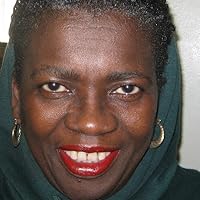
Mayme Hatcher Johnson is the 94 year old widow of famed Harlem Gangster Ellsworth "Bumpy" Johnson, who was portrayed in the movies "Hoodlum" starring Laurence Fishburne, and most recently "American Gangster" starring Denzel Washington. It is only now when Frank Lucas was promoting American Gangster and speaking tales that Mayme Johnson has broken her silence and written the real deal on her husband, who from the 1930s until his death in 1968, ruled the streets of Harlem. Read the real deal on his war with the Mafia and Dutch Schultz, Madame Stephanie St Clair(who truly existed), Lucky Luciano,Frank Lucas, his friends, his foes, many celebrities including Billie Holliday, Ethel Waters, Lena Horne, etc. A good piece of history is here. Come and learn the real deal. Because of myself and others wanting history to be told, I was helpful in helping this book published, and I heartily recommend anyone wanting to know more of Harlem back in the day as well as others, check this book out!!
Vivid memoir of Ellsworth ‘Bumpy’ Johnson, Harlem street legend and husband of co-author, Mayme Johnson. The book paints a compelling and authentic picture of the man and the world of Harlem he operated in and dominated skewering and correcting many of the mistruths and fabrications in Hollywood films about this era that portrayed him like Hoodlum, Cotton Club and American Gangster. The book could’ve done with a proper editor as typos abound and the formatting give it a cheap, self-published vibe but this doesn’t in any way detract from the story itself which is engaging and deserving of much better packaging than it was given in this book.
Loved getting to “know” these famous and infamous people. Society tends to celebrate and remember the old gangsters who weren’t black. If we’re gonna do some remembering, let us bring them all out in the sunlight and share their stories.
The book was narrated in a very close and accessible way, almost like sitting at the feet of a chatty, gossipy grandmother. I respectfully consumed every word.
You’d be surprised by how many names you recognize! Brace yourself, this is no shadowy, memoir or autobiography, cloaked in innuendos, silly metaphors and life lessons. Names are named and so are their salacious misdeeds. You get your money’s worth for sure.
Great story. Poor editing. It's a shame some of the publishers the authors approached were not interested in a book on Bumpy Johnson, when there are so many out about Capone, Lucky Luciano, Dutch Schultz etc. With so much focus on black gangsters today, I'm unsure why publishers thought people wouldn't be curious where it all began.
I loved this book. It was very entertaining as well as educational. The descriptions made me feel like I was there and I've never been to New York. It felt like a treat to get real insight and not the retelling many yrs later by someone who wasn't there. Bumpy Johnson was definitely a person who embodied duality. It seemed you either loved or hated him but you had to respect him. I am so happy Mayme Johnson got the chance to set the record straight on her husband. She knew who her husband was the good and the bad. And she didn't shy away from the bad.
This book has so much more information than I expected. Growing up in Harlem in the 1950-60’s I listened as a child not understanding the street business that my grandfather worked in. Even when I returned to live on the outskirts of the community, as a young adult, I heard about Bumpy Johnson, spoken of as a community member who was highly respected. In this book I learned more about his life in its historical context.
This book was very good considering the typographical errors. It gave an historical perspective of Harlem at the time. Bumpy lived one block away from me when I was a kid.
Mayme Johnson wrote in the first chapter of this 2008 book, “It wasn’t unusual for a gunshot victim to be wheeled into the operating room… But this was no usual gunshot victim. This was my husband, Ellsworth ‘Bumpy’ Johnson. The man who, according to legend, almost single-handedly fought the infamous Jewish hoodlum Dutch Schultz when that notorious madman tried to take over the Harlem numbers rackets. The man who was as well-known for his charity to children as for his deadly temper when he was crossed by other gangsters. The man who was the undisputed King of the Harlem Underworld.” (Pg. 14) Later, she adds, “while I knew there was always a chance he’d get hurt in his line of work, somehow it never occurred to me that he might be killed and I would be a widow. Call me naïve.” (Pg. 18)
She outlines, “Lucky Luciano may have run most of New York City. But, when it came to Harlem, the man in charge was my man, Bumpy Johnson… Bumpy was a man whose contradictions are still the root of many an argument in Harlem. But… everybody could agree---in his lifetime, Ellsworth ‘Bumpy’ Johnson was ‘the man’ in Harlem. If you wanted to do anything in Harlem… you’d better stop and see Bumpy because he ran the place. The police knew it---they came to him to negotiate peace between young street gangs. The politicians knew it---they counted on him to deliver votes on Election Day. Even the Italian and Jewish syndicate knew it, although they had to find out the hard way… Bumpy was willing to use his fists and his guns to get what he wanted, but he was just as willing to use his money to help Harlemites in need… Yes, Bumpy was a criminal, but he was a criminal with a social conscience… Bumpy was an underworld leader who took from the people, but at least gave something back.” (Pg. 21-23)
She continues, “I knew who and what Bumpy was … and I never did intend to fall in love with him, but I did… My parents were sharecroppers, and we were… Very poor… I wasn’t what you called a ‘bad girl,’ but I was certainly looking for a way out of North Carolina… I made some mistakes. One of them resulted in me being a single mother at age 20…” (Pg. 23) In [April] 1948 she was in a restaurant, and “Bumpy had just finished doing a 10-year stint … for slicing up a pimp… so I’d never had the opportunity to meet him. Now was my chance… Before long I was known as Bumpy’s girl. It was a good title to possess. It meant I could get in anywhere I wanted to go. I was treated as a queen.” (Pg. 29-31) “In October [1948] We were married in a civil ceremony… I would be a liar if I said I married Bumpy out of love. I would be an even bigger liar if I said I didn’t fall madly in love with the man… There would never be another man for me.” (Pg. 32) Later, she explains, “it hit me what kind of lives Bumpy and his friends lived---and I wondered what the hell I was getting into… with someone who could be shot and killed at any moment? Three weeks later Bumpy and I got married.” (Pg. 144)
She notes, “the Italian mob respected Bumpy Johnson and everything they did in Harlem was cleared by Bumpy. Even if they wanted to rub out an informer or teach someone a lesson, Bumpy had to be notified, and have the opportunity to pick up the hit contract himself if he so chose. Bumpy was the only Negro who dealt with the Italian mob as if he were their equal. Quite a remarkable feat in the thirties and forties.” (Pg. 34)
She argues, “Bumpy was a gangster, and everyone in Harlem knew it and accepted it. Yes, he was a number banker, yes he provided paid protection, and yes, he busted a few heads (or shot a few people) from time-to-time, but after all, he never really bothered anyone who wasn’t already in the criminal world, or hurt anyone who didn’t deserve it. But selling heroin? That was different. That was something that people found it much harder to accept or forgive. Although Bumpy readily admitted all of his other illegal activities he insisted until the day he died, that he had been framed on the drug charges which sent him to Alcatraz… There are many people who… believe that Bumpy was indeed set-up…” (Pg. 35)
She recounts that in 1925 “Bumpy was sent to [prison] for ten years on a burglary charge, and did two years before making parole. Then in 1927 he was sentenced to another two years… on an assault charge… he was back out on the streets for less than five months before being sent back … on a grand larceny charge… But it was when he got out or prison for that hutch that the legend of Bumpy Johnson really began.” (Pg. 65)
In 1932, “Bumpy and his crew waged a guerilla war of sorts, and picking off Dutch Schultz’s men [which] was easy since there were few other white men walking around Harlem during the day.” (Pg. 96) By 1934, “the people of Harlem realized Bumpy had ended the war with no further losses, and had negotiated a peace with honor. And… they were grateful. And they realized that for the first time a black man had stood up to the white mob instead of just … going along to get alone. And because of that, they were in awe. Bumpy was now a living legend.” (Pg. 102) Later, she adds, “Bumpy’s relationship with the East Side Italians were sometimes rocky, but he never backed down. He was determined that they deal with him before they tried to step to anyone in Harlem…” (Pg. 137)
She contends, “Bumpy never sold heroin, but that didn’t mean he wasn’t making a bunch of money off of it… the dope dealers had to kick back a portion of their money to Bumpy in order to operate, and in addition, Bumpy also loaned them money… when they were short of cash and needed to buy weight.” (Pg. 173-174) Later, she adds, “the Feds … knew he knew all of the big time drug dealers in Harlem, and if they could make the charges against Bumpy stick they could get him to flip on the dealers and clean up the drug trade in Harlem… [A friend/associate of Bumpy’s named Flash] amended his story…. [and] had sold [drugs] for him in the past. The Feds … went about trying to set Bumpy up…” (Pg. 185-186) Ultimately, “in June 1953, Bumpy was hauled off to prison… He was now a convicted drug dealer. He never got over it.” (Pg. 192)
He was released from prison in 1963, and “there was an impromptu parade as Bumpy rode down Seventh Avenue… People were lined up on the sidewalk cheering and throwing confetti as the motorcade made its way through the streets of Harlem… Bumpy later admitted that he thought the people of Harlem would have forgotten him after his long absence, or that they would treat him like a pariah because he was a convicted drug dealer. But … most of the people in Harlem … had a hard time believing that Bumpy was selling drugs---no matter what some damn white jury said.” (Pg. 200)
She explains, “Bumpy especially had a soft spot for the Black Militants who were just making the scene in Harlem… Bumpy was in prison in 1943 when … ‘Detroit Red’ [later Malcolm X] moved to Harlem… in 1947, Detroit Red had fled Harlem for Boston. But when Bumpy came out of federal prison in 1963 the two finally met… Detroit Red had become Malcolm X. Bumpy was impressed with Malcolm, and [was] one of those who supported Malcolm’s new organization after he left the Nation of Islam in 1964. When he was assassinated while giving a lecture… Bumpy was devastated… [He said] ‘I offered him protection, and he turned it down. Said he didn’t want men with guns around him because it would be like he was trying to provoke something. He shoulda listened to me.’” (Pg. 210-211)
And she finally admits, “Bumpy had started dabbling in the drug trade around 1965. He still didn’t want anything to do with heroin---he thought it was a sucker drug that destroyed too many lives. But cocaine---that was different… People didn’t get addicted to the stuff, and while it didn’t bring in as much money as heroin, there was still a lot of money to be made.” (Pg. 215)
After recounting Bumpy’s fatal heart attack, she concludes, “Bumpy’s life may have been a volent and turbulent one, but his death was one that any Harlem sporting man would pay for---eating fried chicken at Wells Restaurant… surrounded by childhood friends. It just can’t get better than that.” (Pg. 227)
This book is a useful corrective to the rather ‘sanitized’ portrait of Bumpy Johnson presented in the series, ‘Godfather of Harlem’ (with Forrest Whittaker as Bumpy).
I almost DNF because the 1st chapter was mostly about the author (Bumpy's wife), who gave me a bad impression. She strikes me as a gold digger who thinks her stuff dont stink. She is really full of herself, and it really turned me off from the book. Fortunately, the rest of the book is about Bumpy and is actually really good. Although, I questioned the accuracy because she states she is telling this story at the age of 93, so how well is her memory at that age? I also feel like she may be exaggerating at some points. However, overall, it was a good book, minus that 1st chapter. I would recommend it.
This is a relaxed and entertaining hagiography. Bumpy Johnson’s wife doesn’t sugarcoat the truth (very much). The violence and the crime are laid out for the reader to see. Yet Johnson was a gangster, using violent and illegal means to make money and bend people to his will. It’s hard to have much sympathy for these kinds of characters, and I resent (and find dangerous) the glorification of thugs who can’t be bothered to do honest work for a living and abide by reasonable laws. Who knows what stories we're not hearing.
I found it amusing that Johnson’s wife is shocked that he would be framed for dealing heroine, when it’s conceded he was a burglar, extortionist, numbers runner, murderer, cocaine dealer, pimp, smuggler, adulterer, and general threat. That he lived as long as he did is a miracle.
I read this book for some research about 1930s Harlem. As noted, I’m strongly opposed to the glorification of violent thugs. Of course they are complicated people capable of doing some good. If they were completely anti-social they’d quickly be dead or committed to an asylum or jail. But this book does have some charm in Johnson’s wife’s fond memories.
I first noticed this book while watching The Godfather of Harlem series, and finally got it a few days ago. I’ve always loved gangster stories from back in the day, and reading this book felt as if I were having a conversation with Mayme Johnson. I loved her voice, how she didn’t hold back in telling it how it was - the good and the bad. It was a bit off putting that she didn’t acknowledge his dealing heroin in Harlem, considering all other crimes he allegedly committed. Why was selling heroin worse than all that?
The writing and grammar errors irked me at times but in general it was a good story.
An easy, interesting read. I felt as if I was sitting in the living room enjoying a glass of wine as Mrs. Johnson told her story about her husband. While the typos were distracting, it did not take away from her story. Her husband was a fascinating character, and I enjoyed her vivid descriptions of Harlem in the 40s and 50s. Life for us is challenging even on easy days but when you read our stories, as told by us, it colors our experiences in a rich, colorful woven fabric that I call life! I recommend this book! A good read!
This book is so we'll written. The name dropping, makes for great reading and authentiy. I enjoyed reading this .I love stories of my great grandfather's Harlem . A time that will never be seen again. It's written in a way that makes you ( if you close your eyes like Dorthy in the wizard of oz) feel as if your actually there. No small feat when writing!
EXCELLENT READ.....BUMPY JOHNSON, THE MOST NOTORIOUS BLACK GANGSTER OF NYC, NAMELY HARLEM, WHO DEFEATED THE ITALIAN & JEWISH MAFIA's has his OUTSTANDING LIFESTORY told by none other than his loving wife, Mayme Johnson.I LOVED IT FROM BEGINNING TO END.
I learned a lot by reading this book I’m glad Bumpy wife was able to tell the story of the great Harlem legend it gives us readers more insight of his life and what’s true Mr Johnson will forever be a legend in the underworld and no one can’t take that away from him
I was so excited to see that Mrs. Bumpy wrote a book about her husband! Rest in peace to both. Bumpy was a fascinating character to me. A genius in a way. He knew how to be reasonable and cut deals and bust somebody up the haid when called for. A mixture of refinement and street thug. Mayme, the author, is a fascinating lady too. I became fascinated after watching Godfather of Harlem. Forest Whitaker was great as Bumpy.
Mayme puts you right in Harlem during the 50s and 60s. I purchased this book after I grew tired of trying to decipher what aspects of the Godfather of Harlem show was real or not. Of course Mayme’s account may benefit with some privileges of the full truth, but I enjoyed reading a different perspective.
I really enjoyed reading this book. It felt like Ms. Mayme Johnson was personally sharing her stories with me. While I enjoyed the 'Godfather of Harlem' show, the book provided a unique perspective on Bumpy Johnson that I found even more compelling.
This was a good read. Mostly told me stuff I already knew through previous documentaries. This book really helped me with research on my book I’m releasing that is set during that time period
Mayme Johnson writes a short, heartfelt biography of her husband, Ellsworth “Bumpy” Johnson aka the Godfather of Harlem. Nicely done biography and history of Harlem from 30s through the 60s.
Bumpy Johnson definitely had an interesting life. This is a good read after watching the Godfather of Harlem series. Would be four stars if not for the grammatical errors.
Godfather of Harlem es un trabajo literario sobresaliente que retrata la vida y los tiempos de Bumpy Johnson, un personaje histórico fascinante. Este libro, meticulosamente investigado y escrito, destaca por la forma en que trata el carácter contradictorio de Johnson, equilibrando su vida como gánster y su papel como benefactor de su comunidad oprimida.
El autor maneja con habilidad la complejidad de Johnson, pintando un retrato de un hombre que simultáneamente se sumerge en el crimen organizado y defiende los intereses de su comunidad. La historia, más que una narrativa lineal de ‘bueno contra malo’, presenta una serie de grises, con Johnson personificando esta dualidad.
La estructura y el estilo de la narrativa invitan al lector a explorar la psicología de Johnson, su lucha interna y sus contradicciones. La rebeldía de Johnson, su rechazo a la sumisión y su influencia en su comunidad se presentan de manera tan palpable que el personaje cobra vida en las páginas.
El libro ofrece una reflexión profunda sobre la moral y la ética en una época de injusticia y represión. La historia de Johnson sirve como un espejo de la sociedad, desafiando las percepciones y preconceptos del lector.
‘The Godfather of Harlem’ es más que una biografía o un relato de crímenes. Es un estudio de personajes, una exploración de la dualidad humana y una inmersión en un período histórico crucial. Para aquellos interesados en una narración atractiva, una perspectiva única y un personaje que encarna la paradoja, este libro es una lectura obligada.