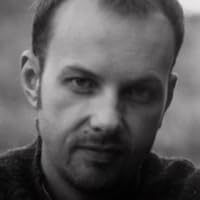
John Clellon Holmes met Jack Kerouac on a hot New York City weekend in 1948, and until the end of Kerouac’s life they were―in Holmes’s words―“Brother Souls.” Both were neophyte novelists, hungry for literary fame but just as hungry to find a new way of responding to their experiences in a postwar American society that for them had lost its direction. Late one night as they sat talking, Kerouac spontaneously created the term “Beat Generation” to describe this new attitude they felt stirring around them. Brother Souls is the remarkable chronicle of this cornerstone friendship and the life of John Clellon Holmes. From 1948 to 1951, when Kerouac’s wanderings took him back to New York, he and Holmes met almost daily. Struggling to find a form for the novel he intended to write, Kerouac climbed the stairs to the apartment in midtown Manhattan where Holmes lived with his wife to read the pages of Holmes’s manuscript for the novel Go as they left the typewriter. With the pages of Holmes’s final chapter still in his mind, he was at last able to crack his own writing dilemma. In a burst of creation in April 1951, he drew all the materials he had been gathering into the scroll manuscript of On the Road . Biographer Ann Charters was close to John Clellon Holmes for more than a decade. At his death in 1988 she was one of a handful of scholars allowed access to the voluminous archive of letters, journals, and manuscripts Holmes had been keeping for twenty-five years. In that mass of material waited an untold story. These two ambitious writers, Holmes and Kerouac, shared days and nights arguing over what writing should be, wandering from one explosive party to the next, and hanging on the new sounds of bebop. Through the pages of Holmes’s journals, often written the morning after the events they recount, Charters discovered and mined an unparalleled trove describing the seminal figures of the Beat Holmes, Kerouac, Neal Cassady, Allen Ginsberg, William Burroughs, Gregory Corso, and their friends and lovers.
Back when I started really digging into the beat writers, I found a quiet affinity with John Clellon Holmes, probably because he was the (apparent) square of the set of Kerouac/Burroughs/Ginsberg. He's been under-appraised over the years - a Dutch monograph here, a reissue there. I remember the pleasure of digging through his collected essays when they were issued on U Arkansas press with glee - such an observant eye, emersonian.
Sam and Ann Charters apply that same sort of observant eye - one informed by careful scholarship and friendship they had with the primary actors here - to the life and intertwining friendship of Holmes and Kerouac, from their distorted mirror early days through to their long apprenticeship in the writers life through to their mid- and late- life successes and struggles. This is richly told and thoroughly enjoyable, suitable for aficionado or discoverer alike.
Now for when the time can come for Holmes' apparently voluminous journals to see print...
At long last, a biography that sheds light on the Beat Generation's true founding member and sardonic wit, John Clellon Holmes. Though the bio includes a lot of Kerouac material already covered by Charters and other biographers (one assumes putting Kerouac in the title helped with sales), the primary focus remains on Holmes and his brilliant body of work.
You owe it to yourself not only to read "Go" and "The Horn" but also the series of collections released posthumously in the late 80's "Displaced Persons," "Passionate Opinions," and "Representative Men." After all the wild, post-modern, existential angst in Kerouac, Ginsburg and Burroughs, it's nice to read thoughtful, quiet reflections on the same events, from a writer who really was the true chronicler of the movement.