

What do you think?
Spectrum Multiview
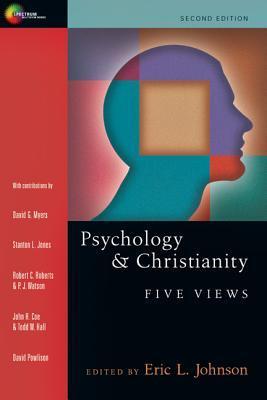
Psychology and Christianity: Five Views
How are Christians to understand and undertake the discipline of psychology? This question has been of keen interest (and sometimes concern) to Christians because of the importance we place on a correct understanding of human nature. Psychology can sometimes seem disconnected from, if not antithetical to, Christian perspectives on life. How are we to understand our Christian beliefs about persons in relation to secular psychological beliefs? This revised edition of a widely appreciated text now presents five models for understanding the relationship between psychology and Christianity. All the essays and responses have been reworked and updated with some new contributors including the addition of a new perspective, the transformative view from John Coe and Todd Hall (Biola University). Also found here is David Powlison (Westminster Theological Seminary) who offers the biblical counseling model. The levels-of-explanation model is advanced by David G. Myers (Hope College), while Stanton L. Jones (Wheaton College) offers an entirely new chapter presenting the integration model. The Christian psychology model is put forth by Robert C. Roberts (Baylor University) now joined by Paul J. Watson (University of Tennesee, Chattanooga). Each of the contributors responds to the other essayists, noting points of agreement as well as problems they see. Eric L. Johnson provides a revised introduction that describes the history of Christians and psychology, as well as a conclusion that considers what might unite the five views and how a reader might evaluate the relative strengths and weaknesses of each view. Psychology and Christianity: Five Views has become a standard introductory textbook for students and professors of Christian psychology. This revision promises to keep it so.
319 pages, Paperback
First published September 7, 2000
Ratings & Reviews
Friends & Following
Create a free account to discover what your friends think of this book!
Community Reviews
Displaying 1 - 30 of 78 reviews

November 29, 2022
This book is helpful for comparing different Christian views on Psychology/Counseling! But I had a hard time enjoying the read and thought it was kinda boring.

May 2, 2025
Possibly one of the best books on Christianity and Psychology ever!
This book covers five important views on Christianity and Psychology, each author has their turn writing a chapter about their view, and then the other authors all write about what they liked/didn't like about a particular person's view. It was so entertaining and made the book so much fun to read. It was truly so epic to see author vs. author and them (respectfully) roast each other. I would totally recommend this book to someone who wants to learn more about Psychology and it's fundamental relationship with Christianity.
This book covers five important views on Christianity and Psychology, each author has their turn writing a chapter about their view, and then the other authors all write about what they liked/didn't like about a particular person's view. It was so entertaining and made the book so much fun to read. It was truly so epic to see author vs. author and them (respectfully) roast each other. I would totally recommend this book to someone who wants to learn more about Psychology and it's fundamental relationship with Christianity.

January 17, 2026
Psychology & Christianity surpassed my expectations, while still falling short of what I would’ve wanted from a book like this.
The book followed the predictable “n views on x” written-debate format, with advocates of each view presenting an opening statement, followed by a brief critique from advocates of the other views. Eric Johnson wrote an extended introduction and concluding reflection.
The focus of the book was largely scholastic, on how Christians should view psychology as an academic discipline—not so much on the specifics of counseling practice.
STRENGTHS
1. Psychology and Christianity presents a basic introduction to several main views on how Christians should view psychology as an academic discipline, including views which many readers might not otherwise consider (especially Transformational Psychology).
2. Generally, the dialogue was genuinely scholarly while lively. I was pleasantly surprised with the level of discourse—all authors exhibited a high level of acuity and learning. Yet, I didn’t find this book dry at all—the authors are strong, engaging writers.
WEAKNESSES
1. Distinctions between the five views could have been laid out more clearly. Sometimes, key features of views were only introduced by respondents.
2. As stated in the book, Integrative Psychology, Christian Psychology, and Biblical Counseling seemed to collapse into each other, either differing only by emphasis (Integrative Psychology and Christian Psychology) or in practical emphases (Integrative Psychology and Biblical Counseling). After reading this, I wonder whether the five views are genuinely five, irreducibly distinct positions, differing along theoretical lines—and whether the five views were somewhat haphazardly selected.
3. Opening statements (especially the Levels-of-Explanation Approach and Christian Psychology) lacked sufficient argumentation for their views. They tended to simply give expositions of the views—fine, but less helpful.
4. The book seemed split between a focus on academic psychology and counseling, especially with Biblical Counseling in the mix. This obfuscated the dialectic and differences/commonalities between views.
5. Secular psychotherapy was addressed briefly but not adequately defended or critiqued—particularly given that authors found that a stance on psychotherapy distinguished Integrative Psychology from Biblical Counseling.
OVERALL ASSESSMENT
I was most attracted to something between Integrative Psychology and Biblical Counseling—which, as presented, seemed to differ only in secondary theoretical points, or in their positions on the role of explicit appeals to Scripture/the gospel in counseling and of secular psychotherapy. However, the Transformational Psychology critique of the modernist conception of science endorsed by both Integrative Psychology and Biblical Counseling was plausible. As a Van Tilian, a worry I have with Transformational Psychology is that it treats facts about human psychology as intelligible to us in themselves without explicit reference to God or interpretation in the light of Scripture—something which the Integrative Psychology and Biblical Counseling approaches were stronger on.
I would recommend this book to those interested in learning about different Christian views on the academic discipline of psychology, or potentially those interested in understanding views about counseling practice—although the lack of consistent emphasis on either area makes this book insufficient in itself.
The book followed the predictable “n views on x” written-debate format, with advocates of each view presenting an opening statement, followed by a brief critique from advocates of the other views. Eric Johnson wrote an extended introduction and concluding reflection.
The focus of the book was largely scholastic, on how Christians should view psychology as an academic discipline—not so much on the specifics of counseling practice.
STRENGTHS
1. Psychology and Christianity presents a basic introduction to several main views on how Christians should view psychology as an academic discipline, including views which many readers might not otherwise consider (especially Transformational Psychology).
2. Generally, the dialogue was genuinely scholarly while lively. I was pleasantly surprised with the level of discourse—all authors exhibited a high level of acuity and learning. Yet, I didn’t find this book dry at all—the authors are strong, engaging writers.
WEAKNESSES
1. Distinctions between the five views could have been laid out more clearly. Sometimes, key features of views were only introduced by respondents.
2. As stated in the book, Integrative Psychology, Christian Psychology, and Biblical Counseling seemed to collapse into each other, either differing only by emphasis (Integrative Psychology and Christian Psychology) or in practical emphases (Integrative Psychology and Biblical Counseling). After reading this, I wonder whether the five views are genuinely five, irreducibly distinct positions, differing along theoretical lines—and whether the five views were somewhat haphazardly selected.
3. Opening statements (especially the Levels-of-Explanation Approach and Christian Psychology) lacked sufficient argumentation for their views. They tended to simply give expositions of the views—fine, but less helpful.
4. The book seemed split between a focus on academic psychology and counseling, especially with Biblical Counseling in the mix. This obfuscated the dialectic and differences/commonalities between views.
5. Secular psychotherapy was addressed briefly but not adequately defended or critiqued—particularly given that authors found that a stance on psychotherapy distinguished Integrative Psychology from Biblical Counseling.
OVERALL ASSESSMENT
I was most attracted to something between Integrative Psychology and Biblical Counseling—which, as presented, seemed to differ only in secondary theoretical points, or in their positions on the role of explicit appeals to Scripture/the gospel in counseling and of secular psychotherapy. However, the Transformational Psychology critique of the modernist conception of science endorsed by both Integrative Psychology and Biblical Counseling was plausible. As a Van Tilian, a worry I have with Transformational Psychology is that it treats facts about human psychology as intelligible to us in themselves without explicit reference to God or interpretation in the light of Scripture—something which the Integrative Psychology and Biblical Counseling approaches were stronger on.
I would recommend this book to those interested in learning about different Christian views on the academic discipline of psychology, or potentially those interested in understanding views about counseling practice—although the lack of consistent emphasis on either area makes this book insufficient in itself.

September 2, 2023
This book has been a great help in understanding various approaches to psychology than my own (biblical counseling). It has been an excellent resource to site and use for sparring when I teach biblical counseling. After engaging with the other views, I am only further convinced of the clarity, authority, wisdom, superiority, and sufficiency of the Scriptures for counseling.

August 8, 2025
This book could have had two or three less views. Half the time, the author's did not know the difference between their own view and that of another author. Chapters 2, 3, and 5 are the one's worth reading.

July 24, 2023
Wonderful book for anyone interested in understanding the different Christian approaches to psychology. (It is an academic book, so it’s a very heavy read.)
The five views:
1. Levels of explanation
2. Integration
3. Christian Psychology
4. Transformational Psychology
5. Biblical counseling
It is set up in a format where each view states it’s position, and the other four views all give a response to that position, citing where the views overlap, and what issues they take with that particular view.
Extremely detailed, well-reasoned arguments for each position.
(Side note: I only skimmed 3 of the views, as my main focus was on two particular positions.)
I highly recommend this book as a resource for anyone who is truly interested in understanding the different approaches, and is willing to expend some mental energy.
The five views:
1. Levels of explanation
2. Integration
3. Christian Psychology
4. Transformational Psychology
5. Biblical counseling
It is set up in a format where each view states it’s position, and the other four views all give a response to that position, citing where the views overlap, and what issues they take with that particular view.
Extremely detailed, well-reasoned arguments for each position.
(Side note: I only skimmed 3 of the views, as my main focus was on two particular positions.)
I highly recommend this book as a resource for anyone who is truly interested in understanding the different approaches, and is willing to expend some mental energy.

March 24, 2022
This was my first serious study in the Christian study of Psychology, and I found this to be a helpful survey of the various views. While I would fall more toward to Biblical Counselling model, I saw helpful contribution and critique coming from some of the other positions, especially the Integrative and Christian Psychology perspectives. Johnson's introduction and conclusion were not the best at framing and summarizing, but overall it was very well done.
May 22, 2023
There is a lot to consider in this book. Each system seems to have something to offer yet not all equally so. I really liked the closing thoughts from the editor and wish we could move toward such dialog.

October 27, 2023
This was an intriguing book. I don't think any of the contributors made a compelling case for their own views (even the ones I feel most strongly about), but provided a lot of good things to consider about the short comings of each.

August 20, 2025
Generally not a huge fan of these types of books and this one was no exception. Definitely learned a few things but it was 100 pages too long and the authors largely talked past each other.
October 19, 2022
If you’re curious to know more about the different views on the integration of Christianity and Psychology, this book with provide you with a helpful overview of the 5 most common views: levels of explanation, integration, Christian psychology, transformational psychology and biblical counseling. Decent intro, but I found the reading to be a bit dense and hard to keep my attention at times.

January 24, 2021
I read sections of this for my Psychology 101 class (which was basically Intro to/Propaganda for the Biblical/Nouthetic Counseling view 😅). All of the authors seem gracious in putting forth their views and responses, even when they disagree. I do not completely agree with any view myself, but I tend to lean towards more of an integrationist approach. I think that this book provides a good overview of the main schools of thought regrading Christian approaches to psychology, and I appreciate that after each section introducing the view the authors with other views were given space to respond, thus fostering a sort of dialogue about this difficult issue.

May 12, 2018
Very dry. This book could’ve been soooo much shorter. Some of the views are just a face palm. It’s not the book’s fault because the author was just describing the different views but seriously some of the views are not thought out. Plus, the fifth view is redundant. Why did he add that in there? It could easily be just be four views.
January 22, 2022
Lecture très complète faisant la promotion de diverses écoles de pensée reliant le christianisme et la science de la psychologie.
Après, il demeure le rôle du lecteur de saisir à quelle école il s'associe et souhaite continuer d'approfondir.
C'est une introduction somme toute bien réalisé, suffisamment instructive pour équiper les intéresser.
Après, il demeure le rôle du lecteur de saisir à quelle école il s'associe et souhaite continuer d'approfondir.
C'est une introduction somme toute bien réalisé, suffisamment instructive pour équiper les intéresser.

May 19, 2018
This book takes all five views and methods of the psychology/Christianity integration argument and has them interact. Though it was good, it wasn't very clear and I got halfway through the book before I realized what was actually happening.
Used with Liberty University Online PSYC 420.
Used with Liberty University Online PSYC 420.
August 20, 2024
FOUR VERY DIFFERENT EVANGELICALS COMPARE THEIR PERSPECTIVES TO PSYCHOLOGY
The editors state in the "Acknowledgements" section of this 2000 book, "Christians have taken different positions regarding the extent to which they should have anything to do with modern psychology, some embracing it wholeheartedly, others rejecting it just as vigorously, and many others falling somewhere in-between. Few opportunities have arisen for Christians to dialogue publicly about these differences, the value of psychology in general for Christians, and the problems involved in psychological study and counseling practice for people of faith. We have been delighted to work on just such a dialogue." (Pg. 9)
Participants are David G. Myers ("Levels-of-Explanation" view); Gary Collins ("Integration" view); Robert C. Roberts ("Christian Psychology" view); and David Powlison ("Biblical Counseling" view). After each essay explaining one position, the others offer a brief response to it. [There is now also an updated version of this book, with a fifth view added: Psychology & Christianity: Five Views.]
One essayist states, "Everett Worthington has suggested that writings about the interdisciplinary integration of psychology and theology have occurred in three waves. The first was prior to 1975 and included Paul Meehl, Paul Tournier, Richard Bube, and Gary Collins. Worthington's list should have included Clyde Narramore, whose lonely pioneering efforts set the stage for much that would follow in the United States. Narramore's contribution has been lost in discussions of integration, perhaps because he was not a scholar writing for professional publications. Instead he worked as a practitioner as popularizer, becoming the first to make psychology respectable in the evangelical community... a second wave of integrationists... addressed the integration of psychology and theology with vigor... Worthington suggests that since 1982 the development of integration models has slowed to a trickle." (Pg. 104-105)
Collins notes, "When we meet or work alongside non-Christian professional colleagues, we do not merge into their worldviews and hide our Christian perspectives under a cover of psychojargon and heady theorizing. Neither do we disrespect our secular colleagues by insensitively bombarding them with theologies and catchy evangelism efforts. Instead, we are like Paul in Athens. He reasoned with the religious leaders..." (Pg. 108) He asks, "Why is psychology still one of the most popular courses even on Christian college campuses? Psychology is popular and worth studying because more than any other discipline it is committed to understanding people." (Pg. 109-110)
The editors note in conclusion, "After reading a book like this, it's easy to come away frustrated: four sincere and intelligent Christians expressing four different views, on some points saying virtually opposite things... In the extreme it can lead to a kind of despair or at least indifference---apparently it doesn't really matter what Christians think... But the underlying goal of psychology is loftier than affirming personal preference: it aims at truth... So though intelligent Christians differ, it doesn't mean there is no point to telling the truth." (Pg. 243)
This book (or its updated version) is "must reading" for anyone wanting to compare the various perspectives of Christians to psychology.
The editors state in the "Acknowledgements" section of this 2000 book, "Christians have taken different positions regarding the extent to which they should have anything to do with modern psychology, some embracing it wholeheartedly, others rejecting it just as vigorously, and many others falling somewhere in-between. Few opportunities have arisen for Christians to dialogue publicly about these differences, the value of psychology in general for Christians, and the problems involved in psychological study and counseling practice for people of faith. We have been delighted to work on just such a dialogue." (Pg. 9)
Participants are David G. Myers ("Levels-of-Explanation" view); Gary Collins ("Integration" view); Robert C. Roberts ("Christian Psychology" view); and David Powlison ("Biblical Counseling" view). After each essay explaining one position, the others offer a brief response to it. [There is now also an updated version of this book, with a fifth view added: Psychology & Christianity: Five Views.]
One essayist states, "Everett Worthington has suggested that writings about the interdisciplinary integration of psychology and theology have occurred in three waves. The first was prior to 1975 and included Paul Meehl, Paul Tournier, Richard Bube, and Gary Collins. Worthington's list should have included Clyde Narramore, whose lonely pioneering efforts set the stage for much that would follow in the United States. Narramore's contribution has been lost in discussions of integration, perhaps because he was not a scholar writing for professional publications. Instead he worked as a practitioner as popularizer, becoming the first to make psychology respectable in the evangelical community... a second wave of integrationists... addressed the integration of psychology and theology with vigor... Worthington suggests that since 1982 the development of integration models has slowed to a trickle." (Pg. 104-105)
Collins notes, "When we meet or work alongside non-Christian professional colleagues, we do not merge into their worldviews and hide our Christian perspectives under a cover of psychojargon and heady theorizing. Neither do we disrespect our secular colleagues by insensitively bombarding them with theologies and catchy evangelism efforts. Instead, we are like Paul in Athens. He reasoned with the religious leaders..." (Pg. 108) He asks, "Why is psychology still one of the most popular courses even on Christian college campuses? Psychology is popular and worth studying because more than any other discipline it is committed to understanding people." (Pg. 109-110)
The editors note in conclusion, "After reading a book like this, it's easy to come away frustrated: four sincere and intelligent Christians expressing four different views, on some points saying virtually opposite things... In the extreme it can lead to a kind of despair or at least indifference---apparently it doesn't really matter what Christians think... But the underlying goal of psychology is loftier than affirming personal preference: it aims at truth... So though intelligent Christians differ, it doesn't mean there is no point to telling the truth." (Pg. 243)
This book (or its updated version) is "must reading" for anyone wanting to compare the various perspectives of Christians to psychology.
March 27, 2025
These multi-view books are so hard to rate. While one or more authors may be fantastic, others can fail so hard as to drag down the entire book.
This, thankfully, is better than most, but still far from perfect.
I also agree with the reviewer that, often, I learned more from the responses than the main essays themselves! Many responses from all sides did a wonderful job pointing out holes, offering critique, or agreeing and adding more detail.
I do highly recommend reading the introduction and post script. Both are full of excellent insight and summary.
LEVELS is the typical position shared by some christians and many secular therapists. It essentially banishes christianity into irrelevance for this subject.
All other views paid lip service to the idea of holding to the authority and some level of relevance to the Bible while accepting what is acceptable within the secular resources. Main differences lay upon how much secular sources should be trusted, how much they offer, and how full or partial the Bible's own philosophy is relevant and sufficient.
INTEGRATION is a very common view, but failed to provide a solid filter through which to see what is good and what isn't in secular sciences and how to integrate it well.
CHRISTIAN PSYCHOLOGY does better, and calls people to a psychology of the Bible and focuses on the sharp deficiencies in a modern, secular approach.
TRANSFORMATIONAL is by far the most vague and outlying of the essays. Basically, it calls for a complete reorganizing of how we think, discover, and do science. While this historical retrieval is commendable, it left a lot of questions and stayed far more in the philosophical and ethereal rather than the practical.
BIBLICAL COUNSELING finished the book far more grounded in the practical interactions of the counselor's office dealing with the souls and problems of life, rather than the more stark, sterile studies and surveys of the opening LEVELS view. He included a case study and focused on Biblical sufficiency for the hearts and aches of men, but also admitted Biblical Counseling was still getting on it's feet and recovering from a century of so of pastors and theologians utterly failing. However, he also failed to say how they failed or what changed, not did he look deeper into his criticism of secular resource.
This, thankfully, is better than most, but still far from perfect.
I also agree with the reviewer that, often, I learned more from the responses than the main essays themselves! Many responses from all sides did a wonderful job pointing out holes, offering critique, or agreeing and adding more detail.
I do highly recommend reading the introduction and post script. Both are full of excellent insight and summary.
LEVELS is the typical position shared by some christians and many secular therapists. It essentially banishes christianity into irrelevance for this subject.
All other views paid lip service to the idea of holding to the authority and some level of relevance to the Bible while accepting what is acceptable within the secular resources. Main differences lay upon how much secular sources should be trusted, how much they offer, and how full or partial the Bible's own philosophy is relevant and sufficient.
INTEGRATION is a very common view, but failed to provide a solid filter through which to see what is good and what isn't in secular sciences and how to integrate it well.
CHRISTIAN PSYCHOLOGY does better, and calls people to a psychology of the Bible and focuses on the sharp deficiencies in a modern, secular approach.
TRANSFORMATIONAL is by far the most vague and outlying of the essays. Basically, it calls for a complete reorganizing of how we think, discover, and do science. While this historical retrieval is commendable, it left a lot of questions and stayed far more in the philosophical and ethereal rather than the practical.
BIBLICAL COUNSELING finished the book far more grounded in the practical interactions of the counselor's office dealing with the souls and problems of life, rather than the more stark, sterile studies and surveys of the opening LEVELS view. He included a case study and focused on Biblical sufficiency for the hearts and aches of men, but also admitted Biblical Counseling was still getting on it's feet and recovering from a century of so of pastors and theologians utterly failing. However, he also failed to say how they failed or what changed, not did he look deeper into his criticism of secular resource.

August 4, 2020
I love the idea of books that compare different views on topics. I've read through all or parts of several books in that format. It's a great way to learn directly from each side of a debate in their own words and allow others to respond to each different view so that you can understand all sides even better. This book is of particular interest to me because the focus of my ministry is at the intersection of Christianity and psychology.
Unfortunately, this book was a major disappointment. It only slightly helped to clarify and inform my understanding of the different views on the relationship between Christianity and psychology. I have a BS and MA in psychology and am working on a PhD so I read this book mostly out of duty rather than to learn. Still, I was expecting a much clearer picture of the different views.
The way each of the five views were presented was too watered down and abstract. It seemed like the authors were trying to present their views in the most sanitized, least controversial way possible. It was almost as though nobody wanted to offend anti-science fundamentalists while not trying to sound anti-science. On top of that, there was very little discussion of specific, concrete comparisons between the views. The explanations of the views were so broad and abstract that any reasonable person could probably claim to hold to all five views.
I'm not sure I would recommend this book to anyone. If you are not familiar with psychology, this book will not give you enough information about psychology in order to make an informed decision about how it does or doesn't fit with Christianity. If you are well-versed in psychology, this book will be a frustrating waste of time because everything is presented in an overly simplistic, narrow, and abstract fashion. I'm not sure what other resources are out there to get a better understanding of the subject. I've written an article on my website which might be helpful but it uses different language than this book so it won't exactly map onto a specific view.
https://www.jaymedenwaldt.com/2019/10...
Unfortunately, this book was a major disappointment. It only slightly helped to clarify and inform my understanding of the different views on the relationship between Christianity and psychology. I have a BS and MA in psychology and am working on a PhD so I read this book mostly out of duty rather than to learn. Still, I was expecting a much clearer picture of the different views.
The way each of the five views were presented was too watered down and abstract. It seemed like the authors were trying to present their views in the most sanitized, least controversial way possible. It was almost as though nobody wanted to offend anti-science fundamentalists while not trying to sound anti-science. On top of that, there was very little discussion of specific, concrete comparisons between the views. The explanations of the views were so broad and abstract that any reasonable person could probably claim to hold to all five views.
I'm not sure I would recommend this book to anyone. If you are not familiar with psychology, this book will not give you enough information about psychology in order to make an informed decision about how it does or doesn't fit with Christianity. If you are well-versed in psychology, this book will be a frustrating waste of time because everything is presented in an overly simplistic, narrow, and abstract fashion. I'm not sure what other resources are out there to get a better understanding of the subject. I've written an article on my website which might be helpful but it uses different language than this book so it won't exactly map onto a specific view.
https://www.jaymedenwaldt.com/2019/10...
Did Not Finish
July 10, 2020Spirited and lively but also slow and dense at times.
The collection of thinkers contributing to this book are tasked with presenting and debating the relationship of psychology and Christianity. The result is an analytical and sophisticated discussion. Each theorist explains and defends their position on how the broad discipline of psychology and Christian faith relate.
With the field of psychology seeing a dramatic rise in interest throughout the 20th century, Christian interest soon followed. As an academic discipline, psychology grew immensely in the wake of Freud, Jung, and Maslow, along with others more recently. Christian psychologists emerged and popularized many theories through publications and radio shows, often filtering down into preaching, bible studies, and seminary training. What is a Christian to do with a subconscious, anger venting, love languages, and personality theories so prevalent today? While those questions are not directly in the scope of the book, the point is clear; A well constructed, biblically defined, carefully reasoned position on how the Christian faith and the body of knowledge called psychology interrelate is very much warranted today. That is what this book is about.
Certainly, Christians have interpreted the various sub disciplines of psychology differently over the last few decades resulting in the need for the current work. This book is a presentation of the major 5 positions that have emerged. The major views are classified under these five headings: 1) levels of explanation, 2) integration, 3) Christian psychology, 4) transformational psychology, and 5) biblical counseling. Though I didn’t read the whole thing, I found Powlison’s contribution from the biblical counseling position most stimulating and insightful. His interactions with the other theorists is careful, considerate, and wise.
At times, the read is an engaging discussion. The responses at the end of each chapter grant a certain sense of debate amongst the contributors. In this sense, the book was quite interesting. At other points, the author’s positions seemed to drag on, unnecessarily verbose, languishing in unclear language.
To my own surprise, the positions I knew to be flawed did contain worthwhile points. After reading, I’m slightly less dogmatic about certain things. Even levels of explanation, the most liberal approach, has points worth considering. True to form however, there are fatal flaws. Divergence from the Bible at critical junctures make all but the biblical counseling position troublesome.
This edition (2010) was updated from the earlier 2000 edition to include the newly formulated transformational psychology position. For interested readers, I would recommend the book Counseling and Christianity released in 2012 for a more helpful elaboration of each position in terms of how each view relates to ministry with other people. Though there is less interaction from each contributor with the other positions, a hypothetical case study is brought forth in order to see these positions not in the academic halls, but in real lives. It is here where biblical counseling truly shines.
The psychologies are diverse and varied. Neuropsychology, personality theories, behavioral norms, sleep studies and more each fall under psychology’s vast umbrella. Some fields are much closer to hard science while others remain closer to soft science. Perhaps most importantly, students of the Scripture must take cues from the revealed word in forming an understanding of people and their problems.
The collection of thinkers contributing to this book are tasked with presenting and debating the relationship of psychology and Christianity. The result is an analytical and sophisticated discussion. Each theorist explains and defends their position on how the broad discipline of psychology and Christian faith relate.
With the field of psychology seeing a dramatic rise in interest throughout the 20th century, Christian interest soon followed. As an academic discipline, psychology grew immensely in the wake of Freud, Jung, and Maslow, along with others more recently. Christian psychologists emerged and popularized many theories through publications and radio shows, often filtering down into preaching, bible studies, and seminary training. What is a Christian to do with a subconscious, anger venting, love languages, and personality theories so prevalent today? While those questions are not directly in the scope of the book, the point is clear; A well constructed, biblically defined, carefully reasoned position on how the Christian faith and the body of knowledge called psychology interrelate is very much warranted today. That is what this book is about.
Certainly, Christians have interpreted the various sub disciplines of psychology differently over the last few decades resulting in the need for the current work. This book is a presentation of the major 5 positions that have emerged. The major views are classified under these five headings: 1) levels of explanation, 2) integration, 3) Christian psychology, 4) transformational psychology, and 5) biblical counseling. Though I didn’t read the whole thing, I found Powlison’s contribution from the biblical counseling position most stimulating and insightful. His interactions with the other theorists is careful, considerate, and wise.
At times, the read is an engaging discussion. The responses at the end of each chapter grant a certain sense of debate amongst the contributors. In this sense, the book was quite interesting. At other points, the author’s positions seemed to drag on, unnecessarily verbose, languishing in unclear language.
To my own surprise, the positions I knew to be flawed did contain worthwhile points. After reading, I’m slightly less dogmatic about certain things. Even levels of explanation, the most liberal approach, has points worth considering. True to form however, there are fatal flaws. Divergence from the Bible at critical junctures make all but the biblical counseling position troublesome.
This edition (2010) was updated from the earlier 2000 edition to include the newly formulated transformational psychology position. For interested readers, I would recommend the book Counseling and Christianity released in 2012 for a more helpful elaboration of each position in terms of how each view relates to ministry with other people. Though there is less interaction from each contributor with the other positions, a hypothetical case study is brought forth in order to see these positions not in the academic halls, but in real lives. It is here where biblical counseling truly shines.
The psychologies are diverse and varied. Neuropsychology, personality theories, behavioral norms, sleep studies and more each fall under psychology’s vast umbrella. Some fields are much closer to hard science while others remain closer to soft science. Perhaps most importantly, students of the Scripture must take cues from the revealed word in forming an understanding of people and their problems.
August 25, 2017
Psychology and Christianity definitely have been influencing each other constructively to get closer to the Truth. Throughout history, we have seen how many times dogmatism (in whatever disciplines) has not worked. There is no system that is value-neutral. Even basic observational research suggests some sort of presumption from the set up of the variables. Holding fundamental values and beliefs firmly, we have to be critical of us and other people on interpretations. We need to be open minded and have dialogues whenever there is any contradiction between what science reveals and religious interpretations. If the apparent contradiction cannot be solved and all sides have strong evidence to support itself, we can hold a meta-systemic view that delays the final judgment until more evidence clears things up. It is essential to keep in mind that we are not the omniscient God; as human beings, we make mistakes and we often do. Personally, I believe that if even many knowledgeable, thoughtful scholars debate among themselves, I do not think it is for people like us who have limited knowledge and haven't read through the research literature to jump out of our intelligent boundary and make a judgment call; the result is certainly to deviate from the Truth.

September 14, 2021
A helpful but dry overview of the various perspectives on the relationship between Christianity and Psychology. In many ways, it feels as if there are two positions (Biblical counseling and integration) while the others are mere arguments over fine points. The book is a worthwhile read for those specifically seeking a framework for integrating faith into mental health work, but has little relevance beyond that.
In reflecting on the book, I found three important questions worth asking oneself anytime integration is a question. Whether one is thinking about integrating faith and science, faith and culture, or articulate a Christian view on any number of political issues, these questions are worth thinking about to find a place on the spectrum of views.
1. To what extent should Christianity and the subject be mixed?
2. How does one determine when knowledge from one subject overrides knowledge from the other?
3. How much knowledge can be constructed on a topic solely from theology/the Bible?
In reflecting on the book, I found three important questions worth asking oneself anytime integration is a question. Whether one is thinking about integrating faith and science, faith and culture, or articulate a Christian view on any number of political issues, these questions are worth thinking about to find a place on the spectrum of views.
1. To what extent should Christianity and the subject be mixed?
2. How does one determine when knowledge from one subject overrides knowledge from the other?
3. How much knowledge can be constructed on a topic solely from theology/the Bible?
February 20, 2021
4.5/5
As a Christian practicing in the field of mental health for a decade now, I have a high interest in understanding how best to help people. I learned a lot from this book even though it primarily summarizes five important Christian perspectives on the role of psychology. This is a theoretical book so of course it is going to be dry (I'm really confused by that consistent criticism I've seen in the reviews). For those wanting to learn more about the tension, this book is an excellent place to start.
I appreciated the last chapter by Johnson on learning from each perspective. I know I have learned from each perspective over the years and think there is a role for how they can complement each other as much or more as competing. Perhaps this is just my personality shining through but I look forward to a lifelong approach to learning from each perspective given in this book.
As a Christian practicing in the field of mental health for a decade now, I have a high interest in understanding how best to help people. I learned a lot from this book even though it primarily summarizes five important Christian perspectives on the role of psychology. This is a theoretical book so of course it is going to be dry (I'm really confused by that consistent criticism I've seen in the reviews). For those wanting to learn more about the tension, this book is an excellent place to start.
I appreciated the last chapter by Johnson on learning from each perspective. I know I have learned from each perspective over the years and think there is a role for how they can complement each other as much or more as competing. Perhaps this is just my personality shining through but I look forward to a lifelong approach to learning from each perspective given in this book.
August 25, 2025
Textbooks are very difficult to rate. By nature they are not the most engaging (dense and boring). But they can’t be judged the same way as fiction.
Psychology and Christianity: Five Views was helpful in discerning the distinctions between different Christian approaches to Psychology. But, this could have been accomplished in a way more concise and clear. When people explain their own view, they don’t always do it in the most efficient manner. Still, the goal was an intellectually challenging dialogue. It accomplished this. I found myself agreeing with every view on 90% of what they offered. This highlighted how all the varying perspectives have benefits for specific applications; it’s less about which one best fits my view or which view is best. It also shows how small distinctions can sometimes lead to distant conclusions.
Psychology and Christianity: Five Views was helpful in discerning the distinctions between different Christian approaches to Psychology. But, this could have been accomplished in a way more concise and clear. When people explain their own view, they don’t always do it in the most efficient manner. Still, the goal was an intellectually challenging dialogue. It accomplished this. I found myself agreeing with every view on 90% of what they offered. This highlighted how all the varying perspectives have benefits for specific applications; it’s less about which one best fits my view or which view is best. It also shows how small distinctions can sometimes lead to distant conclusions.

July 9, 2017
As counseling grad student (and knowing virtually nothing about psychology) I found this book to be fascinating and helpful in gaining understanding of the relationship between science and theology. Each view is laid out in their respective chapter with helpful critiques from the other four views, of that particular view. My only gripe was the language seemed rather "heady" at times, but that's because of my limited knowledge (this book required reading in the first class of my masters program, which I am currently in). I will no doubt come back and revisit in subsequent years to brush up on the views and gain a more in depth understanding of them all.

May 12, 2024
Since there are many contributors to this book, the writing styles vary. All are readable but some are more engaging than others. However, the format of this book is a great resource for anyone wanting to gain an understanding of the different nuances in approach to mental well-being from a Christian perspective. I should really say from various Christian perspectives because the different author integrate their faith into the practice of psychology in different ways. I especially enjoyed the historical survey of the relationship of psychology and Christianity and the rebuttals to each view. I thought all the authors were insightful and respectful.

July 29, 2025
Overall a very helpful book in understanding different ‘Christian’ approaches to psychology/counseling. There were a few views that I think bordered on non-Christian in the long run because of their views on Scripture and its sufficiency. Personally I felt the most affinity with David Powlison and his explanation of the Biblical Counseling viewpoint, as well as his responses to the other four views. The response sections were generally the best in providing some interpretive lenses on what the view responded to was actually teaching.
If you are interested in psychology/counseling and its relationship to Christianity, this is a pretty helpful book.
If you are interested in psychology/counseling and its relationship to Christianity, this is a pretty helpful book.

January 28, 2018
I thought this book was, overall, a helpful read. I enjoyed the dialogical format and think the subject matter well-suited to this kind of comparative study. It did not answer all my questions, as I wish it did, but perhaps this is to be expected.
Would love to see more literature comparing actual therapy techniques. A couple of the five here described their theoretical tenants without going much into what therapy would look like (or research, for that matter), and without that visual it was sometimes hard to differentiate/contrast them.
Would love to see more literature comparing actual therapy techniques. A couple of the five here described their theoretical tenants without going much into what therapy would look like (or research, for that matter), and without that visual it was sometimes hard to differentiate/contrast them.

October 24, 2019
This book is heady, and I honestly feel like I need to read it again with the addition of other resources in order to really understand the five views. The critiques helped me understand the views more than the authors presentation of the view did, most of the time. However, Johnson’s conclusion of this book was worth reading to the end - i really appreciated his discussion of meta-systemic thinking and how important varying perspectives are. Overall a good read, just a little confusing and hard to digest at times.

April 28, 2026
This book has so many interesting discussions and insights into the philosophy of science. The first author did not really seem interested in defending his philosophical view of science. He just wanted to assume it because it's how everyone practices it. That is really unfortunate because three of the five views were challenging those very presuppositions. Overall, great book.
I will warn the anyone who sees this however: This book contains a ton of difficult vocabulary. Have your dictionary at the ready.
I will warn the anyone who sees this however: This book contains a ton of difficult vocabulary. Have your dictionary at the ready.

July 14, 2017
I love this series of books that present various viewpoints of different topics. This one was especially interesting, as I didn't realize there were so many diverse views of psychology and Christianity. I hadn't even heard of two of them until I read it. Unfortunately, these authors aren't always as cordial with each other as others are in other books I've read in this series. But overall, the book fulfills its job in the multi-views series.
Displaying 1 - 30 of 78 reviews