

What do you think?

Apikoros Sleuth
"Apikoros Sleuth" is a murder mystery in the form of a Talmudic inquiry, a rigorous and relentless pursuit of truth and justice in the full knowledge of the impossibility of ever entirely attaining the goal. In search of the possibility of an aesthetic response to the limits of representations, resisting categories, including that of the book itself, "Apikoros Sleuth" re-examines the practice of writing and the writer's relationship to language. The result is a palimpsest of the most ancient text of the Kabbalah and the final tractate of the Jewish Talmud, which asks the question "How should we act?"
- GenresLiterature
144 pages, Paperback
First published January 1, 2003
Ratings & Reviews
Friends & Following
Create a free account to discover what your friends think of this book!
Community Reviews
Displaying 1 - 3 of 3 reviews

January 17, 2014
TALK TO THE HAND

...until it talks back.
Above is the book's opening image, and those in the know tell me that it is a warning to the casually curious, those who might delve into the secrets of Kabbalah without sufficient seriousness and preparation, risking MADNESS. ("A man is always considered forewarned.")
The hand is inscribed with syllables that code the very name(s) of GAWD. For those not in the know, Kabbalah is the obscure mystic fringe of Judaism, known for its intellectually demanding and philosophical/metaphysical rigor by adherents such as Madonna and Britney Spears. It draws its power from THE WORD.
But what the hell is the word, really?
From the murky world of mental concepts to the breath vibrating moist tendons in the throat, to the wet dental-lingual-labial orchestra of articulation, to the varying degrees of compactedness imposed upon the air, to the fine hairs and membranes in ears that register the waves of this propelled air pattern, to the reconstruction/recognition of these sounds complete with attendant concepts and emotions. It's all really really weird, this words business.
Weirder still once the eyes get involved: literacy parses those sounds into visual symbols to be mixed and melded and ordered to allow the magic of silent speech. Of course you can't mix them any way you want; there must be rules.
One of the coolest gems of etymology trivia is the little-known fact that "glamor" and "grammar" share roots in primitive magic. For words to have meaning or magic, there must be some form, conventions of incantation. So "glamor" became the bewitching effect and "grammar" was that effect's formula. Imagine how magical writing must have seemed to the uninitiated.
Some would claim that there is something essentially literary about the Jewish mind and Jewish culture. Others might assert that The Book is a pretty portable form of culture that would naturally become central to a people on the move. Statues, temples, material trades, farming techniques and their resultant cuisine, city organization: these things all thrive on the presumption that you're gonna be somewhere for a while, rather than be repeatedly routed and scattered. In that latter case you need a culture you can cram into allotted carry-on space. Books and gold. Culture and capital. E-Z-totes.
So the "People of the Book" built their culture on the written word in lieu of real estate and its attendant privileges. Centuries of ethics, narrative, and argument piling up resulted in the accretion of many layers of commentary, like a GoodReads thread on 50 Shades except unstupid, but every bit as tedious. Many still attribute magical properties to these buried strata of the written word and guard these secrets, hence our word cabal.
Of course it was inevitable that there would be novels that deployed this grammar-glamor toward their own aesthetic ends. What more fitting genre than a mystery? Yes, I'm finally talking about the book. This book. This marvelous puzzle of a book. To get a look at its kooky Talmudesque layout (and read a less blathery review) go HERE. I could tell you that it's just a 144 page mystery where few chapters are more than a page long, which would be totally true and absolutely misleading.
I've always been amused when people bestow the glamor of mystery and a clouded sort of authenticity upon Judaism which, especially when you're a child, is so stultifyingly boring that you want to swallow a firecracker rather than hear the reason for yet another weird little rule all other kids disobey regularly with no visible consequences. But with age, distance (lotta distance), and the glamorous grammar of objectivity, I can see how Hebrew's fat inky swaths and chubby blot-knobs might imbue a page with a sense of writing's early magic. In our age we know magic is about tricks and this book is entirely composed of typographic trickery. The page layout mimics the Talmud and its commentaries, the ur-text filling a central box, surrounded by smaller columns of annotation and argumentation. In Sleuth, the central text box explores a theme, sets the tone, or asks questions about ethics or reading itself while the plot develops on the margins, or the margins' margins.
When the story starts to pick up, the central text turns to blocks of Hebrew which, if you flip the pages past quickly, rise out of the frame, followed by more, like movie credits or an ascending elevator, until the frame freezes and the film melts. ("One stands outside one's own body, watching, narrating in the preterit-past. As though it were. What? Yes, exactly. A movie.") or the mindspace of a suspect stepped into an elevator experiencing self-abnegation and the resigned despair of a human in custody. The obsessive narrator fixates on both cinema and (especially) elevators, dual motifs ("Two? Why do I need two?") that elaborate a confusion between escape and an entrapment whose inevitability threatens to comfort: "The sudden release from responsibility at the moment of complete powerlessness teaches us the extent of the tension under which we have been laboring until then."
Our sleuth frequently takes on this sort of sad tramp mashochism:
"...one feels a fondness for one's executioner, possible reasons are: here is our last human face; a last glorious failure to commune; we may prefer to gaze upon even the visage of our executioner than the face of death; the Other's face is a port in a storm; to know at last for certain that death resides in the face of the Other as a momentary compensation."
This narrator is afflicted with a serious case of reference mania; unremarkable-seeming details (shower curtains, the contents of a humble lunch, having to use the bathroom, teeth, newsprint) leap forward broadcasting unnoticed weirdness, the familiar morphing into the strange--like language when you think about it--and his struggle to apprehend reality, to fix details in a scheme of general sense, brings forth a maze of echoing associations: common sayings (nit-picked, tweaked, punned upon, then elevated to quasi-scriptural status), Old Testament passages (spliced, looped, and remixed), and memories of his past (a bad romance, radical politics, secrets and betrayals). The move between detail and generalization becomes one of his obsessive anthems--a detail that needs a generalization and a generalization that needs a detail--which he applies to everything like a manic compulsion. The repetition and alteration of familiar phrases often results in surprising new versions:
"Suspicion is the better part of valor."
"The law of diminishing returned."
At first this mix is heady and confusing, but Majzels gives the reader enough time to get used to the strangeness before the plot really kicks in. It does have a plot, one not only conventional but verging on hackneyed, absolutely forgivable given that its noir familiarity is a welcome solid stage to stand on as this book's theater can seem all curtains. You really do just have to relax and take it in. The layout actually becomes rather familiar; we get accustomed to his voice and its motifs and refrains and the reader settles into the book's unique form and rules as it becomes clear that the narrator has learned that people from a secretive political group he once belonged to (with code names like Schtick, Betty Boop, and Booger)
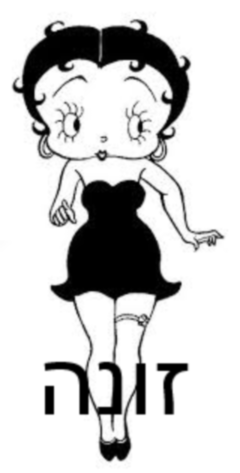
are riddles. He is forced into the role of the reluctant sleuth (as well as suspect and potential next victim) attempting to suss out the truths surrounding a twice-purloined letter.
Lest readers of this review think this book is another graduate-program-Rorschach-inkblot-nothing-means-anything abstract art project, let me give a few examples of the impressive narrative densities the author offers: dramatic, expository, and, OK, somewhat more foggy struggles toward ethical clarity, in reverse order:
1) Foggy struggle to ethical clarity: "But the body reminded him and the difficulty returned to its place. The difficulty of sometimes. This is one thing for another. But what then? Now that we have come to this. People remark. Some say. Others admit. Some admit others. But rarely. Try as he might, he could not accept their smell." This is a noted reference to Levinas, chiding people who suspect foreigners for their different talk, different smells.
2) Expository denseness: "...did a dentist sometimes catch a glimpse of his shame gnawing at the tiny mirrored instrument as he removed it from the golden mouth of privilege? Shall we ask a closed casket? Too late. Not to mention too little. A small blackened square in the newspaper of deliverance. Beloved husband. Loving wife and child. So that too. Drilling teeth by day and home to the family, the supper table, television, a game of parcheesi, Mother Goose, rinse and spit and to bed. The whole works. Not to mention the lawn. Entirely green. And devoid. Of foreign organisms. A man is always considered forewarned. All right, good for him. A lot of good it did him. Dead. Drilled. Frozen stiff."
3) And then there is the dramatic density by which he elevates an elevator escape into Brian de Palma levels of painfully articulate suspense: "He waited an eternity of palms and underarms for the doors to slide shut. Shall we say there was a passing glance from the head on a uniform of guilt, an eye-to-eye with a man already itching to press shoulder-to-shoulder with the sketch artist?...
"In that man's eyes he saw the grey-blue pages of the evening papers. He saw the hand on the arm of the Law rise from the cult of justice, and begin the slow movement that becomes a wave when the accordion of escape does not press between them. He, for his part, began a more than gradual descent. Or should we say less than gradual?:: He laboured with his breathing. Studied breath taking view of numbers in descending order. His heart bumped against the lobby. Upstairs they measured a corpse."
The way a Kabbalist or biblical hermeneuticist or a meth-lit etymologist might seize upon a word or a phrase and explode it into a giant cloud of variants, multiple meanings, many-leveled associations, and dozens of ghosts from history, the narrator sees no detail too minute or banal to load with exhaustive tonnage from myth, memory, the Old Testament, rhetoric, worn sayings, cinematic and novelistic conventions, Kafka, Gertrude Stein, Marx, Levinas, and judgements from the Sanhedrin. What is this thing the Sanhedrin? It is the ancient Rabbinical court and boy were they hard-asses but that's another story.
He uses this obsessive explicating of the ordinary for some funny narrative effects. "Silence was an option that slid on the buttery slope of my tongue."
Whereas his treatment in police hands is treated with perverse minimization "Let us construct an argument whereby a cuff on the side of the head is one result of a meditative susurration. Perhaps even a desirable consequence to be welcomed with open ears."
Trope-wise, 99% of all novels use metaphor mainly [figure totally made up]. 92% of readers respond "Huh?" when asked about metonymy [from poll never taken]. Metaphor: referring to something with something it resembles. Metonymy: referring to something with something it's related to. One of my favorite things about this book is that it rocks metonymy big-time. When a group of stiff-shirted cops are heard shouting at the discovery of a corpse, all cops are referred to as shouting shirts from then on. This is just one of many phrases that go from strange to familiar through repetition.
Books this cryptic invite all kinds of readings that might be aligned on a subjective-to-objective spectrum (just a quick ad-hoc way to do it; not claiming a serious "method" here):
On the subjective end:
This may or may not be a book about an aging radical-left burnout whose Talmudic and Kabbalic studies have driven him insane and left him trapped within a bad noir movie in his own mind, his only perceivable escape being minute examination of the delusion's smallest instances of ethical truth: the only way he knows.
On the objective end, the story and its possible interpretations are all laid out by the author within a matrix designed to foreground interpretation, problematize traditional narration, frustrate any univocal closure, and literalize the density with which personal and intertextual associations impinge upon all our reading.
I'd certainly never claim these are mutually exclusive.
Please read this book. Please gift this book. If you are asked what it's about, say "Sexual relations, money, pigs, leprosy."
...until it talks back.
Above is the book's opening image, and those in the know tell me that it is a warning to the casually curious, those who might delve into the secrets of Kabbalah without sufficient seriousness and preparation, risking MADNESS. ("A man is always considered forewarned.")
The hand is inscribed with syllables that code the very name(s) of GAWD. For those not in the know, Kabbalah is the obscure mystic fringe of Judaism, known for its intellectually demanding and philosophical/metaphysical rigor by adherents such as Madonna and Britney Spears. It draws its power from THE WORD.
But what the hell is the word, really?
From the murky world of mental concepts to the breath vibrating moist tendons in the throat, to the wet dental-lingual-labial orchestra of articulation, to the varying degrees of compactedness imposed upon the air, to the fine hairs and membranes in ears that register the waves of this propelled air pattern, to the reconstruction/recognition of these sounds complete with attendant concepts and emotions. It's all really really weird, this words business.
Weirder still once the eyes get involved: literacy parses those sounds into visual symbols to be mixed and melded and ordered to allow the magic of silent speech. Of course you can't mix them any way you want; there must be rules.
One of the coolest gems of etymology trivia is the little-known fact that "glamor" and "grammar" share roots in primitive magic. For words to have meaning or magic, there must be some form, conventions of incantation. So "glamor" became the bewitching effect and "grammar" was that effect's formula. Imagine how magical writing must have seemed to the uninitiated.
Some would claim that there is something essentially literary about the Jewish mind and Jewish culture. Others might assert that The Book is a pretty portable form of culture that would naturally become central to a people on the move. Statues, temples, material trades, farming techniques and their resultant cuisine, city organization: these things all thrive on the presumption that you're gonna be somewhere for a while, rather than be repeatedly routed and scattered. In that latter case you need a culture you can cram into allotted carry-on space. Books and gold. Culture and capital. E-Z-totes.
So the "People of the Book" built their culture on the written word in lieu of real estate and its attendant privileges. Centuries of ethics, narrative, and argument piling up resulted in the accretion of many layers of commentary, like a GoodReads thread on 50 Shades except unstupid, but every bit as tedious. Many still attribute magical properties to these buried strata of the written word and guard these secrets, hence our word cabal.
Of course it was inevitable that there would be novels that deployed this grammar-glamor toward their own aesthetic ends. What more fitting genre than a mystery? Yes, I'm finally talking about the book. This book. This marvelous puzzle of a book. To get a look at its kooky Talmudesque layout (and read a less blathery review) go HERE. I could tell you that it's just a 144 page mystery where few chapters are more than a page long, which would be totally true and absolutely misleading.
I've always been amused when people bestow the glamor of mystery and a clouded sort of authenticity upon Judaism which, especially when you're a child, is so stultifyingly boring that you want to swallow a firecracker rather than hear the reason for yet another weird little rule all other kids disobey regularly with no visible consequences. But with age, distance (lotta distance), and the glamorous grammar of objectivity, I can see how Hebrew's fat inky swaths and chubby blot-knobs might imbue a page with a sense of writing's early magic. In our age we know magic is about tricks and this book is entirely composed of typographic trickery. The page layout mimics the Talmud and its commentaries, the ur-text filling a central box, surrounded by smaller columns of annotation and argumentation. In Sleuth, the central text box explores a theme, sets the tone, or asks questions about ethics or reading itself while the plot develops on the margins, or the margins' margins.
When the story starts to pick up, the central text turns to blocks of Hebrew which, if you flip the pages past quickly, rise out of the frame, followed by more, like movie credits or an ascending elevator, until the frame freezes and the film melts. ("One stands outside one's own body, watching, narrating in the preterit-past. As though it were. What? Yes, exactly. A movie.") or the mindspace of a suspect stepped into an elevator experiencing self-abnegation and the resigned despair of a human in custody. The obsessive narrator fixates on both cinema and (especially) elevators, dual motifs ("Two? Why do I need two?") that elaborate a confusion between escape and an entrapment whose inevitability threatens to comfort: "The sudden release from responsibility at the moment of complete powerlessness teaches us the extent of the tension under which we have been laboring until then."
Our sleuth frequently takes on this sort of sad tramp mashochism:
"...one feels a fondness for one's executioner, possible reasons are: here is our last human face; a last glorious failure to commune; we may prefer to gaze upon even the visage of our executioner than the face of death; the Other's face is a port in a storm; to know at last for certain that death resides in the face of the Other as a momentary compensation."
This narrator is afflicted with a serious case of reference mania; unremarkable-seeming details (shower curtains, the contents of a humble lunch, having to use the bathroom, teeth, newsprint) leap forward broadcasting unnoticed weirdness, the familiar morphing into the strange--like language when you think about it--and his struggle to apprehend reality, to fix details in a scheme of general sense, brings forth a maze of echoing associations: common sayings (nit-picked, tweaked, punned upon, then elevated to quasi-scriptural status), Old Testament passages (spliced, looped, and remixed), and memories of his past (a bad romance, radical politics, secrets and betrayals). The move between detail and generalization becomes one of his obsessive anthems--a detail that needs a generalization and a generalization that needs a detail--which he applies to everything like a manic compulsion. The repetition and alteration of familiar phrases often results in surprising new versions:
"Suspicion is the better part of valor."
"The law of diminishing returned."
At first this mix is heady and confusing, but Majzels gives the reader enough time to get used to the strangeness before the plot really kicks in. It does have a plot, one not only conventional but verging on hackneyed, absolutely forgivable given that its noir familiarity is a welcome solid stage to stand on as this book's theater can seem all curtains. You really do just have to relax and take it in. The layout actually becomes rather familiar; we get accustomed to his voice and its motifs and refrains and the reader settles into the book's unique form and rules as it becomes clear that the narrator has learned that people from a secretive political group he once belonged to (with code names like Schtick, Betty Boop, and Booger)
are riddles. He is forced into the role of the reluctant sleuth (as well as suspect and potential next victim) attempting to suss out the truths surrounding a twice-purloined letter.
Lest readers of this review think this book is another graduate-program-Rorschach-inkblot-nothing-means-anything abstract art project, let me give a few examples of the impressive narrative densities the author offers: dramatic, expository, and, OK, somewhat more foggy struggles toward ethical clarity, in reverse order:
1) Foggy struggle to ethical clarity: "But the body reminded him and the difficulty returned to its place. The difficulty of sometimes. This is one thing for another. But what then? Now that we have come to this. People remark. Some say. Others admit. Some admit others. But rarely. Try as he might, he could not accept their smell." This is a noted reference to Levinas, chiding people who suspect foreigners for their different talk, different smells.
2) Expository denseness: "...did a dentist sometimes catch a glimpse of his shame gnawing at the tiny mirrored instrument as he removed it from the golden mouth of privilege? Shall we ask a closed casket? Too late. Not to mention too little. A small blackened square in the newspaper of deliverance. Beloved husband. Loving wife and child. So that too. Drilling teeth by day and home to the family, the supper table, television, a game of parcheesi, Mother Goose, rinse and spit and to bed. The whole works. Not to mention the lawn. Entirely green. And devoid. Of foreign organisms. A man is always considered forewarned. All right, good for him. A lot of good it did him. Dead. Drilled. Frozen stiff."
3) And then there is the dramatic density by which he elevates an elevator escape into Brian de Palma levels of painfully articulate suspense: "He waited an eternity of palms and underarms for the doors to slide shut. Shall we say there was a passing glance from the head on a uniform of guilt, an eye-to-eye with a man already itching to press shoulder-to-shoulder with the sketch artist?...
"In that man's eyes he saw the grey-blue pages of the evening papers. He saw the hand on the arm of the Law rise from the cult of justice, and begin the slow movement that becomes a wave when the accordion of escape does not press between them. He, for his part, began a more than gradual descent. Or should we say less than gradual?:: He laboured with his breathing. Studied breath taking view of numbers in descending order. His heart bumped against the lobby. Upstairs they measured a corpse."
The way a Kabbalist or biblical hermeneuticist or a meth-lit etymologist might seize upon a word or a phrase and explode it into a giant cloud of variants, multiple meanings, many-leveled associations, and dozens of ghosts from history, the narrator sees no detail too minute or banal to load with exhaustive tonnage from myth, memory, the Old Testament, rhetoric, worn sayings, cinematic and novelistic conventions, Kafka, Gertrude Stein, Marx, Levinas, and judgements from the Sanhedrin. What is this thing the Sanhedrin? It is the ancient Rabbinical court and boy were they hard-asses but that's another story.
He uses this obsessive explicating of the ordinary for some funny narrative effects. "Silence was an option that slid on the buttery slope of my tongue."
Whereas his treatment in police hands is treated with perverse minimization "Let us construct an argument whereby a cuff on the side of the head is one result of a meditative susurration. Perhaps even a desirable consequence to be welcomed with open ears."
Trope-wise, 99% of all novels use metaphor mainly [figure totally made up]. 92% of readers respond "Huh?" when asked about metonymy [from poll never taken]. Metaphor: referring to something with something it resembles. Metonymy: referring to something with something it's related to. One of my favorite things about this book is that it rocks metonymy big-time. When a group of stiff-shirted cops are heard shouting at the discovery of a corpse, all cops are referred to as shouting shirts from then on. This is just one of many phrases that go from strange to familiar through repetition.
Books this cryptic invite all kinds of readings that might be aligned on a subjective-to-objective spectrum (just a quick ad-hoc way to do it; not claiming a serious "method" here):
On the subjective end:
This may or may not be a book about an aging radical-left burnout whose Talmudic and Kabbalic studies have driven him insane and left him trapped within a bad noir movie in his own mind, his only perceivable escape being minute examination of the delusion's smallest instances of ethical truth: the only way he knows.
On the objective end, the story and its possible interpretations are all laid out by the author within a matrix designed to foreground interpretation, problematize traditional narration, frustrate any univocal closure, and literalize the density with which personal and intertextual associations impinge upon all our reading.
I'd certainly never claim these are mutually exclusive.
Please read this book. Please gift this book. If you are asked what it's about, say "Sexual relations, money, pigs, leprosy."

February 24, 2016
We sleuth, we sleuth, yet meaning escapes us.One could be forgiven for being a bit overwhelmed by this book upon first glance. There is, at a purely textual level, a lot going on here. Most pages look like this:

Though some are even more overwhelming by an abundance of Hebrew letters:
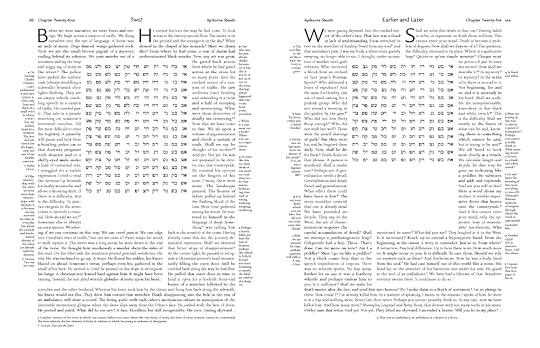
The book is - for those who are familiar with it, this will be obvious - set up to mimic the structure of the Talmud:
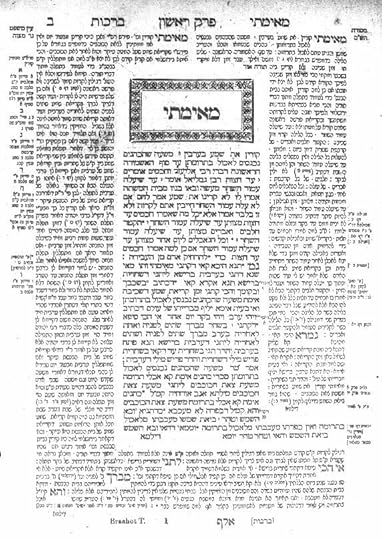
Of course, the Talmud is actually organized in a very specific way - as explained here - and the structure of this book, while mimicking the layout of the Talmud, does not attempt to follow the actual structure of the Talmud. That's not to say that the layout is not important - it is quite important in parts - but its importance here comes from its specific layout on the pages themselves - the visual impact of the text (and its movement, and its dissolution) takes the place of a specific organization.
Of course, utilizing the structure of the Talmud is important thematically - this is "a murder mystery in the form of a Talmudic inquiry" - and sections of the Talmud - concepts from the Talmud - and teachings surrounding the Talmud inform the text and the story.
Well, enough about that, let's dive in and look at - briefly, without belaboring this too much - why this book is actually something special, while managing to be quite a bit of fun as well.
Apikoros
The titular term Apikoros is a good place to start, not only because this book is big on using what will likely be unfamiliar terms to the reader, but because when it does so it's usually introducing concepts to the narrative that are actually important. (you will likely need to look up a lot of words. don’t be afraid to do it. it helps. a lot).
At the most basic level, an Apikoros "is a Jewish term cited in the Mishnah, referring to one who does not have a share in the world to come". The book (Apikoros Sleuth) quotes a definition:
Those of us who say the Torah is not from heaven. Those of us who interpret the word of the Torah in a way contrary to the halakhah. Those of us who profane the covenant inscribed in the flesh. Those of us who profane the holiness of the sacrifices. Those of us who disdain the half-holidays. Those of us who say the whole Torah comes from heaven, except this deduction, except this exception, except this a fortiori, or this proof by analogy. Those of us who have the opportunity to study the Torah and do not do so. Those of us who study the Torah, but only from time to time. Those of us who cause the face of their fellow to pale with shame. All these have no share in the World to Come: even if they know the Torah and have performed charitable deeds, all these have no share in the World to Come.The quote provided comes from a Baraita ("external" or "outside" - refers to teachings "outside" of the six orders of the Mishnah. Originally, "Baraita" probably referred to teachings from schools outside of the main Mishnaic-era academies). While on the one hand an Apikoros can be boiled down to a form of "heretic", Majzels himself prefers "lapsed Jew" - either way, it is an individual who is outside of the faith. They are Other. The concept of Other is continually revisited throughout the text – and the extensive quotes from Derrida, Levinas, Jabès, Lyotard, etc ground this work pretty firmly in a post-structural framework. Additionally, it is intentional - viewed in the context of the rest of the text - that Majzels chooses to define the outsider with an outsider text. The book is filled with these small repetitions – flourishes really – where Majzels underlines and draws attention to the craftsmanship and detail of the work.
Lastly, the concept of the sleuth being Apikoros is an invitation. The sleuth himself has no “share in the world to come” – he is an Other – and while the reader could be overwhelmed by the textual layout, off put by what appears to be extensive Hebrew, and generally convinced that the text is too much; Mazjels, in his choice of title is saying ‘relax, we’re all outsiders here”.
The Hebrew
One of my GR friends (Brian) sent the text of this book to an Israeli friend of his (Ram) who provided commentary and some attempt at translation (what I mean quickly becomes clear). I’ll include his translations under a spoiler tag (for space reasons if nothing else), but I want to highlight something that Ram says:
The Hebrew ranges between somewhat coherent and totally incoherent. The incoherent parts are either (a) complete gibberish made up by the author, (b) partial gibberish made up by author by putting together parts of Hebrew words that on first sight seem legit but when reading have no connection or logic, (c) ancient Hebrew words I don't know, or (d) Aramaic, which I also don't know.
I point this out not to attempt in any way to take away from Majzels’ book – I instead point it out to underline, again, the need for the reader to relax a bit in reading this book. Some of you are going to have the overwhelming desire to unlock everything from the text – awesome, I mean it, that’s awesome – but the text is both accessible and enjoyable as a more surface level read, and the inability to understand everything shouldn’t hinder you – mostly because it appears not everything is meant to be understood.
That said, Majzels is doing some really cool stuff here. The one I want to point out is the three letter word נגע, which shows up a lot in the book. The definition Ram provides is this - which means "touched" (as a verb, not adjective, e.g. he touched). But it might also mean affliction, can't tell without diacritics. - it’s possible that Mazjels means it both ways, but the text seems to support “affliction” – I mention it only because the term shows up around 20 times or so.
The other definitions (and non-definitions) are as follows – all but the bolded text are directly quoted from Ram (I removed some of his commentary to leave the main definitions behind):
I want to touch on one other note provided by Ram – because it dominates the center section of the book:
Then all the way to page 33a we have tables of two letters to each "word". This section is more mathematical than Hebrew-related. Sometimes the letters appear in absolute order, sometimes they appear in order that is broken in some places. The letters seem to not have any more meaning than their serial number in the alphabet, so armed with the Hebrew alphabet you can make as much sense of it as I can.
I think this part is all about structure, my interpretation is under the spoiler:
The Figs
Very early on in the book the reader is provided with a story of two guards –one blind and one lame – guarding (and stealing from) fig trees. This is parable is actually a part of the Hebrew teachings, but Mazjels only tells part of it. The parable and surrounding explanation are as follows (it is quoted from here):
Antoninus said to Rebbi: The body and the soul have an alibi to free themselves from punishment on the Judgment Day. How so? The body can claim, “The soul is the one that sinned. From the time it left me, I have been lying silent like a rock in the grave.” And the soul can say, “It is the body that has sinned. From the day that I left it I have been flying in the air like a bird.” Rebbi answered, “Allow me to offer a parable. To what can this be compared? To a king who had a beautiful orchard that contained luscious figs and he posted in it two guards, one lame and the other blind. Said the lame one to the blind one, “I see luscious fruits in the orchard. Come, put me on your shoulders, and together we will pick the figs and eat them.” The lame one climbed on the blind one’s back, and they picked the figs and ate them. A while later the king, the owner of the orchard found that his figs were gone.I highlight this for three reasons.
He said to the guards, “What happened to my luscious figs?” Said the lame one, “Do I have feet to take me to the fig trees?” Said the blind one, “Do I have eyes to see where the figs are?” What did the owner do? He placed the lame one on the shoulders of the blind one, and judged them together. So too, on the Day of Judgment, the Holy One Blessed Be He, brings the soul and puts it back into the body and judges them jointly.
1. As noted way above, the structure of the book is in fact thematically important – while this is a book heavy in postmodern theory, it is driven by Jewish law, scripture, myth, and history, and many of the concepts explored within the book – and the structure of the textual investigation – are heavily based on this.
2. The idea of things being judged as a unit (Two!? Why do I need two?) is constantly revisited.
3. As is the concept of the separation of the body and the soul – and the thought that the body is free of sin while free from the soul recurs throughout the text, and yet that portion of the Fig story does not appear in the text. There are layers in layer here.
Anacoluthon
(/ænəkəˈluːθɒn/ an-ə-kə-loo-thon; from the Greek, anakolouthon, from an-: 'not' + akolouthos: 'following') is a rhetorical device that can be defined as wording ignoring syntax. This is achieved by transposing clauses. Anacoluthon often contains a sentence interrupted halfway. The sentence then has a change in form.You’ll know what I mean.
Digression and Repetition
But we were asking: which sin must a sleuth, if he is to sleuth, avoid? Digression.Just so we’re clear, in the context of the book, that’s a joke (and a funny one at that).
Digression is prevalent here – you’ll read entire sections covering multiple pages only to find that you’ve arrived back at the plot no wiser – maybe thematically, philosophically, fuller, but not wiser - and in fact will likely have forgotten where in the plot you even were. At times I forgot I had actually left the plot behind, and was surprised to basically step back in mid-action, as if I never left. This in large part speaks to how enjoyable it is to actually read this book – a good thing, as the plot is very much secondary here (more on that in the next, last, section).
More than that, the reader is inundated with repetition and motifs throughout the text. Neither are stagnant though, and they shift as the book goes along, and tend to become something different. The thing that I was really impressed by is that there are a number of seemingly nonsense repetitions throughout the text, and they kind of continuously pop up, until all of a sudden they’ve shifted just enough to become clear, in the context of the book in certain sections, where all of a sudden you realize that all the repetitions have been driving to this one iteration, in this one place.
Again, this is a meticulously crafted book. Not just in textual layout, but in textual content. Most of what Mazjels is doing is serving some bigger picture he has in his head, and he’s only interested in getting around to it in his own time, and revealing it at his own pace. But almost everything ties together eventually, and the patient diligent reader is in fact rewarded with answers (and a plot).
Again, relax, enjoy.
The book itself
It’s really funny. If you’re not catching that then you’re missing something. Mazjels has a knack for playing with words, and twisting phrases, and then continuing to play and twist long after you would think all avenues are exhausted. Not all of it is laugh out loud funny, but when it’s not its still impressive in its linguistic dexterity.
I considered my silent options silently. I weighed those options on a subatomic scale and found them wanting. Wanting what? Wanting more. Options. Booger wanted a spoken promise of silence. I considered speaking out against silence. To refuse silence is well and good, but would speaking retrieve a body by the gate or a dentist with too many teeth in his name? I considered the possibility of a silent refusal of silence. I mean, to remain silent in the face of Booger’s demand for my silence. But silence left too much unsaid. Clearly (it seemed so at the time), Booger (Mr. Rooney to you) and his shadowy shadow both preferred speech, I mean mine, to silence. They required a sentence. Silence (in the face of their demand for my silence) might lead to a sentence of death. Possibly. Here, another option: to speak a sentence of silent acquiescence. But if I spoke my silence now, would I not be acquiescing to murder? If I played mute to Booger’s tune, who would satisfy suspicion’s passing glance from the head of a uniform, that eye-to-eye with the man whose shoulder itched to press shoulder-to-shoulder with that sketch artist (he had by now already done so)? Silence was an option that slid on the buttery slope of my tongue.Oh, yes, there is a character called Booger. This book doesn't actually take itself as seriously as it appears on the surface. Scatological and urinary jokes and discussions abound. There are many plays with the name Booger (most utilizing some emphasis on the word “pick”). Snickering penis allusions are rampant as well. That’s not to say that childish humor is all there is – it shows up, more frequent than you would expect, but really only to continue to reinforce the levity of the text. They pretty much act as moments of intermission, where the author is still telling the reader to relax – it’s not all heavy lifting here.
All that aside, there is a plot here. At times Mazjels is almost begrudging at dispensing any information, or at “moving the ball forward” in terms of plot, but there is a quite good, fairly involved murder mystery buried in all of this. It picks up quite a bit of steam at around the halfway mark, after which I found myself not only enjoying the book and the act of reading the book, but I all of a sudden didn’t want to put it down, because I wanted to know whothehelldidit in this whodunit.
I was skeptical of this book when I started it – it’s tough for an author to utilize 1) a playful and atypical textual layout; 2) dense and convoluted prose; all while 3) still managing to actually have something to say, which is actually served by those first two items. Majzels pulls it off though, and this is a book –that if you can track a copy down for cheap – really needs to be more widely read.
And remember. Relax. It’ll be okay.

May 27, 2014
Review to come when I have had time to think.
Displaying 1 - 3 of 3 reviews