Combining ethnology and memoir, this fascinating book describes the issues surrounding childbirth and motherhood for disabled women. The author, a paraplegic, tells about her own hunt for medical advice before getting pregnant―and then about the normal births of her two children―before widening the conversation to other disabled women and sympathetic members of the medical community.
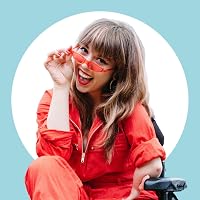
A respected leader, administrator, coach, athlete, writer, and mother, Heather Kuttai has been spinal cord injured for over three decades. She is a three-time Paralympic medallist and an experienced provincial and national team coach. She pioneered Disability Services for Students at the University of Saskatchewan, and in addition to being an advocate for students with disabilities and the creator of several student retention programs, she was also responsible for the development and writing of a University policy for this office. While at the U of S Kuttai worked on several research and writing projects. A sought-after motivational public speaker, Kuttai is frequently asked to make public presentations on topics such as disability, dealing with adversity, parenting, and sport. She was recently inducted into the Saskatchewan Sport Hall of Fame and received a YWCA Women of Distinction Award for Leadership and Management.
First of all I feel I must say that I've never read a book on disability or the issues surrounding disability before. Taking that into account I found the book quiet informative. The book is split into two sections: the first being mostly autobiographical in nature and the second being more academic in its treatment of the issues. By far the most interesting and enlightening area of the book, for me, was the autobiographical part of the book which submerged the reader in the the issues faced by the author as she learned to deal with her disability whilst seeking to live a full life. This part of the book dealt with her thought-processes and how she met the challenges and opportunities that life presented her with. The second, more academic, part of the book did not interest me to the same level as I felt out of my depth and somewhat disconnected from this part of the narrative. But it was still informative in it's own way. Overall I found the book good but I think it could have been improved with an expanded autobiographical element, and the academic/personal segments could have been better integrated.
This was an excellent read. Great insight in to one person’s experience of disability and childbirth, as well as the author’s experience as a Paralympic athlete. The book raises all kinds of interesting and important questions about bodies, gender, ability, ableism, perseverance, grit, and our stories. I appreciated that, though this was an auto-ethnography based on the author’s thesis, it was very readable and not overly jargon-filled. It didn’t feel like an academic read although it has great scholarly merit.
Disclosure: the author, Heather Kuttai is a friend of mine. Though I may have found it extra moving because I know her, I think I would have loved this book regardless.
The author is a suburban mom though she is not your typical suburban mom since she is a paraplegic and uses a wheelchair to get around. Throughout the book she does talk about her experience in being a wheelchair bound person and the frustration she experiences in living in society. She did marry even though there were those who thought that she wouldn’t be able to find someone who would marry her. In telling about her experience she does give both the pros and cons of being a pregnant paraplegic. She does give enough information so that women with her disability can make an informed decision about whether or not to have children. She is frank and honest about her experience and doesn’t sugarcoat it though she had always wanted to be a mom. She told about giving birth made her feel like a woman, even though she felt that society didn’t see her in that way because of her disability. She did put her health at risk in having her babies, especially her second child. She does need to be open to the possibility that not every woman with her disability wants to put their health at risk in order to give birth to a child, that there are some women who would choose not to have children or doesn’t find a partner that she can bear a child with and that does not make her any less of a woman.