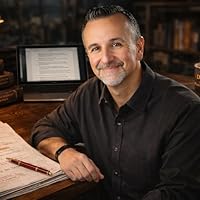
John Joseph Swartzwelder Jr. is an American comedy writer and novelist, best known for his work on the animated television series The Simpsons. Born in Seattle, Washington, Swartzwelder began his career working in advertising. He was later hired to work on comedy series Saturday Night Live in the mid-1980s as a writer. He later contributed to fellow writer George Meyer's short-lived Army Man magazine, which led him to join the original writing team of The Simpsons, beginning in 1989. He worked on The Simpsons as a writer and producer until 2003, and later contributed to The Simpsons Movie. He wrote the largest number of Simpsons episodes (59 full episodes, with contributions to several others) by a large margin. After his retirement from the show, he began a career as a writer of self-published absurdist novels. He has written more than a dozen novels, the most recent of which, The Spy with No Pants, was published in December 2020. Swartzwelder is revered among comedy fans and his colleagues. He is known for his reclusiveness, and gave his first-ever interview in 2021, in The New Yorker. Per Mike Sacks, "Swartzwelder’s specialty on The Simpsons was conjuring dark characters from a strange, old America: banjo-playing hobos, cigarette-smoking ventriloquist dummies, nineteenth-century baseball players, rat-tailed carnival children, and pantsless, singing old-timers."
John Swartzwelder, notoriously reclusive Simpsons scribe, is known for penning some of that show's funniest and most culturally pointed episodes. He is capable of being absurd without succumbing to plot-driven idiocy and able to nestle high-brow-rising humor next to the goofiest of puns without skipping a beat. Few of the show's current writers can boast his kind of output, whether you're measuring it by episode or by how many gags he can fit into any given minute.
His books (four so far) don't try to follow coherency as much as his work on The Simpsons. Instead, he uses the medium as a forum for his stream-of-consciousness wise-cracking. Mass by volume, these slim tomes have the same silly density as his episodes, even if they sprawl ten times as much. For the most part, Swartzwelder sticks to the same basic formula that made his shows a success: a fat and idiotic central character gets into all manner of monkey-shines and comes out mostly unchanged. Instead of Homer, though, our main man is called Frank Burly.
THE TIME MACHINE DID IT Frank Burly introduces us to his unlikely career as a private eye. Although his primary talents are screwing things up and getting beaten on a regular basis, he ends up with a fairly important case. A bum claims that he used to be a millionaire, but criminals with a time machine retroactively stole his wealth. Burly's in over his head (heck, this guy gets in over his head just trying to tie his shoes), but that doesn't stop him from barreling headfirst into the mystery and subsequently making it messier and harder to solve. Quickly written, hastily plotted, and genuinely funny, this is one of the few books I've ever read that's gotten me to laugh out-loud, and on a regular basis. 5 Stars. FAVORITE LINE: Frank Burly, on his imprisonment and torture by the criminals -- "I held up under all this pretty well. I was sleeping like a baby -- waking up every three hours screaming and crapping my pants."
DOUBLE WONDERFUL Swartzwelder makes a mistake. Instead of one central character with the brains of a dusty cactus, he creates an entire town of them. The citizens of the Wild West town of Slackjaw are having economic troubles. Part of their problem is that the "wild" in their western town is missing; it's a pretty boring place, plus it exists in the shadows of the world-renowned Double Wonderful ranch, run by a wealthy couple who are so perfect, God owes them favors. They try desperately to bring fame and/or notoriety to their little corner of the world, but most of their ideas are pretty lame (encourage bandits to rob them, hang the mayor, etc.). They eventually get their wish, and it's mildly amusing, but the scattered scope of the story's lunacy and its slap-dash conclusion are pretty harried. You won't laugh as much as you'll roll your eyes. Not bad; not great. Notable mainly because the story's central theme (the horrifying price of fame) gives you some real clues as to why Mr. Swartzwelder himself so adamantly chooses to stay out of the spotlight. 3 Stars. MOST SELF-REFERENTIAL LINE: "...Buntline said that short books were the best selling kind ... That's what the reading public wanted in a book these days, he said. They wanted to get as close as possible to not reading at all."
HOW I CONQUERED YOUR PLANET Swartzwelder, catching on, brings Frank Burly back to the fore. He's still a private detective, he's still pretty bad at it, and he's still stumbling backwards into strange cases (and sometimes plate glass windows). This time the case may have something to do with Martians. Or maybe it's Neptunians. They're both very similar, as far as aliens look, although it's harder to pronounce the word "Neptunians." While going about his daily routine of getting in the way of things, Frank ends up alienating (nyuk, nyuk) all sorts of planetary species. And, of course, he conquers your planet. Not as consistent as "Time Machine," but much sharper than "Double Wonderful." 4 Stars. FAVORITE LINE: Frank Burly, on his new alien secretary -- "...I discovered that I had hired a surprisingly dedicated secretary, who listened in on my phone calls, patted down my visitors, looked through my desk for me each morning before I got in, even appeared in my dreams taking notes."
THE EXPLODING DETECTIVE Frank Burly's back, this time augmenting his act with a mostly-malfunctioning jetpack. His inability to steer is overshadowed, however, by his ability to withstand multiple explosive collisions, and he becomes something of a superhero. The new title doesn't fit him so well, because it requires that he get up before noon and commit all kinds of acts, most of them selfless and painful. He ends up getting involved in a battle against a super villain, a washed up James Bond type, and another time machine. Although this book is as funny as the previous, it makes it obvious that, while Burly's adventures through time and space are all well and good, Swartzwelder might do well to actually keep his gags confined to the realm of detective work. I doubt it took the man longer than a couple of days to write any of these books, but this is the first time I felt it really showed. 4 Stars. FAVORITE LINE: Frank Burly has infiltrated a Secret Club for Super Villains, searching for his would-be assassin -- "I continued around the room ... making it sound like I was a new member who was just making conversation. "Have you been trying to kill me?" I would ask, casually. "I'm just curious. Or we could talk about the weather, if you like. The weather's been trying to kill me too.'"
I've read all of John Swartzwelder's books, and Double Wonderful stands out as the worst. If you're looking to try something from him, you'd be better off starting with The Time Machine Did it or The Exploding Detective.
To explain why this is a bad Swartzwelder book, I'm going to elaborate a bit on how his other(good) books work . Typically the plot is nothing more than a barebones scaffolding for jokes; sometimes it's clever, sometimes not, but that's almost immaterial. With the structure in place, Swartzwelder just takes you from absurdity to absurdity, and achieves what I suspect is one of the highest joke to word ratios in all of fiction. There is no theme, message, or purpose other than comedic density. That's what makes it such great light reading, and it's why you don't feel cheated at the end of a 130 page book sold for the price of a full novel. If you were to take a full length comedic novel, and exclude everything extraneous to pure silly humor, you'd have something like a Swartzwelder book and about the same number of pages.
Double Wonderful on the other hand tries to introduce a large cast of characters and story that, while still cartoonish, requires more setup than is typical. By the standards of the author, too many humorless sentences go by building up the rather uninteresting old west town of Slackjaw and its inhabitants. The setting and story further impinge on the humor by tethering things, however loosely, to reality. There are no time machines, spacemen, or other fantasy elements available to propel the next gag when the humor begins to stall.
When the jokes finally do kick in, they fall flat. It's hard to quantify, and opinions may vary, but I was simply left completely unamused by an author whose sense of humor has always clicked with me.
As other reviewers have mentioned, there are also some bizarre jokes about Native Americans that will leave you scratching your head. I didn't come away thinking the author was racist, but that would not be a totally unreasonable conclusion to reach if you knew nothing else about him. My take is that these lines are just a symptom of the general poor quality of writing here and perhaps a product of some desperation. More importantly, if reading a book like this causes you to flirt with serious thoughts about racial prejudice, the book has completely failed in its aims. One does not pick up a book like this to think seriously about anything
This time Swartzwelder takes on an old west setting. The story is about a town that wants to be a tourist spot to help their economy. The actions of the townsfolk lead to one major change after another, each one making them more miserable than the last with heavy emphasis on a "the grass is always greener" moral.
I was really hoping this book would be funnier. Swartzwelder's books seem like they'd be a lot funnier if read out loud by a good comdeic actor, but the gags don't work as well printed on the page. In the end, I realize that these really are just Simpsons expanded universe fiction. The reader must picture the citizens of Springfield in the roles for the book to work. I wasn't doing this until the very end, because I wanted to give the writer room to be his own person and not typecast him as "that Simpsons guy," but it doesn't work that way. You have to realize off the bat that the mayor of Slackjaw is Mayor Quimby, the Sheriff is Chief Wiggum, Mr Hawkshaw is Mr. Burns and the titular Wonderfuls are Maude and Ned Flanders. I gave Swartzwelder credit to be able to break away from Springfeild, but he can't. I would have enjoyed this book more if I realized that from the beginning.
Sensitive readers be warned that Swartzwelder goes on an anti tax rant at one point and is very unkind in his portrayal of American Indians. I wish I could defend his portrayal as satire of the racism in old American westerns, but it seems just too mean spirited for that to be that case.
Schwartzwelder is as hit-or-miss as it gets, with as many awkward dad-jokes as surprisingly elegant jokes. In "Double Wonderful," though, that ratio is off and larded with the kind of clabbered cynicism the enfranchised employ when they like to think they're disenfranchised.
though this is not the best of schwartzwelder's novels, it still maintains its sitcom joke pace and absurdist sense of the world. irony is the predominant mode of communication and the jokes ping pong back and forth between being really goofy puns and beaneath-the-surface politically angry. there's a fun balance between the two. double wonderful is about the old west town of slackjaw and its residents' looking for a way to climb the fame ladder in the same way that tombstone or other mythologically sized towns of that era did. they find that fame when a pulp writer comes to town looking for the next dime store craze and settles on writing about their ordinary lives. but plot here is secondary to the line-by-line jokes that blur the events beyond absurdity into meaninglessness. this meaninglessness is okay because of how funny the book is, but it would have been stronger with more of a story-based spine.
Yikes. One joke in the whole book made me laugh out loud. There were a few smiles after that. Maybe one or two, "Hey, that was clever!" bits. But otherwise this one was pretty dreadful. No plot, no characters, no nothing. All of that can be forgiven in a situation where the jokes are great, but the balance just wasn't there. I'm told the rest of his books are much funnier. I picked this one up first because I've always enjoyed a Western novel, and especially enjoyed Western spoofs. But apparently this one was just not for me. The one joke that made me laugh and the good will earned from his work on The Simpsons is probably enough to get me to check out one of his "good" books. We'll see how that one goes. Skip this one.
Setting aside the ridiculousness of star ratings in general, I wish Goodreads allowed ratings in increments of half-stars. This doesn't deserve the two-star rating I'm giving it because the ridiculous dad jokes come fast and furious and the narrative gets more delightfully absurd with each chapter, but I also hesitate to give this three stars because it's not quite as funny as his private eye books, there's a bit of libertarian nonsense about how awful it is to pay taxes, and I was genuinely puzzled about whether the American Indian subplot was skewering Western genre conventions and making fun of racists or whether it actually was racist. Probably a little of both. I mean, you can't grow up in the USA without getting a brain full of cognitive dissonance.
All of John Swartzwelder’s books have been read by my son and me over the last few months. They were imaginative and silly. They have been a true blessing over these last months. My son and I have laughed every night. I strongly endorse reading these books as a tonic for these times.
Some interesting turns of phrase and gags but overall a pretty weak story. Also the Native American related humor just doesn't really work. I think a lot of the cultural touchstones he relies upon have become pretty outdated and therefore the book doesn't really work.
John Swartzwelder does it again! The old west town of Slackjaw is hungry for fame and money so they approach the Double Wonderful farm for advice on popularity. Once they make a name for themselves in a series of pulp novels based around their dramatically told mundane lives, they find that fame isn't everything it's cracked up to be. That's the plot in a nutshell but as usual the author is able to fit in a joke a minute and enough surreal humor and happenings to keep you rolling for hours. He also really nails the price of celebrity, the stupidity of the media and the Hollywood lifestyle better than any of the other comparable satires I've come across. Finally, a direct mockery of Hollywood and Celebrity Culture that is laugh out loud hilarious and on-point WITHOUT being preachy or overly dark/cynical.
This is like one of the early, good Simpson episodes that were willing to poke fun at modern culture with honesty and wit, while building a quirky community of characters that were flawed and quirky enough to keep the tone light-hearted. It also had a very relevant message for our age of narcissism and media obsession that I think will stay with you after reading.
I am a Simpsons fan from the very beginning of the show. John Swartzwelder is one of the most prolific writers for the show. While watching DVDs of the series and listening to the commentary (yes I'm a geek) Al Jean and others referred to Swartzwelder's self-published books. They also referred to him as a recluse who writes his scripts at home and has them delivered to the studio.
I was intrigued and ordered all three of Swartzwelder's books in paperback. They were quirky and marginally funny. I read them more out of curiosity than for enjoyment. It pointed out that there is a huge different between writing scripts for a 30 minute TV show (which are punched up by other writers) and writing and editing a book on your own. Swartzwelder has vast amounts of talent for the former, but not so much for the latter.
So I read this after my husband (not a reader) suggested it. I really enjoyed it. It was very Simpson's-esque humor, which made me smile and even chuckle out loud a few times. It's not my new favorite of all time, but I enjoyed the jokes, storyline, and even the overall moral. Does it keep you guessing? No. Does it have an awesome, unexpected plot twist? No pretty standard. I enjoyed it more than expected and enjoyed the overall "be careful what you wish for" theme enough that I look forward to reading his other 3 books and would highly recommend it as a quick, afternoon read.
This book is whimsical fun, but I have to dock it at least a star for its portrayal of Native Americans. Arguably, the author could say he's parodying the antiquated tropes and racist jokes. Arguably. But actually no. It just winds up repeating them, I think.
And arguably there's a sense that he makes fun of everyone. But he doesn't make fun of everyone . . . for their race, you see.
Like Swartzwelder's early book the plot is mostly an excuse to be nonchalant about terrible things.
If you enjoy the Simpsons, John Swartzwelder will make you laugh out loud. This is stupid humor at its finest. I love how dumb the characters are. You won't find "Double Wonderful" in a Book store, so go to Amazon.
Didn't enjoy this as much as his first one -- there's a lot of exposition, and I find his dialogue is where I laugh the most. Nonetheless, there's plenty of fun prose. I'm still laughing about smelling a metaphysical rat, "the kind of rat you smell in your heart."
Though peppered with good jokes throughout, "Double Wonderful" was a slog compared with Swartzwelder's previous novel, "The Time Machine Did It". The concept wears thin fairly quickly, leaving the reader with a few high-caliber jokes wasted on a one note story.
its alot of story. most of which is really funny. There is a reason libraries dont carry alot of Swartzwelder. it is laugh out loud funny. Then it gets weird because most people get what they want to hilariously horrible effect.
Not great, but not boring, either. Not as good as The Time Machine Did It, but not bad. It was OK -- that's what the two star rating is supposed to signify here, so that is what it gets.