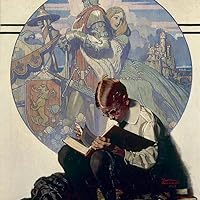
Matthew Zapruder's third book mixes humor and invention with love and loss, as when the breath of a lover is compared to "a field of titanium gravestones / growing warmer in the sun." The title poem is an elegy for the heroes and mentors in the poet's life—from David Foster Wallace to the poet's father. Zapruder's poems are direct and surprising, and throughout the book he wrestles with the desire to do well, to make art, and to face the vast events of the day.
Look out scientists! Today the unemployment rate is 9.4 percent. I have no idea what that means. I tried to think about it harder for a while. Then tried standing in an actual stance of mystery and not knowing towards the world. Which is my job. As is staring at the back yard and for one second believing I am actually rising away from myself. Which is maybe what I have in common right now with you . . .
Matthew Zapruder is the author of five collections of poetry, most recently Father’s Day, as well as Why Poetry, and Story of a Poem. In 2000, he co-founded Verse Press, and is now editor at large at Wave Books, where he edits contemporary poetry, prose, and translations. From 2016-7 he held the annually rotating position of Editor of the Poetry Column for the New York Times Magazine, and he was the Editor of Best American Poetry 2022. He lives in Northern California, and teaches in the MFA in Creative Writing at Saint Mary’s College of California. His forthcoming collection of poetry, I Love Hearing Your Dreams, will be published by Scribner in September, 2024.
I'm so torn about this collection. Zapruder reads like a hip John Ashbery with heart, but the same things that often frustrate me about Ashbery frustrate me about Zapruder -- a near fetishistic need to jarringly juxtapose high and low diction, switch registers and voices seemingly on a whim, and a deliberate attempt to obfuscate, sacrificing heart and clarity for a more formal representation of what it means to be alive in post-modern America. Whereas Ashbery uses erudite allusions to French literature, or classical painting, Zapruder references pop culture, science and technology to communicate his vision of 21st century America. Still, at the heart of these often complex poems lies a very traditional heart: love, death and the inevitable passage of time are common themes. His final poem, a five movement elegy for, among others, David Foster Wallace and his father, is a powerful plea for art in the service of memorializing and survival.
In old black and white documentaries sometimes you can see the young at a concert or demonstration staring in a certain way as if a giant golden banjo is somewhere sparkling just too far off to hear. They really didn't know there was a camera. Cross legged on the lawn they are patiently listening to speeches or the folk singer hunched over his little brown guitar. They look as tired as the young today. The calm manner in which their eyes just like the camera rest on certain things then move to others shows they know no amount of sunlight will keep them from growing suddenly older. I have seen the new five dollar bills with their huge pink hypertrophied numbers in the lower right hand corner and feel excited and betrayed. Which things should never change? The famous cherry trees I grew up under drop all their brand new buds a little earlier each year. Now it's all over before the festival begins. The young. Maybe they'll let us be in their dreams.
So much that has been lost in modern poetry is recovered by Matthew Zapruder in Come On All You Ghosts. Clearly he has studied the forms of classic poems—their cadence, their unique language, their structure—and though his own poetry is not properly formal, he has absorbed these elements into his own. In other words, this is poetry that sounds like poetry, that is musical and strange without being inaccessible, that ennobles the reader rather than dragging them through the slough of pedestrian observations.
Unlike his peers, Zapruder clearly involves the spiritual in his work. The title itself suggests this, but it shines in the majority of the poems. Realities beyond the purely physical are explored, and things that are mundane are revealed to have deeper significance, or at least to get the poet thinking about deeper things. One of the best examples of this comes early in the volume—the poem "Pocket," in which Zapruder explores memory and mystery by identifying with a small article of clothing.
Unlike virtually any poet ever, Zapruder actually writes good ars poetica, poetry about poetry. I hate this type of poem more than any other, mainly because it's usually nothing more than an opportunity for lousy poets to be self-indulgent and self-serving—writing about the thing you're writing is the worst kind of laziness. But when Zapruder does it, he maintains his self-effacing humor and he never takes the endeavor too seriously. At the same time, he takes it seriously enough to reveal something of the struggle of poetry, the purpose of poetry, and the ambivalence a poet often feels.
In the end, though, you simply have to admire Zapruder's ability to craft beautiful lines that are also meaningful (the trend is increasingly to write something that sounds pretty and signifies nothing), such as this fragment from "The New Lustration" about dreaming: "....The thought / I could be one who falls asleep and dreams / some brave act and wakes to actually / do it flapped through me, brief breeze / through a somnolent flag." And that is why you should read this book.
Oh, man. I needed these poems. I'm actually in the process of reading this right now, but I've been feeling so stationary in my writing. Basically, stationary in my living as well. Zapruder is gently shoving all this sadness and truth in my face. I want to tell him thank you.
I feel like this is one of these poetry collections that makes people not too fond of poetry collections. The poems themselves weren't bad by any means but they didn't fot together. It was like reading randomly chosen poems from an author, without any though behind their correlation that i was hoping for given that it's a poetry collection.
I wasn't able to get through this collection on my first or second attempts. And though, ultimately I believe that Zapruder's IS a bit uneven, I locate the origin of my early difficulties with the book within my own poetic predilections (the geography of which are constantly expanding to include more and more styles and habits), and honestly, to a sense of professional competition and envy. Let me be clear: I don't KNOW Matthew Zapruder; but I picked up his book on the strong recommendation of a friend and by cosmic coincidence, happened to start reading it during a week when I received a MORE than usual number of rejections from literary magazines. After reading the first couple poems in this collection, I heard the terrible, destructive, and toxic voice in my head yelling, "your own poems are JUST like these, and some are better!!!" The second attempt made me remember the mindset of the first.
So I waited a year; and I'm so pleased that I returned, as Zapruder's title encourages me to.
First of all, how can anyone not like a book of poetry which contains pieces dedicated to JIM ZORN ("Poem For Jim Zorn"), White Castle, John McCain, and Neko Case (songstress in one of my favorite bands, The New Pornographers). So what one notices right away about Zapruder is his obvious comfort in post-modernity, most strikingly in his consideration of what can be text and what is worthy of versification.
But Zapruder's hipster charm and taste is NOT what makes this book REALLY enjoyable; he's a damn good poet characterized by an acrobatic skill with diction and the connotations of the words he chooses. In "Poem For Ferlinghetti" for instance, Zapruder writes, "I have tried/for a long time to be useful,/like everyone I am also/always balancing/on the small blade of not/letting other people down." And so later, in the same poem, Zapruder finds himself writing and (re?)discovers what it is that MAKES him useful to others, the way that every good poet is "of service" (as Ted Kooser sweetly phrased it): "I am/at my desk pushing/against one word feeling/its hinge creak like wind/would a gate".
Zapruder is great at the good old stuff too. In "Minnesota" he describes a "squirrel he recognizes," his "onyx nails/click on the frozen snow."
And then there's the acrobatics. In "Little Voice," he writes, "I can't take it any longer. Im going to stop shaving/my teeth and chew my face. I'm going to finish inventing/ that way to turn my blood into thread and knit/a sweater the shape of a giant machete and chop/my head right off."
I would be remiss if I didn't point out that Zapruder is also VERY funny and one comes to find his obsessions endearing: the promise of innocence supposedly to be found in midwestern cities, and his seemingly uncontrollable and unpredictable reaction to Neil Young's music to name just two.
In any case, all of his skill are on display. I mentioned earlier the book bing uneven. I found section II to be far stronger than the other two in the book, which was sort of a let down. Of course, the collection finishes with Zapruder's BEST poem, the one which gives the collection its name, and I couldn't help but want to turn right back to the beginning and start it over again after reading it.
Still rereading and still loving this collection. It's discursive (some would say disjointed) and prosy and at times breaks my friend's rule that poetry should only do those things which only poetry can do, but I can forgive nearly anything when he does this:
Clearly life is a drag, by which I mean a net that keeps pulling the most unsavory and useful boots we either put on lamenting, or eat with the hooks of some big idea gripping the sides of our mouths and yanking them upwards in a conceptual grimace.
And he's always doing this, yanking back the curtain to remind you that he's just a dude on the other side of the words pushing them out through these machines. And whether he's sorting through the wreckage after his father's death or writing too intently about Diet Coke, he does so through strings of small surprises: the extended clarification (see above), the unexpected adjective ("she will answer any question/ no matter how spiral, no matter how glass"), the broken cliche ("that open field where an entirely/ new love could snow") or the joke of surrealist desperation ("I'm going to stop shaving/ my teeth and chew my face").
Save a few exceptions (the titular piece, "Little Voice," "After Reading Tu Fu..." and a few others) I am more often struck by images and/or lines than by full poems, but damn am I struck by those images and lines. It's a collection that will soon look very worn, and it's more than enough to make me seek out The Pajamist.
I first picked this up as a sophomore in college and just got back to it in my "sophomore" year post grad. I used a handful of those early poems in an introductory poetry class I taught because I admired them so much. Zapruder uses mostly plain, straightforward language so his poems aren't difficult to follow.
I love some of these poems a lot. Favorites include: "Schwinn," "The Prelude," "Poem for Hannah," "For You in Full Bloom," and the titular poem. Sprinkled throughout the others are stanzas and metaphors that stopped me cold and demanded contemplation. Zapruder consistently nails the endings of his poems. There were quite a few misses for me in the overall collection, which is why I gave it three stars. I'm glad I own a copy, though, if only for my favorites and the miscellaneous lines I loved from other ones.
Somewhere between the poetic equivalent of a TED talk and a sassy protagonist narrating a comic book or providing a Chuck Palahniuk movie voiceover. Makes sense the author’s previous collection was adapted into a graphic novel.
If you enjoy standup, one men shows, podcasts, or Old Time Radio dramas this collection is for you. I agree with the Library Journal that his enjambments are also very worth celebrating.
Oh, apparently musical accompaniment to pieces from this were commissioned by Carnegie Hall and premiered with string quartet stylings there in 2012, which can be listened to on Gabriel Hahane’s band camp (album: “The Fiction Issue” with Brooklyn Rider), so if you read this definitely check that out too! :D
the kind of poetry i would really love to highlight one liners, but zapruder is simply not my style. if you want whimsy, vaguely humorous, stream of conscious like poetry, great. it's good, just not my favorite.
I was so excited to read this, but something about it made me feel like I was being spoken to in a condescending tone. There were lines I really loved, but this didn’t keep me hooked the way I was expecting.
Zapruder is quickly becoming a favorite and an (re)entry point for something I lost along the way. His poems are narrative for me and I find resonance in resemblance.
She asked me how long it will be until the giant black rose she has seen in her dreams bursts out of the ocean just beyond the walls of the circular city and drips molten fire on the heads of likenesses of the smiling gods who sent a message from outside our solar system crying and swearing to protect us if we built them. Quite a long time. Probably many hundreds of years. First we must build the circular walls, then the towers and the steps. Then we must build the satellite array and send it into the atmosphere. And we don’t have that technology yet. The scientists who can dream of building it have not yet even been born. So for now I say to her let us live here in this apartment and make sounds of love on this futon while outside the window the orange extension cable strangles the white and green flowering branch and monks cry anciently on the radio.
(woof, this is awful and disjointed, but whatever. Here are some thoughts I apparently wrote down at some point.)
On first reading, Matthew Zapruder’s Come On All You Ghosts is an impressive collection of poems that form a cohesive narrative of isolation and gradual insight into a seemingly inexplicable world. On second reading, however, the poems lose their charm. Characteristics that impress on first reading become trite on the second pass, and the lasting impression is of a poet trying too hard for his own good and coming off, unfortunately, as “emo.”
Zapruder’s strength of voice, which holds the individual poems together, is also a weakness. Depending on the mood of the reader, the voice could be perceived as either morosely thoughtful or narcissistically self-pitying.
Zapruder relies heavily on incomplete sentences to create this disjointed, unsettled mood. He often employs structures that would be proper sentences but for their opening conjunctions: “But I’m thinking about lions,” “And /the marching band took a deep collective / breath and plunged back into song,” and “Nor my handwriting / in which I had thankfully never written.” Zapruder gives the impression of beginning in the middle of a thought. The resulting mood is dynamic, but splintered, un-whole, and purposefully unsatisfying.
Zapruder also works with more severe fragments such as “Said the little voice, that is” and “Sinister thoughts / at a Xerox machine. A chat with a retired / torturer. Now the sharp blade.” These fragments, combined with his tendency to mix elaborate sentences with short, jarring phrases for rhetorical effect, prove overwhelming. Published individually, the poems seem fresh and inventive, but gathered together, their style grows tiresome.
Lines like “A chat with a retired / torturer” are perhaps the result of a tangential mind, one hesitant to deny a phrase or image that catches its fancy. In many ways, this is a gift to the poet: the ability to make connections a less expansive mind might miss. “The Prelude” is the best example:
Oh this Diet Coke is really good, though come to think of it it tastes like nothing plus the idea of chocolate, or an acquaintance of chocolate speaking fondly of certain times it and chocolate had spoken of nothing, or nothing remembering a field in which it once ate the most wondrous sandwich of ham and rustic chambered cheese yet still wished for a piece of chocolate before the lone walk back… The poem moves on toward Zapruder’s favored mood, unease, but the poem’s joy comes from that moment when the poet’s surprise is also the reader’s: how leaving the mental space in which the narrator thinks of Diet Coke in all these wonderful ways leads back to the darkness of “With secret despair / I returned to the city. Something / seemed to be waiting for me.” Other poems, such as “Sad News,” with its retired torturer, fail to live up to the promise of the “The Prelude”’s opening tangent, but I can forgive the occasional misstep.
I am less willing to forgive Zapruder’s urge to explain things. Throughout the book the poet searches for understanding. In “Pocket,” he words it beautifully:
Today the unemployment rate is 9.4%. I have no idea what that means. I tried to think about it harder for a while. Then tried standing in an actual stance of mystery and not knowing towards the world. Which is my job.
A “stance of mystery” is an apt description for the way a poet approaches the world, but in this poem, Zapruder seems goes beyond the self-referential and imply that this is everyone’s job—maybe the mechanic’s, the high-school Spanish teacher’s, the unemployed day-laborer’s.
Less successful poems tumble into self-absorption. “Schwinn” has all the bones of a solid poem, but is hurt by the poet’s insistence on explaining what he means instead of moving toward subtlety: “I will / never know a single thing anyone feels, / just how they say it…” Out of context, this single line does not seem particularly offensive, but it grows tiresome when read with its surrounding poems.
The least successful of these pieces is “Burma,” a descent into forcefully explained self-pity so poorly handled that its title and opening images might offend anyone who has experienced immediate suffering. The piece opens strongly, “In Burma right now people are screaming. / Inside their monasteries the monks are sealed. / ‘Blood and broken glass,’” but the succeeding lines are maudlin: “I feel I would drink a glass of poison, / In order to help, / But that’s probably a lie.” The remainder of the poem is spent wallowing in the self-absorption of “I want to do important work” and “I want to stop pretending.” If there are people screaming in Burma, they are not screaming about the “presence of lithium” that some ambiguous, shady force (“they”) is “pumping into our waters.” A poem that begins as this poem does must end somewhere more important than the poet’s desire to “stop pretending.”
Most of the poems in Come On All You Ghosts stand very well individually, but collected into a book, the elements that make these poems succeed add up to too much of a good thing: too many fragments, too many tangents, asking too often if you understand what he means, too often explaining what he wants you to understand. Zapruder needs to identify his crutches — the subjects he recycles too often, the words that come too easily, the style choices that stagnate — and find more varied ways to surprise both himself and his readers.
Open and then dump a bunch of tubes of paint on a white bedsheet spread on the ground, and the proceed to stomp on the paints; tip the bedsheet over so the tubes fall off, and then look at your result: that’s how reading this book of poetry from Zapruder felt like. Abstract, sometimes surreal, occasionally an interesting mess, compelling, most hard to understand, and with bright colorful stanzas and sections that jump out at you. Not especially enjoyable, but fascinating!
"Never to Return" is one of the most dizzying and whimsical and baffling poems I've ever read. I could read it every day forever and still find something new to ponder. A great collection by Zapruder (especially the final section), which was appreciated all the more after reading his book, Why Poetry.
More novel than striking to me. This book is able to craft a great atmosphere which serves its often wordy and dense places. However, I found the overall work lacking in connecting forces under the weight it takes to its singular voice. Without too much trajectory this work, while at times beautiful and haunting, fails to engage with the medium at its highest.
This was ok? There were some brilliant lines, but to me most of the best parts were ruined by other parts in the same poem. And each was too long, which made the good parts overwhelmed by the bad... The only excerpt I saved was the line,
[...] You are an older sister now so it's true the world owes you massive reparations. [...]
I’m in love with his short perfect poems. If only I could follow the chain and take the road to the dragon, then life would be good. I’m alive and I heed your call, Matthew let’s go! I’m with you my poetic friend
A solid collection from a very approachable poet. My favorites included: Pocket The Prelude (made me nostalgic for Wordsworth) As I Cross the Heliopause at Midnight, I Think of My Mission For You in Full Bloom and the title poem Come On All You Ghosts
“... and it’s all been as people say downhill from there, meaning until this moment I have been coasting, but from this one forward Grace I vote I shall coast no more.”
Someone who borrowed this book from the library before me put tiny stars in pencil on about half the pages. I want to know this person. I want to be friends with this person.