War All the Time is a selection of poetry from the early 1980s. Charles Bukowski shows that he is still as pure as ever but he has evolved into a slightly happier man that has found some fame and love. These poems show how he grapples with his past and future colliding.
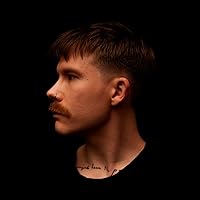
Henry Charles Bukowski (born as Heinrich Karl Bukowski) was a German-born American poet, novelist and short story writer. His writing was influenced by the social, cultural and economic ambience of his home city of Los Angeles.It is marked by an emphasis on the ordinary lives of poor Americans, the act of writing, alcohol, relationships with women and the drudgery of work. Bukowski wrote thousands of poems, hundreds of short stories and six novels, eventually publishing over sixty books
Charles Bukowski was the only child of an American soldier and a German mother. At the age of three, he came with his family to the United States and grew up in Los Angeles. He attended Los Angeles City College from 1939 to 1941, then left school and moved to New York City to become a writer. His lack of publishing success at this time caused him to give up writing in 1946 and spurred a ten-year stint of heavy drinking. After he developed a bleeding ulcer, he decided to take up writing again. He worked a wide range of jobs to support his writing, including dishwasher, truck driver and loader, mail carrier, guard, gas station attendant, stock boy, warehouse worker, shipping clerk, post office clerk, parking lot attendant, Red Cross orderly, and elevator operator. He also worked in a dog biscuit factory, a slaughterhouse, a cake and cookie factory, and he hung posters in New York City subways.
Bukowski published his first story when he was twenty-four and began writing poetry at the age of thirty-five. His first book of poetry was published in 1959; he went on to publish more than forty-five books of poetry and prose, including Pulp (1994), Screams from the Balcony (1993), and The Last Night of the Earth Poems (1992).
He died of leukemia in San Pedro on March 9, 1994.
This is the first poetry book of Bukowski's I've read and am glad I read novels first then moved to the poetry.. However, I was blown away by how much I enjoyed this book. I marked hundreds of pages so I can go back and read again, and again. He makes me want to drink wine, chain smoke cigarettes, and read poetry all night. Renewed my love of Bukowski and poetry.
i bought this book after I moved back to Michigan in 1995 with only a couple hundred bucks to my name and a rusted olds omega, it changed my life in a not so profound way, showed me the literary light that I had already been chasing but made it so much clearer, if that makes sense and is not too heavy handed.
Some needles in a hay, my personal experience with Bukowski's poetry —predictable outcome, since good old Hank used to write ~10 poems a day, which was okay because he didn't intend to write masterpieces (yet he talked here and there about inmortal poems, but even that can and cannot be seen as a contradiction, depending on the goal you impose to your art, which in the case of Bukowski was not highly aesthetic but to the core poetry [which makes me think of Daniel Johnston's music, which I highly respect and enjoy], and some indeed have made it quite well and can be considered as inmortal, namely the famous Bluebird]) but casual everydayman poetry [yet highbrow in literary and musical taste, but, nonetheless, mundane in its style, working class themes and pleasures to balance well enough].
It is only an auctioneer who can equally and impartially admire all schools of art. (Oscar Wilde)
I quote (the always so very quotable) Wilde to defend myself (more poets today reverence Buk than Baudelaire, which is only normal 'cause all of us have imitated the former in high school [keep on doing it in adulthood, when Bukowski himself hated shallowers, is the big, and sickening, problem of a lot of talentless barnacles who don't acknowledge the anxiety of the influence to either stop writing completely or overcome it and create something of their own] and no one, finished the 19th century, has ever dared trying to imitate the latter —not just harder but impossible]), meaning that I prefer poets such as Baudelaire, who polished the same poems over and over again for a decade, like a marble block worked by Michelangelo, over Bukowski dropping poems like Pollock dropped painting (revolutionary at his time and highly influentional since then, but just not my favourite thing, unless in NeXTmodernism, where I take it to the extreme, writing a book in an hour [Wish You Were Here], but even that is a paradoxically reactionary defense mechanism to not only prove a point but something to myself —that, if I want to, I can be as stupidly and trendily modern as any average Joe, and even more, 'cause, no matter how much I try, I was lucky in the gene lottery [and culture too, not just because of being half Spaniard and half French but my uncle showing me amazing music since I was a kiddo] and cannot be mediocre no matter how badly I try).
Bukowski loved César Vallejo... but even César, so vanguardist in Trilce, polished it as much as Eliot polished The Waste Land, but, because the lines in Trilce, unlike Eliot's, run free, the craft behind it is harder to spot, but Vallejo himself talked about him getting rid of everything which made the poem narrative-like and, in a letter to a friend, said: ¡Dios sabe cuánto he sufrido para que el ritmo no traspasara esa libertad y cayera en libertinaje! God knows how much I've suffered in order for the rhythm to not overstep freedom and fall into debauchery!
War All the Time is one of Bukowski’s later collections, bringing together poems from 1981–1984 in a fascinating collection that actually breaks some of the trends that Bukowski had set during his earlier work. He’s mellower, but he’s also more preoccupied with death, and while he still races the horses, he’s slightly less of a womaniser.
If you’ve ever read Bukowski before then you know roughly what to expect here, although it’s worth noting that a few of the poems also play with prose and one of them is a long piece with multiple different sections. Some of them are the other way round, super short and to the point, but they’re delivered in Bukowski’s typical simplistic but effective style. It’s really remarkable how much of a punch he was able to pack, and Bukowski got better and better at that towards the end of his life.
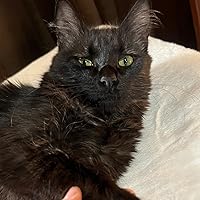
Still, this isn’t my favourite Bukowski collection, but it’s still a pretty good book regardless. It’s particularly interesting to see him reflect upon the writers that have lived and died in his lifetime, as well as on lost loves and the various unpleasant things that happened to him. There are also some poems about cats, but they’re not particularly cheerful. Still, I could relate to them a lot because I have a cat too.
All in all, this is a pretty typical Bukowski collection and it was exactly what I was hoping for when I picked it up. I recommend reading some of his work if you get a chance, and this is a decent place to start. Enjoy.
From what I can tell Bukowski produced three mediocre books of poetry in the 1980s: Dangling in the Tournefortia, You Get So Alone at Times That It Just Makes Sense and this one. What I liked best about this collection was the trio of poems written for his cats ("The History of a Tough Motherfucker," "Terminology," "One For the Old Boy"). Another poem I liked a lot was "Krutz," about his German publisher. And "Eulogy To A Hell Of A Dame" is the obligatory Jane poem. Others that had some spark to them: "Some Of My Readers," "The Troops," "Space Creatures," "The Famous Writer," "A Strange Moment," and "Big John of Echo Park." "How Do They Get Your Number?" starts out brilliant and beautiful, but ends in a Bukowski cliche, making it my least favorite of this collection. He had something really good going and then he ruined it with the usual telephone-call-from-a-fan routine. Blah.
I found this collection terribly easy to read, except for the fact that I kept wanting to stop and mark my favorites to make them easier to find in the future. (I had quite a few "favorites.") Bukowski's writing is funny, weary, hardened, and terribly poignant. He alternates without warning between gruff and heartbreaking and takes the reader for an emotional ride.
Holden Caulfield said, "What really knocks me out is a book that, when you're all done reading it, you wish the author that wrote it was a terrific friend of yours and you could call him up on the phone whenever you felt like it." I loved this idea when I first read The Catcher in the Rye. I don't feel like that often, though. And actually, in Bukowski's case, I'm pretty sure I *wouldn't* like him much if I were in the same room as him...but I sure as hell enjoy reading about him and what he's doing, probably because his poems also include his reactions to the world around him. He writes like he can't help but write, and I appreciate that. Now I've gotta check out some of his prose...
For me poetry is about leverage, telling as much as possible with as few words as possible. Bukowski is a master at this. I'm a great admirer of the work despite the fact that the person seems to have been utterly revolting.
I’ve read tons of Bukowski poetry collections and this one was really just ok. He was a bit softer in this one. The best one in my opinion is Last Night Of The Earth Poems which is also his final collection published before he died. I can’t really recommend this one unless you’re Bukowski obsessed or otherwise some sort of completionist.
“I can only think that the death of good people and bad are equally sad”
I pretty much knew what I’m going to get when I decided to go for a Bukowski’s book; what a drunk, dirty old man but still there’s something hidden in his poems that makes me not mind picking another one of his works..
“I sit above the ice rink where the children skate in the afternoon, mostly young girls dressed in blues, reds, whites, greens, purples, yellows, orange they are all very good, swift, they spin and glide, there are no collisions. even the tiniest child very good, all tiny, larger and largest— whirl through the open spaces as if they were one. I like it, very much, but then I think as they get older they will stop skating, they will stop singing, painting, dancing, their interests will shift to survival.”
I understand why some people don't like Bukowski, I really do. He's a dirty old man, with filthy thoughts and a bad mouth. But he is unapologetically so and that's what I like. He makes any subject matter seem worth writing about. This the third Bukowski collection I've read this year, besides feeling like I've read sections of an autobiography, a result of this Bukowski marathon has been more fluid poetry, more care free writing, more ..."fuck it" and it feels pretty good.
The stand out poems for me are trapped in the centre of the collection, some of the metaphors he uses to describe death, his dying friend and life in between are profound and touching.
Ultimately though, it made me realise Bukowski with his wifes and ex wifes, his mangled cat and horse gambling that he was searching for something, trying to fill a void of some sort. I guess our sins are always worth writing about.
I have LIVED the trope of the young man smoking cigarettes and drinking too much while writing poetry about bleary nights and hungover mornings. My friend Dave wrote a whole chapbook of poetry like this, some of it pretty good.
I say this because reading Bukowski's poetry for the first time in a stretch is like a cold beer on a summer patio—it's refreshing and rejuvenating. Of course, there's problematic shit here, but he owns it and frankly, it's nice to read someone fully leaning into their history and issues with acidic wit and good humour. I'm a big fan of the race-track poems, there's a 30-page monster in this book. If you haven't dipped back into Bukowski for a while, he rings in a different way but is just as enjoyable in later decades.
My favorite poems:
"now" p. 248 "the star" p. 147 "result" p. 156 "beauti-ful" p. 173 "Horsemeet" p.36
I find it annoying you can't do half stars on Goodreads, because I'd put this as 4.5 rather than 4 if I could. This is the first time I've read Bukowski's poetry (and only the novel, Pulp, before it), but cumulatively these shards of life are entertaining, thoughtful, often quite brilliant (particularly where the final few lines encapsulate everything that has gone before with a pithy certainty), and strangely life-confirming as well as life-condemning. Highly recommended, particularly for non-poetry lovers, only the number of horse racing poems in here stopping me from giving it 5 stars as I didn't feel that as an outsider I was drawn into that world.
As a fan of Bukowski's novels (Ham on Rye, Post Office) I wasn't let down with my expectation of a gritty poetry experience. I was hoping that there might be some sort of love poem in there that I could use as a reading in my wedding, but just when I thought I had found a suitable one he would start talking about ass play and how much of a slut the woman was. Oh well. I bought the book because of his poem "Oh Yes", one of my favorites of his.
Oh Yes
"there are worse things than being alone but it often takes decades to realize this and most often when you do it's too late and there's nothing worse than too late"
You pretty much know what you're going to get when you pick up a book of Bukowski poetry, but this one remains one of my favorites due mostly to standouts like "the miracle is the shortest time," "the skaters," and "the history of a tough motherfucker," which was my introduction to Bukowski more than 20 years ago.
When things get tiresome or go sideways, in life or in writing, I go back to Bukowski. He defrags my brain and gets me on the right path again. This one is a damn good one that I'm now re-reading for the umpteenth time.
According to goodreads this is the 18th Bukowski book I've read, which is more books than I have read by any other author. I'm pretty impressed that I'm not sick of him. He still writes about the same old stuff; drinking, women, horseraces, cats, etc. But, he's always got a way of looking at real life that hits home. Luckily, I have plenty of Bukowski still to read.
pace is the essence ****************** as the mailman walked up the hill he laughed when he saw me. I laughed too. "yeah, Harry, I know: just an old man with a hose watering the parkway. you got me..."
those guys think it's got to be war all the time. I'm just taking a rest. when I finally press that red button they'll wish I was back watering the gladiolas.
I am in a sense, Bukowski-obsessed, ever since I dug up the treasure that is his writing. In every single way, I loved this collection. Only question I have after reading most of his work is: where to now?
this was exactly what i needed to sit with me through my insomnia. bukowski writes about sex, drinking while also thinking too much, and appreciating the life lessons cats give us, as if he were hanging out in my head.
ıslak, sıska, dehşet içinde kapıma geldi bir gece, onu içeri alıp besledim, bana güvenmeyi öğrendi, kaldı benimle bir arkadaşım park yerinden çıkarken onu ezinceye kadar, kediden arda kalanı veterinere götürdüm, “yaşayacağını sanmıyorum,” dedi veteriner, “yine de şu ilaçları ver… omurgası ezilmiş, ama yeni bir şey değil, önceden ezikmiş zaten, bir şekilde tamir olmuş, yaşasa bile asla yürüyemeyecek, şu röntgenlere bak, vurulmuş bu, mermiler hala içinde… bir zamanlar kuyruğu da varmış, birileri kesmiş... “
kediyi eve getirdim, sıcak bir yaz günüydü, son otuz yılın en sıcak günü, banyonun döşemesine koydum, su ve ilaç verdim, yemek yemiyordu, suya dokunmadı bile, parmağımı suya batırıp ağzını ıslattım, onunla konuştum, evden çıkmadım, zamanımın çoğunu banyoda onunla konuşarak geçirdim, onu usulca okşayarak, donuk mavi gözleriyle bana baktı ve birkaç gün sonra ön bacaklarıyla kendini öne doğru çekerek ilk kez hareket etti (arka bacakları çalışmıyordu) ve kum kutusunun içine girdi, olanaklı bir zaferin borazanları ötmüştü sanki banyoda ve kentte, o kediye bir yakınlık duydum - ben de kendimi kötü durumlarda bulmuştum, o kadar kötü değil belki, ama yeterince kötü…
bir sabah doğruldu, ayağa kalktı, sonra yığılıp bana baktı.
“başaracaksın,” dedim ona.
vazgeçmedi, kalkıp devriliyordu, sonunda birkaç adım atabildi, sarhoş gibiydi, arka bacakları hareket etmek istemiyordu, yine düştü, dinlendi, bir kez daha kalktı.
gerisini biliyorsunuz; şimdi her zamankinden daha iyi, şaşı ve neredeyse dişsiz, ama zerafeti geri geldi, gözlerindeki o bakış ise hiç kaybolmadı…
şimdi, bazı söyleşilerde, bana hayat ve edebiyat hakkında soru sorduklarında, hele sarhoşsam, şaşı, vurulmuş, ezilmiş ve kuyruksuz kedimi havaya kaldırıp, “bakın, bakın, şuna bakın!” diye bağırıyorum.
anlamıyorlar ama, “Celine’den büyük ölçüde etkilendiğinizi söylüyorsunuz,” gibi bir şey söylüyorlar.
I have read quite a few volumes of Charles Bukowski's poetry over the years and this is one of his strongest collections. If you are new to Bukowski, and casually pick up a copy of any of his books of poetry randomly off a bookstore bookshelf, I can guarantee you that if you have any appreciation for poetry at all, you will undoubtedly encounter some amazing poems, some immediately-forgettable poems and many mediocre poems which fall somewhere in between.
This volume, however, stands out - it contains a large number of powerful and impressive poems. It's only in the last 50 pages of the book that you start to see some signs of weaker poems, or what some might refer to as 'filler'.
I think it was Bukowski critic Russell Harrison who pointed to this book in particular as an example of how strong Bukowski became as a poet later on in his life, but it didn't start in the 1990s but here in the early 1980s. I think this volume gives the highly lauded Last Night of the Earth Poems a real run for its money. Which one is better? Well, if they were racehorses, it would be a photo finish.
I almost gave this volume 5 stars. This was a perfect volume to work through slowly. I took it with me on a recent holiday to Okinawa and the poems were at times hilarious, sometimes made me horny, at other times shocking and disgusting, but never ever dull, that's for sure.
Although I don't like how Bukowski took some cheap shots at other poets, like Creeley (his favorite bugbear), I DO understand, especially after reading this, why someone like Bukowski would not have time for more cerebral and subtle poetry like Creeley's.
This book is the work of a master and it is vastly underrated. It is an absolute must for all Buk fans and if you are new to Buk, it's not a bad place to start at all.
It took me about two years to read this collection. This is not because I found it challenging, but healing and therapeutic instead. Bukowski's poems are like little packets of anxiety balm that I sparingly used to get the down the road a time or two. I read this collection in a miserly manner because I did not want to use up all the new experiences from an author I enjoyed so much.
Come to find out that there is an overwhelming body of work that Bukowski left behind. A sorts of volumes of poems, short stories, and novels! And rereading my favorites from this collection has been a joy.
This is beyond comforting as a reader who finds beauty in the grotesque, community in the outskirts, comfort in vulnerability, and peace in our nasty nature.
I enjoyed that it had a different style and there were relatable nuances in it. Many criticize the content as sexist. I have to agree. My thought is if the book was written in current time I would feel differently, liking it less. It wasn't and does fairly represent the 80's from what I remember, and attempts to do so artistically. That in itself is worth considering. All the poems are good I think and worth a read for anyone who can take the context of western civilization and culture into consideration for the time the book was written.
So for the last little bit I have been returning to Bukowski for entertainment, distraction, and inspiration. He does not fail to do all three in War All the Time. Why then did I give it only four stars? Well that is because it is not until after the first hundred pages or so that Bukowski finds his beat and energy. Before this point the poems seem to languish in passionless lines. However the later poems rush with a rhythm of life and maintain a quick beat. All and all it is a good work... but the first few pages have to be mustered through,.
"Se oli syvää ja valoisa ja huumaavaa, lähellä hulluutta me nauroimme niin kovaa, sinun naurusi ja minun, muistan kun silmäsi huusivat sanoivat rakkaus, nyt kun muurit niin hiljaa siirtyvät."