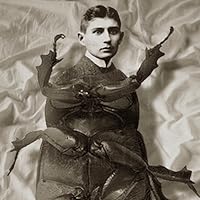
From one of the greatest writers of the twentieth century, the author of The Three stories he published in his lifetime, including his best-known tale, “The Metamorphosis.”I have only one request," Kafka wrote to his publisher Kurt Wolff in 1913. "'The Stoker,' 'The Metamorphosis,' and 'The Judgment' belong together, both inwardly and outwardly. There is an obvious connection among the three, and, even more important, a secret one, for which reason I would be reluctant to forego the chance of having them published together in a book, which might be called The Sons."
Franz Kafka was a German-speaking writer from Prague whose work became one of the foundations of modern literature, even though he published only a small part of his writing during his lifetime. Born into a middle-class Jewish family in Prague, then part of the Austro-Hungarian Empire, Kafka grew up amid German, Czech, and Jewish cultural influences that shaped his sense of displacement and linguistic precision. His difficult relationship with his authoritarian father left a lasting mark, fostering feelings of guilt, anxiety, and inadequacy that became central themes in his fiction and personal writings. Kafka studied law at the German University in Prague, earning a doctorate in 1906. He chose law for practical reasons rather than personal inclination, a compromise that troubled him throughout his life. After university, he worked for several insurance institutions, most notably the Workers Accident Insurance Institute for the Kingdom of Bohemia. His duties included assessing industrial accidents and drafting legal reports, work he carried out competently and responsibly. Nevertheless, Kafka regarded his professional life as an obstacle to his true vocation, and most of his writing was done at night or during periods of illness and leave. Kafka began publishing short prose pieces in his early adulthood, later collected in volumes such as Contemplation and A Country Doctor. These works attracted little attention at the time but already displayed the hallmarks of his mature style, including precise language, emotional restraint, and the application of calm logic to deeply unsettling situations. His major novels The Trial, The Castle, and Amerika were left unfinished and unpublished during his lifetime. They depict protagonists trapped within opaque systems of authority, facing accusations, rules, or hierarchies that remain unexplained and unreachable. Themes of alienation, guilt, bureaucracy, law, and punishment run throughout Kafka’s work. His characters often respond to absurd or terrifying circumstances with obedience or resignation, reflecting his own conflicted relationship with authority and obligation. Kafka’s prose avoids overt symbolism, yet his narratives function as powerful metaphors through structure, repetition, and tone. Ordinary environments gradually become nightmarish without losing their internal coherence. Kafka’s personal life was marked by emotional conflict, chronic self-doubt, and recurring illness. He formed intense but troubled romantic relationships, including engagements that he repeatedly broke off, fearing that marriage would interfere with his writing. His extensive correspondence and diaries reveal a relentless self-critic, deeply concerned with morality, spirituality, and the demands of artistic integrity. In his later years, Kafka’s health deteriorated due to tuberculosis, forcing him to withdraw from work and spend long periods in sanatoriums. Despite his illness, he continued writing when possible. He died young, leaving behind a large body of unpublished manuscripts. Before his death, he instructed his close friend Max Brod to destroy all of his remaining work. Brod ignored this request and instead edited and published Kafka’s novels, stories, and diaries, ensuring his posthumous reputation. The publication of Kafka’s work after his death established him as one of the most influential writers of the twentieth century. The term Kafkaesque entered common usage to describe situations marked by oppressive bureaucracy, absurd logic, and existential anxiety. His writing has been interpreted through existential, religious, psychological, and political perspectives, though Kafka himself resisted definitive meanings. His enduring power lies in his ability to articulate modern anxiety with clarity and restraint.
“My writing was all about you; all I did there, after all, was to bemoan what I could not bemoan upon your breast. It was an intentionally long and drawn-out leave-taking from you” (p. 150). This is what Kafka wrote to his father in 1919, five years before his death. There couldn’t be any better way to highlight this recurring motif: dysfunctional father and son relationships. And indeed, the three stories selected in this volume, “The Judgment”, “The Stoker”, and “The Metamorphosis”, epitomise everything Kafka felt about this specific and universal experience. So much so that the present volume could also have been titled The Fathers or Fathers and Sons.
In all three stories, the protagonists—Georg Bendemann, Karl Rossmann and Gregor Samsa—are thinly veiled alter egos of Franz Kafka. And all three young men have an incredibly complicated relationship with their fathers. In “The Judgment”, the father is a stout but crippled old man, borderline paranoid, who sentences his own son to death by drowning. Strangely enough, the son complies immediately, and we wonder if he does so out of submissiveness or sheer exasperation. In “The Stoker” (aka chapter one of Amerika) a young man, just banished by his own father, tries to help a stoker on a transatlantic ship to defend himself against an abusive boss; we don’t know what befalls the stoker in the end. Finally, in “The Metamorphosis”, Gregor Samsa is famously transformed into a monstrous parasite, and is the victim of his father and sister, who injure him physically, neglect him and are finally delighted about his death.
To top it all, this volume includes the “Letter to His Father”, an extended register of grievances Franz Kafka wrote to his own father, Hermann, at the age of 36, pointing out, with incredible rhetorical acumen, the varied flavours of abuse in his progenitor’s upbringing methods. Significantly enough, Kafka gave the letter to his mother, who never delivered it to its intended recipient.
Although these texts, considered separately, often seem polysemic and, in many ways, uncanny, assembling them in one volume does make several aspects come to the fore: firstly, the underlying and recurring archetype of the sacrificial son (Abraham and Isaac) in Kafka’s work. It also demonstrates how his style is infused with judicial elements (indictments, defence speeches, verdicts) and how fathers and sons are repeatedly portrayed as judges and accused, persecutors and victims. Lastly, these texts show how Kafka himself struggled all his life with a tyrannical paterfamilias, be it real or imagined, and vacillated endlessly between self-affirmation and self-renunciation.
The Sons is a collection of three short stories--"The Stoker," "The Metamorphosis," and "The Judgment." The three stories are thematically loosely connected by a strained father-son relationship. "The Stoker" and "The Judgment" to me feel underdeveloped and address the theme more broadly. "The Stoker" is the first chapter of Kafka's novel Amerika, so probably lacks more context to understand the character development of Karl Rossmann who travels to USA and meets the titular stoker. On the other hand, "The Judgment" is a short story Kafka wrote in a single sitting in a meditative state of mind reflecting happenings in his own personal life, so it's more fruitful to analyze it through a biographical perspective than as a literary fiction.
However, "The Metamorphosis" is the crown jewel and delivers a powerful message which heavily resonates with me. There are various interpretations, ranging from psychoanalytic, religious, sociological, or even as Nabokov excluding any symbolic or allegoric meanings. These are my thoughts.
"The Metamorphosis" begins with Gregor Samsa turning into a many-legged, xenomorphic creature. He treats it as mundane rather than shocking, feeling restless because he cannot start his ordinary workday. Over time, he adapts to his new body and situation. Despite despising his job and enduring a solitary, misunderstood life, he sacrifices himself as the family's sole provider.
Grete, Gregor's sister, takes responsibility for caring for Gregor, showing compassion and understanding the magnitude of the situation at first. Eventually, she grows distant as the burden overwhelms her, and ultimately dehumanizes him, prioritizing the family's dignity over her brother's welfare. Grete's transformation is opposite to Gregor's. As he loses the family's respect and becomes a source of shame, Grete gradually gains their approval. Hidden qualities emerge: she becomes confident, assertive, nurturing, and a provider. The family begins to rely on her, and her actions restore their dignity as Gregor is ostracized and dehumanized. By the end, she takes Gregor's place--this is seemingly cruel and backstabbing, but Grete is an adolescent carrying an immense burden without the help of her parents. There are limits to what any person, especially a young person, can endure.
The unnamed mother and father represent societal norms, prioritizing appearances and others' opinions, such as the clerk's view or the tenants' comfort. Gregor's relationship with them feels transactional, particularly with his father, who was always distant and uninterested in him. While his mother struggles between maternal love and disgust at Gregor's form, she too eventually alienates him. Ironically, Gregor's transformation and containment induces a positive change in the family's circumstances, as if he was the root of their problems.
Gregor's transformation into a vermin feels as if this nature was always latent within him, manifesting at this moment. His insect form symbolizes hidden truths and societal rejection of nonconformity, a fate always one step ahead. This mirrors real-world ostracism: pursuing an unconventional career, entertaining a forbidden love, or coming out as gay can lead to family rejection, even though the person remains the same--except a hidden truth was revealed.
Bugs are disgusting. Any deviation from societal norms can trigger similar reactions. Suddenly, we become bugs in the eyes of others. Gregor's parents did seemingly everything right, and yet they're burdened with this shame. This is often the case when a child digresses from the narrative; the shame becomes unbearable. I come from a narrow-minded country and I'm familiar with a plethora of tragic stories with destroyed lives because they didn't fit the narrative--reduced to bugs, and then crushed.
The sons \ Kafka (الٲبناء) ٲو (الٲسرة) لـ فرانز كافكا كافكا یكتب نفسه بٲربعة طرق مختلفة السرد و لكن بنفس المضمون، كافكا يترك كل شيء وراءه و يذهب، لكن ٳلی ٲين؟ سنعلم هذا لاحقاً. الكتاب يضم ٲربع قصص: الحكم، في عشر صفحات فقط، يخطف كافكا انفاس قارئيه، الشاب و والده في حجرته، تنشب بينهم محادثة، في البداية يجعلنا نتعاطف مع الوالد بصورة رهيبة، لكن في النهاية يقلب الطاولة رٲساً علی عقب. آخر مشهد في القصة يهز الٲبدان، فهو يقول "والداي العزيزان لطالما ٲحببتكما" و يترك نفسه يسقط من الجسر. ٭كنتُ قد قرٲت هذه القصة منذُ عام لكنني لم ٲقدر علی تكملة الكتاب، جرعاته كانت مضاعفة. الوقاد، قصة لن تُفهم من ٲول قراءة، مهما هاجر الفتی مسقط رٲسه فهو سيبقی ضحية ماضيه و ما فعله حتی لو كان رغماً عنه. المسخ، يا آلهي هذه القصة التي لن تُنتسی، من افظع ما قرٲت 👌 رسالة ٳلی الوالد، و ٲنا ٲقرٲ خطابه هذا، كنت ٲشعر بٲن كافكا يمسك بيدي و يضعه علی جرحه، و يقول ٲتشعرین بي ؟ 💔 "الحياة هي ٲكثر من لعبة صبر" 😓
این طور که در مقدمه ی کتاب اومده کافکا درسال 1913 نامه ای به ناشرش کورت ولف نوشت و ازش خواست تا سه داستان "داوری" ، " آتش انداز" و "مسخ " رو در یک جلد تحت نام پسران منتشر کنه چرا که اعتقاد داشته محتوای این سه داستان یک ارتباط مخفی با هم دارند که در ظاهر مخفی مونده. این خواسته در زمان خودش نادیده گرفته شد. کافکا اصلا نام آشنایی برای اهل ادب نبود و ولف هم کمی بعد به جبهه فرستاده شد. هفتاد و پنج سال بعد این خواسته ی کافکا با افزودن بخش چهارمی با نام " نامه به پدر" عملی شد
ارتباط رازآلودی که کافکا ازش حرف می زده بی شک ارتباط پدران و پسران داستان بوده . نامه به پدر که از سیاه ترین اتوبیوگرافی های ادبیاته، ارتباط فرانتس کافکا با پدرش رو به تصویر می کشه ، این که چطور به دلیل انتقادات، سرزنش ها ورفتارهای خشونت بارش همیشه از اون وحشت داشته ، هرگز نتونسته اون رو درک کنه و با رضایت به خواسته هاش تن بده. با خوندن این نامه هست که می فهمیم پدران زورگو و پسران مظلوم سه داستان اول از کجا جان گرفتند.
داستان آتش انداز قسمت دوم این کتابه و درواقع فصل اول کتاب امریکاست. کافکا بعدها این داستان رو ادامه داده و امریکا رو کامل کرده
A poignant book on the relationship between a son and his father. Kafka had a tough time with his dad. It is very emotional and highly realistic. Kafka cries and you can hear it.
A short but very profound story about different aspects:
1. The relationship between father and son.
2. How we change our emotions and thoughts quickly - we can go from empathy and generosity to anger, or from love to hate in a matter of seconds.
3. The guilt we carry from the most absurd things.
4. How each individual lives in their own world, with their own visions and selfishness.
5. The guilt that each one carries, however absurd it may be.
6. The verdict we impose on ourselves and others, by a constant judgment by our own references.
7. The place of power where we place ourselves over others - through social hierarchies (such as the relationship of father and son) and the ideas we develop, for example the supposed "pity" we feel for others, we constantly put ourselves above of others.
8. The different characters we create from ourselves that we show at work, in society and at home, in our intimacy.
9. The "well of vanity" that we are.
Around all of this, there are other issues constantly present in Kafka's stories: alienation, condemnation and absurd condemnation.
The narrative revolves around a character who becomes engaged and decides to tell his or her engagement to a friend who moved to another city and who is experiencing difficulties and who does not want to return to his hometown because of the shame of not having given in nothing in life.
The protagonist does not want to tell the friend of his engagement not to make him more unhappy. Georg works and lives with his father, a widowed and old man.
Most of the story takes place in a dark room, with the windows closed, in a conversation between the father and son about Georg's decision to tell his friend about his engagement and the speeches his father makes to him in the light of that event.
As in other stories, Kafka provokes to life the selfish proportions that defy and define the limits of itself: its horizon, its hopes, expectations, memories and depravations, reaching the end of itself: the absurd meaning.
_____
"Metamorphosis"
Although the central content of the action of "The Metamorphosis" is well known: that of a traveling salesman who wakes up transformed into an insect inside the room of the house where he lives with his family; this story bears itself on itself as provocative turns (to mention just some of the themes) about relationships, family, acceptance of differences, communication, prejudice, work, appearance.
What would be the first concern we would have when we were transformed into an insect? For Gregor Sansa, the protagonist, was thinking about his work !!! Yes, how could he not be late to catch the train, that he had never been absent from the firm, that he was an efficient worker who had received a promotion, what his bosses would think about his lack ... etc.
On the other hand, Gregor, who was the breadwinner, supported the house and his family (father, mother and sister) was considered a boy completely inserted in his family context, when he became an insect, he began to be misunderstood, to be put aside, to generate anger, contempt, to be only a weight to the coexistence - simply because it altered its physical form and it ceased to be functional that clan. Until he reaches the point, that his sister, who is his greatest advocate, changes his perspective and suggests that the family should get rid of him.
Gregor's transformation adds up to the impossibility of communication between him and his family; they can not communicate with the insect, nor Gregor with too much; though he understands what others are saying. The lack of dialogue practically increases the family tragedy practically irreversible.
This tragic and absurd irreversibility imposes perhaps the limit of life itself: irreparable death. During the narrative, we go some way, working our own hope: waiting for some kind of family reconciliation, a happy happy, something like that. But Kafka goes on to point out that perhaps beauty, or one of the great qualities of existence is its own discontinuous, within the continuous death-life.
To fit the family happiness, perhaps the most traditional still today, is to look good, have a good job and money. With this, one lives a horizon of happy future. Kafka provokes us by pointing out that under this smokescreen there is alienation and the tragedy of adequacy, as well as convenience.
Gregor discovers, for example, that if before his transformation, he considered his father a conformed, tedious, debt-laden household, but when reality changed, he hid in a safe deposit box that could support the family. That her mother, in spite of the regrets of her health, could also work; that his sister though had a gift for violin and music, could also get a good job; but everyone adjusted their lives on the back of Gregor who supported them financially and was even willing to pay a long music course to his sister - thinking that this would not be a debt but an investment.
This musical gift is noticed much more by Gregor than by all other members of the family and by people who are not part of the family clan.
As in much of Shakespeare's works, Kafka points out to us that life is absurd and that tragedy and comedy mingle and change rapidly. That the temporal shift to a happy future often does not have its own essence - perhaps we have ceased to exist until then. We die before, we cease to be - and as much as we know our limits, as Albert Camus reflects, beauty is precisely in this lack of meaning and in the awareness of our limitation and of ourselves.
Gregor at his end, still sees the window. Meditate on your condition: you still think like a human, despite having the form of an insect. And find serenity in an uncertain future. Redemption seems not to be in the acknowledgment of others about us - this is a complex and endless struggle; but it is in the wisdom of finding the possibilities we have, trying to understand who we are and giving a sense of quality to all of this.
________
"A Sentença"
Uma história curta, mas muito profunda sobre diferentes aspectos:
1. A relação entre pai e filho.
2. Como mudamos de emoção e de pensamentos rapidamente - podemos ir da empatia e da generosidade à raiva, ou do amor ao ódio em questão de segundos.
3. A culpa que carregamos das coisas mais absurdas.
4. Como cada indivíduo vive em seu próprio mundo, com suas próprias visões e egoísmo.
5. A culpa que cada um carrega, por mais absurda que ela seja.
6. O veredito que impomos à nós mesmos e aos outros, por um julgamento constante por nossas próprias referências.
7. O lugar de poder onde colocamos nós mesmos sobre os demais - através de hierarquias sociais (como a relação de pai e filho) e sobre as idéias que desenvolvemos, por exemplo a suposta "pena" que sentimos pelos outros, constantemente nos colocamos acima dos demais.
8. Os diferentes personagens que criamos de nós mesmos que mostramos no trabalho, na sociedade e em casa, na nossa intimidade.
9. O "poço de vaidade" que somos.
Em torno de tudo isso, há outras questões constantemente presentes nas histórias de Kafka: a alienação, a condenação e a condenação absurda.
A narrativa gira em torno de um personagem que torna-se noivo e decide contar ou não seu noivado a um amigo que mudou-se para outra cidade e que passa por dificuldades e que não quer retornar à sua cidade de origem pela vergonha de não ter dado certo em nada na vida.
O protagonista não quer contar ao amigo de seu noivado para não deixá-lo mais infeliz. Georg trabalha e mora com o pai, um homem viúvo e já velho.
A maior parte da história se passa dentro de um quarto escuro, com as janelas fechadas, numa conversa entre o pai e o filho sobre a decisão de Georg contar do noivado ao amigo e os discursos que o pai faz para ele em função desse acontecimento.
Como em outras histórias, Kafka provoca apontando à vida as proporções egoístas que desafiam e definem os limites dela mesma: seu horizonte, suas esperanças, expectativas, memórias e depravações, chegando ao fim dela mesma: o absurdo que se significa.
_____
"A Metamorfose"
Embora o conteúdo central da ação de "A Metamorfose" seja bastante conhecido: a de um caixeiro viajante que acorda transformado em um inseto no interior do quarto da casa onde mora com sua família; essa história carrega em si provocações que giram (para mencionar apenas sobre alguns dos temas) sobre os relacionamentos, a família, a aceitação das diferenças, comunicação, preconceito, trabalho, aparência.
Qual seria a primeira preocupação que teríamos ao nos ver transformados em um inseto? Para Gregor Sansa, o protagonista, foi pensar sobre seu trabalho!!! Sim: como faria para não se atrasar para pegar o trem, que nunca havia faltado na firma, que era um trabalhador eficiente que recebera uma promoção, o que seus chefes iriam pensar sobre sua falta...etc.
Por outro lado, Gregor que era o arrimo de família, sustentava a casa e seus familiares (pai, mãe e irmã) era considerado um rapaz completamente inserido em seu contexto familiar, ao se transformar em inseto, começa a ser mau compreendido, a ser posto de lado, a gerar raiva, desprezo, a ser apenas um peso à convivência - simplesmente porque alterou sua forma física e deixou de ser funcional aquele clã. Até chegar-se à um ponto, que sua irmã que é a maior defensora dele, muda de perspectiva e sugere que a família deveria se livrar dele.
À transformação de Gregor soma-se à impossibilidade da comunicação entre ele e seus familiares; eles não conseguem comunicar-se com o inseto, nem Gregor com demais; apesar de que ele compreende o que os outros falam. A falta de diálogo aumenta de forma praticamente irreversível a tragédia familiar.
Essa irreversibilidade trágica e absurda impõe talvez o limite da própria vida: a morte irremediável. Durante a narrativa, vamos de alguma forma, trabalhando a nossa própria esperança: aguardando algum tipo de reconciliação familiar, um feliz feliz, algo do tipo. Mas Kafka continua a apontar que talvez, a beleza, ou uma das grandes qualidades à existência é seu próprio descontínuo, dentro do contínuo morte - vida.
O adequar-se à felicidade familiar, talvez a mais tradicional ainda nos dias de hoje, seja a de se ter um boa aparência, um bom emprego e dinheiro. Com isso, vive-se um horizonte de futuro feliz. Kafka nos provoca apontando que sob essa cortina de fumaça, existe a alienação e a tragédia da adequação, como também a da comodidade.
Gregor descobre, por exemplo, que se antes de sua transformação, considerava seu pai um sujeito conformado, tedioso e que vivia em casa atolado em dívidas, mas que quando a realidade mudou, ele escondia dentro de um cofre economias que poderiam sustentar a família. Que sua mãe, apesar dos pesares de sua saúde, também poderia trabalhar; que sua irmã embora tivesse um dom para o violino e a música , também poderia conseguir um bom emprego; mas todos adequavam suas vidas nas costas de Gregor que sustentava financeiramente todos eles e inclusive estava disposto a pagar um curso longo de música para sua irmã - pensando que essa não seria um dívida e sim um investimento.
Esse dom musical é notado muito mais por Gregor do que por todos os demais membros da família e por pessoas que não fazem parte do clã familiar.
Como em grande parte das obras de Shakespeare, Kafka nos aponta que a vida é absurda e que a tragédia e a comédia misturam-se e transformam-se rapidamente. Que o deslocamento temporal para um futuro feliz muitas vezes não tem sua própria essência - talvez nós deixamos de existir até lá. Morremos antes, deixamos de ser - e por mais que saibamos de nossos limites, como Albert Camus reflete, a beleza está justamente nessa falta de sentido e na consciência de nossa limitação e a de nós mesmos.
Gregor em seu fim, ainda vê a janela. Medita em sua condição: ainda pensa como um humano, apesar de ter a forma de um inseto. E encontra serenidade em um futuro incerto. A redenção parece não estar no reconhecimento dos outros sobre nós - essa é uma luta complexa e sem fim; mas está na sabedoria de encontrar as possibilidades que temos, tentar entender o que somos e dar um sentido de qualidade a tudo isso.
yeah, i mean, there are some things in this particular stringing together of three specific kafka texts that work differently when complied than by themselves, in a general best-of book, or, as is the case with 'the stoker,' merely a chapter of a novel on its own. everyone knows metamorphosis. or should. and it's glory goes without saying. for whatever reason i hadn't read 'the judgement,' and i am glad i did. the same goes for 'the stoker.' however i had read the letter to his father a few times, and as addendum it works ok alongside the others, but it's kind of misleading as an inclusion, as, the reasons the other 3 stories work are the shared parts, skewed for each story. the hands, the windows, the doors and rooms, the on-lookers and their facial gesturing, of course familial interests, newspapers, desks... the back cover states kafka said these stories "belong together, both inwardly and outwardly," going on to discern these as obvious ones (which, i assume, are those i mentioned, as well as the symmetry such skillfully crafted in each in a way so great that, at least in my own opinion, he usurps even the symmetrical forms of dante), that there is some secret reason, which, who knows. and frankly, it doesn't matter. the secret is its relation to the individual reader, partitioned away from kafka and his persona/biographics. it is impossible to summarize the brilliance of kafka. it's been tried a bazillion times, and though each time the summation is fully correct and proper in defining kafka, it is not in defining kafka so much as defining the individual summarizer and kafka's work. he is just so intricate at each turn, moreso the more time one spends with his work. and that these individual stores, which are pillars of literature on their own accord, can be hinged upon one and other to, really, create a whole new work (if only in context, though, one could argue that a work becomes reborn with each contextualization) which is complete and adds dimensions to the already infinite ... blah blah blah. you get my point
It's amazing how Franz Kafka could write so well, even after translations. Having a book that isn't written in the original language is always risky, since some words will lose their meaning in the translating process. But these remained well written after their translations and I liked them a lot. The only problem I had was with "Letter to His Father". It seemed like every other person's stories about their fathers. All the angst-ridden teenage bullshit but with a better vocabulary. Seeing as how most of what he writes in it is the same stuff I've tried to convey about my own father, it was boring as hell. I never realized how many people complain about their fathers or father-figures, and in reading it I decided that when I complain about mine, I'll just paraphrase "Letter to His Father". That way I don't have to think too much about the subject.
All-in-all, I liked "The Sons" and I can't wait to get some more of Kafka's work.
I was curious about the "Schocken Kafka Library" and why it's association was unique compared with other Kafka publications. Here is a link to a very interesting little piece on the Schocken Kafka Library http://www.ideofact.com/archives/0001...
"The Schocken collection is the only collection of Jewish books which escaped the hands of the Nazi's."
"Quando Gregor Samsa, certa manhã, despertou na sua cama de sonhos intranquilos, descobriu-se metamorfoseado num monstruoso insecto." Escrita entre 17 de Novembro e 7 de Dezembro de 1912, A Metamorfose é uma obra central não só no universo de Kafka como também na história da literatura, tendo inspirado uma vasta legião de escritores. Numa entrevista concedida à revista Paris Review, Gabriel García Márquez revela deste modo o impacto que a leitura desta obra teve na sua vida: "One night a friend lent me a book of short stories by Franz Kafka. I went back to the pension where I was staying and began to read The Metamorphosis. The first line almost knocked me off the bed. I was so surprised. [...] When I read the line I thought to myself that I didn't know anyone was allowed to write things like that. If I had known, I would have started writing a long time ago. So I immediately started writing short stories."
A história de Gregor Samsa é simples. Trata-se de um caixeiro-viajante pobre, não particularmente satisfeito com o seu trabalho, mas que dele não pode prescindir para conseguir pagar as dívidas dos seus pais. O quotidiano de Gregor Samsa é marcado pelo "tormento das viagens, a preocupação com as ligações dos comboios, má comida e a más horas, um contacto humano sempre ocasional, passageiro e sem afecto." É durante uma breve estada na casa dos seus pais (cerca de uma semana) que o inimaginável acontece. Gregor Samsa - criatura de carne e osso - acorda e vê-se transformado num monstruoso insecto. A partir daqui, tanto o protagonista desta narrativa como o próprio leitor são irresistivelmente arrastado para o vórtice da bizarria. Perante o sucedido, Gregor Samsa persiste durante um período considerável na negação da realidade. "E se eu continuasse a dormir mais um bocado e esquecesse todas estas tolices", pensa o desafortunado Samsa. Enquanto tudo isto acontece, Samsa tenta fazer tudo como dantes. A primeira coisa que tenta fazer é sair da cama. Quando Samsa olha para o despertador e vê que são seis e meia da manhã, fica inquieto, dado que já não é possível chegar a tempo ao trabalho. Enquanto Gregor Samsa se debate com o seu novo corpo para sair da cama, a mãe bate à porta do quarto (porta essa que está fechada à chave) e diz: "Gregor, são sete menos um quarto. Não querias apanhar o comboio?" Gregor, claro está, sussurra a custo algo de absolutamente ininteligível, o que faz com que o mistério relativo ao seu estado se vá adensando. Os pedidos para que Gregor abra a porta do quarto multiplicam-se sem cessar. A mãe, o pai e a irmã imploram-lhe para que ele abra a porta. Sem sucesso. Nisto, o gerente da firma em que Gregor trabalha aparece em cena para obter uma explicação sobre o seu atraso. É a partir deste momento que a narrativa adquire uma atmosfera pesada, asfixiante e claustrofóbica. A viagem curtíssima mas demorada de Gregor Samsa desde a sua cama até à porta do quarto deixa-nos inquietos e incomodados, pois antecipamos claramente o horror que irá trespassar todos aqueles que esperam ansiosamente do lá de fora do quarto. Quando finalmente o monstruoso insecto roda a chave da fechadura e se mostra ao mundo, surge o pasmo, a repulsa, o medo e o terror, tudo isto em doses infinitas. Por fim, Gregor é empurrado violentamente para o interior do seu quarto e nele permanecerá quase sempre - existe apenas uma única excepção - até ao final da narrativa.
Assim que conhecemos o fim desta estranha novela, há uma pergunta que ecoa no nosso cérebro: "Como é que uma história tão obviamente impossível e irreal tem a capacidade de se apresentar à minha imaginação e sensibilidade de uma forma absolutamente verosímil?" É evidente que eu sei que nenhum ser humano é transformável num insecto, por isso pode parecer absurdo que eu me comova com uma situação que mais não é que uma invenção literária. No entanto, também é evidente que estamos perante um texto que não pode ser lido literalmente, sob pena de não compreendermos nada. Todas as obras de Kafka são profundamente alegóricas, incluindo A Metamorfose. Aliás, a razão pela qual nós aderimos tão facilmente ao desespero de Gregor Samsa prende-se com o facto de nós sabermos (ou intuirmos) que não é de uma transformação literal de um homem num insecto que Kafka quer falar, mas sim de outra coisa muito mais próxima do reino dos homens. A passagem de homem para insecto é uma metáfora que Kafka usa para explorar brilhantemente a condição humana, sendo graças a ela que se forma uma simbiose entre a narrativa e o leitor. Para o crítico americano George Steiner, pode ser lida em A Metamorfose uma espécie de profecia do Holocausto. Segundo ele, "Kafka retratou a redução do homem a um insecto atormentado. A metamorfose de Gregor Samsa, entendida por aqueles que primeiro ouviram a história como um sonho monstruoso, viria a ser o destino literal de milhões de seres humanos. A própria palavra para insectos, Ungeziefer, é um lance de trágica clarividência; foi assim que os nazis vieram a denominar as vítimas do gás." Na verdade, não podemos ter a certeza absoluta do significado desta obra. O universo literário de Franz Kafka encontra-se blindado à interpretação total, dada a miríade de significados de que a sua obra é feita. Contudo, podemos estar certos de uma coisa. Por mais obscuros e complexos que sejam os meios empregues pela literatura para descrever a "realidade" (para Nabokov, a palavra realidade é uma das poucas palavras que não significa nada sem aspas), é indesmentível que a literatura está sempre próxima do pulsar do mundo, da humanidade, da vida. Pelo menos, é o que sentimos ao lermos A Metamorfose.
Franz Kafka – The Sons The Sons is een bundel van vier nauw verwante teksten van Franz Kafka, geschreven tussen 1912 en 1919, waarin telkens een zoon centraal staat die gevangen zit in een asymmetrische machtsrelatie met vaderfiguren en autoriteit. De verhalen en de brief functioneren samen als variaties op één existentieel thema: de onmogelijkheid voor de zoon om zelfstandig, schuldloos of volwassen te worden.
A. The Judgment (1912) In The Sons opent Kafka met een extreem geconcentreerd vader-zoonconflict waarin oordeel belangrijker is dan waarheid. Georg Bendemann is een jonge zakenman die samenwoont met zijn oude vader. Hij schrijft een brief aan een jeugdvriend in Rusland waarin hij zijn verloving aankondigt. Voor hij de brief verstuurt, besluit hij zijn vader in te lichten — een ogenschijnlijk onschuldige handeling die ontspoort in een existentiële confrontatie. Wat begint als zorgzaamheid “je moet beter voor jezelf zorgen” slaat om in een nachtmerrie: de vader blijkt alles te weten, beschuldigt Georg van verraad, seksuele immoraliteit en arrogantie, en velt uiteindelijk een onherroepelijk oordeel: de dood door verdrinking.
Georg verzet zich niet. Hij gehoorzaamt volledig en springt van de brug.
Kernpunten Vaderfiguur = absolute, bijna goddelijke autoriteit Zoon = gehoorzaam, schuldgevoelens zonder concrete schuld De “rechtspraak” is irrationeel maar onweerstaanbaar
Sleutelcitaat “I sentence you now to death by drowning.”
B. The Stoker (1912) Waar The Judgment het oordeel toont, laat The Sons in The Stoker zien wat er gebeurt nadat de zoon al is veroordeeld. De zestienjarige Karl Rossmann wordt door zijn ouders naar Amerika gestuurd nadat hij zwanger is gemaakt door een dienstmeisje. Bij aankomst raakt hij zijn bagage kwijt en belandt hij in het scheepsruim bij een stoker, een woedende, gemarginaliseerde arbeider die zich onrechtvaardig behandeld voelt. Karl identificeert zich onmiddellijk met deze man en wil hem helpen tegen de autoriteiten van het schip. Net wanneer Karl lijkt te kiezen voor solidariteit met de onderdrukte, verschijnt zijn rijke oom, die hem “redt” — maar daarmee ook zijn autonomie wegneemt.
Kernpunten Ballingschap als straf Pseudo-vaders: stoker vs. oom Schijnbare redding = nieuwe afhankelijkheid
Sleutelcitaat “It didn’t matter to my parents what happened to me now.”
C. The Metamorphosis (1915) In het hart van The Sons staat het verhaal waarin de zoon zelf het probleem wordt. Gregor Samsa wordt wakker als een reusachtig insect. Zonder verbazing maakt hij zich vooral zorgen over zijn werk en het inkomen van zijn familie. Gaandeweg wordt hij steeds verder geïsoleerd: zijn ouders en zus schamen zich voor hem, mishandelen hem en sluiten hem op. Wanneer Gregor sterft, voelt het gezin opluchting. Ze gaan samen wandelen en maken plannen voor de toekomst.
Kernpunten Identiteit volledig herleid tot nut Familiebanden blijken conditioneel De “monstrositeit” zit niet in Gregor, maar in het gezin
Sleutelcitaat “He thought of his family with tenderness and love.”
D. Letter to His Father (1919) The Sons eindigt met Kafka’s meest expliciete tekst: geen fictie meer, maar analyse. Deze lange, nooit verstuurde brief is Kafka’s meest directe confrontatie met zijn vader. Hij beschrijft hoe diens tirannieke opvoeding hem klein hield, verlamde en tegelijkertijd afhankelijk maakte.
Kafka analyseert de fundamentele tegenstrijdigheid: hij moest zelfstandig worden, maar werd gestraft zodra hij dat probeerde.
Kernpunten Schuld zonder ontsnapping Vader als maatstaf van alles Onmogelijkheid van volwassenwording
Sleutelcitaat “I was crushed by the mere physical presence of my father.”
2. Overkoepelende thematiek (The Sons) Alle teksten draaien om de zoon die niet mag volwassen worden: De vader oordeelt (The Judgment) De zoon wordt verbannen (The Stoker) De zoon wordt nutteloos (The Metamorphosis) De zoon analyseert zijn ondergang (Letter to His Father)
Kafka toont geen rebellie, maar interne gehoorzaamheid. De zonen verzetten zich niet — ze internaliseren het oordeel. The Sons is geen bundel over opstand, maar over onmogelijkheden: onmogelijkheid van autonomie onmogelijkheid van gelijkwaardige liefde onmogelijkheid van ontsnappen aan familiale structuren De vader is geen individu, maar een systeem.
Kafka schrijft geen verhalen om te troosten, maar om bloot te leggen wat meestal onzichtbaar blijft: hoe macht werkt binnen liefde, en hoe gehoorzaamheid destructief kan zijn.
After hearing about Franz Kafka many times on the Internet, I was really intrigued to read about him,his characters and books. Curiously, I was searching for “Letter to his Father”,since I had a little idea about Kafka's strained relationship with his father. That's when I stumbled upon this collection of his three brilliant stories including “Letter to his Father”. And I must say,this was the best decision, because Kafka himself wanted that these three stories,namely,“The Judgment”,The Stoker” and “The Metamorphosis” should be published together as a collection because he said that there's a “secret conection” between them which was in regards to the common theme of father-son relationship,which is what Kafka's works are mostly based upon. Though the idea wasn't taken that seriously at first because of a various reasons that are mentioned in the Foreword of this book,it's years later that critiques and publishers have realised that Kafka was right about the secret connection and these stories are now published together.
This haunting trio - ‘The Judgement’, ‘The Stoker’ and ‘The Metamorphosis’ - feels less like a collection of short stories and more like one long scream into the void of fatherhood, belonging, and a desperate craving for approval. Each story centers a son, and each of these sons is crushed ; slowly, inevitably by the father figure in their life. The thread that connects them is,Kafka’s own soul, stitched into each page with trembling hands.
After reading these characters, I had the question that why Franz Kafka made them suffer so much,why did he crushed them slowly,so devastatingly and to answer that...at the end is “Letter to his Father”,which shows you why characters written by Kafka are tragic. It certainly won't be an exaggeration to say that what he suffered in his real life,his living reality was much more larger and heartbreaking than the emotions he invoked in his writings.
Much of Kafka's trauma shaped through his own self-loathing, without any guidance living in the loneliness he was pushed to the extent where he started questioning everything around him, everything about his own self,he was defeated even before doing anything..and such existential crisis is utterly devastating. No one can ever write about their own self the way Kafka did and it's both beautiful and saddening in the way he did it without even flinching in the slightest.🥺❤️🩹
If you want to understand the pain behind the words, read “Letter to His Father” first. If you want to understand how pain becomes fiction, read “The Sons.” ✨
this was a fascinating collection of kafka short stories connected by the common thread of sons being subject to their fathers demands at great cost. it also includes a letter that kafka wrote to his father detailing, from his perspective, a psychological portrait of him as a father and as a person.
while it def felt a bit invasive to read this, it did contextualize these short stories, but at the same time, i feel like it slightly lessened the impact of them, since it’s clear the source of the idea. it feels more challenging to interpret them from a different perspective knowing kafka at least partially wrote them as an allegory of his own relationship with his father.
still, i am drawn to his writing like a moth to flame, and i enjoy exploring the world through his eyes, even if that means horror, anxiety, isolation, and despair.
It's fucking KAFKA, guys! Of course it's five stars! This was probably the fourth time I've read "The Judgment" and the fifth time I've read "The Metamorphosis," stories that were "weird" when I was a teenager and that are now kind of shockingly relevant to... everything I see and feel. (I remember being in high school and first hearing about interpreting the latter story with a "Marxist" lens. "Preposterous!" young dweeb me thought. THE FUCKING THING MIGHT AS WELL BE CALLED "THE MARXIST LENS" ON LIFE, WORK, FAMILY, POWER, ETC.) This collection is rounded out with "The Stoker," which later became the first chapter of "Amerika," and the author's "Letter to His Father," fifty pages of shockingly frank criticisms of Kafka's dad, Kafka himself, etc. As long as people are reading books, this man will inspire cults.
This was a great collection of stories exploring the complex relationships between father and son. The Judgement stood out as a firm favourite of mine. The letter that Kafka wrote to his father at the end of the book was interesting to begin with, but I became disinterested after a while because it was wayyyyy too long. 4 stars.
Truly obsessed with Metamorphosis (my first time reading) and his letter to his father at the end knocked me on my feet (especially with regards to Judaism).