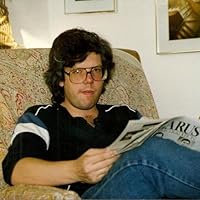
It's campy, it's cool, empty, intrusive, trite, and treacly. It's Big Brother singing. Call it what you will -- elevator music, Moodsong ® easy listening, or Muzak ®. For a musical genre that was supposed to offend no one, it has a lot of enemies. Musical cognoscenti decry its insipid content; regular folk -- if they notice -- bemoan its pervasiveness; while hipsters and campsters celebrate its retro chic. Mindful of the many voices, Joseph Lanza's Elevator Music sings seriously, with tongue in cheek, the praises of this venerable American institution. Lanza addresses the criticisms of elites who say that Muzak and its ilk are dehumanized, vapid, or cheesy. These reactions, he argues, are based more on cultural prejudices than honest musical appraisal. Says Lanza, today's so-called mood music is the inheritor of a long tradition of mood-altering music stretching back to the ancients; Nero's fiddle and the sirens of Odysseus being two famous examples. Contemporary atmospheric music, Lanza argues, not only serves the same purpose, it is also the inevitable background for our media-dominated age. One of Lanza's premises, to quote Mark Twain, is that this music is "better than it sounds." "This book will have succeeded in its purpose," he writes, "if I can help efface...the distinction between one person's elevator music and another's prized recording." Joseph Lanza is an author, producer, and music historian. His most recent book is Russ Columbo and the Crooner Mystique .
Joseph Lanza is the author of several books with subjects ranging from popular music to obsessive film directors, including ELEVATOR MUSIC: A SURREAL HISTORY OF MUZAK, EASY-LISTENING, AND OTHER MOODSONG (University of Michigan Press) and PHALLIC FRENZY: KEN RUSSELL & HIS FILMS (Chicago Review Press, 2007) -- a psycho-sexual, hyper-humorous, biographical thriller celebrating the great director. He recently appeared as himself in the 2011 BBC4 documentary: THE JOY OF EASY LISTENING.
He recently contributed the essay "Foreground Flatland" in the OXFORD HANDBOOK OF NEW AUDIOVISUAL AESTHETICS (2013) and the CD booklet essay for "RONNIE DOVE: The Complete Original Chart Hits (1964-1969)" from Real Gone Music (2014).
His forthcoming book is entitled, THE TEXAS CHAIN SAW MASSACRE AND ITS TERRIFYING TIMES, from Skyhorse Publishing -- scheduled for release in mid-January 2019.
Reading ELEVATOR MUSIC has the same effect on me as actually listening to Muzak or an easy listening music station on the radio. It's a very relaxing, calm read which, considering the state of the world as of March 2020 (if you're reading this in the future and don't understand, look up COVID-19), is an essential balm to my heart and soul. There's a lot of name and brand dropping which is very off-putting as someone not very deep into the history of Muzak, and it's not done in a very beginner friendly way. But there are a lot of interesting stories and is an overall good introduction to the world of chill elevator music.
Also, I would hope that if this book was ever revised and re-released for newer trends in Muzak, they would delve into the popular YouTube music genre that is lo-fi hip-hop and chillhop; I would love to read an oral history behind the rise of anime girls wearing headphones while studying to SoulChef and L'indecis.
Any book that could make me reconsider the qualities of Mantovani or the 101 Strings records I have passed by thousands of times in the dollar bins certainly has my attention. In this book Joseph Lanza takes perhaps the most widely loved and hated subgenre of all time (even moreso than country music) and makes the case for it as real art and music with a purpose. His central premise deals with how music affects its listeners, and how artists throughout the course of history have tried to use music as a means to alter people's moods. This mood-altering affect mixed with the technological advances that allows for piped-in or "canned" music to be played in public places as unobtrusive but pleasant soundtracking of people's lives is discussed as well as the ensuing controversy and dismissal of the art form.
My journey to enjoying what is called "easy-listening" or "lounge" music in record store terms basically started with finding out how much stuff I liked already fit in that category (soundtracks, light jazz, classical), and then discovering the more zany strands of Tijuana brass albums, Space Age Bachelor Pad music and exotica. However, moodsong and string albums still remained fairly uninteresting to me until I realized how much I liked the Jackie Gleason albums I would find while digging. These led me to reconsider how well these albums can soundtrack schoolwork, reading, internet surfing, dinner, and more. I was also surprised to discover that many of these albums that I initially struggled to understand the appeal of were meant to be lovemaking soundtracks for the Greatest Generation (ie Mystic Moods Orchestra, Jackie Gleason, etc). As Jackie Gleason supposedly said, if Clark Gable needs a soundtrack for his love scenes in movies, then shouldn't a regular guy in the Bronx need one?
This is definitely where the rubber meets the road if you're the type of person who genuinely claims that you listen to "all kinds of music." "Elevator" music is such a punchline that even bringing it up usually makes anyone squirm even though there's actually not much music in elevators these days. I say read this book, and next time someone claims to like all music give them a clue that Muzak and moodsong is actually much better than they give credit for. It sure works as a way to relax after a long day at the office, which is why it was created in the first place.
Ultimately Lanza's argument surrounding the aesthetic and cultural worth of Muzak in its original form (that is, soft instrumental compositions or arrangements of popular songs heard in public spaces via a distant selector/curator) is understandable and interesting to hear -- as is his vision towards the proliferation of vaporwave. Just wish I didn't have to wade through an almost unbearably long tangent on mood music composers / hi-fi listening made for the home / the construction of easy listening as a genre, smack in the middle of the book to get there. The majority of the book otherwise covers programmed music in public spaces, Muzak as a company, etc. Easy listening as genre is brought up again in a brief chapter regarding New Age/space music -- the length spent on Vangelis and Hearts of Space is about as much as should be covered on Jackie Gleason, Martin Denny, etc in a book centered on the listening experience outside of the home as a means for shifting affect.
Pretty entertaining romp through the history of music made strictly for the purpose of alteration of mood. Starts with the 19th century's answer to Brian Eno, Erik Satie, and traces his influences through the birth of Muzak, the development of mood-altering music as home appliance, and an interesting discussion of fairly recently developments in the field.
Joseph Lanza has written a very important cultural history book - the history of background music or the music you don't listen to while waiting in a store, subway station, etc. In other words Muzak. Who makes this stuff? Why?? And is it even an art? Great book!
For a Music and Technology class. It helps to broaden one's definition of music; it gave me a nice slice of humble pie. My definition of art, and aesthetics was challenged, and once again I must work to redefine my personal definitions. sigh.
Very good and useful book which could be even better if Lanza (author of great Ken Russel book btw) really did like most of the music he writes about. He doesn't hate it too so overall the feeling is kinda meh. And why is this history called surreal exactly? So many questions.
A revelation of a book, with a loving look at the history of a musical genre that's often denegrated.
Elevator music, or mood music, goes back before the iconic company Muzak. Light classical and similar songs have been around for a while, sometimes as background, sometimes as motivator.
Mantovani, Percy Faith, the 101 Strings - they all follow one another throughout the years, and the book ends with Zamfir, Yanni and other New Age artists.
This book is almost 30 years old, so it's missing a lot of developments since then. There is an update that makes it only 20 years old - I think I'll have to seek it out.
Some interesting stuff here about the evolution of muzak. But as mentioned by a previous reviewer the middle of the book gets bogged down in descriptions and biographies of mood music composers and lps. A few errors in the book too : Mertropolis was released in 1927 not 1919. And Olivia Newton John’s song Magic is incorrectly named as We Are Magic.
The social manipulation part of this story is interesting, but like the music it chronicles, the book began to bore me about halfway through. I don’t have an abiding interest in the people that were responsible for easy listening music, so their mini biographies and accomplishments were not engaging.
An amazing and rather captivating introduction to the world of easy-listening and mood music. Despite being a fan of the genre, I still learned a lot about its roots and references. Great reading.
Extensive look into the field of Muzak, a world much broader & developed than one might assume. The insight into the philosophy & workings behind this 'background music' are fascinating, some of the details on individuals and their releases not so much. The book tends to drag a bit in the middle but the conceptual analysis and descriptions of Muzak's impact make it worthwhile.
(Re-read.) A wonderfully wide-eyed, contrarian view of a world populated by the constant din of background music, tracking its theoretical, cultural and corporate histories with wit, amusement and a surprising amount of respect and reverence. This book was a huge influence on me as a teenager, leading among other things to my purchase of Brian Eno's Music for Airports plus a lifelong affinity for "Beautiful Music" and kitsch vinyl, and the parallels it draws between Muzak and the then-current trend of New Age can easily be extrapolated into today's widespread appetite for ambient, chillout, etc. Luckily it appears that Lanza has revisited the subject quite recently, but this deeply engaging study and celebration will always hold a storied place on my shelf.
The topic of background music is really interesting, and it was fascinating to read about its early history. But at roughly the halfway point, it simply got boring. It’s an endless list of people making more and more background music, and I really didn’t need to know about every single one of them. The book came out in the early 90s, and the way we consume music has changed dramatically since then. An updated version tracing the history from then to now would make this much more interesting. But as it is, the first third or so is really interesting, but then it begins to drag. Still worth it for the early history, though.
This book definitely addresses a gap in musicology.
Positive: The author understands the forms involved. He gets industry participants to talk. He gets behind the song selection, arrangement, delivery, performance, and production techniques and scientific rationale of mood/elevator/Muzak music. Excellent discography.
Negative: Book could use better editing. A chapter on the Nineties-centered mood music revival would have been nice, although one can guess the author's take on this sort of Muzak for hipsters by reading between the lines.