Jump to ratings and reviews
Rate this book

William Marshal #2

The Greatest Knight

Rate this book
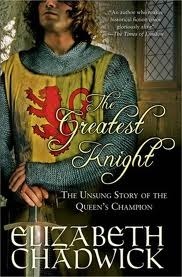
THE NEW YORK TIMES AND USA TODAY BESTSELLER! "The best writer of medieval fiction currently around."— Historical Novels Review Royal protector. Loyal servant. Forgotten hero. 12th century, A penniless young knight with few prospects, William Marshal is plucked from obscurity when he saves the life of Henry II's formidable queen, Eleanor of Aquitaine. In gratitude, she appoints him tutor to the heir to the throne, the volatile and fickle Prince Henry. But being a royal favorite brings its share of danger and jealousy as well as fame and reward. A writer of uncommon historical integrity and accuracy, Elizabeth Chadwick resurrects the true story of one of England's greatest forgotten heroes in a captivating blend of fact and fiction. The Greatest Knight restores William Marshal to his rightful place at the pinnacle of the British Middle Ages, reflecting through him the triumphs, scandals, and power struggles that haven't changed in eight hundred years. Fans of Phillipa Gregory, Susanna Kearsley, or Diana Gabaldon are sure to recognize The Greatest Knight as exceptional historical fiction, bringing medieval Britain to brilliant life. More Novels of Elizabeth Chadwick's William The Greatest Knight The Scarlet Lion For the King's Favor Templar Silks To Defy a King

562 pages, Kindle Edition

First published November 3, 2005

580 people are currently reading
9352 people want to read

About the author

Elizabeth Chadwick

48 books3,257 followers
Best selling historical novelist Elizabeth Chadwick won a Betty Trask Award for her first novel The Wild Hunt. She has been shortlisted for the UK's mainstream Best Romantic Novel of the Year Award 4 times and longlisted twice. Her novel The Scarlet Lion about the great William Marshal and his wife Isabelle de Clare, has been selected by Richard Lee, founder of the Historical Novel Society as one of the landmark historical novels of the last ten years.
When not at her desk, she can be found taking long walks with the dog, baking cakes, reading books (of course!) exploring ruins, listening to various brands of rock and metal music, and occasionally slaving over a steaming cauldron with re-enactment society Regia Anglorum.

Ratings & Reviews

What do you think?
Rate this book

Friends & Following

Create a free account to discover what your friends think of this book!

Community Reviews

5 stars
4,051 (41%)
4 stars
3,658 (37%)
3 stars
1,611 (16%)
2 stars
366 (3%)
1 star
115 (1%)
Displaying 1 - 30 of 783 reviews
Profile Image for Lizzy.
305 reviews159 followers
October 16, 2024
"Fight for your lord, fight for his honour, but never forget that you were fighting for yourself too."
The Greatest Knight is one of the best historical fiction books I’ve ever read. After reading about Eleanor of Aquitaine in the more recent Elizabeth Chadwick’s The Summer Queen, I felt like going back not only to revisit the older Eleanor, but also to meet such a perfect hero.

We get to know William Marshall, a figure that could be envisioned as the ideal medieval knight. Chadwick tells the story of a hero, that using chance and opportunity, rose from a penniless and landless second son to serve four kings: King Henry II, Henry the Young King, Richard the Lionheart and the infamous King John.

Perhaps Marshall’s job could have been easier if he had served less conflicted and disagreeable masters than were Henry II and Eleanor’s offspring. We travel from England to France and back, crusade to Jerusalem and travel through tourney fields, but especially we meet a figure that was above all loyal to those he pledged his fealty, even in the face of near certain peril. Those characterists might have assured, having lived in a dangerous world of politics, that he would become one of the most powerful in the realm and eventually regent of England.

Chadwick writes extremely well, with the right amount of drama, glamour and tragedy. Her account of a meeting of Marshall with Queen Eleanor, while visitng her at Winchester, illustrates how the author is able to make us feel all the nuances of such a moment while they talk about marriage, love and trust:

“I hope to make a good match, madam… I may not look like a bargain at the moment, but rest and polish will rectify some of the damage…”
Eleanor expression softened. “I do believe you are smitten.” She teased.
William chuckled. “That would not be difficult, madam. The girl is eighteen years old and beautiful. What will she think of a grizzled old warhorse like me is another matter.”
Eleanor laughed. “Either you are shamelessly angling for praise or you not see yourself as women do.” She reached a beringed hand to touch the sides of the face: “You wear more years than I first took you into my service, but you were still a boy then, and time has wrought experience, not lines. Isabelle de Clare will have no cause to complain of this match.” …
“I trust you still have your singing voice?” Eleanor enquired.
He gave her a puzzled look. “I do not know, madam. It has been so long since there has been anything to sing about, and I have been too busy.”
“If you are to take a bride, I suggest you find it again.” Eleanor’s smile wavered. “Neither of my husbands could sing. Who knows what might have been different if either of them had bothered to learn?” She let out a shaky breath and looked down at her hands. “You may find it strange,” she said, “but even after what has happened, I mourn for Henry. There was a time when it was very sweet between us. Even all the bitterness that came afterwards cannot alter those memories. And he gave me children… He said that they were all mine except for John, but he was wrong. Even John belongs to me… He didn’t trust me. Every minute of every day I was watched, if not by his guards then by his spies.” She sighed and made a weary gesture. “William, if you are going to love your wife, and have her love you, then take some advice from one who has lived with it and without it and knows its price and value.”
“Madam?”
“Isabelle de Clare is an heiress. Remember that the lands you rule are hers and that she might desire to have a say in what you do with them. Take her with you when you can and your deputy when you cannot, and never give her cause to resent you, because she will have the raise of your sons and daughters.”
“I will do my best,” he said.
“You may think me an interfering old woman, but I have your interest at heart since I took you into my service.”

After that little glimpse into the book, you might understand why I could not give it less than 5 solid stars! I highly recommend not only the Greatest Knight, but the whole magnificent William Marshall’s Saga.
Profile Image for Michelle, the Bookshelf Stalker.
596 reviews406 followers
January 23, 2011
I started this in the evening and never stopped reading. Chadwick's writing is like a history peep show and I love it. Ok, so William Marshal is larger than life, basically a saint and annoyingly ethical in a sea of scumbags, but I still love him. I seem to have a thing for these men in history that are nice guys but still can kick your ass!
Profile Image for Stephanie.
355 reviews9 followers
May 16, 2011
I am not usually into medieval fiction, or historical fiction much at all, but this was really good! That is one thing I love about GoodReads; I find new and wonderful books that I would never have picked for myself.

This story is based on the life of a forgotten hero, William Marshal, the knight selected by Eleanor of Acquitaine to train her sons in horsemanship and chivalry. While Eleanor's sons might not have turned out that great, it wasn't any fault of William Marshal's. He was amazing! Most of the story is based on fact with some of the gray areas filled in by the author. There was not much information on his Crusade to Jerusalem, except for the fact that he carried Henry the Young King's cloak to pay hommage and make amends after the robbing of a monastery to provide money for Henry's battle with his father. His marriage to Isabelle de Clare and their subsequent involvement in King Richard's battle with his brother John is all well-documented. Throughout the story, William's integrity, loyalty and stolid support for the Plantagenet family keeps him busy going from one battle to the next. When he decides to marry and start a family, his life is still dictated by the whim of the court and who will get him to support them in their quest for the title of King of England.

There is a second book about William Marshal called "The Scarlet Lion" which follows William and Isabelle after they leave England for Ireland. I will be reading that too, and probably looking for more from Elizabeth Chadwick.
Profile Image for Krista.
259 reviews34 followers
November 2, 2021
Note: I am re-posting this review I did last year in honor of William Marshal, who celebrated his 797th death anniversary last May 14th (I remembered just now, sorry). He was my first ever medieval crush, many thanks to this book! :) The Greatest Knight is also one of my first historical fiction reads, and I super enjoyed this tour to the olden times that I never stopped reading anything under this genre since then. :)

-------------------------------

Before this read, I have never heard of William Marshal, a 12th-century personality. I have not known about the life and exploits of ‘the greatest knight that ever lived.’ I admit not being well-versed about feudal Europe, courtly knights, or monarchical politics; my knowledge about the Middle Ages is usually limited to fictional books set in that period and medieval-themed films or TV shows that boast of elaborate costume display and scenic country landscapes, and I know that they don’t always count as credible sources of information.

So, hearing about William Marshal through this book (albeit in the same fictional fashion) has given me an introduction to his remarkable life story and how from being landless—which I learned is a younger son’s usual fate in his time—he became one of the richest and most powerful men in their kingdom. His autobiography could rival that of our modern-day telenovelas—a young crown hostage and penniless nobleman who eventually grew up to be an indisputable tourney champion, skilled courtier, honorable knight, loyal crown aide, and brilliant military strategist. Historical accounts also noted that his marriage to wealthy heiress Isabelle de Clare appeared to have been a happy one and that he treated his wife as his helpmate and equal. Not the usual perspective of men in his time, which made William Marshal even more agreeable for me!

Then, there is Elizabeth Chadwick’s capable writing style. She has given me a historical excursion with her descriptive narrative of events in William Marshal's time. It felt like I was exactly there in medieval Europe either as a silent spectator in tourney jousts or a peasant looking impressed as brave knights paraded in the street. I may have probably said a line or two to the great William Marshal, or even served him wine (or ale)! As a reader, I enjoy this feeling of immersion; the book being so compelling it was like seeing William Marshal in the flesh, hearing his actual voice, or knowing what stirs his passion. As a history aficionado, I admire the author’s vivid portrayal of historical events and places and even the mundane lives of both the nobility and ordinary people.

With Chadwick’s ability to transport me back to the past, who needs standing stones or time machines? (Okay, so maybe I might need those standing stones for Outlander’s Jamie Fraser after all, but this is another story.)

I truly enjoyed this read despite the drama, feudalism, and too much politics in William Marshal’s time. It is nice to read people from ages past come back to life in contemporary print, and I think Elizabeth Chadwick excels in exploiting this field. I have never read a lot of historical fiction materials or known a lot of writers under this genre, but ever since my first Chadwick read (Shadows and Strongholds) I already knew that I would see more of her.
Profile Image for Ricarda.
24 reviews4 followers
December 15, 2013
This book has everything that I might wish for in a 600 page long historic novel. A hero who makes his way in the world by using chance and opportunity, an enigmatic Queen, a King who's been the first Plantagenet on the throne and a lot of historical conflict at the core of the narrative.
What I didn't find however, was a good book which I think is extremely sad because all the requirements for a great read where there.

The minor thing that bothered me was language. Chadwick certainly can write, but her use of metaphors and comparisons drove me up the walls sometimes. I'll give her the benefit of the doubt in some parts because I didn't read the original but the German version but still. I found myself conciously noticing her figures of speach, which inhibited the flow of my reading alot because I was always thrown out of the narrative into musings about writing. Also, she often ends paragraphs with a comparison or a metaphor. So often that it is noticable. Now you could argue that this is a history novel and meant to entertain instead of being highly literary in writing style. Which brings me to my second, much larger problem with the book.

The way the story is told and, to an even larger degree, the characters.
The book spans 26 years, which is fairly normal for a historic novel that wants to depict historical developements. However, Chadwick manages to really only portray episodes instead of periods. We get glimpses of events. That, in itself, would be fine, but somehow, I could find neither drive nor urgency in any of them. No matter how significant an event was, it was told in the same, nearly solemn manner. In the afterword, Chadwick says that a lot of things, she could only hint at because William Marshall's personal history is so full of events and experiences that it would be impossible to do it justice, the reason she wrote a second book about the second half of his life (which I haven't read so I can't say whether this differs from the first one).
Chadwick succumbs to that one thing that cannot happen in literature that is meant mostly for pure entertainment: she tells instead of showing. Whenever she moves on for a year or two with her narrative, the reader gets told in the opening paragraph what has happened in the years in between, then a more or less significant scene from Williams life is depicted and on we move. We do not see him develope, we get told he did.

Which brings me to my second major point of criticism. The characters. I know that Marshall is a historic figure, I know that he suposedly had all the character traits a knight was thought to have, a man right out of song. But here's the pitfall. I believe she's throughly researched. But, as she writes herself in the afterword, much knowledge about him results from a ballade written after his death that has been rediscovered in 1890. Now, a ballade in itself is a literary text, it's a piece of imagination of a single person. It's prone to praise of the hero. And that's exactly what Chadwick does. William Marshall has no depth of character because he is inherently good, noble, humble and all around chivalrous. He does no wrong. The only (perceived) wrong he does, that he is able to find fault in himself for, is the fact that he wasn't with his Lord when he died and that he followed his orders and ransacked churches under Henrys command. For 26 years of life, this is an impressively small list of sins for a soldier who had a mistress (who, conviniently is infertile so she won't give him any bastards), was said to have an affair with Margaret, wife of Henry, and who fought in dozens of tournaments that usually weren't exactly havens of good behaviour.
Chadwick managed to avoid every possible conflict Marshall could have had. If the documents didn't serve her with one, she could well have invented one. But she decided to stick to the sources she had, and if I have learned one thing during my history studies it's that what is important about a historical source is what it doesn't tell you. The blank spots. The hints at something they don't want you to know because it would interfer with the version of history that is supposed to be written down. Every source we have has been written down to preserve a certain notion about what has happened by a certain group or even single person. And for me, Chadwick simply believes in the greatness and goodness of William Marshall described in the ballade (that I have, admittedly, never read, so I'm doing a bit of guessing here).
A character that has come such a long way, from a virtual nobody to teacher and trusted companion of the kings son(s), someone who comes from the hinterland and moves into palaces, is not believable for me if he isn't at least tempted by this gain of power.
Similiarly to Marshall, the other characters remain flat because we only get to see them every once in a while and their relationships remain suspiciously devoid of emotion, a fact that for me, mainly results from Marshall's inhuman goodness, so that his relationships to the other characters always remain somewhat a token of what a real relationship would look like.

So while I really was curious about the book and love the time it depicts, and really wanted to like it, I never really managed to do so. It is, however, a quick read and gives you an insight into the turbulent times of Henry II, his famous wife Eleanore of Aquitaine and their quarrelsome sons, thus two stars.
Profile Image for Lori Elliott.
861 reviews2,223 followers
January 2, 2011
Elizabeth Chadwick is as amazing as Sharon Kay Penman!!! First met William Marshal in Penman's When Christ and His Saints Slept as a five year old hostage to King Stephan... Loved learning more about him!!! He was the 'white knight' little girls dream about!!! Look forward to reading more of Chadwick!!!
Profile Image for Jamie Collins.
1,556 reviews307 followers
October 25, 2009
A nice romance/historical fiction about the legendary knight-errant who served Eleanor of Aquitaine and her sons, including Richard the Lionheart and the infamous King John. I felt immersed in medieval Europe and was always reluctant to put the book down. The details on tournament play were particularly interesting.

One thing I felt was lacking was an exploration of Marshal's childhood and adolescence, since I was curious about the impact of his father's abandonment. The book begins when Marshal is a young man, and we merely get a dream sequence that depicts the incident when Marshal was a hostage at age five (King Stephen threatened to hang the boy if his father didn't surrender, and his father famously replied, "I still have the hammer and the anvil with which to forge still more and better sons.").

This story follows Marshal through the death of Henry II and into Richard's reign. I'll look forward to the US printing of the next book, which covers the second half of William Marshal's life.

Profile Image for Alissa.
659 reviews102 followers
January 5, 2018
3.5 stars. This reads more like a romanticized biography than historical fiction based upon real characters, anyway I liked the unhurried, even pace and the detailed descriptions of events and manners, which felt researched (though I'm no authority on the subject) and well-suited to the narrative style.

How did one hold on to one’s loyalty when love was dead and fidelity betrayed? Perhaps one did so because it was the only light in the void and to let go was to fall for eternity.
Profile Image for Misfit.
1,638 reviews353 followers
February 21, 2015
Chadwick just keeps getting better and better! This was a wonderful story and much different from Chadwick's previous books, but is to be somewhat expected as Marshal's early life was one of duty to his lord(s) and not leaving much room for romance.

A fascinating look at a true, honorable and loyal man, who in the end was well rewarded for his loyalty by marriage to a wealthy heiress who became his life's soul mate. Much of the book is involved with the treachery and intrigue of the Plantagenet court and their lives -- you won't see as much heart stopping page turning excitement as you might have found some of the author's previous works, but still excellent reading just the same. It was also wonderful getting a closer look at those Plantagenets, Henry II, young Henry, Eleanor, Richard I and the always evil Prince John. It's going to be even harder now to wait for Sharon Kay Penman's third novel in her own trilogy of this family, The Devil's Brood.

If you enjoy this book, do check out the sequel, The Scarlet Lion and the newly released prequel, A Place Beyond Courage (special order from the UK, not available in the US). As always with Chadwick's books, the way she brings the medieval period to life in such a graceful and effortless way, be it the sights, sounds, smells, food, clothes and battles is just awesome. As quoted on some of her book jackets, the next best thing to time travel. Five stars.
Profile Image for Heidi (can’t retire soon enough).
1,378 reviews267 followers
August 15, 2020
Not a bad HF book... Certainly ripe with details. Unfortunately it lacked engagement on the fictional side, especially the second half, which was very stilted for me (lots of skipping years and timeline listing rather than living through with the character).

Chadwick is a prolific HF writer but I clearly didn’t pick her best.
Profile Image for Amy Bruno.
364 reviews562 followers
November 11, 2009
Elizabeth Chadwick really outdid herself with this novel about William Marshal, son of the infamous John Marshal, the man behind the “the hammer and anvil” speech. When William was 6 years old his father pledged him as a hostage to King Stephen during a siege. When his father turned sides and broke his word, William’s death was a foregone conclusion. Fortunately for William, King Stephen had no intention of murdering a child and he was spared.

Marshal is penniless and with no land to call his own when he enters the service of King Henry II. He is desperate to earn his rank among the others in King Henry’s retinue – to be more than just the son of John Marshal. Brilliant in the tourney field and loyal to a fault, he quickly wins the attention of Eleanor of Aquitaine. After William gallantly saves her life, she asks him to join her son’s household – to train and teach the heir to the throne of England. Perhaps William’s job would’ve been a bit easier had he served another family – they didn’t call Henry II and Eleanor of Aquitaine’s children the Devil’s Brood for nothing!

William is the very definition of chivalry and if you’re like me, you’ll fall completely in love with him! I first met William in Sharon Kay Penman’s Devil’s Brood and was intrigued - I was dying to know more about him and see experiences through his eyes. Well, Chadwick has scratched my itch so to speak and I LOVED EVERY PAGE! There’s a little bit for everyone in this novel – fighting, loving, hating, betrayal, loyalty – it’s all there!!!

But wait! There’s more! The Greatest Knight has a sequel…YEAH, more William!!! It’s called The Scarlet Lion and will be released in the US on March 1, 2010. I, for one will be waiting at the doors of my local bookstore that day!

Rating: 5 / 5
Profile Image for Barb.
1,317 reviews147 followers
November 8, 2008
Elizabeth Chadwick's 'The Greatest Knight' chronicles the life of William Marshall, the Medieval soldier and statesman who was described as "the greatest knight that ever lived".

Chadwick takes us from Marshall's boyhood through his service to three kings; King Henry II, Henry the Young King and King Richard. Marshall is loyal and true to those he pledges his fealty even in the face of near certain peril.

I found the history interesting but Chadwick failed to bring these characters to life for me. I admired William Marshall but I felt like he was somewhat flat and one dimensional, he was always good and true and nearly perfect. I enjoyed the characterization of Eleanor of Aquitaine and her faithful friendship with Marshall. Chadwick portrays Marshall best engaged in relationships with the women in his life. The beginning of this story seems rather dull until he meets his wife (which isn't until page 328). But she too seemed just a little too perfect to be real.

I thought Marshall's brother John was the more interesting character. He had flaws, shortcomings and regrets, which made him much more realistic. I also thought their relationship was interesting and could have been examined more closely and threaded throughout the story to give it greater tension.
Profile Image for Orsolya.
649 reviews284 followers
August 13, 2024
If you ever find yourself as a contestant on Jeopardy with the answer being, “The greatest knight in history”; make sure to answer, “Who is William Marshal?” William Marshal continues to captivate both historians and Average Joe history-lovers even with lapse of multiple centuries since his lifetime. History-fiction writer Elizabeth Chadwick follows up “A Place Beyond Courage” (although the aforementioned novel was published later even though a prequel); with “The Greatest Knight” which highlights William Marshal’s servitude to King Henry, the king’s son the Younger King (also named Henry) and King Richard (the Lionheart) at the death of the Younger King. Also enriching the pages are a showcasing of William’s personal life in the vein of his marriage to Isabel de Clare.

Although suggested to read after “A Place Beyond Courage”; Chadwick’s “The Greatest Knight” holds its own to readers as a standalone alone novel or starting the William Marshal books in Chadwick’s repertoire. Chadwick dives into William’s character and life from the onset of the novel ‘grabbing’ reader attention. A young William Marshal is new to the courtier life and humble in his beginnings but is not without his share of struggle and situations that demand courage. Chadwick’s storytelling is crisp and poignant weaving an illustrative tapestry that compels to read on. Although easily digested; “The Greatest Knights” eschews page filler fluff to instead focus more on historical fact told through the eyes of a fictional narrative. Readers will be both educated and entertained by “The Greatest Knight”.

This isn’t to say that “The Greatest Knight” is without its fair share of “As you know, Bob” – character conversations where events are discussed versus actually being lived; but, “The Greatest Knight is noticeably lesser muddled with this famous Chadwick habit. Also less potent (but still making an appearance) are the sexually-charged events (and always revolving around a maiden losing her virginity but having the best sex, ever – us women know that is DEFINITELY fiction!) that Chadwick seems to feel are necessary in her novels. These always come off as surprising if you follow Chadwick in ‘real life’ on socials – I wouldn’t think she is of such lusty nature!

The character arcs in “The Greatest Knight” are worth noting as they display ample growth and regeneration especially with William. This allows “The Greatest Knight” to feel more ‘real’ and helps serve as a character study, of sorts. Chadwick also excels at introducing Eleanor Aquitaine and her children as whole portrayals even deviating from the standard stereotypical obsession with Richard the Lionheart in which panties are dropped and he is ‘perfect’. Chadwick offers a new look at Richard which stresses his negative traits, as well, and therefore being closer to the reality of the actual person.

There are some unnecessary sprinkles in “The Greatest Knight” such as William’s love affair with a mistress, Clara. Chadwick mentions in her ‘Author’s Note’ that Clara is a completely imagined character and there are no historical proofs of William ever having a mistress. This plot arc simply didn’t add to the plot or the context of William and could have been omitted.

The second half of “The Greatest Knight” enters Isabel de Clare and her marriage to William which emphasizes William’s romantic bones and causes those readers in love with him already to fall in even deeper. These chapters are not without a bit of an over-exaggeration in William’s devotion to love and his wife; but luckily “The Greatest Knight” doesn’t fall into the categories of sap or smut.

Coming in especially strong in “The Greatest Knight” are battle scenes, warfare and angry entanglements which are vibrant and jump off the pages making readers feel like they are in the midst of warfare and can virtually hear the metal clanking of swords and horse whinnying in protest. These add meat to the skeleton of “The Greatest Knight” and up the ante in its glittery force.

The concluding chapters of “The Greatest Knight” lay the coursework for the follow-up novel, “The Scarlet Lion”, and encouragingly leave cliff-hangers that cohesively roll into the opening of the subsequent novel. Chadwick also supplements with an ‘Author’s Note’ relaying the historical liberties taken versus genuine fact throughout the text and some sources for further research/reading.

“The Greatest Knight” is a strong historical fiction novel that invites readers into the lives of William, Eleanor of Aquitaine and the ‘Devil’s Broad’ (her sons) and is recommended for readers of Chadwick or those with an interest in the period/history events.
Profile Image for Regan Walker.
Author 31 books820 followers
January 29, 2020
Splendid Story of a Historical Knight and his Lady Love in the time of the Plantagenets

This is the second in the William Marshall series (see list below). Set in the 12th century, it tells the story of William Marshall, a young knight who rose to be the greatest knight on the tourney circuit and the favorite of Eleanor of Aquitaine. Chadwick paints a vivid picture of a man who took advantage of every opportunity and, with honor and commitment, never disappointed. Along the way, he meets his true love, Isabelle de Clare, a countess who made William a magnate. I enjoyed seeing their love develop and the strong woman Isabelle was, admired by her husband. Together, they forge an alliance that withstood the test of time.

I love how Chadwick weaves historical fact with her believable fiction. The characters come alive and the history unfolds all around you. Truly a splendid adventure well told!

The Marshal Novels:

A Place Beyond Courage
The Greatest Knight
The Scarlet Lion
The Time of Singing (The King’s Favor in the US)
To Defy a King
Profile Image for Mela.
2,003 reviews265 followers
November 9, 2022
Is there any sense of writing why I loved this book and why Elizabeth Chadwick is a master and genius? You could just read my reviews of her other books I have read earlier (see here if you are interested).

Nonetheless I am too much tempted. I must add a few words.

Again, I have found here moving and real descriptions which made me feel that I was there, that I felt how characters felt.

William watched the toddler struggle out of his mother’s arms and, squealing with joy, make a beeline for her pet mouser. The sleek tabby cat sprang from floor to sideboard and, curling its paws into its chest, regarded the infant disdainfully out of slanting golden eyes, the tip of its tail twitching. The squeals became less delighted. The infant reached upwards, fat fists opening and closing. “Cat,” he shouted. “Cat, cat, cat!”

Richard rode straight-backed and with a natural, supple grace, one hand at the reins, the other down by his side. William adjusted the stirrup leathers, which had been strapped to suit Longchamp’s much shorter legs, and brought the chestnut alongside Richard’s stallion. They rode away from the abbey in silence, the hooves making a hollow thud on the dry ground and raising a powder of pale dust

William clattered into the courtyard at Longueville at a gallop, flung down from his sweating courser while still reining the beast back, and strode into the keep. There was something so close to frenzy in his gait that the servants eyed him askance. Ignoring them, he ran up the twisting stairs, almost losing his footing but refusing to slow

Chadwick's novels are the best way to understand, to learn and to fell in love with the history. Her historical accuracy is almost pedantic. I have known nothing about Henry II of England and his sons (only a little about Eleanor of Aquitaine). It was a fascinating journey through the hard and tragic history of those times (those kings) and it isn't over. I am going to read, without doubts, the next book about William Marshal (and Angevin kings of England).

You can see also (like in other her books) the timeless messages about humans and about rules of big, important events (the history).

Everyone knew that; everyone was prepared until it happened to them.

I have read here also one of the saddest sentences/conclusions. You surely know what a role (rights) had women for most of the past centuries. In higher classes they were used for political purposes. I knew it. Nonetheless, when I read quoted below words, something cracked somewhere in my heart. (These were words of a young widow, who hadn't a happy marriage.)

"What will you do now?” he asked. She gave a forlorn shrug.
“Return to my family…serve them by making another match and hope that it is a good one.” The grief and regret twisted a little tighter inside him.
“I hope so too, my lady,” he said.

I hope so too...
Profile Image for Erin.
3,867 reviews466 followers
January 14, 2024
In "The Greatest Knight" Elizabeth Chadwick transports her readers to 12th century England to the dazzling court of Henry II and Queen Eleanor of Aquitaine. The main protagonist is William Marshal, the fourth son of a landholder, who through loyalty to his king(s) finds himself climbing the social ladder.

As a young boy, William was held captive by King Stephen and almost lost his life at the age of five. William eventually finds himself as a knight supporting the young Prince Henry. William establishes himself as a knight who practices the codes of chivalry and is held in regard by his queen but not always in the eyes of those who don't like his goody-goody ways.


Elizabeth Chadwick's descriptions of life as a knight going from tournament from tournament was particularly vivid and interesting. It also serves as a way to show us more a noble rather than royal narrative.

I look very forward to the sequel The Scarlet Lion (William Marshal, #3) by Elizabeth Chadwick which tells more of Marshal's married life and his struggles with King John.

Goodreads review published 26/10/14
Profile Image for Christine.
7,213 reviews565 followers
March 11, 2011
I owe Chadwick an apolgy. I've been aware of her for a while, mostly though GRFs but I have been somewhat wary of picking up her books. This is not due to distrust on the part of my GRFs reviews, but more with knowledge that my tolerance of romantic fiction is, currently, very, very, very, very low. And some of the covers of Chadwick's books look a bit too romancy I'm the same way with Urban Fantasy. You know what's it like, you've been burnt by false book advertising before, and you know you're going to be burnt again.

Well, for a day Amazon offer this free for the Kindle(as well asFor the King's Favor), and I couldn't beat the price.

After reading this book, I'm glad I picked up King's Favor, and in fact, brought To Defy a King for kindle (it was on sale for under $4).

This was a good book. Yes, it has romance in it, but it is historic fiction first. So none of that "OMG my rapist husband is such a virile lay that I'll overlook the whole rape issue because after all, women are just begging for it".

I HATE novels that use that. I'm not done with the whole censorship thing, I thinnk burning books is evil, but honestly if any books should be burned it's those.

This isn't one of those. In many ways, it is a good character study of William Marshall (played by John Hurt in the latest Robin Hood) and who served four kings in his life time. This book chronicles his early years, focusing more on his raise to power.

His romantic lead isn't introduced until the second half of the book. Isabelle de Clare is not your weak willed ninny. She is just as interesting a character as her husband. They are team.

There is plently of swording fighting and jousting (but did anyone besides me miss the detailed story of Eleanor and her broods' rebellion). I suppose William seems to much of a saint (honestly, I just want to get the later books just to see how Chadwick handles the whole Niccola de Hay issue).

Good historical fiction reading.
Profile Image for Martin Lake.
Author 42 books148 followers
October 5, 2011
Perfect knight, consummate politician or both

This novel tells the story of William Marshal who was one of the greatest English knights of the twelfth century, or arguably, any century. He was also astute politically and this story shows how he was able to loyally serve King Henry II and two of his sons who were engaged in an almost feral conflict with each other. In this maelstrom of passion and family feud Marshal was the great survivor.

Chadwick weaves a marvellous story which made the era come very much alive. She skilfully and lightly blends the essential historical facts into the story so that I never felt the research was showing through the narrative. I would, however, have liked some indication of a few of the archaic words although such is her way with words that the vast majority I was able to understand from the context.

The most interesting thing for me is the fact that Marshal was such a survivor. The novel, which is told from his point of view, has an excellent explanation for this; he was a man of exquisite loyalty and honour. Yet, even while I was beguiled by this notion (and which person is not in some way the hero of their own story) I also began to wonder if he wasn't too much of a good thing and that we were reading the account of a somewhat unreliable narrator.

I say, I wonder, because Chadwick never lets slip whether Marshal was perfect knight or consummate politician. In fact, of course, he was probably both. There is a teasing moment, when he was accused of being overly friendly to a well-connected female, but, even here we are left unsure of the veracity of events. However, I wonder if he was more than just tempted.

This is a great book which I thoroughly enjoyed and would recommend to anyone interested in reading about the Medieval Period. I look forward to reading more of her books.
Profile Image for Tara Chevrestt.
Author 25 books313 followers
August 13, 2011
Most all of my reading friends have read this book and declared their undying love for William Marshall, the greatest knight. 25 percent into this book, I said, "Hm. This is really well written. Love the Eleanor tidbits, but I'm not in love with this William dude."

50 percent into the book, I said, "I have no interested in all these Henrys and Johns fighting over the crown, but Chadwick is making this interesting. This is a darn good book, but I'm still not in love with William. Everything he does is to advance himself and he never should have gone back to working for the king. What is making my friends gaga over this guy?"

75 percent into the book, William gets married and on his wedding night he does the most romantic thing ever and tops it off with a heart melting quote, "I warrant that Adam had considerably more pain having a rib cut out for his Eve."

And that is when I fell in love with William Marshall. I won't bother resummarizing this as so many reviewers already have. I am dying to see this version of Eleanor of Aquitaine come to life again. The only thing I didn't like about this book is I grew a bit bored at times with all the Henry vs Henry, Henry vs Richard, Richard vs John stuff. (Men in history were always bickering about power and in fairness to the author, I had no interest in those particular guys when I nabbed this book.)

Funniest moment:

William: "I am about to go and claim a young bride and yet here I am easing myself into a chair like an old man."

Eleanor: "I doubt the parts that matter have lost their sap, William."

Favorite quote: "As to what I amount to...I've heard a variety of opinions and come to the conclusion that few of them matter save the one I have of myself."
Profile Image for Laura.
1,888 reviews22 followers
February 10, 2010
The Greatest Knight is quite simply, one of the best historical fiction novels that I have read in quite awhile. This novel is the story of William Marshal, perhaps the greatest knight of the middle ages. The story is set mostly during the reign of King Henry II and Queen Eleanor of Aquitaine during the 12th century. I have always found this to be a fascinating period of history, and it was wonderful to learn about a compelling new (to me) character during this part of history.

William Marshal is a young knight with the drive and passion to hone his skills to perfection. He is also a man with deep loyalties, once he commits to a ruler or a cause, he will never go back on his word. With honor, integrity, and superior fighting skills as a knight, William soon rises up the ranks to become a royal knight to King Henry and Queen Eleanor and the trainer of their young sons. As the sons grow and family tensions rise, William’s loyalty is put to the test. William experiences very tumultuous times – epic battles, enemies that will do anything to see him fall, and the love of a wonderful, beautiful heiress, Isabelle de Claire.

Overall, I loved this novel. I had a hard time putting it down. It was fascinating and kept me reading far into the night. Elizabeth Chadwick has written a book that contains my favorite elements of good historical fiction: a riveting true story written with great historical accuracy, a wonderful hero, and a great love story with a strong female protagonist. I love reading about knights in shining armor, and this book was so much more than a simple love story. William Marshal ranks as one of my favorite new literary heroes.
Profile Image for Shelli.
1,229 reviews17 followers
January 2, 2012
What a fantastic way to start out the new year with a 5 star read. This was filled with wonderful historical information mixed in with an exciting and immensely readable story. Part action, part love story there was never a dull moment for me. A fitting title as I fell in love with the main character William Marshal. What surprised me about the book is I also had great admiration for two of the lead female characters, Eleanor of Acquitaine and Isabelle de Clare, this doesn't usually happen for me. The writing was such that I was transported back to this time and became involved in the lives of these characters. Even though this book was over 500 pages, I didn't want it to end. I enjoyed learning about the in-fighting of the sons of King Henry and Eleanor....their own strained relationship and the lives of the court who served them. The parts about the Tourneys were well written and enjoyable. I would have liked to know more about William's young life and what led up to his leaving home at such a young age. I look forward to learning more about William and Isabelle in The Scarlet Lion. I loved reading this book and it will be a favorite!
Profile Image for Jerry Jr..
Author 1 book5 followers
August 26, 2011
Rarely does a novel stumble so much over its own hagiographic intent as Elizabeth Chadwick's "The Greatest Knight." And there is something really sad about this: obviously, she believes her subject and main character here to be not just important and unacknowledged in his contributions to the foundations of the English nation, but someone whose life and actions are vindicated by the available historical record. But in her effort to depict the 12th century knight William Marshal as a heroic figure, she fails because of his very perfection to make him an interesting character. Even pressed by the Job-like burden of the intrigues and betrayals of the royal family to which Marshal has pledged his service, in Chadwick's story he's so saintly that we cannot even say that he is being manfully stoic. That would imply Marshal had mastered his baser passions and motivations, which in Chadwick's depictions, he seems simply not to have. There are tantalizing allusions by Chadwick to Marshal's skills as a courtier which indicate he may have a dissembling side in service to a healthy interest in his own advancement. This would of course be a natural character trait in a figure involved for so long in the turbulent power struggles of the Angevin court. But instead, it's nowhere in evidence in what Chadwick actually shows us of Marshal's life.

Now, I personally came of age with my role models the fallen anti-heroes of current pop culture. And someone could reasonably assume my dissatisfaction with Chadwick's Marshall is really about my own alienation from the ideals of knightly perfection in the medieval world. And perhaps that is true, to a point. But I honestly think I could reconcile myself to Chadwick's vision of Marshal as earnest, pious, honest and flawlessly loyal if there was just some dramatic tension in his being so, if we were really presented with the possibility that he might fail to live up to the ideal, or if the ideal might seriously fail him. What I mean by this is illustrated by a turn of events about half way through: Marshall is falsely accused of adultery (if you want the spoiler, check wikipedia) and as a result loses his place at court and goes into exile. As this unfolded in my reading, I found myself really riveted, perhaps for the first time in the novel. It posed a really compelling conflict in that this man who had invested so much in his own personal honor had seen that honor rendered worthless. And it made me wonder what would happen next, since Marshall had essentially spent his entire life defined by his service to the Plantagenets and now found himself outside their service. Imagine my disappointment when this plot twist finds itself quickly and tidily resolved, and the events that transpired while Marshall was away from England--in service to Philip of Flanders, going on pilgrimage to the Holy Roman Empire-- relegated to a quick retelling after the fact. The events Chadwick brushes past in those pages seem about five times more interesting than most of the incidents that the novel does provide us. This problem gets magnified later when a pilgrimage to Jerusalem is likewise syncopated. And here too, it's not just that we miss an interesting travelogue. It's that Chadwick intends the pilgrimage to Jerusalem to serve as a journey of personal redemption and, in the words of contemporary therapists, a "self-inventory" by Marshal. But the novel has not permitted him any real sins, and his abbreviated journey permits him no suspense as to whether he will in fact find what he seeks in the Holy Land.

This brings me to another serious flaw in Chadwick's "The Greatest Knight": organized as it is as an effort to tell the story of Marshall's life and rise to power in toto, as a biography would, Chadwick loses the opportunity to organize the novel as a tighter, more cohesive story. And so we get many pages of tournaments, many pages of romantic interaction that does not feel terribly realistic, and many, many, many pages of Plantagenet double-dealing.

Finally, though Chadwick writes with impressive clarity that paints clearly the scenes she wants to convey, something her writing fails to do is to convey the emotional import of scenes. Time and again we are told what the characters are feeling, but not in a way that communicates the feeling to us. Instead, the novel passes before us with a certain degree of emotional distance, rendering many of what should be very intense conflicts between the characters (father and son, brother and brother, mother and son) oddly muted.

Chadwick's novel though is not without its virtues. While there are occasional anachronistic hiccups (one discussion of privacy between husbands and wives certainly feels more suited to the era of drawing rooms than to the 12th century), she makes an extensive effort to make the novel feel authentically medieval: she refers numerous times to the rushes on the floor, to the crowded, teeming world of the medieval castle, to the role of the saints in people's everyday lives. At the same time, she does not present in the slightest a vision of the era tainted by patronizing or flippant notions of the "Dark Ages." Instead, her characters may make do with little technology, less knowledge of the world, and a very flawed idea of government, but they calculate, scheme and rationalize with as much sophistication as public figures today (if not, perhaps, a bit more).

On balance, I guess whether the novel succeeds depends on what its purpose is. If it is to enlighten us as to this historical figure, explain his role in the complex disputes of his time, and present a picture of the chivalric culture in which he lived, it succeeds. But if the purpose of "The Greatest Knight" is to tell a compelling story, give the reader an idea of what might have been going on in William Marshal's psyche, or even to make readers care for him who aren't otherwise interested in the period, then not so much.
Profile Image for Clbplym.
1,105 reviews2 followers
October 27, 2025
I wanted to read this after visiting Pembroke Castle and learning something of this very influential historical figure I had never heard of. The book seems very well researched although I couldn't say for certain given my own lack of knowledge. It is good to read about some women of power in this period. The portrayal of William Marshall was a little bit too good to be true!
Profile Image for Shannon.
1,302 reviews45 followers
June 29, 2023
Really well-written historical fiction. This author really makes you feel like you're there with the characters, watching the happenings through a magical time-travel portal. This book is definitely better because I read the first book in the series, even though it was published after this one. I feel it's needed to fully make sense of everything that happens here. Now that I see how good she is, I'm planning to read everything this author has ever written.
Profile Image for Heather C.
494 reviews80 followers
February 11, 2010
The Greatest Knight is the first part of a tale about William Marshall. He begins his life as a lowly hearth knight scrabbling his way up the social hierarchy of the medieval period.

“A penniless young knight with few prospects, William Marshal is plucked from obscurity when he saves the life of Henry II's formidable queen, Eleanor of Aquitaine. In gratitude, she appoints him tutor to the heir to the throne, the volatile and fickle Prince Henry. But being a royal favorite brings its share of danger and jealousy as well as fame and reward (from Sourcebooks website)”

When this book first came out, a bunch of my blog friends were reading this book and raving about it, and I felt left out because I didn’t have the book or have any time to read it. Then, when I heard about the sequel coming out, The Scarlet Lion, I knew I had to read this before I could read the sequel.

I really enjoyed reading about the life of a knight during the medieval period. I had not read anything from this time period so the whole world was very new to me. Chadwick did a phenomenal job at describing all the aspects of this world. I gained an entirely new vocabulary as well (like mesnie!). After reading about the Tudor period for so long – it is a very, very different world – which was very refreshing.

The characters were so well rounded and very real. I loved all of the women in his life – Clara, Isabelle, and Eleanor. Each one brings out a different part of William and contributed to the growth and evolution of his person. Without all of them, he wouldn’t be the same person. William is definitely someone you can admire.

The pages just flew by and before I knew it I was finished with 500+ pages. I luckily have The Scarlet Lion on hand to jump right into, and it feels like I am reading one continuous book. The only complaint I have is that almost each chapter jumps at least 2 years. I found it difficult to remember how much time had passed between events and had to keep flipping back to figure out the year. I will need to become a little more familiar with the layout of France (where many of the events take place), I don’t know the map all that well. Other than that, a fantastic introduction to the medieval period and William Marshal.

4.5 out of 5 stars

This book was received for review from the publisher - I was not compensated for my opinions and the above is my honest review.
1,148 reviews39 followers
August 21, 2018
Beguiling characters, stunning historical detail within a captivating narrative makes this impressive read outstanding!

I am a huge fan and keen reader of works by Elizabeth Chadwick, for her impressive collection of Medieval novels stand-out above all other historical literature. It is the author’s attention to detail that makes her work so beautifully atmospheric, as past ages are brought boldly to life with much fervent intensity and color. This stunning novel cleverly combines both fact and fiction, as one of England’s greatest forgotten heroes is resurrected on the page triumphantly. Within the apex of the Middle Ages this noble Knight brought victory, he created mighty power struggles and memorable scandals; all of which has lived on through the centuries and is very much a part of our history. Elizabeth Chadwick is not only one of my favorite authors of historical fiction, as her noticeable books within this genre are something special, for she is one of the greatest writers of Medieval Fiction.

Convincing and utterly compelling this exciting novel is one that encapsulates the harshness of the bleak Middle-Ages, through heated drama and conflict. Dazzling authentic details are blended beautifully with a modern twist for electric emotional drama that oozes quality, as you are left breathless in astonishment of such a feat. William Marshall’s journey from a penniless young Knight with few prospects to one of the greatest and most influential hero’s in history is truly fascinating and most interesting. That single act (of when he saves the life of Eleanor of Aquitaine; Henry VII’s wife) is the catalyst for great chance, and so plucked from obscurity he is thrust into fame and fortune. Being a Royal ‘Favorite’ also has its downfalls, as you discover what the implications are of coming into conflict with others – especially in a Royal court.

An absorbing tale that is fueled by passion, exquisitely drawn and indisputably exceptional, I would highly recommend “The Greatest Knight” to those readers who delight in epic battles and re-telling the past.

www.elizabethchadwick.com
Profile Image for Veronica .
777 reviews209 followers
January 11, 2016
I enjoyed this look into the life of a little known historical figure, William Marshall, a knight who served during the time of Henry II. The writing style was easy and the book well-paced, giving a nice idea of medieval life in England. It felt more like a highlights or cliffnotes version of William's life however since every chapter skipped ahead a few years in his life, meanwhile the Plantagenet family dramas (Henry II, Eleanor of Aqtuitaine, and their sons Henry, Richard, and John) ferment in the background. The story became less interesting to me, oddly enough, when the romance set in during the last third of the book when William takes a 17 year old bride. He was 43 at the time. Now I know that it was quite the normal custom for girls to be married off at very young ages (sometimes as young as 13, as in the case of William's older brother, John) to men that were old enough to be their fathers or grandfathers so I don't hold it against the characters. It's just that the mental image this creates doesn't work for my modern mind. All in all though, an interesting read. The book does not take you through the whole of William's life however. That is left for the next book in the series, The Scarlet Lion.
Profile Image for Patricia Kitto.
281 reviews16 followers
July 13, 2015
I love books that teach me something. I have read about Eleanor of Aquitaine and was familiar with the basics of the Magna Carta, but this book's focus (and the next book in the series The Scarlet Lion) on William the Marshal brings the rich history of the 12th and 13th centuries to life.

I found myself looking forward to getting back to this book and reading it when I needed to be reading other things! It was easy to read - just the right mix of history and character development.

And now I'm fascinated with William Marshal and want to read the new biography about him by Thomas Asbridge: The Greatest Knight: The Remarkable Life of William Marshal, the Power Behind Five English Thrones.
Profile Image for Holly Weiss.
Author 6 books124 followers
January 5, 2012
Finally, an author pays tribute to this little-known English knight. William Marshall, who served Eleanor of Aquitaine and her son, the young King Henry, earned his place in history. I admired his loyalty, integrity and intelligence. He found love later in life because of his many duties to the court. The Greatest Knight is an impeccably written book.

From the Goodreads synposis - "She (Elizabeth Chadwich) appeals to readers who are looking for historical accuracy and strong, believable characters, readers who want to feel that they are being immersed in the period with well-rounded characters."
Displaying 1 - 30 of 783 reviews

Can't find what you're looking for?

Get help and learn more about the design.