

What do you think?
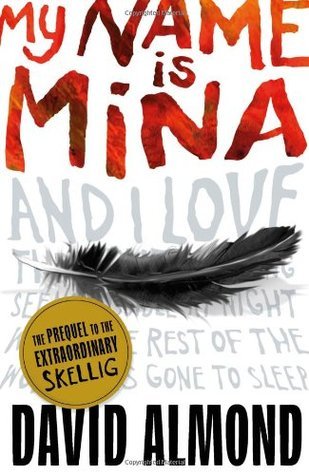
Skellig #0.5
My Name Is Mina
There's an empty notebook lying on the table in the moonlight. It's been there for an age. I keep on saying that I'll write a journal. So I'll start right here, right now. I open the book and write the very first words: My name is Mina and I love the night. Then what shall I write? I can't just write that this happened then this happened then this happened to boring infinitum. I'll let my journal grow just like the mind does, just like a tree or a beast does, just like life does. Why should a book tell a tale in a dull straight line?
And so Mina writes and writes in her journal, and through her stories and poems there grows an opus of her life - her lessons, her loves, her beliefs, her mum, her dad, her thoughts and her dreams.
In this stunningly designed book, David Almond revisits Mina before she has met Michael, before she has met Skellig, in what is a thought-provoking and extraordinary prequel to his best-selling debut novel, Skellig.
From the winner of the Whitbread Children's Book Award the Carnegie Medal and the 2010 Hans Christian Andersen Award comes the extraordinary prequel to the award-winning Skellig.
And so Mina writes and writes in her journal, and through her stories and poems there grows an opus of her life - her lessons, her loves, her beliefs, her mum, her dad, her thoughts and her dreams.
In this stunningly designed book, David Almond revisits Mina before she has met Michael, before she has met Skellig, in what is a thought-provoking and extraordinary prequel to his best-selling debut novel, Skellig.
From the winner of the Whitbread Children's Book Award the Carnegie Medal and the 2010 Hans Christian Andersen Award comes the extraordinary prequel to the award-winning Skellig.
320 pages, Hardcover
First published September 2, 2010
About the author
David Almond
84 books839 followersDavid Almond is a British children's writer who has penned several novels, each one to critical acclaim. He was born and raised in Felling and Newcastle in post-industrial North East England and educated at the University of East Anglia. When he was young, he found his love of writing when some short stories of his were published in a local magazine. He started out as an author of adult fiction before finding his niche writing literature for young adults.
His first children's novel, Skellig (1998), set in Newcastle, won the Whitbread Children's Novel of the Year Award and also the Carnegie Medal. His subsequent novels are: Kit's Wilderness (1999), Heaven Eyes (2000), Secret Heart (2001), The Fire Eaters (2003) and Clay (2005). His first play aimed at adolescents, Wild Girl, Wild Boy, toured in 2001 and was published in 2002.
His works are highly philosophical and thus appeal to children and adults alike. Recurring themes throughout include the complex relationships between apparent opposites (such as life and death, reality and fiction, past and future); forms of education; growing up and adapting to change; the nature of 'the self'. He has been greatly influenced by the works of the English Romantic poet William Blake.
He is an author often suggested on National Curriculum reading lists in the United Kingdom and has attracted the attention of academics who specialise in the study of children's literature.
Almond currently lives with his family in Northumberland, England.
Awards: Hans Christian Andersen Award for Writing (2010).
His first children's novel, Skellig (1998), set in Newcastle, won the Whitbread Children's Novel of the Year Award and also the Carnegie Medal. His subsequent novels are: Kit's Wilderness (1999), Heaven Eyes (2000), Secret Heart (2001), The Fire Eaters (2003) and Clay (2005). His first play aimed at adolescents, Wild Girl, Wild Boy, toured in 2001 and was published in 2002.
His works are highly philosophical and thus appeal to children and adults alike. Recurring themes throughout include the complex relationships between apparent opposites (such as life and death, reality and fiction, past and future); forms of education; growing up and adapting to change; the nature of 'the self'. He has been greatly influenced by the works of the English Romantic poet William Blake.
He is an author often suggested on National Curriculum reading lists in the United Kingdom and has attracted the attention of academics who specialise in the study of children's literature.
Almond currently lives with his family in Northumberland, England.
Awards: Hans Christian Andersen Award for Writing (2010).
Ratings & Reviews
Friends & Following
Create a free account to discover what your friends think of this book!
Community Reviews
Displaying 1 - 30 of 737 reviews
December 28, 2020
"Mina" von David Almond ist ein außergewöhnliches Buch über ein außergewöhnliches Mädchen. Mina ist ein junges und aufgewecktes Mädchen. Sie ist ein Einzelkind und lebt zusammen mit ihrer Mutter. Ihr Vater ist bereits früh gestorben, und Mina vermisst ihn sehr.
Mina ist ein kluges Mädchen; sie könnte zu den besten in ihrer Klasse gehören. Aber Mina ist auch "seltsam", finden ihre Lehrer, und sie macht nicht immer das, was sie soll. So spitzt sich die Situation zu, als Mina eine Prüfung machen soll. Sie soll einen Aufsatz schreiben, aber auf ihrem Papier steht am Ende der Stunde kein einziger vernünftiger Satz. Mina wird zum Schulleiter gebracht, der Minas Mutter informiert. Die nimmt daraufhin Mina von der Schule und unterrichtet sie selbst zu Hause. Mina findet das super. Nun hat sie außerdem viel Zeit, auf ihren Baum zu klettern. Dort sitzt sie oft, beobachtet die Vögel, die über ihr ein Nest bauen und schreibt in ihr Tagebuch.
Mina ist ein nachdenkliches Mädchen. Sie stellt alles in Frage, macht sich über alles Gedanken, und alles bringt sie zu Papier.
Wir - die Leser - dürfen an Minas Gedankenwelt teilnehmen. Es macht Freude, ihre Ansichten zu lesen, die oft traurig sind, oft lustig, sehr philosophisch und klug.
Mina ist wirklich ein außergewöhnliches Mädchen, und ich glaube, dass viele junge Leserinnen sich ein wenig mit ihr identifizieren können.
Das Buch wird empfohlen für Kinder von 10 bis 11 Jahren. Ich kann mich dieser Empfehlung anschließen. Es ist ein tolles Buch, das kurzweilige Lesestunden schenkt und selbst ein wenig zum Nachdenken anregt.
Auch erwähnen möchte ich noch das schöne Cover, das passender kaum sein könnte. Es zeigt Mina in ihrem Baum, über sich das Vogelnest und unten die Katze Whisper. Es ist ganz in Blautönen gehalten und wirkt auf mich sehr ansprechend.
Auch innen hat das Buch einiges zu bieten. Es gibt immer wieder hervorspringende Sätze, die riesig und fett gedruckt sind, so dass es auch optisch niemals langweilig werden kann.
Der Autor, David Almond, der 1951 in Großbritannien geboren wurde, ist über Umwege zum Schreiben gekommen. Zuvor hat er bereits als Briefträger, Lektor und Lehrer gearbeitet. Ich hatte bereits beim Lesen des Buches den Eindruck, dass der Autor sich mit Kindern gut auskennen muss. Ich denke, seine Erfahrung als Lehrer konnte er gut in sein Buch einbringen.
Fazit: Ein sehr empfehlenswertes Buch!
Mina ist ein kluges Mädchen; sie könnte zu den besten in ihrer Klasse gehören. Aber Mina ist auch "seltsam", finden ihre Lehrer, und sie macht nicht immer das, was sie soll. So spitzt sich die Situation zu, als Mina eine Prüfung machen soll. Sie soll einen Aufsatz schreiben, aber auf ihrem Papier steht am Ende der Stunde kein einziger vernünftiger Satz. Mina wird zum Schulleiter gebracht, der Minas Mutter informiert. Die nimmt daraufhin Mina von der Schule und unterrichtet sie selbst zu Hause. Mina findet das super. Nun hat sie außerdem viel Zeit, auf ihren Baum zu klettern. Dort sitzt sie oft, beobachtet die Vögel, die über ihr ein Nest bauen und schreibt in ihr Tagebuch.
Mina ist ein nachdenkliches Mädchen. Sie stellt alles in Frage, macht sich über alles Gedanken, und alles bringt sie zu Papier.
Wir - die Leser - dürfen an Minas Gedankenwelt teilnehmen. Es macht Freude, ihre Ansichten zu lesen, die oft traurig sind, oft lustig, sehr philosophisch und klug.
Mina ist wirklich ein außergewöhnliches Mädchen, und ich glaube, dass viele junge Leserinnen sich ein wenig mit ihr identifizieren können.
Das Buch wird empfohlen für Kinder von 10 bis 11 Jahren. Ich kann mich dieser Empfehlung anschließen. Es ist ein tolles Buch, das kurzweilige Lesestunden schenkt und selbst ein wenig zum Nachdenken anregt.
Auch erwähnen möchte ich noch das schöne Cover, das passender kaum sein könnte. Es zeigt Mina in ihrem Baum, über sich das Vogelnest und unten die Katze Whisper. Es ist ganz in Blautönen gehalten und wirkt auf mich sehr ansprechend.
Auch innen hat das Buch einiges zu bieten. Es gibt immer wieder hervorspringende Sätze, die riesig und fett gedruckt sind, so dass es auch optisch niemals langweilig werden kann.
Der Autor, David Almond, der 1951 in Großbritannien geboren wurde, ist über Umwege zum Schreiben gekommen. Zuvor hat er bereits als Briefträger, Lektor und Lehrer gearbeitet. Ich hatte bereits beim Lesen des Buches den Eindruck, dass der Autor sich mit Kindern gut auskennen muss. Ich denke, seine Erfahrung als Lehrer konnte er gut in sein Buch einbringen.
Fazit: Ein sehr empfehlenswertes Buch!

December 24, 2018
"It's hard isn't it?' 'What?' 'Trying to discover how to be yourself."
What a cute prequel this was! Narrated by Mina, the young girl we meet in Skellig. We get an insight into her home and school life; how most of the other kids think she is weird and strange. She spends most of her time in her tree in her front garden.
The writing style is unlike anything I've read before - set out like her diary, with loads of random pages, bold font, capitals - exactly how you'd expect the mind of a child to play out.
A really quick read, I loved Mina and really felt for her. 3.5 stars!
What a cute prequel this was! Narrated by Mina, the young girl we meet in Skellig. We get an insight into her home and school life; how most of the other kids think she is weird and strange. She spends most of her time in her tree in her front garden.
The writing style is unlike anything I've read before - set out like her diary, with loads of random pages, bold font, capitals - exactly how you'd expect the mind of a child to play out.
A really quick read, I loved Mina and really felt for her. 3.5 stars!

June 11, 2015
A frustrating journal, but an interesting character
It pains me to give this such a low rating because I have very mixed feeling about it. I appreciate the idea behind it, but it is not very enjoyable to read. This is not a novel or a straightforward narrative, but a journal of a young girl called Mina. She is a character in Skellig which is a book I really enjoyed. This is her journal prior to the events of Skellig and it feels completely, and utterly, unnecessary.
Mina is a complete outcast of society because she views the world in a different way to most people; she has filled her head with the poetry of William Blake. She longs to be completely free but as a result comes across as little crazy. I do think, in a way, Mina is wise beyond her years. She has a better head on her shoulders than most adults. She has convinced herself that there is no heaven; thus, the Earth must be treated as a heaven or life isn’t worth living. She has a positive, proactive, attitude and makes the most of every situation and everyone. This is all very good but her journal just isn’t that interesting to read.
Too realistic
I feel like I shouldn’t be reading it. It comes across as something very private and contains the inner most ramblings of her character. Don’t get me wrong, David Almond has written the journal very well but it terms of the readability of it, it is just very poor. It is repetitive and random. There is no real story arc in it just a load of random stuff that barely connects. I would rather have read a simple, straightforward, narrative of the events that happened to the character prior to the events of Skellig. The journal does reflect the character but I just found it so tedious to read.
Mina is an interesting character and her journal is full of bright ideas. Almond has captured the voice of a child superbly, but the end result is utterly mundane. There are so many times you can read an overly enthusiastic journal entry and find it remotely entertaining. This is packed full of unnecessary anecdotes and tangents that literally just pack this thing out far too much. I regret purchasing this because I feel like I have no new insight into her character.
I strongly recommend avoiding this and reading one of Almond’s full novels instead. This is because they are really good works of children’s literature. This, however, is very basic and not worth the time. This is not Almond’s finest hour.
It pains me to give this such a low rating because I have very mixed feeling about it. I appreciate the idea behind it, but it is not very enjoyable to read. This is not a novel or a straightforward narrative, but a journal of a young girl called Mina. She is a character in Skellig which is a book I really enjoyed. This is her journal prior to the events of Skellig and it feels completely, and utterly, unnecessary.
Mina is a complete outcast of society because she views the world in a different way to most people; she has filled her head with the poetry of William Blake. She longs to be completely free but as a result comes across as little crazy. I do think, in a way, Mina is wise beyond her years. She has a better head on her shoulders than most adults. She has convinced herself that there is no heaven; thus, the Earth must be treated as a heaven or life isn’t worth living. She has a positive, proactive, attitude and makes the most of every situation and everyone. This is all very good but her journal just isn’t that interesting to read.
Too realistic
I feel like I shouldn’t be reading it. It comes across as something very private and contains the inner most ramblings of her character. Don’t get me wrong, David Almond has written the journal very well but it terms of the readability of it, it is just very poor. It is repetitive and random. There is no real story arc in it just a load of random stuff that barely connects. I would rather have read a simple, straightforward, narrative of the events that happened to the character prior to the events of Skellig. The journal does reflect the character but I just found it so tedious to read.
Mina is an interesting character and her journal is full of bright ideas. Almond has captured the voice of a child superbly, but the end result is utterly mundane. There are so many times you can read an overly enthusiastic journal entry and find it remotely entertaining. This is packed full of unnecessary anecdotes and tangents that literally just pack this thing out far too much. I regret purchasing this because I feel like I have no new insight into her character.
I strongly recommend avoiding this and reading one of Almond’s full novels instead. This is because they are really good works of children’s literature. This, however, is very basic and not worth the time. This is not Almond’s finest hour.

March 27, 2012
I had to give this a five! Though I thought the first half was a solid three the second half blew me away.
May I say now, if you are currently thinking of reading 'My name is Mina' without reading 'Skellig' I would strongly recommend against it. While 'My name is Mina' would work as a stand alone book I think it adds another level to it having read 'Skellig', and to read 'Skellig' after reading 'My name is Mina' would destroy some of the mystery that is key to 'Skellig'.
I found the first half well written but slightly pointless, I don't really like books written in diary form and I couldn't really get very attached to Mina. However, pretty much exactly at the half way point I found myself having to force the book shut. The writing was gorgeous, the relationships between the characters were fabulous and I fell in love with Mina- barmy, sensitive, vulnerable Mina. I particulaly loved the relationship between the protagonist and her mum (although part of that may be me being slightly sentimental, as it reminded me of a picture book called the Big Big Sea that I used to read with my mum when I was little) Additonally it's simply facinating to learn the story behind Micheal and Mina's first meeting in 'Skellig'.
David Almond has created a story in which nothing much happens, but it's about so much. It's the kind of story that makes you want to grab your favourite person in the world and start dancing under the starlight. Uterlly inspirational, breathtaking and beautiful; a story about growing up and finding out who you are; it is, in my opinion, even better than 'Skellig'. Also may I just thank you Mr Almond, as having just read several books with disappointing endings I had almost given up on them, this book proves to me that amazing endings are still out there.
As a added bonus it has also restored my faith in the CILIP Carnegie award and is my current favourite to win this year.
(Edit: Sadly it didn't win the 2012 Carnegie awards, it was beaten by A Monster Calls so well done to Patrick Ness for winning two years in a row!)
May I say now, if you are currently thinking of reading 'My name is Mina' without reading 'Skellig' I would strongly recommend against it. While 'My name is Mina' would work as a stand alone book I think it adds another level to it having read 'Skellig', and to read 'Skellig' after reading 'My name is Mina' would destroy some of the mystery that is key to 'Skellig'.
I found the first half well written but slightly pointless, I don't really like books written in diary form and I couldn't really get very attached to Mina. However, pretty much exactly at the half way point I found myself having to force the book shut. The writing was gorgeous, the relationships between the characters were fabulous and I fell in love with Mina- barmy, sensitive, vulnerable Mina. I particulaly loved the relationship between the protagonist and her mum (although part of that may be me being slightly sentimental, as it reminded me of a picture book called the Big Big Sea that I used to read with my mum when I was little) Additonally it's simply facinating to learn the story behind Micheal and Mina's first meeting in 'Skellig'.
David Almond has created a story in which nothing much happens, but it's about so much. It's the kind of story that makes you want to grab your favourite person in the world and start dancing under the starlight. Uterlly inspirational, breathtaking and beautiful; a story about growing up and finding out who you are; it is, in my opinion, even better than 'Skellig'. Also may I just thank you Mr Almond, as having just read several books with disappointing endings I had almost given up on them, this book proves to me that amazing endings are still out there.
As a added bonus it has also restored my faith in the CILIP Carnegie award and is my current favourite to win this year.
(Edit: Sadly it didn't win the 2012 Carnegie awards, it was beaten by A Monster Calls so well done to Patrick Ness for winning two years in a row!)

May 1, 2020
کتاب رو دیوانهوار بعد از خوندن اسکلیگ سفارش دادم، تا باز هم در فضاش باشم. و گرچه قبل از رسیدن به ماجراهای اون تموم میشه، بینهایت از کرده خود دلشادم.
مینا؛ حرفهاش، فکراش، نوشتههاش و زندگیش.
باید بازم بخونمش. در بین جملههاش زندگی کنم. آزادتر.
خیلی کتاب دوستداشتنیای بود برام. خیلی.
و هیچجوره نمیتونم باور کنم که آلموند ۶۰سالش بوده که اینو نوشته. :)))😭
مینا؛ حرفهاش، فکراش، نوشتههاش و زندگیش.
باید بازم بخونمش. در بین جملههاش زندگی کنم. آزادتر.
خیلی کتاب دوستداشتنیای بود برام. خیلی.
و هیچجوره نمیتونم باور کنم که آلموند ۶۰سالش بوده که اینو نوشته. :)))😭

February 4, 2015
Beautiful, witty writing. Just wish it wasn't a prequel to another book because I'm most likely not going to read that one and this ending wasn't very solid. I loved Mina's thoughtfulness throughout this and it definitely made me think.
October 25, 2021
《هو الحق》
از اون کتاب های کودک و نوجوان دوست داشتنی که سن و سال نمیشناسن.
من نسخهی صوتیش رو گوش دادم ، گویندگی خوب داشت .من لذت بردم،دلنشین بود 💛🌼
۳آبان ۱۴۰۰🍁🍂
از اون کتاب های کودک و نوجوان دوست داشتنی که سن و سال نمیشناسن.
من نسخهی صوتیش رو گوش دادم ، گویندگی خوب داشت .من لذت بردم،دلنشین بود 💛🌼
۳آبان ۱۴۰۰🍁🍂

March 31, 2022
حدود ۲۰ روز و حتی بیشتر میشه که درست و حسابی نتونستم چیزی بخونم. امشب بالاخره عزمم رو جزم کردم و کارهای دیگه رو کنار گذاشتم و این کتاب رو تموم کردم.
بازم یه کتاب جادویی و ظریف دیگه که از قفسه نوجوان پیدا کردم! کتابی که بهت یادآوری میکنه تو وجود داری؛ تو زنده ای؛ تو توی این جهان خارقالعاده وجود داری. کتابی که باعث میشه پنجره اتاقتو باز کنی و چند دقیقه سکوت کنی و به چراغهای ساختمونها، آسمون تیره و صدای باد گوش بدی و یه چیزهایی هم شاید برای خودت زمزمه کنی و متوجه چند تا قشنگی جهان که حواست بهشون نبوده بشی. • از متن کتاب:
برو دستشویی. بعد از اینکه کارت تموم شد سیفون را بکش. به این فکر کن که ادرارت کجا میرود و به چه چیزی تبدیل میشود. ادرار و عرق و تفم به شکل بخار در هوا بالا میرود و به شکل باران روی زمین فرود میآید. پوستم به شکل ذرات گردوغبار در نور خورشید می رقصد. نفسم با هوا و آسمان ترکیب میشود.
بازم یه کتاب جادویی و ظریف دیگه که از قفسه نوجوان پیدا کردم! کتابی که بهت یادآوری میکنه تو وجود داری؛ تو زنده ای؛ تو توی این جهان خارقالعاده وجود داری. کتابی که باعث میشه پنجره اتاقتو باز کنی و چند دقیقه سکوت کنی و به چراغهای ساختمونها، آسمون تیره و صدای باد گوش بدی و یه چیزهایی هم شاید برای خودت زمزمه کنی و متوجه چند تا قشنگی جهان که حواست بهشون نبوده بشی. • از متن کتاب:
برو دستشویی. بعد از اینکه کارت تموم شد سیفون را بکش. به این فکر کن که ادرارت کجا میرود و به چه چیزی تبدیل میشود. ادرار و عرق و تفم به شکل بخار در هوا بالا میرود و به شکل باران روی زمین فرود میآید. پوستم به شکل ذرات گردوغبار در نور خورشید می رقصد. نفسم با هوا و آسمان ترکیب میشود.
February 11, 2012
The prequel and companion to the extraordinary Skellig, this is told in Mina's own distinctive voice. Textually it is glorious, using a range of fonts, with some pages blank, some white on black and sometimes Mina tells her story in the third person to distance herself from more difficult memories. I found the story profoundly affecting, sometimes to the point of tears and sometimes laughing aloud, and it is a book that teachers should all read, as a warning to how our results-fixated education culture can limit and stifle when we most intend it to stretch and challenge.
12 year old Mina, the imaginative girl who lives over the road from Michael in Skellig, is home schooled after a series of unfortunate incidents in her middle school (bullying, an unsympathetic teacher- although she admits she exaggerates Mrs Sculley-, deliberate sabotage of her SATs writing test) and is grieving for the loss of her father. This is an exciting book and a testimony to David Almond's glorious writing as this is mostly Mina sharing her feelings, thoughts, plays on words and poems- apart from Mina leaving school, spending a day in a Pupil Referral Unit and meeting Michael for the first time, very little action occurs. But it is so beautifully written and Mina is such a vivid character, this doesn't matter. Gorgeous, and highly recommended as a guided reading book for high ability Y5 upwards. It would lead to some amazing diary and poetry writing.
12 year old Mina, the imaginative girl who lives over the road from Michael in Skellig, is home schooled after a series of unfortunate incidents in her middle school (bullying, an unsympathetic teacher- although she admits she exaggerates Mrs Sculley-, deliberate sabotage of her SATs writing test) and is grieving for the loss of her father. This is an exciting book and a testimony to David Almond's glorious writing as this is mostly Mina sharing her feelings, thoughts, plays on words and poems- apart from Mina leaving school, spending a day in a Pupil Referral Unit and meeting Michael for the first time, very little action occurs. But it is so beautifully written and Mina is such a vivid character, this doesn't matter. Gorgeous, and highly recommended as a guided reading book for high ability Y5 upwards. It would lead to some amazing diary and poetry writing.
December 22, 2018
This book is marmite.
For a lot of people, it's too rambling, too weird, too focused on what's going on inside Mina's head, too many exclamation marks and strange fonts and enlarged text. It's pointing a camera lens at ordinary stuff the way Mina sees them, and for lots of people, that's not okay.
And that's fine. Different opinions, ect.
But I love the rambling. I love the weirdness and the inside of Mina's head and the exclamation marks and the fonts and the texts, and it's a camera lens I want to look through. And you know what? This book changed the way I see the world. That sounds pretentious and fake and over-dramatic, but I say it simply and truthfully - this book changed the way I see the world. It changed me. I came out of reading this book if not a different person, at least a person who can see the sunshine two shades brighter.
I don't read this book often. I can't, because 90% of the time I wouldn't enjoy it. I'd be sick of the slow pace and rambling entries and arty observations and mind games, and I'd put it down to be swallowed by dust. But this book has a special place in my life, and my mind, and kinda my heart. I needed it when I read it, and I didn't even realise until afterwards that My Name Is Mina is what I had been craving.
So I won't say any more. It's not everyone's cup of tea. This book is written for certain people, who maybe need a little touch of Mina at some point in their lives.
For a lot of people, it's too rambling, too weird, too focused on what's going on inside Mina's head, too many exclamation marks and strange fonts and enlarged text. It's pointing a camera lens at ordinary stuff the way Mina sees them, and for lots of people, that's not okay.
And that's fine. Different opinions, ect.
But I love the rambling. I love the weirdness and the inside of Mina's head and the exclamation marks and the fonts and the texts, and it's a camera lens I want to look through. And you know what? This book changed the way I see the world. That sounds pretentious and fake and over-dramatic, but I say it simply and truthfully - this book changed the way I see the world. It changed me. I came out of reading this book if not a different person, at least a person who can see the sunshine two shades brighter.
I don't read this book often. I can't, because 90% of the time I wouldn't enjoy it. I'd be sick of the slow pace and rambling entries and arty observations and mind games, and I'd put it down to be swallowed by dust. But this book has a special place in my life, and my mind, and kinda my heart. I needed it when I read it, and I didn't even realise until afterwards that My Name Is Mina is what I had been craving.
So I won't say any more. It's not everyone's cup of tea. This book is written for certain people, who maybe need a little touch of Mina at some point in their lives.

February 13, 2012
Extraordinary Fact! All the exclamation points currently in existence in the English language actually APPEAR in this book!! COMPLETELY TRUE!!!! SOOOOO annoying!!!!!!!
I have not read "Skellig." I did not already know Mina; I did not already have an emotional investment in her when I opened this book. I did not find her innermost thoughts to be wonderful and delightful. Mostly I found them boring and annoying and impossibly young. I think, that if this book had started differently, I would have enjoyed it more. The parts of the book where she just outright shared information with us, I really enjoyed. I loved hearing her story. I loved getting to KNOW her. I could not have cared less about hearing her thoughts on birds or pee or sentence structure. If the book had begun with her story, I may have cared a bit more about her thoughts because I would have known her a bit more; I would have felt a connection to her. Or maybe if I'd read "Skellig."
I have not read "Skellig." I did not already know Mina; I did not already have an emotional investment in her when I opened this book. I did not find her innermost thoughts to be wonderful and delightful. Mostly I found them boring and annoying and impossibly young. I think, that if this book had started differently, I would have enjoyed it more. The parts of the book where she just outright shared information with us, I really enjoyed. I loved hearing her story. I loved getting to KNOW her. I could not have cared less about hearing her thoughts on birds or pee or sentence structure. If the book had begun with her story, I may have cared a bit more about her thoughts because I would have known her a bit more; I would have felt a connection to her. Or maybe if I'd read "Skellig."

June 6, 2011
This is going on my Autism shelf, even though it's never explicitly stated that Mina has autism. It fits. Anyway, Mina's having a rough time. Her father died not long ago, and school, which had always been somewhat challenging for her became much worse. She didn't fit it with her peers, and she didn't get along at all with her teacher. So right now she's being homeschooled by her mother, and she's getting to spend a lot of time sitting in her favorite tree and watching the house on the street where the neighbor recently died, as it is put up for sale. Mina thinks a lot.
There's a bit of magical realism (don't ask, I've already forgotten). But mostly, this is just the straightforward diary of a non-typical 9 year old girl going through a difficult time. One can enjoy it is a prequel to Skellig, but it works very well as a standalone.
Library copy.
There's a bit of magical realism (don't ask, I've already forgotten). But mostly, this is just the straightforward diary of a non-typical 9 year old girl going through a difficult time. One can enjoy it is a prequel to Skellig, but it works very well as a standalone.
Library copy.

February 20, 2012
Do you ever have the urge to write an author and transcriptionally hug and kiss them because of your profound gratitude for their having been born and having written this one particular book? I usually hug the book instead. And I’ve been hugging My Name is Mina the past few days. I should really write those living authors. I should write to David Almond.
I’d heard of My Name is Mina in passing. I think it was in a manner of whispers from the “Lucky Day” shelf in Juvenile Fiction at the Library. I picked it up the other day. I’m familiar with David Almond, should be good. On the cover in small print: ”One of the best novels of the last decade.” -Nick Hornby. I flipped open the cover and read:
"Mina loves the night. While everyone else is in a deep slumber, she gazes out the window, witness to the moon’s silvery light. In the stillness, she can even hear her own heart beating. This is when Mina feels that anything is possible, that her imagination is set free.
"A blank notebook lies on the table. It has been there for what seems like forever. Mina has proclaimed in the past that she will use it as a journal, and one night, at last, she begins to do just that. As she writes, Mina makes discoveries both trivial and profound about herself and her world, her thoughts and her dreams.
"Award-winning author David Almond re-introduces readers to the perceptive, sensitive Mina before the events of Skellig in this lyrical and fantastical work. My Name Is Mina is not only a pleasure to read, it is an intimate and enlightening look at a character whose open mind and heart have much to teach us about life, love, and the mysteries that surround us." –inside jacket copy
I flipped pages and noted the unusual form. I balanced it on top of my seven volumes of Pluto. I was taking this book home to Natalya, whom instantly came to mind. She and Mina would be friends, minus the tree part. Well, maybe Mina could have talked her into climbing one. To be perfectly candid, I would linger in hopes of an invitation myself.
"Then what shall I write? I can’t just write that this happened then this happened then this happened to boring infinitum. I’ll let my journal grow just like the mind does, just like a tree or a beast does, just like life does. Why should a book tell a tale in a dull straight line?
"Words should wander and meander. They should fly like owls and flicker like bats and slip like cats. They should murmur and scream and dance and sing.
"Sometimes there should be no words at all.
"Just silence.
"Just clean white space.
"Some pages will be like a sky with a single bird in it. some will be like a sky with a swirling swarm of starlings in it. My sentences will be a clutch, a collection, a pattern, a swarm, a shoal, a mosaic. They will be a circus, a menagerie, a tree, a nest. Because my mind is not in order. My mind is not straight lines. My mind is a clutter and a mess. It is my mind, but it is also very like other minds. And like all minds, like every mind that there has ever been and every mind that there will ever be, it is a place of wonder." (11-12, though technically 3-4)
I could stop here, couldn’t I. But I won’t.
I had hopes with the first entry title page: Moonlight, Wonder, Flies & Nonsense. I found poetry upon the first page of written words, and I quickly found love within a short succession of pages; 4 and 5 and 6 pages in, pages 12-14. “I was told by my teacher Mrs. Scullery that I should not write anything until I had planned what I would write. What nonsense! [...] I did want to be what they called a good girl, so I did try.” There are people who say they want to be a Writer, and there are people who say that they are. And I’m not mistaking Published Author for Writer and neither should you. My Name is Mina is for Writers, for Artists, Anyone, and for Birdwatchers.
I think people will want to give this book to youth they find “special.” And it is true that Mina is gifted and unusual (I think mostly due to her courageousness). You get that her mother is a profound influence, a mentor and guide; she herself is a Creative thinker. If for no other reason buy this for the sake of its portrayal of a loving, truly nurturing mother. “Raise your child in the way they should go,” comes to mind. Anyway, I think people should want to give this book to any young person. It is true that many people like Mina feel alone in their wondering and meandering and musing about themselves and the world; but the book does not impart a sense of “specialness” upon Mina outside of realizing a very rich character. It would assume every young person has (at the very most) an inner life, a distinction, and a loneliness. My evidence?
Now, I’m not going to say the book assumes absolute familiarity, Mina’s mind would be her own (11), but she will not be wholly unfamiliar on some intimate level (at least I desperately hope not). Better, Mina would challenge the reader to nurture their creativity, their wondering minds. If, like Mina, you’re not going to have it nurtured in a school setting or special programs, or unlike her, at home, be determined and a bit desperate and brave and find yourself an empty journal to meander your way through.
My Name is Mina has these fantastic “Extraordinary Activities” throughout. They are connected to her stories and contemplations where they are exampled, but they are meant to engage the reader, the creative. “Go to the loo. Flush your pee away. Consider where it will go to and what it will become” (124). “(Joyous Version) Write a page of words for joy. [or] (Sad Version) Write a page of words for sadness” (133). N did this one, pausing her reading to do so: “Write a poem that repeats a word and repeats a word and repeats a word and repeats a word until it almost loses its meaning. (It can be useful to choose a word that you don’t like, or that scares or disturbs you)” (97). N’s present essay project on present, future, past tenses: yep, the concrete poem Mina wrote on page 89 and following.
Mina is funny and serious and vulnerable and strong and restless and still and shy and friendly and outrageous and poignant and… I found her a beautiful character with which to become acquainted. Rather importantly, she is not charmingly quirky, or a cute puppy to indulge and smile over. She is deadly ridiculous.
If you’ve read David Almonds 1998 debut novel and awards-winning Skellig, you’ve met Mina. While you needn’t have read Skellig to enjoy My Name is Mina, My Name is Mina is cited as a prequel. You meet Mina from before Michael (in Skellig) moves onto her street. She sees him, occasionally observes, but there is a time before she finally introduces herself to him. Those familiar with Skellig will note references, people, and remember Mina. Those unfamiliar will not feel cheated, nor will they encounter any frustrating sense of inevitability like stories often written with another story in mind. You know those that are written to offer backstory. Mina isn’t a backstory. She is her own story.
When Mina writes that “the journal will grow just like the mind does” the book does take on this characteristic. She doesn’t date entries, but uses creative (summarative) titles. She’ll allude to an ending, and then move back and forth before she reaches it. “Afterwards, Mina tried to think of ways to tell the tale. Then she thought that maybe it’d be best to write it down, which is what she did” (58). She intentionally avoids stories until she feels ready to share them, still distancing herself from their discomfort; she’ll switch from 1st- to 3rd-person for similar reasons. ”Extraordinary Activity: (third-person version) Write a story about yourself as if you’re writing about somebody else. (first-person version) Write a story about somebody else as if you’re writing about yourself” (59). Some of the world about her is captured obliquely, what we learn of her mother’s is created thus. The book is a journal of Mina’s keeping after all, her preoccupations, her confessions, her stories, her own dramatic effects. She yells, she cries, she records poems and blank pages. Mina’s mind may be a mess, as she puts it, but the book is by no means jumbled into indecipherability. It doesn’t even feel unnatural. It doesn’t even exhaust the reader with cleverness–maybe because its less “clever” and more normal. Mina resists conforming, and I’m glad for it.
My Name is Mina culminates into an ending that isn’t remotely forced, or even inevitable for that matter. We have points we are alerted to look for, progressions we would see through, and then it slips into another story: Skellig. I was compelled to turn pages by my desire to spend time with Mina and the world she inhabits in her mind’s eye; to explore ideas of creation and death and life and belonging and cages and nonsense and story; to have fun and be brave and engage in healthy doses of nonsense and sorrow and long walks.
Thank you David Almond for your gift to the world, to my daughter, and to me. Thank you for introducing us to Mina.
———————————————-
recommendation…ages 10&up, human (or beast), lovers of humor, occasional irreverence, poetry you can understand, adventure, birds, nonsense, absolute sense… For those who’ve experienced a loss, a found, an inquisitive mind, an understanding adult, an equally strange friend, the principal’s office…
Bart’s Bookshelf did a really excellent (and short) review, which I just found. Check it out.
L @ omphaloskepsis
http://contemplatrix.wordpress.com/20...
I’d heard of My Name is Mina in passing. I think it was in a manner of whispers from the “Lucky Day” shelf in Juvenile Fiction at the Library. I picked it up the other day. I’m familiar with David Almond, should be good. On the cover in small print: ”One of the best novels of the last decade.” -Nick Hornby. I flipped open the cover and read:
"Mina loves the night. While everyone else is in a deep slumber, she gazes out the window, witness to the moon’s silvery light. In the stillness, she can even hear her own heart beating. This is when Mina feels that anything is possible, that her imagination is set free.
"A blank notebook lies on the table. It has been there for what seems like forever. Mina has proclaimed in the past that she will use it as a journal, and one night, at last, she begins to do just that. As she writes, Mina makes discoveries both trivial and profound about herself and her world, her thoughts and her dreams.
"Award-winning author David Almond re-introduces readers to the perceptive, sensitive Mina before the events of Skellig in this lyrical and fantastical work. My Name Is Mina is not only a pleasure to read, it is an intimate and enlightening look at a character whose open mind and heart have much to teach us about life, love, and the mysteries that surround us." –inside jacket copy
I flipped pages and noted the unusual form. I balanced it on top of my seven volumes of Pluto. I was taking this book home to Natalya, whom instantly came to mind. She and Mina would be friends, minus the tree part. Well, maybe Mina could have talked her into climbing one. To be perfectly candid, I would linger in hopes of an invitation myself.
"Then what shall I write? I can’t just write that this happened then this happened then this happened to boring infinitum. I’ll let my journal grow just like the mind does, just like a tree or a beast does, just like life does. Why should a book tell a tale in a dull straight line?
"Words should wander and meander. They should fly like owls and flicker like bats and slip like cats. They should murmur and scream and dance and sing.
"Sometimes there should be no words at all.
"Just silence.
"Just clean white space.
"Some pages will be like a sky with a single bird in it. some will be like a sky with a swirling swarm of starlings in it. My sentences will be a clutch, a collection, a pattern, a swarm, a shoal, a mosaic. They will be a circus, a menagerie, a tree, a nest. Because my mind is not in order. My mind is not straight lines. My mind is a clutter and a mess. It is my mind, but it is also very like other minds. And like all minds, like every mind that there has ever been and every mind that there will ever be, it is a place of wonder." (11-12, though technically 3-4)
I could stop here, couldn’t I. But I won’t.
I had hopes with the first entry title page: Moonlight, Wonder, Flies & Nonsense. I found poetry upon the first page of written words, and I quickly found love within a short succession of pages; 4 and 5 and 6 pages in, pages 12-14. “I was told by my teacher Mrs. Scullery that I should not write anything until I had planned what I would write. What nonsense! [...] I did want to be what they called a good girl, so I did try.” There are people who say they want to be a Writer, and there are people who say that they are. And I’m not mistaking Published Author for Writer and neither should you. My Name is Mina is for Writers, for Artists, Anyone, and for Birdwatchers.
I think people will want to give this book to youth they find “special.” And it is true that Mina is gifted and unusual (I think mostly due to her courageousness). You get that her mother is a profound influence, a mentor and guide; she herself is a Creative thinker. If for no other reason buy this for the sake of its portrayal of a loving, truly nurturing mother. “Raise your child in the way they should go,” comes to mind. Anyway, I think people should want to give this book to any young person. It is true that many people like Mina feel alone in their wondering and meandering and musing about themselves and the world; but the book does not impart a sense of “specialness” upon Mina outside of realizing a very rich character. It would assume every young person has (at the very most) an inner life, a distinction, and a loneliness. My evidence?
Now, I’m not going to say the book assumes absolute familiarity, Mina’s mind would be her own (11), but she will not be wholly unfamiliar on some intimate level (at least I desperately hope not). Better, Mina would challenge the reader to nurture their creativity, their wondering minds. If, like Mina, you’re not going to have it nurtured in a school setting or special programs, or unlike her, at home, be determined and a bit desperate and brave and find yourself an empty journal to meander your way through.
My Name is Mina has these fantastic “Extraordinary Activities” throughout. They are connected to her stories and contemplations where they are exampled, but they are meant to engage the reader, the creative. “Go to the loo. Flush your pee away. Consider where it will go to and what it will become” (124). “(Joyous Version) Write a page of words for joy. [or] (Sad Version) Write a page of words for sadness” (133). N did this one, pausing her reading to do so: “Write a poem that repeats a word and repeats a word and repeats a word and repeats a word until it almost loses its meaning. (It can be useful to choose a word that you don’t like, or that scares or disturbs you)” (97). N’s present essay project on present, future, past tenses: yep, the concrete poem Mina wrote on page 89 and following.
Mina is funny and serious and vulnerable and strong and restless and still and shy and friendly and outrageous and poignant and… I found her a beautiful character with which to become acquainted. Rather importantly, she is not charmingly quirky, or a cute puppy to indulge and smile over. She is deadly ridiculous.
If you’ve read David Almonds 1998 debut novel and awards-winning Skellig, you’ve met Mina. While you needn’t have read Skellig to enjoy My Name is Mina, My Name is Mina is cited as a prequel. You meet Mina from before Michael (in Skellig) moves onto her street. She sees him, occasionally observes, but there is a time before she finally introduces herself to him. Those familiar with Skellig will note references, people, and remember Mina. Those unfamiliar will not feel cheated, nor will they encounter any frustrating sense of inevitability like stories often written with another story in mind. You know those that are written to offer backstory. Mina isn’t a backstory. She is her own story.
When Mina writes that “the journal will grow just like the mind does” the book does take on this characteristic. She doesn’t date entries, but uses creative (summarative) titles. She’ll allude to an ending, and then move back and forth before she reaches it. “Afterwards, Mina tried to think of ways to tell the tale. Then she thought that maybe it’d be best to write it down, which is what she did” (58). She intentionally avoids stories until she feels ready to share them, still distancing herself from their discomfort; she’ll switch from 1st- to 3rd-person for similar reasons. ”Extraordinary Activity: (third-person version) Write a story about yourself as if you’re writing about somebody else. (first-person version) Write a story about somebody else as if you’re writing about yourself” (59). Some of the world about her is captured obliquely, what we learn of her mother’s is created thus. The book is a journal of Mina’s keeping after all, her preoccupations, her confessions, her stories, her own dramatic effects. She yells, she cries, she records poems and blank pages. Mina’s mind may be a mess, as she puts it, but the book is by no means jumbled into indecipherability. It doesn’t even feel unnatural. It doesn’t even exhaust the reader with cleverness–maybe because its less “clever” and more normal. Mina resists conforming, and I’m glad for it.
My Name is Mina culminates into an ending that isn’t remotely forced, or even inevitable for that matter. We have points we are alerted to look for, progressions we would see through, and then it slips into another story: Skellig. I was compelled to turn pages by my desire to spend time with Mina and the world she inhabits in her mind’s eye; to explore ideas of creation and death and life and belonging and cages and nonsense and story; to have fun and be brave and engage in healthy doses of nonsense and sorrow and long walks.
Thank you David Almond for your gift to the world, to my daughter, and to me. Thank you for introducing us to Mina.
———————————————-
recommendation…ages 10&up, human (or beast), lovers of humor, occasional irreverence, poetry you can understand, adventure, birds, nonsense, absolute sense… For those who’ve experienced a loss, a found, an inquisitive mind, an understanding adult, an equally strange friend, the principal’s office…
Bart’s Bookshelf did a really excellent (and short) review, which I just found. Check it out.
L @ omphaloskepsis
http://contemplatrix.wordpress.com/20...

September 6, 2021
اگر دنیا به نظرتان جای عجيبی است، اگر با اتفاقات کوچک در اطرافتان بسیار زیاد شگفتزده میشوید، اگر افکار و احساسات غریبی سراغتان میآید، اگر معتقدید همهی آدمها نباید یکراه مشخص و از پیش تعیینشده را طی کنند و هنجارشکنها را ارج مینهید، اگر ترسهای غیرمعمول دارید، احتمالا با مینای نه ساله همزادپنداری خواهید کرد
بسیار ساده، روان و بامزه
بسیار ساده، روان و بامزه

September 16, 2016
3.5 stars!

August 3, 2019
Brilliant! I loved Skellig and I loved this! I absolutely adore David Almond's stories and how his character think, wander and discover. It's peaceful at times and deep at others and I believe everyone needs to read at least one of his books :p

July 29, 2026
3 ⭐️ una bella “favola” per grandi e piccini

August 7, 2016
Това беше.....нямам думи...много странна книга..но много ми хареса
July 13, 2018
Amazing. Should’ve read it way sooner.

July 6, 2020
فهمید تنها داستانی که در آن هیچ اتفاقی نمیافتاد، داستانی بود که اصلا نوشته نمیشد. یک صفحهی خالی. درک این مسئله باعث شد ناگهان احساس تنهایی و وحشت کند. گاهی همین آرزو را داشت. آرزوی خالی بودن، هیچ بودن، تهی بودن، به جایی تعلق نداشتن. گاهی خواستار زندگیای بود که در آن هیچ اتفاقی برایش نمیافتاد. گاهی آرزو میکرد مثل داستانی بود که هرگز آغاز نشده بود. مالکوم درست میگفت. بزرگ شدن جدا از شگفتانگیز و هیجانآمیز بودنش گاهی میتوانست سخت باشد. سخت و لعنتی.
بازم یه کتاب دیگه که از خودم بپرسم اگه وقتی همسن مینا بودم میخوندمش چه حسی داشتم چی ازش درک میکردم؟

December 16, 2024
Even better than Skellig!! Mina was my favourite character in that book anyway, so I naturally wanted to know more about a book focused on her story. I wasn't disappointed at all. There's pain, but joy too, and the beauty of discovering the world and your awkward, brave place in it - and writing or, as Mina calls it, "taking words for a walk", which sounds a really nice, poetic thing to do. I wish more books for 'grownups' were like this: simple and complex, joyful and gloomy at the same time.

March 2, 2026
a re-read of a childhood favourite book. super biased review, i could see somebody (particular an adult) thinking this was very rambling and repetitive, but i think david almond portrays the inside the mind of a child excellently, especially a weird one. this book meant a lot to me as a kid so obligatory 5/5 for being so important to me, but objective 3.5 in the world of grown ups.

December 31, 2019
Simplemente ame a Mina ! 💛
March 14, 2021
아니, 너무 사랑 스러웠다. 💞
January 7, 2023
Better than the main book by far. Mina is such a great character, she's adorable.

October 29, 2012
Read this book.
(I was going to leave my so-called review at that, but in truth, there are quite a number of people who won't like this book at all and therefore should not read it. So I decided to expand on my statement a little more. As a disclaimer, I had previously never heard of Skellig beyond seeing the title in a few lists and have no previous exposure to the character Mina nor the author.)
Read this book if:
1. you don't mind making allowances for journal-style writing that includes enthusiastic use of capital letters, exclamation marks, poems, lists, special word/page formatting, etc. The caps and punctuation were not too bad, and I'm easily fussed over those.
2. you like stream-of-consciousness narratives.
3. you like stream-of-consciousness narratives from children (or child-like characters) that are enthusiastic and full of wonder and questions, proud in their oddness and unconventionality, and will say/write whatever pops into their head.
4. you don't mind books that just get into a character's head and follow them around without really having a lot of outside action and drama.
Things happen in the story, definitely, but the actual events are less important than what Mina thinks about through them all. She seems to have a sweet relationship with her mum, and I loved her interactions with the other interesting kids at the "misfit school." The delight in this story for me was just reading the often nonsensical, ridiculous, rambling ideas Mina has. The philosophical-ish thoughts she shares throughout the book actually made me think of Doctor Who right away. That's one of the things I love about that show. The Doctor says things that seem totally bonkers but really, don't we all have those thoughts? We just tend to ignore them or laugh them off. But hearing them in a television show or reading them in a book makes me giddy and comforted and I want to shout "YES! Other people think about weird things too!"
(I was going to leave my so-called review at that, but in truth, there are quite a number of people who won't like this book at all and therefore should not read it. So I decided to expand on my statement a little more. As a disclaimer, I had previously never heard of Skellig beyond seeing the title in a few lists and have no previous exposure to the character Mina nor the author.)
Read this book if:
1. you don't mind making allowances for journal-style writing that includes enthusiastic use of capital letters, exclamation marks, poems, lists, special word/page formatting, etc. The caps and punctuation were not too bad, and I'm easily fussed over those.
2. you like stream-of-consciousness narratives.
3. you like stream-of-consciousness narratives from children (or child-like characters) that are enthusiastic and full of wonder and questions, proud in their oddness and unconventionality, and will say/write whatever pops into their head.
4. you don't mind books that just get into a character's head and follow them around without really having a lot of outside action and drama.
Things happen in the story, definitely, but the actual events are less important than what Mina thinks about through them all. She seems to have a sweet relationship with her mum, and I loved her interactions with the other interesting kids at the "misfit school." The delight in this story for me was just reading the often nonsensical, ridiculous, rambling ideas Mina has. The philosophical-ish thoughts she shares throughout the book actually made me think of Doctor Who right away. That's one of the things I love about that show. The Doctor says things that seem totally bonkers but really, don't we all have those thoughts? We just tend to ignore them or laugh them off. But hearing them in a television show or reading them in a book makes me giddy and comforted and I want to shout "YES! Other people think about weird things too!"

March 7, 2022
This book is Genius! It’s an extraordinary adventure inside the lead character (Mina)’s brain. I think it brilliantly captures the crazy energy and thought flow that goes on inside someone head. I used to do something very similar with my own thoughts many years ago to practice my typing skills. And more recently I draw as I walk, thanks to fitness trackers. As an adult I’ve gotten so much out of this book, so many exciting ideas - Extraordinary Activities I mean - I can only imagine it might blow the mind of a younger reader. Love it!
October 28, 2020
I really liked the book, because it shows you life in an entirely different perspective. The main character is very curious and eager to learn and takes you with on her experiences with new things. Most books follow a line. Mostly straight with some bumps in the way. But this book goes from here to there not prioritizing what’s happening, but the thoughts that go through Mina’s mind during the story. This really makes you connect with the main character even more.

October 29, 2015
Leérlo junto con mis alumnos es un placer, ver que se interesaron en la lectura por este libro me llena de satisfacción.
Aunque Mina les de unas ideas un poco locas, pero se puede remediar con la desrarificación.
Aunque Mina les de unas ideas un poco locas, pero se puede remediar con la desrarificación.

January 15, 2023
بد نبود، بانمک بود، حداقل برا من یکم خندهدار بود بعضیجاهاش، ولی در کل کتاب زیاد خاصی نیست، یهسری حرفها از دختری که بهظاهر از اوتیسم رنج میبره و پدرش رو از دست داده، انگار فقط همین، بد نبود.
Displaying 1 - 30 of 737 reviews