

What do you think?
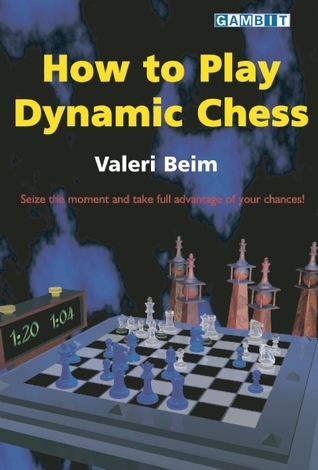
How To Play Dynamic Chess
Chess is fundamentally a dynamic game. Each move changes the situation and the possibilities for both sides. No piece is ever identically as valuable as any other, and their scope changes from move to move. The current generation of supergrandmasters plays unrelentingly dynamic chess, but a great deal of chess literature still deals with chess as if it were a predominantly static game. Much traditional chess teaching is based around rules of thumb that might work well 'on average' or in 'typical' situations, but these rules may not equip players for the specific and sometimes exceptional situations that they face in their games. In this book, Valeri Beim explains how to factor in dynamic considerations, and weigh initiative and time against material and other static factors. Topics dynamics, development, the king as a target, breakthrough, and the initiative.
- GenresChess
175 pages, Paperback
First published October 1, 2004
Ratings & Reviews
Friends & Following
Create a free account to discover what your friends think of this book!
Community Reviews
Displaying 1 - 1 of 1 review

September 3, 2026
Very much essential reading if you're still at the stage of building your foundation in attacking play. I find this is an excellent companion to Tal's "Attack with Mikhail Tal". Whereas "Attack with Mikhail Tal" teaches you how to spot the symptoms for a strong attack, "How To Play Dynamic Chess" teaches you one of the key concepts for building a sharp position and recontextualizes some of the abstractions Tal and Damsky left in their book but never clarified.
Beim does divagate a bit, pulling material from his book on Static Advantages (basically an introduction to Positional Play like Stean's "Simple Chess") to highlight how a strong player must switch between dynamic and 'simple chess' to convert their advantage into a win, but nothing that I think would instill any bad habits. Several strong players have noted how harmful it can be for one's game to learn positional play before they've gained sufficient proficiency in attacking play. Here's a translated excerpt on the topic by Soviet GM Grigory Levenfish:
It is important that studying chess tactics should precede the detailed study of the strategy. The amateur needs only the elementary knowledge of strategical principles, while paying extra attention to calculating chess combinations. The following scenario is all too common: one of the opponents, after studying numerous chess books, builds his position on the basis of the most scientific principles of the modern chess school... only to succumb to a simple two-move trap. The longstanding Soviet Women Champion [Olga] Rubtsova scored many points on tactical traps against the opponents who had extensive knowledge of the positional struggle, openings and endgames, but were helpless in calculating combinations. Even in the style of certain masters there is a lack of balance between tactics and strategy, which stems from the time when they started to climb the first steps on the ladder of chess successes. Such masters instinctively avoid complications, and when they are forced into them after all, the class of their play drops dramatically. Steinitz, the creator of positional school, in his younger days recognized only tactical struggle. The chess development of Lasker, Capablanca, Alekhne, Nimzowitsch, Réti and other first-class masters followed a similar path.
-How To Improve Your Chess Qualification, published in the bulletin Kuibyshev, #4, p. 7
5
Beim does divagate a bit, pulling material from his book on Static Advantages (basically an introduction to Positional Play like Stean's "Simple Chess") to highlight how a strong player must switch between dynamic and 'simple chess' to convert their advantage into a win, but nothing that I think would instill any bad habits. Several strong players have noted how harmful it can be for one's game to learn positional play before they've gained sufficient proficiency in attacking play. Here's a translated excerpt on the topic by Soviet GM Grigory Levenfish:
It is important that studying chess tactics should precede the detailed study of the strategy. The amateur needs only the elementary knowledge of strategical principles, while paying extra attention to calculating chess combinations. The following scenario is all too common: one of the opponents, after studying numerous chess books, builds his position on the basis of the most scientific principles of the modern chess school... only to succumb to a simple two-move trap. The longstanding Soviet Women Champion [Olga] Rubtsova scored many points on tactical traps against the opponents who had extensive knowledge of the positional struggle, openings and endgames, but were helpless in calculating combinations. Even in the style of certain masters there is a lack of balance between tactics and strategy, which stems from the time when they started to climb the first steps on the ladder of chess successes. Such masters instinctively avoid complications, and when they are forced into them after all, the class of their play drops dramatically. Steinitz, the creator of positional school, in his younger days recognized only tactical struggle. The chess development of Lasker, Capablanca, Alekhne, Nimzowitsch, Réti and other first-class masters followed a similar path.
-How To Improve Your Chess Qualification, published in the bulletin Kuibyshev, #4, p. 7
5
Displaying 1 - 1 of 1 review