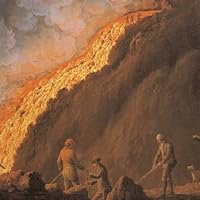
There are three men whose contributions helped free science from the straitjacket of theology. Two of the three - Nicolaus Copernicus and Charles Darwin - are widely known and heralded for their breakthroughs. The third, James Hutton, never received the same recognition, yet he profoundly changed our understanding of the earth and its dynamic forces. Hutton proved that the earth was likely millions of years old rather than the biblically determined six thousand, and that it was continuously being shaped and re-shaped by myriad everyday forces rather than one cataclysmic event.
In this expertly crafted narrative, Jack Repcheck tells the remarkable story of this Scottish gentleman farmer and how his simple observations on his small tract of land led him to a theory that was in direct confrontation with the Bible and that also provided the scientific proof that would spark Darwin's theory of evolution. It is also the story of Scotland and the Scottish Enlightenment, which brought together some of the greatest thinkers of the age, from David Hume and Adam Smith to James Watt and Erasmus Darwin. Finally, it is a story about the power of the written word.
Repcheck argues that Hutton's work was lost to history because he could not describe his findings in graceful and readable prose (unlike Darwin's Origin of the Species, Hutton's one and only book was impenetrable). A marvelous narrative about a little-known man and the science he founded, The Man Who Found Time is also a parable about the power of books to shape the history of ideas.
I picked up this book during my recent trip to Edinburgh, and it quickly became my favorite companion. I'd wanted to learn more about James Hutton (father of geology!), especially since I was visiting the very city where he'd given his startling lectures in 1785 pronouncing the Earth as "immeasurably old" -- much older than the then-accepted age of 6,000 years! And indeed, this book delivers. It tells a great and gripping story---or rather, several stories.
Other reviewers have complained that this book diverges from its primary topic of Hutton to go off on tangents about contemporary historical events, but this is precisely what I love about the book. It gave me a real sense of the context in which his work was set, and thereby provided a better understanding of its significance, and how it came about. I learned about Bonnie Prince Charlie and how his invasion of Edinburgh, accompanied by the highland clans, led later to the British exacting a brutal retribution that devastated the clans but, perhaps fortuitously for the future of science, afforded Edinburgh with its first real security that paved the way for the "Scottish Enlightenment" in the late 1700's, in which milieu Hutton thrived. Far from being irrelevant, since this all happened while Hutton was in college in Edinburgh, I think it is very relevant for imagining his life and his impressions.
The book is filled with evocative descriptions of Edinburgh, and in reading them while sitting in cafes or pubs, during my own exploration of the city, I was impressed with how Repcheck had really captured Edinburgh in his pages. I also really liked that Repcheck didn't end his book with Hutton's death, but continued on to chase out the unfolding story of geology as a science. Hutton's friend Playfair, who worked unceasingly to popularize Hutton's views, with more success than Hutton ever had, provides a particularly interesting epilogue to Hutton's life. The book also covers Hutton's influence on Charles Lyell, who articulated so much of geology in his own writings, and went on to himself influence Charles Darwin. It really is all one big pageant, which continues to unfold today.
Probably due to the fact that there just isn't much information about James Hutton, this book was more of a history of the times and places he lived. It didn't have the excitment factor that some other science biographies do.
"James Hutton burst the boundaries of time, thereby establishing geology's most distinctive and transforming contribution to human thought--Deep Time."--Stephen Jay Gould.
The Bible taught us that the world was "created" in about a week. By studying the ages of Biblical characters, scholars figured out that the world was about 6,000 years old. To counter that would mean hellfire and being burned to death here on earth. Some scientists still showed courage.
Nicolaus Copernicus argued in 1543 that the sun, not the earth, was the center of the universe. Out of fear for his life, he waited till the end of his life to publish his information.
It took Galileo, the first celebrity scientist, to publicize the true meaning of what Copernicus had written. He would be placed under house arrest for endorsing the Copernican system in an influential 1632 book.
The King James Bible, first published in the 17th century, verified the religious argument by placing specific dates in the margins. Thus all Christians knew God created the earth on October 23, 4004 BC.
In 1788, James Hutton would boldly confront this centuries-old wisdom. He knew the earth was much older. Most scholars relied on Noah's flood to explain geological formations. Such ignorance still prevails today. Hutton relied on observation. By so doing, he upset people in two ways: 1. the veracity of the Bible was in question, and 2. It displaced humans from the start of time. Just like Copernicus had taken man away from the divine center of things and Darwin would take man away from the divine altogether. All of these men--Copernicus, Galileo, Hutton, and Darwin--only wanted to seek the truth unconstrained by past biases, even those sanctioned by the clergy.
Hutton could not see where the beginning of the earth was, and he did not believe in any upcoming end with a return of some godhead. Hutton would influence Charles Lyell, who would in turn influence Charles Darwin. Giants rely on the shoulders of giants to aid civilization.
Hutton devised the first rigorous and unified theory of the earth. His two main discoveries: 1. The earth was consistently restoring itself, and 2. Subterranean heat was profoundly important.
Hutton was part of a Golden Age in Edinburgh, Scotland. It included David Hume, Adam Smith, Joseph Black, James Watt.
The Hebrew might have been lost if not for Eusebius from Flavius Josephus and Julius Africanus. His version is now known as the Septuagint Bible. 72 Israelites were brought to Alexandria to gather the oral histories. Legend! The truth is that Ptolemy II sponsored a translation in Alexandria. That version had tremendous influence. Exact days were given for lives of the famous people.
It would be Johannes Kepler who discovered that Christ was not born in the year 0, but in the year 4 BC.
Edinburgh smelled so bad, it was given the disparaging moniker Auld Reekie. Chimney smoke from burning coal helped. Also it was built on a ridge, so it could not have a plumbing system. When the clock struck ten, everyone was free to throw their trash out the window. People lit pieces of paper in taverns to kill the other smells. Sleeping meant covering your head with sheets to hide from the smells.
In the mid 1700s, the study of the earth was in its infancy. Genesis covered all you needed to know. The word "geology" would not come into use for another generation. However, there were many books that at least broke some ground. Giants always need to stand on the shoulders of others. The great Buffon, for example, was forced by the church to recant or lose his job. Religions have never been leaders in freedom of expression.
Hutton realized that erosion is necessary to form soil. Stephen Jay Gould called this "the paradox of the soil."
Hutton also dropped his bombshell that the earth was unknowably old. Hutton was accused by some as being an atheist and a blasphemer.
The importance of John Playfair cannot be underestimated. Hutton wrote his 1795 Theory of the Earth while he was in great pain. So Playfair took on the honorable of clarifying his friend's remarkable scientific discoveries.
Then James Hall began experimental geology by also proving Hutton's ideas. His reputation as a careful chemist meant his results were taken seriously.
But Hutton's enemies who could not leave their superstitions behind them continued to attack him.
Charles Lyell would carry the torch forward. He would use both Hutton and Playfair to write his book on geology. For the next 100 years it was the definitive geology book.
And that would influence Charles Darwin. Both Darwin and Alfred Russel Wallace both came up with the theory of natural selection. We think of it as Darwin's because he had the idea 15 years earlier. Lyell became Darwin's literary agent. The world was about to change.
A surprising review, considering the last few “fruitful”reviews of biographies. Something about the way this was written sparked something within me. It was more science-oriented, which was great. There was almost a dark academia vibe to it, theoretically the events of this book and the way of life of its characters is exactly what dark academia is/was.
“A story needed to be told” was said by Brian Greene in a review of this book. And it is exactly right. The life of Hutton is neglected in many ways nowadays, and not known amongst the non-geologist community. It is undoubtedly the case that without Hutton, there would have been no Lyell, without Lyell, there would have been no Darwin (in terms of discovery). And how would that have went?
It is truly a sad affair to know that James Hutton, who spent his life studying the Earth — who carefully made observations and new interpretations — died (literally) trying to defend his life’s work from people who could not break the wall of religious scripture. The world is indebted to the work of John Playfair and Charles Lyell for keeping his spirit alive.
Only through them, and the true friendship of the Oyster Club members, can we now — in the 21st century — say that we see “no vestige of a beginning… and no prospect of an end…”. His spirit must live on in the way we work as scientists today.
read for my geo class. kinda dull at points and don’t really understand why they’re giving you this info but overall a good book about how geology became a thing. gotta go write an essay on it.
Do you know who James Hutton is? Don’t feel bad if you don’t, he is a name that has unfortunately disappeared over time. So who is he? He originated the theory of uniformitarianism, which explained the Earth’s crust by means of natural process. Hutton's work established geology as a proper science, and thus he is often referred to as the "Father of Modern Geology". Hutton wasn’t a great writer though and his communication skills needed some work so it would take almost a century for his work to get any reorganization and for people to start believing that perhaps the Earth far more than 6,000 years old.
Ok, so I’m not the biggest geology fan – I took one course in college for a requirement and was perfectly fine after that. But I also know that geology plays a big part in our world so I was interested in this book. I had originally read a book called The Geography of Genius which brought up James Hutton and it’s my nature to research further and want to know more! I wish I had enjoyed this book a bit more. There seems to be a lot of gaps in the history of Hutton, so we get a lot of “we don’t know much about this time of his life….” So how do you fill in a 200+ page book when a lot of information on the main person is unavailable? Write about a lot of other people and the history going on around the time (some I found relevant, others not so much so) and be repetitive…sure, interesting, but not really what I wanted. However, I did learn some interesting things and I appreciated the terms in the back of the book since geology really is not my thing. A short book but not a particularly short read for me. If you are really in geology, you may enjoy this book but then again if you are THAT interested in the subject you probably already know about James Hutton…maybe.
Superb book! The fascinating age of discovery and exploration through the Industrial Revolution. Amazing to see how the age of the earth got pushed back from about 6000 years to a few billion!
I came across this book by accident while spending some time in Edinburgh, (my family on my mother's side originated from Edinburgh and I have spent many a happy hour in the city). Holidays are a great time time to explore and I wanted to know more about the characters that formed part of the Enlightenment, particularly those with the Scottish connection or background. I'd shown little interest in learning anything about history (and certainly not geology) at school so there was no reason to choose this other than mild curiosity. Reading through the book was like moving through a door into corridor with countless future options - spark to a flame - how many cliques are they for that moment when a slight interest becomes fascinated curiosity. I don't know if this is a great book but I'm certain it is a well told story of an amazing character in a remarkable period of time and well worth the effort of reading; highly recommended.
Review of Ages in Chaos: James Hutton and the Discovery of Deep Time by Stephen Baxter, November 2, 2009 By Walter H. Pierce
This review is from: Ages in Chaos: James Hutton and the Discovery of Deep Time (Paperback) This book gives an accurate assessment of the contributions of James Hutton (1726-1797) to science in general and geology in particular. Baxter gives "deep time" emphasis, but he does this, not by allowing the question of time to dominate the book. The organization of the book serves to elucidate the scientific concept of geologic time, a concept which Hutton jump-started, and delineates how the concept of deep time has evolved to modern day.
New ground and interesting for me is Baxter's treatment of "design arguments" (page 42) stemming all the way back to Aristotle. "Fred Hoyle - the British astrophysicist who unraveled the production of carbon I stars - said in 1959, 'I do not believe that any scientist who examined the evidence would fail to draw the inference that the laws of nuclear physics have been deliberately designed with regard to the consequence they produce inside the stars."
Stephen Baxter, the author, is an award-winning science fiction writer and was formerly educated as a physicist and engineer. I am a geologist by training and profession, and initially wondered if Baxter could give an adequate perspective to a work on Hutton. Please let me state to my geological friends that Baxter seems to have assimilated geology very well and shares most or all of our sensibilities. I can only guess that writing science fiction must be wonderful training and preparation for understanding and explaining the history of science and geology. As an example of two areas that satisfied my geologic chauvinism, Baxter pays very close attention to the roles of "field work" and Hutton's rock collection in the development of his scientific conclusions. This was new Hutton territory for me and I found Baxter's treatment fascinating - great book.
One of Baxter's final conclusions concerning Hutton is: "There have been many great geologists, but no figure before or since bequeathed a package of so many profound and integrated insights as James Hutton. And he was the first to construct a model of Earth's history containing its most essential feature, a vast and deep abyss of time."
To reach this conclusion Baxter takes us through a real History of Science lesson, not just Hutton biography, but the biography and contributions of his precursors, teachers, scientific peers, and successors who were impacted, conflicted by, and who supported and elaborated Hutton's work. Baxter is able to do this in 231 pages, and I think it would have been difficult to do it in fewer.
Baxter quotes Stephen Jay Gould: "......though Hutton was a great thinker, he was not a modern thinker. And he has been hugely misunderstood" (page 216). Baxter attempts to place the reader in the historic context in which Hutton lived: "How much harder it was for Hutton in a time when the textbooks had yet to be written!" There is a splendid review of James Ussher, the Irish bishop, that had established the earth's birthday as 22 October, 4004, BC, on a Saturday, at about six in the evening. Although this was established religious dogma at the time of Hutton's youth ".......it was obvious there was something wrong. You didn't even have to look at the rocks to know that." (Baxter, page 23). And, going against the Church was dangerous. Some of Hutton's most vociferous critics decried him as an atheist, in print. In addition to the obvious religious conflicts, Hutton's writing was obscure.
He assumed that the reader was more knowledgeable. "In addition nobody had really understood Hutton's careful epistemology and his uniformitarianism, or his arguments about heat - partly because he hadn't sufficiently explained them in a presentation Playfair called too brief." (Baxter, page 147) "Hutton was endeavoring to produce a complete and consistent body of physical theory and epistemological methodology to support his assertions about the Earth;..."(Baxter, page 177). By separating his observations from his inferences, Hutton was trying to explain the basis on which he derived his hypotheses, and by opening up his methodology for examination he was setting out his thinking as a basis for a true science of geology in the future - for that methodology itself could be improved (Baxter, page 132).
It was almost as if Hutton had two enormous goals: 1) explaining how the earth worked and 2) how to think and reason scientifically about the new unnamed science of geology. It is no wonder that readers had difficulty.
Playfair is well know to all geologists as the translator for Hutton. He was a warm friend and sought to make the significance of Hutton's work understood. He also wrote a biographic sketch of Hutton after his death which Baxter suggests is too idealized. Baxter attempts, I think successfully, to sleuth and flesh out the real man, Hutton, quoting some of his letters which are lively and salty.
Hutton begins university at age fourteen (1740), and studied math under Colin Maclaurin, who had been recommended by Newton. Hutton developed an interest in chemistry in spite of the University of Edinburgh not having a chemistry curriculum. After three years at University he took a position as an apprentice to a solicitor, but this did not work out. Hutton was still interested in chemistry. He went back to the University to study medicine. He met a fellow medical student named John Clerk who was from a prominent Midlothian land and coal mine owning family. Baxter believes that this began Hutton's interest, at age eighteen, in minerals, coal, and rocks (1744). After three years studying medicine at Edinburgh he left to continue his studies abroad. At age 21 he arrived in Paris (1747). "Hutton probably attended Professor Francois Rouelle's lectures on mineralogy in Paris. Rouelle pioneered ideas, concerning the order in which rocks had been laid down....." (Baxter, Page 45). From Paris he went to Leiden to complete his medical training. He wrote a thesis in French entitled, "On the Circulation of Blood in the Microcosm".
Returning to Edinburgh through London at age 23 he struggled with what to do next (1749). Apparently being a physician was not in the cards. He and a friend James Davie began a business producing sal ammoniac which was used in dyes and in the production of tin and brass. It was being imported from Egypt but he and Davie had worked a method to produce it in Scotland from chimney soot collected in Edinburgh.
"But now his life was devastated by scandal." (Baxter, page 58) There is fragmentary evidence of a women, and a son emerges after Hutton's death. The episode was so embarrassing to Hutton that he felt a need to retreat from Edinburgh to two small farm properties of his father's southeast of Edinburgh along the coast in Berwickshire (1752). "The Land was wild and uncultivated, just open fields that backed on to sheep country. Stones had to be split and hauled away before Hutton could work the soil at all" (Baxter, page 64).
Here from age 26 to age 39 farming became his chief occupation. Initially he focused on learning what he could from other farmers that were sucessful. He traveled to and apprenticed under excellent farmers in Norfolk, Yarmouth, and Belton. "He made many journeys - mostly on foot - to different parts of England. He visited Northumberland, Yorkshire, Derbyshire, Cambridgeshire, Oxfordshire, and the Isle of Wight. These trips were made primarily to study agricultural techniques, but by this time Hutton had also begun to study geology and mineralogy in a more serious way" (Baxter, page 61). "Hutton would later boast that he could tell you where a piece of gravel had come from anywhere on the eastern side of Britain" (Baxter, page, 61).
"Hutton persevered with his farming, and slowly his situation improved. His Norfolk plough transformed the land. As Adam Ferguson noted, 'The joke [of his Norfolk plough] has become serious, and is now the general practice from one end of Scotland to the other.' The farm, once 'very wild and uncultivated piece of land', had a 'degree of neatness and garden-like culture, which in farming had not been seen before. Persons of every description came from every quarter to gratify their intellectual curiosity, as well as to get information' " (Baxter, page 72). With pioneering techniques, he had greatly improved the condition of his land, and his agricultural studies had become the focal point of his interlocking interests in chemistry, meteorology, geology and botany. His achievements showed the quality of his character and his mind" (Baxter, page 80).
Hutton's natural focus on soil must have led to this key intuition:...."the world did not suffer only decay: perhaps it also had the capability for repair" (Baxter, page 76).
"This was Hutton's picture, then: rocks decayed through erosion, the rubble was consolidated into new rocks, and then somehow uplifted to make new lands - erosion, deposition, consolidation, uplift. And cupped in the heart of this immense rocky machine, the priceless soil that sustained life was subtly created" (Baxter, page 78). Arguing with the support of final causes and design arguments Hutton reached this hypothesis. ".....starting from first principles - that the final cause for the Earth is to sustain life - Hutton deduced that it must have some mechanism of repair from erosion, just as Harvey had once deduced the existence of capillaries in the body, then undetected, to complete his model of blood's circulation. The task now was to find that mechanism....." Baxter continues on page 77 quoting Hutton: ' This is the view in which we are now to examine the globe, to see if there be, in the constitution of this world a reproductive operation, by which a ruined constitution may be again repaired, and a duration or stability thus procured to the machine, considered as a world sustaining plants and animals.'
At the age of 41 in 1767 Hutton determined to return to Edinburgh. He build a new home facing the spectacular geology of Salisbury Crags and Arthur's seat for himself and his three sisters. Previously...."He had been elected to a committee which was to supervise the construction of the Forth and Clyde canal" (Baxter, page 79). "It was against the background of the elegant new city, and in the heads of a literate, independent-minded and newly prosperous populace, that the Scottish Enlightenment would bloom, causing Voltaire to say, 'It is to Scotland that we must look for our idea of civilization' (Baxter, page 86).
It was a relief for Hutton to move into his new house on St. John's Hill, his collection was taking up to much space.......Hutton would examine his specimens chemically and under the microscope, and then varnish them to keep them looking bright. He would prune his hoard to focus on the most intellectually valuable samples" (Baxter, page 97).
This era was know as the Scottish Enlightenment. Many of the most famous men were personal acquaintances or good friends of James Hutton. The David Hume family farm was near Hutton's farm. Joseph Black, Adam Smith, and James Watt were personal friends. Hutton visited with Erasmus Darwin, grandfather to Charles Darwin. And Hutton attracted and mentored younger talents such as Sir James Hall and John Playfair. These men met and shared their scientific theories at the Philosophical Society and at gentleman's clubs such the Poker Club. Large volumes of Claret were also imbibed.
As previously mentioned Hutton began a tradition of field work and travel with his agricultural studies. He went back to the low countries in 1754. In 1764 he traveled to the Scottish highlands with George Clerk-Maxwell where Hutton compiled notes, observations, and reflections on the geology. In 1774 made a long trip to Birmingham, Wales, Anglesey, Wiltshire, Bath, Warwickshire, and Derbyshire. "....as early as 1764 his forays into the field had become directed and specific, as he sought evidence to support his arguments" (Baxter, page 116). "In Wales he mostly had to ride on horseback, and his backside took a good deal of punishment: during this forty-day tour his riding breeches would wear out four times" (Baxter, page 111). In 1779 he went to Shropshire to climb Wrekin. In 1785 he went to Glen Tilt. In 1787 he went to Arran to search for his concept of an unconformity with, marginal results. Later in 1787 he discovered his first clear unconformity at Jedburgh, by serendipity in the "borders region" of Scotland. And finally by a directed effort from the sea to the coast he discovered at Siccar Point, a clear cut example of an unconformity. On that day he was accompanied in the field by John Playfair and Sir John Hall. What better way to make permanent disciples. Baxter quotes from Playfair: "The mind seemed to grow giddy by looking so far into the abyss of time; and while we listened with earnestness and admiration to the philosopher who was now unfolding to us the order and series of those wonderful events, we became sensible how much farther reason may sometimes go than imagination can venture to follow."
Baxter does a masterful job of piecing together the rest of the story, and at the same time putting it into historical context. This includes the oral presentation in 1785 and print version in 1788 and book version of Hutton's Theory of the Earth in 1795 and the blistering attacks which followed. "Hutton knew he had to defend himself. Even more so then in 1785, Britain in 1793 was not a good place to be called a heretic" (Baxter, page 174).
"By now most European geologists were divided into two camps, neither of which had been influenced much by Hutton's theories. The 'Vulcanists', including Desmarest and Faujas, were fire geologists, who believed that volcanoes must have had significant effects on the evolution of the Earth. The other school was the Neptunists, who thought volcanoes were irrelevant special effects. To them water was the key agent . All Neptunists hypothesized some kind of universal ocean, out of which the rocks had been deposited. But there was still a whole spectrum of theologically inclined thinkers, ranging from those who still held to the most literal interpretation of the Bible account, to others who interpreted its teaching in a more symbolic or allegorical way" (Baxter, page 165-166).
On a Saturday in March 1797 James Hutton died. "Essential or not, Hutton's huge work was almost universally ignored by learned society, then and since. Even his closest friend, Black, wouldn't buy a word of it" (Baxter, page 168). These words by Playfair serve as a memorial: "With [Hutton's] relish for what ever is beautiful and sublime in science, we may easily conceive what pleasure he derived from his own geological speculations. The novelty and grandeur of the objects offered by them to the imagination, the simple and uniform order given to the whole natural history of the Earth, and, above all, the views opened of the wisdom that governs nature, are things to which hardly any man could be insensible, but to him they were matter, not of transient delight, but of solid and permanent happiness....No author was ever more disposed to consider the enjoyment of them, as the full and adequate reward of his labours" (Baxter, page 185).
Baxter continues with the history of the conflicts among the Vulcanists, Neptunists, Catatastrophists, and Uniformitarianists and the development of the concept of geologic time. By and large Hutton's team wins but the men he mentored, John Playfair, and Sir James Hall led the way by clarifying communication, updating, and finishing the science. "In 1824, aged sixty-three Hall accompanied yet another keen young geologist on a repeat of Hutton's classic expedition to Siccar Point. The youngster was much impressed - and, a quarter of a century after Hutton's death, it was to him that the responsibility for the next stage of the argument would devolve. ....... His name was Charles Lyell" (Baxter, page 203).
Baxter abstracts the rest of the story, carrying on with Lyell, Darwin, Kelvin, Rutherford, and Holmes to near present day. This neat and concise volume gives us an excellent introduction to James Hutton and how he almost single-handedly turned the study of the earth into a science called geology; and gave us a way of fruitfully thinking about and making sense of the Earth.
Jack Repcheck’s “The Man Who Found Time” is a concise and engaging biography of James Hutton, the Scottish polymath, who had the courage to follow the evidence of his studies in geology and conclude that the earth was much older than the 6,000 years suggested by the Book of Genesis.
Repcheck laments that James Hutton is not widely recognized today, and cites a number of reasons: he announced his greatest hypotheses at a time when the world’s attention was focused on politics; namely, the American and French Revolutions, he was a poor writer, and he lacked Charles Darwin’s ability to captivate a wider public. This is borne out by the fact that Hutton’s masterpiece, “The Theory of the Earth,” sold a scant 500 copies.
Repcheck demonstrates that Hutton's work was profoundly influential. Hutton took to the field and presented evidence from his studies of Siccar Point and Glen Tilt to refute the accepted chronology of the earth which was proffered in the Bible's creation narrative. Repcheck notes that Hutton was held to be a heretic, despite being a man of faith. Here, Hutton was fortuitous insofar as he came of age during the Scottish Enlightenment; he recognized that the natural forces of heat and pressure such as volcanism and erosion operated under the aegis of natural law, and required long periods of time in order to do their work. Thus Hutton did not rely on explanations such as the Deluge or the Universal Ocean, to elucidate the origin of the geological formations he found in the Scottish Highlands. And, importantly, Repcheck demonstrates how Hutton’s Boswell’s- Black, Playfair and, in a sense, Lyell- paved the way for Darwin and Wallace to revolutionize science with their theories of evolution.
While Repcheck generally does not address the reaction Hutton elicited from the established Church of Scotland, or the Catholic Church’s response to this challenge, the book is a timely reminder that science requires bravery, as well as independence from both church and state. This is an excellent work and is well worthwhile.
This book is the story of James Hutton, an 18th century Scottish solicitor’s clerk turned physician turned farmer turned geologist. Hutton is credited with demonstrating that he Earth is immeasurably older than what was believed at the time and he is celebrated today as the father of modern geology. It is a fascinating story and the author tells it well, BUT… (There is always a BUT, isn’t there?). Apparently, there is very little primary material for Hutton, so the author resorts to padding and conjecture. Padding: An inordinate part of the book is taken up by the detailed history of Scotland and especially Edinburgh during the period under consideration. Although some of this material is undoubtedly useful as background of the story, I believe that to devote page after page to the minutiae of the Jacobine Uprising and Bonnie Prince Charlie’s struggle to (re)gain the throne of Scotland is beyond the scope of this book. Conjecture: : I did not count the “perhaps”, “probably”, “likely”, “possible” and “may” in the text; just one paragraph (p. 58) contains 5 instances. And then, there are the factual errors: Constantine did not “immediately convert[.] to Christianity” in 312 CE (p.27); he was baptized on his death bed in 337 CE. He was not “try[ing] to convert pagans to Christianity” (p.27); his Edict of Milan (313 CE) was an edict of tolerance. He did not make Christianity “the official religion of the empire” (p.27, 38); it was Theodosius who did that in 380 CE. How could “Jesus and his followers” use the Septuagint (p. 31) since it was written in Greek and they, as illiterate peasants or fishermen, only spoke Aramaic? The “old Roman Empire [of the east]” did not last only “a couple of centuries” (p. 39) after the fall of Rome in 476 CE; it lasted another thousand years until it was conquered by the Ottomans in the 15th century.
This book is well written and always interesting, but frequently ventures off topic. I suppose this is due to the fact that little information exists with regards to certain timespans in Hutton’s life and work. The man lived in the 18th century and didn’t keep a diary so the only solid information about him and his groundbreaking theory (pun intended) come from his publications, correspondences, and secondhand writings by people who knew him.
The author seems to cope with these sparse areas of Hutton’s life by filling them with things like Bonnie Prince Charlie’s failed rebellion or Edinburgh’s urban planning. Instead, I think this biography could’ve focused more on humanity’s understanding of the earth and its origins before Hutton and after him. The beginning of the book discusses what Europeans believed for centuries based on biblical scriptures, but no mention is made about the beliefs of everyone living outside of Christianity, Judaism, or Europe itself. There is also no mention of beliefs from antiquity.
The book is not overly long and it gives good insight into the workings of the scientific community in Scotland during the 18th and 19th centuries. It also helps readers understand the slow and arduous process of overturning long held societal beliefs (especially ones that were espoused by the christianity).
This is a great book if you want to know about the Scottish Enlightenment, the murderous British campaign to repress Scottish independence, or James Hutton's efforts to demonstrate that the earth's internal heat and volcanic activities are what causes the formation of various forms of rock. The problem is that the book's title promises to focus on Hutton, but it does not--only about 80 pages out of 207 are about Dr. Hutton. In fact, by page 161 Hutton is dead, and his theories regarding the earth and its "antiquity" were under attack and in peril of being lost to science. In the remaining pages, Repcheck does a thorough job of showing how several of Hutton's allies and, ultimately, the better known Charles Lyell, turned the tide in favor of Hutton's ideas, but the fact remains that Hutton himself remains rather mysterious. Also mysterious is the choice of this book's title--"The Man who Found Time"--which gives no clue that Hutton's work concerned the workings of the earth. Nonetheless, this is a solid introduction to the significance of Hutton's discoveries in banishing Bible-based geology and clearing the way for Darwin's theory of evolution.
I am genuinely sad to be done with this book. It was such an enjoyable read.
I found myself at time mystified by the detours the book took, but I enjoyed all of them.
Eventually it told the entire story, or at least its particular story.
I have one complaint, but that is not the reason it gets four stars (five stars goes to Dubliners and the like, FWIW). Yet my complaint is about the issue of time. It’s a tremendously complicated issue and the kind of history that Repcheck told couldn’t really do it. He’s telling a story about a series of different individuals. Fascinating ones, mind you.
But certain ideas simply cannot be comprehended by that type of history. These ideas are too big. They shape schools and institutions, and philosophies result from them. So to tell the story from the perspective of a series of thinkers just doesn’t do it justice.
Geological time is one of those. But I think Biblical accounts of time are another such idea.
Awesome! The book informs the reader of one of the most exciting periods of human history with perhaps one of man kinds most powerful thinkers. James Hutton is if you can't already tell one of my favorite figures in history. Often in life you have many thinkers all considering the very same theories and notions and so new laws and axioms, conventions are simultaneously co-invented or established. Rarely do you have those historical figures that advance are understanding by centuries or depending on the moment perhaps light years. In my opinion Galileo, Newton, Hutton, Darwin, and Einstein of the scientist are a few. There are of course figures not just in the science as well who deserve the same recognition, but I digress.
Very informative and an easy read. Kept my attention throughout.
The book covered the life of James Hutton and his geological investigations, and also introduced many of his contemporary scientists. Charles Darwin (who came later) was very influenced by Hutton and his idea of an old earth. One of Hutton's supporters was Charles Lyell who wrote "Principles of Geology" which Darwin brought with him on his Beagle voyage.
Reading this book, it struck me (again) how scientists do not work in isolation, but stand on the shoulders of previous explorers and their discoveries.
I also got to know Edinburgh with the help of Google Maps.
This book gave so many interesting description of how James Hutton (One of the Fathers of Geology) laid out the basic notions of geological studies that opened to the our understanding of how old our planet is. Before his time, every scholars and educated men believed that the bible has told all the facts about how the origins of everything started, and that was from God's creation in the book of Genesis. But Hutton laid a practical explanation about the geological formations of earth by digging rocks and fossils and analysing its sediment formations and its mineral deposits. At his time, geology was not a well studied field of science. Great book to read.
Before Darwin capsized the boat of Creationism, Hutton fired a warning shot across the bow. This is an enjoyable read about someone who helped advance our understanding of our planet, in the context of those who came before, and after, him. It also tells a bit about the broader but less known (at least to me) “Scottish Enlightenment” and Hutton’s contemporary “free-thinkers” like Hume, Adam Smith and James Maxwell.
Excellent review of the life of one of the most important scientists of the 18th century, who is now only known by geologists. Let's change that! Without James Hutton, Charles Darwin could not have perceived deep time. James Hutton, using solid observation and reasoning, figured out the basics of how the earth works, overlooked by all who had come before, their minds warped by biblical indoctrination. Well-worth the read!
A short very readable biography of an important but relatively little known member of the Scottish Enlightenment and father of modern geology.
I was introduced to Hutton by Stephen J. Gould having read his excellent “Time’s Arrow, Time’s Cycle” many years ago.
While the biographical details of Hutton are sometimes rather sketchy (as the author himself acknowledges) the book does an excellent job of places his life and works in the appropriate context.
Easy to read for a nonfiction science book. However, if you're looking for lots of insight on the geology related to this topic, you won't find it. The book was more about the social implications of the theory, how his life and history led up the the theory, and the historical ripples that occurred as a result of Hutton's theory.
The book’s beginning has in depth coverage of the church’s established beliefs of the age of the Earth, to show what James Hutton and others of the Scottish Enlightenment movement were facing as they found evidence of Earth’s ancient beginnings. Rich in detail about places and people, this was a great read.
Repcheck addresses the age of the earth and hits high points on the timeline of the man who helped establish the field of geography. He does well with laying the foundation of where thought was at the time, and covering the contemporary scientific theories.
A good historical review for those interested in geological time, geology, and aspects of geography and natural selection... Up to the present I've only been familiar with Lyell's work in this field...
A detailed account of James Hutton's life, with final chapters and epilogue connecting him to Lyell and Darwin. Although I enjoyed some of the background information (e.g. Bonnie Prince Charlie and the Jacobites), that level of detail didn't add much to the overall story.
3.5 This was very interesting and I learned a lot. It definitely made me want to visit Scotland again! It does have some very interesting information about geology and how some pretty incredible scientific discoveries were made.
Very thinly researched. Only 200 pages but the first 50 or so (it felt like) wonder off into a rambling digression on biblical ideas on the creation of earth. About 30 pages directly deal with the life of Hutton and most of those lean heavily on “he may have…”, “he probably…”etc.
A really fantastic read for anyone with even a remote interest in the planet. Learning more about the background of the concept of the "6000 year old Earth" + some of the history of Scotland/England + the Scottish Enlightment was charming!