From the eve of the Great Depression to the onset of World War II, Lynd Ward, America’s first great graphic novelist, bore witness to the roiling, dizzying national scene as both a master printmaker and a socially committed storyteller. His medium of expression, the wordless “novel in woodcuts,” was his alone in the United States, and he quickly brought it from bold iconic infancy to a still unrivalled richness of drama, characterization, imagery, and technique.
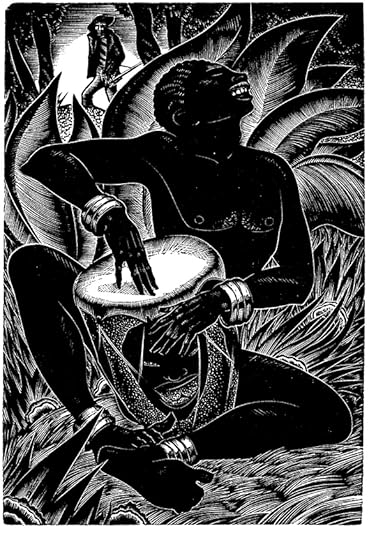
In this, the first of two volumes collecting all his woodcut novels, The Library of America brings together Ward’s earliest books, published when the artist was still in his twenties. Gods’ Man (1929), the audaciously ambitious work that made Ward’s reputation, is a modern morality play, an allegory of the deadly bargain a striving young artist often makes with life. Madman’s Drum (1930), a multigenerational saga worthy of Faulkner, traces the legacy of violence haunting a family whose stock in trade is human souls. Wild Pilgrimage (1932), perhaps the most accomplished of these early books, is a study in the brutalization of an American factory worker whose heart can still respond to beauty but whose mind is twisted in rage against the system and its shackles.
The images reproduced in this volume are taken from prints pulled from the original woodblocks or first-generation electrotypes. Ward’s novels are presented, for the first time since the 1930s, in the format that the artist intended, one image per right-hand page, and are followed by five essays in which he discusses the technical challenges of his craft. Art Spiegelman contributes an introductory essay, “Reading Pictures,” that defines Ward’s towering achievement in that most demanding of graphic-story forms, the wordless novel in woodcuts.
LYND WARD (1905-1985) illustrated more than two hundred books for children and adults throughout his prolific career. Winner of the Caldecott Medal for his watercolors in The Biggest Bear, Mr. Ward was also famous for his wood engravings, which are featured in museum collections throughout the United States and abroad.
وارد روایت صرفا تصویری با وودکات* رو در اروپا با کارهای فرانس ماسریل و اوتو نوکل شناخت و با خودش به امریکا بردشون. این کتاب مجموعهایه از سه رمان اولش و سه رمان بعدیش هم در جلد بعده. کلمات فقط در عنوانها یا جزئی بصری از تصاویرن مثل تابلوی مهمونخونه و عنصر روایی فقط تصویران. . [image error] . احتمالا به خاطر تاثیر بصری اکسپرسیونیستهای المان و فکری ماسریل، یکی از المانهای اصلی رمانهای وودکات به طور کلی تفکرات سوسیالیستی دونسته میشه که تقریبا تو تمام تصاویر رمانهای وارد هم دیده میشه. چیزی که باعث شد کارهاش تو امریکا و کارهای ماسریل تو المان نازی ممنوع بشن. تعارض فرد و جامعه، سنگینی سرمایهداری، انگست و سرکوبشدگی تو ساختمانهای بلند و آغوشها به یه اندازه دیده میشه. . [image error] . رمانها به تنهایی لذت بخشن و مقدمه اسپیگلمن خالق معروف maus هم برای درک بهترشون کمک کنندهان. هر چند دومی برای من بیش از حد روایت پیچیدهای داشت و بعضی جاها سخت بود ارتباط رو بین اینتروالا پیدا کنم. احتمالا دوباره بخونمش. *تکنیک وودکات woodcut یه جور چاپ با حکاکی نگاتیو تصویر روی چوبه که قسمتهای تراشیده نشده جوهر رو به کاغذ میدن و قسمتهای تراشیده شده سفید میمونن. .
a collection of lynd ward's first three wordless woodcut pre-WWII graphic novels... GODS' MAN is fantastic, just beautiful (though a little obvious on the last page)... had me in tears and exhilarated at the same time... MADMAN'S DRUM and WILD PILGRIMAGE are aren't as good but are more experimental and maybe more interesting from a historical perspective... if one is interested in an historical perspective... but, yeah, GODS' MAN... just a perfect emotional journey in pictures... really amazing pictures! timeless stuff.
An absolute classic! A novel told entirely through woodcuts --and what a treat! The images are so mesmerizing even my reluctant teenage students can't help but be absorbed by them. Ward tells three different stories in this volume, but by far the best is 'God's Man'.
All of the stories are predictable and basic; however the storyline is entertaining enough and the creativity behind this work is palpable. I had no idea so much could be done with a woodcut, from tones to texture to layout!
This classic graphic novel can be read in minutes but it takes longer to fully appreciate it.
Impressive work. But a bit overwhelming. The chronology in the back was particularly good, but clearly I like words over pictures. The other essays in the back added somewhat, as did the introduction. I guess I would have preferred a smaller volume was discussion on the pictures themselves, or even better words between the pictures like it had been for a silent movie. Clearly this is worth reading for anyone interesting in where graphic novels came from.
This is a collection of three wordless novels. Each page contains a woodcut illustration that tells the story of several characters. Powerful, creative, and engaging. The novel God’s Man is probably the best of the three.
There are a number of things I really liked about this book and a few drawbacks. "God's Man" was enjoyable but seemed a bit obvious in its plot and message. With "Madman's Drum" I had a bit of difficulty following exactly what was going on and feel I got lost as the story covered a lot of ground. At the same time, I had a great deal of fun just taking in some of the illustrations. Ward includes some very complex uses of textures and line styles, particularly in illustrating some outdoor scenes full of different types of trees, bushes, flowers, and grasses. My falling into the individual illustrations may have played a part in losing track of the story. In general, this book is worth checking out just to see the illustrations individually. On many of the pages I stopped and thought about how great it would be to have that particular illustration framed and hanging on my wall. In "Wild Pilgrimage," Ward also goes back and forth between black ink prints for what is happening in reality, and a reddish/rust color ink on the illustrations that show what is happening in the main character's head, which is very effective in terms of conveying the concept behind the story. I also found Ward's essays on the different stories to be enjoyable, even though they were largely about block print techniques, and they all ended rather abruptly. I was somewhat disappointed that the introduction by Art Spiegelman was the same as is printed in the other volume in this collection, and the same timeline of Ward's life as is in the other volume is also presented at the end of this one.
You need to read this. Yeah, you. If I could have given it 6 stars, I would have. It's been a long time since I've read something that both moved and inspired my thinking so dramatically. And the stories are entirely wordless. They are novels in woodcuts, very reminiscent of Fritz Lang, Murnau and both soviet and WPA propaganda. I came away thinking that if I taught high school or college English, wordless fiction would be a required unit. It requires mindfulness and attention to detail and makes the brain work in ways it usually doesn't have to. All the while spinning gloriously ironic and tragic tales. Even if you are not into graphic novels, if you like art or Edgar Allan Poe or just want a challenge. You need to read this. Yeah, you.
I learned about this book in a recent conference workshop. I only "read" the first story - Gods' Man -- and skimmed the others. This is a wordless novel in woodcuts. Each page is an individual woodcut, beautiful details. These images viewed in sequence portray a story.
Gods' Man was originally published in 1929, considered America's first graphic novel.
It's pretty amazing how much story Ward can tell using just the block cuts and no words. Truly impressive. As a fan of both comics and printing, I really enjoyed this.
I had to move books today and among my Library of America books, I encountered the 2 volumes of Lynd Ward's work. I decided to read Volume 1, which contains Ward's first 3 graphic novels (with the images from woodcuts), an introduction by Art Spiegelman, and four essays by Ward. The original woodcuts, if available, were used for the novels. The images all appear on the right hand side page and are quite beautiful. In and across the novels, the images of men and women are similar or identical. Spiegelman's introduction is very helpful in understanding the novels.
Gods' Man, published in 1929, is a familiar story - artist makes a deal with the devil for a brush that makes his paintings desirable. Artist becomes famous but disillusioned by the decadence of the city. He leaves for the country in bad shape and is nursed to health by a beautiful woman who herds goats. They marry and have a son. Then the devil shows up to get what he was promised and the artists pays what is owned.
>i>Madman's Dream, published in 1930, was harder to follow. It is supposed to be a family saga. I understood generation 1, with the patriarch being a procurer and seller of slaves. His son is quite literate, marries and has a daughter. Thanks to Spiegelman, I know it is the daughter's beau who is tried by a 3-judge court and hanged because he is a communist.
Wild Pilgrimage, published in 1932 tells the story of an American factory worker. While not as complex as Madman's Dream, I would not have understood its core theme but for Spiegelman's introduction. In this book, some of the woodcuts are sepia in color rather than black & white. I took those to represents the dreams of the tortured factory work but I could be wrong!
The essays were interesting.
Overall, an interesting experience, although I have to say, I prefer comic books (especially non-comic ones) for my graphic reading, as I need the hints in the words to best appreciate the illustrations.
Lynd Ward is commonly accepted as the first American graphic novelist. He produced six “novels in woodcuts” from 1929 to 1937, the first three of which are collected here. The stories are fairly dark and deal with a Faustian bargain, generational violence, and brutal factory working conditions, respectively (the latter clearly inspired by the Great Depression). Gods’ Man was Ward’s first story and probably the best here; the other are two are good if slightly confusing. The art of course is the real draw, and remains stunning to this day. There are influences from German Expressionism and Art Deco, while some images look like they could be used in labor propaganda from the time period. Yes, these stories are different from what we now refer to as the “graphic novel,” but they still can be identified as sequential visual storytelling. Ward came from a printmaking and illustration background, not comics, so it makes sense that he would produce works like this.
A cool collection. Nicely presented, too, with one image per right-hand page, allowing you to really focus on what you’re seeing (this is apparently how Ward intended to have his work printed). I have the second volume queued up.
It's difficult to review books that are influential to entire genres being created after being deeply versed with the evolutions and byproducts of the original work. Typically an issue for comedy movies. The similar prototypical nature to these stories are some of the earliest versions of modern graphics novels that make it hard to evaluate on a level field. The stories themselves are relatable enough but not completely timeless with some of the imagery being more contemporary with the original publication. I think the mesmerizing feature is the effort involved creating each image as a woodblock. I've always had an appreciation for woodblock artwork and the sheer volume and consistency of these collections is nearly unfathomable to the point of being lost due. Quality modern graphic novel illustration methods certainly have a lot of nuisance and effort put into every panel but the physicality of wood carving/engraving every panel is astonishing and I haven't even mentioned the aesthetics.
Contextual to when it was published it's easily 5 stars but the question or relevance and enjoyability today? I'd say it doesn't have mass market appeal but feels like an enjoyable piece of art history that I'm happy to have on my bookshelf.
Endlessly inventive and astonishingly prolific, Lynd Ward created six "novels in woodcuts," the first three of which are beautifully reproduced in this volume, which includes essays by the artist and an introduction by Art Spiegelman. The precursors of graphic novels, Ward's pioneering works developed over time in technique and narrative complexity, progress that is fascinating to trace in the three chronologically arranged novels in this volume from the Library of America. (While the stories are told in pictures, I'd suggest that readers get some background words on each, especially the somewhat convoluted Madman's Drum.) Ward illustrated countless children's, YA, and adult books, including a number by his wife, May McNeer. The first of the children's books he both illustrated and wrote, The Biggest Bear, won the Caldecott Medal. (A lifelong worker for social justice, Ward's father, the redoubtable Harry F. Ward, was elected the first chairperson of the board of the ACLU in 1920, a position he filled for 20 years.)
يعتمد سرد ليند وارد على الصورة فقط. لا توجد كلمات على الورق، مجرد رسومات لمشاهد في القصّة. هذه هي المرّة الأولى التي أتعرّض فيها لهذا النوع من السرد الصوريّ، على أنني أقرأ المانجا اليابانية. الرسومات في المانجا اليابانية جزءٌ مهمٌّ للقصة؛ لأنها تخلق معنىً جديدًا، وأداة مفتاحيّة لفهم الأحداث ورسم تصوّرٍ ما لمقاصد الفنّان. أما في حال ليند وارد فالقصص لا تحتوي إلا على صور؛ إذ إنّ لكلّ قارئٍ سردٌ خاصّ ومقاصد خاصّة، فالنص احتكارٌ للمعنى والكلمة سجن القارئ والصورة متاحة للجميع.
أفضل القصص الثلاثة بالنسبة لي: المصطفى. وهي تلتف حول مسرحية رومانية لبلاوتوس، وبالتحديد، حول هذا النص: «Quem di diligunt, adulescens moritur» «من يحبّه الله، يأخذه إليه»
I read these out of a sort of obligation to be well-versed in woodcuts but the stories are too vague and open to interpretation for my preference in reading. I like to know what the creator is attempting to convey as precisely as possible- not to play a guessing game.
With these, I could figure what he was "getting at", yet I felt that I was constantly following the wrong thought-patterns through them which ultimately left me confused and upset. I like waxing philosophically upon narrative more than most but I need to know what exactly I'm digging into to in order to enjoy doing so.
Before I go further, this collection contains three of Wynd’s works, one of which is God’s Man.
God’s Man is one of the best pieces of literature I have ever read (viewed?). The entirety of all three graphic novels are done in fantastic art deco woodcut illustrations, all without any words. However, published in 1929, God’s Man is the strongest out of the three and if you were to only pick up one story, read this one. The other two were beautifully done, but weaker. You must read God’s Man though. It is an absolutely marvelous work of art
I thought the concept of a novel without words fascinating, and this book did not disappoint. Of the 3 stories, I found I enjoyed the Wild Pilgrimage the most. Something about these novels stuck with me afterwards; I don’t know if it’s because this style of writing requires the reader to interpret through feeling more than through thoughts, but I felt a residual sense of shared experience with these protagonists. Interesting and quick read. :)
Lynd Ward’s first three graphic novels, though the term didn’t exist until quite a while after he did these, in the late twenties and early thirties – he was clearly a competent graphic artist at that point, becoming equally good at telling a story in a completely visual format took him a bit longer. But he improves a lot at that in the course of this collection, I’m giving four stars mainly on the strength of Wild Pilgrimage, his third effort.
I was drawn to this book for some excerpts I’d seen. I was unaware of the intense nature of the stories as well as some of the more graphic images. I’d intended to use it as an example of different methods for story telling and art for my children’s homeschool lessons. It will not now be available for this purpose. Though the art and story are indeed wonderful!
God's Man – perfectly modest. Madman's Drum – overly complicated plot and confusing composition. The worst offender. Wild Pilgrimage – art is more modernist. Other than that, forgettable.
A series that would've been fantastic had the artist recognized the limitations of his medium and stuck to simple stories.
I think “Madman’s Drum” was actually my favorite, despite my agreement with others that it’s least effectively composed of the three. Inventive work, with a real understanding of how sequential images can work in complicated ways, beyond being a replacement for text.