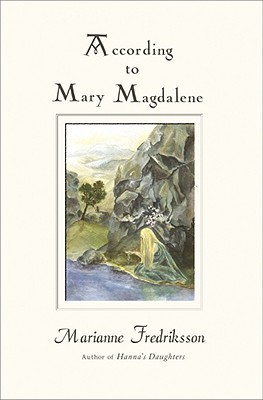
Long ater the death of Christ, the apostles seek out Mary Magdalene. They have come for her memories of Jesus, as she was closest to and most loved by him. Thus begins her story: her childhood and the murder of her parents; her education and service at a brothel; her first love. Mary recounts her intimate experience with Jesus of Nazareth--of meeting this remarkable man, their all-too-human relationship, and his journey toward destiny.
Later, when she realizes the apostles are intentionally altering Christ's teachings to suit their own goals, Mary struggles to spread the undistorted teachings herself, joining with her sisters who would otherwise have no place, and no voice, in the new church the apostles are creating.
In sharing her own story, Mary weaves a richly textured tapestry of people, landscapes, cultures, and beliefs, and provides new insight into the role of women in the early Christian church. Marianne Fredrikkson masterfully breathes new life into the figure of Mary Magdalene in this triumphal novel of the life, death, and resurrection of Jesus Christ, seen through the eyes of the woman who loved him most.
Marianne Fredriksson was a Swedish author who worked and lived in Roslagen and Stockholm. Before becoming a novelist, she was a journalist on various Swedish newspapers and magazines, including Svenska Dagbladet.
Fredriksson published fifteen novels, most of which have been translated into English, German, Dutch and other languages. Most of her earlier books are based on biblical stories. A central theme in her writings is friendship because, as she maintained, "friendship will be more important than love" in the future.
1997. I read "Volgens Maria Magdalena". Fredriksson [Swedish author] became VERY famous among Dutch readers in 1998 with her book Anna, Hanna and Johanna: Good book bringing to life three generations of women in Sweden.
This one does a great job of making the first century AD come to life for me. Roman rulers, Greek traders, Greek as lingua franca of the whole Near Eastern coast; Jews, early Christians, Jewish Christians, and all those who worshipped the multiple gods of Greece and Rome [and earlier ones].
You follow Jesus around in his final year of life, as seen through the eyes of Mary of Magdala. Fredriksson brings in lots of stories familiar to us from the New Testament, but now in a different light. The bulk of the book shows us something of the confusion of beliefs in the couple of decades right after Jesus' death, and the great struggle for power and authority in setting up an established church that later resulted in the hierarchy headed up by the pope.
Fredriksson is trying to explain how it could happen that Jesus' actual messages got so lost and distorted right from the get-go. In this novel we hear Mary Magdalene trying to put into words what the messages were that came through to her, and hear her thoughts on why the disciples and Paul and others had such a mental block against hearing what Jesus was actually saying.
I learned a great deal about early Christians. Going on after that to read some of Elaine Pagel's book, it all began to make a lot of sense. [greed for power] ---------------- September 2018 I read the English translation of the book and just loved it. I did remember reading a fictionalized account of Mary Magdalene earlier, but thought it might have been by a different author. This time the story -- and the storytelling -- seem to me wonderfully done. So simply written, short sentences. All the time conveying what a struggle it was to put strong emotional experiences into words, and Jesus' messages.
"I think that Jesus meant that instead of being paralyzed by guilt, we could reconcile ourselves to it. Forgive ourselves, and thus our fellow human beings." 128
Barnabas and Paul: "But a church can't be built without definite rules and clear messages." Mary kept reminding them that Jesus said not to make rules and laws of his preaching, but the apostles could not understand this. Fredriksson shows us how hard Mary tries to convey ideas to them and how it just does not come through. They just don't get it.
Goodreader Harry Meier has an interesting take on the book: "It sort of seems by the time we get to the end of the novel that Mary and Jesus were secular Swedes with a love-hate relationship with religion and more or less just wanting people to follow their inner illumination and be nice to one another."
Another stellar Marianne Fredriksson book. I think this one and 'Simon's Family' are my favorites. I normally intensely dislike books pertaining to Christianity, yet this book was different, it was so so good. Almost makes me want to delve into the Gnostic gospels again. It is always encouraging to be presented with an image of Christianity full of tolerance and egalitarianism (what the Bible is diametrically opposed to). Although this was fiction, I like to imagine it contained the spirit of truth.
I found the concept amazing but it didn't play out like I expected. The writing feels clunky but I'm not sure if that's because of the author or the translator. I literally fell asleep everytime I tried to read it so the whole process took longer than I would have liked.
Det här är den första Fredriksson jag läst på minst 25 år! Kärt återseende! Den behagliga berättartonen, de omsorgsfullt utmejslade miljöerna och starka kvinnoporträtten känns igen - Fredriksson har stått sig väl. Berättelsen om Maria Magdalena är lika aktuell nu som alltid - en viktig kommentar till gängse religionshistoria!
Loksins finn ég þessa bók aftur, ég las hana fyrir mörgum árum en hefur lengi langað til að lesa hana aftur en mundi hvorki nafn né höfund. Greinilegt að Marianne höfðar til mín því þær þrjár bækur sem ég hef lesið fá allar fullt hús stiga frá mér. Nú les ég þessa bók aftur og læt ykkur vita ef skoðun mín hefur breyst.
This is the biography of Jesus according to Mary Magdelene. It is a kind of thought experiment that takes its point of departure from a quotation from Simone Weil who said that the origins of Christianity are no longer able to be reconstructed and have their source in a mystery. In the preface Fredriksson (a Swedish author who won a big award for the novel) explains that she was motivated in writing the book to tell a story based on historical witness that runs counter to the Gospel stories, which she argues reflect a largely male perspective governed by the male disciples of Jesus as well as Paul. This counter narrative she finds in the Gospel of Mary -- a Gospel that was discoverd with the Nag Hammadi texts in 1947. Jesus appears to Mary after the crucifixion and delivers to her a series of revelations she is to bring to the male disciples, who find it difficult to believe the testimony of a woman. The novel, like the Gospel, effectively she pits Mary against Peter, as well as Paul (who doesn't appear in the Gospel of Mary). Both in one way or another offer an account of Jesus that places rules and regulations at the centre of the story. In the case of Peter, Fredriksoon relies largely on 1 Peter (although historically it is a topic of much debate whether Peter wrote 1 Peter and I side with those who say he didn't). Important here is the table of rules commanding women and slaves to be obedient to husbands and masters. In the case of Paul, Fredriksson presents a construction of the historical Paul based on every letter attributed to the apostle in the New Testament -- including 1 Timothy, which commands women to remain silent in the churches, and to have exercise no authority over men on account of Eve being responsible for the temptation of Adam to eat the forbidden fruit, wherefore women are to be saved by bearing children. It is unlikely that Paul wrote 1 Timothy (or 2 Timothy and Titus for that matter), so the Paul Fredriksson creates is truly a fiction. Mary's law-free Gospel Fredriksson derives from what rightly is understood as a debate amongst the first followers of Christ concerning the continuing validity of the Law in a new emerging religious movement. Quite incorrect is Fredriksson's view that Paul and Peter took the same side and even that Paul encouraged an understanding of the Law that more or less saw a continuation of Older Testament precepts and regulations. Paul in fact was probably much closer to Fredriksson's Mary than the story allows.
Mary's own story begins intriguingly enough with becoming an orphan due to a Roman round-up of agitators rightly or wrongly believed to be associated one Judas the Galilean whom the first-century Jewish historian, Josephus, describes as one of several messianic pretenders in the decades leading up to the conflagration that was the Jewish War of 66-70/2, when the Jews rose up against the Romans and were squashed and their Temple destroyed. She was sold into slavery, became a prostitute, and finally became the concubine of Greek named Leonidas who becomes a Christian and heads to Corinth with her and his household, where he dies, and thus Mary finds herself a free woman. .
Mary and the female followers of Jesus are scandalized by what Peter and Paul are doing to the message of Jesus. Mary wants to set the record straight and Fredriksson draws on the Gospel of Mary (a very early Gospel that some argue in fact is contemporary with the period of composition of the biblical Gospels, namely in the second half of the first century). Mary's Jesus is largely the Jesus of contemporary Jesus scholarship: Torah is interpreted in the light of the advent of the Kingdom of God, not vice versa; the Kingdom of God is within and around, not entirely in the future; the needs of compassion and humanity trump religious and ritual rules; Jesus hangs around with outcasts; Jesus says things that are scandalous like only those who do God's will are his mother, brothers and sisters and the dead should be left to bury the dead.
It is now a cultural commonplace that Mary was both a prostitute and Jesus' lover. That is what she is here as well. The former is a creation of Christian legend -- largely iconographical tradition -- and the second is the product of fictions like Jesus Christ Superstar. Mary tells us that Jesus never cast seven demons out of her and that someone made that up. Mary is Jesus' girl and we are left to figure out the rest.
Fredriksson follows recent scholarship that sees the problems Paul had with the church in Corinth arising from a contest over authority with women who claim a kind of Wisdom christology -- namely that even as Jesus was an prophet inspired by Divine Wisdom (Sophia), so the women in Corinth are laying claim to the same powers. It is worth stating that this is tendentious scholarship.
All of this is to say that Fredriksson has both done and not done her homework.On the one hand, hHer Jesus is in varying degrees consistent with the Jesus of the Jesus Seminar. Her Paul, however, deviates wildly contemporary scholarship. Further, her view of first century Judaism is distressingly out of joint with what scholars today would say about it: her Judaism rehearses the Christian trope of first century Jews following the Law slavishly, anxious that they could never measure up, and thus always living under the burden of guilt. This bears no relation to what Jews in the first century believed or how they lived, and has far more in common with Augustine and Luther than anything contemporary with Jesus and Paul. The Teaching of Contempt thus haunts Fredriksson's account, which is ironic given that she has set out to write a liberating narrative about Jesus. Peter and Paul are masculinist Jews who replace one set of legal requirements with another; Mary and her female associates represent a religious worldview free from Laws and requirements, a kind of faith directed by the inner light of truth that everyone allegedly has. It sort of seems by the time we get to the end of the novel that Mary and Jesus were secular Swedes with a love hate relationship with religion and more or less just wanting people to follow their inner illumination and be nice to one another.
I was extremely annoyed the way Fredriksson took the four Gospels, put them in a blender and pressed "Puree." And further once again we have Jesus speaking in King James English (though inconsistently so; sometimes he doesn't!). The novel is severely weakened by this form of Gospel verisimilitude. Fredriksson didn't need to do this; she could simply have had Mary remember things that Jesus said and the sorts of things he did without taking us laboriously through Gospel stories. My finger on my Kindle was twitching to get to the next page through these bits and I have to say I did a good deal of eye-rolling.
What I find most interesting about this story is the way of secular but religiously sensitive author has mined the Jesus tradition for a story believable and useful as a religious perspective in her own social context. What Fredriksson does with Jesus (and he Gospel of Mary for that matter) is exactly what early followers of Jesus did, when they wrote their own narratives using the words of Jesus (either what he really said, or what they believe he would have said). That is, she recasts Jesus words and his message to speak to a new context where Jesus continues to have significance historically, in this case, in Fredriksson's setting. One can't help but remain sceptical about the kind of religious individualism Fredriksson has Mary champion. In other words, Fredriksson's Mary and Jesus are no less a creation of her present than the Jesus of the Gospels was of the Gospellers' own historic present. Religion is fascinating for the way the stories it tells and retells about the past are significantly shaped by the present in which they are told. Fredriksson's account reveals the degree to which the Jesus story fascinates even in the most secular of contexts.
Offenbar faszinieren mich Neuerzählungen aus einer anderen Perspektive, besonders wenn es der Blickwinkel einer Frau in einem männerdominierten Kontext ist. Und Fredriksson hat es geschafft, gut recherchierte Erkenntnisse und Erdachtes zu einem lesenswerten Roman zu verknüpfen. Manche widergegebene Diskussion war mir zu kleinteilig, manches Detail zu häufig wiederholt, insgesamt war ich jedoch gut unterhalten und habe das eine oder andere recherchiert. Neben all den Denkanstößen und gesetzten Zeichen, die angesichts des Themas sicherlich hitzige Diskussionen hervorrufen können, haben mich vor allem die Personenzeichnungen fasziniert. Die Charaktere bauen sich innerhalb der ruhigen Erzählweise auf und schaffen Einblicke, dennoch blieb eine Distanz, die mir entgegenkam. Fredriksson gelingt der Drahtseilakt, Maria Magdalena und andere biblische Figuren mit Leben zu füllen und dennoch sachlich einen Aspekt zu einer Debatte hinzuzufügen, die trotz des Alters des Buches aktuell ist.
Mooi idee om het verhaal van Jezus vanuit de ogen van Maria Magdalena te schrijven. Wat mij betreft had Jezus nog wat minder mystiek omschreven mogen worden en had meer gefocust mogen worden op de band die Maria en Jezus als mens tot mens met elkaar hadden. Maar goed, voordat ik met iemand in een gelovige discussie kom...
Soms wat te onduidelijk met gekke woordkeuzes, waardoor ik té vaak terug moest lezen om te weten waar het verhaal heen was gesprongen op de tijdlijn en welk personage aan het spreken was.
I absolutely love the concept for this book, which is Mary Magdalene's life before and after Jesus. The book draws heavily from the gnostic gospel, the Gospel of Mary Magdalene, and emphasizes very well how the direction of early Christianity was not pre-destined to be what it is today, but how much diversity there was in Christian thought in the first century. The role of women in the early church, which was massive, is also displayed so well here, and I commend Fredriksson for that. I also do like that Mary's adopted father/legal husband (it's messy but makes sense in the text and is not weird, it's very sweet actually) was a gay man. I think it's really important to show on full display that Jesus and his core followers never said a thing against LGBTQ people and that if anything he would have been accepting of them as he was literally everyone. That was a big plus for me.
Where this book lost me really was pacing. Parts of it were very interesting, mostly the chapters focusing on Mary telling and recording her experience with Jesus' ministry to Peter and Paul and her actual memories of her time with him. These parts shine through the rest of the book, which frankly is very boring. Mary's early childhood at the brothel is fine, but I'm not a huge fan of the perpetuation of the myth of Mary Magdalene being a prostitute, which was likely not the case. Fredriksson may handle it well and overall shows sex work very positively, but it's just a little old to me and most of her time there was uninteresting. Most of the chapters dealing with the drama with her in-laws were painstaking to read, and the ending was just so incredibly rushed and unearned. Also, and this may mostly be a translation issue since this book was originally not published in English, but the writing was often very stilted and difficult to get through.
One last thing I did appreciate was the depiction of Jesus and his ministry. Fredriksson both retained the mythic and otherworldly qualities of Jesus while making it very clear that he was also just a man. Her interpretation of him did not hide it's disdain for the myths of the virgin birth, of being the messiah and literal son of God, and instead focused on the power in Jesus' oration and his kindness and acceptance of all. I did really appreciate how Mary's experience as a sex worker in the past was not discussed between her and Jesus beyond their initial meeting at all, and how their romantic and physical relationship were based in natural mutual respect never interrogated her past as a sex worker. His love for her was very sweet, and seeing him become more and more wary and tired throughout the narrative and Mary do more and more to care for him was sweet. I also liked how Fredriksson discussed the "virgin birth" in the sense that she denies it validity in the text. When Mary meets Mary (Jesus's mother that is), it is very clear that Mother Mary does not understand where her son's power comes from and is very afraid of it. She did not expect her son to be born as he is and if anything is afraid of it because she knows it threatens his safety. Her mention of only being 15 when she had him, and the possible implication of his conception being due to sexual assault, is a well-done interrogation of the virgin birth myth and presentation of an alternative to the myth-making that most scholars agreed occurred in the writing of Jesus' birth and conception. It tied well too to Mary's own conception herself, which is implied through her distinctively European appearance to also have originated from a Roman soldier sexually assaulting her Palestinean Jewish mother. They overall were excellent foils and I am truly a sucker for explorations of the relationship between Mary Magdalene and Jesus.
Overall, I liked this book conceptually and in pieces. Fredriksson obviously did her scholarly research and wrote an excellent alternative history to that of the Bible itself of the early days of Christianity, but it is impossible to ignore the long expanses of nothing happening and the mediocre writing. Would only recommend to who are EXTREMELY into biblical fiction.
Het begin van het boek vond ik nogal verwarrend. Ik kreeg de tijdsprongen niet meteen door en belangrijker nog, dit leek totaal niet op de bijbelverhalen 💔 Kijk ik weet dat dit een roman is maar ik had verwacht dat de auteur de lege plekken uit de bijbel zou invullen met eigen interpretaties die wel gebaseerd zijn op wat al in de Schriften staat. Dus kan je voorstellen hoe bamboozled ik was toen ik las dat Magda de vrouw was van de Griekse soldaat Leonidas, en alles wat daarna kwam 🫠🤏
De vertaling is vrij makkelijk om te lezen. kort, to the point
ANYWAYS OVER HET INHOUD Ik denk dat ik meer had genoten als het boek over volledig fictionele personages ging, in plaats van Magda, Jezus etc. zelf. Ik kon er niet echt in komen, vooral omdat de personages totaal niet overeenkwamen met hoe ik ze . ken
Mijn kennis is beperkt maar genoeg om te merken dat ze normaal gesproken anders worden beschreven lol Maar misschien is dat juist de bedoeling van de auteur. Misschien ben ik wel die joodse meid waarover in het boek wordt gesproken, die te veel vasthoudt aan regels en “juistheid”
Ik had ook graag meer gezien van de relatie tussen Magda en Jezus. De momenten waarop Jezus gewoon een mens was, een man, iemand die zorgen had en moe kon zijn .. dat vond ik mooi Jammer dat hun band verder nauwelijks werd uitgewerkt
Ook had ik gewild dat bepaalde gebeurtenissen wat langer duurden of dieper werden uitgewerkt, zoals: 1. De ervaring van magda bij de kruisiging/kruistocht van Jezus 2. De 1e en 2e dood van Leonidas. POV van zowel magda als Terentius, Octavianus, Euphorsyne.. al die mensen die haar lief hadden 3. De reünies oh my goodness de reünies 4. Het moment waarop en nadat Magda naar Kafarnaum vertrok 5. Het oprijzen van Jezus na zijn dood EN ZOVEEL MEER ugh ze voelden voor mij gwn te afstandelijk en te kort. Je zou denken dat die momenten een soort climax zouden hebben, maar toch bleef alles een beetje op een lijn. Ik zou zeggen dat de momenten die leidden naar de laatste van Leonidas wel een soort opbouw hadden maar een climax is het ook niett echtt
ik had ook gewild dat er langer stil werd gestaan bij de identiteit van de ‘prostituee’ (wat allang debunked is trwns) Maar ik had gewoon graag meer gelezen over haar gedachten als een hele Joodse meid die in zonde leeft en wat dat met haar deed, especially met de gebeurtenis van Mirjam.
De tegenstelling van eerst luid en duidelijk tegen je pleegmoeder zeggen dat je geen heiden wordt, en een paar jaar later zelf kiezen om in zonde te leven. Zelfs al was je pleegmoeder (die een pimp was) dat niet eens van plan.
Halverwege begon ik me zelfs af te vragen of het verhaal echt zo meeslepend was, of dat ik gewoon graag wilde dat het boek eindelijk uit was en door kan gaan met mijn volgende boek
Verder snapte ik niet helemaal wat het doel van het boek is. _Religieus_ is het niet echt. Het schijnt wel een belangrijk licht op de age old probleem van -mannen denken weer dat zij beter zijn dan vrouwen- Een belangrijk inzicht ja maar t deed mn ogen niet open of iets dergelijks
TOCH heb ik een paar traantjes aan t einde gelaten 🥲 Het stuk over de reünies.. dat gevoel dat je alle gemiste jaren wil goedmaken, dat elke vraag die in de lucht hangen moet beantwoorden, alsof je de tijd op die manier terug kan winnen
En wat me het meest raakte: al vanaf het begin van het verhaal praat Magda over Leonidas’ uiterlijk. Hoe hij er ouder uitziet, vermoeider dan vroeger. Bij het begin denk je dat het een detail is die niet veel uitmaakt, het is iets om het verhaal meer vloeiend, vol te maken. Maar dan… ben je ineens een paar honderd bladzijden verder. Als je nog een beetje bladert is de kaft weer in zicht. En daar zit je dan, samen met Magda, naast haar pleegvader op zijn sterfbed. Ze beseft opeens dat ze eigenlijk nooit echt naar hem heeft geluisterd. Ze hebben vaak gepraat, ja, maar nooit had ze hem echt gevraagd hoe het met HEM ging.
Dat moment waarop ze dacht: “Als hij mijn biologische vader was geweest, had ik beter voor hem gezorgd.” bro 😭😭😭😭😭😭 Hij is meer vader dan wie dan ook. Je hebt hem voor lief genomen, en dat doen echte kinderen ook met hun ouders. Je beseft pas wat ze voor je betekenen als het te laat is. En dat maakt hem juist je échte vader. 💔💔💔💔💔 dont talk to me ik ben echt een sukkel voor ouder/kind dynamieken
IK WEET NIET HOE IK DIT BOEK MOET BEOORDELEN Er waren zoveel dingen die ik had gewild. Meer religie, meer accuraatheid, meer emotie, meer diepgang. Maar tegelijkertijd had ik aan t einde wel veel gevoeld. Alleen denk ik dat die emoties vooral voortkwamen uit mijn eigen ervaringen, niet uit de kracht van het boek zelf. Ik huilde meer om mezelf dan om Magda.
Ik ben echt sterk van mening dat als ik alleen waarde kan halen uit je boek door andermans mening of mijn eigen ervaring erop te projecteren . dan is het boek zelf gewoon niet zo goed
ja emoties worden beïnvloed door wat je zelf hebt meegemaakt, maar ik kan ook geraakt worden door een goed geschreven boek, zelfs als ik me er totaal niet in herken
ALLL MET ALLL Zou ik het aanraden? Nee. Vind ik het een slechte read? Ook niet. WEL heb ik wel wat gevoeld. Dus een 3.5/5 🤏🌟🥸
—- —— —— — ——— ——- ———-
“De waarheid? Ze keek naar de rol waarop ze het verhaal van haar jeugd had opgeschreven. En de vraag kwam opnieuw op: hoeveel ervan was waar?” p43
“Een halfuur later was het jongetje geboren, en weer wat later was hij gewassen en aan Isis bij de deur getoond. Toen het kind naar het godin toe werd gedragen, voelde Maria afstand, angst. Maar op hetzelfde moment voelde ze Zijn glimlach; Hij lachte om haar vooroordelen.” p120 idc als dit oppervlakkig is bro hoe geweldig is de headcanon dat papa jesus lacht ipv boos wordt wann je een pos bent
“In de loop van de jaren heb ik vaak gedacht dat hij te groot voor ons was. We zullen het nooit begrijpen; we kunnen alleen maar proberen het te interpreteren. En dat doen we vanuit onze eigen vooroordelen” p138-139
“Je kunt je niet voorstellen hoeveel er voor nodig is om te zijn als een kind.” p150
“Kinderen zijn immers een deel van hun moeder, van haar lichaam, van haar dromen en… van haar verstand. Maar ik heb een vreemdeling gebaard.” p.192 oh mother mary 😭😭😭😭 mother of jesus 😭😭😭💔💔💔💔💔💔💔
“Verzoenen en vergeven, … Je moet bij jezelf beginnen, je eigen angst en egoïsme erkennen. Verdriet hebben over wat er is gebeurd en jezelf vergeven. Wanneer je dat kunt, hoef je de schuld niet op anderen te schuiven.” p.198
This entire review has been hidden because of spoilers.
Inte lika mäktig som "den som vandrar om natten", "enligt Maria Magdalena" ger mig inte fullt ut samma känsla av att tappa andan, men nästan. Mycket fin. Tycker om. Kanske inte en bok jag vill läsa om så som "den som vandrar om natten" som jag tror jag kommer läsa om många gånger i livet, men ngn gång till kan jag gott tänka mig att läsa denna. Så jag rekommenderar den definitivt. Och "den som vandrar om natten"!
A fictional story of the life and death of Christ as told by Mary Magdalene, the woman who probably knew him best. If you're interested in alternative views of Christianity, you'll enjoy this book. And if not, it's a good story nonetheless.
Jag läste boken när jag var inne i en period med många lästa böcker från bibeltiden. Och den här tyckte jag mycket om. Den är skriven på ett enkelt, men känslosamt sätt, den är storartad, ger en ny aspekt på Jesus och kristendomen och väcker många funderingar. Rekommenderas varmt!
Älskar Fredrikssons sätt att skriva, rent och vackert men enkelt. Just den här boken av henne fastnade jag aldrig i, kanske för att jag är totalt oreligiös och hela boken handlade om Kristendomens födelse.
I’ll start this review by saying I am an eclectic pagan. I understand why people commit to being a Christian, but I have many gripes with the rules of the religion: the laws, the views on women and non-believers, on anyone who is different from them. I studied religions like christianity for some time and I have known for a while that Jesus was quite likely much more aligned with how I think than he probably would be with the current state of Christianity. This book confirmed everything from me. And it finally made me fully understand Christianity, what it wanted and where it came from. Jesus and I probably truly just believed the same thing, we just had different words for it. For the very first time in my life, I felt a bit Christian myself.
Next to these revelations, it was so refreshing to read about Maria Magdalena and the other women who spend time with the Son of Men. I know that this book is theoretically fiction, but in all honesty: so is the entirety of the bible. I have read much Christian fiction, this is the first one that felt truly real to me. I will re-read this book many times.
Wat. Een. Boek! Het verhaal sleurt je mee in het denken van de eerste christenen, maar dan bekeken via een blik die men maar al te vaak vergeet: de vrouwen. Het vertelt over de jeugd van Maria Magdalena, een vrouw die vaak gereduceerd wordt tot een prostituee, en over haar relatie met Jezus. Zij werd in het vroege christendom aanzien als een soort van heldin, een vrouw met ballen, en dat wordt hier heel mooi voorgesteld hoe dit dan zou zijn in het echt. Maar al te vaak worden de blikken van de vrouwen vergeten, maar Jezus zelf zegt dat man en vrouw gelijk staan - een idee dat door duizenden jaren aan masochisme en een patriarchale samenleving werd verbannen naar het achterhoofd van de onwetenden. Dit boek wendt zich duidelijk van dat eeuwenoud idee af en toont de invloed van vrouwelijke figuren - Maria Magdalena, moeder Maria, Salome, en nog vele anderen. Hoewel het fictie is, zou het evengoed hebben kunnen plaatsvinden. Een echte aanrader voor mensen die het christendom eens van een andere hoek willen bekijken.
Dit boek vertelt het levensverhaal van Maria Magdalena. Ze ziet als klein, Joods meisje hoe haar gezin uitgemoord wordt door de Romeinen. Ze wordt opgevangen door de Griek Leonidas, die haar toevertrouwt aan de zorgen van de courtisane Euphrosyne. Zij en Leonidas nemen om de beurt de zorg voor haar op. Als ze Jezus ontmoet, wordt ze zijn geliefde en een trouwe volgelinge. Veel later in haar leven, zoeken de volgelingen Simon-Petrus en Paulus haar op. Naar aanleiding daarvan graaft ze in haar herinneringen en schrijft ze haar versie van het verhaal. Voor Jezus was iedereen gelijk, maar volgens de Joodse traditie zijn vrouwen onbelangrijk, dus de vrouwelijke volgelingen werden na het overlijden van Jezus opzij geschoven. Het zou het evangelie volgens Maria Magdalena kunnen zijn, als vrouwen wel een stem zouden gehad hebben. Het geeft in ieder geval een duidelijk beeld van hoe de woorden van Jezus (misschien) verdraaid werden, tot ze in de Joodse tradities pasten.
This is a fictional book but is based very much on things that, according to the Gospels, really did happen. Mary Magdalene is at the time an older woman and ends up writing down her memoirs. She is married to Leonidas. Her childhood years were incredibly harsh, her entire family being killed by Roman soldiers.
Leonidas ends up finding her alone and starving and takes her under his protection. He places her with a friend who happens to run a brothel. Mary is brought up there but is not forced to become a prostitute.
A lot of the book deals with her time with Jesus from her own viewpoint. Sometimes Peter shows up to ask her things.
The book has her living in Antioch so this is not an she-ended-up-in-France type of story. She has had no children.
The strength of the book is in the way her story is told. It's very interesting.
Op latere leeftijd blikt Maria Magdalena terug op haar ervaringen als volgeling van Jezus in het laatste jaar van diens leven. Maria is diep onder de indruk van Jezus en zijn boodschap en mist hem sinds zijn dood enorm. Ze is daarnaast ook gefrustreerd en verdrietig dat de meest invloedrijken van zijn volgelingen de boodschap van Jezus niet goed weergeven.
Fredriksson geeft haar eigen kijk op Magdalena’s leven en de vroegste christelijke kerkgemeenschap. Het is interessant maar door gebrek aan enige bronvermelding is niet duidelijk hoe realistisch het geschetste beeld is. Fredriksson voert Maria Magdalena niet alleen op als een van de belangrijkste apostelen, maar ook als prostituee en intieme partner van Jezus, terwijl daar volgens mij niet echt aanwijzingen voor zijn.
I just finished my second reading of this book. I first read it several years ago (before Goodreads). I remember liking it. My mother gave it to me (along with other books by the same author, which I also enjoyed). I still like it, but it's kind of blasphemous, and also prejudice. I think it's done deliberately, to make a point. The author made the characters too "modern" to be believable for those times. But I think she had to do that, in order to keep the reader's interest. The premise of this novel is great, and I enjoyed seeing a different perspective on the stories about Jesus that I grew up with.
En oikein tiedä mitä ajatella. Kiinnostava konsepti, mutta luulen että olisin saanut tästä enemmän irti, jos yleensäkään tuntisin alkuseurakuntien historiaa ja ajan käytäntöjä paremmin.
En ihan hirveästi pitänyt kirjoitustyylistä, paljon mitään sanomatonta kuvailua ja lyhyitä lauseita. En myöskään hahmottanut ihan täysin, miksi kirjaa kuvailtiin niin sensuellisti jne. Mutta ehkä 1990-luvun lopulla avoimesti seksistä pitävä nainen oli vielä asia, joka herätti kuhinaa.
Muuten ajatus siitä, miltä Raamattu ja kristinuskon eri variaatiot tänä päivänä näyttäisivät, jos naisten kertomukset olisi kelpuutettu niihin mukaan, on kiinnostava.
es war eine so schöne reise und nochmal ein ganz neuer blick auf die geschichte zwischen magdalena und jesus! ich habe selten ein so lebhaft schön beschriebenes buch gelesen wie dieses. mal was ganz anderes wie die menschen in ihrem wesen so gut beschrieben und erfasst werden! die storryline unterstreicht diese erstklassige literatur nur nochmals mit einem neuen blick auf liebe. manchmal etwas übertrieben und unrealistisch aber wir leben auch heute einfsch in einer anderen zeit!
somehow the most unrealistic thing was Greeks having a problem with male homosexuality. The romantization of sex work if done under the right madam was unnecessary. And the rampant antisemitism way over the top. Like, you can criticize old ways of thinking and prejudices without bashing an entire system of beliefs. idk just messy.
Dit boek was veel mooier dan ik verwacht had. Ik heb het boek (grotendeels) gelezen terwijl ik naast de kerstboom zat en ik zag het verhaal echt voor me. Het is op zo’n (goede) manier geschreven, dat je als lezer verwacht dat het echt zo geweest is.
This was an intriguing book written about the Life of Jesus through Mary Magdalene’s eyes. Though it was controversial to many, I enjoyed reading the different perspective and how the Apostles sought her out for her memories as her time as one of Christ’s most beloved.
Ben ontroerd. Dit boek laat goed zien hoe zelfs de beste bedoelingen verkeerd begrepen worden en aangehaald worden om eigen macht te vergroten. En hoe vrouwen blijvend onderdrukt worden door hen die macht willen.
Boeiend boek, waarin de Bijbelfiguren een menselijke uitstraling hebben en aldus toegankelijker zijn. Ook de relatie met Jezus en de bewondering van Maria Magdalena maken het intrigerend. Een voorbode van de Da Vinci Code?