Human beings have succeeded as the most dominant species on earth in large part due to our need to connect and cooperate. It was our ability to socialize and connect that catapulted our species to phenomenal heights of innovation, through collaboration and specialization. This drive has fine-tuned our unconscious perception of faces, facial expressions, body language, and touch. Our primitive drive to connect changes how we perceive the world and the people around us. We see, hear, empathize with, and understand others differently depending on whether they are a member of our in-group or not. This unconscious drive to connect can draw us together, but it also emphasizes the differences between groups. And it is getting worse, as overcrowding, technology, and the media often focus us on our differences. We become more and more divided into groups as a result.
Here, Mark Williams shows us how to recapture the drive for connection in a way that will help us look past our differences and reconnect, even with those whom we perceive to be outside our groups. He starts by discussing the human brain’s specialization for connection and how it evolved, and the fascinating way we automatically process the thoughts and feelings of others. He focuses on how connection works in practice and why it is important for learning, innovating, health and wellbeing. He then explores the negative consequences of our drive for connection and explains how it contributes to racism, sexism, nationalism, and many other social issues of our day, as well as its impact on our individual health and wellbeing. He ends with a positive perspective by examining how we can use our drive for connection to expand our in-group and extend multicultural societies for the good of our planet.
So overall it's a nice little package you can throw at people who have just crawled from under a rock and wonder if maybe it won't be all so bad if we live in those little pods tuned into the Matrix. It would be. It would be bad, here's the science.
Notes: The science is sound and delivered in a nice readable way - no issues there. The talking points and the issues discussed (cursory discussion of racism, sexism, and kids don't touch grass anymore) on the other hand, should be pretty well known to any reader that is likely to pick this up. The discussed solutions are either general statements ("we need more diversity in media", "we need wealth redistribution") or relatively well-known these days suggestions along the lines of "touch grass" and "make sure your kids touch grass" (did you know you could turn off all your phone notifications and it'll feel good?). It's not really delving into either a proper critique of capitalism - there are other books for that - and it's not really giving out actionable advice to curb your teen's phone addition - I'm guessing there are other books for that too.
There seems to be an interesting conflict between saying that kids should have more unsupervised play time to master social skills, but also let's de-anonymise the internet so that they don't get preyed on or develop a porn addiction. The conclusion is obviously kids need a safe-enough environment where they can be let loose, and places where they can hang out without either devolving into delinquency or having to pay money to go. The evil evil Youtube algorithm has fed me like three different videos on the importance and complete lack of 'third places' in modern cities (places that are not work/school and not home where you can go loiter safely and for free) - this seems to be exactly the solution for this, and figuring out how these could be done is possibly in the sweet spot between the advice on basically taking personal responsibility (not a scalable solution) and toppling capitalism (not immediately actionable). "Going to your friend's house" is not a very scalable solution either, given the godawful urban planning common in many places in the US and AU - a lot of people simply can't drop in to their schoolmates houses. This is clearly a systemic issue, and goes beyond the scope of just laying out the neuroscience.
Another problem is boredom - no one will be able to pry phones and video games out of kids' hands because mostly, there is nothing else interesting to do. The best alternative is exactly those formal extracurricular activities where kids are busy, but apparently not learning to socialise.
I am somewhat annoyed at the lack of any positives of the internet mentioned, for example for any weird/nerdy/disabled/LGBT kids who might not have an easy time making friends with the local kids either because it's a small town, or meeting people anywhere outside of school is a hassle (see above). It seems somewhat obvious that the internet is fantastic for getting access to learning opportunities well beyond what you might get at your local school, mental health advice that could be life-saving, and online communities that could be a great source of support. (These often also depend on anonymity, so how will real-ID-based internet work out for those people?)
The book is also (somewhat ironically) completely focused on first-world countries - it'd be interesting to hear how the evil attention-grabbing tech is affecting people in, say, the rest of the world where people a) are more likely to live with their extended families, b) parents are more likely to enforce discipline a lot more, ah, sternly.
I’ll start my review of this must-read book by quoting its last paragraph: “And finally, there is a lot of pain and suffering in the world. If we all loved a little harder, cared a little more, hugged a little stronger, and opened our circles a little wider, fewer people would feel lonely and depressed. Our brains would be awash with happy neurotransmitters, and we would all feel—as we fundamentally are—part of the connected species.”
To continue the pattern, I’ll consider the last part of the book: Mark’s solutions for the many problems he identified during his exploration of the implications of neuropsychology for humanity. I was cheering while I read his recommendations. I have been an environmental and humanitarian activist since 1972. Basically, Mark wants everyone to join me. He envisages a new society, which is the one I have been striving for during all this time.
So, reading his book has been a scientific validation for me.
In addition, Mark’s research on the effects of the electronic revolution on human functioning is a horror story. The book is worth reading for this reason alone. The brain is not static, but changes in response to what we do: “use it or lose it” for any function. Mark demonstrates that the huge amounts of screen time by youngsters means they risk never developing the abilities necessary for empathy, companionship, reading the emotions of others. Adults, even old people, are likely to lose such fundamental abilities unless they exercise them. Even having a phone to hand during a conversation interferes with the depth of connection between two people. Remember, this is not opinion, but what well-designed experiments demonstrate.
About two-thirds of the book, from the opening on, is a scientific but easy-to-understand explanation of cognitive neuroscience, and what it tells us about the reason humans have become the dominant species on earth. This is because we are designed to cooperate. Problems, some obvious others remarkably subtle, arise because having an ingroup means there is an outgroup.
I hope that after reading Mark’s entertaining journey through evolution, the rise and function of technology, and the workings of society, you will be inspired to join me in declaring all sentient beings to be my family.
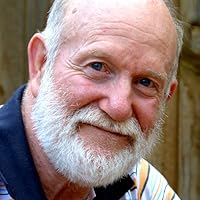
Mark A. Williams is a cognitive neuroscientist who's been learning about the human brain for 25 years. In his new book: The Connected Species, he explains what science now knows about WHY we do things the way we do. For example:
"Yes, one of our greatest attributes, connection, is the reason for one of our most dreadful traits, discrimination. This drive to connect can help to explain many of the issues we see in our society today, including racism, sexism, fanaticism, extremism, and nationalism."
Most all of us are very social animals from birth to death. Showing how this works from the inside shines light on unexplored motivations. As you learn why others behave the way they do, you see yourself more clearly.
Mark has a conversational style that makes us "get" his explanations in ways that feel natural and intuitive. And even if you've read the latest research in an area he's covering, his personal interactions with other researchers makes it fresh and interesting.
You feel good while you read this, even if the things your reading about are not always nice.
Thank you NetGalley, and thank you Rowman & Littlefield, for allowing me to read this book early. All these opinions are my own.
"The Connected Species: How the Evolution of the Human Brain Can Save the World" by Mark A. Williams is a fascinating investigation of the evolution of the human brain, concentrating on our fundamental urge for connection and collaboration. Williams dives into how our species' prosperity has been aided by this basic urge, enabling innovation and societal advancement through collaboration and specialisation.
The book's exploration of the negative repercussions of our yearning for connection is very enlightening. Williams discusses how complicated social concerns such as racism, sexism, and nationalism are linked with our natural want to connect with individuals who are similar to us. He also explores how these dynamics affect personal health and well-being.
However, "The Connected Species" is more than just a critique of human nature; it also presents an optimistic outlook. Williams proposes practical solutions to harness our desire for connection in order to promote more inclusive communities and overcome the barriers that divide us. This book is a riveting read for anybody interested in psychology, sociology, and the future of human interaction because of his optimistic stance on leveraging our innate tendencies for the greater good of society and the world.
A decent read, but having read multiple books on similar topics, I felt there is not much original content, but I could be biased because of pre-reading in similar genre
Learnt a lot of new things, it’s so interesting that you literally hear things differently from people who are not in your perceived “in-group” versus from those who are. neuroscience is so fascinating🥹🥹