

What do you think?

I Am Providence #1-2
I Am Providence: The Life and Times of H. P. Lovecraft
In 1996, S. T. Joshi's H. P. Lovecraft: A Life was published to universal acclaim. Joyce Carol Oates called it the "definitive" biography, and it won the British Fantasy Award and the Horror Write Sers Association Award. But that 1996 edition was abridged from the manuscript that Joshi wrote in 1993-95; in all, more than 150,000 words were cut for space reasons.
Hippocampus Press is proud to present the complete, uncut edition of Joshi's biography, I Am Providence: The Life and Times of H. P. Lovecraft. In addition to restoring every word of Joshi's original manuscript, the entire text has been thoroughly revised and updated in light of the new information on Lovecraft that has emerged since 1996. As such, this book can now truly be said to be the definitive biography of H. P. Lovecraft, written by the world's leading authority on Lovecraft. Readers will find countless details about Lovecraft's life and work not included in the earlier edition, along with important updates on new publications by and about Lovecraft in the last 15 years and on Lovecraft's increasing worldwide reputation. This book constitutes S. T. Joshi's final word on Lovecraft the man, the writer, and the thinker.
Hippocampus Press is proud to present the complete, uncut edition of Joshi's biography, I Am Providence: The Life and Times of H. P. Lovecraft. In addition to restoring every word of Joshi's original manuscript, the entire text has been thoroughly revised and updated in light of the new information on Lovecraft that has emerged since 1996. As such, this book can now truly be said to be the definitive biography of H. P. Lovecraft, written by the world's leading authority on Lovecraft. Readers will find countless details about Lovecraft's life and work not included in the earlier edition, along with important updates on new publications by and about Lovecraft in the last 15 years and on Lovecraft's increasing worldwide reputation. This book constitutes S. T. Joshi's final word on Lovecraft the man, the writer, and the thinker.
1148 pages, Hardcover
First published August 20, 2010
About the author
S.T. Joshi
787 books466 followersSunand Tryambak Joshi is an Indian American literary scholar, and a leading figure in the study of Howard Phillips Lovecraft and other authors. Besides what some critics consider to be the definitive biography of Lovecraft (H. P. Lovecraft: A Life, 1996), Joshi has written about Ambrose Bierce, H. L. Mencken, Lord Dunsany, and M.R. James, and has edited collections of their works.
His literary criticism is notable for its emphases upon readability and the dominant worldviews of the authors in question; his The Weird Tale looks at six acknowledged masters of horror and fantasy (namely Arthur Machen, Algernon Blackwood, Dunsany, M. R. James, Bierce and Lovecraft), and discusses their respective worldviews in depth and with authority. A follow-up volume, The Modern Weird Tale, examines the work of modern writers, including Shirley Jackson, Ramsey Campbell, Stephen King, Robert Aickman, Thomas Ligotti, T. E. D. Klein and others, from a similar philosophically oriented viewpoint. The Evolution of the Weird Tale (2004) includes essays on Dennis Etchison, L. P. Hartley, Les Daniels, E. F. Benson, Rudyard Kipling, David J. Schow, Robert Bloch, L. P. Davies, Edward Lucas White, Rod Serling, Poppy Z. Brite and others.
Joshi is the editor of the small-press literary journals Lovecraft Studies and Studies in Weird Fiction, published by Necronomicon Press. He is also the editor of Lovecraft Annual and co-editor of Dead Reckonings, both small-press journals published by Hippocampus Press.
In addition to literary criticism, Joshi has also edited books on atheism and social relations, including Documents of American Prejudice (1999), an annotated collection of American racist writings; In Her Place (2006), which collects written examples of prejudice against women; and Atheism: A Reader (2000), which collects atheistic writings by such people as Antony Flew, George Eliot, Bertrand Russell, Emma Goldman, Gore Vidal and Carl Sagan, among others. An Agnostic Reader, collecting pieces by such writers as Isaac Asimov, John William Draper, Albert Einstein, Frederic Harrison, Thomas Henry Huxley, Robert Ingersoll, Corliss Lamont, Arthur Schopenhauer and Edward Westermarck, was published in 2007.
Joshi is also the author of God's Defenders: What They Believe and Why They Are Wrong (2003), an anti-religious polemic against various writers including C. S. Lewis, G. K. Chesterton, T. S. Eliot, William F. Buckley, Jr., William James, Stephen L. Carter, Annie Dillard, Reynolds Price, Elisabeth Kübler-Ross, Guenter Lewy, Neale Donald Walsch and Jerry Falwell, which is dedicated to theologian and fellow Lovecraft critic Robert M. Price.
In 2006 he published The Angry Right: Why Conservatives Keep Getting It Wrong, which criticised the political writings of such commentators as William F. Buckley, Jr., Russell Kirk, David and Rush Limbaugh, Ann Coulter, Phyllis Schlafly, William Bennett, Gertrude Himmelfarb and Irving and William Kristol, arguing that, despite the efforts of right-wing polemicists, the values of the American people have become steadily more liberal over time.
Joshi, who lives with his wife in Moravia, New York, has stated on his website that his most noteworthy achievements thus far have been his biography of Lovecraft, H. P. Lovecraft: A Life and The Weird Tale.
His literary criticism is notable for its emphases upon readability and the dominant worldviews of the authors in question; his The Weird Tale looks at six acknowledged masters of horror and fantasy (namely Arthur Machen, Algernon Blackwood, Dunsany, M. R. James, Bierce and Lovecraft), and discusses their respective worldviews in depth and with authority. A follow-up volume, The Modern Weird Tale, examines the work of modern writers, including Shirley Jackson, Ramsey Campbell, Stephen King, Robert Aickman, Thomas Ligotti, T. E. D. Klein and others, from a similar philosophically oriented viewpoint. The Evolution of the Weird Tale (2004) includes essays on Dennis Etchison, L. P. Hartley, Les Daniels, E. F. Benson, Rudyard Kipling, David J. Schow, Robert Bloch, L. P. Davies, Edward Lucas White, Rod Serling, Poppy Z. Brite and others.
Joshi is the editor of the small-press literary journals Lovecraft Studies and Studies in Weird Fiction, published by Necronomicon Press. He is also the editor of Lovecraft Annual and co-editor of Dead Reckonings, both small-press journals published by Hippocampus Press.
In addition to literary criticism, Joshi has also edited books on atheism and social relations, including Documents of American Prejudice (1999), an annotated collection of American racist writings; In Her Place (2006), which collects written examples of prejudice against women; and Atheism: A Reader (2000), which collects atheistic writings by such people as Antony Flew, George Eliot, Bertrand Russell, Emma Goldman, Gore Vidal and Carl Sagan, among others. An Agnostic Reader, collecting pieces by such writers as Isaac Asimov, John William Draper, Albert Einstein, Frederic Harrison, Thomas Henry Huxley, Robert Ingersoll, Corliss Lamont, Arthur Schopenhauer and Edward Westermarck, was published in 2007.
Joshi is also the author of God's Defenders: What They Believe and Why They Are Wrong (2003), an anti-religious polemic against various writers including C. S. Lewis, G. K. Chesterton, T. S. Eliot, William F. Buckley, Jr., William James, Stephen L. Carter, Annie Dillard, Reynolds Price, Elisabeth Kübler-Ross, Guenter Lewy, Neale Donald Walsch and Jerry Falwell, which is dedicated to theologian and fellow Lovecraft critic Robert M. Price.
In 2006 he published The Angry Right: Why Conservatives Keep Getting It Wrong, which criticised the political writings of such commentators as William F. Buckley, Jr., Russell Kirk, David and Rush Limbaugh, Ann Coulter, Phyllis Schlafly, William Bennett, Gertrude Himmelfarb and Irving and William Kristol, arguing that, despite the efforts of right-wing polemicists, the values of the American people have become steadily more liberal over time.
Joshi, who lives with his wife in Moravia, New York, has stated on his website that his most noteworthy achievements thus far have been his biography of Lovecraft, H. P. Lovecraft: A Life and The Weird Tale.
Ratings & Reviews
Friends & Following
Create a free account to discover what your friends think of this book!
Community Reviews
Displaying 1 - 30 of 48 reviews

September 29, 2019
As much Lovecraft as anyone could ever wish for. If you are a hardcore fan, you simply have to get this, and I swear you will pore over every single word in these thousand pages as if they were the pnakotic fucking manuscripts.
Joshi's sass and personality transpire abundantly through his scholarship (and he often assumes a critical tone worthy of HP himself), but that is an excellent thing: it makes for an interesting, stimulating read. I don't expect you to agree with all of Joshi's points, but his critical integrity, and his dedication to his subject, is nothing short of commendable.
Admittedly, this goes into the tiniest detail on certain topics, like amateur journalism, that I cannot imagine were ever anything but mind-numbingly boring even to the amateur journalists themselves, but it's all necessary context, and the juicy bits, I swear, far outnumber the tedious paragraphs.
People love to talk about Lovecraft these days. They love to hate, they love to love. But the truth is, if the world were a better place, we would all read these tomes before speaking, and realize that reality is more complicated than we thought.* Not because it turns out he was secretly sweet and cool with minorities (ha!), but because he was a complicated person, puzzling in his racism, extraordinary in his generosity with friends, and unshaken in his love of his art form. For hear this: HP Lovecraftthe might well be the greatest aesthete who ever lived. Read Joshi's book.
*as people should know if they ever picked up a book, any book, like, ever.
Joshi's sass and personality transpire abundantly through his scholarship (and he often assumes a critical tone worthy of HP himself), but that is an excellent thing: it makes for an interesting, stimulating read. I don't expect you to agree with all of Joshi's points, but his critical integrity, and his dedication to his subject, is nothing short of commendable.
Admittedly, this goes into the tiniest detail on certain topics, like amateur journalism, that I cannot imagine were ever anything but mind-numbingly boring even to the amateur journalists themselves, but it's all necessary context, and the juicy bits, I swear, far outnumber the tedious paragraphs.
People love to talk about Lovecraft these days. They love to hate, they love to love. But the truth is, if the world were a better place, we would all read these tomes before speaking, and realize that reality is more complicated than we thought.* Not because it turns out he was secretly sweet and cool with minorities (ha!), but because he was a complicated person, puzzling in his racism, extraordinary in his generosity with friends, and unshaken in his love of his art form. For hear this: HP Lovecraftthe might well be the greatest aesthete who ever lived. Read Joshi's book.
*as people should know if they ever picked up a book, any book, like, ever.

September 6, 2020
Good God, I must stop reading biographies of writers. However much I may love their fiction, they have a terrible inclination to lead boring lives. I suppose we must forgive them - if they didn't spend so much time tucked up inside scribbling then they wouldn't leave us such interesting tales.
S.T. Joshi deserves 5 stars for this enormous work which is stupendously detailed, referenced, footnoted and cross-checked, but I had to knock one off because it was a slog.
I highly recommend it to any Lovecraft scholar who wishes to know the minutiae of his life: here we have out-lined sketches of several generations of Lovecraft's ancestors; more than any sane person would wish to know about the state of early twentieth century amateur writing and the petty politics of their various magazines, clubs, and organisations; exhaustive details of who wrote to Lovecraft and when and how he replied, and who he visited and when, and what they saw, and which buildings he liked and which he didn't and whether they're still standing now, and all sorts of details of that kind.
In between all that is the story of his life, of interest to gawkers who like to know the gossip about interesting people. Born into a well-to-do family he had a wonderfully privileged youth, despite which he was friendless and prey to terrible nightmares. The family fortunes fell away so that by the time he flunked out of high-school, he and his mother were reduced to a dank, funny-smelling duplex where Lovecraft spent years catatonic with depression in a darkened room while his frighteningly over-protective mother told people he was too ugly to leave the house. He was the original NEET.
Honestly, it was the best thing for him when she was confined to the insane asylum (though he would be horrified to hear me say so - he was a loving son and a true gentleman). He got into amateur writing, made some friends, even started selling stories. A brief stint as a married man in New York didn't turn out well. He hated New York: ugly and full of foreigners. And despite his best attempts, he was not cut out for matrimony, being asexual and homosocial. When Sonia told him she wanted a divorce he genuinely tried to persuade her that an epistolary marriage would work - living apart but corresponding in a matrimonial fashion. A proposition so daft that I can't help finding it endearing (but then, I'm not his wife!)
Back to Providence where he lived with his aunt and spent most of his time writing a vast quantity of letters to friends, colleagues, acquaintances, and anyone who loved his fiction and struck up a correspondence on that basis. His vast network of penpals made him the heart of the weird fiction community. Alas, his financial situation did not improve, probably due to the fact that he thought it vulgar to write for money and was unfailingly generous with his revision services. He visited friends when money allowed, which wasn't often, and tried to save by eating as cheaply as possible. Perhaps his early death was hastened by his habit of eating for less than 30¢ a day (one doughnut for breakfast and beans on toast for dinner).
S.T. Joshi goes into some detail on his philosophy which underpinned his approach to life and his unique fiction, but luckily much of his correspondence has survived, so I'm looking forward to exploring that in his own words in the published collections of his letters.
S.T. Joshi deserves 5 stars for this enormous work which is stupendously detailed, referenced, footnoted and cross-checked, but I had to knock one off because it was a slog.
I highly recommend it to any Lovecraft scholar who wishes to know the minutiae of his life: here we have out-lined sketches of several generations of Lovecraft's ancestors; more than any sane person would wish to know about the state of early twentieth century amateur writing and the petty politics of their various magazines, clubs, and organisations; exhaustive details of who wrote to Lovecraft and when and how he replied, and who he visited and when, and what they saw, and which buildings he liked and which he didn't and whether they're still standing now, and all sorts of details of that kind.
In between all that is the story of his life, of interest to gawkers who like to know the gossip about interesting people. Born into a well-to-do family he had a wonderfully privileged youth, despite which he was friendless and prey to terrible nightmares. The family fortunes fell away so that by the time he flunked out of high-school, he and his mother were reduced to a dank, funny-smelling duplex where Lovecraft spent years catatonic with depression in a darkened room while his frighteningly over-protective mother told people he was too ugly to leave the house. He was the original NEET.
Honestly, it was the best thing for him when she was confined to the insane asylum (though he would be horrified to hear me say so - he was a loving son and a true gentleman). He got into amateur writing, made some friends, even started selling stories. A brief stint as a married man in New York didn't turn out well. He hated New York: ugly and full of foreigners. And despite his best attempts, he was not cut out for matrimony, being asexual and homosocial. When Sonia told him she wanted a divorce he genuinely tried to persuade her that an epistolary marriage would work - living apart but corresponding in a matrimonial fashion. A proposition so daft that I can't help finding it endearing (but then, I'm not his wife!)
Back to Providence where he lived with his aunt and spent most of his time writing a vast quantity of letters to friends, colleagues, acquaintances, and anyone who loved his fiction and struck up a correspondence on that basis. His vast network of penpals made him the heart of the weird fiction community. Alas, his financial situation did not improve, probably due to the fact that he thought it vulgar to write for money and was unfailingly generous with his revision services. He visited friends when money allowed, which wasn't often, and tried to save by eating as cheaply as possible. Perhaps his early death was hastened by his habit of eating for less than 30¢ a day (one doughnut for breakfast and beans on toast for dinner).
S.T. Joshi goes into some detail on his philosophy which underpinned his approach to life and his unique fiction, but luckily much of his correspondence has survived, so I'm looking forward to exploring that in his own words in the published collections of his letters.

April 1, 2011
A fascinating account with an incredible and staggering amount of detail. I do not think I have ever read a biography so minutely researched. This does mean that I Am Providence is strictly for Lovecraft scholars and admirers but, as one myself, this is no real criticism because S.T. Joshi has set the standard so high for other biographies I read from this point on. I seriously doubt they will be as informative and as entertaining as this account of the Old Gent from Providence, Rhode Island.

December 22, 2015
There’s an amusing moment in this mammoth biography of H P Lovecraft where S T Joshi comments on a brief autobiographical essay Lovecraft once wrote: “on the whole this is an exceptionally accurate and compact account of Lovecraft’s life and beliefs, and all that is required to flesh out the picture is masses of detail.” And here, Joshi provides the masses of detail. Sometimes they are masses — I have to admit I skipped a few passages, such as the more involved details of the politics of the early-Twentieth Century amateur press movement, or the exact details of Lovecraft’s many late-life trips up and down the east coast of America. But, for a book of its size and subject, it's an excellent, lively read.
Reviewing a biography, it can be tempting to review the life, not the book — which is a good sign, as it shows the biographer has done their job, getting out of the way to let their subject take the stage. Joshi has certainly done his job here. If nothing else, those “masses of detail” assembled here counter some of the myths about Lovecraft: the travels alone prove him not to have been a recluse (apart from, perhaps, in his teenage years), as do his vigorous epistolary friendships, many of which resulted in actual visits. And his presidency of both of the main amateur press associations of his day surely proves he was far more capable at the sort of tasks that would land him a job than he thought himself to be. The end of Lovecraft’s life comes across as truly sad, and Joshi’s last words are both true and poignant: “He was a human being like any of us—neither a lunatic nor a superman. He had his share of flaws and virtues. But he is dead now, and no amount of praise or blame will have any effect upon the course of his life. His work alone remains.”
Reviewing a biography, it can be tempting to review the life, not the book — which is a good sign, as it shows the biographer has done their job, getting out of the way to let their subject take the stage. Joshi has certainly done his job here. If nothing else, those “masses of detail” assembled here counter some of the myths about Lovecraft: the travels alone prove him not to have been a recluse (apart from, perhaps, in his teenage years), as do his vigorous epistolary friendships, many of which resulted in actual visits. And his presidency of both of the main amateur press associations of his day surely proves he was far more capable at the sort of tasks that would land him a job than he thought himself to be. The end of Lovecraft’s life comes across as truly sad, and Joshi’s last words are both true and poignant: “He was a human being like any of us—neither a lunatic nor a superman. He had his share of flaws and virtues. But he is dead now, and no amount of praise or blame will have any effect upon the course of his life. His work alone remains.”

March 15, 2013
When S. T. Joshi's H. P. Lovecraft: A Life came out in the late 1990s, I was one of the first folks to get a copy, and I devoured it, frequently marveling at how much Lovecraft's early life paralleled my own...and gratefully reading about how HPL wasn't the social misfit and recluse that so many falsely believe him to be. Unfortunately, said volume quickly dropped out of print--
But now it has returned, in a greatly expanded, updated, and much handsome two-volume version. This is the definitive biography and critical survey of HPL and his works. The end. S. T. Joshi is the Big Papa of Lovecraft studies for a reason, and considering the sheer volume of primary source materials that Joshi has read through and catalogued in researching this work...well, you've got to give the man Major Props.
This is a volume which NO serious Lovecraft scholar can lack. And most fans of his fiction should probably check it out, anyway, if only to see that Grandpa Theobald was actually a pretty funny guy...when he wasn't being a racist jackass--but hey, no one's perfect.
But now it has returned, in a greatly expanded, updated, and much handsome two-volume version. This is the definitive biography and critical survey of HPL and his works. The end. S. T. Joshi is the Big Papa of Lovecraft studies for a reason, and considering the sheer volume of primary source materials that Joshi has read through and catalogued in researching this work...well, you've got to give the man Major Props.
This is a volume which NO serious Lovecraft scholar can lack. And most fans of his fiction should probably check it out, anyway, if only to see that Grandpa Theobald was actually a pretty funny guy...when he wasn't being a racist jackass--but hey, no one's perfect.

September 16, 2013
My favorite work of nonfiction and biography is 'Peter the Great: His Life and World' by Robert K Massie, a biography of almost 900 pages which I read in 2007. Considering how much nonfiction I read, being the unquestioned favorite is a very, very lofty perch. This is now my second favorite biography. Almost right up there with that one.
So let us begin. Anyone interested in not just reading Lovecraft as fiction but also as a writer with something to say has no doubt heard of S.T. Joshi. Not only the greatest and most comprehensive of Lovecraft scholars alive, but of them all, period. Joshi lets Lovecraft tell his own story through many letters, as well as letting others who have met him chime in through their impressions of the man. Naturally, as a literary critic he also ads his own exceptionally erudite commentary to also bring a contemporary perceptive on these matters. All of it is handled excellently.
We are taken on a linear tour of HPL's life, with numerous asides about other developments overlapping chapters, and thus get to see the development of a remarkable individual, ridden with high and low points which alike come together to make the man and many of his influences. I need not state the life of the man here.
Joshi's focus on his thought, evolutions in his politics philosophy featuring just as much as literary developments, really help to show where the core perspectives that make HPL so unique really came from. His condemnable racism and questionable early reactionary nature is neither brushed over nor excused, but neither is it taken out of proportion to his many virtues as a man. Most pertinent of which is just what a good and honorable friend he was to those he both new in person, and those he only knew from correspondence. Works of charity, tips and advice, and a lively social circle in which he eventually became the star. Coupled with his wide travels (for the time and his income) and vigorous efforts to go out of his way to relate them to others-the man must have been one one of the best people anyone could have had as friends, and clearly is a far cry from the obtuse recluse narrative which seems to dominate thinking about him.
If I had any quibbles with this work, the only one I can think of is very minor, and that is the dismissive way Joshi treats Howard. Granted, I agree that a significant chunk, perhaps even almost half of what Robert E Howard wrote was 'hack-work' (its still fun though), but what he really invested in (a few independent stories, Most of Conan, all of Kull, etc) I think deserves serious literary credit. Of course, its not a book about Howard so that hardly matters. I generally agreed with Joshi on Clark Ashton Smith being a good poet, a great fantasist (Zothique among the best) but that the Averoign stories are banal and forgettable. I also learned about a few authors from that period I need to check out, so that is always good.
I specifically liked Joshi's mentioning Laird Barron and Thomas Ligotti, who recently I have become quite into and agree wholeheartedly that they are amongst the contemporary vanguard of the weird tale. I would also include John Langan and Nathan Ballingrud in that list as well. I clearly have to check out more Pugmire, and will be sure to do so soon.
So, in all, a fantastic work of both scholarship and erudition ( A feat I can be quite sympathetic to having just completed a doctoral thesis myself) but also of heart, soul, and passion. This book is a testament to both the man it is about and the man who wrote it.
So let us begin. Anyone interested in not just reading Lovecraft as fiction but also as a writer with something to say has no doubt heard of S.T. Joshi. Not only the greatest and most comprehensive of Lovecraft scholars alive, but of them all, period. Joshi lets Lovecraft tell his own story through many letters, as well as letting others who have met him chime in through their impressions of the man. Naturally, as a literary critic he also ads his own exceptionally erudite commentary to also bring a contemporary perceptive on these matters. All of it is handled excellently.
We are taken on a linear tour of HPL's life, with numerous asides about other developments overlapping chapters, and thus get to see the development of a remarkable individual, ridden with high and low points which alike come together to make the man and many of his influences. I need not state the life of the man here.
Joshi's focus on his thought, evolutions in his politics philosophy featuring just as much as literary developments, really help to show where the core perspectives that make HPL so unique really came from. His condemnable racism and questionable early reactionary nature is neither brushed over nor excused, but neither is it taken out of proportion to his many virtues as a man. Most pertinent of which is just what a good and honorable friend he was to those he both new in person, and those he only knew from correspondence. Works of charity, tips and advice, and a lively social circle in which he eventually became the star. Coupled with his wide travels (for the time and his income) and vigorous efforts to go out of his way to relate them to others-the man must have been one one of the best people anyone could have had as friends, and clearly is a far cry from the obtuse recluse narrative which seems to dominate thinking about him.
If I had any quibbles with this work, the only one I can think of is very minor, and that is the dismissive way Joshi treats Howard. Granted, I agree that a significant chunk, perhaps even almost half of what Robert E Howard wrote was 'hack-work' (its still fun though), but what he really invested in (a few independent stories, Most of Conan, all of Kull, etc) I think deserves serious literary credit. Of course, its not a book about Howard so that hardly matters. I generally agreed with Joshi on Clark Ashton Smith being a good poet, a great fantasist (Zothique among the best) but that the Averoign stories are banal and forgettable. I also learned about a few authors from that period I need to check out, so that is always good.
I specifically liked Joshi's mentioning Laird Barron and Thomas Ligotti, who recently I have become quite into and agree wholeheartedly that they are amongst the contemporary vanguard of the weird tale. I would also include John Langan and Nathan Ballingrud in that list as well. I clearly have to check out more Pugmire, and will be sure to do so soon.
So, in all, a fantastic work of both scholarship and erudition ( A feat I can be quite sympathetic to having just completed a doctoral thesis myself) but also of heart, soul, and passion. This book is a testament to both the man it is about and the man who wrote it.

March 21, 2015
An exhaustedly researched biography of HP Lovecraft. S.T. Joshi crafted probably the definitive bio on the weird fiction writer, who is rightly seen as a master of American horror next to Poe. This volume (part one of two) does an amazing job of bringing Lovecraft to vivid life, presenting new information as well as dispelling many myths. Yes, he was reclusive, depressed, idealizing a more “gentlemanly” 18th century past, loathing the mechanistic present, and a periwig wearing racist to boot. However, with the death of his mother (who had projected a love/hate relationship with her son) and through the many amateur writing groups of the day (which he would participate in and also lead – a very interesting piece to read about!), Lovecraft began to mature in thought and manner, developing a vast circle of friends, fans, and correspondents of such loyalty that few people of a more outgoing nature could ever match.
A recluse? He travelled throughout the East Coast, FL, and Quebec, staying with and accommodating many a friend and correspondent, touring places of antiquarian interest, hanging out with groups of fellow writers in a variety of clubs and organizations, and even finding time to become briefly married.
An unfaltering atheist, he believed in a universe where man’s insignificance was exposed to the unmentionable and uncaring horrors that lurked beyond. It’s ironic in a way that a man who did not believe in God would end up creating a cosmic mythology of extraterrestrials who found their way to Earth, foolishly worshipped by humans as deities. Even back in his day, as he became a well-known writer in amateur publications and circles, he would weave such detail between realistic settings and his horrors that fans would write to him asking if his creatures were real or if the Necronomicon (a book of evil he created in his tales that could summon these monsters) actually existed!
That many persons have continued to believe so to this day would surely have made the atheist Lovecraft giggle with incredulous joy.
Warts and all, Joshi does an amazing job of detailing all that is known of Lovecraft, through many of the letters written back and forth to his fans and friends. Ever a gentleman, he would never decline a response to any letter of inquiry or request for writing aid, and some of these “lost” letters are still being discovered (the HP Lovecraft Historical Society has announced they have come across a collection of 38 letters from Lovecraft to Zealia Bishop, a client of Lovecrafts, which have never been seen, to be released in a book this year).
Joshi also adds a nice mini-summary to virtually every single work of Lovecraft’s, and writes the biography with such detail and clarity, the reader has to root for Lovecraft, feeling his poverty (he would list out with pride how he could get by eating only twice a day, and surviving a week on just a few cans of beans, cold soup, and the occasional piece of bread or other sundry item, sometimes old and possibly even spoiled) and his frustrations at countless story rejections from official publishing houses, while taking in his obvious enjoyment in his travels and the accolades he received from so many fellow writers and followers. There are also some funny moments, involving editorial clients that Lovecraft endured who obviously could not write a wit! The ending is sad, of course, as Lovecraft did not live past 46, and as you near it, you start to feel as if you are approaching an already known climax in a fictional story that you wish could have been avoided.
If you are a student or fan of Lovecraft’s writing, this is a definitive work you cannot miss.
A recluse? He travelled throughout the East Coast, FL, and Quebec, staying with and accommodating many a friend and correspondent, touring places of antiquarian interest, hanging out with groups of fellow writers in a variety of clubs and organizations, and even finding time to become briefly married.
An unfaltering atheist, he believed in a universe where man’s insignificance was exposed to the unmentionable and uncaring horrors that lurked beyond. It’s ironic in a way that a man who did not believe in God would end up creating a cosmic mythology of extraterrestrials who found their way to Earth, foolishly worshipped by humans as deities. Even back in his day, as he became a well-known writer in amateur publications and circles, he would weave such detail between realistic settings and his horrors that fans would write to him asking if his creatures were real or if the Necronomicon (a book of evil he created in his tales that could summon these monsters) actually existed!
That many persons have continued to believe so to this day would surely have made the atheist Lovecraft giggle with incredulous joy.
Warts and all, Joshi does an amazing job of detailing all that is known of Lovecraft, through many of the letters written back and forth to his fans and friends. Ever a gentleman, he would never decline a response to any letter of inquiry or request for writing aid, and some of these “lost” letters are still being discovered (the HP Lovecraft Historical Society has announced they have come across a collection of 38 letters from Lovecraft to Zealia Bishop, a client of Lovecrafts, which have never been seen, to be released in a book this year).
Joshi also adds a nice mini-summary to virtually every single work of Lovecraft’s, and writes the biography with such detail and clarity, the reader has to root for Lovecraft, feeling his poverty (he would list out with pride how he could get by eating only twice a day, and surviving a week on just a few cans of beans, cold soup, and the occasional piece of bread or other sundry item, sometimes old and possibly even spoiled) and his frustrations at countless story rejections from official publishing houses, while taking in his obvious enjoyment in his travels and the accolades he received from so many fellow writers and followers. There are also some funny moments, involving editorial clients that Lovecraft endured who obviously could not write a wit! The ending is sad, of course, as Lovecraft did not live past 46, and as you near it, you start to feel as if you are approaching an already known climax in a fictional story that you wish could have been avoided.
If you are a student or fan of Lovecraft’s writing, this is a definitive work you cannot miss.
October 6, 2011
A thousand page book for a man who lived 47 years. That's about 1/2 page for every month that he lived. You would think that this much detail would be mired down in minutia, but this level of detail I found to be actually quite captivating.
Because Lovecraft was a prolific letter writer, we are able to know much about his life, from the profound to the mundane. Joshi has read thousands of Lovecraft's letters and the level of detail he wrote about Lovecraft, is able to reveal the complicated man that he was.
This books covers not only his life, but also critiques his stories, and discusses his Lovecraft's place in weird fiction. It is basically a brain-dump of a leading Lovecraft scholar who has been studying him for the last thirty or so years.
Because Lovecraft was a prolific letter writer, we are able to know much about his life, from the profound to the mundane. Joshi has read thousands of Lovecraft's letters and the level of detail he wrote about Lovecraft, is able to reveal the complicated man that he was.
This books covers not only his life, but also critiques his stories, and discusses his Lovecraft's place in weird fiction. It is basically a brain-dump of a leading Lovecraft scholar who has been studying him for the last thirty or so years.

February 28, 2017
I spent a long time reading this massive, two-volume biography of H.P. Lovecraft, but it was time well spent. I have been a fan of Lovecraft's work since I was a teenager, and the man himself always fascinated me. This is, I believe, the definitive biography. It is the closest we can come, I think, to knowing Lovecraft as a person.

November 3, 2017
An astoundingly scrupulous piece of biographical work, containing myriads of trivia, however notably marred by the author's much too categorical 'best'/'mediocre'/'poor' evaluation of the various pieces of fiction that make up Lovecraft's collective authorship.

October 2, 2019
The one word review would be 'exhaustive.'
For better or worse 'I am Providence' is the longest and most in-depth biography of H.P. Lovecraft and I predict it will remain so indefinitely. I say for better or worse since its sheer exhaustiveness means that on the one hand you will be getting the perhaps best and most erudiate analysis of Lovecraft and his writing that there is to be found, but unless you're a Lovecraft scholar it's unlikely that you'll be interested in everything this book has to offer and there are hundreds of pages that are only tangentially related to Lovecraft as an author of cosmic horror.
The sections on Lovecraft's childhood and personal life make for absorbing reading, and the long, detailed analysises of his more accomplished works make up the main course of the book. I found myself skimming other sections however, such as the ones covering his venture into amateur journalism and the mini biographies his friends, with the exception of those that are significant in their own right such as Clark Ashton Smith and Robert E. Howard.
Speaking of Robert E. Howard, I was somewhat taken aback by Joshi's offhand dismissal of his merits as an author. This was doubly surprising because he makes such fair, accurate assessments of other pulp authors of the era, and Howard has gone a long way from being seen as a hack writer to being considered one of the greats in the history of pulp and sword & sorcery. Joshi's dismissal of Howard echoes that older - I dare say outdated - view, which Lovecraft too suffered from in that his stories were associated with magazines of "low" literary value. While it's true that only a small selection of Howard's literary output is truly excellent, the same applies to Lovecraft.
I won't deduct any stars for this latter gripe as this is a biography of Lovecraft and not Howard, but as one who has greatly enjoyed both of these authors I couldn't let it go unmentioned.
For better or worse 'I am Providence' is the longest and most in-depth biography of H.P. Lovecraft and I predict it will remain so indefinitely. I say for better or worse since its sheer exhaustiveness means that on the one hand you will be getting the perhaps best and most erudiate analysis of Lovecraft and his writing that there is to be found, but unless you're a Lovecraft scholar it's unlikely that you'll be interested in everything this book has to offer and there are hundreds of pages that are only tangentially related to Lovecraft as an author of cosmic horror.
The sections on Lovecraft's childhood and personal life make for absorbing reading, and the long, detailed analysises of his more accomplished works make up the main course of the book. I found myself skimming other sections however, such as the ones covering his venture into amateur journalism and the mini biographies his friends, with the exception of those that are significant in their own right such as Clark Ashton Smith and Robert E. Howard.
Speaking of Robert E. Howard, I was somewhat taken aback by Joshi's offhand dismissal of his merits as an author. This was doubly surprising because he makes such fair, accurate assessments of other pulp authors of the era, and Howard has gone a long way from being seen as a hack writer to being considered one of the greats in the history of pulp and sword & sorcery. Joshi's dismissal of Howard echoes that older - I dare say outdated - view, which Lovecraft too suffered from in that his stories were associated with magazines of "low" literary value. While it's true that only a small selection of Howard's literary output is truly excellent, the same applies to Lovecraft.
I won't deduct any stars for this latter gripe as this is a biography of Lovecraft and not Howard, but as one who has greatly enjoyed both of these authors I couldn't let it go unmentioned.

September 14, 2024
Lovecraft fan-boy Joshi was the best author for this book EVER. What did we learn in school? Write what you know - and Joshi knows Lovecraft!
September 17, 2025
What a read.

August 1, 2021
H. P. Lovecraft stood alone against the world and against life but his own life, as S. T. Joshi recounts in exacting detail was richer and more substantial than we could ever expect. This author of some of the greatest weird fiction devoted years to amateur journalism and writing, was a noted antiquarian and lover of cats, and a true friend and mentor to countless other writers (Richard. E. Howard, Robert Bloch, C. M. Moore among others).
Every aspect of Lovecraft life is covered here from his childhood to his early days as an amateur journalist to his groundbreaking fiction. Joshi cements his reputation as one of the finest Lovecraft and weird fiction scholars by not only chronicling the life of its greatest author but by offering insightful criticism not for Lovecraft but on the other major figures in weird fiction. This is not just a meticulous biography of H. P. Lovecraft but a full account of his aesthetics, philosophy, and metaphysics - Joshi shows a keen understanding of early-twentieth and eighteenth century writing and thought as he systematises Lovecraft’s own beliefs. There is certainly no doubt that Lovecraft was unread or uneducated despite dropping out of school at a young age. His sense of time and place, squarely rooted in Providence but encompassing New England and the eighteenth century demonstrate Lovecraft’s aesthetics and showcase his talented fiction and travelogues.
Joshi is clearly a fan - how else could a 1000-plus page biography like this come about after its initial abridged publication? But he is not slavish in his devotion, he squarely deals with Lovecraft’s failings - both his marriage and especially his racism. These are given necessary context but Joshi makes no apologies for Lovecraft’s racism for it was the only belief of his that failed to change once he was exposed to the wider world. There is also a summary of Lovecraft’s influence and fiction after his death, presaging Joshi’s other seminal works analysing modern weird tales.
“He was a human being like any of us – neither a lunatic nor superman. He had his share of flaws and virtues. But he is dead now, and no amount of praise or blame will have any effect upon the course of his life. His work alone remains.” A fine ending, and reflection on how to treat this man out of time, to the definitive biography of H. P. Lovecraft but the most moving tribute comes from Clark Ashton Smith who wrote in the July 1937 edition of Weird Tales:
“And yet thou art not gone
Nor given wholly unto dream and dust:
For, even upon
This lonely western hill of Averoigne
Thy flesh had never visited,
I meet some wise and sentient wraith of thee,
Some undeparting presence, gracious and august.
More luminous for thee the vernal grass,
More magically dark the Druid stone
And in the mind thou art for ever shown
As in a wizard’s glass;
And from the spirit’s page that runes can never pass.“
Every aspect of Lovecraft life is covered here from his childhood to his early days as an amateur journalist to his groundbreaking fiction. Joshi cements his reputation as one of the finest Lovecraft and weird fiction scholars by not only chronicling the life of its greatest author but by offering insightful criticism not for Lovecraft but on the other major figures in weird fiction. This is not just a meticulous biography of H. P. Lovecraft but a full account of his aesthetics, philosophy, and metaphysics - Joshi shows a keen understanding of early-twentieth and eighteenth century writing and thought as he systematises Lovecraft’s own beliefs. There is certainly no doubt that Lovecraft was unread or uneducated despite dropping out of school at a young age. His sense of time and place, squarely rooted in Providence but encompassing New England and the eighteenth century demonstrate Lovecraft’s aesthetics and showcase his talented fiction and travelogues.
Joshi is clearly a fan - how else could a 1000-plus page biography like this come about after its initial abridged publication? But he is not slavish in his devotion, he squarely deals with Lovecraft’s failings - both his marriage and especially his racism. These are given necessary context but Joshi makes no apologies for Lovecraft’s racism for it was the only belief of his that failed to change once he was exposed to the wider world. There is also a summary of Lovecraft’s influence and fiction after his death, presaging Joshi’s other seminal works analysing modern weird tales.
“He was a human being like any of us – neither a lunatic nor superman. He had his share of flaws and virtues. But he is dead now, and no amount of praise or blame will have any effect upon the course of his life. His work alone remains.” A fine ending, and reflection on how to treat this man out of time, to the definitive biography of H. P. Lovecraft but the most moving tribute comes from Clark Ashton Smith who wrote in the July 1937 edition of Weird Tales:
“And yet thou art not gone
Nor given wholly unto dream and dust:
For, even upon
This lonely western hill of Averoigne
Thy flesh had never visited,
I meet some wise and sentient wraith of thee,
Some undeparting presence, gracious and august.
More luminous for thee the vernal grass,
More magically dark the Druid stone
And in the mind thou art for ever shown
As in a wizard’s glass;
And from the spirit’s page that runes can never pass.“
July 1, 2024
Prethodna Džošijeva izuzetno informativna biografija Harolda Filipsa Lavkrafta (1890-1937) objavljena je još 1996. (https://www.goodreads.com/book/show/1...) i oni koji posjeduju taj tom od 700 gusto kucanih strana, u slučaju da se ne radi o fanatičnim lavkraftijancima, izgledno neće imati potrebu za novom, dvotomnom, verzijom. U pitanju je restoracija pomenutog teksta koji je prvobitno skraćen za 150,000 riječi.
Dabome, neiscrpni Džoši je prilično relevantan i vrlo čitljiv – ništa manje nego što je personalan – književni teoretičar i biograf, zbog čega je uređivao brojne žanrovske, odnosno pretežno horor-antologije za tako popularne izdavače kao što su The Library of America, Penguin Classics i Greenwood Press. Štaviše, Džoši je uredio/napisao i nekoliko valjanih literarnih enciklopedija. Ipak, vratiti svih 150,000 riječi u rad o ovim piscu lako će pokazati svoje prednosti i nedostatke, mada je sasvim razumljivo što se specijalizovanom izdavaču kao što je Hippocampus Press nakon 15 godina ukazala potreba za još jednom Lavkraftovom biografijom. (Iako Lavkraft – kao uostalom i Filip K. Dik – po svoj prilici, više nikada neće iskliznuti iz interesovanja žanrovske i mejnstrim kritike, knjige o Lavkraftovom životu reklo bi se da pretežno počivaju na ramenima predanog kuratora kakav je Džoši.)
U isti mah, čini se da sáma Džošijeva bibliografija što na kraju drugog toma broji oko 40 naslova vezanih za H.F. Lavkrafta i većinu onoga što je napisao o ovom autoru, garantovano je, u ovom ili onom obliku, našlo mjesta u biografiji Ja sam Providens.
Pojedine teme su prosto naduvane i rasplinute bez ikakve potrebe, što u nekoliko navrata onemogućava nesmetano čitanje inače vrlo pristojno opširne biografije sa vjerovatno najgore opremljenim naslovnicama u ovakvoj vrsti literature u broširanom izdanju.
Ako znamo da je Lavkraft, pored svog opusa koji broji jedan roman (Slučaj Čarlsa Dekstera Vorda) i jednu novelu ili kratki roman (U planinana ludila), i oko 70-ak priča (ne računajući pri tom poeziju), napisao i oko 100,000 pisama, gdje je, osim detaljne genealoške autobiografije, izlagao i vlastita podrobna razmišljanja o literaturi i filozofiji, u drugom tomu ćemo tako naći raspravu o seksualnosti u literaturi, te i kod muškaraca i žena uopšte. Dakle, povešće se priča o nečemu što je bezmalo nesvojstveno i neprisutno u čovjekovom opusu (pa i u životu), osim, na mahove, u jedva primjetnim, i to morbidnim, natuknicama. Kao što navodi Džoši iz jednog od pisama: „Samo neki smiješni ignoramus ili zadrigli viktorijanac može vidjeti bilo šta erotsko na zdravom ljudskom tijelu...“
I pored ovakvih naizgled puritanističkih izjava, Lavkraft je bio izdašni protivnik cenzure, pa Džoši lijepo ilustruje ovu dihotomiju, premda je Lavkraft, u svom polju, rijetko imao problema sa cenzurom kao, recimo, drugi pisci koji su se bavili daleko škakljivijim temama i čija djela zaista daju uvid u strukturu intimnih međuljudskih veza. Na tom mjestu u biografiji ćemo naići i na „skoriju“ listu gdje je Lavkraft naznačio sedam različitih tipova ili metoda seksualne diskusije u umjetnosti, a potom i imena pisaca koje posebno vezuje za svoju prilično proizvoljnu teoriju. Nisam u potpunosti razumio koliko je ova informacija uopšte značajna za Lavkrafta, a nekmoli za njegov opus, izuzev toga što u prvi plan izbacuje nikog drugog do autora ove biografije – samog Džošija – u najboljem referentnom svjetlu.
Ne želim reći da je pomenuta informacija sasvim beskorisna, ali kod čovjeka koji je vodio život lišen bilo kakvih značajnih događaja (za razliku od, recimo slojevitog Grejema Grina, koji je možda i s pravom zavrijedio trotomnu biografiju), dakle pretežno pišući pisma i prozu, logično je pretpostaviti da će prilikom ovakvih akademskih poduhvata najistaknutiji neprijatelj zapravo biti – višak materijala.
Kao izuzetni pobornik starih džentlmenskih vrijednosti (služio se engleskom transkripcijom), a tako i, između ostalog, rasizma (u okvirima ondašnjeg kulturalnog tradicionalizma, naravno), Lavkraft je, barem sudeći prema pismima, bio ophrvan, poduprt i opčinjen svakovrsnim filozofijama i ideologijama. One su se periodično mijenjale ili su se međusobno miješale – odatle se preobrazivši u „kosmicizam“ – tako da Džoši nastoji da svaku od njih koliko je to god moguće locira u njegovom opusu ili u životnoj suštini, i ukaže na potencijalnu naprednost kosmicizma, u smislu da je osjetnije stasao među umjetnicima tek sredinom XX vijeka, što na momente, u ovoj knjizi, zvuči doista iscrpljujuće.
U prvom tomu ćemo saznati da je Lavkraft u suštini bio ateista i „cinični materijalista“ i da je, u pogledu etike imao pretežno „pesimističku kosmičku“ perspektivu o svijetu, pri tom se, između ostalog, hraneći epikurejizmom i Šopenhauerom (i to, izgleda, samo jednom njegovom knjigom, Studijama o pesimizmu). Kroz brojne primjere koji ponekad kažu jedno, a katkada i nešto sasvim drugo (“Da budem iskren, moj prezir prema ljudskoj životinji eksponencijalno se uvećava što više gledam u te štetočine, i što više saznajem o plodovima njihovih zluradih, podlih i sadističkih psiholoških procesa...“), Džoši ipak zaključuje da kod ovog ekscentrika ne postoji neka veća kontradikcija u mišljenju, i da Lavkraft, u suštini, ipak nije bio istinski pesimista ili mizantrop. Na kraju krajeva, kao dijete svog vremena, Lavkraft navodno nije bio ni rasista, ali nešto malo ekstremne ponderacije koju je ostavio u svojim pismima glede migranata, crnaca i Jevreja, kao i nekih očito „nižih“ naroda, druge bi navelo da o njemu steknu sasvim drukčiji uvid.
Kako god bilo, pesimistično viđenje svijeta, ili kosmicizam, u smislu „fundamentalne premise da standardni ljudski zakoni i emocije nemaju nikakvu validnost niti značenje pred očevidnim animozitetom kosmosa“ prema čovjekovoj generalnoj ništavnosti, našlo je mjesta u većini njegovih priča, što ih, s jedne strane, čini prilično distinktivnim, na trenutke vrlo uvjerljivim i, prije svega, fascinantnim.
Prilično načitan čovjek, Lavkraft je svoje uzore, poput Edgara Poa – rodonačelnika horora i „uvrnute priče“ – zatim Šeridana Le Fanua, Lorda Dansenija i Artura Makena, predstavio u esejističkom djelu Natprirodna strava u književnosti, koje je ishvalio čak i tvrdokorni „highbrow“ neprijatelj žanra, Edmund Vilson. S druge strane, Lavkraft je prijatno iznenađen Konradovim remek-djelom Lord Džim (iako nigdje ne spominje Srce tame istog pisca, koje bi nadasve više odgovaralo njegovim pesimističkim senzibilitetima), dok pagane kao što su Tomas Hardi i D.H. Lorens – što je takođe malo čudno – uopšte nije smatrao značajnim piscima.
Sve ove oscilacije pomno bilježi Džoši, koji i za samog Lavkrafta kaže da je, kao pisac, bio vrlo neujednačen, ali isto tako da ne postoji bojazan da će čovjekova pisma vremenom biti priznatakao „njegovo najveće književno i personalno dostignuće“.
Na kraju dobijamo poglavlje koje objedinjuje Lavkraftov uticaj na filmski i literarni žanr, pa i šire, od njegove smrti 1937, čija se vijest „proširila tek malko brže od smrti Roberta I. Hauarda“, Konanovog stvoritelja – pa sve do danas.
Istovremeno i izvrsna i zamorna knjiga, oni koji posjeduju prvu verziju mislim da neće trebati da očajavaju. U slučaju da im ovaj pisac znači mnogo više, ovo je definitivni izvor o Lavkraftovom životu i djelu.
2014
Dabome, neiscrpni Džoši je prilično relevantan i vrlo čitljiv – ništa manje nego što je personalan – književni teoretičar i biograf, zbog čega je uređivao brojne žanrovske, odnosno pretežno horor-antologije za tako popularne izdavače kao što su The Library of America, Penguin Classics i Greenwood Press. Štaviše, Džoši je uredio/napisao i nekoliko valjanih literarnih enciklopedija. Ipak, vratiti svih 150,000 riječi u rad o ovim piscu lako će pokazati svoje prednosti i nedostatke, mada je sasvim razumljivo što se specijalizovanom izdavaču kao što je Hippocampus Press nakon 15 godina ukazala potreba za još jednom Lavkraftovom biografijom. (Iako Lavkraft – kao uostalom i Filip K. Dik – po svoj prilici, više nikada neće iskliznuti iz interesovanja žanrovske i mejnstrim kritike, knjige o Lavkraftovom životu reklo bi se da pretežno počivaju na ramenima predanog kuratora kakav je Džoši.)
U isti mah, čini se da sáma Džošijeva bibliografija što na kraju drugog toma broji oko 40 naslova vezanih za H.F. Lavkrafta i većinu onoga što je napisao o ovom autoru, garantovano je, u ovom ili onom obliku, našlo mjesta u biografiji Ja sam Providens.
Pojedine teme su prosto naduvane i rasplinute bez ikakve potrebe, što u nekoliko navrata onemogućava nesmetano čitanje inače vrlo pristojno opširne biografije sa vjerovatno najgore opremljenim naslovnicama u ovakvoj vrsti literature u broširanom izdanju.
Ako znamo da je Lavkraft, pored svog opusa koji broji jedan roman (Slučaj Čarlsa Dekstera Vorda) i jednu novelu ili kratki roman (U planinana ludila), i oko 70-ak priča (ne računajući pri tom poeziju), napisao i oko 100,000 pisama, gdje je, osim detaljne genealoške autobiografije, izlagao i vlastita podrobna razmišljanja o literaturi i filozofiji, u drugom tomu ćemo tako naći raspravu o seksualnosti u literaturi, te i kod muškaraca i žena uopšte. Dakle, povešće se priča o nečemu što je bezmalo nesvojstveno i neprisutno u čovjekovom opusu (pa i u životu), osim, na mahove, u jedva primjetnim, i to morbidnim, natuknicama. Kao što navodi Džoši iz jednog od pisama: „Samo neki smiješni ignoramus ili zadrigli viktorijanac može vidjeti bilo šta erotsko na zdravom ljudskom tijelu...“
I pored ovakvih naizgled puritanističkih izjava, Lavkraft je bio izdašni protivnik cenzure, pa Džoši lijepo ilustruje ovu dihotomiju, premda je Lavkraft, u svom polju, rijetko imao problema sa cenzurom kao, recimo, drugi pisci koji su se bavili daleko škakljivijim temama i čija djela zaista daju uvid u strukturu intimnih međuljudskih veza. Na tom mjestu u biografiji ćemo naići i na „skoriju“ listu gdje je Lavkraft naznačio sedam različitih tipova ili metoda seksualne diskusije u umjetnosti, a potom i imena pisaca koje posebno vezuje za svoju prilično proizvoljnu teoriju. Nisam u potpunosti razumio koliko je ova informacija uopšte značajna za Lavkrafta, a nekmoli za njegov opus, izuzev toga što u prvi plan izbacuje nikog drugog do autora ove biografije – samog Džošija – u najboljem referentnom svjetlu.
Ne želim reći da je pomenuta informacija sasvim beskorisna, ali kod čovjeka koji je vodio život lišen bilo kakvih značajnih događaja (za razliku od, recimo slojevitog Grejema Grina, koji je možda i s pravom zavrijedio trotomnu biografiju), dakle pretežno pišući pisma i prozu, logično je pretpostaviti da će prilikom ovakvih akademskih poduhvata najistaknutiji neprijatelj zapravo biti – višak materijala.
Kao izuzetni pobornik starih džentlmenskih vrijednosti (služio se engleskom transkripcijom), a tako i, između ostalog, rasizma (u okvirima ondašnjeg kulturalnog tradicionalizma, naravno), Lavkraft je, barem sudeći prema pismima, bio ophrvan, poduprt i opčinjen svakovrsnim filozofijama i ideologijama. One su se periodično mijenjale ili su se međusobno miješale – odatle se preobrazivši u „kosmicizam“ – tako da Džoši nastoji da svaku od njih koliko je to god moguće locira u njegovom opusu ili u životnoj suštini, i ukaže na potencijalnu naprednost kosmicizma, u smislu da je osjetnije stasao među umjetnicima tek sredinom XX vijeka, što na momente, u ovoj knjizi, zvuči doista iscrpljujuće.
U prvom tomu ćemo saznati da je Lavkraft u suštini bio ateista i „cinični materijalista“ i da je, u pogledu etike imao pretežno „pesimističku kosmičku“ perspektivu o svijetu, pri tom se, između ostalog, hraneći epikurejizmom i Šopenhauerom (i to, izgleda, samo jednom njegovom knjigom, Studijama o pesimizmu). Kroz brojne primjere koji ponekad kažu jedno, a katkada i nešto sasvim drugo (“Da budem iskren, moj prezir prema ljudskoj životinji eksponencijalno se uvećava što više gledam u te štetočine, i što više saznajem o plodovima njihovih zluradih, podlih i sadističkih psiholoških procesa...“), Džoši ipak zaključuje da kod ovog ekscentrika ne postoji neka veća kontradikcija u mišljenju, i da Lavkraft, u suštini, ipak nije bio istinski pesimista ili mizantrop. Na kraju krajeva, kao dijete svog vremena, Lavkraft navodno nije bio ni rasista, ali nešto malo ekstremne ponderacije koju je ostavio u svojim pismima glede migranata, crnaca i Jevreja, kao i nekih očito „nižih“ naroda, druge bi navelo da o njemu steknu sasvim drukčiji uvid.
Kako god bilo, pesimistično viđenje svijeta, ili kosmicizam, u smislu „fundamentalne premise da standardni ljudski zakoni i emocije nemaju nikakvu validnost niti značenje pred očevidnim animozitetom kosmosa“ prema čovjekovoj generalnoj ništavnosti, našlo je mjesta u većini njegovih priča, što ih, s jedne strane, čini prilično distinktivnim, na trenutke vrlo uvjerljivim i, prije svega, fascinantnim.
Prilično načitan čovjek, Lavkraft je svoje uzore, poput Edgara Poa – rodonačelnika horora i „uvrnute priče“ – zatim Šeridana Le Fanua, Lorda Dansenija i Artura Makena, predstavio u esejističkom djelu Natprirodna strava u književnosti, koje je ishvalio čak i tvrdokorni „highbrow“ neprijatelj žanra, Edmund Vilson. S druge strane, Lavkraft je prijatno iznenađen Konradovim remek-djelom Lord Džim (iako nigdje ne spominje Srce tame istog pisca, koje bi nadasve više odgovaralo njegovim pesimističkim senzibilitetima), dok pagane kao što su Tomas Hardi i D.H. Lorens – što je takođe malo čudno – uopšte nije smatrao značajnim piscima.
Sve ove oscilacije pomno bilježi Džoši, koji i za samog Lavkrafta kaže da je, kao pisac, bio vrlo neujednačen, ali isto tako da ne postoji bojazan da će čovjekova pisma vremenom biti priznatakao „njegovo najveće književno i personalno dostignuće“.
Na kraju dobijamo poglavlje koje objedinjuje Lavkraftov uticaj na filmski i literarni žanr, pa i šire, od njegove smrti 1937, čija se vijest „proširila tek malko brže od smrti Roberta I. Hauarda“, Konanovog stvoritelja – pa sve do danas.
Istovremeno i izvrsna i zamorna knjiga, oni koji posjeduju prvu verziju mislim da neće trebati da očajavaju. U slučaju da im ovaj pisac znači mnogo više, ovo je definitivni izvor o Lavkraftovom životu i djelu.
2014

Read
October 28, 2019Joshie’s book does exactly as advertised. He reviews the life of HPL and along the way, just about every story written by the man. So much so, that if you have not done an exhaustive reading of HPL, spoilers abound.
I read this slowly. I would scan each chapter, note the stories Joshie would be discussing in said chapter, then read those stories first. This took a long time. I think I read this off and on for nearly two years doing this; however, by books end I felt I had a solid grasp on all things HPL.
My plan was to re-read the book after completing this; however, STJ’s style of writing is less than entertaining, and while I still may do so in the future, I’m in no rush.
I give this book two ratings:
1. As an exhaustive and educational review of HPL and all his major works, 5 stars
2. As an enjoyable biography, 3 stars.
I read this slowly. I would scan each chapter, note the stories Joshie would be discussing in said chapter, then read those stories first. This took a long time. I think I read this off and on for nearly two years doing this; however, by books end I felt I had a solid grasp on all things HPL.
My plan was to re-read the book after completing this; however, STJ’s style of writing is less than entertaining, and while I still may do so in the future, I’m in no rush.
I give this book two ratings:
1. As an exhaustive and educational review of HPL and all his major works, 5 stars
2. As an enjoyable biography, 3 stars.

July 1, 2023
S. T. Joshi produced a two volume definitive biography of HP Lovecraft in the mid-1990s but was forced to cut around 150,000 words for reasonable commercial reasons at the time. This later 2013 edition from Hippocampus Press returns the lost text and adds new scholarly findings.
To say this work is magisterial does not do it justice. It is the result of decades of scholarship by the foremost academic interpreter of the weird in English literature. It seems unlikely that it will ever be bettered as a guide to the facts of the matter.
It took a very long time to read. Perhaps the full version is almost too detailed (one would not be too surprised at the appearance of a breakfast menu on a particular date) but I would not have wanted anything else.
Joshi paints a very different picture of Lovecraft from the mythology that has surrounded him from people who assume that the works are the person and who project their own eldritch fantasies on someone they can barely know. His legacy was also victim as much as beneficiary of Arkham Press.
This is a man who lived for well over forty years in straitened circumstances and yet managed to have a full and interesting life, who was far more complex than we might expect and who, like everyone, changed over time whilst retaining an essentially unchanged core of personality.
This is relevant in particular in relation to his 'racism' (we have a similar problem with, say, Heidegger's Nazism) - the detachment of a person from their time, the imposition of absolute moral standards and the failure to realise that the 'crime' in question was localised and temporary.
In fact, Lovecraft comes across as, well, a really nice guy, essentially kind, thoughtful, intellectually curious, loyal to his many friends who were largely loyal to him, perhaps self-doubting at times, asexual and more than a little unworldly - far more saint than devil.
Where Joshi scores is in positioning Lovecraft as a man of his place and time - small town East Coast America when it could still be seen (just) in traditional Anglo-Saxon terms and where an educationally aspiring popular culture created keen opportunities for friendly correspondence.
Lovecraft managed to combine an early nostalgia for Britain and pre-colonial America which made him an instinctive traditionalist (although this moderated with the years) with a startlingly modern scientific materialist concept of the cosmos.
All small towns tend to have coteries of aspirant writers, poets and artists, mostly of limited capacity. It is Lovecraft's luck that history allowed a mind clearly more interesting than most the opportunity to craft a unique approach to genre fiction thanks to the appearance of 'Weird Tales'.
Amateur writers from across the country connected through what we would call fandom today and the correspondence columns of commercial pulp fiction (the same phenomenon helped kick start America's contribution to science fiction and fantasy).
This was not the highly lucrative popular cultural phenomenon of today, dependent on big capital and modern technology, but a networked pan-American culture of enthusiasts writing in hand or in very basic forms of print with the commercial pulps and 'journalistic' societies acting as the glue.
When someone visited another writer, travelling across country, they might stay for a few days or more seeing the sites, exchanging ideas and putting a face to a letter, much as we might drop in on someone known only from Facebook if we happened to be in their town.
Lovecraft was generous and people, often in just as much a straitened circumstance as himself, would be generous to him. He travelled quite widely on the East Coast of his country as well as to the Deep South and could be called reasonably cosmopolitan if we add his Anglophile literary knowledge.
His sense of location is part of the appeal of his stories. This sense of location derived from an active fascination with historical topography - an antiquarian approach that allows us often to identify the buildings in stories with buildings that existed, at least in his time.
Although Joshi is a scholar of texts, this work is restrained in dealing with Lovecraft's output (indeed, I found Joshi often curt and quite critical of the man's work) but this is right. This is a book about a man, his life and his connections. It is also a reference work as much as a biography.
Although we care about the work, the effect of Joshi's intelligent, caring, restrained and thoughtful approach is to make it clear that Lovecraft was a lot more than his more obvious output and that it is the man that matters. You leave the book with a very different conception of who HPL actually was.
There is a concluding chapter which reviews the subsequent construction of the Lovecraft mythos and assesses Lovecraft most honestly in the light of the preceding story of his life. One conclusion is that perhaps his letters may become, in literary terms, as or more important than his stories.
So, all praise to this fine scholar who seems to have abandoned youthful enthusiasm for restrained scholarly assessment of a significant figure in Western popular culture and who has single-handedly recovered him both from those who manipulated his image for gain and from the over-enthusiastic.
After Joshi's magnum opus, it is impossible to take Derlethian fantasies, or indeed a lot of early Lovecraftian pastiches, quite so seriously and perfectly possible to see Lovecraft's menacing style and cosmic approach to horror as of literary and cultural consequence on its own terms.

September 28, 2013
If the idea of reading an exhaustive 1000 page biography about a particular cult writer who lived a short and relatively uneventful life does not appeal to you I recommend you don't bother with this book- if the idea of a 1000 page biography about HP Lovecraft makes you go 'oooh!' however, then I definitely recommend this book as I cannot even conceive of a more authoritative or enjoyable edition.

November 2, 2023
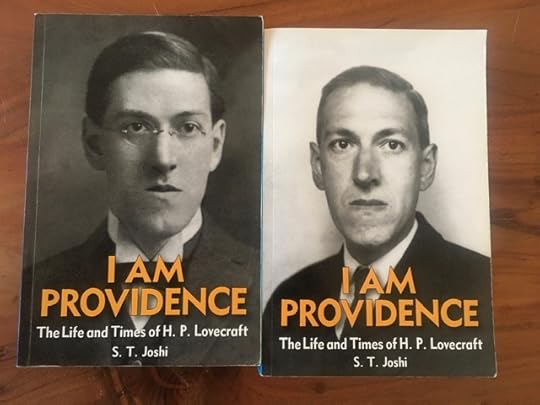
Five stars. You cannot ask for a more complete biography of H.P. Lovecraft. The level of research that S.T. Joshi put into I Am Providence is comparable only to the work of the great biographer Robert A. Caro. I read this massive tome — 1,451 pages plus over 200 pages of footnotes in the Kindle eBook edition — in only 15 days. That is not a testament to my speed so much as to Joshi's compulsive readability. [August 15, 2026 Revision and Update of the Review]
If anything, the author can be faulted for excessive detail. At one point he writes that Lovecraft's "letters are always of consuming interest, but on occasion one feels as if Lovecraft is having some difficulty shutting up" (p. 1097). Well, on occasion one feels as if Joshi is having some difficulty shutting up. I skimmed certain passages — long lists of books, HPL's grades from his school years. However, most of the detail is pertinent and, for this massive nerd, of great interest.
Part of the appeal is Joshi's humorous, lively, and often cantankerous writing style. He puts forth that "the proper function of any biographer" is "passing judgment" (p. 1421) and he has no problem sharing his opinions on a variety of topics, including Lovecraft's writing. I disagreed with him often and found this stimulating. Still, Joshi is careful to distinguish what are facts, what is conjecture, and what is opinion. He provides a strong sense of Lovecraft the human being, along with the environment that produced him, and the man's evolving views on philosophy, politics, morality, and most of all, "weird" literature.
A New Englander Reading About a New Englander
I am a New Englander, born and raised in Maine. I lived in southern California for three years and moved back to New England with a renewed appreciation for its culture, beauty, and history. I went to California partly to escape winter and returned having come to love the snow — and especially the fall, which is New England at its most itself: the color of the leaves, the smell of the air, the particular quality of the late afternoon light in October.
Lovecraft's own exile from New England is one of the biography's most compelling threads. His wife Sonia brought him to Brooklyn in March 1924, and he remained in New York until April 1926 — 2.5 years that were, for most of their duration, a sustained misery. Initially excited by the city's antiquities, he grew increasingly alienated by its cosmopolitan crowds. His two most overtly racist stories, "He" and "The Horror at Red Hook," were written during this period, directly inspired by his horror at the teeming immigrant populations of America's most diverse city. These are not his best stories. They are his most nakedly fearful ones, and the connection between the exile's misery and the fiction's ugliness is direct and instructive.
His return to Providence in 1926 was transformative. Joshi's account of his most productive creative period — the outburst that produced "The Call of Cthulhu," "The Colour Out of Space," "The Dunwich Horror," and "At the Mountains of Madness" in rapid succession — makes clear that Lovecraft could only do his best work when rooted in his native landscape. "It is astonishing how much better the old head works since its restoration to those native scenes amidst which it belongs" (p. 850).
My own three years in California were nothing like Lovecraft's New York misery — I chose to go, and California is genuinely beautiful. But the experience of returning to New England with fresh eyes, understanding for the first time what I had always taken for granted, gave me some small intuitive access to what Lovecraft was describing. You cannot fully love a place until you have missed it.
Lovecraft's sense of identity was inseparable from the region's colonial architecture, its autumn landscapes, and its ancient history. His declaration "I am Providence" is not just geographical — it is ontological. The city and the man were the same thing.
The Massachusetts that haunted Lovecraft's fiction — Marblehead, Salem, Newburyport, the wild rural terrain of the western part of the state — is landscape I know. Joshi's account of Lovecraft's experience of Marblehead in 1922, feeling himself united with his entire cultural past, is one of the biography's most vivid passages:
"To all intents & purposes I am more naturally isolated from mankind than Nathaniel Hawthorne himself, who dwelt alone in the midst of crowds... My life lies not among people but among scenes—my local affections are not personal, but topographical & architectural.... I am always an outsider—to all scenes & all people—but outsiders have their sentimental preferences in visual environment... it is New England I must have—in some form or other. Providence is part of me—I am Providence." (pp. 832-833)
The Case for Reading Lovecraft Despite His Flaws
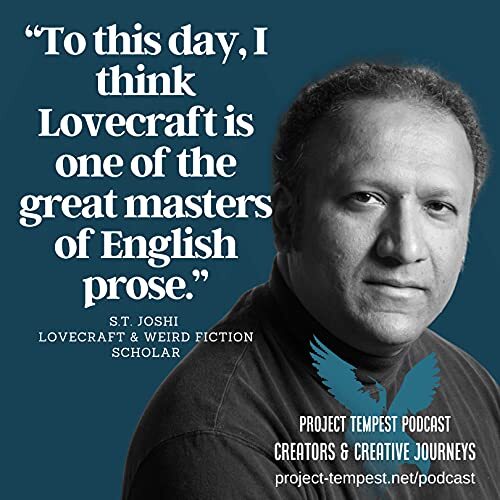
Joshi, himself a person of color and an immigrant to the United States from India, examines Lovecraft's racism and xenophobia in detail while making a compelling case that there is still much to love about his work and the human being himself. This is the most striking irony in contemporary Lovecraft scholarship: the most authoritative living Lovecraft scholar is a brown-skinned immigrant, a man Lovecraft would likely have regarded with hostility on sight. Joshi's answer to this paradox is essentially: the work exceeds the man. I find this persuasive.
Lovecraft's racism was not incidental to his horror — it was generative. The fear of the unknown, the alien, the incomprehensible that powers his best work was almost certainly rooted in his genuine terror of the unfamiliar, including people who looked or spoke differently from him. The Shoggoth is not just a monster; it is the externalization of a specific kind of fear. Understanding this does not excuse it but it makes his fiction more explicable and in some ways more interesting. The cosmicism that gives his best work its genuine philosophical power — the sense that the universe is vast, indifferent, and populated by things that human beings cannot understand or survive — is the same worldview that made racial difference terrifying to him. The horror and the bigotry share a root.
Joshi is precise and honest about where Lovecraft's racial thinking failed:
"Only on the issue of race did his thinking remain relatively static. He never realised that his beliefs had been largely shaped by parental and societal influence, early reading, and outmoded late nineteenth-century science. The brute fact is that by 1930 every 'scientific' justification for racism had been demolished." (p. 1283)
And yet the same man wrote this, in one of his most admirable passages:
"There is nothing better than oblivion, since in oblivion there is no wish unfulfilled. We had it before we were born, yet did not complain. Shall we then whine because we know it will return? It is Elysium enough for me, at any rate." (p. 469)
The marriage to Sonia Greene is the biography's most humanizing and most revealing episode. Sonia was a Jewish immigrant from Ukraine: exactly the kind of person Lovecraft's ideology would have coded as alien and threatening. Joshi makes a compelling case that Lovecraft married her believing she had been sufficiently "Americanized" — that she was, in his framework, an exception who had earned assimilation. This is not an admirable position. But it is a recognizably human one: a man whose worldview was built on rigid categories discovering that the categories did not hold when confronted with a specific person he loved. The marriage failed, for reasons Joshi explores in detail. But it happened, and it complicates the simple portrait.
What I most admire about Lovecraft — and what Joshi identifies as perhaps his most remarkable quality — is his intellectual honesty in almost every domain except race:
"This is a defining moment in the life of H. P. Lovecraft. How prototypical that it was not family ties, religious beliefs, or even the urge to write that kept him from suicide, but scientific curiosity. He was one of the most prodigious autodidacts in modern history, and he continued not merely to add to his store of knowledge to the end of his life but to revise his world view in light of that knowledge. This, perhaps, is what we ought most to admire about him." (p. 146)
Lovecraft was, in addition to everything else, genuinely funny. His letters crackle with wit, self-deprecation, and a warmth toward his correspondents that his fiction rarely displays. He loved history and architecture with the same passionate specificity that I love New England autumn. He was a devoted friend and a generous correspondent who wrote enormous letters to strangers who had asked him a few simple questions. He died at 46, impoverished and largely unrecognized. His work alone remains.
Joshi's concluding paragraph is the right place to end:
"Lovecraft is an oddity — neither he nor his work is 'normal' in any conventional sense, and much of the fascination that continues to surround him resides exactly in this fact. But both his supporters and his detractors would do well to examine the facts about both his life and his work, and also the perspective from which they make their own pronouncements and evaluations of his character. He was a human being like any of us — neither a lunatic nor a superman. He had his share of flaws and virtues. But he is dead now, and no amount of praise or blame will have any effect upon the course of his life. His work alone remains." (p. 1451)
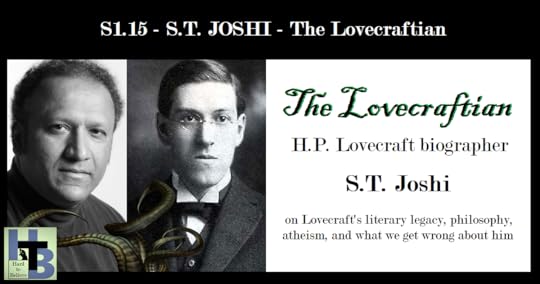
Citation:
Joshi, S. T. (2013). I am Providence: The life and times of H. P. Lovecraft [eBook edition]. Hippocampus Press. https://www.amazon.com/Am-Providence-... (Original work published 2010)
Title: I Am Providence: The Life and Times of H. P. Lovecraft
Author(s): Sunand Tryambak (S.T.) Joshi
Year: 2010
Genre: Nonfiction — Biography, Literature, & History
Page count: 1,662 pages [eBook edition]
Date(s) read: 10/19/23–11/2/23
Book #210 in 2023
February 18, 2022
It has been argued that H.P. Lovecraft is one of the most documented figures of the twentieth century. During his life he wrote approximately 100,000 letters (ranging from brief missives to 70 pages), a tenth of which still exist, and many of his friends were encouraged to write memoirs of him shortly after he died. Even setting aside his literary fame, this means a biography of him has a great deal to draw from. It conjures up a vivid - albeit highly idiosyncratic - depiction of life in Providence in the 1920s and early 1930s: the daily life as experienced by the relatively impoverished, the environment of amateur journalism and pulp mag fandom, the landscape and architecture still extant (and lovingly depicted in Lovecraft's many walking tour guides). In that sense, this biography's 1,058 pages more than capture a sense of period and place.
The biography is also a helpful complement to Lovecraft's fiction. Many of his stories have strong philosophical underpinnings driving them, and even when only looking at his fiction you can see him gradually develop his ideas about cosmicism and the nature of horror, his mimicry (and later abandonment) of influences like Poe and Dunsany, his testing and stretching of the shape stories can be and still function. His biography complements this study. It gives these interests context, showing what Lovecraft read, and how things like his love of astronomy informed his philosophies, and how his thoughts on things like politics evolved over his life.
This could have been a very dry and leaden book in other hands. Thankfully, S.T. Joshi has a lightness of prose, a readability no matter how mundane the details. Joshi is the world's foremost authority on Lovecraft, but he is happy to admit when the extant sources do not articulate some detail of Lovecraft's life. At the same time Joshi is very free with his opinions (while always making clear they are his personal opinions), and I think that is one of the biggest factors in keeping the book's pace lively. I don't always agree with his assertions - I think Joshi is using a very different definition of 'parody' when he labels 'The Hound' and 'The Dunwich Horror' as such - but it is a particularly effective approach to take with things like Lovecraft's decision to marry or his well-documented racism. Joshi offers some explanations for where Lovecraft's views are derived, but he ultimately takes him to task for attitudes that, even at the time, Lovecraft should have known better about. Still, what emerges from the biography is a fascinating but flawed individual, and it is hard to see how another biographer could do a more definitive job, or a historian a better window into this highly specific sliver of time, than Joshi.
The biography is also a helpful complement to Lovecraft's fiction. Many of his stories have strong philosophical underpinnings driving them, and even when only looking at his fiction you can see him gradually develop his ideas about cosmicism and the nature of horror, his mimicry (and later abandonment) of influences like Poe and Dunsany, his testing and stretching of the shape stories can be and still function. His biography complements this study. It gives these interests context, showing what Lovecraft read, and how things like his love of astronomy informed his philosophies, and how his thoughts on things like politics evolved over his life.
This could have been a very dry and leaden book in other hands. Thankfully, S.T. Joshi has a lightness of prose, a readability no matter how mundane the details. Joshi is the world's foremost authority on Lovecraft, but he is happy to admit when the extant sources do not articulate some detail of Lovecraft's life. At the same time Joshi is very free with his opinions (while always making clear they are his personal opinions), and I think that is one of the biggest factors in keeping the book's pace lively. I don't always agree with his assertions - I think Joshi is using a very different definition of 'parody' when he labels 'The Hound' and 'The Dunwich Horror' as such - but it is a particularly effective approach to take with things like Lovecraft's decision to marry or his well-documented racism. Joshi offers some explanations for where Lovecraft's views are derived, but he ultimately takes him to task for attitudes that, even at the time, Lovecraft should have known better about. Still, what emerges from the biography is a fascinating but flawed individual, and it is hard to see how another biographer could do a more definitive job, or a historian a better window into this highly specific sliver of time, than Joshi.

March 18, 2021
S. T. Joshi has created what I find to be the definitive biography of Howard Phillips Lovecraft. It must have been a true labor of love for Joshi.
There are two things, unfortunately, that will deter many people from picking this book up and giving it a read:
- its size alone will be the first detriment (nearly 1200 pages)
- preconceived, and often false, notions that people have regarding the subject of this book will also be a deterrent, I believe.
This is sad. H. P. Lovecraft was an extremely interesting man. Sure, he had his faults, as we all do. He is definitely on my list of authors with whom I would love to spend an evening by a fire in some cozy den discussing many things.
This book has truly increased my knowledge of Lovecraft, but it has also brought me closer to the man. You cannot absorb this much about a person without beginning to feel that you actually knew them. My esteem for H. P. Lovecraft has most definitely surged.
I'm also extremely impressed with S. T. Joshi, the author of this work. I cannot even begin to imagine the years of toil that were involved in researching for this project. It was worth it, though. Joshi has managed to humanize Lovecraft. He doesn't hide the ugliness, but attempts to explain it a bit; understanding assists in developing a less biased opinion of a subject.
I would most assuredly recommend a reading of Joshi's book for anyone with the slightest interest or curiousity regarding its subject.. Howard Phillips Lovecraft, his philosophies, his struggles, his likes and dislikes, his life. If life had thrown just a few less curve balls at Howard, one may wonder just how far and how successful he may have been; particularly if he had kept his health and lasted into his 70s or 80s. Instead, he was lost to us way too soon (46 years old), just as one of his inspirational mentors, E. A. Poe. (died at 40).
Howard never attained any commercial success in his lifetime. He never had a published book of any of his works while still living. His stories were mostly disseminated via amateur presses or magazines, such as Weird Tales.
There is a decent biographical article in Wikipedia regarding Lovecraft that may stir your interest toward the full story found in Joshi's biography on Lovecraft. I hope you give it a go someday.

April 22, 2025
"He seemed, somehow, to have been an integral part of my literary life," wrote Henry Kuttner on H.P. Lovecraft's death. In some ways I feel the same. I read almost all of Lovecraft's work in Panther Books editions in my early teens, and I have no doubt that his later stories of cosmic SF horror influenced my own writing, especially
Heart of Ice
, which very obviously owes a debt to At the Mountains of Madness.
The only Lovecraft biography I'd read before this was L. Sprague de Camp's 1975 book, which was a breezy read but perpetuated a lot of misconceptions of HPL as a maladjusted loner. S.T. Joshi sets the record straight here, showing us the full man -- or as full a picture as you can get without reading all his letters. Lovecraft comes across as a gentleman devoted to his friends, courteous and kind to those who came to him for writing advice, eloquent and amusing in his letters, and who inspired fierce loyalty. And, of course, he created an entirely new concept of science-fictional horror that transcended his admittedly often turgid prose style.
The book could have done with some editing, but the Kindle version is over 1500 pages long so that's perhaps not surprising. I take issue with Joshi on a couple of points. First when he says, "Bertrand Russell was far from being an atheist"; Russell was technically agnostic, but atheist with regard to all religions both historical and modern. And secondly when Joshi thinks he has identified a lazy slip in "The Dreams in the Witch House": "How can Lovecraft the atheist allow Keziah to be frightened off by the sight of a crucifix?" Well, Keziah is a self-identified witch from the 17th century who has inadvertently travelled through time and space but imagines that she has done so using black magic, so why shouldn't she react in fear to a crucifix?
I was going to take issue with the omission of Alan Moore from the list of writers influenced by Lovecraft, but I Am Providence was written in 2010 and Moore only released Neonomicon (the first of his Lovecraftian comics) that same year.
The only Lovecraft biography I'd read before this was L. Sprague de Camp's 1975 book, which was a breezy read but perpetuated a lot of misconceptions of HPL as a maladjusted loner. S.T. Joshi sets the record straight here, showing us the full man -- or as full a picture as you can get without reading all his letters. Lovecraft comes across as a gentleman devoted to his friends, courteous and kind to those who came to him for writing advice, eloquent and amusing in his letters, and who inspired fierce loyalty. And, of course, he created an entirely new concept of science-fictional horror that transcended his admittedly often turgid prose style.
The book could have done with some editing, but the Kindle version is over 1500 pages long so that's perhaps not surprising. I take issue with Joshi on a couple of points. First when he says, "Bertrand Russell was far from being an atheist"; Russell was technically agnostic, but atheist with regard to all religions both historical and modern. And secondly when Joshi thinks he has identified a lazy slip in "The Dreams in the Witch House": "How can Lovecraft the atheist allow Keziah to be frightened off by the sight of a crucifix?" Well, Keziah is a self-identified witch from the 17th century who has inadvertently travelled through time and space but imagines that she has done so using black magic, so why shouldn't she react in fear to a crucifix?
I was going to take issue with the omission of Alan Moore from the list of writers influenced by Lovecraft, but I Am Providence was written in 2010 and Moore only released Neonomicon (the first of his Lovecraftian comics) that same year.
September 27, 2023
This book is MASSIVE, and I spent the better part of a year chipping away at it between other reads. While it does delve a bit too frequently into Joshi's infamously pompous editorializing, often ironically following criticisms of Lovecraft's snobbish tastes with pure examples of his own ("unremarkable, unlearned hack-work"), this absolutely is deserving of its reputation as the definitive biography of HP Lovecraft. As someone who's only exposure to HP has been his fiction (ALL of his fiction, granted), this was a great window into his correspondences, poetry, philosophies, essays, and newsletters, showing the broad web of how they both fed into each other and stood out as separate facets of this man. While I did read it piecemeal, the writing is quite crisp and accessible, dense only in the layers it's exploring, but Joshi is skilled at knowing how to parse them out, going through each year in little sections that gradually stack into an overall structure. While his analysis can, yes, be a bit picky and narrow, he still gives each of Lovecraft's stories its due, and even when I didn't agree with him all the time on their quality, his delving in themes and influences was always informative, as well as how he'd cast them against both Lovecraft's forming philosophies and disillusion with the pulp market. It ultimately does what it set out to do, show you who Lovecraft was as a man. He was frustrating (contrary to those who call Joshi a Lovecraft apologist, the book is absolutely open and critical about his racism) and annoyingly self-destructive at times, but was more humorous and gregarious than people expect, a loyal friend, and was still in the process of some deep evolution of character when his life was cut short.

November 25, 2021
H.P. Lovecraft is the father or founder of weird fiction . Weird fiction is a category in and of itself that focuses on strange things that happen to people. Born in Providence , Rhode Island in 1890 HP lead a real sheltered life.
Born into wealth, thanks to his grandfather Whipple Philips, Howard lived most of his life on 454 Angel Street. When he was two years old his father was committed to a sanatorium. He was sick with syphalis . After this he would be raised by his aunts and grandfather. H.P. was very sheltered by his family , often having little contact with the neighborhood kids. In his own little world he absorbed the mythologies of different cultures and even worshipped some of their gods for fun. He had family that doted on him excessively.
This caused H.P. to have a week constitution and he missed lots of school as a result. As a teenager he was often struck with nerves . He did not graduate high school due to so many abscences. While in high school he managed to run his own magazine which focused on science and astronomy.
Later in his career he would focus on amateur work. Later on he would publish in Weird Tales. He had difficulty publishing later on. Basically the man and his life in a nutshell. H.P. was an atheist who had no beLife in god. He believed the Anglo Saxon culture to be superior and he shunned inter ethic marriage. He looked down on anyone who was not white. The book was overly long and Burdened with excessive details that made for slow reading . Book should have been condensed to three to four hundred pages.

June 9, 2026
As a devoted fan of Lovecraft, I could not pass up S. T. Joshi’s meticulously crafted biography.
Joshi traces his life in an almost obsessive manner: poverty, isolation, fear of change, obsession with the past, and belief in his own uniqueness. Every hint is supported by correspondence, so this is not conspiratorial nonsense, but a solidly documented biography.
While reading, it becomes increasingly clear where the coldness of his prose and poetry comes from. A cosmos without meaning, a world that is indifferent to human beings, and entities to whom we simply do not matter. Lovecraft comes across as someone who never learned to live in the present world and therefore created one of his own.
The passages dealing with his prejudices and elitism are genuinely fascinating. His attitude toward racism is also noteworthy; I would not describe it as aggressive bigotry, but rather as a fearful perception of the surrounding world, which he was afraid to truly get to know.
“I Am Providence” is slow, dense reading that demands close attention. The reward is a deeper understanding of why Lovecraft wrote the way he did, and why his texts work so perfectly, to the point that we can see their reflection in much of contemporary horror fiction.
Joshi traces his life in an almost obsessive manner: poverty, isolation, fear of change, obsession with the past, and belief in his own uniqueness. Every hint is supported by correspondence, so this is not conspiratorial nonsense, but a solidly documented biography.
While reading, it becomes increasingly clear where the coldness of his prose and poetry comes from. A cosmos without meaning, a world that is indifferent to human beings, and entities to whom we simply do not matter. Lovecraft comes across as someone who never learned to live in the present world and therefore created one of his own.
The passages dealing with his prejudices and elitism are genuinely fascinating. His attitude toward racism is also noteworthy; I would not describe it as aggressive bigotry, but rather as a fearful perception of the surrounding world, which he was afraid to truly get to know.
“I Am Providence” is slow, dense reading that demands close attention. The reward is a deeper understanding of why Lovecraft wrote the way he did, and why his texts work so perfectly, to the point that we can see their reflection in much of contemporary horror fiction.

May 12, 2024
Endlessly fascinating two volumes by the finest Lovecraft scholar S.T. Joshi Here, Joshi provides in depth analysis and often controversial opinions on Lovecraft’s life and work: we can read about Lovecraft’s formative years; his precarious health( the failed marriage( those famous letters and, of course the stories themselves.
Racist beliefs have long blighted Lovecraft’s name and it’s a crying shame held those opinions, but he often comes over as a charming and stimulating companion. Personally, I feel the author is a little too hard on some of Lovecraft’s work but the wonderful thing about all art is that it often divides opinions.
A word about Lovecraft’s voluminous correspondence: many think that Lovecraft would have written a lot more stories if it wasn’t for the urge to instigate and respond to mountain’s of mail. I fully agree with the author that this is probably not the case. Those letters made him the writer that he was. Some excerpts from this lifetime of communication are included here and make for engrossing study.
An absolute must for those interested in sci-fi and horror fiction, mixed in with fantasy.
Racist beliefs have long blighted Lovecraft’s name and it’s a crying shame held those opinions, but he often comes over as a charming and stimulating companion. Personally, I feel the author is a little too hard on some of Lovecraft’s work but the wonderful thing about all art is that it often divides opinions.
A word about Lovecraft’s voluminous correspondence: many think that Lovecraft would have written a lot more stories if it wasn’t for the urge to instigate and respond to mountain’s of mail. I fully agree with the author that this is probably not the case. Those letters made him the writer that he was. Some excerpts from this lifetime of communication are included here and make for engrossing study.
An absolute must for those interested in sci-fi and horror fiction, mixed in with fantasy.

March 5, 2026
My long-standing appreciation for Lovecraftian horror goes back to my early teens, but when I eventually read some of his biographical and epistolary collections I found the man fascinating. This book explores not only Lovecraft’s life and art in meticulous detail, but contains fascinating insights into the social attitudes of bourgeois New Englanders, the amateur journalism movement in the United States, life in the rapidly changing 1920s and the Great Depression. S.T. Joshi’s knowledge and enthusiasm is contagious; he seems to know more about Lovecraft than I know about myself. My only criticism is that in countering falsehoods and misconceptions from earlier biographers such as L. Sprague de Camp, Joshi can be overly generous in his assessments of Lovecraft’s less admirable qualities such as his racism and mental health issues. I would highly recommend this book (or the abridged “H.P. Lovecraft: A Life”) for anyone seeking a better understanding of his life and work.

June 18, 2024
The most definitive and comprehensive biography of H.P. Lovecraft by the scholar who probably understands him and his legacy most completely, S.T. Joshi. Joshi gives us a fairly complete account of his life and times (often the problem is where to abbreviate, given the voluminous records left by his massive correspondence - of which perhaps only 10% or so remains extant!), AND grapples with the complexity of his legacy - one of the greatest correspondents in world history, a titanic influence on subsequent literary history and even pop culture, yet his racism remains an utter blot upon his character. Joshi does not excuse or ignore Lovecraft's failings, nor is this book a polemic against those faults, but acknowledges them as part and parcel of his complex character. Anyone with an interest in Lovecraft beyond the superficial interest in reading his stories should read this book.
May 22, 2017
It has taken me almost a year to complete the two volumes which make up this book. Over a thousand pages of dense information from an author who obviously has huge respect for and knowledge and understanding of, his subject.
I feel I will spend the next ten years of my life just working through the authors and supplementary information listed throughout.
This is a stunning piece of work, incredibly thorough and detailed from the start to finish of Lovecraft's life. Joshi does not shy away from some of the more difficult aspects of that life such as the poor treatment of Sonia, HPL's wife, and the now widely publicised prejudices, and while I have come away from this not necessarily liking HPL as a person I feel I understand the issues better and can empathise in SOME regards.
This has in no way reduced my enjoyment of Lovecraft's art, but if anything has deepened my understanding of his life, his dedication to certain "causes" and the times in which he lived.
I feel I will spend the next ten years of my life just working through the authors and supplementary information listed throughout.
This is a stunning piece of work, incredibly thorough and detailed from the start to finish of Lovecraft's life. Joshi does not shy away from some of the more difficult aspects of that life such as the poor treatment of Sonia, HPL's wife, and the now widely publicised prejudices, and while I have come away from this not necessarily liking HPL as a person I feel I understand the issues better and can empathise in SOME regards.
This has in no way reduced my enjoyment of Lovecraft's art, but if anything has deepened my understanding of his life, his dedication to certain "causes" and the times in which he lived.
Displaying 1 - 30 of 48 reviews