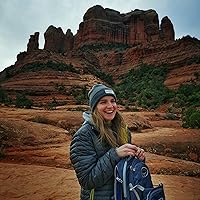
Is it Possible to ‘Cowboy’ on Six Continents? That is just what J. B. Zielke did in his early twenties. Argentina to Mongolia, Mexico to Australia this book takes you to places that you may not have even realized there are cowboys. Gunfights, feral bulls, bank truck robberies, and little old men riding reindeer are all part of this modern-day international cowboy journey. Being a cowboy is a dangerous occupation no matter where in the world it’s done. There are many similarities among cowboys all over the world but even more, differences are discussed in this book. It will leave you with a new appreciation for the problems ranchers face all over the world. Whether you live in a big city high-rise or on a ranch this collection of true stories will have you on the edge of your seat. “As cattlemen, we dream of what life was like on a trail crew driving herds north with no fences in sight. Places where technology fades away, and the spirit of the wild is still king. Something has driven J.B. to travel to where the modern world has just begun to meet the untamed land. In this book, he records what those worlds are like while they still exist." Colter Wall
The Lost Cowboy may not be beautifully written, full of artful prose, but it’s a wonderfully honest look at one young man’s desire to do something big and unique with his life and it was a pleasure to read. Zielke’s adventures highlight the tolerance for risk inherent in many cowboys but that seems to have been tamped down is so much of modern society. I genuinely got a big kick out of his time in Australia (where I swear I could have been reading about my cowboy father-in-law). It seems to me he was honestly lucky to get out of there alive, but isn’t that the way Australia is intended to be experienced? (Haha.) His time in Sweden made me so grateful to live in America because their regulations seem intended to annihilate any kind of farming or ranching and that really makes me sad. Like another reviewer here, it was a true treat for me to read about his time riding reindeer in Mongolia. Now THATS what I would call an adventure. Overall, this book vaguely reminded me of Peter Jenkins’ Walk Across America in that it was a travelogue that also gave a peek at the personal feelings of the ups and downs of modern life and the culture being travelled through, ultimately highlighting the value of adventure.
I have known JB for a number of years, and this book is a perfect reflection of his voice and experiences. I’m a biased reader, but his story is worth reading, and I will be buying more copies to give to people that need to hear it. An inspiring and uplifting tale about what is possible when you put your head down and try.
Solid read. It’s a travel log, so it kind of reads as a journal in spots, kind of showcasing he isn’t a writer by trade, but that’s kind of the charm of it. I enjoyed all sections (broke out by the countries he’s Cowboy’d in) but I think Australia and Mongolia were the most interesting. Riding the reindeer and then anything to do with rodeo/bull-riding was the most interesting to me. Cool book.
"I must travel to where the wild things are, sleep in the dirt, and tear up my body while I am young." (pg. 249)
Honest, compelling and entertaining, J. B. Zielke's travelogue The Lost Cowboy proves a surprisingly adept and rewarding addition to any bookshelf. Considering it's a self-published memoir and the author is only in his mid-twenties, you'd be well within your rights to have a few misgivings about the ride you are about to embark upon, but by any reasonable metric this is a good read. It follows the young Zielke, a cowboy and former rodeo rider, as he satisfies his wanderlust and thrill-seeking by cowboying on six different continents.
The book might appear to be imbalanced at first in the attention it gives to each of these continents, but The Lost Cowboy is greater than the sum of its parts and it flows well. 150 pages in Australia, herding cattle in the Outback on vast and rough land, are followed by another 100 immersed in the gaucho culture of Argentina. At first glance, you might think the later segments, each between 30 and 60 pages, would feel light in comparison, but Zielke is similarly capable when recalling his adventures in Sweden, South Africa, Mexico and Mongolia – the latter involving the unusual experience of riding reindeer.
I say 'adventures' because that's truly what they are; Zielke gives us anecdotes and insight and the other trappings of a travel book, but he also delivers danger, peril and restores a sense of romance to the world that has been lost in modern times. It is this which is the book's main selling point. In his Foreword to the book, the country and western musician Colter Wall – himself a young man who has built a career on a sincere evocation of an admired cultural past – tells us that ours is "a world where the wild places are shrinking" (pg. 9), following which Zielke spends 400 pages showing us that, in the third decade of the twenty-first century, there is still genuine adventure to be had in this world. And it's not only the eye-catching stuff – the bull- and reindeer-riding, the cow-roping and the wilderness camping. Zielke also has an eye, albeit untrained, for the smaller moments which carry their own poetry and romance. Witness the following scene, after a wild horse has been caught by Zielke and his gaucho companions in a heavy downpour in Argentina:
"We returned to the barn. We took the mare to a stout wooden post and tied her there so she would not pull loose. We rode into the barn and unsaddled our horses. All the men and horses looked the same. With so much mud, you could hardly see the colors on them. The horses got a small helping of grain as a reward for a hard day's work, and we released them. They all walked out and just stood in the warm rain, letting it wash the sweat from their hides. When they felt clean, they trotted off to join the other horses in the herd." (pg. 232)
This is, in my opinion, Zielke's finest passage of prose in the book, and while you can immediately see that it is not a masterpiece of the writing craft, it also has an evident charm. With a bit more polish and a touch of genius, you could find such an observation in Steinbeck or Hemingway or Cormac McCarthy, and while Zielke falls far short of that – who would not? – it is surprising and energising that he has that eye. To have these adventures is the sign of an interesting man; to be able to deliver the stories to a reader is something we should cherish, even though – the quoted passage aside – the writing is more often functional and workmanlike.
The limits to Zielke's writing are never fatal in the book; in fact, they're not even to its detriment. The key thing is for the author to deliver his experiences to the reader, and this he achieves. Rather, it is Zielke's reluctance to delve deep which prevents The Lost Cowboy from becoming even more remarkable than it is. He encounters various sensitive issues in his travels – the campaign of organised violence against white farmers in South Africa, for example, or the use of unpaid volunteers like himself to do hospitality work at rich-people ranches in Argentina – without really addressing them. Whether through a desire to be diplomatic or positive, or a lack of confidence in his role as writer, Zielke is usually circumspect where a truly great piece of writing would be opinionated.
Nevertheless, this can be said to be the flipside to one of Zielke's finer qualities: perhaps uniquely for a modern-day travel book, The Lost Cowboy is never self-regarding. There's neither a fawning exoticism nor a condescension towards the foreign cultures he encounters, which he interacts with honestly and without complacency. There's never a sense that Zielke believes he is the star, rather than the land or the adventure in it. It's rare to find such honest and charming writing nowadays, and perhaps explains why this book was self-published. Only the affluent and well-connected can get a travel book (or any book) published in the mainstream nowadays, and their 'adventures' are carefully stage-managed and risk-free. Honest working men like Zielke wouldn't even get in the room, to the extent that you can find yourself believing that people like this had died out of the world, rather than merely being severely disenfranchised.
Consequently, like the wild cattle and horses he often encounters, the self-published Zielke is free from any brand or marking, and this authenticity is another of the things that invests The Lost Cowboy with its charm. There's an articulation here of a point of view that is not often acknowledged, and even more rarely given voice to: the young modern men who feel a disconnect from the mainstream of their generation and their society – not as freaks or outcasts, but as quiet, thoughtful men in a world that is about bright flashing screens and short attention spans and the next big thing. Men desirous of "a place where people were valued and things were used", something that would be "refreshing in a world where people were used and things were valued" (pg. 107). Zielke might not necessarily have the awareness to fully recognise this deeper literary potential of his piece, or the writer's skill to realise it on the page had he recognised it, but it is there and it is restorative just to know that it is.
"Before starting to travel I often felt like I was slowly slugging my life away shoulder to shoulder with my peers like cattle being herded toward our 'higher-paying' jobs. We would work for the rest of our lives in a mind fog until one day we'd realize the better portion of our life was somewhere far gone in the past" (pp150-1). I'm not aware of any other contemporary book which really articulates this disconnect among the young. To be sure, there are books on Millennial angst, but they are often affected, political or bowdlerised by the compromises they make to the market. Zielke's book is the first one I've found that has bloomed under this broad generational storm-cloud which feels sincere. The Lost Cowboy might not be the most artful delivery of this sense of wanderlust and disconnect, but it breathes honestly and cleanly on every page and that is a far more admirable quality.
The Lost Cowboy by J. B. Zielke is an awe-inspiring true story of the author’s quest for knowledge about modern-day cowboying around the world. Zielke, in his twenties, traveled to six continents, working on ranches and learning the hard way the life of the cowboy, often in untamed land.
Zielke, an experienced horseman and rodeo competitor, began his quest in Australia where cowboys are called “ringers.” When he first arrived he was met by two rough, dusty looking men, shoeless, wearing button-up shirts with no sleeves and very dirty shorts. Zielke worked with these men catching wild bulls. His time in Australia was spent working for and with some of the roughest, toughest people he had ever met.
Next on his quest was Argentina, thrust into a Spanish-speaking world where he worked at a guest ranch, then later worked round-up on a cattle ranch. Much of ranching was different than Zielke expected—even the saddles were constructed differently than either American or English.
Sweden, he found, was one of the most unique places to raise cattle in the world. The Swedish government is very much involved, enforcing strict rules, restrictions and regulations. A couple of examples: It is illegal to rope any animal, and all stock must be sheltered in a four-sided structure in winter. Still, as in most places, Zielke made the most of his stay and made a significant contribution to the work force.
In South Africa, Zielke, through his contacts with Future Farmers Foundation, helped mentor and work with students, some of whom were just getting started working with agriculture, and some who were running massive multimillion-dollar farms. Overall, Zielke found that Africa was like seeing the world as it really was.
In Mexico, Zielke worked on a large farm, mostly harvesting corn, then later worked on a ranch. He was constantly impressed with Mexican ingenuity and their ability to make broken-down machinery work.
Asia, specifically Mongolia, was Zielke’s final destination. One of his aims in Mongolia was to visit the last people on earth who still ride reindeer. He found the Tsaatan, people who live in northern Mongolia, the last semi-nomadic people who depend on reindeer for transportation.
The Lost Cowboy is a story of a man who sought his adventure the hard way. He endured hardships most people would not be willing to suffer. He wasn’t a rich man, but he labored to earn enough money to experience the riches and hardships of cowboys the world over. This review only touches on the highlights of what is a thoroughly entertaining, in-depth, and educational story of one man’s attempt to experience the cowboy life in different cultures.
Author: JB Zielke - I genuinely enjoyed this & now feel an urge to head to Patagonia. That’s an expected result of reading the stories of someone who’s traveled the world working with livestock & whose descriptions reminded me how much of the world there is to see.
An underlying theme of the book is one of connection with the people he meets. Zielke clearly found ways not only to live a wild life & come out the other side but also to make friends along the way.
A real cowboy who worked livestock on six continents and lived to tell the tale. A gripping read and a must for fans of all things western, bucking horses, wild cattle, open ranges, and living free. Buy this one for a friend too. Winner of the prestigious SPUR award from the Western Writers of America.