First published in 1965, this novel is set in the early post-Independence years, when a new republic eagerly looks forward to a future full of hope. Rakesh, a young foreign service officer, who had grown up at a time when young men were ardent nationalists, returns to Delhi after a six-year absence to find many changes. He meets the new Advisor on Foreign Affairs, the controversial Kalyan Sinha, and is once again drawn to the magnetic personality of the politician whose ruthless manipulations are, in a way, a precursor of the moral corruption in the years to come. A rivettingly prescient novel.
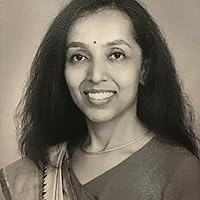
Nayantara Sahgal is an Indian writer in English. Her fiction deals with India's elite responding to the crises engendered by political change. She was one of the first female Indian writers in English to receive wide recognition. She is a member of the Nehru family (not the Nehru-Gandhi family as she so often points out), the second of the three daughters born to Jawaharlal Nehru's sister, Vijaya Lakshmi Pandit. She was awarded the 1986 Sahitya Akademi Award for English, for her novel Rich Like Us (1985)awarded by India's National Academy of Letters.
The books set in the era after independence (that I have read) have mostly dealt with partition and its aftermath. This one is different because it is set in a later period, but one that captures the challenges before a nation and its people. People who have had to change from being freedom fighters to bureaucrats, politicians and ordinary, but free citizens who all have to play a part in nation building. People who know they're being watched by others across the world as they set about laying the foundations of a country. As a member of India's first family in politics, Nayantara Sahgal is very well suited to write this tale. The anecdotes on Gandhi, the notes on Nehru's room, all add to the authenticity of the narratives. Though we begin to see India through the eyes of Rakesh, a foreign service officer who returns to the country after six years, a long list of characters soon appear - bureaucrats, politicians, and their families, all of whom have to cope with the changing landscape. The book offers a view of the early stages of corruption that's now an epidemic in India - when industry meets bureaucracy and politics, and a new generation of politicians, who have had little role in the freedom struggle, suddenly get their taste of power. An older set is forced to watch vested interests take precedence over morality and integrity. Power struggles and manipulations among them are interspersed with cultural clashes between generations and outlooks, providing a wholesome snapshot of an era. With so many unique characters, whom the author uses to provide perspectives on various facets of life and mindsets in that period, I did feel that a longer story was needed to do justice. The narrative of a few characters seemed to have been cut short purely for some kind of closure before the book ended, and the hasty conclusions sometimes worked against the hard work done thus far. But yet, it is quite a good read, especially because it is set in an era which is rarely talked about, or understood.
Wonderful even though a slow read. Helps much with understanding early years of independence and how politics in India took shape. Amazing how much of it stand true even today.
Loved the characters and scenes, the writing held my attention. But the book as a whole felt more like a history lesson than a novel. Rahesh was hardly in the book, and he was posited as the main character. The ending was very odd, like sticking Rahesh back in at the last minute.
But I loved the history, the idea of a new nation starting out in the world.
A book that ends too quickly. Simple yet captivating writing which bring forward the conflicts of different generations and personalities around the time of independence without attacking/ vilifying any side. Often depersonalized historical and political account is humanized in this book by beautifully threading elements of fiction with facts.
Living in an age of 24/7 news channels, online blogs, social media and being face to face with juvenile rants on a constant basis, it's quite easy in today's world to come to come to terms with the harsh realities of Indian politics, it's murkiness and the general pettiness that plagues our rotten bureaucracy.
But for a second, imagine the India of 1965. With the memories of the Independence movement still fresh, the towering persona of Nehru and the halo of supremacy still firm on the bureaucrats of our nation, how easy would it have been to see through it all and to come to grips with the rising nepotism and the creeping decay? Reading Sahgal's "This side of Morning" with this perspective made me realize the importance of this book. Being the niece of Nehru and privy to the vantage point it must have offered is almost half the task accomplished before embarking on such a work, but irrespective of this, Sahgal still pulls off an immensely readable piece of fiction set in the heart of Lutyen's Delhi.
A young IFS officer, a Machiavellian mandarin in the MEA, senior bureaucrats, their wives - mostly veterans of the cocktail circuits, characters who still stand by the ethics and principles of the vanishing Age of Gandhi being confronted with a new India etc form the motley of characters of this work. The editing could have been a bit more crisper since in my opinion, this would have been a much more enjoyable read had it been slimmer by 30-40 odd pages.