

What do you think?

Captain Scott
Sir Ranulph Fiennes is uniquely qualified to write a new biography of Captain Scott. This is the first biography of Scott by someone who has experienced the deprivations, the stress and the sheer physical pain that Scott lived through; he has suffered all but the final tragedy endured by the much maligned Scott. He is determined to put the record straight.
As well as being the definitive biography of Scott, written with the full and exclusive cooperation of the Scott Estate, this book traces the way that Scott's reputation has been attacked and his achievements distorted.
'Sir Ranulph Fiennes has done Captain Scott's memory some service...he has certainly written a more dispassionate and balanced account than Huntford ever set out to do.' - Simon Courtauld, Spectator
As well as being the definitive biography of Scott, written with the full and exclusive cooperation of the Scott Estate, this book traces the way that Scott's reputation has been attacked and his achievements distorted.
'Sir Ranulph Fiennes has done Captain Scott's memory some service...he has certainly written a more dispassionate and balanced account than Huntford ever set out to do.' - Simon Courtauld, Spectator
508 pages, Paperback
First published November 3, 2004
About the author
Ranulph Fiennes
100 books298 followersSir Ranulph Twisleton-Wykeham-Fiennes, 3rd Baronet, OBE, better known as Ranulph (Ran) Fiennes, is a British adventurer and holder of several endurance records.
Fiennes has written books about his army service and his expeditions as well as a book defending Robert Falcon Scott from modern revisionists. In May 2009, aged 65, he climbed to the summit of Mount Everest. According to the Guinness Book of World Records he is the world's greatest living adventurer.
Fiennes has written books about his army service and his expeditions as well as a book defending Robert Falcon Scott from modern revisionists. In May 2009, aged 65, he climbed to the summit of Mount Everest. According to the Guinness Book of World Records he is the world's greatest living adventurer.
Ratings & Reviews
Friends & Following
Create a free account to discover what your friends think of this book!
Community Reviews
Displaying 1 - 30 of 135 reviews

June 13, 2009
This biography on Captain Scott by Ranulph Fiennes will rank in my top ten books for 2003. I have to confess that I have no in-depth knowledge on artic travel and exploration other than having read a few good books on the subject.
Having said that, out of the books that I have read on the subject this has to be the best so far. In any book I read I always have a look at the background (or pedigree) of the author. In this case Ranulph Fiennes has the personal experience of many years of artic travel & exploration to back up his claims and theories in his account of Captain Scott.
By referring to his own experiences in the same areas and similar circumstances you get a much better idea of what was possible and why and what wasn't possible and why. He is also able to put to rest many of the myths and fairy tales surrounding Scott's South Pole expedition and the fate of himself and his companions.
After finishing this book I really felt I had a much better understanding of what these brave men attempted and why they failed or didn't fail depending on your point of view. As other reviews have indicated, maybe the author tends to lean to Captain Scott's defence too much but then again maybe Captain's Scott's reputation needs to be picked up from the dust of history and given a good polish again, its well deserved.
I would have no hesitation in recommending this book to anyone who wants to know what really happened to Captain Scott. Anyone who enjoys accounts of adventure, of man overcoming adversity or just a decent history book to read, this will suit them down-to-the-ground. I am indebted to the author for passing on his passion for this man, I have learnt a few things and I am grateful that I had the opportunity to read such a well-researched and well-written book, well done to Mr Fiennes!
From the back cover: "The real story of one of the greatest explorers who ever lived by the man described by the Guinness Book of Records as the world's greatest living explorer."

April 30, 2022
The best account ever written about the ultimate explorer race to the South Pole.

September 28, 2023
Having really loved Ranulph Fiennes's Shackleton, I thought I'd go back and try out this one. I was not disappointed. This was amazing, both in what it was telling and how it was telling it.
I only knew bits and pieces about what happened to Scott and his subsequent legacy, so I was going into this more or less blind. My area is mid-19th century British polar exploration and although I do feel Antarctic exploration is pretty timeless, there are huge differences in terms of funding, preparation, goals and personalities sometimes. The theme that unites them though is how hostile the environment is and just how much endurance the human body and mind has to go through. In that way, I think Ranulph Fiennes is the perfect person to write a biography of Scott (and Shackleton), having done so much (and more) of what they did. He understands the extreme climates and the insane experiences someone has to go through in the far north or far south.
I saw in the other reviews that this book would also include a debunking of the debunking of Scott's character, mainly in relation to Roland Huntford's Last Place on Earth/Scott and Amundsen, which absolutely assassinated Scott and what he did and how he did it. There are glimpses of this throughout, with the final two chapters dedicated specifically to why and how Scott's legacy has been examined and re-examined. I found that really interesting, with its basis in how times change and how the British character is one that loves martyrdom and sacrifice and the underdog. Although Ranulph Fiennes claims to be unbiased, I do think there is a little bit of Scott admiration throughout the book, which is totally understandable. I found his deconstruction of Huntford's research and historical points very pertinent to how history is constantly re-evaluated, and how a historical narrative presented as 'fact' can be just as mythic as any other interpretation.
But to the actual history of the book, because that is what gripped me the most. The story of the Terra Nova is such a tragic, powerful, and in ways inspiring narrative. Every chapter, and every event, had me wondering just how someone can survive such things as -60 degrees Celsius, bitter winds, marches through blizzards, the constant danger of hidden crevasses, the risk of getting trapped in ice, all in a very unknown and uncharted continent. Stories of sacrifice and determination, and moreover the bonds of friendship and love, really grab me and this has all of that. I did not expect to get teary over it, considering that does not happen with almost any book I read, but the account of Oates sacrificing himself to try and save his dying friends, and of Scott, Bowers, and Wilson in their tent, knowing that the end was coming and trying to face it bravely, got me. Regardless of what you think about Scott, that way to go is utterly horrific and chilling.
There were a few parts that will stay on with me after having read this, mainly from Scott's diaries and letters. 'For God's sake, look after our people', as well as 'I hope I will be a good memory' shook me, but maybe my favourite was the line from Ulysses on his memorial cairn: 'To seek, to find, and not to yield'.
Overall, this was a great book on someone who has become a controversial personality, but I could not help falling a little in love with Scott while reading this. He was flawed and imperfect, but that was what made this book, and him, so fascinating.
I only knew bits and pieces about what happened to Scott and his subsequent legacy, so I was going into this more or less blind. My area is mid-19th century British polar exploration and although I do feel Antarctic exploration is pretty timeless, there are huge differences in terms of funding, preparation, goals and personalities sometimes. The theme that unites them though is how hostile the environment is and just how much endurance the human body and mind has to go through. In that way, I think Ranulph Fiennes is the perfect person to write a biography of Scott (and Shackleton), having done so much (and more) of what they did. He understands the extreme climates and the insane experiences someone has to go through in the far north or far south.
I saw in the other reviews that this book would also include a debunking of the debunking of Scott's character, mainly in relation to Roland Huntford's Last Place on Earth/Scott and Amundsen, which absolutely assassinated Scott and what he did and how he did it. There are glimpses of this throughout, with the final two chapters dedicated specifically to why and how Scott's legacy has been examined and re-examined. I found that really interesting, with its basis in how times change and how the British character is one that loves martyrdom and sacrifice and the underdog. Although Ranulph Fiennes claims to be unbiased, I do think there is a little bit of Scott admiration throughout the book, which is totally understandable. I found his deconstruction of Huntford's research and historical points very pertinent to how history is constantly re-evaluated, and how a historical narrative presented as 'fact' can be just as mythic as any other interpretation.
But to the actual history of the book, because that is what gripped me the most. The story of the Terra Nova is such a tragic, powerful, and in ways inspiring narrative. Every chapter, and every event, had me wondering just how someone can survive such things as -60 degrees Celsius, bitter winds, marches through blizzards, the constant danger of hidden crevasses, the risk of getting trapped in ice, all in a very unknown and uncharted continent. Stories of sacrifice and determination, and moreover the bonds of friendship and love, really grab me and this has all of that. I did not expect to get teary over it, considering that does not happen with almost any book I read, but the account of Oates sacrificing himself to try and save his dying friends, and of Scott, Bowers, and Wilson in their tent, knowing that the end was coming and trying to face it bravely, got me. Regardless of what you think about Scott, that way to go is utterly horrific and chilling.
There were a few parts that will stay on with me after having read this, mainly from Scott's diaries and letters. 'For God's sake, look after our people', as well as 'I hope I will be a good memory' shook me, but maybe my favourite was the line from Ulysses on his memorial cairn: 'To seek, to find, and not to yield'.
Overall, this was a great book on someone who has become a controversial personality, but I could not help falling a little in love with Scott while reading this. He was flawed and imperfect, but that was what made this book, and him, so fascinating.

January 6, 2024
As someone who actually has lengthy Polar experience, Fiennes brings a unique angle to this much-told story: he knows just what it is actually like to see your own feet rotting from gangrene, to lose 25% of your body weight despite eating to satiety every day because you are expending more energy than it is physically possible to ingest, or to pull on mittens over hands frozen to raw meat (and makes the point that Captain Oates could not possibly have opened the tent-strings hinself for his final 'walk'; someone else would have had to let him out).
On the other hand, since I had obtained my previous knowledge of Scott's plans and personality from Elspeth Huxley and Apsley Cherry-Garrard, both of who in fact depict him in very much the same light as he is shown here - a loyal, conscientious worrier who struggled against depression - the heavily defensive attitude of the whole book reads strangely. Fiennes is not telling me anything I did not already know, and yet he is arguing so hard to defend his subject against accusations that these authors among others are supposedly making (he even describes poor Cherry as 'the hostile Cherry-Garrard') that he risks leaving the reverse impression. I'm perfectly willing to believe that Roland Huntford may have written a sensationalist, sloppily researched and even falsified biography of Scott along the lines of such celebrity character-assassinators as Charles Higham, but I for one don't need Fiennes to try quite so hard to convince me of this.
On the other hand, since I had obtained my previous knowledge of Scott's plans and personality from Elspeth Huxley and Apsley Cherry-Garrard, both of who in fact depict him in very much the same light as he is shown here - a loyal, conscientious worrier who struggled against depression - the heavily defensive attitude of the whole book reads strangely. Fiennes is not telling me anything I did not already know, and yet he is arguing so hard to defend his subject against accusations that these authors among others are supposedly making (he even describes poor Cherry as 'the hostile Cherry-Garrard') that he risks leaving the reverse impression. I'm perfectly willing to believe that Roland Huntford may have written a sensationalist, sloppily researched and even falsified biography of Scott along the lines of such celebrity character-assassinators as Charles Higham, but I for one don't need Fiennes to try quite so hard to convince me of this.

July 28, 2020
This book has two parts: first, a biography of Scott, with detailed accounts of his Discovery and Terra Nova expeditions, and, secondly, a defence of Scott’s legacy against those who have subsequently “debunked” him.
I knew very little about Scott and South Polar exploration before this, and even less about all the controversy surrounding him, which meant the final chapter on Scott’s hijacked legacy (and the intense take down of one or two debunkers) was a little dull. Though it would appear to make an invaluable contribution to the Scott debate if what Fiennes is saying is correct.
The biography, however, was fascinating, inspiring, and very moving at places.
4/5 for the biography. 2/5 for the chapter on Scott’s legacy.
I knew very little about Scott and South Polar exploration before this, and even less about all the controversy surrounding him, which meant the final chapter on Scott’s hijacked legacy (and the intense take down of one or two debunkers) was a little dull. Though it would appear to make an invaluable contribution to the Scott debate if what Fiennes is saying is correct.
The biography, however, was fascinating, inspiring, and very moving at places.
4/5 for the biography. 2/5 for the chapter on Scott’s legacy.

June 25, 2026
Hard times create strong men, strong men create good times, good times create weak men, and weak men create hard times.
Captain Scott, and the early polar explorers, are amongst those strongest of men. The pain they endured was immense, and they did so out of choice and bravery, they went to the Antarctic because it was a challenge and a hard thing to do.
Our country doesn’t produce men like this anymore, and when you look at how far we as a country have fallen, it’s hard to not conclude that western civilisation is, for the most part, doomed.
Today we still revel in the character destructions of several figures from the British Imperial era; Churchill, Kipling, Scott. It seems though that we have now run out of new figures to target and judge by the standards of our times, as we achieve much less. Therefor, we look across the pond to target the next wave of explorations pioneers, ones that don’t look to the poles but to other planets. I wonder how history will treat these explorers.
5 stars, a great book, but it did make me feel a little cold at times.
Captain Scott, and the early polar explorers, are amongst those strongest of men. The pain they endured was immense, and they did so out of choice and bravery, they went to the Antarctic because it was a challenge and a hard thing to do.
Our country doesn’t produce men like this anymore, and when you look at how far we as a country have fallen, it’s hard to not conclude that western civilisation is, for the most part, doomed.
Today we still revel in the character destructions of several figures from the British Imperial era; Churchill, Kipling, Scott. It seems though that we have now run out of new figures to target and judge by the standards of our times, as we achieve much less. Therefor, we look across the pond to target the next wave of explorations pioneers, ones that don’t look to the poles but to other planets. I wonder how history will treat these explorers.
5 stars, a great book, but it did make me feel a little cold at times.

November 10, 2018
Interesting to hear about Fienne's experiences alongside Scott's and a decent overview of the historiography surrounding Scott.
It's pretty readable too though sometimes the paragraphs don't seem to link and it meanders through different topics vaguely related.
The biggest issue with the book is that, even though he claims not to care that deeply about Scott, and even though he claims to weigh up both sides of an argument, sometimes his prose comes across as so one-sided, pro-Scott that it loses some credibility. For example, he claims that a man cannot be judged by his diary entries as they would have been edited had he not died. That's true to a degree, but I don't think you can disregard every negative comment about another expedition member as having no truth or right to be discussed.
Overall - interesting but could have done with some editing!
It's pretty readable too though sometimes the paragraphs don't seem to link and it meanders through different topics vaguely related.
The biggest issue with the book is that, even though he claims not to care that deeply about Scott, and even though he claims to weigh up both sides of an argument, sometimes his prose comes across as so one-sided, pro-Scott that it loses some credibility. For example, he claims that a man cannot be judged by his diary entries as they would have been edited had he not died. That's true to a degree, but I don't think you can disregard every negative comment about another expedition member as having no truth or right to be discussed.
Overall - interesting but could have done with some editing!
August 10, 2026
I started reading this about ten minutes after I finished Huntford’s last place on earth and I am so happy I did, mostly for the point for point Huntford takedown in the final chapter. Get him again for me
But anyway I love reading polar books by actual polar explorers cause they will follow up “Scott did this incredibly dangerous and batshit thing” with “so I also did this ten years ago”. Or drop that they tried to get their whole team’s appendixes removed. Jokes aside though there’s multiple times where Fiennes can give context to quotes from Scott that you simply wouldn’t have gotten otherwise and I do think that’s very cool
Booked in for a coach journey and Fiennes’ Shackleton biography tomorrow methinks
But anyway I love reading polar books by actual polar explorers cause they will follow up “Scott did this incredibly dangerous and batshit thing” with “so I also did this ten years ago”. Or drop that they tried to get their whole team’s appendixes removed. Jokes aside though there’s multiple times where Fiennes can give context to quotes from Scott that you simply wouldn’t have gotten otherwise and I do think that’s very cool
Booked in for a coach journey and Fiennes’ Shackleton biography tomorrow methinks
January 27, 2016
With this biography of Captain Scott, Ranulph Fiennes is attempting to right the wrong done to Scott's reputation. A wrong mostly done by the author Roland Huntford, at least in Fiennes view. The author charts Scott's life but primarily focuses on his two expeditions to the south pole, the second one ending in tragedy.
Fiennes is an experienced polar explorer and has lead expeditions in the same areas as Scott, using some of the same methods, including extensive man-hauling as were used on both Scott's expedition. This gives the book a weight you can feel. He writes about the stress and strain and deprivation that wears on you, leading to being harsher on your companions during your expedition journaling than you otherwise would be. He goes into great detail on why and how the decisions were made to man-haul to the South Pole by his team, instead of using dog sleds and skis as Amundsen did. Fiennes doesn't shy away from Scott's character flaws, flaws that Scott himself was aware of and fought against his whole life. He was prone to bouts of depression and malaise, to being sharp-tongued and dismissive of those who weren't pulling their weight. Through the surviving journals of the men who were on the expedition, he shows that most of the crew knew these faults and respected and admired Scott for the tremendous leader he was anyway.
This was an interesting read, especially after finishing "The Last Viking" Stephen Brown's biography of Roald Amundsen, the Norwegian explorer who secretly launched an expedition to the South Pole at the same time as Scott. I came out of that book with a lot of admiration for Amundsen, but Fiennes clearly has a great disrespect for him. He considers the way Amundsen kept his plans to be the first to the pole secret until it was too late for Scott to make any adjustments, sneaky and underhanded. Amundsen was an adventurer pure and simple, his expedition was solely to be the first to the pole, nothing else. Scott on the other hand was leading a scientific expedition. He and his men mapped great areas of the Antarctic, taking scientific measurements the entire time, collecting samples and specimens and adding to the collective knowledge of the mostly unknown polar region.
This is at it's heart a great adventure book. The things they went through both on the first and second expedition are hard to fathom in this day and age. The end is harrowing but it's highly readable.
Fiennes is an experienced polar explorer and has lead expeditions in the same areas as Scott, using some of the same methods, including extensive man-hauling as were used on both Scott's expedition. This gives the book a weight you can feel. He writes about the stress and strain and deprivation that wears on you, leading to being harsher on your companions during your expedition journaling than you otherwise would be. He goes into great detail on why and how the decisions were made to man-haul to the South Pole by his team, instead of using dog sleds and skis as Amundsen did. Fiennes doesn't shy away from Scott's character flaws, flaws that Scott himself was aware of and fought against his whole life. He was prone to bouts of depression and malaise, to being sharp-tongued and dismissive of those who weren't pulling their weight. Through the surviving journals of the men who were on the expedition, he shows that most of the crew knew these faults and respected and admired Scott for the tremendous leader he was anyway.
This was an interesting read, especially after finishing "The Last Viking" Stephen Brown's biography of Roald Amundsen, the Norwegian explorer who secretly launched an expedition to the South Pole at the same time as Scott. I came out of that book with a lot of admiration for Amundsen, but Fiennes clearly has a great disrespect for him. He considers the way Amundsen kept his plans to be the first to the pole secret until it was too late for Scott to make any adjustments, sneaky and underhanded. Amundsen was an adventurer pure and simple, his expedition was solely to be the first to the pole, nothing else. Scott on the other hand was leading a scientific expedition. He and his men mapped great areas of the Antarctic, taking scientific measurements the entire time, collecting samples and specimens and adding to the collective knowledge of the mostly unknown polar region.
This is at it's heart a great adventure book. The things they went through both on the first and second expedition are hard to fathom in this day and age. The end is harrowing but it's highly readable.
February 27, 2014
Torn between 3 and 4 stars. The first half of the book is Scott's back-story before the ill fated Terra Nova expedition, and while it gives certain parts of the Terra Nova expedition some context, as a stand alone biography it was somewhat pedestrian - it was ok.
Second half is excellent; Fiennes experience with polar travel and conditions, together with his meticulous research of the expedition's letters and diaries, places him in an excellent position to be able to offer critical analysis of the decisions made by Scott and behaviour of the team.
As the journey begins to unravel, it's hard not to be moved by the courage shown by all the men involved, and having been given a glimpse of what these men went through i won't look at adversity in quite the same way again.
Three or four? such was my emotional involvement, i'll go for four :)
Second half is excellent; Fiennes experience with polar travel and conditions, together with his meticulous research of the expedition's letters and diaries, places him in an excellent position to be able to offer critical analysis of the decisions made by Scott and behaviour of the team.
As the journey begins to unravel, it's hard not to be moved by the courage shown by all the men involved, and having been given a glimpse of what these men went through i won't look at adversity in quite the same way again.
Three or four? such was my emotional involvement, i'll go for four :)

September 8, 2023
An interesting depiction of Scotts expeditions to the south pole, ending in the race against Amundsens team. The beginning of the book is a little dragging, but once the pace picks up it gets really gripping. The end is a little too long though and the author doesn’t really get to the point, so it has some lengths but is a really interesting book for everyone who wants to know more about antarctic exploration.

January 22, 2022
(4.5) This was a great look not only into Scott's life and character but also to both the Discovery and the Terra Nova expedition and many of the men involved in them. Before reading this I didn't know who Fiennes was and you can really tell that this was written by someone who has experienced many of the hardships Scott went through. This guy mentions that he once spent 3 months on a floating ice floe like one comments that he got stuck on an elevator or something. Wild stuff.
I read the part of the Terra Nova expedition as I simultaneously watched Pointing's film "The Great White Silence" and having such vivid visual records of the men of the expedition helped me symphatize way more than I already was with these men. The sequence of Bowers, Evans, Wilson and Scott inside their tent, getting theirs boots off, getting into their sleeping bags and snuggling together for warmth dind't leave my mind for a second while I read about Wilson, Bowers and Scott's last days in their tent.
Fiennes' not only gives a very humanizing (and biased, but in a good way) view of Scott himself but also of the rest, even when they didn't see eye to eye with the Owner, as they called Scott. One of my favourite things about this was learning about Captain Lawrence "Titus" Oates. He already was the one men of this expedition I was most interested in but reading more about him, his complex personality and relationship with Scott and obviously, very tragic end, made the bits about him some of my favourites.
This was not only a great look into Scott but also an amazing tale of his two main expeditions and I would 100% recommend him to anyone interested not necessarily in Scott but in polar exploration in general.
(That last one chapter of Mr Fiennes just destroying Hunford, Scott's main critic and debunker, was so fucking shady and. Good for you Mr Fiennes good for you. I would also write a 500 pages-long book to discredit a shitty biographer of one of my special historical boys)
I read the part of the Terra Nova expedition as I simultaneously watched Pointing's film "The Great White Silence" and having such vivid visual records of the men of the expedition helped me symphatize way more than I already was with these men. The sequence of Bowers, Evans, Wilson and Scott inside their tent, getting theirs boots off, getting into their sleeping bags and snuggling together for warmth dind't leave my mind for a second while I read about Wilson, Bowers and Scott's last days in their tent.
Fiennes' not only gives a very humanizing (and biased, but in a good way) view of Scott himself but also of the rest, even when they didn't see eye to eye with the Owner, as they called Scott. One of my favourite things about this was learning about Captain Lawrence "Titus" Oates. He already was the one men of this expedition I was most interested in but reading more about him, his complex personality and relationship with Scott and obviously, very tragic end, made the bits about him some of my favourites.
This was not only a great look into Scott but also an amazing tale of his two main expeditions and I would 100% recommend him to anyone interested not necessarily in Scott but in polar exploration in general.
(That last one chapter of Mr Fiennes just destroying Hunford, Scott's main critic and debunker, was so fucking shady and. Good for you Mr Fiennes good for you. I would also write a 500 pages-long book to discredit a shitty biographer of one of my special historical boys)

January 31, 2018
I've read a few other books on polar exploration, and it was interesting to read one written by an author with actual polar experience. Fiennes' experiences on polar expeditions helped inform his views on Scott, and add depth and context to the writing of this book. I think he mainly did a good job of remaining unbiased, or did until the end of the book, when he traces the history of Scott's reputation. Apparently there has been a complex history of lionization/bastardization of his character, most of the negativity hailing from a single poorly sourced and biased biography. As far as I can tell, Fiennes does a good job of presenting primary source information and offering a clear representation of historical events.

July 29, 2024
A really well researched biography by Ranulph Fiennes who as an explorer himself brings a unique perspective to Scott's expeditions.
July 13, 2020
I didn't realize Oates was only 32 (my age) when he went for a walk.
I never really thought about it before, but all of this happened just before the First World War. So telling the story of the Terra Nova Expedition as a tale of heroic sacrifice doomed to failure makes sense.
I wasn't aware of the Huntford book, but it was interesting how views on Scott and the failure of the expedition have changed.
I never really thought about it before, but all of this happened just before the First World War. So telling the story of the Terra Nova Expedition as a tale of heroic sacrifice doomed to failure makes sense.
I wasn't aware of the Huntford book, but it was interesting how views on Scott and the failure of the expedition have changed.

October 22, 2019
I really wanted to like this nonfiction books about the last 1800s and the quite a bit of the problems faced by Polar Explorers from the 1900s up to the 70s-80s.
What I didn’t like about this author’s presentation of facts downplayed and didn’t provide proven facts to support the tainted stores of canned goods. But for the fact that I already knew why many of these tins of meat were contaminated and many cans contained merely bones in cans that were supposed to have what the label said was in the cans. Many other canned goods were punctured such that the contents of the cans became poisonous.
This sabotage is a significant reason for the many aborted Expeditions; four poisoning and lead contamination from these cans were infecting all who ate those cans that actually had what the label said. Poor seals of the canned food, deliberate small punctures committed by the employees employed by Hungarian food processing plant were themselves starving as the result of slave wages so they ate what they could and sabotaged many other cans in protest.
The botulism knocked most, if not all of these ship’s crew for told the failure of several Expeditions.
The author just glazed over this significant set of facts should never have been described in the few sentences the author gave the reader.
Additionally, he bad mouths other nonfiction writers’ accounts of the stories as completely wrong. The explores this author says that what they wrote in their biographies is inaccurate because these writer couldn’t possibly know the facts about treks that took place more than a century ago. But the same standard of measurement, this author tells what he touts as the credible account of the Expeditions that took place before he was born
If he is constrained to previously written works for the basis of this book, how dare he rely on books he goes out of his way to disparage?
The book lacks honest appraisals of writers who completed their works contemporaneously with the news and the explorers who published articles about their adventures and the dangers they faced .
The book appears to knock down others’ accomplishments in an attempt to con his readers into believing his book is the seminal and only accurate portrayal of the Expeditions to the South Pole.
Even more disturbing, are the very obvious pages of those who, before he was even born, wrote their first person accounts of their own experiences.
I admit that I’m listening to this book in audiobook format. I can only hope that the physical book contains a huge number of citations and footnotes. The audiobook version doesn’t make reference to any citations nor footnotes.
If I hadn’t read or listened to every single Polar Expeditions, I would not has such a firm foundation upon which I can see those spots where this author did not conduct a comprehensive study of the Great Explorers’ proven facts. As a result, a reader totally familiar with these expeditions, an unlearned reader would take the book as a perfectly factual recount of the stories of the Great Explores.
Point in fact. He brings up Shackelton’s very poor health. But he doesn’t detail HOW Shackelton became so infirm. At least he gives credit where credit is due to Shack who, while incapacitated, continued to help guide the crew successfully to their goal and back while only losing to frostbite and scurvy just a few of his crew. Kudos to this author for that, at least.
If this book was submitted for either a Master’s or PH.d thesis, in the fact of grueling questions by the faculty, they could easily dismiss this thesis because he omitted key facts, facts that adversely hurt the Expeditions.
Pick a better researched book if you’re looking to get the real story of Antarctic Expeditions.
This writer chose to detail WHY the crews got sick from the food.
What I didn’t like about this author’s presentation of facts downplayed and didn’t provide proven facts to support the tainted stores of canned goods. But for the fact that I already knew why many of these tins of meat were contaminated and many cans contained merely bones in cans that were supposed to have what the label said was in the cans. Many other canned goods were punctured such that the contents of the cans became poisonous.
This sabotage is a significant reason for the many aborted Expeditions; four poisoning and lead contamination from these cans were infecting all who ate those cans that actually had what the label said. Poor seals of the canned food, deliberate small punctures committed by the employees employed by Hungarian food processing plant were themselves starving as the result of slave wages so they ate what they could and sabotaged many other cans in protest.
The botulism knocked most, if not all of these ship’s crew for told the failure of several Expeditions.
The author just glazed over this significant set of facts should never have been described in the few sentences the author gave the reader.
Additionally, he bad mouths other nonfiction writers’ accounts of the stories as completely wrong. The explores this author says that what they wrote in their biographies is inaccurate because these writer couldn’t possibly know the facts about treks that took place more than a century ago. But the same standard of measurement, this author tells what he touts as the credible account of the Expeditions that took place before he was born
If he is constrained to previously written works for the basis of this book, how dare he rely on books he goes out of his way to disparage?
The book lacks honest appraisals of writers who completed their works contemporaneously with the news and the explorers who published articles about their adventures and the dangers they faced .
The book appears to knock down others’ accomplishments in an attempt to con his readers into believing his book is the seminal and only accurate portrayal of the Expeditions to the South Pole.
Even more disturbing, are the very obvious pages of those who, before he was even born, wrote their first person accounts of their own experiences.
I admit that I’m listening to this book in audiobook format. I can only hope that the physical book contains a huge number of citations and footnotes. The audiobook version doesn’t make reference to any citations nor footnotes.
If I hadn’t read or listened to every single Polar Expeditions, I would not has such a firm foundation upon which I can see those spots where this author did not conduct a comprehensive study of the Great Explorers’ proven facts. As a result, a reader totally familiar with these expeditions, an unlearned reader would take the book as a perfectly factual recount of the stories of the Great Explores.
Point in fact. He brings up Shackelton’s very poor health. But he doesn’t detail HOW Shackelton became so infirm. At least he gives credit where credit is due to Shack who, while incapacitated, continued to help guide the crew successfully to their goal and back while only losing to frostbite and scurvy just a few of his crew. Kudos to this author for that, at least.
If this book was submitted for either a Master’s or PH.d thesis, in the fact of grueling questions by the faculty, they could easily dismiss this thesis because he omitted key facts, facts that adversely hurt the Expeditions.
Pick a better researched book if you’re looking to get the real story of Antarctic Expeditions.
This writer chose to detail WHY the crews got sick from the food.

March 7, 2018
The description of Captain Scott and his four companions marching back from the South Pole haunted me days after finishing the book. I couldn't help repeatedly imagining what they went through in that freezing cold tent with frostbitten limbs and faces, no food or water, no strength to continue and no reinforcements coming to help. My heart just couldn't encompass the pain and desolation.
The author Ranulph Fiennes has written a book that evoked my emotions while being thorough to the subject matter, briefly covering Scott's biography, the details and context of both Antarctic voyages and wading through the controversy of his legacy in the final chapter. Fiennes is a polar explorer himself and travelled the same route as Scott to the south pole and references to his own experiences provided valuable context.
Captain Scott's ill-fated South Pole adventure occurred around the same time as the Titanic disaster. Both tragedies seemed symptomatic of a mood within the British Empire looking to re-capture past glory and prove continuing prowess. Both projects were grand in scale and shared tragic ends which seemed a combination of human error and bad fortune. Fiennes does justice to the place of Scott's journey in the history of the Empire and describes how attitudes towards Scott changed as attitudes towards the Empire did within British society.
Fiennes has attempted to balance the narrative on Captain Scott which had begun with him as British hero shortly after his death and seemed to end with him as fool and villain in the present day. At times, he defends Scott and debunks wrongful criticism and myths around Scott's life and polar expeditions. At other times he simply adds detail and context to the situations Scott faced in Antartica so the reader could have a wider understanding of the decisions he made. I finished the book with the impression that I had read something balanced and complete and have no desire to read other books on the subject.
The author Ranulph Fiennes has written a book that evoked my emotions while being thorough to the subject matter, briefly covering Scott's biography, the details and context of both Antarctic voyages and wading through the controversy of his legacy in the final chapter. Fiennes is a polar explorer himself and travelled the same route as Scott to the south pole and references to his own experiences provided valuable context.
Captain Scott's ill-fated South Pole adventure occurred around the same time as the Titanic disaster. Both tragedies seemed symptomatic of a mood within the British Empire looking to re-capture past glory and prove continuing prowess. Both projects were grand in scale and shared tragic ends which seemed a combination of human error and bad fortune. Fiennes does justice to the place of Scott's journey in the history of the Empire and describes how attitudes towards Scott changed as attitudes towards the Empire did within British society.
Fiennes has attempted to balance the narrative on Captain Scott which had begun with him as British hero shortly after his death and seemed to end with him as fool and villain in the present day. At times, he defends Scott and debunks wrongful criticism and myths around Scott's life and polar expeditions. At other times he simply adds detail and context to the situations Scott faced in Antartica so the reader could have a wider understanding of the decisions he made. I finished the book with the impression that I had read something balanced and complete and have no desire to read other books on the subject.

November 25, 2024
Una de mis obsesiones son los exploradores polares y este libro en particular me ha encantado: va punto por punto describiendo el durísimo último viaje de Scott y cómo la tragedia se produjo por una combinación de temperaturas bajísimas como no se había visto en años, malas decisiones de los compañeros que quedaron (pobre Apsley Cherry Garrard) y la decisión de ser una expedición científica, no solamente una carrera al Polo (como sí lo hizo Amundsen). Me agrada que Fiennes reconoce que es fan de Scott, pero apunta datos para señalar que ha sido injustamente vilipendiado sobre todo por gente que opina sentada en el escritorio de su casa. Ahora iré por su libro de Shackleton.

August 30, 2008
This book is about artic exploration of Antarctica, focusing on Captain Robert Scott's two expeditions (1901-04 and 1910-13). Scott and his team members that reached the South Pole suffered from horribly cold weather and starvation, which eventually claimed their lives during to their return journey. The author of the book, Sir Ranulph Fiennes, also an artic adventurer, gives great insights into the story having personal knowledge of the harsh conditions and equipment used in artic travel. He is also well versed in all the journals and books of the men associated with the expeditions. The discussions about what it takes to be a great leader and how to survive in so desperate of circumstances, makes the book a worthwhile read.
Besides telling the story of Captain Scott, another purpose of the book was to reclaim Scott’s reputation from recent authors who harshly criticized his character and judgment, twisting the truth even to the point of lying. Towards the end of the book Fiennes criticizes the modern trend of destroying past hero’s by authors today.
The real victory of Captian Robert Scott was to remain true to his principles and good natured to the end, a feat many on his expedition who survived were unable to do.
Besides telling the story of Captain Scott, another purpose of the book was to reclaim Scott’s reputation from recent authors who harshly criticized his character and judgment, twisting the truth even to the point of lying. Towards the end of the book Fiennes criticizes the modern trend of destroying past hero’s by authors today.
The real victory of Captian Robert Scott was to remain true to his principles and good natured to the end, a feat many on his expedition who survived were unable to do.
January 13, 2016
I cannot recommend this highly enough. Not a hagiography yet sympathetic to the ordeal of Scott and his men. Who better to write of the trials of Antarctic travel than someone who has not only been there but has experience both manhauling and using dogs?
This is a factual account of Scott's travels using quotes from original sources rather than past biographies. Sir Ranulph not only describes what happened but also explains from his own experience the whys and wherefores. He also carefully highlights errors that have become almost accepted truths, giving evidence to support his reasoning.
If you were only going to read one book about the Terra Nova expedition this should be it.
This is a factual account of Scott's travels using quotes from original sources rather than past biographies. Sir Ranulph not only describes what happened but also explains from his own experience the whys and wherefores. He also carefully highlights errors that have become almost accepted truths, giving evidence to support his reasoning.
If you were only going to read one book about the Terra Nova expedition this should be it.
August 24, 2026
Uno de mis libros favoritos sobre las exploraciones del Polo Sur, lo disfruté mucho en su momento quizás porque se aborda desde el punto de vista de un experto en el terreno que desmonta las conclusiones simplistas sobre las decisiones de Scott.
May 14, 2024
Is a class book, brilliant story about a British exploring legend.
February 21, 2024
Another really good biography by Fiennes. This book has totally re-educated me on Scott and his expeditions, which I last learnt about as a schoolboy. Fiennes' meticulous research and own experience combine to give a thorough and authentic account of Scott's life and what happened in the antarctic all those years ago. I found this work slightly harder to read than his Shackleton book, but i think that is mainly due to the sheer amount of information this one contains, and also the fact that Scott was not as colourful a character as Shackleton. I started out woth Shackleton as my polar hero after reading Lansings book Endurance. Now, having finished both biographies, Scott to me is the true master of the South. A combination of bad luck, bad weather, and the ruthlessness of others have denigrated him over the years, but it is hard not to admire him and his men, valiant and defiant right to the end, with the majority of their scientific work ignored in favour of the manufactured 'race to the pole'. A great book and well worth a read.

January 25, 2019
I enjoyed this book more once it got to the actual Antarctic experience of the crews (the first journey in 1902 and the later more famous one in 1913). The earlier biographical lead-up about Scott and his progress towards Antarctic exploration was important backstory, but took a long time and was only useful for character foundations that Fiennes uses later as a defence for Scott.
The book features a lot of Fiennes, acting as an expert, and thus one of the only people to be able to comment on Scott's actions and reasoning that resulted in (or that coincided with) his death and four of his crew on their journey back from the South Pole. Fiennes does paint a picture of Scott as an incorrectly maligned giant of the golden age of exploration, a man whose good name was tarnished by jealous, unknowing, and, in one case, senile crew members and later revisionists. I think they are fair points, Scott's story was polarized and selectively used for patriotism or reflecting changing society, but the argument at times sounds overly defensive and reflects Fiennes's own right-wing political views.
What makes the book amazing is the story of Scott and his men. The journeys they took, the conditions they faced, and the successes they had even with the tragic end in The Tent are phenomenal and well-documented feats of strength, courage, and leadership. Shackleton gets much more press for his Elephant Island voyage (and because he survived), but Scott in this book is shown as a more genuine, effective, and "British" leader who was only foiled by changing circumstances and some bad luck. Scott made the poll, and did so while conducting a hugely influential scientific program along the way, and was only beaten because Amundsen changed his plans and went hell for leather into a race (that itself nearly ended in tragedy) that had no great impact on the world other than being first. That's why Scott is still so well known today, that's why his name is on the South Pole Station alongside Amundsen's. I think that's an important thing to remember, and an interesting study of difference between the two men and their outcomes. Scott, nearly to the end, carried 35 pounds of rocks that it was hoped would show Antarctica was a continent once attached to others in the world, or with animals from the age of dinosaurs. Amundsen just covered miles, judge them as you wish.
The stories of life on the ice and the life of these men conducting scientific experiments and human travel expeditions is remarkable, and there were times where I was left shaking my head with wonder. Not that I think it was a good idea - I would never want to live through what they did and of course today we don't need to - but it is amazing to see how it progressed within 100 years. The fact that Scott was the last man at the Pole for almost 50 years is also quite remarkable, and that his journey is still a benchmark for modern-day explorers' distances and paces... wow. These stories make up for the defensive writing and for the boring preamble.
Note: I've been reading a book about Arctic or Antarctic exploration each year (it seems always in winter), so this was a natural fit to read over Christmas, but it was also a book that was on my shelf for some 5-7 years beforehand. I'm looking forward to learning more about Amundsen or some of the other characters involved in similar events around that time, to see how people like Scott are portrayed differently depending on the book's respective protagonists and the authors' era and views.
The book features a lot of Fiennes, acting as an expert, and thus one of the only people to be able to comment on Scott's actions and reasoning that resulted in (or that coincided with) his death and four of his crew on their journey back from the South Pole. Fiennes does paint a picture of Scott as an incorrectly maligned giant of the golden age of exploration, a man whose good name was tarnished by jealous, unknowing, and, in one case, senile crew members and later revisionists. I think they are fair points, Scott's story was polarized and selectively used for patriotism or reflecting changing society, but the argument at times sounds overly defensive and reflects Fiennes's own right-wing political views.
What makes the book amazing is the story of Scott and his men. The journeys they took, the conditions they faced, and the successes they had even with the tragic end in The Tent are phenomenal and well-documented feats of strength, courage, and leadership. Shackleton gets much more press for his Elephant Island voyage (and because he survived), but Scott in this book is shown as a more genuine, effective, and "British" leader who was only foiled by changing circumstances and some bad luck. Scott made the poll, and did so while conducting a hugely influential scientific program along the way, and was only beaten because Amundsen changed his plans and went hell for leather into a race (that itself nearly ended in tragedy) that had no great impact on the world other than being first. That's why Scott is still so well known today, that's why his name is on the South Pole Station alongside Amundsen's. I think that's an important thing to remember, and an interesting study of difference between the two men and their outcomes. Scott, nearly to the end, carried 35 pounds of rocks that it was hoped would show Antarctica was a continent once attached to others in the world, or with animals from the age of dinosaurs. Amundsen just covered miles, judge them as you wish.
The stories of life on the ice and the life of these men conducting scientific experiments and human travel expeditions is remarkable, and there were times where I was left shaking my head with wonder. Not that I think it was a good idea - I would never want to live through what they did and of course today we don't need to - but it is amazing to see how it progressed within 100 years. The fact that Scott was the last man at the Pole for almost 50 years is also quite remarkable, and that his journey is still a benchmark for modern-day explorers' distances and paces... wow. These stories make up for the defensive writing and for the boring preamble.
Note: I've been reading a book about Arctic or Antarctic exploration each year (it seems always in winter), so this was a natural fit to read over Christmas, but it was also a book that was on my shelf for some 5-7 years beforehand. I'm looking forward to learning more about Amundsen or some of the other characters involved in similar events around that time, to see how people like Scott are portrayed differently depending on the book's respective protagonists and the authors' era and views.

November 27, 2022
I liked this analysis of Scott vs Amundsen. It is well-researched and the author has actually done polar expeditions.
It gave me a deeper understanding and appreciation for Scott's feats. He was a sensitive soul and didn't want to kill the dogs and ponies to eat their meat. It felt a lot of responsibility for his men and always blamed himself when something went wrong. His final letters are strong and brave even facing his end.
It gave me a deeper understanding and appreciation for Scott's feats. He was a sensitive soul and didn't want to kill the dogs and ponies to eat their meat. It felt a lot of responsibility for his men and always blamed himself when something went wrong. His final letters are strong and brave even facing his end.

November 7, 2010
In 1911 and 1912, Robert Falcon Scott and Roald Amundsen both mounted expeditions to the South Pole. Amundsen got their first and Scott's final pole team, himself and four others, died on their return voyage. Ever since, their has been great debate about Amundsen's honor (he disguised his attempt on the South Pole as a trip to the North Pole until it was too late for Scott to alter his plans in any significant way) and Scott's effectiveness as a leader. In books, one side of that debate is best represented by Roland Huntford's The Last Place on Earth, which depicts Scott as a mistake-ridden bully, while the other side is best reflected by this book, which redraws Scott as a reasonable man thwarted only by the weather and a few other bad breaks.
While the truth is probably somewhere imbetween the two accounts, I find Fiennes more convincing. His work reflects a greater understanding of the challenges of polar travel, expedition leadership, and Antarctic weather, all of which he has directly experienced and Huntford has not. He also shows a greater familiarity with the breadth of journals, diaries, and other accounts of the Scott and Amundsen expeditions. In fact the only reason I take one star off my rating is that Fiennes' debunking of Huntford becomes so thorough at the end of Race to the Pole that it bogs down the finish of the book and begins to make you wonder if Fiennes has a chip on his shoulder of some kind that he isn't telling you about.
But until that finish, this is a work of great scholarship and great storytelling. Fiennes depicts Scott as a strong planner whose expedition achieved important scientific advances despite its sad end. It's not however, a hagiography, Fiennes does acknowledge various mistakes made by Scott and his men along the way. Amundsen, in contrast, had no scientific program and merely reached the Pole first, using tactics, that particularly in climate of the historical time were ethically questionable. Fiennes' portrayal of Scott and his various men has real psychological depth and the story, no matter who tells it, is just plain compelling. In sum, this is an exciting book that will make its readers careful very knowledgable about polar exploration and the controversy surrounding Scott. Read this book first.
While the truth is probably somewhere imbetween the two accounts, I find Fiennes more convincing. His work reflects a greater understanding of the challenges of polar travel, expedition leadership, and Antarctic weather, all of which he has directly experienced and Huntford has not. He also shows a greater familiarity with the breadth of journals, diaries, and other accounts of the Scott and Amundsen expeditions. In fact the only reason I take one star off my rating is that Fiennes' debunking of Huntford becomes so thorough at the end of Race to the Pole that it bogs down the finish of the book and begins to make you wonder if Fiennes has a chip on his shoulder of some kind that he isn't telling you about.
But until that finish, this is a work of great scholarship and great storytelling. Fiennes depicts Scott as a strong planner whose expedition achieved important scientific advances despite its sad end. It's not however, a hagiography, Fiennes does acknowledge various mistakes made by Scott and his men along the way. Amundsen, in contrast, had no scientific program and merely reached the Pole first, using tactics, that particularly in climate of the historical time were ethically questionable. Fiennes' portrayal of Scott and his various men has real psychological depth and the story, no matter who tells it, is just plain compelling. In sum, this is an exciting book that will make its readers careful very knowledgable about polar exploration and the controversy surrounding Scott. Read this book first.

February 4, 2021
His was a subtle character, full of lights and shades. He was certainly the most dominating personality in our not uninteresting community... But few who knew him realized how shy and reserved the man was, and it is partly for this reason that he so often laid himself open to misunderstanding.
I love anything that has to do with Antarctic exploration and adventure, so I knew I would love this book, especially since Shackleton (my favorite Antarctic explorer) features in this story. Captain Scott has become a close second after finishing this book.
Fiennes is particularly knowledgeable about the Antarctic, as he himself has explored the region - and he takes time to compare his own experiences and decisions to those of Scott. As Fiennes remarks, it is easy for those who have no knowledge of Antarctic conditions to blame Scott for the doomed journey. However, upon reading about the myriad sufferings, bad luck, and devastating conditions visited upon Scott and his group, I felt great sympathy for their plight and admiration for all they achieved. Though Scott's group was second to reach the Pole, I believe that his journey was a lot more difficult and strenuous than Amundsen's; Amundsen's team used dogs, while Scott and his men made it through sheer will and manpower.
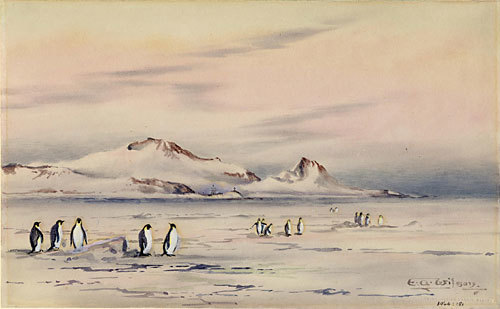
By the end of the book I had become so familiar with Scott and his men that the ultimate demise of these explorers, however expected, was painful to read about. I valued Fiennes' input, and came away amazed by the endurance of the human spirit in the most hostile conditions on the planet. Additionally, I was charmed by the Antarctic paintings and sketches of Edward Wilson. Antarctica, though terrifying, is not without its beauty.

August 29, 2011
Although it's taken me quite some time to read "Captain Scott", this is more a reflection on me than the book. I found it a thorough and mostly well-written account of Captain Scott's Antarctic expeditions. Fiennes goes to great lengths to defend Scott's reputation against the claims made in Roland Huntford's book (which I have not read). However, I often felt that Fiennes tried too hard to justify or explain Scott's actions and the infrequent criticisms of Scott by his team (particularly by Titus Oates in his letters home to his mother). Even without Fiennes' explanations, it seemed obvious that many of Scott's Antarctic expedition companions had the greatest respect and admiration for him, and that numerous factors beyond Scott's control (in particular the unusually cold and harsh weather he experienced on the return journey from the Pole) contributed to the well known tragedy. Fiennes frequently described his own experiences in the Antactric, and while this experience almost certainly gives him a unique understanding of Scott's circumstances, I found these anecdotes rather intrusive.On the whole, this is definitely a worthy read, although not one that evokes the atmosphere of the age to any great degree (unlike Elspeth Huxley's "Scott of the Antarctic" which I have read several times).

August 2, 2021
After reading Michael Palin’s excellent “Erebus - the story of a ship”, I’ve become increasingly interested in the great age of polar exploration. Without knowing much about Scott or his South Pole expeditions beyond the famous Oates quote: “I’m going outside, I may be some time”, I picked this book since it’s written (and narrated if you get the audiobook) by British arctic explorer Ranulph Fiennes.
For a first book on the subject, I think this is a great introduction. Fiennes is not a career historian, but brings personal experience into the narrative as he discusses the technology, planning and polar routes involved in the Scott era. The story itself is a mixture of incredible courage and fortitude in the face of insane natural opposition, with an ending the combines tragedy and heroism in a truly poignant way.
The author closes out the book with a review of the ways in which Scott’s reputation has been reinterpreted by different historians over the years. Though Fiennes is clearly on Scott’s side, he makes a strong and reasoned argument against the assassination of Scott’s character we’ve seen since the 1970s, providing useful and objective context on some of the other 110+ books that have been written on the subject, and their authors & potential agendas.
For a first book on the subject, I think this is a great introduction. Fiennes is not a career historian, but brings personal experience into the narrative as he discusses the technology, planning and polar routes involved in the Scott era. The story itself is a mixture of incredible courage and fortitude in the face of insane natural opposition, with an ending the combines tragedy and heroism in a truly poignant way.
The author closes out the book with a review of the ways in which Scott’s reputation has been reinterpreted by different historians over the years. Though Fiennes is clearly on Scott’s side, he makes a strong and reasoned argument against the assassination of Scott’s character we’ve seen since the 1970s, providing useful and objective context on some of the other 110+ books that have been written on the subject, and their authors & potential agendas.
This entire review has been hidden because of spoilers.

May 2, 2020
This book was recommended to me after declaring that Roland Huntford’s book on Scott and Amundsen, portraying Scott as an inexperienced, bumbling fool, had led me to Apsley Cherry Garrard’s masterpiece “The Worst Journey in the World”.
The story of Scott in the main part of Fiennes’ book portrays a well-organised, thoughtful and sensitive man. The Polar journey is told in such painful, vivid, detail that I willed it to have a different outcome. But I knew the main purpose of this book, culminating in the last section, was a direct rebuttal of Huntford’s hatchet job on Scott’s reputation.
Despite my initial reservation about Fiennes partiality: he’s Eton and military; a British Patriot, and he is clearly telling the story to the direction he wants to lead you. He does, however, a very intelligent job of demolishing Huntford’s assertions and conclusions. It’s concisely and clearly written. It changed my mind.
You should still read “The Worst Journey ...” by Cherry-Garrard - he was actually there!
The story of Scott in the main part of Fiennes’ book portrays a well-organised, thoughtful and sensitive man. The Polar journey is told in such painful, vivid, detail that I willed it to have a different outcome. But I knew the main purpose of this book, culminating in the last section, was a direct rebuttal of Huntford’s hatchet job on Scott’s reputation.
Despite my initial reservation about Fiennes partiality: he’s Eton and military; a British Patriot, and he is clearly telling the story to the direction he wants to lead you. He does, however, a very intelligent job of demolishing Huntford’s assertions and conclusions. It’s concisely and clearly written. It changed my mind.
You should still read “The Worst Journey ...” by Cherry-Garrard - he was actually there!
Displaying 1 - 30 of 135 reviews