

What do you think?

Red Smoking Mirror
'With Red Smoking Mirror, Nick Hunt has created the love child of JG Ballard and Ursula K Le Guin' - Joanna Pocock, author of Surrender
The year is 1521 in the Mexica city of Tenochtitlan. Twenty-nine years earlier, Islamic Spain never fell to the Christians, and Andalus launched a voyage of discovery to the New Maghreb.
For two decades the Jewish merchant Eli Ben Abram, who led the first ships across the sea, has maintained a delicate peace in the Moorish enclave of Moctezuma's breathtaking capital, assisted by his Nahua wife Malinala. But the emperor has been acting strangely, sacrifices are increasing at the temples, a mysterious sickness is spreading through the city, and there are rumours of a hostile army crossing the sea…
A bravura reimagining of an alternate history, Red Smoking Mirror is a richly written novel of love and fate, of how cultures co-operate and clash, and of how individuals can shape and are shaped by the times they live through.
The year is 1521 in the Mexica city of Tenochtitlan. Twenty-nine years earlier, Islamic Spain never fell to the Christians, and Andalus launched a voyage of discovery to the New Maghreb.
For two decades the Jewish merchant Eli Ben Abram, who led the first ships across the sea, has maintained a delicate peace in the Moorish enclave of Moctezuma's breathtaking capital, assisted by his Nahua wife Malinala. But the emperor has been acting strangely, sacrifices are increasing at the temples, a mysterious sickness is spreading through the city, and there are rumours of a hostile army crossing the sea…
A bravura reimagining of an alternate history, Red Smoking Mirror is a richly written novel of love and fate, of how cultures co-operate and clash, and of how individuals can shape and are shaped by the times they live through.
237 pages, Kindle Edition
First published July 6, 2023
About the author
Nick Hunt
27 books107 followersNick Hunt has walked and written across much of Europe. His first book 'Walking the Woods and the Water' (Nicholas Brealey, 2014) was a finalist for the Stanford Dolman Travel Book of the Year. He also works as a contributor and editor for the Dark Mountain Project.
Ratings & Reviews
Friends & Following
Create a free account to discover what your friends think of this book!
Community Reviews
Displaying 1 - 30 of 44 reviews

sample-but-not-now
June 11, 2024Was drawn in by the admittedly fascinating alternate-history concept: that Islamic Spain never fell to the Christians, thus the first contact that the Mexica (Aztecs) of the "New World" had was with a Muslim and Jewish world, and was based on trade rather than conquest. However, the writing style is somewhat "prose poem"-ish and makes it seem remote and hard to connect to the story right off the bat. I could be wrong, but this also seems like it's going to be a dude-centric narrative.
Who knows, maybe this gets better? But it didn't grab me hard enough to make the investment to find out.
Who knows, maybe this gets better? But it didn't grab me hard enough to make the investment to find out.
August 26, 2023
Alternate history (or counterfactual) fiction tends to go for the big moments and deal with the consequences directly. Such as: what if the Nazis had won WW2? What if the Confederacy had triumphed in the US Civil War? Big stuff with big ramifications for the losers in the new timeline. However, chooses Nick Hunt to walk a different path in his debut novel Red Smoking Mirror.
Hunt’s point of divergence is what would happen if the reconquest of Spain by Christians did not take place? But his story is not set on the Iberian peninsula of Muslim Al-Andalus. No, his tale looks at how the absence of a Christian Imperial Spain would impact the peoples of central and southern America, specifically the Aztec civilization of Tenochtitlan. It’s a bold choice and asks interesting questions about the inevitability of history.
Eli Ben Abram is a Jewish merchant from Andalus now living in the Aztec capital. Decades earlier he led the mission across the ocean and founded the peaceful trade route that now exists between the vastly different cultures. Over the years, the two nations have prospered but Eli has started to worry. Local people are starting to fall sick and a brutal ideologue has arrived on the eastern shore at the head of ferocious, blooded army. Can disaster be averted or has fate condemned the Aztecs to the same fate they shared in our own history?
Hunt writes with great care and detail. His research shines through and his sense of place and time is excellent. If there are issues, they lie in the pacing of the story, which is pointedly slow at the start. Further, Eli is very much a witness rather than a participant in events. Consequently, it is hard to care entirely for his fate when jeopardy raises its head. But the ideas on display are interesting and well presented.
(Proof copy supplied. Opinions my own.)
Hunt’s point of divergence is what would happen if the reconquest of Spain by Christians did not take place? But his story is not set on the Iberian peninsula of Muslim Al-Andalus. No, his tale looks at how the absence of a Christian Imperial Spain would impact the peoples of central and southern America, specifically the Aztec civilization of Tenochtitlan. It’s a bold choice and asks interesting questions about the inevitability of history.
Eli Ben Abram is a Jewish merchant from Andalus now living in the Aztec capital. Decades earlier he led the mission across the ocean and founded the peaceful trade route that now exists between the vastly different cultures. Over the years, the two nations have prospered but Eli has started to worry. Local people are starting to fall sick and a brutal ideologue has arrived on the eastern shore at the head of ferocious, blooded army. Can disaster be averted or has fate condemned the Aztecs to the same fate they shared in our own history?
Hunt writes with great care and detail. His research shines through and his sense of place and time is excellent. If there are issues, they lie in the pacing of the story, which is pointedly slow at the start. Further, Eli is very much a witness rather than a participant in events. Consequently, it is hard to care entirely for his fate when jeopardy raises its head. But the ideas on display are interesting and well presented.
(Proof copy supplied. Opinions my own.)

September 17, 2023
In 1521, Eli Ben Abram is a Jewish merchant living in the city of Tenochtitlan, Mexica. Originally born in the Caliphate of Andalus, Eli has managed to carve a successful path for himself alongside that of his young and headstrong ex-slave wife Malinala. However, when rumours of a Moorish invasion begin to arise in the city and questionable tales regarding their Lord, dissent runs amongst the elders and threatens the idyllic life that Eli craves.
This novel stands aside from most others that I have read. It is highly original, taking the challenge of writing an alternate history without focusing on the direct historical event.
Hunt is clearly examining a scenario in which the reconquest of Spain did not occur. However, where this novel thrives in its originality is that the author explores the repercussions of history, the sense of inevitability, for in this novel we the reader are led to experience the impact of a lack of Christian Imperial Spain in Central and Southern America.
Eli is a wonderful narrator, who zones in on the minute of details that it almost becomes a disorienting experience as you witness the clash of religion, culture and race. Read like an epic poem, the prose is tense, rich and immersive with its strength indisputably in the world-building.
Moralistic and reflective, Nick Hunt's novel is a book that I would recommend to any who love to question the great "what-ifs" of history.
Thank you to @_swiftpress for offering me a copy of this novel to review.
This novel stands aside from most others that I have read. It is highly original, taking the challenge of writing an alternate history without focusing on the direct historical event.
Hunt is clearly examining a scenario in which the reconquest of Spain did not occur. However, where this novel thrives in its originality is that the author explores the repercussions of history, the sense of inevitability, for in this novel we the reader are led to experience the impact of a lack of Christian Imperial Spain in Central and Southern America.
Eli is a wonderful narrator, who zones in on the minute of details that it almost becomes a disorienting experience as you witness the clash of religion, culture and race. Read like an epic poem, the prose is tense, rich and immersive with its strength indisputably in the world-building.
Moralistic and reflective, Nick Hunt's novel is a book that I would recommend to any who love to question the great "what-ifs" of history.
Thank you to @_swiftpress for offering me a copy of this novel to review.

April 11, 2026
What if the Moors were not defeated in Spain, and thus discovered Mesoamerica?
As a biased reader (fan of the subgenre and time period), the story had to do little to win me over, and it did so easily. I was grinning the whole time with this mirrored world of an alternate past.
My only gripe was the ending, it was abrupt, and I wished for more. Also, it had a slow pace and was a bit "uneventful"—it mainly focused on the world and mood—so I can see how others might feel bored, but I never was.
I recommend it to fans of alternate history and Mesoamerican culture.
As a biased reader (fan of the subgenre and time period), the story had to do little to win me over, and it did so easily. I was grinning the whole time with this mirrored world of an alternate past.
My only gripe was the ending, it was abrupt, and I wished for more. Also, it had a slow pace and was a bit "uneventful"—it mainly focused on the world and mood—so I can see how others might feel bored, but I never was.
I recommend it to fans of alternate history and Mesoamerican culture.

July 31, 2023
An original, entertaining and well plotted alternate history set in a world where a number of what-if took place and a lot is going on.
I loved the storytelling and the excellent world building. Well plotted and intriguing
Highly recommended.
Many thanks to the publisher for this ARC, all opinions are mine
I loved the storytelling and the excellent world building. Well plotted and intriguing
Highly recommended.
Many thanks to the publisher for this ARC, all opinions are mine
March 1, 2024
It’s a 3.75 for me really, the writing style felt a bit jarring at times but this book comes together really well in its conclusion. Weirdly the notes on the text at the end made me like it a bit more.

September 9, 2026
“I do not want to see these things, whatever things are now to come. I am too old for war, for grand eventful changes. Too old for the world to end and too old for a new one to begin. But not too old to love my wife. God! It rushes back.”
This entire review has been hidden because of spoilers.
July 24, 2023
Across five centuries, Red Smoking Mirror shows us an alternate Techochtitlan and an alternate, expansive, Caliphate which stretches across Europe to the new world beyond. In this disorienting new/old world, a miasmatic vision is summoned up in which the smoke of cooking and sacrifice blend with the stories of the peoples conquered and conquering. At the centre, we are represented by Eli Ben Abram - allied with the newcomers, in love with the country and his canny native wife Malinala, tired, wanting peace, yet still within him the dangerous curiosity of a coloniser. Through Eli we see the possibility of of an alternate future, one where new and old world coexist as equals. For the duration of this book the mirror is held just right so we can see in it the reflection of what might have been, and maybe hope again that some of it still is.
October 31, 2023
This needed to start on about page 150 after endless pages of preamble when things start to actually occur. Pacing was baffling - so heavily backloaded. Well written but in an aggressively boring style that seemed to mimic translated ancient texts.
July 10, 2024
Nick Hunt's "Red Smoking Mirror" takes readers on a captivating journey through a meticulously crafted alternate history. By focusing on the unique elements of this world, we can appreciate the depth and complexity of Hunt's world-building.
The central world-building twist hinges on the pivotal moment where Islamic Spain (Andalus) never falls to Christian forces. This single point of divergence ripples outwards, shaping the political and cultural landscape of the novel. Tenochtitlan, the heart of the Aztec Empire, becomes a fascinating crucible. Here, we see the established Aztec culture coexisting (uneasily at times) with a thriving Moorish enclave led by the protagonist, Eli Ben Abram. This creates a unique blend of religious practices, architectural styles, and social customs, adding a layer of richness and intrigue to the narrative.
The lingering influence of Moorish Spain manifests in the presence of Arabic script alongside Nahuatl and Spanish. This linguistic diversity reflects the cultural exchange that occurs in Tenochtitlan. Similarly, the coexistence of Islam and Aztec religion adds another layer of complexity. Hunt portrays the challenges and opportunities that arise from this religious pluralism, showcasing the potential for both conflict and cooperation.
The rise of a powerful Islamic Spain likely alters trade routes and technological advancements. Hunt explores these possibilities through hints of advanced weaponry and the presence of African goods in Tenochtitlan. The details, though sparse, paint a picture of a world where the flow of goods and ideas is different from our own history.
The year is 1521, and the arrival of Spanish conquistadors looms large. The established power dynamics in Tenochtitlan are already strained, and the arrival of the European force creates a sense of impending conflict. Hunt masterfully builds tension by hinting at the devastation the conquistadors could bring, not just to the Aztec Empire, but also to the fragile peace within Tenochtitlan itself.
The Red Smoking Mirror itself remains somewhat enigmatic throughout the novel. Is it a scientific instrument, a religious artifact, or something more? This ambiguity adds to the world's mystique and invites readers to speculate about its true purpose and significance. Its connection to the alternate history, and whether it represents a point of divergence or a consequence of it, remains tantalizingly unclear.
The world-building in "Red Smoking Mirror" is a masterful exercise in imagination and historical reimagining. By focusing on the ripple effects of a single historical shift, Hunt creates a vibrant and believable alternate world where cultural clashes, religious tensions, and the threat of impending conquest all contribute to a captivating narrative. The world-building serves not just as a backdrop, but as an integral part of the story, shaping the characters' experiences and driving the plot forward.
The central world-building twist hinges on the pivotal moment where Islamic Spain (Andalus) never falls to Christian forces. This single point of divergence ripples outwards, shaping the political and cultural landscape of the novel. Tenochtitlan, the heart of the Aztec Empire, becomes a fascinating crucible. Here, we see the established Aztec culture coexisting (uneasily at times) with a thriving Moorish enclave led by the protagonist, Eli Ben Abram. This creates a unique blend of religious practices, architectural styles, and social customs, adding a layer of richness and intrigue to the narrative.
The lingering influence of Moorish Spain manifests in the presence of Arabic script alongside Nahuatl and Spanish. This linguistic diversity reflects the cultural exchange that occurs in Tenochtitlan. Similarly, the coexistence of Islam and Aztec religion adds another layer of complexity. Hunt portrays the challenges and opportunities that arise from this religious pluralism, showcasing the potential for both conflict and cooperation.
The rise of a powerful Islamic Spain likely alters trade routes and technological advancements. Hunt explores these possibilities through hints of advanced weaponry and the presence of African goods in Tenochtitlan. The details, though sparse, paint a picture of a world where the flow of goods and ideas is different from our own history.
The year is 1521, and the arrival of Spanish conquistadors looms large. The established power dynamics in Tenochtitlan are already strained, and the arrival of the European force creates a sense of impending conflict. Hunt masterfully builds tension by hinting at the devastation the conquistadors could bring, not just to the Aztec Empire, but also to the fragile peace within Tenochtitlan itself.
The Red Smoking Mirror itself remains somewhat enigmatic throughout the novel. Is it a scientific instrument, a religious artifact, or something more? This ambiguity adds to the world's mystique and invites readers to speculate about its true purpose and significance. Its connection to the alternate history, and whether it represents a point of divergence or a consequence of it, remains tantalizingly unclear.
The world-building in "Red Smoking Mirror" is a masterful exercise in imagination and historical reimagining. By focusing on the ripple effects of a single historical shift, Hunt creates a vibrant and believable alternate world where cultural clashes, religious tensions, and the threat of impending conquest all contribute to a captivating narrative. The world-building serves not just as a backdrop, but as an integral part of the story, shaping the characters' experiences and driving the plot forward.

September 2, 2024
WHAT IF MUSLIMS HAD SETTLED THE NEW WORLD?
Most Americans remember the date 1492 as the year Christopher Columbus “discovered” the New World. Europeans recall it for other reasons as well. Because in 1492 the Christian kingdoms of Castile and Aragon conquered the Emirate of Granada, ending 800 years of Muslim rule on the Iberian Peninsula. That year also marked the expulsion of the Jews and Muslims from the recently united Kingdom of Spain. Now, in a clever alternate history of Mexico, Nick Hunt explores a world in which none of these things took place. In Red Smoking Mirror, Muslims led by a Jewish pilot land in the Caribbean and on the coast of Mexico. There they establish friendly trade relations with the Native kingdoms they encounter. And they make their way in peace to the magnificent city of Tenochtitlan, present-day Mexico City. There a grand drama plays out as their peaceful world begins to crumble.
THE CALIPH’S LAW PROTECTS THE MOORS IN THE NEW MAGHREB
Welcome to the New Maghreb, a land of maiz (corn), tubaq (tobacco), and xocolatl (chocolate). For Eli Ben Abram, the pilot who brought the Moors to the New World, it’s the realization of a dream. Tenochtitlan is far from Qurtubah (Córdoba) and Qadis (Cádiz) in Andalus (Spain), but Eli knows that he and his fellow merchants live under the protection of the caliph‘s law nonetheless. It’s 1521, and many, like himself, have grown rich from the export of tubaq, xocolatl, and other local goods and the importation of manufactured goods from the Old World. But now come reports that Benmessaoud, a fearsome warrior intent on imposing sharia law on Muslim and Native alike, has landed on the coast. And portents of doom from all quarters begin to intrude on Eli’s idyllic life.
PORTENTS OF DOOM INTRUDE ON THE MERCHANTS’ PEACEFUL LIVES
The land itself foretells doom, as the volcano that towers above the city begins to smoke and send towers of flame into the sky. But far more worrisome for Eli are his wife’s increasingly lengthy absences from their home. Malinala, a Native woman from a coastal kingdom who is a former slave, has been leaving on mysterious “errands” for weeks. New, younger merchants have been turning up in Tenochtitlan, some of them openly hostile to Eli and the community’s other elders. And rumors of Benmessaoud’s approach are multiplying. Clearly, a cataclysm is in the offing, and there is nothing Eli Ben Abram can do about it.
ABOUT THE AUTHOR
Nick Hunt has written three travel books about walking across Europe as well as a book about birds, a collection of short stories, and articles in numerous leading publications in the UK. This alternate history of Mexico is his first novel. Hunt is English, He currently lives in Bristol.
Most Americans remember the date 1492 as the year Christopher Columbus “discovered” the New World. Europeans recall it for other reasons as well. Because in 1492 the Christian kingdoms of Castile and Aragon conquered the Emirate of Granada, ending 800 years of Muslim rule on the Iberian Peninsula. That year also marked the expulsion of the Jews and Muslims from the recently united Kingdom of Spain. Now, in a clever alternate history of Mexico, Nick Hunt explores a world in which none of these things took place. In Red Smoking Mirror, Muslims led by a Jewish pilot land in the Caribbean and on the coast of Mexico. There they establish friendly trade relations with the Native kingdoms they encounter. And they make their way in peace to the magnificent city of Tenochtitlan, present-day Mexico City. There a grand drama plays out as their peaceful world begins to crumble.
THE CALIPH’S LAW PROTECTS THE MOORS IN THE NEW MAGHREB
Welcome to the New Maghreb, a land of maiz (corn), tubaq (tobacco), and xocolatl (chocolate). For Eli Ben Abram, the pilot who brought the Moors to the New World, it’s the realization of a dream. Tenochtitlan is far from Qurtubah (Córdoba) and Qadis (Cádiz) in Andalus (Spain), but Eli knows that he and his fellow merchants live under the protection of the caliph‘s law nonetheless. It’s 1521, and many, like himself, have grown rich from the export of tubaq, xocolatl, and other local goods and the importation of manufactured goods from the Old World. But now come reports that Benmessaoud, a fearsome warrior intent on imposing sharia law on Muslim and Native alike, has landed on the coast. And portents of doom from all quarters begin to intrude on Eli’s idyllic life.
PORTENTS OF DOOM INTRUDE ON THE MERCHANTS’ PEACEFUL LIVES
The land itself foretells doom, as the volcano that towers above the city begins to smoke and send towers of flame into the sky. But far more worrisome for Eli are his wife’s increasingly lengthy absences from their home. Malinala, a Native woman from a coastal kingdom who is a former slave, has been leaving on mysterious “errands” for weeks. New, younger merchants have been turning up in Tenochtitlan, some of them openly hostile to Eli and the community’s other elders. And rumors of Benmessaoud’s approach are multiplying. Clearly, a cataclysm is in the offing, and there is nothing Eli Ben Abram can do about it.
ABOUT THE AUTHOR
Nick Hunt has written three travel books about walking across Europe as well as a book about birds, a collection of short stories, and articles in numerous leading publications in the UK. This alternate history of Mexico is his first novel. Hunt is English, He currently lives in Bristol.
March 20, 2024
Red Smoking Mirror: A World Shaped by Traders and Capitalism
Nick Hunt's Red Smoking Mirror presents a unique alternate history where Islamic Spain (Andalus) never fell. This has far-reaching consequences, shaping the role of traders and the development of capitalism within the novel's world.
The presence of a thriving Moorish enclave in Tenochtitlan, led by the protagonist Eli Ben Abram, introduces a new dimension to Aztec society. The Moors bring with them advanced trading practices, knowledge of finance, and a more individualistic approach to commerce, contrasting with the more collectivist Aztec economic structure.
Eli's entrepreneurial spirit and the establishment of a marketplace within Tenochtitlan represent the seeds of a capitalist system. The novel portrays the potential benefits, like increased prosperity and social mobility, but also the potential drawbacks, such as social stratification and exploitation.
The arrival of the Moors disrupts the existing trade networks. Tensions arise between the established Aztec merchant class and the enterprising Moors. This competition can be seen as a driver of innovation and economic growth, but also a source of potential conflict.
Trade isn't just about goods; it's about the exchange of ideas. Eli's presence exposes Aztec society to new concepts like banking and credit. This cultural exchange can have a profound impact on Aztec economic practices and societal structures.
The novel doesn't shy away from portraying the potential negative consequences of capitalism. There are hints of exploitation of labor, particularly regarding the treatment of slaves brought by the Moors. This raises questions about the ethical implications of trade and economic development.
The novel concludes before the full impact of the Moorish presence on Aztec capitalism can be explored. It leaves readers to ponder how this nascent economic system might develop and the societal changes it might bring.
Analyzing how specific trade goods and cultural practices associated with the Moors influence Aztec society could provide deeper insight into the economic transformation. Additionally, exploring the role of women in the marketplace and commercial activities could reveal the gendered aspects of this economic shift. By examining the portrayal of traders and capitalism in Red Smoking Mirror, we gain a better understanding of the complex interplay between cultural exchange, economic development, and the potential pitfalls of unchecked commercialism within the world Hunt has created.
Nick Hunt's Red Smoking Mirror presents a unique alternate history where Islamic Spain (Andalus) never fell. This has far-reaching consequences, shaping the role of traders and the development of capitalism within the novel's world.
The presence of a thriving Moorish enclave in Tenochtitlan, led by the protagonist Eli Ben Abram, introduces a new dimension to Aztec society. The Moors bring with them advanced trading practices, knowledge of finance, and a more individualistic approach to commerce, contrasting with the more collectivist Aztec economic structure.
Eli's entrepreneurial spirit and the establishment of a marketplace within Tenochtitlan represent the seeds of a capitalist system. The novel portrays the potential benefits, like increased prosperity and social mobility, but also the potential drawbacks, such as social stratification and exploitation.
The arrival of the Moors disrupts the existing trade networks. Tensions arise between the established Aztec merchant class and the enterprising Moors. This competition can be seen as a driver of innovation and economic growth, but also a source of potential conflict.
Trade isn't just about goods; it's about the exchange of ideas. Eli's presence exposes Aztec society to new concepts like banking and credit. This cultural exchange can have a profound impact on Aztec economic practices and societal structures.
The novel doesn't shy away from portraying the potential negative consequences of capitalism. There are hints of exploitation of labor, particularly regarding the treatment of slaves brought by the Moors. This raises questions about the ethical implications of trade and economic development.
The novel concludes before the full impact of the Moorish presence on Aztec capitalism can be explored. It leaves readers to ponder how this nascent economic system might develop and the societal changes it might bring.
Analyzing how specific trade goods and cultural practices associated with the Moors influence Aztec society could provide deeper insight into the economic transformation. Additionally, exploring the role of women in the marketplace and commercial activities could reveal the gendered aspects of this economic shift. By examining the portrayal of traders and capitalism in Red Smoking Mirror, we gain a better understanding of the complex interplay between cultural exchange, economic development, and the potential pitfalls of unchecked commercialism within the world Hunt has created.

July 13, 2024
Novel set in 16th Century MEXICO / SPAIN
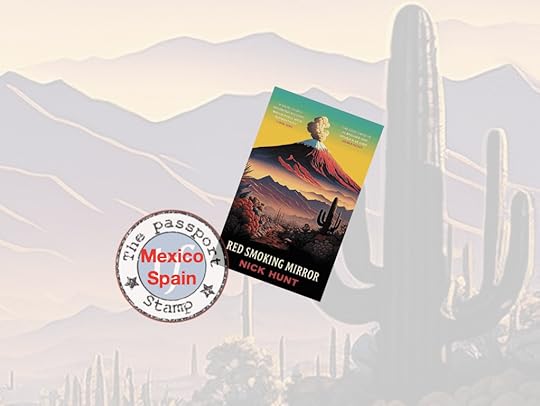
Shortlisted for the Edward Stanford Travel Writing Awards 2024, Fiction With A Sense Of Place.
This is a cinematic novel set in the early 16th Century countries of what we now know as Mexico and Spain.
Eli Ben Abram has moved from Al-Andalus (Spain) and taken a flotilla across the Atlantic to Mexico. There he has settled with his wife Malinala, 30 years his junior in the town of Tenochtitlan – Emperor Moctezuma’s capital – situated next to a volcano. The town is a mercantile hub where people of different backgrounds and faiths congregate, a true melting pot and it has a universal everyman feel. There is colour on the streets and a variety of fancy clothes, bald dogs rummaging around and inhabitants anticipatory of the arrival of the Emperor. Eli looks back to earlier times in Al-Andalus where he grew up in what seems to be present day Córdoba, which was a shining example of how peoples from all kinds of backgrounds could harmoniously co-exit.
Inevitably mankind agitates for change, seeking out others to blame for perceived ills, and unrest ensues; and then a dire plague descends on the populace. Caravans of people and vehicles are ambushed, omens are interpreted and the volcano starts to emit smoke and flames. Weird rituals are established and religious practices ensnare the populace..
The author experiments with the notion of an alternate history. What if Al-Andalus had not been reconquered by the Christians and had remained under Muslim control? He then goes on to ponder how that might have played out in territories that were ultimately conquered by Spain.
It is a fascinating read that is full of colour and detail and it is a story that is crafted with a competent, imaginative and painterly hand. I thought of works by Rousseau when I was reading it, with a dash of Renaissance processional paintings (like Gozzoli’s Procession of the Magi, although the author depicts camels, not horses).
I got caught up in the description and richness, perhaps a little at the expense of the story. This is a very unusual read that has stayed with me. It also has shades of the works by Silvia Moreno-Garcia.
Shortlisted for the Edward Stanford Travel Writing Awards 2024, Fiction With A Sense Of Place.
This is a cinematic novel set in the early 16th Century countries of what we now know as Mexico and Spain.
Eli Ben Abram has moved from Al-Andalus (Spain) and taken a flotilla across the Atlantic to Mexico. There he has settled with his wife Malinala, 30 years his junior in the town of Tenochtitlan – Emperor Moctezuma’s capital – situated next to a volcano. The town is a mercantile hub where people of different backgrounds and faiths congregate, a true melting pot and it has a universal everyman feel. There is colour on the streets and a variety of fancy clothes, bald dogs rummaging around and inhabitants anticipatory of the arrival of the Emperor. Eli looks back to earlier times in Al-Andalus where he grew up in what seems to be present day Córdoba, which was a shining example of how peoples from all kinds of backgrounds could harmoniously co-exit.
Inevitably mankind agitates for change, seeking out others to blame for perceived ills, and unrest ensues; and then a dire plague descends on the populace. Caravans of people and vehicles are ambushed, omens are interpreted and the volcano starts to emit smoke and flames. Weird rituals are established and religious practices ensnare the populace..
The author experiments with the notion of an alternate history. What if Al-Andalus had not been reconquered by the Christians and had remained under Muslim control? He then goes on to ponder how that might have played out in territories that were ultimately conquered by Spain.
It is a fascinating read that is full of colour and detail and it is a story that is crafted with a competent, imaginative and painterly hand. I thought of works by Rousseau when I was reading it, with a dash of Renaissance processional paintings (like Gozzoli’s Procession of the Magi, although the author depicts camels, not horses).
I got caught up in the description and richness, perhaps a little at the expense of the story. This is a very unusual read that has stayed with me. It also has shades of the works by Silvia Moreno-Garcia.

March 20, 2024
Worldbuilding Analysis: Red Smoking Mirror
Nick Hunt's Red Smoking Mirror offers a unique alternate history, demanding an analysis of its worldbuilding.
The central worldbuilding twist hinges on Islamic Spain (Andalus) never falling to Christian forces. This “butterfly effect” ripples outwards, shaping the political and cultural landscape.
Tenochtitlan, the heart of the Aztec Empire, becomes a fascinating crucible. We see the established Aztec culture coexisting (uneasily at times) with a thriving Moorish enclave led by the protagonist, Eli Ben Abram. This creates a rich tapestry of religious practices, architectural styles, and social customs.
Hunt skillfully portrays the challenges of cultural exchange. Friction arises between the Abrahamic faiths (Islam and Judaism) and the indigenous Aztecs. The presence of a Jewish merchant community adds another layer of complexity.
The novel grounds itself in historical details, referencing real figures like Moctezuma II, the Aztec emperor. However, the alternate history elements, like the Moorish presence and the lingering threat of invasion, create a sense of unease and foreshadowing.
Hunt doesn't shy away from depicting the everyday realities of this alternate world. We see how trade, food, and clothing would have been influenced by the cultural exchange. The integration of Moorish technology or advancements could be explored further in an analysis.
Red Smoking Mirror's worldbuilding is a strength. It offers a believable and thought-provoking alternate history, creating a unique cultural and political landscape for the characters to navigate. By analyzing the cultural clashes, the historical context, and the impact on daily life, we gain a deeper appreciation for the intricate world Hunt has crafted.
The role of the Red Smoking Mirror itself remains somewhat ambiguous in the worldbuilding. Depending on the book's ending (which I won't spoil here), its significance could be a point of further analysis.
Nick Hunt's Red Smoking Mirror offers a unique alternate history, demanding an analysis of its worldbuilding.
The central worldbuilding twist hinges on Islamic Spain (Andalus) never falling to Christian forces. This “butterfly effect” ripples outwards, shaping the political and cultural landscape.
Tenochtitlan, the heart of the Aztec Empire, becomes a fascinating crucible. We see the established Aztec culture coexisting (uneasily at times) with a thriving Moorish enclave led by the protagonist, Eli Ben Abram. This creates a rich tapestry of religious practices, architectural styles, and social customs.
Hunt skillfully portrays the challenges of cultural exchange. Friction arises between the Abrahamic faiths (Islam and Judaism) and the indigenous Aztecs. The presence of a Jewish merchant community adds another layer of complexity.
The novel grounds itself in historical details, referencing real figures like Moctezuma II, the Aztec emperor. However, the alternate history elements, like the Moorish presence and the lingering threat of invasion, create a sense of unease and foreshadowing.
Hunt doesn't shy away from depicting the everyday realities of this alternate world. We see how trade, food, and clothing would have been influenced by the cultural exchange. The integration of Moorish technology or advancements could be explored further in an analysis.
Red Smoking Mirror's worldbuilding is a strength. It offers a believable and thought-provoking alternate history, creating a unique cultural and political landscape for the characters to navigate. By analyzing the cultural clashes, the historical context, and the impact on daily life, we gain a deeper appreciation for the intricate world Hunt has crafted.
The role of the Red Smoking Mirror itself remains somewhat ambiguous in the worldbuilding. Depending on the book's ending (which I won't spoil here), its significance could be a point of further analysis.

June 8, 2024
It is 1521 by the Frankish year, and Eli ben Abram is unsettled. His world is much like ours, with the key difference being that the Reconquista of Spain never happened, and the discovery of the New World was made by merchants working for the Caliphate of Cordoba, here to trade rather than conquer.
In Tenochtitlan, Eli is an outsider twice over: a Moor among the Mexica, a Jew among the Moors. He is married to the Nahua translator Malinala (an alternative version of Cortez' translator La Malinche). Amidst the bustling trade and human sacrifices of the city, Eli has carved out a little slice of peace, and a world where his boundaries are much wider than they are under the Caliph's Laws--boundaries so wide he can almost forget them.
Yet, rumors are unsettled. The Moorish fanatic Benmassoud is reported to have arrived on the coast with an army to end the trade in sinful goods like tobacco and chocolate. Plague is spreading through Tenochtitlan. Popocatépetl is erupting. The other merchants have requested that Eli gain an audience with the Emperor Moctezuma. And worst of all, Malinala is evasive, often absent on business she will not explain, and Eli will not ask.
Red Smoking Mirror is a fantastic piece of mood and setting, a mediation on exile and the ties that bind very different people. Yet it is also not really a novel, Eli is a great observer, but a shockingly passive protagonist. This is a really good book, but it's missing some element that would make it great.
In Tenochtitlan, Eli is an outsider twice over: a Moor among the Mexica, a Jew among the Moors. He is married to the Nahua translator Malinala (an alternative version of Cortez' translator La Malinche). Amidst the bustling trade and human sacrifices of the city, Eli has carved out a little slice of peace, and a world where his boundaries are much wider than they are under the Caliph's Laws--boundaries so wide he can almost forget them.
Yet, rumors are unsettled. The Moorish fanatic Benmassoud is reported to have arrived on the coast with an army to end the trade in sinful goods like tobacco and chocolate. Plague is spreading through Tenochtitlan. Popocatépetl is erupting. The other merchants have requested that Eli gain an audience with the Emperor Moctezuma. And worst of all, Malinala is evasive, often absent on business she will not explain, and Eli will not ask.
Red Smoking Mirror is a fantastic piece of mood and setting, a mediation on exile and the ties that bind very different people. Yet it is also not really a novel, Eli is a great observer, but a shockingly passive protagonist. This is a really good book, but it's missing some element that would make it great.

June 22, 2024
4.5
A wonderful book! Paints an incredibly vivid portrait of life in an alternate history Tenochtitlan. The inevitability of the book’s final third is quite devastating. In some ways I wish that as an alternate history there could have been a different ending.
Eli is a fascinating narrator, an eternal outsider who has found a place that he believes he is more suited to. He is capable of seeing and appreciating beauty in everything but he fails to understand people, and has a kind of ethical void when it comes to human suffering that makes him blind to what is happening around him. He is the book’s eyes and the central mystery would not work from the perspective of other characters but I still found myself wanting to know how this narrative looked from Malinala or Moctezuma’s perspective.
Still, one of the most interesting and engagingly written books I’ve read this year.
Rather than J.G. Ballard and Ursula Le Guin, which the blurb cites, this reminded me the most of Doris Lessing’s Canopus in Argos books, with which it shares much in common.
A wonderful book! Paints an incredibly vivid portrait of life in an alternate history Tenochtitlan. The inevitability of the book’s final third is quite devastating. In some ways I wish that as an alternate history there could have been a different ending.
Eli is a fascinating narrator, an eternal outsider who has found a place that he believes he is more suited to. He is capable of seeing and appreciating beauty in everything but he fails to understand people, and has a kind of ethical void when it comes to human suffering that makes him blind to what is happening around him. He is the book’s eyes and the central mystery would not work from the perspective of other characters but I still found myself wanting to know how this narrative looked from Malinala or Moctezuma’s perspective.
Still, one of the most interesting and engagingly written books I’ve read this year.
Rather than J.G. Ballard and Ursula Le Guin, which the blurb cites, this reminded me the most of Doris Lessing’s Canopus in Argos books, with which it shares much in common.

June 9, 2023
And what is there left to say about this walk through Tenochtitlan? Only that dogs are everywhere and that the sun is dark ... Only that the smoky sky is teeming with frightened birds, that the temple steps are wet, that body after body rolls down the angled, steep decline, their torsos blue ... [loc. 2013]
Eli Ben Abram is a Jewish merchant, born in the Caliphate of Andalus and now trading in the New Maghreb. He came across the Sea of Darkness to Mexica, in the first fleet of traders: now he lives in the great city of Tenochtitlan, in the shadow of the Smoking Mountain, with his Nahua wife Malinala. The traders from Andalus have prospered among the Mexica, but there are rumours of a great Moorish army bound for the city, there to root out the impurities of tubaq and xocolatl. And there is dissent among the elders of the Moorish quarter; and Malinala tells her husband tales of the Thirteen Heavens and the Nine Hells, the Five Suns, the Smoking Mirror, the Feathered Serpent...
This is a world in which, as Hunt says in his afterword, "the Reconquest never happened. The Islamic Golden Age .. continued into the Age of Exploration; and Spain, as we know it today, never came into existence. ... the first ships that crossed the Atlantic were crewed by seafaring Moors rather than by Spaniards." [loc. 2362] Hunt depicts a more peaceful (and less disease-ridden) meeting of the two cultures, though the seeds of bloody conquest have already been sown. There are some familiar historical figures (the emperor Moctezuma, La Malinche, and a Genoan named Christoforo) and, as the novel progresses, a sense of historical inevitability. Eli is an intriguing narrator, with his helpless love for his young wife, and the secret he's carried with him since he met a man from Genoa in a tavern in Cadiz. He sometimes seems wilfully blind to the undercurrents of what's happening around him, and he is sometimes less than kind to those he encounters: but his admiration for Mexica culture (evocatively described) runs through this novel.
Thanks to the publisher and Netgalley for the advance review copy, in exchange for this full honest review. UK publication date is 06 JUL 2023.
March 19, 2024
Red Smoking Mirror: A Lush Reimagining, Slow Burn Intrigue
Nick Hunt's Red Smoking Mirror dives into alternate history, crafting a richly detailed Aztec Empire that never fell to the Spanish. We enter Tenochtitlan in 1521, a metropolis pulsating with life and a thriving trade partnership with a Muslim-influenced Spain, led by the Jewish merchant Eli Ben Abram. Hunt excels at transporting readers to a believable Tenochtitlan. From bustling marketplaces to the grandeur of Aztec temples, the descriptions are immersive. The "what if" scenario of a powerful Aztec Empire untouched by European conquest is a fascinating hook, raising questions about the inevitability of historical forces. The novel delves into the complexities of cultural exchange, showcasing the tensions and possibilities that arise when vastly different societies interact.
Red Smoking Mirror is a captivating read for those who enjoy historical fiction with a speculative twist.
Nick Hunt's Red Smoking Mirror dives into alternate history, crafting a richly detailed Aztec Empire that never fell to the Spanish. We enter Tenochtitlan in 1521, a metropolis pulsating with life and a thriving trade partnership with a Muslim-influenced Spain, led by the Jewish merchant Eli Ben Abram. Hunt excels at transporting readers to a believable Tenochtitlan. From bustling marketplaces to the grandeur of Aztec temples, the descriptions are immersive. The "what if" scenario of a powerful Aztec Empire untouched by European conquest is a fascinating hook, raising questions about the inevitability of historical forces. The novel delves into the complexities of cultural exchange, showcasing the tensions and possibilities that arise when vastly different societies interact.
Red Smoking Mirror is a captivating read for those who enjoy historical fiction with a speculative twist.

November 9, 2023
An alternate history story set in a world where the Christian Reconquista never happened and Spain remains an Islamic state. Subsequently; the America’s are discovered and colonised by Muslim explorers, not the conquistadors of our familiar timeline. This alternate history imagines a culture where Muslim traders and officials coexist with Aztec citizens and the court of Montezuma at the height of Tenochtitlan (Mexico City) civilisation. This was such a transportive read. The detail was lush and sensory. The sights and sounds, the smells and foods, even the quality of the light and air were lavishly portrayed. I felt I was there. I really enjoyed this.

January 4, 2026
Dit boek probeert veel, maar komt te kort. Gebaseerd op columbus, cortes en malinche beschrijft dit boek hoe de moslims mexico binnenvallen (ipv de werkelijkheid waar christelijk spanje dit deed). Veel moeilijke termen, rare vertalingen die weinig toevoegen en een soort poëtische prose maken dit tot een lastig te lezen boek waar ik geen plezier uit haalde. Thank god voor die ene Geschiedenis Inside aflevering, anders was dit misschien het eerste boek ooit wat ik niet uitlas.
Ik snap waar de auteur heen wilde maar als je het achteraan nog uit moet leggen is het wat mij betreft geen geslaagd boek.
Ik snap waar de auteur heen wilde maar als je het achteraan nog uit moet leggen is het wat mij betreft geen geslaagd boek.
This entire review has been hidden because of spoilers.
January 5, 2025
As you read this book it keeps promising, and promising yet that promise never comes. The first two thirds are a slow build for a finale that comes and goes with little ceremony. While the setting is an interesting one, it can only get you so far. All this while the protagonist/narrator observes the story, but never participates in it.
To give credit, Nick Hunt has an easy yet vivid style. But on the whole it just misses the mark.
*side note. The review on the cover comparing Hunt to Ursula K. Le Guin is disrespectful to one of the best authors out there
To give credit, Nick Hunt has an easy yet vivid style. But on the whole it just misses the mark.
*side note. The review on the cover comparing Hunt to Ursula K. Le Guin is disrespectful to one of the best authors out there
December 12, 2025
Disappointing is the overall feeling I’m left with after this book. The concept was so unique alongside some obviously detailed research gave the book such amazing potential, it’s a shame that the terrible writing ruined the novel.
The plot, pacing, prose and character development were all pretty woeful. Nothing really happens in the book at all and the dialogue is horrendous. Every single piece of dialogue ends with “he says” or “she says” once I noticed this fact the book was almost unreadable.
The plot, pacing, prose and character development were all pretty woeful. Nothing really happens in the book at all and the dialogue is horrendous. Every single piece of dialogue ends with “he says” or “she says” once I noticed this fact the book was almost unreadable.
April 2, 2024
This is an outstanding novel. The counterfactual take on Moorish Spain’s history creates a fascinating backdrop for an engaging page-turner set in 16th-century Mexico. The writing style is unique and a little strange at times, but the characters are all interesting, the plot is different to most other novels, and some of the topics, superstitions and elements of history touched upon throughout the book make it an enjoyable experience. It is definitely worth a read!
June 24, 2025
I think there was a good idea here, but I really disliked the first person narrative and endless description. Other readers have said it picks up after page 150… that’s too much backstory. For a short novel it felt very long. I couldn’t get into the story at all, and had no sense of the characters or the place. I also have a strong liking for speech marks, something that was sadly lacking in this book. Not for me.
July 30, 2023
I was fascinated throughout, made me wonder lots of what ifs…the hairless dogs seemed to be mentioned quite a lot but I’m not sure of their significance.
Not sure there were any wahabi types around at that time though to spoil the fine balance of power, although it was an alternate reality so the author can do anything 😅
Not sure there were any wahabi types around at that time though to spoil the fine balance of power, although it was an alternate reality so the author can do anything 😅
This entire review has been hidden because of spoilers.

October 16, 2023
The Auraist substack is a recommendation service that identifies the best-written books from prize shortlists, end-of-year lists, and major reviews. Red Smoking Mirror was one of our picks for the best-written speculative fiction books of the summer. Read an extract at https://auraist.substack.com/p/specul.... Subscriptions are currently free.

October 26, 2024
The idea of an alternative history where the Andalusian caliphate never collapsed and ended up being the civilisation establishing contact with the Americas sounded promising, however the prose and structure of the novel failed its purpose. The author shows promise but needs to structure his story-telling with a more gripping chronological narrative.

August 10, 2023
I was lured in by the mention of Ballard on the cover. However there's little Ballardian in this book other than a little Empire of the Sun
Not the fault of the author and I kind of enjoyed the prose in this alternative history although it did feel a little shaggy dog story
Not the fault of the author and I kind of enjoyed the prose in this alternative history although it did feel a little shaggy dog story

December 17, 2024
I picked this up because of the reviewers' blurb referencing Ballard (and LeGuin): while it was an interesting 'alternative history' it didn't quite work for me. It was too slow in parts, and a little superficial in its depiction of both 'moor' and 'mexica'

August 16, 2023
Vivid, sad and manages to be both patiently paced and an absolute page-turner. I loved the small details of every-day life. More tales from this rich and colourful alternative history please!
Displaying 1 - 30 of 44 reviews