Hidden within every political debate—in legislatures, on radio talk shows, and even in coffee shops—is an implicit philosophy of the polity, or a particular understanding of the limits and possibilities of human life in community. Harvard University's Harvey C. Mansfield, one of America's preeminent political theorists, here provides a compelling account of the philosophers who have shaped our fundamental views of politics through the ages. In an era when "partisanship" is deplored, Mansfield shows that taking sides in disputes about the common good is a permanent part of politics; and it is the place to begin in the quest for wisdom concerning the human things.
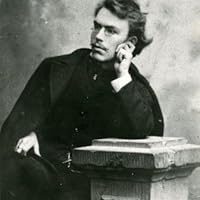
Harvey Claflin Mansfield, Jr. is a Professor of Government at Harvard University.
He has held Guggenheim and NEH Fellowships and has been a Fellow at the National Humanities Center; he also received the National Humanities Medal in 2004 and delivered the Jefferson Lecture in 2007. He is a Carol G. Simon Senior Fellow at Stanford University's Hoover Institution. He is notable for his generally conservative stance on political issues in his writings.
Mansfield is the author and co-translator of studies of and/or by major political philosophers such as Aristotle, Edmund Burke, Niccolò Machiavelli, Alexis de Tocqueville, and Thomas Hobbes, of Constitutional government, and of Manliness (2006).
Among his most notable former students are: Andrew Sullivan, Alan Keyes, Robert Kraynak, John Gibbons, William Kristol, Nathan Tarcov, Clifford Orwin, Mark Blitz, Paul Cantor, Delba Winthrop, Mark Lilla, Arthur Melzer, Jerry Weinberger, Francis Fukuyama, Shen Tong, and James Ceaser.
Harvey Mansfield, long time professor of government at Harvard College, must have been a very gifted teacher. His summary of the history of political philosophy from Socrates until the 20th century is surprisingly comprehensive given its brevity. Mansfield's talent for simplification without sacrificing erudition is on display in this slender volume and it is impressive.
Mansfield's overview of political philosophy is heavily influenced by the work of Leo Strauss, the 20th century political philosopher who offered a new perspective for thinking about the history of political philosophy. A STUDENT'S GUIDE offers a summary of that history that is true to Strauss, at least as far as I can see though I am no expert on Strauss.
Mansfield explains that Socrates, who invented political philosophy, believed that the goal of government is justice. Socrates assumed that men can achieve an understanding of justice from studying man’s own nature as a political animal. The notion that normative principles like justice can be discerned in nature is called natural right. Socrates believed that the way to study nature is through a process known as the dialectic. The dialectic is a process of questioning exemplified by Socrates' interrogations as portrayed in Plato's dialogues. The goal of the dialectic is to convert opinion to knowledge.
Plato came next after Socrates and believed that only a small number of people can make the transition from opinion to knowledge. Those few are philosophers. Plato wondered if a regime can be just when it is not governed by philosophers (and writing esoterically argued that a philosopher-king would unavoidably be tyrannical).
Aristotle, one of Plato's students, accepted much of what Socrates and Plato had taught, but added that Plato's vision of the just regime was not achievable as a practical matter. For Aristotle, government works best via compromise. That is, the many must consent to be governed by the knowledgeable few. And when democracy and oligopoly work well, they follow that model.
Cicero and Aquinas came next. They preserved, promulgated and elaborated upon Aristotle, in particular.
The foregoing philosophers all philosophized in the classical tradition. They accepted that justice (or the good regime) is something that can be discerned based on an understanding of human nature. They accepted natural right and that what is right is something that endures and does not change.
Then came Machiavelli. He marked the end of classical political philosophy. He did not care about justice as a goal for those who govern. He thought that power is its own justification and he may have believed that ideas like justice are never susceptible to knowledge based on nature. He may have believed that a concept like justice will always be the subject of nothing more than opinion. Machiavelli ushered in what Mansfield (as did Strauss) calls 'modernity'. Modernity inevitably leads to moral relativism and other problems that modern political philosophers have not been able to solve.
Mansfield explains that the goal of political philosophy after Machiavelli has been to reduce chance. Classical political philosophy depended upon chance to a great degree. The good regime depended upon the favorable circumstance of having an enlightened leader.
Hobbes attempted to systematize Machiavelli's ideas into a system of political philosophy that would reduce chance. In doing so, he over-simplified human nature and reintroduced a version of natural right that Machiavelli had dispensed with. Hobbes' idea of natural right is that acquiring power is a natural good for men so that they can create a political system that provides security against violence. Hobbes supposes that men will achieve that security by consenting to the rule of a strong monarch.
Locke added the concept of a natural right to property, thus providing security for economic well-being in addition to security against violence. Mansfield explains that Hobbes and Locke abandoned the classical view of human nature which was broad, rich and deep. In contrast, Hobbes and Locke offer a view of man's nature that focuses on only a few qualities of human life. Nonetheless, Hobbes' and especially Locke's ideas were the leading concepts in political philosophy in the west at the time of the Enlightenment.
Next came Rousseau and Nietzsche and their criticisms of the Enlightenment. Rousseau urged the equality of men as a liberal response to the Enlightenment. Nietzche followed with his conservative critique of the Enlightenment. He argued that there are exceptional men who exist above the mundane rules that apply to average men and women. Such men should lead in the future.
In the 19th and 20th centuries, two new approaches to political philosophy emerged. First, positivism, the idea that science can solve the political problems that philosophy has failed to solve. The second is historicism. Radical historicism was authored principally by Heidegger. Mansfield describes Heidegger as the most consequential of the 20th century philosophers. Mansfield also sees Heidegger's thought as the ultimate expression of relativism. It denies that knowledge of natural right (or the good regime) that endures beyond times and places is possible.
Mansfield asserts that a revival of the classical approach to natural right (that is, the approach exemplified by Plato and Aristotle) might offer the needed remedy to positivism and historicism.
Some might deny that the GUIDE is a fair description of the history of political philosophy. Without commenting on that, I am more than ready to say that, though it omits volumes of important philosophy, the GUIDE is truly remarkable for its simple eloquence.
اختصار، طنز و پرمایگی نثر منسفیلد فوقالعاده است. او در این کتاب صرفا مختصری از تاریخ فلسفهی سیاسی را روایت نمیکند، بلکه با تأکید بر اهمیت کلاسیکها از نقاط عطف اندیشهی سیاسی میگوید. در این مسیر او با سقراط و افلاطون و ارسطو آغاز میکند، به آگوستین و توماس میرسد و با اشاره به ماکیاولی و هابز اندیشهی سیاسی مدرن را در تمایز با پیشینیان معرفی میکند. بسیار خواندنی است
بحث در مورد شیوه مطالعه علمها قدمتی به اندازه تاریخ علم دارد. به ویژه علومی که امروز از آن به عنوان «علوم انسانی» نام برده میشود. در دوران ما شیوه جدید «روششناسی» برای علوم اجتماعی و انسانی در دانشگاههای مسلط شده است اما این روش مورد نقد گروهی از عالمان سیاست قرار گرفته است که اگر چه در اقلیت محض اند اما نمیتوان آنان را به هیچ وجه نادیده گرفت. گروهی که لئو اشتراوس، مورخ برجسته آلمانی ـ آمریکایی فلسفه سیاسی را میتواند بنیادگذار آن نامید که به تعبیر خودش روش قدمایی خواندش متون فلسفی را احیا کرده است. روشی که مهمترین ارکان آن نقد تاریخگرایی و پیشرفتگرایی در علوم انسانی جدید و همچنین تاکید بر متنهای نویسندگان بزرگ و شیوه خوانش متفاوت از شیوه پژوهشگران علوم اجتماعی و انسانی جدید است. شیوهای که متکی بر خوانش بین خطوط و آگاهی بر هنر نگارش نویسندگان بزرگ است. هاروی مانسفیلد، استاد برجسته فلسفه سیاسی دانشگاه شیکاگو و شاگرد لئو اشتراوس این شیوه مطالعه فلسفه سیاسی را در کتاب «راهنمای فلسفه سیاسی» به شکلی مختصر و مفید توضیح داده است.
This is an odd little book. It's a history of political philosophy that sometimes reads as a really intellectual book that I (someone who is capable of college classwork and taking her first ever political science course) struggled to follow, and sometimes it reads like a conversation between a professor and a favorite student. It was still really interesting.
I've been clear on how I feel about the editorial choices and apparent lack of direction present in thisseries. Mansfield does significantly better than Young in style and mindfulness of audience, and starts out well by clearly explaining the difference between political science and political philosophy. After that, unfortunately, he rushes through summaries of major contributions to the field and leaves out context, instead reserving precious word count for his own direct addresses to the reader. I appreciate his narrative voice, which is welcoming and intellectually hospitable, but if the book had been 50% longer and used those additional pages to ground the development of major ideas into their historical context, it would have been 100% better.
This book is opinionated. And why shouldn’t it be? After all, politics is the art of asserting ones opinion against others, or at least that was the ancient view assumed by Aristotle... and this very book.
I must admit that I have always been deeply interested in the subject of political philosophy, as soon as I became aware of it [1]. This book is probably not meant for me, but it is certainly a book I can (and do) celebrate because it is written to encourage other people to become more knowledgeable about political philosophy and also more interested in it. The fact that the author also correctly notes that one can be a political philosopher through the rational (!) observation of political activity, such as is omnipresent in our contemporary world, also means that this subject is a great deal more practical than might first seem the case for some of the book's readers. Like the bourgeois merchant in Moliere's famous play, political philosophy is something that many people do without being aware of what it is, and to the extent that this book and others like it make people aware of how they are already political philosophers whether they realize it or not, this book will do great service in removing the mystery and seeming strangeness that often attaches itself to this field.
In barely over 50 pages, the author manages to cover a broad swatch of the history and nature of political philosophy. To be sure, this book is not the last word on the subject, but it has no ambitions to be so. Rather, this book is a very good example of first words on the topic. The author discusses partisanship, the origin of natural right and the conception that mankind is a political animal. The author discusses godly politics, an area often neglected in much political thinking, and the importance of the writings of Plato and Machiavelli on the subject. The author discusses political systems and what might make some ideal, the importance of the bourgeois self to political philosopher, as well as the historical turn of the discipline as a whole. Perhaps best of all, the book contains a bibliographic essay that urges readers to become familiar with Plato, Aristotle, Thucydides, Cicero, Augustine, Al-Farabi, Maimonides, Thomas Aquinas, Machiavelli, Bacon, Hobbes, Locke, Rousseau, Kant, Burke, Hagel, de Tocqueville, John Stuart Mill, Marx, Nietzsche, and Heidegger, to become familiar with the conversation that has taken place within the field over the course of the last 2500 years or so. To be sure, the Bible contains a great deal of discussion about political philosophy but the author does not appear to focus on this element--most books on philosophy have a strong preference for Athens over Jerusalem, after all.
Despite my broader expanse of what I consider to be the most important writings of political philosophy and the fact that I do not come to this field as a neophyte, there is still a great deal to appreciate and enjoy here. The author has a good grasp of the history of the discipline of political philosophy and shows a willingness to ask questions that might make people, regardless of their own partisan positions, and that willingness to wrestle with deep questions and encourage other to do so is sufficient to make this book worth reading, especially given its short length. The subject of political philosophy may seem a bit arcane, but with politics so important in our times and so many people bereft of understanding of how to ask or answer deep and serious questions about philosophy and worldview, this book and others like it are definitely necessary to help people become more educated in the tasks of cultural and spiritual warfare that are so inescapable in these dark times.
Mansfield distinguishes political philosophy from political science. The latter describes political phenomena as it is. For Mansfield, this leaves the normative questions – what is good and what ought to be – behind.
So far, so good. Later, Mansfield comments that the book is about “what I really think (up to a point)….” The operative words are “up to a point” and the point he leaves out says it all. He comes from the “intelligible” world – a word he may have used just once in the book. It is the Really Real, the world of timeless verities, external-objective-universal Truths that only political philosophers seek to understand. They assert not only what ought to be, but also what is True. Political philosophy transcends political argument about what constitutes the Truth. In the absence of an impartial evaluation, these arguments are inherently flawed because they are partisan. They are without “wisdom,” which is the code word for the “intelligible world,” which in turn is code for a world that transcends (or governs or ought to govern) the world of materiality.
The pivot point for Mansfield between the old and the new study of political phenomena comes around the time of Hobbes who saw humans as atomistic Newtons, preoccupied with personal liberty on behalf of self-preservation. This Mansfield pooh-poohs. “No one seeking to describe the whole of human life,” he states, “would say that self-preservation is the center of it, as do Hobbes and Locke.” That makes sense for Mansfield as he has already stipulated his world of Truth. Self-preservation is, in Mansfield’s mind, inherently partisan. It is a multitude of “parts,” the very antithesis of the whole and the common good. That good is Plato’s Good.
Self-preservation (well-being) is absolutely the heart of political theory. (1) It begins with the need for freedom. To be free to seek what is needed to live, and to be free to defend the self’s freedom to seek is the prerequisite for self-preservation. Where does “freedom” as a concept come from? It’s inside. It’s an underlying abstract biological form. We – just as Hobbes observed – are about the individual freedom of one that bumps into the freedom of others. That might seem like an instinctual free-for-all – Hobbes’s chaotic state of nature. But, unlike Hobbes and like Rousseau, we also know that self-preservation and the freedom that goes with it involves community of the best sort - love, compassion, cooperation, reciprocity. In other words, it’s a the good of the whole thing. Politics and political philosophy are about those who seek partisan advantage and those who are about the common good and how to manage this tension between the whole and parts.
Understanding this is what students of politics – scientists and philosophers – are about and ought to be about. They study truth (who we are as human beings) and based on that, they study who we ought to be: Do we choose for ourselves only and our group; or do we promote the well-being of the whole? The standard depends on whose good is used. Is it the good of the self only or the good of the whole? (Both work as self-survival strategies, particularly when the former is combined with deception and manipulation).
Mansfield’s approach to political philosophy takes him out of the ball game in several respects. First, he asserts that the abstractions of philosophy from politics “emerged just once” from Plato’s Socrates. Well, that statement works if one dwells in the “intelligible world.” A counter argument is that Plato left this world behind. (2) How is that, really, relevant to what preoccupies humankind as striving, defending beings?
Second, it’s a round world out there, a globe, with different perspectives about how to managing conflicting freedoms. Mansfield is Western all the way. The book is better titled a student guide to “Western” political philosophy and it is a “partisan” one at that. (3) Had he branched out more he might even have seen the likely extensive cross fertilization of Plato with the life-denying elements of Vedic thought. And, to extend the concept here, how about employing other disciplines, like the study of pre-historic communities, of hunter-gatherers? After all, Rousseau and “state of nature” types made some rather extensive claims about human nature in that regard. Looking at pre-Western contact in the Americas might be particularly instructive in this regard for what emerged in organized life was pure of Western framing paradigms. And, of course, biology (Darwinian theory) and psychology (less so) have a thing or two to say about how we work as human beings.
Third, there’s nothing in this book about The Laws of Plato, the operationalization of the idealized Republic – and the predecessor-model for theocracies, Islam and Christianity in general, and their fundamentalism elements in particular. These are a logical extension of the quest to perfect humankind in the name of a Good.
Fourth, Mansfield’s "natural law" has nothing to do with a this-world natural law, including self-preservation and the concepts that flow from such: freedom and equality; equality and power; power and justice. (4) Most importantly, self-preservation is about life’s motive force. This is totally contravened by Plato who in idealizing reason makes the Good self-motivating. Plato’s Good, no matter how clearly seen, will make not one whit of difference to those whose needs and fears are such that they care only for themselves, not others. And that’s been documented clearly enough the those who study universal political phenomena.
Fifth, Mansfield urges political philosophy to question everything. “Political philosophy,” he writes, “has an elevated character, rising above society by questioning everything, but it also emerges from society when examining its implicit assumptions.” Let’s think about that. What he means is that he has the elevated opinion, and it is those modern-day theorists of everyday partisan politics that is fodder for his examination. But is he, himself, immune? Maybe it’s the Mansfield philosophical edifice, including the underlying motivational forces for believing such, that needs a closer look. Hume, after all famously observed that passions direct thought. Is the quest for eternal verity based on the psychological need for self-preservation (the spiritual ascension to the Island of the Blest) and the psychological fear of the eternal void? (5)
(1) Isn’t there a word usage trap with Mansfield’s use of the term philosophy. As we’ve all been taught over the years, it means love of wisdom. But in the Platonic sense, wisdom is knowing there’s another world of forms that transcends and is superior to this material world. Is there a this-worldly love of wisdom?
(2) Death for Plato, John Gray writes in the New York Review of Books, “means the separation of an immaterial soul from the mortal body.” That might have something to do with Socrates’ last supper scene and his demise.
(3) Gray refers to “the rather stale story that has been taught for so long, in which philosophy begins with the ancient Greeks, becomes subservient to theology after the rise of Christianity, and then gradually evolves into the analytic discipline that exists today. This story leaves out much that should be recognized as philosophy, including Indian, Chinese, and Aztec traditions devoted to systematic reflection on what the world is made of and how humans should live – questions that clearly belong to the Western categories of metaphysics and moral philosophy.”
(4) Mansfield is sort of right in his theory of boredom. It “is a modern affliction that comes with modern rationality. As life is made more predictable and secure, it becomes mediocre uninteresting, and lacking in risk or challenge.
(5) Or worse: Quoting another author, John Gray writes of Hobbes “that what distinguished human beings from ‘all other Animals’ was not attributes such as freedom or reason but ‘the privilege of absurdity,’ a capacity for talking nonsense….”
Prof. Mansfield provides a survey of the major thinkers in political philosophy, as well as a discussion of political philosophy vs political science. By his own admission, the guide is written for students and "to tell you what I really think", but in so doing he provides an excellent summary and syllabus for further study.
Short monograph by an excellent author. Dr. Mansfield's work is always worth reading. The book traces the development of political philosophy from the ancients to the presence. He also points out the mammoth difference between political science and political philosophy.
In this booklet, Mansfield handles the purpose of the political philosophy and the origin of justice in the course of history by different thinkers. First of all, political science takes starting point as what the political fact is/was, in other words, distributive. On the other hand, the subject matter of the political philosophy is what should be or normative. Political philosopy investigates into the possibility of a better or just world. While delving into a just world, it also endeavors to find out the origin of justice whether it is nature, reason or Godly. For Socrates, Aristotle and Plato the origin of justice was nature. Therefore rights were natural and and unique to human beings. Contractarian thinkers such as Hobbes, Locks and Rousseasu also believed that rights were natural, they were inalienable and based on a hypothetical state. Rousseau suggested that man became alienated in state of civil society. Self is social but in state of nature man was free and in abundance. For Hegel rights emerged as result of a historical process in which alienated self is in search of freedom and perfection. Therefore, for Hegel rights are historical and flourishes as a result of a historical process. It is dialectical and progressive. It reaches perfection when the individual's act coincides with the act of the state. While individual represents subjective self, state represents objective self. The last phase of this dialectical transformation is the nation state which embodies rationality and freedom. For Marx dialectic change is historical and progressive but it is based on class struggles. The original purpose of dialectic materialism was to lay the foundation of interpreting the world in order to change it. Historical and political agent of change is social classes. Marx suggests that the best possible world is the stage of communism in which the state withers away and there are no classes or division of labour which is the origin of alienation. Nietzche from different perspective criticizes enlightenment which is progresssive rational and scientific. He thinks that the reason why people doing scientific search is not to get freedom but power relations which helps rulers dominate society with.
Stojí za prečítanie, ak chcete jednoducho pochopiť pointu politickej filozofie. Je to však naozaj len príručka - ba dokonca príručka podľa názoru jedného muža, profesora z Harvardu, ktorý veci vidí nejakým spôsobom. V knižke popisuje povahu politiky, to, že sa prirodzene stáva straníckou a že je rozdiel medzi politickou filozofiou a politológiou (politickou vedou; jedna je normatíva, druhá deskriptívna). Následne rozoberá vybraných velikánov politickej filozofie, aj keď by sa určite dali vybrať aj ďalší. Oplatí sa prečítať práve pre to, že si človek urobí obraz o tom, čo teda čítať, keď chce aspoň nejaký základ politickej filozofie.
Mansfield odporúča - Platón, Aristoteles, Thyukydides, Cicero, Augustín, Al-Farabi a Maimonides (!), Tomáš Akvinský, Machiavelli, Bacon, Hobbes, Locke, Rousseau, Marx, Nietzsche, Mill a Burke, Kant, Hegel, Tocqueville, Heidegger. Áno, tušíte správne, odporúča základné filozofické diela západnej civilizácie. Teda, nič nové.
A možno ešte v skratke o tom, aké základné témy PF identifikuje - otázka prirodzeného práva, spravodlivosti, človeka ako politického tvora, božskej politiky a prirodzeného práva, večnej republiky a redukcionizmu (miesto ideálov riešiť historické fakty, teda čo historicky fungovalo), otázka politických systémom a prirodzeného stavu človeka, až k nejakej zmene ideálu človeka atď.
An old-fashioned book explains the ideas of many dead white European men.
I applaud its brevity (63 pages) but special words remain thick, undefined or omitted. I was looking for important and newer political phrases: ideology, radicalism, populism. Maybe his book stops too soon for me, with little-noted impact on WWII or later. A bigger problem is he treats philosophers not politicians but I guess he excuses that in intro.
Visigoth siege of Carthage? No, the Visigoth conquest stopped in Iberia. It was the Vandals in 440 who took Carthage.
"From the Whig party in the English Civil War he borrowed the idea of legislative supremacy, and from the Tories he took their insistence on kingly prerogative." These roles don't explain US world 2022. Those couldn't become Dems and Republicans? US Dems sided with South in Civil War, later switched to defending civil rights. No Republican believes in a king however they're more accepting of Trump as dictator. What guides those philosophies today? US Constitution maybe but none of the founders are listed.
A good short overview of the evolution of western political philosophy. It starts with Socratic thought, then jumps to the middle ages before moving to enlightenment thinkers. Although the book is very brief_as the author intended it to be, it nonetheless provides a good understanding of the central thesis of major thinkers. A very good bibliography is provided at the end for the reader to start delving into their preferred thinker's seminal works. Overall, the book is a very good reference and guide for anyone wanting to better understand the origins and motives of western political philosophy.
Looking at a very basic framework of Political Philosophy through Mansfield's lens is certainly very intriguing and thought-provoking. Much of it was styled in a conservative light, which gave this text some persuasive touchstones in guiding his overall argument. However, if you're seeking a neutral observer in providing you a guide, this won't be it. But it's certainly worth reading, largely out of its brevity and conciseness.
Having read this a few years after I was first exposed to these philosophers, I wish I'd come across this sooner. Overall a terrific outline!
A terse yet concise introduction to the major political philosophers of Western civilization. The author conveys a readable overview of the most important points expounded by each philosopher and how they relate to the modern notion of partisanship.
Excellent overview of political philosophy. It was just entirely too short. As this review will be. If you want more in depth, look elsewhere. Certainly a good starting point though.
A brilliant little bare-bones, bird's-eye view of the history of partisan politics and political philosophy vs political science. Harvey Mansfield Jr. sees his job as a professor to be a subordinate guide, to give a brief idea of the general map, then point the student in the right direction of studying the actual sources. I see myself returning to this book as quick way to re-familiarize myself with certain thinkers and aspects of political philosophy. His bibliography at the end (which includes his preferred translations), is a good one and one that I will use in the future.
Helpful review of historical trends in philosophy. As someone just starting to learn more about philosophy, I found it inspiring to learn more about the history!