Wie erscheint uns die gegenwärtige Gesellschaft aus einer leninistischen Perspektive?Hierbei handelt es sich keinerswegs um zum eine Rückkehr zu Lenin, sondern um den Versuch, eine kritische Perspektive auf die gegenwärtige politische Situation zu gewinnen.
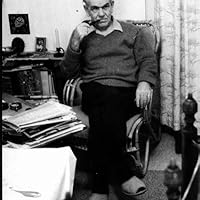
Slavoj Žižek is a Slovene sociologist, philosopher, and cultural critic.
He was born in Ljubljana, Slovenia (then part of SFR Yugoslavia). He received a Doctor of Arts in Philosophy from the University of Ljubljana and studied psychoanalysis at the University of Paris VIII with Jacques-Alain Miller and François Regnault. In 1990 he was a candidate with the party Liberal Democracy of Slovenia for Presidency of the Republic of Slovenia (an auxiliary institution, abolished in 1992).
Since 2005, Žižek has been a member of the Slovenian Academy of Sciences and Arts.
Žižek is well known for his use of the works of 20th century French psychoanalyst Jacques Lacan in a new reading of popular culture. He writes on many topics including the Iraq War, fundamentalism, capitalism, tolerance, political correctness, globalization, subjectivity, human rights, Lenin, myth, cyberspace, postmodernism, multiculturalism, post-marxism, David Lynch, and Alfred Hitchcock.
In an interview with the Spanish newspaper El País he jokingly described himself as an "orthodox Lacanian Stalinist". In an interview with Amy Goodman on Democracy Now! he described himself as a "Marxist" and a "Communist."
Wie immer bei Zizek: Eine ungeheuere Menge an originellen Gedanken, bereichernden Denkanstößen und teilweise brillanten Beobachtungen, die durch Theorie und seine schier unendliche Menge an anschaulichen Beispiele aus Popkultur, Religionsgeschichte, Gegenwartspolitik oder Geschichte greifbarer werden.
Jedoch gilt hier wie immer bei Zizek: Offenbar lektoriert niemand seine Bücher. Müsste man nämlich dieses Buch hinsichtlich seiner Struktur, einer zusammenhängenden Argumentation oder einer generellen Stringenz im vorgeführten Denken beurteilen, hätte jeder Recht damit, es gegen die Wand zu schmeißen.
Das ist alles derart chaotisch, sprunghaft und fragmentarisch geschrieben, dass man immer wieder zurückblättern muss, um halbwegs nachzuvollziehen, wie man zum nächsten Sub-Thema überhaupt gekommen ist bzw. was das überhaupt mit dem Oberthema, „Lenin“ und wie aus seiner Sicht die Gegenwart erscheint, zu tun hat. Es scheint wirklich wie eine Rohfassung zu sein, die Zizek in einem Zug in Word runtergeschrieben hat.
Fast schon ärgerlich ist auch, dass hier einige Passagen praktisch Wort für Wort in anderen, späteren Büchern wie seiner Lacan-Einführung oder „Die Bösen Geister des Himmels“ wiederverwendet werden, als würde Zizek satirisch auf seine eigene Eingebundenheit in das kulturelle Recycling des Spätkapitalismus hinweisen wollen.
Nichtdestotrotz ist Zizek zu lesen immer ein diffus-hedonistisches Erlebnis im Bereich der Philosophie-Lektüre. Es bleibt kein nachvollziehbares Gesamtbild im Langzeitgedächtnis und vieles versteht man in seiner hegelianisch geprägten Abstraktion kaum, doch dieser wilde Mix aus knallharter Theorie, Anekdoten, Witzen und Verweisen aus Film und Gegenwartsphänomenen erzeugt einen diffusen Sog, dem man sich in seiner sympathischen Wirrnis nicht entziehen will, sondern sich eher sogar gerne hingibt.
Lenin stuff was interesting, but hard to understand if you don't have much context. Zizek stuff was fun, but touched on too many subjects and was not very clear. This is my first Zizek though, so, bad place to start. He demands intense focus and to really get at all of his references I would have to be read much more widely (mostly in Marx and Hegel). I thought the talk about 9/11 was good.
The Lenin excerpts are all great. Zizek's analysis is, too. I dropped off a star because in the long afterword he seems to lose focus on Lenin and veer off into familiar Zizek territory (Lacanian analysis of modern movies etc), and while good, it dilutes the otherwise exemplary effort.
First half of the book are just a collection of writings from Lenin in between the February revolution (overthrow of the Czar and introduction of the provisional government) and the October revolution (Bolsheviks seize power and enact socialism). Many of the letters and arguments are chilling, as always, knowing that he won. It's hard to poke a single hole into anything he says: his theories of monopolizing industry for state control as a precursor to socialism, of taking over finance, of making business dealing transparent in the transition time. And of course his anti-war arguments that set the Bolsheviks apart from all the other competing socialist parties.
The last half of the book are essays from Zizek - many reference Lenin and vaguely return to his legacy or his work's implications on today, but most would work on their own without any reference to Lenin at all. Some hit the nail directly on the head (The Right to Truth, Against Post-Politics) while others miss the mark or at least felt vague or inconsequential enough to pass over. Some premonitions from 20 years ago are astounding (like the rise of Berlusconi as a mirror image of Trump) while others are baffling (passing thoughts like beware the pink tide in Latin America may have elements of fascism???).
Anyway, if you want to read Lenin or Zizek the book is worth it and you could always skip the other.
Tip: read the footnotes, they are often where the real treasures of the book are hidden
The Lenin-in-Becoming
In Revolution at the Gates (2002, describing 1917 but still actual as idea), Slavoj Žižek does not present Lenin as the Lenin of the Soviet state apparatus, but as a thinker “thrown into an open situation” (p. 6): a revolutionary confronting a historical rupture in which no neutral coordinates are available.
Žižek reads Lenin not primarily through traditional Marxism, but through Hegel and Lacan. The central question is therefore not simply political organization, but the problem of truth, subjectivity, and revolutionary intervention.
One of Žižek’s key insights, which is intensivily elaborated in all his later works, is that truth is never neutral or purely objective. As he writes:
“the universal truth of a concrete situation can be articulated only from a thoroughly partisan position; truth is by definition one-sided” (p. 177).
This immediately distances Žižek from liberal notions of neutral knowledge, universal values.... Revolutionary truth is not the view from nowhere or a Platonic idea. It emerges only through engagement within an antagonistic situation.
This is also why Žižek insists that materialism is not naïve realism:
“The formula of materialism is not to deny the Beyond, to claim that there is only the world of the actual finite ‘real’ objects, but to claim that this very ‘real’ object does not have full ontological consistency - that from Outside, conceived of as a Whole, it is nothing. Again, the formula of true atheism is not ‘God doesn’t exist,’ but ‘the world doesn’t exist’” (p. 182).
“… appearances matter; appearances are essential …this appearance has more weight than the thing itself, because it designates the way the thing in question is inscribed into the network of its relations with others.” (p. 181- 182).
Reality itself exists only through its distortions, antagonisms and cracks.
==> This is why Žižek claims that “society doesn’t exist”: not because there are no institutions or social relations, but because society has no harmonious ontological closure. The political antagonism of class struggle traverses the social field from within/inside.
The role of Party Intellectuals? This is why Žižek’s reading (a with most of communist/radical left thinkers) of Lenin revolves around the paradox of externality: Do we need Party Intellectuals to facilitate the Revolution or Change?
The (passive?) working class cannot simply arrive spontaneously at revolutionary consciousness through its immediate lived experience/direct knowledge.
“… we should assert that ‘objective’ knowledge of reality is impossible precisely because we (consciousness) are always-already part of it, in the midst of it – the thing that separates us from objective knowledge of reality is our very ontological inclusion of it.” (p. 180)
Žižek therefore emphasizes Lenin’s insistence that revolutionary consciousness requires intervention from an external point where you can see a link between religion, psychoanalysis, and revolutionary politics:
“… it is not possible for the believer to ‘discover God in himself,’ through self-immersion, by spontaneously realizing his or her own Self - God must intervene from outside, disturbing our balance; it is not possible for the working class to actualize its historical mission spontaneously - the Party must intervene from the outside, shaking it out of its self-indulgent spontaneity …” (p. 187).
“…the proletarian standpoint is exactly like making a leap of faith and becoming fully engaged its Cause; yes, the “truth” of Marxism is perceptible only to those who accomplish this leap, not to neutral observers … this truth is none the less universal, not just the “point of view” of a particular subject: ”external” intellectuals are needed because the working class cannot immediately perceive its own place within the social totality, which enables it to accomplish its “mission” – this insight has to be mediated through an external element.” (p. 187)
This is where Lacan becomes essential: The Party functions as what psychoanalysis calls the subject supposed to know: not an authority possessing complete positive knowledge, but an external point through which the subject can recognize a truth inaccessible from within its spontaneous self-understanding. (see remark below with link to last book Liberal Fascisms)
“… analysis is possible only if a foreign kernel gives body to the object-cause of the subject’s desire” (p. 188).
The revolutionary intellectual or party cadre therefore does not simply “teach” the masses from above. Rather, this external element allows the subject to encounter the truth already structuring its own desire and position. The Party occupies what Žižek calls “ the Place of Truth” or “the Form of Truth” (p. 188 - 189).
Importantly, this does not mean that the Party possesses omniscient/neutral knowledge. The point is structural, not psychological. The Party functions as the symbolic place from which revolutionary subjectivity becomes possible.
STALINISM Another major theme of the Afterword concerns Stalinism. Here Žižek refuses both liberal simplifications and nostalgic communist apologetics. He explicitly states: “The actual greatness of Lenin is not the same as the Stalinist authentic myth of Leninism” (p. 193). Yet Stalinism is not merely an accidental betrayal imposed from outside. Leninism itself already contains the problem of: • the Party, • external truth, • revolutionary discipline, • and the elite of cadres.
This becomes clear in Stalin’s famous insight: “Decisive are the middle cadres” (p. 192).
Power ultimately depends not merely on heroic leaders or spontaneous masses, but on the institutional apparatus capable of reproducing ideological order. Stalin understood that revolutionary legitimacy must become organizational permanence.
==> interesting parallel you can read in footnote nr. 36 about Jacques – Alain Miller described by Zizek as the ‘bureaucrat” of Lacan/Freud, cf. p. 317.
What does this mean? For Žižek, Brechtian theatre attempts to destroy immediate emotional identification in order to reveal an external truth. Hence the famous Verfremdungseffekt. Žižek quotes Alain Badiou’s formulation: “aesthetic semblance has to distance itself from itself, so that, in this gap, the external objectivity of the True is displayed” (p. 193).
Art must interrupt itself. The theatrical illusion must sabotage its own immediacy so that truth can emerge precisely through the rupture in appearance. This is profodly Platonic: truth appears only through a break with illusion. Yet it is also “Stalinized,” because art becomes subordinated to a historical Truth whose coordinates are already determined by revolutionary necessity.
This links directly to Badiou’s notion of: “la passion du réel” (p. 194).
The twentieth century did not merely seek reform or compromise; it wanted contact with the Real itself: revolution, violence, historical rupture, authenticity. Žižek notes that for Brecht:
“the harshness of violence as such was perceived and endorsed as a sign of authenticity” (p. 194).
Violence becomes proof that one has broken through liberal appearances and reached the Real itself.
Yet Žižek makes a subtle distinction between Brecht and Georg Lukács. Brecht, despite his Stalinist sympathies, remained formally too disruptive for Stalinist culture:
“Brecht was unbearable to the Stalinist cultural establishment because of his very “over-orthodoxy”- there is no place for The Measure Taken in the Stalinist cultural universe.” (p.196)
==> Remark: which you can link to Zizeks later remarks in other books that the so called ‘cadres’ or nomenclatura in bureaucratic/technocratic environments need always be cynical … if not Ideology cannot work … or the often quoted: “Yes we know that the Big Other/God/Santa Claus doesn’t exist, but still …”
Lukács Lukács, by contrast, appears as a “soft European humanist … closet dissident” (p. 196) yet ultimately becomes: “the ideal Stalinist philosopher” (p. 197).
Why? Because Lukács’ philosophy (after 1930) preserves the idea of a rational historical totality accessible through the Party. His dialectics ultimately stabilize meaning, mediation, and historical necessity. Brecht’s negativity, fragmentation, and estrangement remain too destabilizing.
One of Žižek’s most important political insights: regimes collapse symbolically before they collapse materially:
“The actual defeat of the enemy is thus preceded by symbolic breakdown” (p. 195).
==>The Shah’s regime in Iran and the East German regime in 1989 did not primarily fall through direct military defeat. Rather:
“Big oppressive regimes are never defeated in a head-on confrontation - at a certain point, when the ‘old mole’ accomplishes its underground work in eroding ideological disintegration, they just collapse” (p. 196).
Key Lesson: Power survives only as long as the symbolic order still functions. Once belief disintegrates, the regime suddenly appears fragile, absurd and disintegrates.
Which explains the strong reactions of the so-called politically correct media toward “deviant” behaviour from its critics.
==> Remark: These themes reappear in Žižek’s most recent work, 'Liberal Fascisms'. In the chapter “Let’s Pray Trump Survives,” Žižek again returns to the problem of the Master and political leadership. Citing on page 96: Walter Lippmann’s Public Opinion (1922):
“ ‘the herd of citizens must be governed by a specialized class whose interests reach beyond the locality’ -This elite class is to act as a machinery of knowledge that circumvents the primary defect of democracy, the impossible ideal of the omnipotent citizen.”
Once again, Žižek confronts the paradox that political subjects often require an external figure capable of breaking the inertia of passive immediacy: “ a leader who allows them to pull themselves out of the swamp like Baron Münchhausen.” (p. 96, Liberal Fascisms)
In this way you see that Žižek’s deep insights are always returning and actualised.
Personally I love the repetition in Žižek’s works, the meaning becomes always deeper and deeper and more actualised. His (or Hegel’s, Freud’s, Lacan’s, Lenin’s...) eternal ideas are born again and again in new historical situations.
In addition to providing an interesting selection of Lenin's writings from a critical moment in history, this book provides a decent introduction to Zizek's philosophy (in a series of essays comprising almost half of the book). Zizek has a tendency to get caught up in various tangents and he sometimes verges on being incomprehensible, but overall he presents many interesting ideas and makes a good case for why Lenin is still relevant in the 21st century.
Most of the Lenin pieces are available in English in other, older volumes.
Zizek's long intro/ afterwards is occasionally fascinating, but at the end I wasn't sure if it had amounted to a cohesive statement. That, however, may have been intenional on Zizek's part.
I liked this book, i felt discussing Lenin's theoritical jump from possibility to practice was interesting. Zizek's idea of taking a leap was nice to read.
Disclaimer: I dislike Žižek and I'm suspicious of Leninism as I find it in the world today, so I am far from being this book's ideal reader.
My abiding critique of Žižek is that he struggles with descriptive fidelity. It's a critique that applies to many Hegelians: there's an unstoppable urge to decisively schematise whatever is being described (in this case, global political conditions in 2001), and then abstract operations are performed on this schema to produce some conclusion. Unfortunately, if the schema is off the mark, so are the conclusions. Žižek's distinction is that at least he's entertaining when he does it.
Žižek's popularity makes perfect sense: he's the guy who oversimplifies the world, then does a magic trick to produce a "counterintuitive" result that makes the reader feel smart, and furnishes them with a repeatable epigram.
REPEATING LENIN opens with the remark (which has if anything gained truth since 2001) that "Marx is OK, even on Wall Street", going on to question why there had not (and has not) been a similar reconciliation with Leninism. Žižek points out Lenin was (and is) routinely decried as one of history's great villains, the progenitor of an atrocity, at best a misguided idealist unable to anticipate the Stalinism that displaced him.
I sharply disagree with the ever-present ideological framing of the Soviet Union, even under Stalinism and later, as a brutal, failed project. The USSR was a historically unprecedented success story, wresting control of land and government from a horrible aristocratic regime, unifying diverse peoples under a uniquely inclusive banner, and industrialising a vast overall economy in stunningly quick time. Notoriously, these achievements were coupled with the internalisation of shocking oppression, purges and genocides. But preceding centuries of European colonial expansion and industrialisation had enjoyed the luxury of exporting these horrors to distant lands, and they generally remain out of sight in even today's official histories of Britain, France, Spain and others. And the USSR did all this against the dedicated opposition and military threat of all the period's other great powers.
Due to the USSR and its influence on the world, as late as 1982 the UN General Assembly was passing resolutions that asserted the right of all people to decolonial struggles for self-determination, including by armed struggle—with specific reference to both the apartheid regime in South Africa and the occupation of Palestinian lands. The ideology of Marxism-Leninism exported by the USSR, together with military and diplomatic alliances, was taken up in some form by the majority of all decolonial movements.
So much for the USSR. A Leninist might claim that all that stodgy, smug, imperialist Niall-Fergusonesque criticism of the USSR, and by extension Lenin, is a smokescreen—Leninism is subject to constant abuse because it works.
For myself, as a result of demoralising involvement in many effectively failed (or failing) political parties and activist groups in the last couple of decades, I hoped Žižek's account of Lenin and Leninism might identify which of the political methods Lenin advocated—for instance in STATE AND REVOLUTION—have particular relevance in the era after globalisation, after the GFC, after the fall of the USSR, after the rise of China and the decline of United States hegemony, during the return of a multipolar world politics.
Unfortunately, like many theorists, Žižek is allergic to prescriptions about praxis. His praise of Lenin's thought does not go as far as suggesting a fresh, conjunctural adaptation of Leninist methods. In REPEATING LENIN, he goes a certain distance but no further.
For example Žižek praises Lenin for not caring about obtaining the perfect preconditions for political upheaval, describing how Lenin was well aware that the October Revolution was not the ideal proletarian revolution, and that it would not be led by what Marx called "the real movement". Instead as in STATE AND REVOLUTION he claims a vanguard party is urgently necessary to lead the masses to the proper conciousness and actions. Lenin was not bothered by the prospect of violence, and foresaw the conditions ripe for co-optation of an ideal communism that would emerge after the Soviet Union was established.
Trouble is, Žižek's wish to "forgive" Lenin for this pragmatic and opportunistic outlook isn't salient or worth reading. At times it seems like a form of self-directed compassion or therapy. I'm doubtful these arguments could have been important in 2001, but in 2023 they are givens.
REPEATING LENIN wasn't what it needed to be for me. I wanted an address to the crisis of method among left wing political movements. Its narrow, schematic argument that today the ends justify the means just as they did for Lenin makes a minimal effort to describe what those means were, and none to outline what they could, or should be. Such an approach could only arrive in the far distant future at a detailed appraisal of the political terrain and potentialities of today or even 2001, long after its usefulness will have expired.
These are Vladimir Lenin's political writings up until and at the point of the October Revolution. The rest of the book is philosopher Slavoj Zizek's commentary on these texts, but to be honest it's not really a commentary. It's more like Zizek's usual riffing. If you're unfamiliar with this, check out any number of Zizek's talks on YouTube where he repurposes his ensemble of jokes, old stories, and insights. It's fun only the first time.
My biggest grumble about the book is that the primary texts are so thin. You'd be better off reading these for free on the Internet. Also, you won't necessarily find anything of value politically here. Imagine political pamphlets up until the French Revolution. Since the people writing the pamphlets don't necessarily know that the revolution will take off, nothing seems inevitable in the text itself. It's just political screeds. You could as easily imagine a different set of texts producing a different revolution.
3/5- Was soll man zu Zizek noch sagen? Er ist ein wirklich konfuses Genie, das erkennt man in Werken wie diesem immer gut. Ich hatte nicht das Gefühl, ein Buch über Lenin zu lesen, aber ich hatte trotzdem auf jeden Fall Spaß beim Lesen. Wenn ich den Inhalt in einem Satz zusammenfassen würde wäre es wohl etwas wie „Man muss bereit sein, sich radikal zu erneuern und den „Akt“ der Revolution zu wagen, anstatt in bloßer Kritik zu verharren.“ - Er kritisiert Lenin hier nicht durch und durch, wie ich z.B. es erwartet hätte, sondern sieht vor allem die positiven Seiten in seinem Denken, weniger das Scheitern Teile seiner Realpolitik. Leider ist Zizek‘s Schreibweise notorisch sprunghaft und schweift oft vom eigentlichen Thema ab, was die Lektüre zu einer anstrengenden und teilweise mühsamen Aufgabe macht.
Zizek collects some key Lenin writings from the eve of the 1917 Revolution, then discusses what can be gleaned from these today. This is typical Zizek: jumping through centuries of philosophy and decades of film to illustrate the contradictions of the early post-9/11 world. He argues ultimately that Lenin’s writing is useful because he is asking the right questions, not because he had all the answers. His ideas about how to utilize industry for the benefit of all, for example. How would a similar modern theory be developed for the internet? Zizek argues that as left and revolutionary philosophers are defanged and subsumed into the canon, it is more important than ever to turn to thinkers who challenged the status quo is truly fundamental (revolutionary) ways.
Excellent selection of texts from Lenin which could have benefitted from a little more exposition.
Žižek is always fun to read. Does he make a convincing argument? Not entirely, no. But his provocations are engaging and fertile, even though this doesn't feel like "essential" Žižek.
Come to think of it, nothing I've read of him ever really did feel "essential". But I'm grateful for the challenges they've given me.
Zizek is a champion scholar and it's always super interesting to hear his thought and his analysis. Nonetheless, he has the habit to stray from the main point and more than once he started an argument without mentioning Lenin at all. Moreover, this is not an easy reading and I have to admit that I missed a good part of his speech, due to the eseveral references and the difficult parallelism he does among different sciences and authors. That's why three stars, but I highly recommend his works.
Não li inteiro, apenas me prestei a partes mais interessantes, serviria muito mais como uma curiosidade como aprendizado. Talvez seja uma boa introdução a Lenin e a Zizek, mas se já tem algum costume com esses dois autores, procure livros mais "especializados", que a mesma editora tem em quantidade e qualidade.
A philosophical, cultural and historical tour de force. A perfect unmasking of the lies and hypocrisises of the neo-liberal world order. Perfect for today. Every communist/socialist/leftist/anarchist or even a person remotely involved with politics should read it. Masterpiece, and as every real masterpiece, really difficult. A challenge that rewards you for tackling it.
There are some great insights on contemporary culture and politics in this book, if you want to read Lenin's essays definitely the book for you , but if you are like me, and hoping that Zizek will offer some keen insight into Lenin, you'll be mostly disappointed.
Slavoj Žižek zaplusował sobie u mnie występem w filmie dokumentalnym pod tytułem "Žižek", tam właśnie poznałem jego podejście do rzeczywistości, filozofii, filmów i od cholery innych tematów. Ale nie mnogość zainteresowań sprawiła, że zacząłem go lubić, a sposób przekazywania swoich racji.
Slavoj Žižek do każdej rzeczy podchodzi filozoficznie. Sam uważa się za marksistę, jest komentatorem psychoanalityka Jacques'a Lacana. Jeśli sprawdzi się jego umiejętności, to można zauważyć, że "zna się" na wszystkim. A każdy w nim znajdzie plusy i minusy.
Dla mnie Slavoj Žižek to świetny krytyk kultury, który za pomocą pozostałych swoich "tytułów", analizuje scena po scenie każdy film. Jego "Z-boczona historia kina", trzy odcinkowy miniserial dokumentalny, pokazuje multum tytułów, z jego własnym komentarzem. Można się nie zgadzać z tym co mówi, ale trzeba to zobaczyć, ile można wynieść z jednego filmu.
Po oglądaniu, chciałem się zabrać za którąkolwiek z książek, jaka została przez niego napisana. Na święta wymusiłem na bracie sprezentowanie mi losowego tytułu. Głównie liczył się stosunek ilość stron/cena. Takim sposobem dostałem do ręki "Rewolucje u bram".
I polskie wydanie, moim zdaniem, mocno próbuje oszukać okładką. Każde zagraniczne ma informację, że autorem jest Lenin, a "edited by Slavoj Žižek". Tutaj wydaje się pomijać tę kwestię. Chociaż to jest czepianie się na siłę.
Już na pierwszy ogień mamy przedmowę Sławomira Sierakowskiego, który mnie przestraszył i zniechęcił do książki... Pamiętam, że czytałem gdzieś komentarz na temat relacji Wydawnictwa Krytyki Politycznej, a autora. Slavoj Žižek ponoć nie byłby zadowolony z samych poglądów, a co za tym idzie, z publikowania jego książek, przez to wydawnictwo. Ile w tym prawdy? Nie wiem. Biorę pod uwagę, że jeśli chodzi o politykę, to różne brudy wprawiane są w ruch, niekoniecznie prawdziwe. W każdym razie w przedmowie dowiaduję się, że mowa będzie o lewicy na świecie, jakie błędy popełnia, jak je zwalczać i jaką postawę powinno się przyjmować.
Po przedmowie mamy głównego bohatera - Lenina. Są tu opublikowane jego listy, które pisane były pomiędzy dwoma rewolucjami. Moim zdaniem problem w nich polega na tym, że analizowane powinny być na bieżąco. Tutaj mamy przez kilkaset stron listy Lenina, które po setnej zaczęły mnie nużyć. Aż chce się krzyknąć: "Załapałem!", ale nikt nie słucha. Musiałem to zaliczyć, większość pewnie dałaby sobie spokój i przeszła do komentarza. Jednak, by móc napisać recenzję książki, powinno się ją całą przeczytać. Lenin nieźle mnie wynudził...
Kolejny etap książki, to Slavoj Žižek i jego komentarz. W tym momencie następuje jakieś odrodzenie. Chce się czytać! Anegdoty są kapitalne, analizowanie filmów przyprawia o dreszcze. A wszystko to w kontekście Lenina, lewicy i społeczeństwa. To najjaśniejszy punkt tej książki.
I jak wrażenia? Wydaje mi się, że umieszczanie pism Lenina na początku było błędem. Nie było w nich, moim zdaniem, nic takiego, by nie można byłoby ich pominąć. Zamiast przedmowy Sierakowskiego, można byłoby w skrócie opisać o tym, co Lenin chciał przekazać.
Ciężko powiedzieć, czy można polecić ten tytuł. Slavoj Žižek spisał się perfekcyjnie, chociaż czuję się za głupi na jego psychoanalizę. Co nie zmienia faktu, że dobrze się bawiłem podczas czytania. Jeśli ktoś ma zamiar brać do ręki tę książkę, spokojnie może zacząć od komentarza. Za wiele się nie traci, a Žižek i tak przytacza słowa Lenina, gdy są mu akurat w danym momencie potrzebne. Chętnie przeczytam "Lacrimae rerum", które traktuje o filmach.
A dla zainteresowanych, jakie filmy Slavoj Žižek wziął na warsztat podczas analizowania pism Lenina, umieszczam listę: - Co się wydarzyło w Madison County; - The Thin Blue Line; - Wróg u bram; - Exotica; - Intymność; - Zgadnij kto przyjdzie na obiad; - Rób co należy; - When a Stranger Calls; - cały Dekalog (głównie: VIII, I, X); - Vertigo; - Gasparone; - Przełamując fale; - Tańcząc w ciemnościach; - Orkiestra; - Medea (a raczej tłumacz o tym wspomina); - Taksówkarz; - Ścigany; - Salo, czyli 120 dni Sodomy; - Truman Show; - Zardoz; - Ucieczka Logana; - Ptaki; - Matrix; - Ucieczka z Nowego Jorku; - Dzień Niepodległości; - Podziemny krąg; - Ja, Irena i Ja; - Brudny Harry; - Czas Apokalipsy: Powrót; - Październik; - Łąki Bieżyńskie; - Last Bolshevik; - Szczęście; - Mężowie i żony; - Mężczyźni wolą blondynki; - Wróg publiczny; - Informator; - Buena Vista Social Club; - Memento; - Miłość Elviry Madigan; - Metropolis; - seria James Bond, jako całość; - Przypadek; - Podwójne życie Weroniki; - Rodzice miejcie się na baczności.
This is a tough one to rate, as a nice Stalinist revisionist (kidding), I want people to read these writings by Lenin, therefore I feel it my duty to rate the book highly; but Christ almighty Zizek's afterword, which comprises 200 or so of the 350 pages, is insane, stupid, illiterate, belligerent, and inconsistent. Quoting Jesse, as I find myself doing more and more in these reviews, while reading the pages you get the feeling he's "locked himself in a room" just to "scream" until he faints. Fortunately he left a tape recorder in there, and had it transcribed into an afterword. Seriously, the man has a chapter titled on the greatness of Stalin, and another on Lenin and virtual reality. His defense of materialism makes absolutely no sense, and so far as I can tell is actually a defense of idealism, although either way, it has nothing to do with Lenin. Hell, 99% of the afterword has nothing to do with Lenin, and primarily contains a few interesting observations, and lots of rambling. It's the type of paper where if one of my students handed it in, or I handed it to a professor or journal, the instant reply would be "F: Interesting ideas, but a complete lack of focus, inconsistent presentation, lack of a thesis, and each point can be made with half the word count."
Buy this book if you want to read Lenin's essays, but if you do what I did, and buy it hoping Zizek will offer some keen insight into Lenin, you'll be mostly disappointed.
No es repetir a Lenin, o sus perspectivas de análisis político y práctico: toma del poder, discusiones con otras corrientes políticas, perspicacia y análisis marxista, entre otras lecciones. Trece en total, para intentar comprender el estado actual del quehacer político en nuestro días.
La post política se toma el debate: hechos concretos que necesitan de soluciones inmediatas sin interceder en lo absoluto la ideologías o un program político. Sino que es la suma de los pensamientos en post de una solución casi instantánea e inmediata. A ello apunta a volver a entender y rescatar el legado de Vladimir Ilich Ulianov, Lenin por parte de este filosofo de la cultura pop y el marxismo.
13 capítulos que narran desde la forma en cómo nos organizamos (leninismo), hasta cómo le hablamos a la post política (la necesidad de un programa y una identidad). Es un libro que necesita de análisis y en lo posible de ir colocando ejemplos concretos de nuestro presente para entender las reflexiones, pero que sin ninguna duda, llenaran un vacío intelectual que muchas veces nos lleva a cometer errores de análisis con fenómenos más complejos (como el crecimiento de la ultra derecha alrededor del mundo).
Gran lectura para toda y todo amante del pensamiento crítico.
This is a strange collection. It is part of the "Essential Zizek" series, but the listed author is Lenin. It presents several of Lenin's 1917 writings, with a brief Foreword and extended Afterword by Zizek. The foreword is just fine, and situates the context of the initial writings fairly well, though Zizek leans on a few early footnotes for most of the detail. The afterword, on the other hand, is classic Zizek: rambling, obscurantist, preachy, and oddly reliant on pop culture references. Moreover, it remains unclear in what sense Zizek considers Lenin to be indispensable enough to his (Zizek's) overall project to include this edited volume in the "Essential Zizek" series.
As all the Lenin writings are available in the public domain, very accessible and organized on Marxists.org., this volume barely needs to exist.
Zizek goes on for pages about The Fight Club, and, like D&G, he totally gives away the ending! Perhaps this explains his key philosophical error of selecting as principle the separation between Subject's limited ability to know and the vastness of what cannot be known, and further internalizing that division within the Subject. Hence the rejection of totality and covert resurrection of Kant's thing-in-itself.
Also his reactionary denial of sexual harassment's reality.
I enjoyed the writings of Lenin better than I liked the author's afterword. Unfortunately the author's own opinion seemed to be rather all over the place and none of it seemed to be very fluid. I think he was criticing modern life...perhaps all of modern life, but to tell the truth I couldn't comprehend enough to actually finish his afterword. I really can't say it had anything to do with anything about Lenin, however, he may have got around to it later on...The possible end result could have been poor translation...
On the one hand, I really enjoyed the book, on the other - the language Žižek uses is so over-sophisticated that sometimes it was easier to bang my head against the wall than to understand what he means. What I liked, though, were his thoughts about stalinism, atheism, and sex. I've never met such a logical explanation of how violence is inherent in stalinism, the latter being still grand in its intention to create a radically new society.
The first 150 pages or so (which consisted of a selection of Lenin's writing between the two Russian revolutions of 1917) were very good. Žižek also provided useful notes which contextualized some of the letters and pamphlets Lenin wrote. However, the remainder of the book (a collection of essays by Žižek) unsurprisingly failed to meet Lenin's standard.
zizek indicts the material capitalist world and advocates a return to lenin's revolution. he keeps it interesting by mixing in many allusions to movies like the matrix, fight club and speed and psychoanalytically relates it back to human relation to government.
There are some brilliant insights and commentary on contemporary culture and politics in this book, but as usual with Zizek you have to wade through quite a bit of aggrandizing name-dropping and unnecessary theoretical jargon.
Mniej niż połowa książki to listy Lenina, a cała reszta to przedmowa, wprowadzenie i posłowie (które zajmuje więcej niż same pisma z tytułu). O ile z listów Lenina można wyczytać jego poglądy polityczne, to około 300 stron to wariacja na temat nie wiadomo czego.