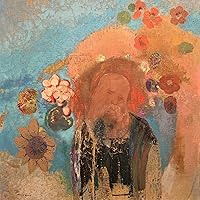
The Premodern Condition identifies and explains a surprising affinity for medievalism and medieval studies among the leading figures of critical theory. Drawing on a wide range of philosophical, literary-critical, and sociological works produced within the French nouvelle critique of the 1960s, Holsinger argues for reconceiving these discourses, in part, as a brilliant amalgamation of medievalisms.
Holsinger shows that the preoccupation with medieval cultures and practices among Bataille, Derrida, Lacan, Barthes, Bourdieu, and their cohorts was so wide ranging that it merits recognition as one of the most significant epiphenomena of postwar French thought. Not simply an object of nostalgic longing or an occasional source of literary exempla, the medieval epoch was continually mined by these thinkers for specific philosophical vocabularies, social formations, and systems of thought.
To supplement its master thesis, The Premodern Condition also contains original essays by Bataille and Bourdieu—translated here for the first time into English—that testify in various ways to the strange persistence of medievalisms in French postwar avant-garde writings. What results is an important and original work that will be a touchstone for specialists in medieval studies and critical theory alike.
Bruce Holsinger is the author of five novels, including Culpability (forthcoming from Spiegel & Grau), The Displacements and The Gifted School (both from Riverhead), and many works of nonfiction, most recently On Parchment: Animals, Archives, and the Making of Culture from Herodotus to the Digital Age (Yale University Press). His books have been recognized with the Colorado Book Award, the John Hurt Fisher Prize, the Philip Brett Award, the John Nicholas Brown Prize, the Modern Language Association's Prize for a First Book, and others. His essays and reviews have appeared in The New York Times, Vanity Fair, and many other publications and he has been profiled on NPR's Weekend Edition, Here & Now, and Marketplace. He is the recipient of a Guggenheim Fellowship.
He teaches in the Department of English at the University of Virginia, where he specializes in medieval literature and modern critical thought and serves as editor of the quarterly journal New Literary History. He also teaches craft classes and serves as board chairman for WriterHouse, a local nonprofit in Charlottesville.
Holsinger's thesis that the medievalism(s) of the avant-garde nouvelle critique can serve to disrupt traditional narrative temporalities is entirely overdetermined, and most of the essays here were of historiographic rather than properly analytical interest to me (though I'll likely return to the Lacan chapter in the future). That said, the extended engagements with Radical Orthodoxy and the nouvelle théologie were unexpected and most welcome.
Interesting profiles on five Frenchies: Bataille, Lacan, Bourdieu, Barthes, Derrida. And now I understand a little better how these thinkers were influenced by their engagement with Medieval Historiography (via the Annales School) and/or various strands of medieval christian theology.
But I don't know what the takeaway is for me - other than gap-filling ("Look, late twentieth-c French Theory wasn't just interested in Modernity! They were ALSO interested in Medieval Times!") So the French avant-garde intellectual elite were deeply interested in the medieval period. Why wouldn't they have been? This doesn't seem so strange to me.
Should we think of "the medieval" differently - do French postmodern theorists offer us a set of useful historical or methodological insights? Should we engage these thinkers, read their works differently, now that we know that they invested themselves into the Dark Times? Should we as well-rounded humanists read more Aquinas and Avila? More chansons? More M. Bloch and Panofsky?