This is a reproduction of a book published before 1923. This book may have occasional imperfections such as missing or blurred pages, poor pictures, errant marks, etc. that were either part of the original artifact, or were introduced by the scanning process. We believe this work is culturally important, and despite the imperfections, have elected to bring it back into print as part of our continuing commitment to the preservation of printed works worldwide. We appreciate your understanding of the imperfections in the preservation process, and hope you enjoy this valuable book.
Radoje Domanović was a Serbian writer and teacher, most famous for his satirical short stories.
Domanović was born in a village Ovsište which is located in Topola municipality, Šumadija District. He attended a gymnasium in Kragujevac. Some of his teachers were Pera Đorđević and Sreten Stojković, followers of Svetozar Marković, who were arrested for an attempt to take control of the local government and displaying a red flag. From 1890 to 1894, Domanović studied at the history and philology department of Belgrade's Grande Ecole (what soon became the University of Belgrade). He read some of his first works to the members of a student organization Pobratimstvo (Bloodbrothers). In 1893, he published his first work, a short story Na mesečini (In the Moonlight), in a magazine Javor. Two years later, he got his first tenure as a lecturer in a gymnasium in Pirot. There he met Jaša Prodanović, who was transferred to that school as a punishment. At that time, Domanović joined Republikanska stranka (The Republican Party), and got married to Natalija Ristić. He took an active part to maintain the doctrine of republicanism during the time of the monarchy, was threatened repeatedly not to criticize The Establishment. After nine months, he was transferred, as a punishment on request of his political rivals, to a gymnasium in Vranje. On the same count, after a year in Vranje, he was transferred to Leskovac. Following a critical speech on the position of teachers in 1898, he was dismissed from his post, along with his wife. As a response, he wrote a short story Ukidanje strasti (The Tearing of Passion). In 1899, he published two collections of short stories and his famous story Danga, perhaps an inspiration for Yevgeny Zamyatin's We (novel). The following year, he got a well-paying, government job as a clerk in the State's Archives. In 1902, after he published Stradija, he was again dismissed from his post. He started writing editorials for magazine Odjek (Echo). After the coup in 1903, Domanović returned to his post, and soon got a stipend to work on his stories. It was rumoured that the coup saved his life, since he was on a list for liquidation of the old government. In 1904, he started a magazine Stradija, that had 35 editions. The following year, he was appointed to the State press. He died in 1908 of tuberculosis survived by his wife and two children Zoran and Danica.
It can be said that Domanović is the diminutive Serbian Swift, if we lend ourselves to compare our writers with foreign ones. During his short literary career he succeeded in developing the great powers of the satirical novel, although some of his stories are distorted by pessimism and grime. Domanović lived for only 35 years and did not publish much, leaving some work in manuscript form. Some of his most famous stories are:
"Danga" (Mark), a story about the author's dream of visiting an imaginary country where all people blindly follow their leaders in a dystopian society. After all of the citizens were branded on the forehead, without complaints, the story culminates when the narrator proclaims that he, as a Serb, is much braver then anybody and requests to be branded ten times.
"Ukidanje strasti" (Abolishing Passion), a satirical fiction about a legislation that outlawed passion, after which people stopped doing things like smoking, drinking, or taking political participation.
"Razmišljanje jednog običnog srpskog vola" (Reasoning of an Ordinary Serbian Ox), criticizes Serbian misuse of their history and tradition.
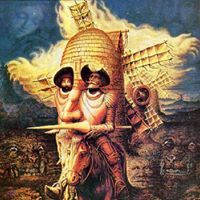
"Kraljević Marko po drugi put među Srbima" (Marko Kraljević Among Serbs For the Second Time), a story of a return of an epic Serbian hero.
"Mrtvo more" (Dead Sea), a story about resistance of masses against any kind of progress.
"Vođa" (The Leader), a story about people who chose a person they never saw before to lead them to a better place. After suffering through a long trip, they realized that their leader was blind.
Marko Mrnjavčević (c. 1335 – 17 May 1395), popularly known as Kraljević Marko, was the de iure Serbian king from 1371 to 1395, while de facto he ruled only the territory in western Macedonia. The capital city of King Marko's state was Prilep. In the Serbian folk epic, in which one of the cycles of poems is dedicated to him, he is known as Kraljević Marko. His father, King Vukašin, was a co-ruler of Emperor Stefan Uroš V, whose reign was marked by the weakening of imperial power and the independence of regional lords in the Serbian Empire, which accelerated its disintegration. Vukašin's possessions included lands in Macedonia, Kosovo and Metohija. Although a ruler of modest historical significance, Marko became a major character in South Slavic oral tradition. He is venerated as a national hero by the Serbs, Macedonians and Bulgarians, remembered in Balkan folklore as a fearless and powerful protector of the weak, who fought against injustice and confronted the Turks during the Ottoman occupation.
Having this in mind, Domanović sets him in the early 20th century, where Marko pleads God to let him help the Serbs who desperately call for his help, to avenge Kosovo, to fight against the injustice, to let down the chains of slaves and to be free once again. God hears Marko, but warns him that it might not go as he plans.
Marko is now in Serbia, on his great horse named Šarac... and he is not doing well by the modern standards. First he kills a man and chops his head off, then he kills more... For him, these people are weak... pathetic. So much so, he starts laughing and because of it, he can't speak the way he usually speaks (deseterac, a verse of 10 syllables). He is on a chaotic rampage, unaware... Then the whole army comes and stops him and put him to jail. The judges explain to him how the situation really is: while Marko came to help Serbian knights free Kosovo and to help Serbian people, nobody really... cares. When Marko finally gets out of jail, now a shaddow of his former self, he sees the modern Serbs as Domanović sees them - as weaklings, people who only care about surviving and hopefully making a little more money they need. Nobody cares for Kosovo. Nobody wants to die for Kosovo, even the most fiery patriots. Being so disappointed, Marko tells God about this and God tells him "I told you so". Marko, probably a 2+ metres tall, strong as a mountain, pictured as the most masculine knight you will ever see... cries at the sight of what his predecessors became. God just sighs. That is the end.
Now, this being written in 1902 is really something. Domanović was disappointed at the monarchy and was in the wave of opposition to Aleksandar Obrenović, the king of Serbia at the time. He was a vivid critic of the monarchy, but also got disappointed with his comrades, especially Nikola Pašić, who is not a good leader in his opinion (Domanović writes Vođa, a story of the blind leader taking 200 families somewhere, even though he can't see). In 2025, reading Domanović feels both good and bad for me, as a Serbian. These texts are so relatable and relevant, so many years now. I first got a glance of serbian mentality through Archibald Reiss. In his book, Čujte Srbi, Reiss describes the mentality of the middle class, mostly goverment office workers. That was in 1927 I think, still the same now.
Domanović is, unlike Reiss, Serbian. He grew up here, he spent his whole life here and he knows how Serbs are. Today I have read 6 of his works that are quite similar in the message he tries to convey. I feel the same way. I think we both resent the Serbian hipocrisy, especially from so called patriots. These people that want to go to wars, but only in their words they are courageous, they would never pick the rifle and go defend our country. They would never be on the front. Meanwhile our real war veterans are on the social margin and the conservative patriots do not care, or are labeled as war criminals by progressives. I don't think this is a majority of society, like Domanović portrays, for he is too pessimistic for me. His works are satires and they are funny, the whole theme is funny, but under it, that realization after you laugh, hits you hard.
The funny thing is, I feel like Domanović and me were in the same position. While he was writing about how Serbs are weak, submissive to authority, wouldn't care to fight for the freedom and glory of their country, for decency and humanity, just 12 years later we would have probably the greatest generation in hundreds of years. This little country of ours fought against a much bigger and stronger enemy and suffered a great deal because of it. That is almost the same generation Domanović writes about. It's their kids.
For years now I felt the same, especially since 2023. I see the things Domanović describes in the boomer generation, but not in the younger ones. These people yearn for freedom. These people want decent life, to stay here and not to go to any promising land blind leaders take us. To not wage wars, but to make something of what we have here. To shift from hating others into loving ourselves, the true, healthy way. Patriotism is loving this land and protecting it, that means protecting women, children, minorities, the land, the air, the water, the animals. Nothing matters if you go to church and do nothing else but talk loudly on slavas about our former glory. Like Domanović says, the glory is earned and we have no rights to bash ourselves with someone else's victories. Even if they are our great-great-great grandfathers and mothers.
How would Radoje Domanović feel if he could ask God to make him come here again, to see us in 2025 like he made Marko Kraljević do in his short story? Would he be proud, or would he see the same patterns as he did 120 years ago? These people that we have now, educated and ambitious, patriotic in a way of rebuilding, not destroying, are Domanović and my dream, I think. He yearned for this for years, and so did I. If I had a chance to speak to him, he would probably be much more conservative than me, but he would listen. I would listen.
I don't know if it's fortunate or not that Domanović died that early. He was only 35 in 1908, when he died of tuberculosis. Just 4 years later, Serbia got into the first war, then the second one just a year later... then it got into the First World War and suffered for six consecuitive years. He didn't get to see why today we are all so proud of his generation that didn't want to bow head to a much stronger enemy. He didn't get to see that our nation, our people, were still worth it. I can feel the resentment towards his own people in his writings, but it isn't hate - it's pain. It is anger.
Domanović's works are warnings; recognize this behavior in Serbs and work against it. Do not stay silent. Silence made it possible for people like this to rule our country for centuries.