

What do you think?

The Virgin Mary
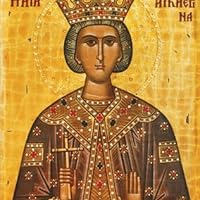
This volume, the third in a collection of sermons by Fr Alexander Schmemann, is on a topic that was particularly close to his heart: the Virgin Mary. The "Theotokos," as Mary is usually referred to among the Orthodox, figures prominently in Byzantine liturgical worship. While no single service is without one or more references to her, Eastern Orthodox theological manuals have little to say about Mary beyond repeating the primarily Christological titles affirmed by the Third Ecumenical Council "Theotokos," "Birthgiver of God." It is to the Eastern liturgical tradition, then, that one must turn for a more developed Mariology. Eastern hymnographers, drawing on Scripture, the early Christian Apocrypha and on a rich theological tradition, went far beyond the laconic definition of the Third Ecumenical Council. Fr Schmemann draws on all these to explain Mariology to a modern audience.
- GenresTheology
93 pages, Paperback
First published March 5, 1996
About the author
Alexander Schmemann
68 books215 followersProtopresbyter Alexander Schmemann was a prominent Eastern Orthodox theologian and priest of the Orthodox Church in America.
Ratings & Reviews
Friends & Following
Create a free account to discover what your friends think of this book!
Community Reviews
Displaying 1 - 7 of 7 reviews
September 6, 2014
Provides a great overview of Orthodox Mariology. Highly recommended.

January 17, 2026
Alexander Schmemann’s The Virgin Mary is an absolute apotheosis of liturgical scholarship, a work that eschews the pedestrian constraints of contemporary systematic theology in favor of a more transcendent, hagiographic resonance. Schmemann’s prose is characterized by an inexorable lucidity, navigating the dense thickets of Mariology with a sophistication that is both percipient and profoundly evocative. For the reader seeking a mere perfunctory overview, this volume may prove overly dense; however, for the discerning intellectual, it offers a veritable cornucopia of patristic insight.
The author’s primary stratagem involves the deconstruction of the Theotokos through the prism of Byzantine hymnography. Rather than adhering to the desiccated syllogisms of Western scholasticism, Schmemann embraces an ontic approach, emphasizing the symbiotic relationship between the Virgin and the cosmic economy of salvation. His exegesis of the Third Ecumenical Council’s proclamations is nothing short of magisterial, transforming what could be a dry historical recount into a vivid, palpitating tapestry of faith. The way he elucidates the intersection of the apocryphal and the canonical is particularly meritorious, displaying a hermeneutic dexterity that is seldom encountered in modern ecclesiastical literature.
Furthermore, the brevity of the tome belies its profound profundity. At under one hundred pages, the work is a masterpiece of concision, yet it remains saturated with an intellectual gravitas that is truly formidable. Every sentence is imbued with a certain teleological urgency, urging the reader toward a more holistic comprehension of Mary’s role as the quintessential archetype of humanity’s response to the Divine. Schmemann’s ability to synthesize disparate liturgical elements into a cohesive, aesthetically pleasing narrative is a testament to his erudition.
The aesthetic quality of his argumentation is bolstered by a stylistic elegance that borders on the sublime. There is a pulchritude in his descriptions of the "Birthgiver of God" that elevates the discourse beyond the realm of mere polemic. Ultimately, The Virgin Mary stands as a par excellence example of theological discourse. It is an indispensable acquisition for any library dedicated to the pursuit of spiritual gnosis. To neglect this volume would be a catastrophic oversight for any serious student of the Eastern tradition. In summary, Schmemann has produced a work of such quintessential excellence that it renders most other contemporary commentaries on the subject entirely superfluous. It is, in every sense of the word, a masterpiece of hagiological synthesis.
The author’s primary stratagem involves the deconstruction of the Theotokos through the prism of Byzantine hymnography. Rather than adhering to the desiccated syllogisms of Western scholasticism, Schmemann embraces an ontic approach, emphasizing the symbiotic relationship between the Virgin and the cosmic economy of salvation. His exegesis of the Third Ecumenical Council’s proclamations is nothing short of magisterial, transforming what could be a dry historical recount into a vivid, palpitating tapestry of faith. The way he elucidates the intersection of the apocryphal and the canonical is particularly meritorious, displaying a hermeneutic dexterity that is seldom encountered in modern ecclesiastical literature.
Furthermore, the brevity of the tome belies its profound profundity. At under one hundred pages, the work is a masterpiece of concision, yet it remains saturated with an intellectual gravitas that is truly formidable. Every sentence is imbued with a certain teleological urgency, urging the reader toward a more holistic comprehension of Mary’s role as the quintessential archetype of humanity’s response to the Divine. Schmemann’s ability to synthesize disparate liturgical elements into a cohesive, aesthetically pleasing narrative is a testament to his erudition.
The aesthetic quality of his argumentation is bolstered by a stylistic elegance that borders on the sublime. There is a pulchritude in his descriptions of the "Birthgiver of God" that elevates the discourse beyond the realm of mere polemic. Ultimately, The Virgin Mary stands as a par excellence example of theological discourse. It is an indispensable acquisition for any library dedicated to the pursuit of spiritual gnosis. To neglect this volume would be a catastrophic oversight for any serious student of the Eastern tradition. In summary, Schmemann has produced a work of such quintessential excellence that it renders most other contemporary commentaries on the subject entirely superfluous. It is, in every sense of the word, a masterpiece of hagiological synthesis.
Read
October 23, 2021The Virgin Mary is a compilation of sermons and lectures that Fr. Schmemann delivered in the 1960s and 70s. Throughout the pieces, he seeks to address his deep concern over the state of both theology and piety around the Virgin Mary, especially the ignorance of the faithful and
the challenge of materialism in the Soviet Union (the sermons were broadcast into the USSR via Radio Liberty) and what he saw taking shape in the western church after Vatican II.
His first sermons, “The Mother of God”, explain the feast days across the church calendar and pulls deep theological and personal meaning from them. He seeks to explain how and why devotion to the Virgin Mary grew in the church and why devotion to the mother of God is in fact essential to devotion to her son Jesus Christ.
The second section shows “Mary: The Archetype of Mankind”. He points out that an authentically Christian anthropology of man must include the veneration of Mary and her central and very personal role in representing mankind as the “instrument” whereby God united Himself
with His creation:
"It is Christ, not Mary, who stands at the center of our faith, as its absolute content and power, fullness and joy. Yet… looking at Mary's role in the incarnation, at the “instrumentality” of
that role, we unavoidably receive the revelation of Mary herself Because the “instrument” is revealed to us as a person, it is the person that gives the ultimate meaning to the instruments (p. 50)."
The third section, “On Mariology in Orthodoxy”, points out that the Eastern Church’s experience of Mary is grounded in the liturgy, rather that the complex theological considerations of the Roman Church or the dismissiveness of the Reformed churches.
"At the heart of that moment, as its expression, movement and perfection, we find Mary. She is not the object of prayer and adoration, but its very expression. She is the Church as prayer, as joy, as fulfillment. It is a combination of beauty and humility, matter and spirit, time and eternity, that is the real experience of the church and of that experience Mary is the focus and the life. It is for this experience that the world is longing today. (67)
The final two sections discuss “Mary and the Holy Spirit” and “Mary in the Liturgy”, fleshing out and amplifying earlier themes, notably showing the absolute linkage of meaning between Mary, the Holy Spirit, and the end times, when the Spirit will inhabit everything with a richness similar to Mary’s experience.
the challenge of materialism in the Soviet Union (the sermons were broadcast into the USSR via Radio Liberty) and what he saw taking shape in the western church after Vatican II.
His first sermons, “The Mother of God”, explain the feast days across the church calendar and pulls deep theological and personal meaning from them. He seeks to explain how and why devotion to the Virgin Mary grew in the church and why devotion to the mother of God is in fact essential to devotion to her son Jesus Christ.
The second section shows “Mary: The Archetype of Mankind”. He points out that an authentically Christian anthropology of man must include the veneration of Mary and her central and very personal role in representing mankind as the “instrument” whereby God united Himself
with His creation:
"It is Christ, not Mary, who stands at the center of our faith, as its absolute content and power, fullness and joy. Yet… looking at Mary's role in the incarnation, at the “instrumentality” of
that role, we unavoidably receive the revelation of Mary herself Because the “instrument” is revealed to us as a person, it is the person that gives the ultimate meaning to the instruments (p. 50)."
The third section, “On Mariology in Orthodoxy”, points out that the Eastern Church’s experience of Mary is grounded in the liturgy, rather that the complex theological considerations of the Roman Church or the dismissiveness of the Reformed churches.
"At the heart of that moment, as its expression, movement and perfection, we find Mary. She is not the object of prayer and adoration, but its very expression. She is the Church as prayer, as joy, as fulfillment. It is a combination of beauty and humility, matter and spirit, time and eternity, that is the real experience of the church and of that experience Mary is the focus and the life. It is for this experience that the world is longing today. (67)
The final two sections discuss “Mary and the Holy Spirit” and “Mary in the Liturgy”, fleshing out and amplifying earlier themes, notably showing the absolute linkage of meaning between Mary, the Holy Spirit, and the end times, when the Spirit will inhabit everything with a richness similar to Mary’s experience.

February 27, 2023
“Through this totally unknown Galilean woman. God would begin to fulfill the mystery of the world's redemption. There would be no thunder and no fear in His presence, but He would come to her in the joy and fullness of childhood. Through her a Child will now be King: a Child, weak, defenseless, yet through Him all the powers of evil are to be forever stripped of power”
I wish reformed people read more Schmemann. There’s plenty to disagree on but in his writings there is a continuation of Lewis, Chesterton and Tolkien’s project of bringing wonder back into the world. The way he emphasizes how every aspect of Christianity is directly opposed to the secular demythologization of the world is so needed today.
On his Marian arguments, some good some bad. I know he argues that the eastern orthodox don’t worship her but I don’t see how, for example, prayers asking her to protect the whole world by her 'invincible power” takes away from the glory of God. If “what we pray is what we believe” is taken so seriously, there’s some gnarly issues here that are de facto idolatry.
However, if we view some of his arguments with Calvin’s lens of looking at Mary as the “disciple par excellence” of Jesus, then theres a good amount to learn from. I found Schmemanns argument of Mary’s fiat as an antidote to the “heresies of minimal and maximal anthropology” very helpful here. Looking at how God thinks of humanity through choosing a woman to, in the words of Bavinck, “carry (Christ) beneath her heart, nurse him at her breast, instruct him in the Scriptures, in whom, in a word, the preparation of the incarnation was completed” is massive.
I wish reformed people read more Schmemann. There’s plenty to disagree on but in his writings there is a continuation of Lewis, Chesterton and Tolkien’s project of bringing wonder back into the world. The way he emphasizes how every aspect of Christianity is directly opposed to the secular demythologization of the world is so needed today.
On his Marian arguments, some good some bad. I know he argues that the eastern orthodox don’t worship her but I don’t see how, for example, prayers asking her to protect the whole world by her 'invincible power” takes away from the glory of God. If “what we pray is what we believe” is taken so seriously, there’s some gnarly issues here that are de facto idolatry.
However, if we view some of his arguments with Calvin’s lens of looking at Mary as the “disciple par excellence” of Jesus, then theres a good amount to learn from. I found Schmemanns argument of Mary’s fiat as an antidote to the “heresies of minimal and maximal anthropology” very helpful here. Looking at how God thinks of humanity through choosing a woman to, in the words of Bavinck, “carry (Christ) beneath her heart, nurse him at her breast, instruct him in the Scriptures, in whom, in a word, the preparation of the incarnation was completed” is massive.

November 27, 2021
More like 3.5 stars. The lack of stars has nothing to do with Schmemann, I have been deeply impacted by much of his writing and thought, the main reason is I just can't go as far as he goes when it comes to the Virgin Mary.
Where Schmemann speculates faithfully from Holy Scripture about Mary's role as a foretaste, icon, and picture of the Church, I am all for it. I found many of his reflections beautiful and profound.
But when he appeals to visions of ancient saints and other experiences throughout church history that lead him to venerate her, I just can't follow him there. In the end, I am just not bringing the same presuppositions to the conversation that he is.
This book was still a fun read and was really helpful for understanding Orthodox Mariology and how it is different than Roman Catholic Mariological reflection. Overall, it was also a wonderful way to kick off Advent.
Section 3 Part IV on Mary's relation to Ecclesiology was utterly profound.
Where Schmemann speculates faithfully from Holy Scripture about Mary's role as a foretaste, icon, and picture of the Church, I am all for it. I found many of his reflections beautiful and profound.
But when he appeals to visions of ancient saints and other experiences throughout church history that lead him to venerate her, I just can't follow him there. In the end, I am just not bringing the same presuppositions to the conversation that he is.
This book was still a fun read and was really helpful for understanding Orthodox Mariology and how it is different than Roman Catholic Mariological reflection. Overall, it was also a wonderful way to kick off Advent.
Section 3 Part IV on Mary's relation to Ecclesiology was utterly profound.

August 8, 2020
This really is a celebration of the faith!! This book is Schmemann’s celebration of St. Mary, the Mother of God: who she is, what she accomplished, what she represents as an archetype for mankind, what she means for our relationship with God, and the image which she provides of the Church and of a woman and of mankind.
Schmemann is unapologetic in his and the Church’s persistent and organic veneration of St. Mary and the high place of honor given to her. In true Schmemann style, he points out the great crisis of our failure to live and experience the Kingdom of God. He discusses how that deficiency is related to the modern demotion of St. Mary to, as he calls it, the “devotion department” of the Church. In response, he discusses primarily the ecclesiological, pneumatological, and anthropological significance of St. Mary.
Schmemann is unapologetic in his and the Church’s persistent and organic veneration of St. Mary and the high place of honor given to her. In true Schmemann style, he points out the great crisis of our failure to live and experience the Kingdom of God. He discusses how that deficiency is related to the modern demotion of St. Mary to, as he calls it, the “devotion department” of the Church. In response, he discusses primarily the ecclesiological, pneumatological, and anthropological significance of St. Mary.

September 28, 2017
A concise presentation of Eastern Orthodox views on the Virgin Mary. Schmemann packs a lot into this little book, and defends the veneration of Mary and the Church's "Mariology" with great skill.
Displaying 1 - 7 of 7 reviews