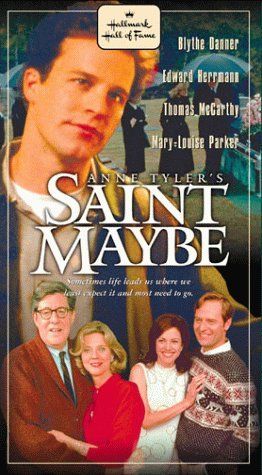
In 1965, the happy Bedloe family is living an ideal, apple-pie existence in Baltimore. Then, in the blink of an eye, a single tragic event occurs that will transform their lives forever--particularly that of seventeen-year-old Ian Bedloe, the youngest son, who blames himself for the sudden "accidental" death of his older brother.
Depressed and depleted, Ian is almost crushed under the weight of an unbearable, secret guilt. Then one crisp January evening, he catches sight of a window with glowing yellow neon, the CHURCH OF THE SECOND CHANCE. He enters and soon discovers that forgiveness must be earned, through a bit of sacrifice and a lot of love...
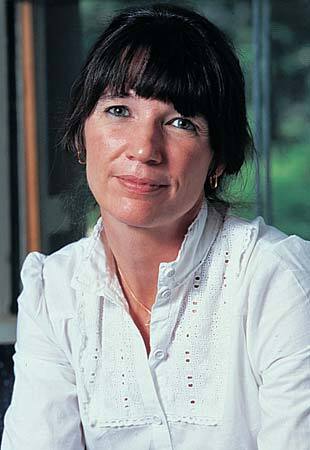
Anne Tyler was born in Minneapolis, Minnesota, in 1941 and grew up in Raleigh, North Carolina. She graduated at nineteen from Duke University and went on to do graduate work in Russian studies at Columbia University. She has published 20 novels, her debut novel being If Morning Ever Comes in (1964). Her eleventh novel, Breathing Lessons, was awarded the Pulitzer Prize in 1988. She is a member of the American Academy of Arts and Letters.
Sometimes I wonder if Real Honest-to-Goodness Nice People are an endangered species...
Then I think, “No - there‘s always a new generation of plain humble folk (who’re still a bit too shy to inherit the earth) WAITING IN THE WINGS!”
And THIS is a wonderfully, warmly human book about the love of your faith, family and friends, and many, many acquaintances, which - experienced day by day, over many years - can seal up every last anxiety-producing crevice in this crazy modern life you lead, heal your pain and bring you... FORGIVENESS.
Now, you’ve heard me raving as I read this, and you may have wondered why -
Because it’s such a simple, unpretentious book, to which my superlatives just seem like I’m gilding a simple lily.
Except Ian Bedloe is no spring lily.
He’s got glaring flaws, just like every other normal teen. But he lives in a happy, apple-pie-American type sixties family. I got the sense right off of something Really ominous about to happen...
And it does. Twice.
Two seismic shocks ripple through the Bedloe family, distancing everyone in its wake. And Ian thinks it’s his fault (and it certainly is, from where I’m sitting!). Cause when my family was split into pieces, I took it the same way!
Someone’s gotta pay, Ian and I thought, so we two losers tried to put our split family and friends back together by Atoning for our misdeed.
So ever since then, like Ian and his neighbourhood circle, I became split down the middle.
And from the centre of that yawning crevice I saw a fearsome ooze of Nothingness appear. Fear. Sheer, dread Emptiness.
This, of course, sounds mighty familiar to many of my existentialist GR friends. Twentieth century literature is awash with it.
No wonder. For without moral standards our angst turns into nameless brown sludge, like it did for Pessoa and Sartre. Unless we fix a name to our sludge. And that’s hard to do when you’re a well-adjusted teen.
Sin is the fill-in-the-blanks answer Ian and I eventually supplied. The only sobriquet that fits that dread.
And we both believed at the time of our fall - yes, admittedly we took our inspiration at face value and literally - that by atoning for it we could right that wrong, with a lifetime of humility.
Funny thing is, it worked.
In the long run - just as it works in this novel. The meek really Do inherit the Earth. As it Really Is. No more bells and whistles. Just plain, honest, unhurried and decent living.
As you read Tyler’s measured, unhurried, seemingly inconsequential story of what dedication to personal reform can do, when carried out in the ordinary, uneventful happenings of one man’s family and friends, it’s Phenomenal.
You’re imitating the Rock, unimportant like a rock, and you’re approximating little by little to your Rock and your Salvation.
He’s there, and he’s not - but He’s in your life’s driver’s seat.
Atoning like Him, YOU find - and give - Peace and Forgiveness.
Now, Tyler is a chronicler of ordinary mid-American life, and she doesn’t resort to such high falutin words herself, because her Faith is so firmly and inconspicuously Embedded in her day-to-day living and writing.
Simplex munditiis.
That same lamp unto your feet that guides your guilty first steps at making your life right, becomes a light to so many simply because you refuse, like Ian, to let it ever go out.
You’re so busy bustling around to the storehouse to get new oil for your lamp that you don’t realize you’re lighting up your neighbourhood in the process.
But here Tyler stops us and politely says... Is it REALLY us, or ALL the loved ones in our lives - because, LOOK - they’re carrying lamps, too, now?
Though to complicate things in reply you might say it’s perhaps NEITHER -
Maybe it’s all a reflection of the First Light (radiating from the Rock).
Which has never gone out because so many REFUSE to let It disappear.
Yes, this book will make you whole again.
Its sparkling nonclimactic prose will wash your parched face like a gentle spring mist:
That will bring into new blossom the withered shoot of your disenchanted life.
Il tv movie del 1998, inevitabilmente prodotto per lo zuccheroso canale Hallmark.
Anne Tyler ambienta quasi tutte le sue storie a Baltimora nel Maryland, la città sull’Atlantico dove lei abita da tempo (ma è nata a Minneapolis, nel Minnesota, e ha girato gli US prima di approdare sulla costa est intorno ai venticinque anni, già madre di due bambine). Scrivi solo quello che conosci? E racconta questa città, che nel tempo è diventata la sua, come se fosse un microcosmo specchio del macrocosmo. Come se fosse un agglomerato di comunità dove tutti conoscevano tutti. Forse perché la città ha una forte presenza di quaccheri, e Tyler è figlia di due convinti attivi fedeli di questa religione che hanno cresciuto la figlia non solo secondo i principi della loro religione ma anche in mezzo a comunità di affiliati.
Tutto ciò impregna questo romanzo - che nella produzione della Tyler si colloca più o meno a metà carriera (1991) – pagine marcate dal sentimento religioso – e non per niente il reverendo Emmett, personaggio pivotale nel racconto, è a capo di una comunità che si chiama la Chiesa della Seconda Occasione: e non per niente il titolo la dice lunga, infatti il protagonista dedica la sua giovane esistenza a espiare una colpa che non ha commesso. Il terzo figlio della famiglia Bedloe, Ian, è ancora un adolescente quando suo fratello Danny, fin lì scapolone impenitente, s’innamora di una donna divorziata già madre di due figli piccoli – scandalo per i fedeli quaccheri! – e la sposa nel giro di poco rendendola madre di una terza creatura. Nel momento in cui la mala sorte interviene a turbare il ménage familiare, un incidente di cui Ian si sente responsabile, il ragazzo si trasforma da giovane zio in giovanissimo padre adottivo. Quasi un santo, insomma. Forse santo, come dice il titolo originale.
Sono temi che mi hanno reso lettore distante e certo non appassionato, facendomi preferire la prima parte del romanzo alla seconda, quando entra in scena il reverendo, la sua chiesa (o setta), il sentimento di rinuncia, abnegazione e sacrificio, tutti aspetti che mi hanno respinto. Certo neppure la prima metà del libro è tra le cose della Tyler che preferisco: perché l’eccesso di ottimismo di mamma Bee, dal nome più che insulso, con me funziona come il martellante pessimismo: m’infastidisce. Ma Anne Tyler sa scrivere. E lo sa fare restando semplice e immediata, senza giri di parole, senza orpelli. Lo sa fare con fine cesello di caratteri e psicologie, cercando il piccolo momento quotidiano sul quale getta una luce che lo trasforma da ordinario in straordinario.
Manifesto del film tv: in rosso la matriarca Bee interpretata da Blythe Danner, attrice abbonata a questo genere di produzioni.
Anne Tyler hasn't permitted many interviews through the decades of her career, but when she has, she's been very clear on what her writing process has involved.
She writes, first, in long hand on unlined paper and revises her long hand versions. Next she types out the entire manuscript, re-writing it in long hand, and reads into a tape-recorder while listening for any "false notes." Then, ultimately, she plays back into a stenographer's machine using the pause button to enter any changes.
This meticulous technique, combined with her natural abilities as a storyteller, has made her the bestselling author she is, and a “top five” favorite writer of all-time for me.
Great writers aren't coincidental, nor are they magical. They have no wands; instead, they break a sweat, they use adult language, they laugh, they cry, and they throw things, sometimes, as they're working. And, if they're smart, they listen to their work, over and over again, read out loud.
Want a fabulous example of the result? From page 314 of this novel:
Rita's batty mother, Bobbeen, spent hours in their kitchen, generally seated not at the table, but on it and dangling her high-heeled sandals from her toes. With her crackling, bleached-out fan of hair and snapping gum and staticky barrage of advice, she seemed electric, almost dangerous.
Do you have any trouble picturing Bobbeen or hearing her? Of course you don't.
This isn't even my favorite work of Ms. Tyler's, but it's my tenth novel of hers and, it is, as always, a solid offering of imaginative storytelling, well-developed characters, and dialogue that you never doubt. This story is set around three orphaned children, on the now-familiar streets of Baltimore, and it is a recipe: how to make a half pitcher of lemonade from sour lemons and a small bag of old sugar.
“If I didn't have Someone to turn this all over to, how would I get through this?”
P.S. Did you know that you can now take an "Anne Tyler Tour" of Baltimore? Who wants to come??
I've yet to read an Anne Tyler novel I haven't liked. Of the 7 I've now read, I think this is up there with A Spool of Blue Thread as one of my favorites. I adore her storytelling and characters. They are so real and well imagined, and sure, you could argue all her novels are a variation on the same thing but she approaches each one just a little bit differently. Plus they are nice to read, and that's a pleasant change. I like to imagine all her characters existing in the same Baltimore universe and passing each other on the street. Lovely story about how the little moments in life impact you in big ways and how one person can shape the destiny of another for better or worse.
Reading the back-of-the-book synopsis, I expected Saint Maybe to be a sort of grace-centered retread of 1980's Ordinary People, in which a teenager struggles to come to terms with the death of his older, "better" brother (for which he feels partially responsible) with the help of a compassionate psychiatrist. As it happened, there are some superficial parallels, but thematically it turned out to have more in common with 2007's Atonement. (And, for the record, I know that both of the films I've mentioned are based on novels . . . I just haven't read them and don't know how faithful a comparison would be.)
Saint Maybe begins in 1965 and centers around the Bedloes, a very happy, normal American family living in Baltimore. Doug and Bee are both teachers. Their oldest, Claudia, has been married for some years and seems to be in a near-constant state of pregnancy (I believe the final count by novel's end was eight children). Danny, the middle child, is the family's golden boy. He is handsome, athletic, and well-liked by everyone. He is old enough to be out on his own, but still lives at home and has settled comfortably into a career at the post office. Ian is the baby of the family, a surprise that arrived several years after the first two. As the book begins, he is nearing the end of his high school career.
The even keel of the Bedloe's lives is mildly disrupted when Danny decides to marry Lucy, a divorced mother of two (Agatha,7, and Thomas, 3). Then, almost immediately after the wedding, Lucy announces that she is pregnant, and after only seven months, a baby girl is born "prematurely." Even Ian is perceptive enough to notice that little Daphne is not a preemie, and when he does the math he realizes that this is not even his brother's child. No one else seems to be aware of this, least of all his brother.
Ian is ruffled further when he begins to suspect Lucy of cheating on Danny. She frequently calls on Ian to babysit so she can spend her afternoons out on the town, but she never says where she goes and one day she returns wearing a dress that Ian knows she and Danny can't afford. Matters come to a head on the night when Lucy manipulates Ian into babysitting while Danny is at a bachelor party, even though Ian has an important date planned with his girlfriend Cicely (after which he hopes to lose his virginity).
Lucy promises to be home early, but she completely blows her curfew, and in fact Danny arrives home first, slightly drunk. Ian, furious, demands that Danny drive him home and then to Cicely's house. As they arrive at the Bedloes', his frustration leads him to blurt out his suspicions about Lucy and the new baby. While he is inside, Danny floors the accelerator and drives his vehicle straight into a stone wall at the end of the street, killing himself. A few months later, after Ian has gone away for his first semester at college, Lucy overdoses on sleeping pills and dies.
While he is back in town for the funeral, Ian happens to stroll past a store front with a neon sign that says "Church of the Second Chance" and slips inside. After the service, he stays to talk to the pastor, Reverend Emmett, who tells him that he will not be forgiven unless he at least attempts to atone for what he did. This conversation leads Ian to drop out of college, apprentice himself to a local carpenter, and devote himself to helping raise Lucy's orphaned children.
The novel follows him for the next 25 years as he basically dedicates his life to the quest for redemption, using his story to explore two extreme Christian doctrines of absolution; what Dietrich Bonhoeffer would call "cheap grace" on the one hand, and the works-based atonement model on the other. What emerges is neither easy or straightforward. Tyler seems to be saying that forgiveness (which, in this case, also means freedom from guilt), while it will be easier for some than for others, cannot be either assumed lightly or earned through extreme sacrifice.
In this case, forgiveness is something that has to be negotiated by the passage of time and the acquisition of wisdom. Ultimately, it is a process in which the journey is more important than the destination. Rather, I should say the journey is the destination (there isn't really a destination at all, I suppose). I don't actually have it all figured out, but I'm still turning it all over in my mind, and probably will be for quite awhile. I've finished reading, but I can't put away what I've read.
Tyler writes characters very well. This family felt completely alive and real to me, really almost to an alarming degree. I struggled, emotionally, to continue reading at a few different points, and I was caught off-guard by my visceral response. I actually had to stop at one point last night and watch a sit-com before continuing because I was alarmed by my strong reaction to the novel, and I knew I couldn't just lay it aside. For one thing, I had to have it done for class today, and for another, it's really a page-turner.
These days, if I'm even the slightest bit sleep-deprived, I'll be napping after a couple of pages of just about anything. In fact, earlier in the evening I had fallen asleep while reading Faulkner's Light in August, but Saint Maybe kept me wide awake until 4:00 in the morning, when I decided I had reached an adequate stopping place. I should note that these "adequate stopping places" become more frequent as the novel draws on towards its conclusion, though I'm not sure whether to regard this as a weakness or a necessity. Either way, by that point I had more than enough momentum built up to sweep me through to the end.
I probably can't totally pinpoint what prompted my reaction to the novel, and certainly part of it must be attributed to personal factors (certainly many of my classmates didn't have the same experience, though I didn't hear any stringent criticisms). Setting that aside, however, I was probably blindsided by two things.
First, the extremely effective shifts in tone and point of view. Each chapter is limited to the perspective of a different character, and the use of this device during the first third of the novel completely subverted my expectations for what the book would be like and how it would approach the story. The first chapter lulled me into a false sense of security, while the second presumably slipped right through whatever armor I had donned in response to the introduction.
Second, as I mentioned before, Tyler is just crackerjack with characters. Almost before I realized what had happened, I had become enormously invested in these people and their lives, which I then followed for decades through every sort of event imaginable, from births to deaths and everything in-between. It's a lot to take in all at once when you're reading about someone you care about, and it's not the sort of experience that many novels can pull off (though Lord knows they try). Obviously I would recommend it just in general. It was an absorbing and (for me) moving read, and also a work that I expect to find floating on the surface of my thoughts whenever I consider or discuss the topic of forgiveness in future.
This entire review has been hidden because of spoilers.
Reading Anne Tyler can be a daring experience. It's as if you have to endure your clothes being taken away and your bare skin exposed. Her insight is scary - and I'm sure I'm not the only reader who feels she is writing about me, my thoughts and my motivations.
Saint Maybe is at once both her most depressing yet uplifting novel. In a moment of intense frustration, a seventeen year old boy makes a mistake – he blurts out an accusation to his brother that taken in a rational light in the best of situations might be properly handled. But it's been a trying evening, his plans to spend the first night with his girlfriend have gone astray, his brother has had too much to drink, and with remarks like these, timing is everything. It’s not a good time and the repercussions of his youth and brashness will haunt him and his family for the rest of his life.
While I didn’t necessarily enjoy the plot of this book – it’s depressing, who in their right mind would – I was won over, once again, by the writing. Anne Tyler could fictionalize a trip to the grocery store and I would hang upon her every word. By the end of the book I was considering it to be perhaps my favourite novel of hers – a lofty achievement when I consider how many wonderful books of hers I’ve read.
I would like to say a lot about this book, but some of it would undoubtedly contain spoilers. I had to consider carefully before rating it, it comes very close (for me) to a 5 star rating. As has been said before, were there half stars I'd go 4.5 easily here.
First, this isn't the typical type book that I usually read or that usually appeals to me. We follow Ian through most of his life, his lack of wisdom, the decisions he makes, their consequences... I picked this book up because I saw (and liked) a made for TV movie based on it. I'd say this is one of of those rare cases where the movie is about as good as the book. There are things in the book that aren't in the movie, but there is at least one scene in the movie, that I prefer to the way it was handled in the book.
Second, don't go to this book for your theology. I could argue with a lot of what's said...but in a way that's part of the point. The thing that bothered me most was the transposition in the church Ian joins of the good works from being a result of a relation to God to some sort of "atoning sacrifice" where forgiveness seems conditional. All sins are forgiven and the changes that come are a result of the change wrought by Jesus. But, The teaching set forth in the novel isn't an unusual teaching and I'm sure some reading the book will agree with it. So, just as certain "other Christians" in the book take issues with smaller questions, some this will bother while others it won't. I feel it's an extremely important question, but it didn't ruin the novel for me. So as I said...this isn't a book on theology. It's a book about people and Christians are people, they're human and as flawed as other people. Enjoy the book for what it is.
Okay, finally (I could add more, but as I said the more detailed the closer I get to a spoiler), I would describe this book with an old fashioned word that you don't hear that often any more. The book is "heartwarming". It's readable, enjoyable, memorable, and one of my favorites. I've read it a couple of times and I'd recommend it, and the movie to for that matter.
I just decided to get the "Audible edition" of this one.
(4.5)Saint Maybe was Tyler’s twelfth novel and forms part of what I consider to be her golden mid-period. It’s most like Dinner at the Homesick Restaurant, my absolute favourite, in that both might be classed as linked short story collections: each chapter is a standalone narrative with knockout first and last lines; together they build a careful picture of a dysfunctional family over the years.
As the novel opens in the 1960s, Ian Bedloe is a lazy teenager contemplating college. When his older brother Danny marries Lucy, mother to Agatha and Thomas, Ian can’t help but comment on the timing of his sister-in-law’s third pregnancy. Danny didn’t realize he’s not the father of this new baby, Daphne, and the newfound knowledge pushes him over the edge. Lucy also fails to cope, and Ian is consumed with guilt at how he inadvertently caused the collapse of their family. In an effort to atone, he joins the puritanical Church of the Second Chance and drops out of college to help his parents raise the three children. Others have to convince him that life is not just about penance and that he deserves happiness, too.
This is one of those books where every character, no matter how minor, shines. I particularly loved Reverend Emmett, whose well-meaning doctrines have been taken further than he intended; Rita, whom the family hires to declutter the house (she’s reminiscent of the dog trainer in The Accidental Tourist); and Daphne, who turns into a rebellious teen for whom Ian will always have a soft spot. Ian’s parents could have faded into the background, but the book probes their grief and their feelings of purposelessness in retirement. My only slight qualm was about how Tyler describes the foreigners who live nearby: Middle Eastern graduate students at Johns Hopkins, they’re there simply to provide comic relief with their harebrained home maintenance schemes; the depiction is good-natured, yet seems dated.
In a few other Tyler novels, I’ve been put off by what can seem like flippancy or inconsequentiality. The works of hers that I love best emphasize both the humour and the sadness: the absurdity and tragedy of these ordinary suburban lives. Here, I especially noted the double-edged portrait of the nature of childcare: Ian “wondered how people endured children on a long-term basis—the monotony and irritation and confinement of them,” yet “They were all that gave his life color, and energy, and …well, life.” I also kept finding personal resonances – for instance, the whole theme of the short homily the pastor delivered at my mother’s wedding ceremony was second chances, my stepfather has a failing old dog like the Bedloes’ Beastie, and the account of Church summer camp rang all too true.
At the sentence level as well as the plot level, this is a very strong showing from Tyler, and a close second to Dinner at the Homesick Restaurant for me. I reckon anyone will be able to find themselves and their family in this story of the life chosen versus the life fallen into, and the difficult necessity of moving past regrets in the search for meaning.
Favourite lines:
Bee (Ian’s mother): “We’ve had such extraordinary troubles, and somehow they’ve turned us ordinary. That’s what’s so hard to figure. We’re not a special family anymore. … We’ve turned uncertain. We’ve turned into worriers.”
“‘Mess up, I say!’ Daphne crowed. ‘Fall flat on your face! Make every mistake you can think of! Use all the life you’ve got.’”
“When is something philosophical acceptance and when is it dumb passivity? When is something a moral decision and when is it scar tissue?”
Saint Maybe has at its core the Bedloes, a Baltimorean middle-class family. They are the nicest people, kind and unassuming, living the American dream in the 1960s. Their two sons and daughter are nice people as well. When tragedy strikes and the eldest son Danny dies, his younger brother, Ian, blames himself. Depression and guilt entrap him. His saving grace is the Church of the Second Chance, which shows him that he should atone in practical ways, not just with meaningless words. So he drops out of college and becomes the carer and guardian of his two nieces and one nephew, who had become orphans.
As always, Anne Tyler crafts very realistic characters. I admire her ability to write stories that are uplifting, without avoiding life's downs such as death, illness, ageing, loneliness.
There is a special category of movie in India, called "Family Film": these deal entirely with matters inside a big "joint" family (where all the siblings live together with their parents in their ancestral home, either matrilineal or patrilineal). In the first quarter of the movie, something will happen to disturb the tranqulity of its existence, and the whole of the remaining is spent in resolving the issue. The movie typically has a tragicomic ending, and leaves the audience with a gooey sentimental feeling inside (precisely for which they have come, anyway). It is something the grandparents can watch with grandchildren, passing the popcorn and soft drinks across the seats.
Saint Maybe by Anne Tyler is such a "Family Film". The novel chronicles the life and times of the Bedloe family, after unexpected tragedy strikes them in the late sixties in the form of the "accidental" death of one of the sons, Danny. However, the tragedy is even more serious for Ian, his younger brother, because he knows that he has unwittingly caused his brother's death through some harsh words uttered in the heat of the moment.
The Bedloes are a picture-perfect family right out of a sitcom: they are always a "family" (as if the individual members didn't matter) and nothing "wrong" ever happens for them. Even when Danny marries Lucy Dean, a divorcee with two children, it is accepted after the initial shock. However, Ian begins to have serious doubts about his sister-in-law's character: he comes to the conclusion that she is sleeping around, her gentlemen friends are keeping her in riches and that his brother is nothing but a fall guy: worse, he is pretty sure that Lucy’s third child, Daphne, is not his brother’s. Things come to a head when Ian is kept away from a date with his girlfriend by being forced to babysit the kids while his brother is attending a stag party, and Lucy is ostensibly having dinner with a girlfriend (but Ian is sure she’s elsewhere). As Danny comes back late, Ian blurts out the unwelcome truth: Danny retaliates by driving his car into a wall and killing himself. Soon, Lucy dies from an overdose of sleeping pills.
Two deaths on his conscience, Ian’s world starts to fall apart. Plagued by guilt, he finds succour in an unlikely place: “The Church of Second Chance”, run by the maverick Reverend Bennett. He gives Ian a way out of his guilt: atonement, the hard way. He has committed a wrong, so he must do whatever it takes to set it right: which in Ian’s case means foregoing a college education, forgetting his sweetheart, and taking charge of his sister-in-law’s three children. Ian spends the rest of the atoning, even when the people around him lose conviction and faith, including the beneficiaries of his penance; but he does not find peace. Until one day, the truth is brought home to him by Daphne, Danny’s daughter:
”You think I don’t know what I am up to, don’t you,” Daphne said.
“Pardon?”
“You think I’m some ninny who wants do right but keeps goofing. But what you don’t see is, I goof on purpose. I’m not like you: King Careful. Mr. Look-Both-Ways. Saint Maybe.”
………
“Mess up, I say!” Daphne crowed. “Fall flat on your face! Make every mistake you can think of! Use all the life you’ve got!”
Ironically, Ian finds peace when he stops looking for it.
Novels about people trying to atone for that one mistake is common in literature: Lord Jim is perhaps the most famous example: Atonement is a recent one. What makes Ian’s story different from these is that it is not a tragedy. There is nothing grandiose about it: it’s just a piece of life. We get a feeling that, even if Ian had not done his penance, nothing much would have changed: life would have gone on, just the same. It is this realisation (“People changed other people’s lives every day of the year. There was no call to make such a fuss about it.”) that is Ian’s true salvation.
Anne Tyler writes well. There is a carefree, no-nonsense quality to her prose, even while describing tragic events, that get to you - there is no heavy-handedness. The structure of the novel, with almost each chapter shifting in POV, prevents it from being too focussed on Ian and helps highlight the fact that it is the story of a family which is being narrated, rather than that of a person. And the constantly changing Middle-Eastern students in the house next door (“the foreigners”) and their perennial craze with electronic gadgetry provides an effective counterpoint to the Bedloe’s unchanging stolidity. The novel literally flows.
However, after reading Dinner at the Homesick Restaurant and this novel, I am starting to get a sneaking suspicion that Ms. Tyler’s subject and style can stale very fast. What is aimed at seems to be a “feel-good” story with some family values (like the films I mentioned at the beginning) rather any exploration in depth of the characters’ motives. There is nothing wrong in that: this is a well-written novel and a fast read. But I doubt whether it will stay in the mind for any length of time.
Late in Anne Tyler's novel, a young woman, Daphne, refers to her uncle and primary character in the story, Ian Bedloe, as "King Careful. Mr. Look-Both-Ways. Saint Maybe." Daphne's description helps the reader follow the course of Ian's complex character through the course of more than two decades.
The story is set in Tyler's Baltimore beginning in 1965 with the large and closely-knit Bedloe family in a Baltimore rowhouse. The two lengthy stage-setting opening chapters tells how one of the Bedloe children, Danny, falls in love with and marries a young divorcee with two children from a prior marriage to a mysterious, missing father. The pair soon have a child of their own, Daphne. One evening Ian, concerned about his older brother's marriage and with parentage, says harsh words to Danny who, with some beer in him, drives his car into a wall resulting in death. Ian blames himself. A few months thereafter, Danny's young widow dies from an overdose of sleeping pills.
Religion, guilt, and repentance play a large role in the story as Ian accidentally falls in with a small storefront church, the "Church of the Second Chance" led by one Reverend Emmett. Ian is convinced he must repent for the guilt he feels by helping to raise the three abandoned children which he does with the help of his parents. He drops out of college, loses his girlfriend, becomes attached to the Church of the Second Chance and also leads a celibate life. He becomes a carpenter and a maker of craft furniture to support himself.
Tyler follows the course of Ian, the three children, the Bedloe family, the Church of the Second Chance, Reverend Emmett, and several others over the course of the novel. The characters sometimes develop linerally over time but more often seem to have their courses impacted by chance events.
Tyler offers particularized and sharp depictions of places and people in her beloved city of Baltimore. The book emphasizes the nature of family life for ill but I think mostly for good. With its emphasis on the Church of the Second Chance and on the redoubtable Reverend Emmett, the book encourages reflection on religion and theology. For all the delights of Tyler's writing, the depth of the story with its religious issues makes it move slowly. It is less accessible than the other books of Anne Tyler I have read. It is a serious novel with much to be pondered.
I was interested in reviews of "Saint Maybe" by online readers and by others. In his August 25, 1991 "New York Times" review, Jay Parini wrote: "Anne Tyler likes to break America's heart, and she will do it again with 'Saint Maybe'". Parini finds the book "Anne Tyler's most sophisticated work, a realistic chronicle that celebrates family life without erasing the pain and boredom that families almost necessarily inflict upon their members. Ian Bedloe, for his part sits near the top of Ms. Tyler's fine list of heroes."
A "multifaith and interspiritual website" "Spirituality and Practice" also reviewed "Saint Maybe". The review by the founders of "Spirituality and Practice", Frederic and Mary Ann Brussat, emphasizes the spiritual themes of the novel as illustrated by Reverend Emmett's advice to Ian: "View your burden as a gift. It's the theme that has been given to you to work with. Accept that and lean into it." The review praises Tyler's novel as "an invogorating spiritual journey filled with revelations about the meaning of grace, giving yourself to God, forgiveness, and prayer."
Kirkus Reviews, to take a final example, said the book was "less accessible than some of Tyler's others, but on its own terms perfection." The review noted that "Tyler's people -- from powerless small children (whose 'every waking minute was scary') to the electric poignant Lucy to the crackly little church group -- are as intimately real and yet ultimately as unknowable as those who somehow have changed one's life."
Life is messy and ambiguous in terms of spirituality, individual growth, family and much more. Tyler encourages the reader to see and to reflect upon this messiness and ambiguity in this, her 12th novel, "Saint Maybe".
Story of the Bedloes family. Very much in Anne Tyler's typical treatments. Good and ordinary people with many of life's usual tragedies that prevail. And how they deal. Or don't. But always within the context and framework of their wider family connectiveness.
This time it is a young death and the aftermath upon the younger sibling. It's darker than most of her other novels. That's possibly why I didn't respond as well as usual. I think she does joy better. Her people are joyful capable.
But for some reason I just didn't get invested into the heavy guilt or the personality traits of the prime character, Ian. Others of hers I have liked much better than this one. But she always essentially gets the locale placements and family relationships to a unique and excellent degree.
Reading the first couple of chapters (which make up almost 25% of the book's length), I thought, "this is the darkest Anne Tyler I've ever read." I didn't know in those first chapters who would turn out to be the main character of the novel. I can truthfully say I was happy with her choice.
Tyler's main characters usually have a life problem to resolve. What I like most about her novels is the creativeness she employs in giving them a means of resolution. I also like that there are characters who don't understand or don't approve of the method chosen. In fact, many of her characters don't even understand why the life problem is such a problem. How much more life-like can that be?
This is not a dysfunctional family. In fact, it is quite the opposite. It is the loving family we could all hope for, though definitely not the "typical American family." I said in The Time Traveler's Wife that everyone should have a Henry. Now I can say that every family should have an Uncle Ian.
Before I was reading as many classics as I now do, I might have given this 5 stars. Ian is an unforgettable character, which certainly must be a part of such a rating. This could be 5 stars, though today I'm placing it toward the top of my 4 star group.
This book started out promisingly enough, but I felt as though Tyler lost her grip on her main character, Ian Bedloe. Ian's descent into mindless fundamentalism slides the narrative toward tedium and outright boredom. The character of Ian became for me, not just unlikeable, but boring. Two-thirds of the way through the book, Tyler devotes a considerable number of pages toward describing the house-cleaning that occurs following a supporting character's death. My response: who cares?
Anne Tyler's book opens with a description of a place: Waverly Street in Baltimore, Maryland. Everyone knows everybody else because this is 1965. We zoom down and look in on the Bedloe family, Bee and Doug, teachers and parents of Danny, Claudia, and Ian, living in a large two-story house on a street full of 'squat clapboard houses' shaded by mostly maple trees.
Ian is 17, and he will soon make a pair of decisions, both of which will haunt him for the rest of his life. One was to tell his older brother, Danny, his suspicions about Danny's new wife, Lucy. This turns out rather ambiguously if you ask me, but Ian believes he is solely responsible for the following tragedy. This leads him into anguished responses of monumental, for him, consequences.
"There was this about the Bedloes: they believed that every part of their lives was absolutely wonderful. It wasn't just an act, either. They really did believe it. Or at least Ian's mother did, and she set the tone."
This doesn't mean bad decisions and tragedies pass the family by. However, it means they have a very useful tool when meeting adversity and bad luck and bad decisions: resilience.
I loved this book. I teared up in several spots. It's definitely a 'feel good' novel. But it is not a shallow cheerful cartoon about people demonstrating rigid moral principles and righteous celebration when vindicated. A touch of saccharine, a bit of fortunate coincidences, a side of smooth friendships - this isn't a book of menacing disasters. But it's nuanced and real, a middle-class American family balancing their personal needs with those of their immediate relatives. The balancing between sacrifice and selfishness is difficult and emotionally stark, but it slowly becomes apparent there are rewards whatever the choice if tempered with positive creativity, more selflessness than selfishness, along with internal strength; and minimum abnegation and resentment.
There are shallow people who never seem to dig deep, and unlikely heroes who save the family with simple formulas - an easygoing religious faith, an acceptance of responsibilities both just and unjust, and a willingness to allow people to fail and make mistakes while keeping the doors open to assist when required. Knowing when to take charge, and knowing what to do isn't always clear, but I think Tyler believes that flexibility along with moderate emotionalism goes a long way to fixing most problems over time. The message here is 'Can-do' expectation works best especially with a forgiving personality, even better than self-examination and space to grow, although those work well later for those able to do so. A drowning individual needs immediately a life preserver, whether that be from a kind, supportive preacher with a list of harmless suggestions (not commandments) or aging, supportive parents with a home but losing ground physically, more than a philosophical discussion about life, gods, morality and predestination. Not everyone has the luxury or intellectual skill set for self-examination. Sometimes simply looking into the faces of your family, dependent on your good will, is motivation enough to do your best at helping and getting them what they need.
A good lesson from this book is, don't overthink it. Just do it, harm no one and be positive. Don't underrate any support group you can gather around you, but be sensible about their help, keeping in mind that what works for you may not work for others.
After all that, did I mention this is a good read? Ahem.
What is our responsibility to other people? When we feel guilty about an error of judgement on our part (if it was an error, or if was it an error of ours that mattered) what do we do to make amends? Feeling guilty is often a guide, but experience and introspection can expose that the feelings we have may not match the event at all, or even if the event can ever be parsed out. Many people cannot or will not examine events, preferring to skim the surface and hope for escape. Some look for a way to ease the feelings with as little introspection as possible, wanting to do the right thing.
Is love enough or is elbow grease and shaping required? What is our purpose in being alive? Is our purpose what we choose or is it chosen for us? Do we choose to make place, duty and family to be important? Do we allow people to fail under the weight of their mistakes? How do we know what the correct responses to these questions should be? Where do step in and take control and where do we back off? Anyone who has a family is faced with these mysteries on a daily basis, and sometimes it matters and often we make no difference at all in the end whatever our responses.
Perhaps an answer, perhaps the best one, is to concentrate on beginning with a good foundation, as if creating a piece of furniture. First, the carpenter knows to build a lasting work he must choose a solid long-lasting wood, such as cherry, and then he must shape it with a competent sensitivity, working with the natural characteristics of the individual wood. As the years pass, it must be maintained by steady perseverance by a responsible owner, by dusting and cleaning and waxing. The most superior piece of furniture will rot over time if not maintained, as any carpenter knows.
Anne Tyler definitely knows.
In a dysfunctional family, per Wikipedia:
List of unhealthy parenting signs which could lead to a family becoming dysfunctional:
Unrealistic expectations Ridicule Conditional love Disrespect; especially contempt Emotional intolerance (family members not allowed to express the "wrong" emotions) Social dysfunction or isolation (for example, parents unwilling to reach out to other families—especially those with children of the same gender and approximate age, or do nothing to help their "friendless" child) Stifled speech (children not allowed to dissent or question authority) Denial of an "inner life" (children are not allowed to develop their own value systems) Being under- or over-protective Apathy "I don't care!" Belittling "You can't do anything right!" Shame "Shame on you!" Bitterness (regardless of what is said, using a bitter tone of voice) Hypocrisy "Do as I say, not as I do" Unforgiving "Saying sorry doesn't help anything!" Judgmental statements or demonization "You are a liar!" Either little or excessive criticism (experts say 80–90% praise, and 10–20% constructive criticism is the most healthy Giving "mixed messages" by having a dual system of values (i.e. one set for the outside world, another when in private, or teaching divergent values to each child) The absentee parent (seldom available for their child due to work overload, alcohol/drug abuse, gambling or other addictions) Unfulfilled projects, activities, and promises affecting children "We'll do it later" Giving to one child what rightly belongs to another Gender prejudice (treats one gender of children fairly; the other unfairly) Discussion and exposure to sexuality: either too much, too soon or too little, too late Faulty discipline (i.e. punishment by "surprise") based more on emotions or family politics than established rules Having an unpredictable emotional state due to substance abuse, personality disorder(s), or stress Parents always (or never) take their children's side when others report acts of misbehavior, or teachers report problems at school Scapegoating (knowingly or recklessly blaming one child for the misdeeds of another) "Tunnel vision" diagnosis of children's problems (for example, a parent may think their child is either lazy or has learning disabilities after he falls behind in school despite recent absence due to illness) Older siblings given either no or excessive authority over younger siblings with respect to their age difference and level of maturity Frequent withholding of consent ("blessing") for culturally common, lawful, and age-appropriate activities a child wants to take part in The "know-it-all" (has no need to obtain child's side of the story when accusing, or listen to child's opinions on matters which greatly impact them) Regularly forcing children to attend activities for which they are extremely over- or under-qualified (e.g. using a preschool to babysit a typical nine-year-old boy, taking a young child to poker games, etc.) Either being a miser ("scrooge") in totality or selectively allowing children's needs to go unmet (e.g. father will not buy a bicycle for his son because he wants to save money for retirement or "something important") Disagreements about nature and nurture (parents, often non-biological, blame common problems on child's heredity, when faulty parenting may be the actual cause)
This list is so dismal, I hate copying it here, but I do so to contrast what a relief it is to read 'Saint Maybe', a book about a functional family which shows how things can be if parents and children avoid the above behaviors. If this suggests to you that there are occasions when reading this novel won't suit your mood, you are right. This novel is about a family which has problems and distresses, but a few key family members pick up the family from its knees during bad and sad times and save the future. No explosions, no psychopaths, no deadly forces or economic displacements.
"Happy families are all alike; every unhappy family is unhappy in its own way." From Anna Karenina, by Leo Tolstoy.
"The Anna Karenina principle describes an endeavor in which a deficiency in any one of a number of factors dooms it to failure. Consequently, a successful endeavor (subject to this principle) is one where every possible deficiency has been avoided." -Wikipedia
This is a book where deficiencies are avoided, where being unhappy is solved. I did not find it unreasonable or sappy in the slightest, however. Instead, it seemed to me entirely within the realm of realistic success by families who are both lucky and of moderate expectations.
Saint Maybe 1965 Baltimore The Bedloe’s have 3 children, they are your typical American family. Then a tragedy occurs. A book that captures life that is ordinary but so painfully real at the same time. Forgiveness of ourselves, atonement is a big part of this story, lots of family life and strife. As the book goes on there is less plot it seems and more day to day life. She does family hum drum life that seems so real warts and all, I enjoy that she just puts it out there. The ending though I knew was coming dwindling pages and all was rather abrupt but fitting. This author is growing on me.
4.75! Finished!!! Phew! Where has Anne Tyler been my whole life?! How have I missed her! She really writes characters in a way that feels so real. I didn’t want this to end! I miss these people already. The conversations she creates are spot on. I love that they are ordinary people going through big things. Such a wonderful sense of family. Each chapter is a jump in time and told from different family perspectives. Normally this would annoy me but her writing is perfect and it really worked! I loved this! I’m going to buy all her books lol!
Initials assessment: Yes: A book I borrowed from the library to try before I buy (tired buying hundreds books and hating half)
I read first ch or more -first 10-100 pages skim around at times. I read many of my GR friend’s reviews. This is what I did and didn’t like:
Love this cover, love deckle edged paper and small sized book.
I’m loving Anne Tyler! I love the way she writes ch! Bought HC 3d party Amazon $19.
This is really an exceptional book. Every time I read a book by Tyler I am surprised by how keen she is at portraying human nature. And what really amazes me is how she can do this without judgment. Her writing is beautiful and so life-affirming. I feel better for having read Saint Maybe.
(АААА, первый раз в жизни гудридз не сохранил мой отзыв! Но ничего, я постараюсь и напишу еще, хоть и покороче.) Итак.
I cannot help but give this book 5 stars: it's completely unremarkable but I can't find a single flaw to it.
There are people. There are people they love. Some of them live, some die. Some do stuff, the others don't. Some go to church. They seek peace and forgiveness. They'd welcome happiness but they are a bit too lazy to actively pursue it.
To me, Anne Tyler's books are the definition of life, simple, boring yet fascinating life, with its meek ups and downs and humble achievements, nothing spectacular, nothing too fancy, nothing too scandalous. Her style is also just perfect: plain, unembroidered, even, she's witty but not too much (and never mocking!), smart but not imperious - I could go on and on but you get the picture, don't you. I think she's a great storyteller, and I'm oh so lucky that she's prolific, for there is always a novel for the hard times.
This is my first Anne Tyler and I look forward to reading more. Here she paints a vivid picture of the warmth in imperfect families in everyday life. The sweet quirky Bedloe family has to deal with the sudden death of their oldest son with the youngest son blaming himself for his brother's accident.
Ian Bedloe turns to church to look for answers. While I didn't agree with the pastor's advice which let Ian accept the blame, it turned out well. The story was an inspirational one about finding true happiness in putting others before yourself.
Hansel and Gretel were wondering through the woods alone and lost, holding hands, looking all around them. The trees loomed so tall overhead that you couldn't see their tops, and Hansel and Gretel were two tiny specks beneath the great dark ceiling of the forest. ............ هانسل وجريتل هائمان على وجوههم في الغابة وحيدان...ضائعان متشابكى اليدين ينظران فيما حولهما
لاحت الاشجار عظيمة الارتفاع فوقهم لا يُرى لقمتها نهاية
وهانسل وجريتل نقطتان ضئيلتان تحت السقف المظلم الكبير للغابة ..............
It’s impossible to say anything that will give justice to the brilliance of Anne Tyler’s writing. I’ve always enjoyed her books but I’d forgotten what a master she is at writing and story telling.
Продолжаю рассыпать звёзды на Энн Тайлер, ничего не остаётся. За что люблю и эту историю тоже, что в общем она ничем не заканчивается, будто постоял у окна, понаблюдал, как живут соседи, пошёл дальше. Никого не хочется осуждать, или понимать, а при этом каждый персонаж как родной. Главным остаётся вопрос, что делать, когда последняя Энн Тайлер будет прочитана?
Another Baltimore set family saga - so typical it's Anne Tyler territory, but nonetheless as usual a great read. I have read a lot of Anne Tyler and this one is particularly strong - definitely one not to miss!
Saint Maybe is quintessential Anne Tyler: a quirky, but affectionately-drawn family has to deal with a tragedy that sends ripples through their lives over many years.
It is also quintessential in being brilliantly written and compelling from first to last.
As i read more Tyler, I keep thinking that perhaps the similarity of some of the scenarios may make her work pall, but to date any doubts have been swept away by her ability to tell a story and draw characters in a humane and convincing way.
Saint Maybe centres on Ian Bedloe. When we meet him, he is a typical adolescent boy, on the cusp of adulthood and keen to embrace all it offers.
But all that changes when his brother dies in a circumstances which leave Ian feeling a deep sense of responsibility and guilt.
In that blink of an eye, life changes. The course he was on hits a dead end, and he becomes obsessed by atonement. A further death then leads him to take on the kind of responsibility you wouldn't expect a teenager to tackle.
He also finds another form of "salvation" when he discovers the Church of the Second Chance - an odd invented Protestant sect whose members seek redemption through good works, but also through a ragtag selection of beliefs, including an aversion to sugar.
The question that runs through all this though is whether Ian's acts of atonement are actually at the expense of his own freedom and happiness?
Anne Tyler resists pat answers to that question. Ian's life is enriched in many ways, even if it is held back in others. And although she mines the comedy in the beliefs of his Church, she never belittles his or others' faith.
Then there is the genuine difference his choice makes to other people's lives. People who also return his care.
Tyler as ever is good at getting inside her characters' heads, and shows a great skill in depicting the children that populate the book.
There is the odd flaw. I would like to think the Tyler of today would flesh out the neighbours who are described simply as "foreigners" by the Bedloes. They are portrayed with affection and warmth, but don't go beyond stereotypes.
But as ever it is Tyler's interest in her fellow human beings with their flaws, foibles and qualities that ultimately shines through.
The Bedloes are a typical, all-American family living in Baltimore until a tragedy occurs. Ian Bedloe tells his brother, Danny, about some suspicions he has about his sister-in-law. Danny reacts by driving off in anger, and is killed in a car accident. Danny's wife also dies several months later, and her three children are orphaned. Ian feels enormous guilt about the death of his brother, and wishes to make amends. He goes to the Church of the Second Chance to seek forgiveness. Reverend Emmett advises him to make "concrete, practical reparation"--to drop out of college and make things right by helping his parents raise the three children.
The book shows the reality of family life with its high and low points. Ian says, "I had both my parents helping, and still it wasn't easy. A lot of it was just plain boring. Just providing a warm body, just being there; anyone could have done it. And then other parts were terifying. Kids get into so much! They start to matter so much. Some days I felt like a fireman or a lifeguard or something--all that tedium, broken up by little spurts of high drama."
Anne Tyler has created a group of wonderful, quirky characters in a warm family story. This was the second book that I have read and enjoyed by this author, and I intend to read more of her books.
Ann Tyler is amazing and yet again she didn't disappoint. I marvel at how she can let you right into that character's head space. You can feel every heartbeat.
This book is heartbreaking, comical and closer to real life than we would like to admit. If you've never read Tyler, then this is a good place to start.
Ian Bedloe had a good teenage life until his brother Danny showed up with his new wife, Lucy. She brought with her two young kids, Thomas and Agatha, and within seven months gave birth to Agatha. But as he babysat for them in the afternoons, allowing Lucy secret getaways from which she returned with expensive gifts, he began to suspect her. Then, a tragedy occurs, and Danny doesn’t make it. Lucy soon follows. Wracked with guilt, Ian wanders the streets of Baltimore (where else?) and drifts into the Church of the Second Chance. It’s a cultish, off-beat, and strict Christian place, one that forbids coffee and sugar, and requires congregants to atone for their sins. Ian interprets this as a call to quit college at age nineteen and take care of Danny’s children.
Even during those seeming mundane moments, the ones that make time plod through the years, each life is infused with meaning. That’s what I get from Tyler’s work.
That said, it’s an extraordinary incident and situation that occurs in the first act. There are some wild and tense scenes, especially the last babysitting job Ian does, and the drama is depicted well. Danny and Lucy’s lives are complex, a little crazy, and secretive, and Ian is beginning in his adolescent brain to form some theories about their problems. He also has his own needs, and Tyler infuses him with hope, guilt, and anger. This section was as impressive and compelling as any of her best works.
But once Ian becomes the children’s guardian, the action shifts. His life becomes something of a foundation, a baseline for the feelings and development of his entire circle. Each of the kids gets a little spotlight, and you’d think there isn’t enough bandwidth to provide character depth, but you’d be wrong. I saw very clearly how their personalities were shaped not so much by Ian’s direct intervention, but in the symbolism of his parenting. Further, there were so many different pasts, so many connections to ghosts and absent parents and lost loves, that whenever Agatha or Thomas or Daphne did something, there would be a ripple effect. Growing up isn’t just growing up, it’s establishing oneself after the chaos of early life and the strangeness of current day.
So, then we come to Ian’s involvement in the Church of the Second Chance. This is the turning point, the theme, and something of a controlling factor for the rest of the novel. We’ve all encountered that person in our lives who belongs to some little-known religious sect that follows arcane rules and seems to control the parishioners’ lives. But Tyler doesn’t make Ian a blind believer. He has his moments of doubt, the times when he thinks what might’ve been had he stayed with Cecily, his high school sweetheart, or made it through college, or just left the church altogether. So, I’ll bet the new people he meets view him as some zealot / weirdo, but there’s much more to him than that. There’s turmoil and anxiety and the randomness of life.
The end is one to contemplate. I’m not sure I’d say abrupt, but definitely not a crescendo. But it does mesh with the pace and the style of the book, the everyday slice-of-life thing it has. “Stuff happening” collides with “what it all means.” True to real life, it gives us more questions than answers. But they’re interesting questions just the same.
Who needs a zippy plot? Tyler gives us interesting people doing their thing, with kaleidoscopic emotions running underneath. Makes life more than just life.
I seem to be in the sweet spot of Anne Tyler books: 80s and 90s. Furthermore, ANY Tyler book is probably well worth the read. They are often more worthwhile literature-wise, plot-wise, and certainly character-wise than anything else I've been digging up from the library! She is prolific to the tee, but also exacting in her work, often taking about 3 years between books. Her list started in the 1960s with "If Morning Ever Comes" and finished just this year with "Three Days in June." (Please see my review of the latter.)
I'm giving "Saint Maybe" 5 wistful stars. These stars are for the 5 main characters of this tome: protagonist Ian, mom and dad Doug and Bee, and the two absent characters who drive the action, Lucy and Danny. The last 2 stars are fading fast, but I won't go into detail so as to not divulge spoilers.
There are also 3 more very important characters in SM who are children in the beginning of the book, and who we have the privilege of getting to know very well by the end.
Here is a quote from near the beginning where we can appreciate Lucy's sense of humor when she shows her kids how she'll look if she gets a secretarial job she wants. It gives you an idea of how thorough Tyler's approach to characterization is, and how she hones and hones a paragraph until all the verbiage shines.
She was planning to work for one of the downtown law firms, something at a nice front desk with flowers in a vase, she said, where she could answer the phone in a la-de-da voice and type letters clickety-click while the clients sat in the waiting room waiting. She demonstrated how she would look-nose raised snootily in the air and fingers tripping smartly as if the keys were burning hot.
After introducing the initial cast of characters, including the protagonist Ian as a young man, the plot kicks into gear with a twist causing Ian to become the "dad" of Lucy's 3 kids at a young age. In fact, he feels the need to do this due to guilt over an event in the story line, but takes on the task of raising the kids with such love and grace that it's heart-breaking to the reader!
SOMEBODY needs to take care of these poor traumatized children, and Ian's parents Bee and Doug certainly can't do so alone. They are aging and rheumatic and getting near the ends of their vital years! The three children are: Daphne who is still an infant, Thomas the middle child, and Agatha the eldest. Following is a description of the older ones.
Thomas, on the other hand, could cause a serious puncture wound if he accidentally poked you with his elbow. Holding him on your lap was like holding a bunch of coat hangers. Which didn't prevent him from trying to climb up there, heaven knows. He had the nuzzling, desperate manner of a small dog starved for attention, which unfortunately lessened his appeal; while Agatha, who managed to act both sullen and ingratiating, came across as sly. Ian had seen how grownups (even his mother, even his earth-mother sister) turned narrow-eyed in Agatha's presence. It seemed that only Ian knew how these children felt: how scary they found every waking minute.
As you can guess, these poor kids have been through a lot. They are survivors! The Kindergarten teacher in me was devastated to read about them. I was mad. I was sad. I was outraged by some of the adults portrayed in SM. That's how real the author's characterization skills are!
So Ian takes over as much as he can, quitting college, and returning home to raise the kids. He is somewhat aided by running into "The Church of Second Chances" and it's quirky leader, Rev. Emmett, who give him "religious" reasons to carry on.
Have you ever had that weird feeling that something is a bit off, disquieting, or awry in your life? Perhaps that what you're currently living isn't your proper life? Maybe you should be elsewhere, with other people, more um, or less Something? Could it be a feeling of unreality? This is a feeling that occurs in SM when Bee talks to Doug about the strange turn their lives have taken. It reminds me of the Talking Heads song "Once in a Lifetime."
From the song... You may find yourself living in a shotgun shack And you may find yourself in another part of the world And you may find yourself behind the wheel of a large automobile And you may find yourself in a beautiful house, with a beautiful wife And you may ask yourself Well...how did I get here?
Bee says Sometimes I have the strangest feeling. I give this start and think, "Why!" I think, "Why, here we are! Just going about our business the same as usual!" And yet so much has changed (Spoiler part left out)...and our house is stuffed with someone else's children...our lives have turned so makeshift and second-class, so second-string, so second-fiddle, and everything's been lost. Isn't it amazing that we keep on going?... "Now, sweetie," he said. (Doug) "We've had such extraordinary troubles," she said, "and somehow they've turned us ordinary. That's what's so hard to figure. We're not a special family anymore." "Why, sweetie, of course we're special," he said. "We've turned uncertain. We've turned into worriers." "Bee, sweetie." "Isn't it amazing?" It was astounding, if he thought about it. But he was careful not to.
Some characters are sliding towards the realization that they've fallen into a hopeless life pit, yet others are trying to fight this feeling.
I do need to end this review with a final quote from baby Daphne who is now a teenager as she gives her stodgy pseudo-Dad some much needed life advice.
I goof on purpose. I'm not like you: King Careful. Mr. Look-Both-Ways. Saint Maybe... Mess up, I say! Fall flat on your face! Make every mistake you can think of! Use all the life you've got!
As you can see, this is where the title of the book comes from. Saint Maybe is Ian.
This remarkable novel ends with some more dramatic events and a semi-pleasing denouement so as not to leave us completely bereft at the loss of another tremendous Tyler cast of characters! I'll be thinking about them for a long time even as I turn to another of her sweet spot books from the library. Won't you join me?